
天然气

Search documents
国家统计局:11月份规上工业原煤生产保持稳定 电力生产保持增长
Xin Hua Cai Jing· 2025-12-15 05:44
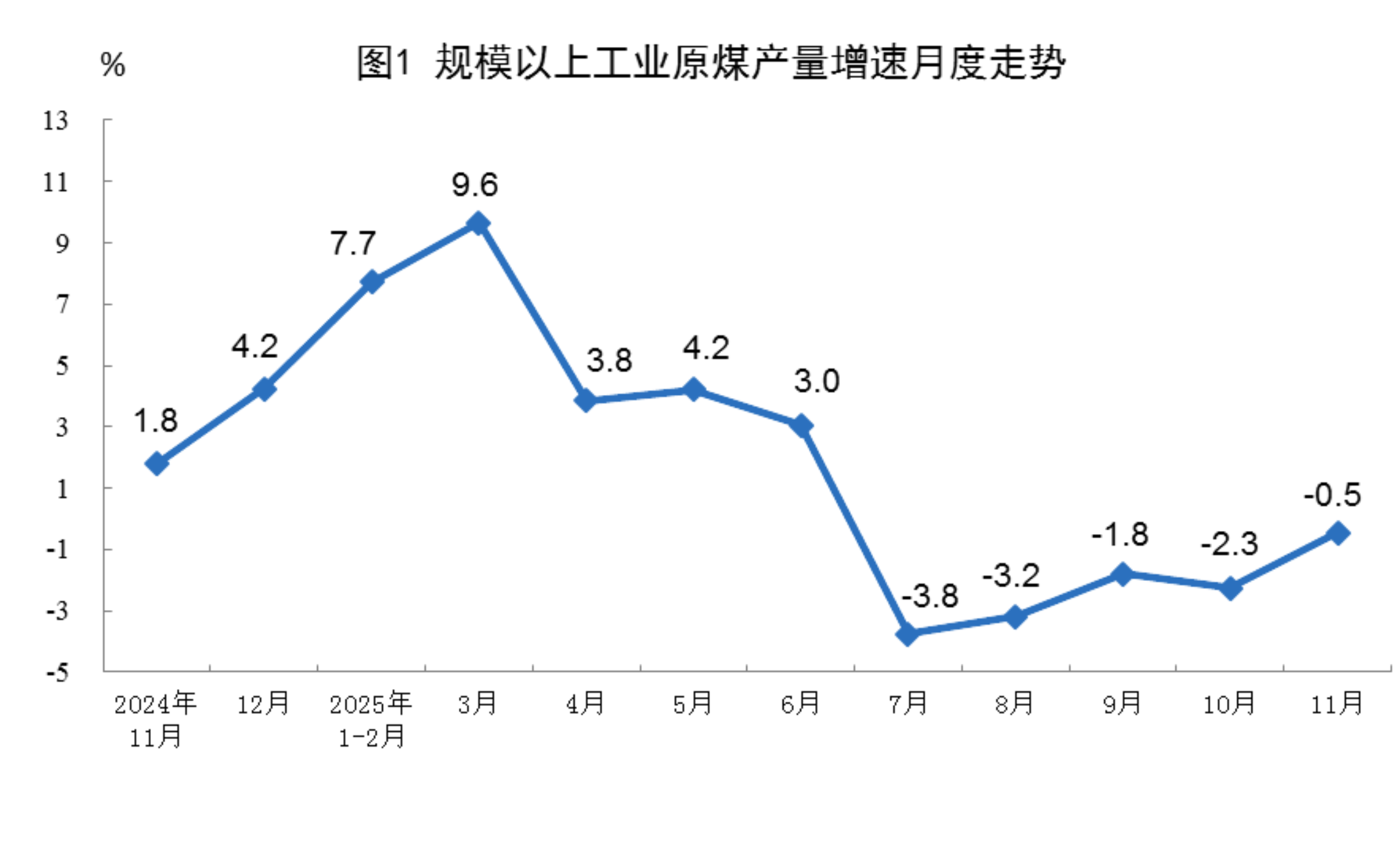
Group 1: Coal Production - In November, the output of raw coal in large-scale industries was 430 million tons, a year-on-year decrease of 0.5%, with an average daily output of 14.23 million tons [2] - From January to November, the total raw coal output reached 4.4 billion tons, representing a year-on-year increase of 1.4% [3] Group 2: Oil Production - In November, the output of crude oil in large-scale industries was 60.83 million tons, showing a year-on-year growth of 3.9%, with a daily average of 2.028 million tons [5] - From January to November, the total crude oil output was 1.9825 billion tons, reflecting a year-on-year increase of 1.7% [5] - The total crude oil processing volume from January to November was 6.7507 billion tons, with a year-on-year growth of 4.0% [5] Group 3: Natural Gas Production - In November, the output of natural gas in large-scale industries was 21.9 billion cubic meters, marking a year-on-year increase of 5.7%, with a daily average of 0.73 billion cubic meters [7] Group 4: Electricity Production - In November, the electricity generation in large-scale industries was 779.2 billion kilowatt-hours, a year-on-year increase of 2.7%, with a daily average of 25.97 billion kilowatt-hours [9] - From January to November, the total electricity generation was 88.567 trillion kilowatt-hours, reflecting a year-on-year increase of 2.4% [9] - The growth rates for different types of electricity generation in November included: - Thermal power decreased by 4.2% year-on-year, a shift from a 7.3% increase in October - Hydropower increased by 17.1%, slowing down by 11.1 percentage points from October - Nuclear power grew by 4.7%, accelerating by 0.5 percentage points from October - Wind power increased by 22.0%, reversing from an 11.9% decrease in October - Solar power grew by 23.4%, accelerating by 17.5 percentage points from October [9]

国家统计局发布最新能源生产情况
中国能源报· 2025-12-15 02:55
Group 1: Energy Production Overview - In November, the production of raw coal remained stable with an output of 430 million tons, a year-on-year decrease of 0.5%, and an average daily output of 14.23 million tons [1] - The production of crude oil accelerated with an output of 17.63 million tons in November, a year-on-year increase of 2.2%, and an average daily output of 588,000 tons [3] - Natural gas production showed steady growth with an output of 21.9 billion cubic meters in November, a year-on-year increase of 5.7%, and an average daily output of 730 million cubic meters [6] Group 2: Electricity Production Situation - The electricity production in November was 779.2 billion kilowatt-hours, a year-on-year increase of 2.7%, with an average daily generation of 25.97 billion kilowatt-hours [8] - The production of thermal power decreased by 4.2% year-on-year, while hydropower increased by 17.1%, nuclear power grew by 4.7%, wind power increased by 22.0%, and solar power saw a growth of 23.4% [8]

国家统计局:2025年11月份能源生产情况
Guo Jia Tong Ji Ju· 2025-12-15 02:50
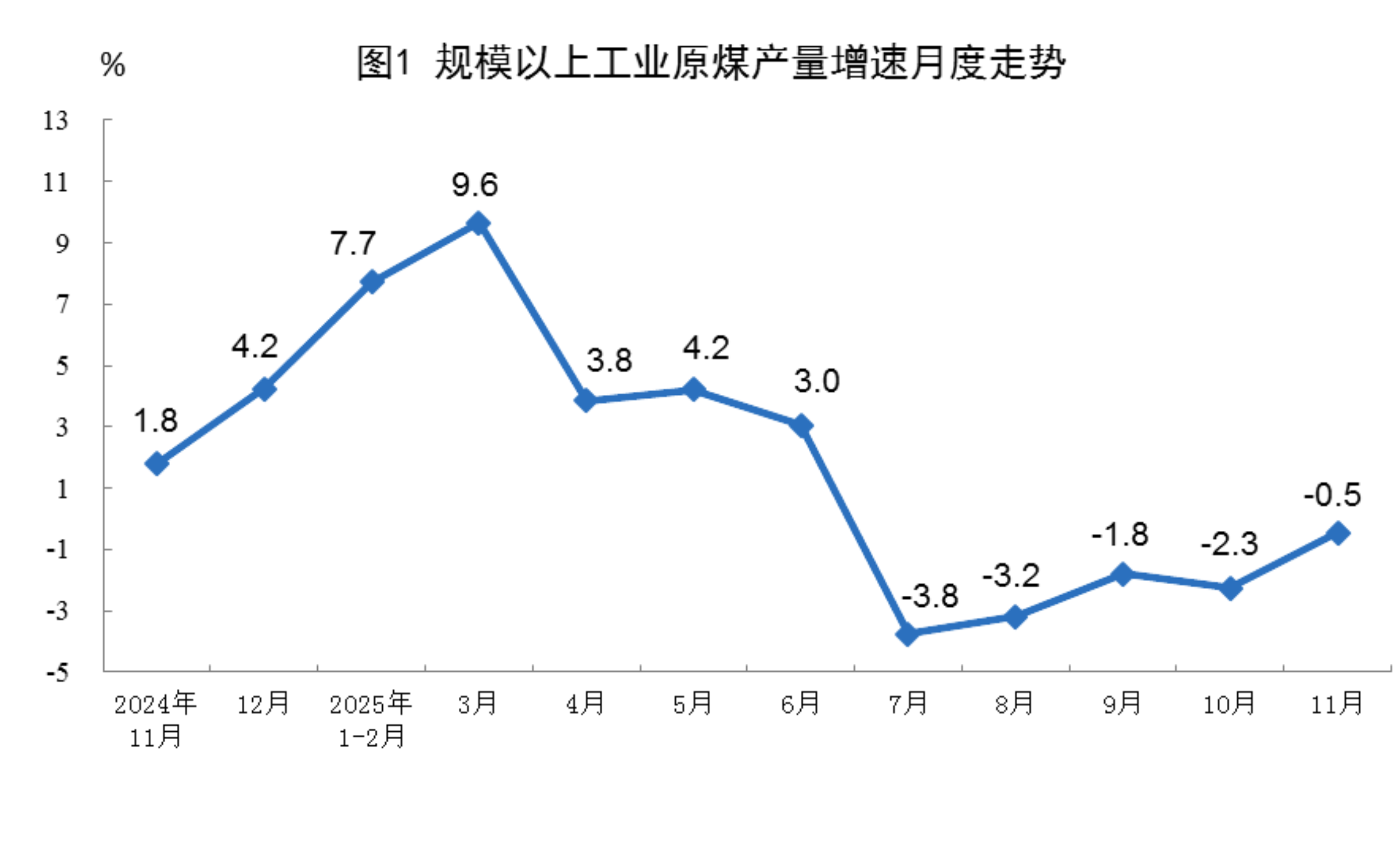
Production Overview - In November, the production of raw coal remained stable, with an output of 430 million tons, a year-on-year decrease of 0.5%, and an average daily output of 14.23 million tons. From January to November, the total output reached 4.4 billion tons, reflecting a year-on-year increase of 1.4% [1] - Crude oil production accelerated in November, reaching 17.63 million tons, a year-on-year increase of 2.2%, with a daily average of 588,000 tons. The total crude oil output from January to November was 198.25 million tons, up 1.7% year-on-year [3] - Natural gas production showed steady growth, with November output at 21.9 billion cubic meters, a year-on-year increase of 5.7%, and a daily average of 730 million cubic meters. The total output from January to November was 238.9 billion cubic meters, reflecting a year-on-year increase of 6.3% [8] Electricity Production - Electricity production in the industrial sector maintained growth in November, with a total generation of 779.2 billion kilowatt-hours, a year-on-year increase of 2.7%, and an average daily generation of 25.97 billion kilowatt-hours. From January to November, the total electricity generation was 8,856.7 billion kilowatt-hours, up 2.4% year-on-year [10] - By type, coal-fired power generation turned from growth to decline, while hydropower saw rapid growth. Nuclear power and solar power generation accelerated, and wind power turned from decline to growth. Specifically, coal-fired power generation decreased by 4.2% year-on-year, while hydropower increased by 17.1%, nuclear power grew by 4.7%, wind power surged by 22.0%, and solar power rose by 23.4% [10]
国家统计局:11月规上工业原煤生产保持稳定 原油生产增速加快 电力生产保持增长
Guo Jia Tong Ji Ju· 2025-12-15 02:49
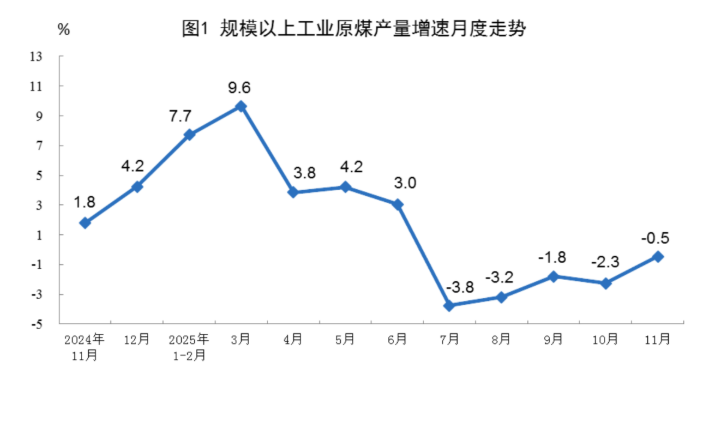
Group 1: Coal, Oil, and Natural Gas Production - In November, the production of raw coal remained stable with an output of 430 million tons, a year-on-year decrease of 0.5%, and an average daily output of 14.23 million tons [2] - The cumulative production of raw coal from January to November reached 4.4 billion tons, reflecting a year-on-year increase of 1.4% [2] - Raw oil production accelerated in November, reaching 17.63 million tons, a year-on-year increase of 2.2%, with a daily average of 588,000 tons [4] - From January to November, the total raw oil production was 198.25 million tons, up by 1.7% year-on-year [5] - Natural gas production showed stable growth in November, with an output of 21.9 billion cubic meters, a year-on-year increase of 5.7%, and a daily average of 730 million cubic meters [8] - The cumulative natural gas production from January to November was 238.9 billion cubic meters, marking a year-on-year increase of 6.3% [8] Group 2: Electricity Production - Electricity production in November maintained growth, with a total generation of 779.2 billion kilowatt-hours, a year-on-year increase of 2.7%, and a daily average of 25.97 billion kilowatt-hours [10] - From January to November, the total electricity generation was 8,856.7 billion kilowatt-hours, reflecting a year-on-year increase of 2.4% [10] - In November, thermal power generation turned from growth to decline with a year-on-year decrease of 4.2%, while hydropower generation increased by 17.1% [10] - Nuclear power generation grew by 4.7%, and solar power generation saw a significant increase of 23.4%, with a growth acceleration of 17.5 percentage points compared to October [10] - Wind power generation turned from decline to growth, increasing by 22.0% in November, compared to a decrease of 11.9% in October [10]
国家统计局:11月份原煤生产保持稳定
Sou Hu Cai Jing· 2025-12-15 02:32
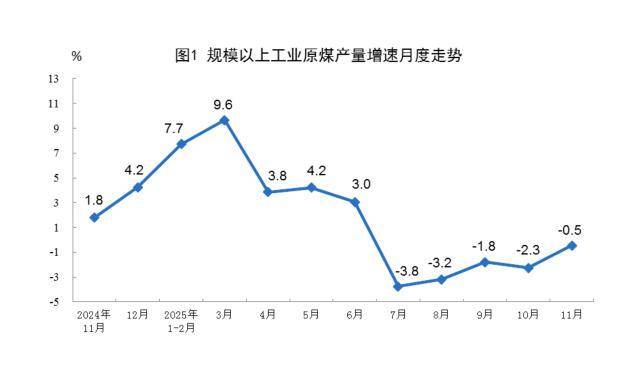
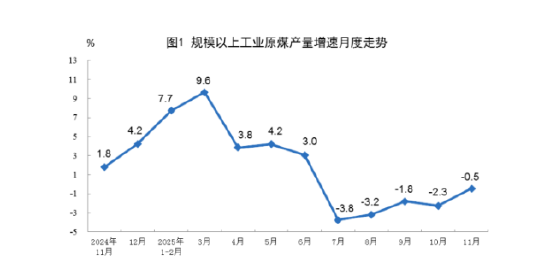
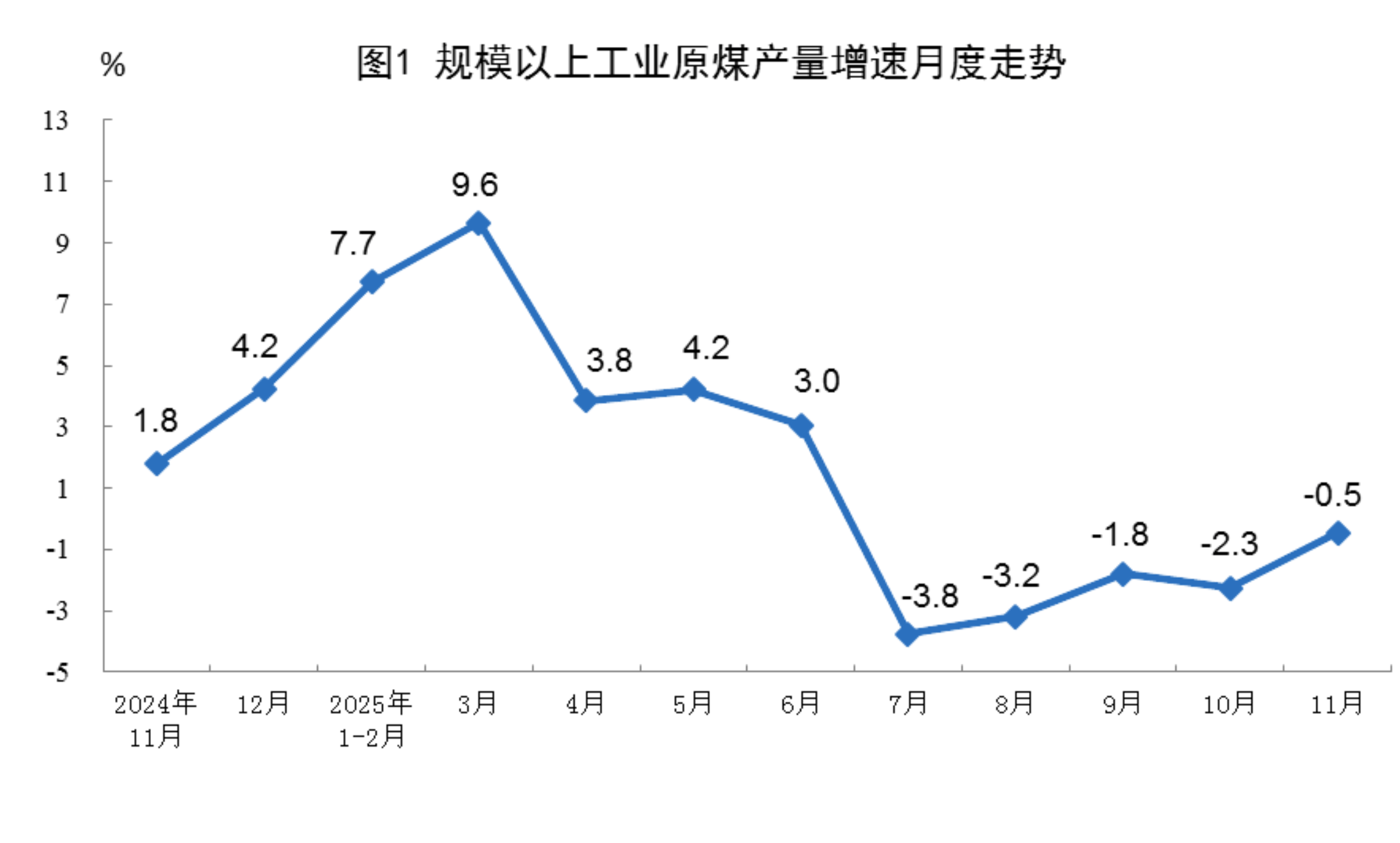
中新网12月15日电 据国家统计局网站消息,11月份,规模以上工业(以下简称规上工业)原煤生产保持稳 定,原油生产增速加快,天然气生产平稳增长,电力生产保持增长。 一、原煤、原油和天然气生产及相关情况 天然气生产稳定增长。11月份,规上工业天然气产量219亿立方米,同比增长5.7%;日均产量7.3亿立方 米。 1—11月份,规上工业原油产量19825万吨,同比增长1.7%。 原油加工平稳增长。11月份,规上工业原油加工量6083万吨,同比增长3.9%;日均加工量202.8万吨。 1—11月份,规上工业原油加工量67507万吨,同比增长4.0%。 图片来源:国家统计局网站 原煤生产保持稳定。11月份,规上工业原煤产量4.3亿吨,同比下降0.5%;日均产量1423万吨。 1—11月份,规上工业原煤产量44.0亿吨,同比增长1.4%。 图片来源:国家统计局网站 原油生产增速加快。11月份,规上工业原油产量1763万吨,同比增长2.2%,增速比10月份加快0.9个百 分点;日均产量58.8万吨。 1—11月份,规上工业天然气产量2389亿立方米,同比增长6.3%。 图片来源:国家统计局网站 二、电力生产情况 规上工业 ...
11月份规模以上工业原煤生产保持稳定
Sou Hu Cai Jing· 2025-12-15 02:32
1—11月份,规上工业原煤产量44.0亿吨,同比增长1.4%。 原油生产增速加快。11月份,规上工业原油产量1763万吨,同比增长2.2%,增速比10月份加快0.9个百 分点;日均产量58.8万吨。 1—11月份,规上工业原油产量19825万吨,同比增长1.7%。 2025年11月份能源生产情况 11月份,规模以上工业(以下简称规上工业)原煤生产保持稳定,原油生产增速加快,天然气生产平稳 增长,电力生产保持增长。 一、原煤、原油和天然气生产及相关情况 原煤生产保持稳定。11月份,规上工业原煤产量4.3亿吨,同比下降0.5%;日均产量1423万吨。 天然气生产稳定增长。11月份,规上工业天然气产量219亿立方米,同比增长5.7%;日均产量7.3亿立方 米。 1—11月份,规上工业天然气产量2389亿立方米,同比增长6.3%。 二、电力生产情况 规上工业电力生产保持增长。11月份,规上工业发电量7792亿千瓦时,同比增长2.7%;日均发电量 259.7亿千瓦时。1—11月份,规上工业发电量88567亿千瓦时,同比增长2.4%。 分品种看,11月份,规上工业火电由增转降,水电较快增长,核电、太阳能发电增速加快,风电 ...
统计局|2025年11月份能源生产情况:工业原煤生产保持稳定 原油生产增速加快
Xin Lang Cai Jing· 2025-12-15 02:23
11月份,规模以上工业(以下简称规上工业)原煤生产保持稳定,原油生产增速加快,天然气生产平稳 增长,电力生产保持增长。 一、原煤、原油和天然气生产及相关情况 原煤生产保持稳定。11月份,规上工业原煤产量4.3亿吨,同比下降0.5%;日均产量1423万吨。 1—11月份,规上工业原煤产量44.0亿吨,同比增长1.4%。 原油生产增速加快。11月份,规上工业原油产量1763万吨,同比增长2.2%,增速比10月份加快0.9个百 分点;日均产量58.8万吨。 1—11月份,规上工业原油产量19825万吨,同比增长1.7%。 原油加工平稳增长。11月份,规上工业原油加工量6083万吨,同比增长3.9%;日均加工量202.8万吨。 1—11月份,规上工业原油加工量67507万吨,同比增长4.0%。 天然气生产稳定增长。11月份,规上工业天然气产量219亿立方米,同比增长5.7%;日均产量7.3亿立方 米。 1—11月份,规上工业天然气产量2389亿立方米,同比增长6.3%。 二、电力生产情况 规上工业电力生产保持增长。11月份,规上工业发电量7792亿千瓦时,同比增长2.7%;日均发电量 259.7亿千瓦时。1—11月份 ...
国家统计局:前11个月原煤生产保持稳定,原油生产增速加快
Sou Hu Cai Jing· 2025-12-15 02:20
【大河财立方消息】12与15日,国家统计局发布2025年11月份能源生产情况。 11月份,规模以上工业(以下简称规上工业)原煤生产保持稳定,原油生产增速加快,天然气生产平稳增长,电力生产保持增长。 一、原煤、原油和天然气生产及相关情况 原煤生产保持稳定。11月份,规上工业原煤产量4.3亿吨,同比下降0.5%;日均产量1423万吨。 1—11月份,规上工业原煤产量44.0亿吨,同比增长1.4%。 原油生产增速加快。11月份,规上工业原油产量1763万吨,同比增长2.2%,增速比10月份加快0.9个百分点;日均产量58.8万吨。 1—11月份,规上工业原油产量19825万吨,同比增长1.7%。 原油加工平稳增长。11月份,规上工业原油加工量6083万吨,同比增长3.9%;日均加工量202.8万吨。 1—11月份,规上工业原油加工量67507万吨,同比增长4.0%。 天然气生产稳定增长。11月份,规上工业天然气产量219亿立方米,同比增长5.7%;日均产量7.3亿立方米。 1—11月份,规上工业天然气产量2389亿立方米,同比增长6.3%。 二、电力生产情况 规上工业电力生产保持增长。11月份,规上工业发电量779 ...
国家统计局:11月份规上工业原煤产量4.3亿吨 同比下降0.5%
智通财经网· 2025-12-15 02:19
Group 1: Coal, Oil, and Natural Gas Production - In November, the production of raw coal in large-scale industries remained stable, with a total output of 430 million tons, a year-on-year decrease of 0.5%, and an average daily output of 14.23 million tons [2] - From January to November, the total raw coal production reached 4.4 billion tons, showing a year-on-year increase of 1.4% [3] - The raw oil production in large-scale industries for the first eleven months was 19.825 million tons, reflecting a year-on-year growth of 1.7% [5] - In November, the raw oil processing volume was 6.083 million tons, a year-on-year increase of 3.9%, with an average daily processing volume of 202,800 tons [5] - From January to November, the total raw oil processing volume was 67.507 million tons, marking a year-on-year increase of 4.0% [5] - Natural gas production in large-scale industries showed stable growth, with November output at 21.9 billion cubic meters, a year-on-year increase of 5.7%, and an average daily output of 730 million cubic meters [9] - From January to November, the total natural gas production reached 238.9 billion cubic meters, reflecting a year-on-year increase of 6.3% [9] Group 2: Electricity Production - The electricity production in large-scale industries maintained growth, with November generation at 779.2 billion kilowatt-hours, a year-on-year increase of 2.7%, and an average daily generation of 25.97 billion kilowatt-hours [11] - From January to November, the total electricity generation was 8,856.7 billion kilowatt-hours, showing a year-on-year increase of 2.4% [11] - In November, the growth rates varied by type: thermal power decreased by 4.2% year-on-year, while hydropower increased by 17.1%, nuclear power grew by 4.7%, wind power increased by 22.0%, and solar power saw a growth of 23.4% [11]
国家统计局:11月中国原煤产量4.3亿吨
Guo Jia Tong Ji Ju· 2025-12-15 02:16
原油加工平稳增长。11月份,规上工业原油加工量6083万吨,同比增长3.9%;日均加工量202.8万吨。 11月份,规模以上工业(以下简称规上工业)原煤生产保持稳定,原油生产增速加快,天然气生产平稳 增长,电力生产保持增长。 一、原煤、原油和天然气生产及相关情况 原煤生产保持稳定。11月份,规上工业原煤产量4.3亿吨,同比下降0.5%;日均产量1423万吨。 1—11月份,规上工业原煤产量44.0亿吨,同比增长1.4%。 原油生产增速加快。11月份,规上工业原油产量1763万吨,同比增长2.2%,增速比10月份加快0.9个百 分点;日均产量58.8万吨。 1—11月份,规上工业原油产量19825万吨,同比增长1.7%。 1—11月份,规上工业原油加工量67507万吨,同比增长4.0%。 天然气生产稳定增长。11月份,规上工业天然气产量219亿立方米,同比增长5.7%;日均产量7.3亿立方 米。 1—11月份,规上工业天然气产量2389亿立方米,同比增长6.3%。 二、电力生产情况 规上工业电力生产保持增长。11月份,规上工业发电量7792亿千瓦时,同比增长2.7%;日均发电量 259.7亿千瓦时。1—11月份 ...