
人工智能产业

Search documents
徐麟李炳军会见国家数据局党组书记、局长刘烈宏一行
Zheng Quan Shi Bao Wang· 2025-08-28 01:24
Core Insights - The meeting between Guizhou provincial leaders and the head of the National Data Bureau emphasizes the commitment to strengthening the digital economy in Guizhou [1] - Guizhou aims to develop key industries such as computing power, data, artificial intelligence, and electronic information [1] - The National Data Bureau expresses ongoing support for Guizhou's digital economy and data industry development [1] Industry Focus - Guizhou is focusing on enhancing its digital economy by prioritizing the development of computing power and data industries [1] - The province is also looking to leverage artificial intelligence and electronic information sectors to drive economic growth [1] - The collaboration with the National Data Bureau is expected to provide guidance and support for innovation and data utilization [1]
穿越周期:全球三大报告解读AIoT产业的真实突破口
3 6 Ke· 2025-08-26 11:31
Core Insights - AI is at a critical juncture of deep integration with the physical world, with three authoritative reports providing different perspectives on industry trends and realities [1][5][22] - The reports emphasize the importance of AIoT (Artificial Intelligence of Things) as a key driver for industrial transformation and value creation [5][12][24] Report Summaries 1. Technology Trends Outlook 2025 by McKinsey Global Institute - The report identifies thirteen frontier technology trends that will impact business and industry by 2025, highlighting AI as a foundational operating system for digital transformation across various sectors [1] - AI is described as an amplifier for infrastructure and applications, reshaping global value creation and competitive dynamics [1][8] 2. The State of AI 2025 by Bessemer Venture Partners - This report analyzes the growth models of AI-native companies and the evolution of AI infrastructure, focusing on systemic innovation and commercialization challenges [2] - It emphasizes that successful AIoT implementations often arise from deep integration into specific industry pain points rather than broad, generalized applications [8][9] 3. The GenAI Divide: State of AI in Business 2025 by MIT - The report reveals a significant ROI gap in generative AI investments, with 95% of global enterprises failing to achieve substantial commercial returns [3][10] - It stresses the necessity for AI projects to be closely tied to core business processes to create measurable value [22][24] Consensus Points 1. Deep Integration of AI and IoT - All three reports agree that the deep integration of AI and IoT is a definitive trend in global technology and industrial upgrades [8][9][12] - AI is no longer a passive tool but actively participates in process optimization and innovation across various applications [8] 2. Focus on Scenarios and ROI - The commercialization of AIoT relies on creating real value in specific scenarios with measurable business returns [10][11] - Successful AIoT enterprises must target high ROI processes and pain points to transition from pilot projects to scalable solutions [10][11] 3. Platform and Ecosystem Collaboration - The reports highlight the importance of platform thinking and ecosystem collaboration over isolated efforts in the increasingly complex AIoT landscape [11][12] - Collaborating with specialized AI service providers can significantly enhance project success rates [11][12] Divergent Perspectives 1. In-house Development vs. External Procurement - MIT's research indicates that in-house AI system development has a commercial success rate of only 33%, compared to 67% for projects that collaborate with external AI service providers [14] - This highlights the challenges many companies face in independently supporting the full AI system lifecycle [14] 2. Pursuing Explosive Growth vs. Sustainable Resilience - BVP distinguishes between "supernova" companies that achieve rapid user growth and valuation spikes and "stars" that focus on long-term customer loyalty and stable profit structures [17] - The balance between rapid innovation and deep industry engagement is crucial for sustainable growth [17][18] 3. Front-end Experience vs. Back-end Intelligence - Current investments in AI are often concentrated on front-end applications like sales and marketing, while back-end intelligence projects yield higher ROI [18] - The reports suggest a strategic shift towards optimizing core operations and processes for true value creation [18][24]


我国人工智能专利数占全球总量60%(人民日报)
Ren Min Ri Bao· 2025-08-15 08:17
Core Insights - The article highlights significant advancements in China's digital sector, particularly in artificial intelligence and integrated circuits, showcasing a comprehensive leap in capabilities [1] - China's digital infrastructure has seen substantial growth, with a notable increase in 5G base stations and gigabit broadband users [1] - The data industry in China is rapidly expanding, with projections indicating a significant rise in the number of data enterprises and industry scale by 2024 [1] Group 1: Technological Advancements - China has achieved a comprehensive and systematic leap in artificial intelligence, with AI patents accounting for 60% of the global total [1] - Breakthroughs have been made in humanoid robots and smart terminals, indicating progress in key technology areas [1] - The integrated circuit sector is accelerating its layout, forming a complete industrial chain covering design, manufacturing, packaging, testing, materials, and equipment [1] Group 2: Digital Infrastructure Development - As of June 30, the total number of 5G base stations reached 4.55 million, and gigabit broadband users reached 226 million [1] - The total computing power scale ranks second globally, reflecting China's growing digital capabilities [1] Group 3: Data Industry Growth - By 2024, the number of data enterprises in China is expected to exceed 400,000, with the data industry scale reaching 5.86 trillion yuan, a 117% increase compared to the end of the 13th Five-Year Plan [1] - The industry is characterized by deep data mining, integrated applications, algorithmic computing power, and high-level data integration [1] - Average R&D investment of listed data enterprises is projected to increase by 79% compared to the end of the 13th Five-Year Plan [1]
发展新质生产力要纠正几种错误认识
Sou Hu Cai Jing· 2025-08-10 20:52
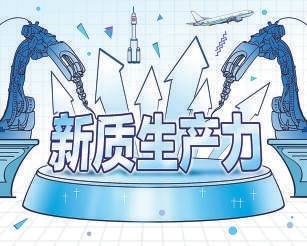
Core Viewpoint - The article emphasizes the importance of developing "new quality productivity" as a means to drive high-quality economic growth and modernization in China, particularly in the context of the fourth industrial revolution characterized by intelligent technology [3][9]. Group 1: Definition and Characteristics of New Quality Productivity - New quality productivity is defined as an advanced form of productivity that emerges from revolutionary technological breakthroughs, characterized by high technology, high efficiency, and high quality [4][5]. - The evolution of productivity can be summarized as a transition through "five powers": human power, horse power, electric power, network power, and computing power, with the current focus on computing power as a key driver of new industries [4][5]. Group 2: Misconceptions to Address - There is a misconception that "new quality" lacks clear definitions and boundaries, which can lead to vague goals and ineffective practices [3][5]. - Another misconception is that the effectiveness of new quality productivity cannot be accurately measured; however, total factor productivity (TFP) can be used as a key indicator, reflecting improvements from technology, institutional reforms, and management enhancements [5][6]. - It is also mistakenly believed that discussions on new quality productivity should only focus on future technologies and industries, while in reality, it encompasses market and institutional innovations that enhance efficiency in traditional industries [6][7]. Group 3: Broader Implications and Applications - The development of new quality productivity is not limited to economic sectors; it also involves education, culture, and green development, highlighting the need for a holistic approach [7][8]. - The article points out that even less developed regions can leverage new technologies to achieve significant advancements, drawing parallels with historical examples of regions that successfully "leapfrogged" in development [8][9]. Group 4: Strategic Considerations - The article stresses the need to pay attention to the context in which new quality productivity was first articulated, particularly in relation to the revitalization of Northeast China, which faces unique economic challenges [9][10]. - It also warns against potential issues such as overcapacity, the emergence of new economic bubbles, and the misapplication of policies that do not consider local conditions [10].
最高法:研究起草数据产权司法保护指导意见
Zheng Quan Shi Bao Wang· 2025-08-08 02:29
Core Viewpoint - The Supreme People's Court has issued guidelines to implement the "Promotion Law of Private Economy," emphasizing the protection of emerging industries and the judicial protection of data rights [1] Group 1: Emerging Industries - The guidelines aim to ensure the healthy and orderly development of emerging industries [1] - There is a focus on the judicial protection of data rights to address disputes related to data ownership [1] Group 2: Data Rights and AI - The guidelines include the drafting of judicial protection opinions for data rights, promoting efficient circulation and trading of data elements [1] - The court will legally adjudicate cases related to artificial intelligence, supporting its lawful application and guiding the healthy development of the AI industry [1]
当AI“看见”世界,商业的未来正在被彻底重塑 | 两说
第一财经· 2025-08-07 10:20
Group 1: AI Impact on Labor Market - AI is predicted to take over creative tasks, not just repetitive jobs, with experts suggesting that roles such as financial analysts and scriptwriters may be at risk [7][9] - Those who do not understand or utilize AI are likely to be the first to be eliminated from the workforce [7] Group 2: Integration of AI with Navigation Systems - The integration of AI with China's BeiDou navigation system is expected to create a trillion-dollar industry, enhancing capabilities beyond navigation to include disaster response and urban planning [10] Group 3: World Models as a Key to Physical Interaction - The concept of world models is introduced as the next generation of AI, enabling machines to understand spatial relationships and perform complex tasks in physical environments [13] Group 4: Revolution in Content Creation - AI-generated content (AIGC) is set to revolutionize the content industry, with AI tools allowing creators to produce high-quality content significantly faster than traditional methods [15] Group 5: Ethical Governance of AI - The ultimate challenge for AI development is governance, focusing on ensuring AI does not become a tool for domination, with a call for global participation in AI governance [18]

具身智能,上海印发重要文件!
证券时报· 2025-08-06 03:42
Core Viewpoint - The Shanghai Municipal Government has set ambitious goals for the development of the embodied intelligence industry, aiming for a core industry scale exceeding 50 billion yuan by 2027, with significant support for key technological advancements and financial tools [1][3]. Group 1: Development Goals - By 2027, Shanghai aims to achieve breakthroughs in at least 20 core algorithms and technologies related to embodied models and embodied data [3]. - The plan includes the establishment of at least four high-quality incubators for embodied intelligence, fostering the gathering of key industry players and promoting innovative application scenarios [3]. Group 2: Financial Support - The government will provide up to 30% support for approved projects, capped at 50 million yuan, to encourage technological advancements in perception decision-making, motion control, embodied data, and operating systems [2][3]. - For companies purchasing data services, there will be a support of up to 500,000 yuan per year in data vouchers [3]. Group 3: Infrastructure Development - The implementation plan emphasizes the creation of five major platforms: computing power, training, pilot testing, investment, and leasing, to solidify the foundation for the development of the embodied intelligence industry [5]. - The plan also aims to enhance the role of Shanghai's artificial intelligence fund in supporting quality enterprises and establishing venture capital funds [5]. Group 4: Application Scenarios - The plan encourages the exploration of new business models in various sectors such as logistics, industrial manufacturing, retail, healthcare, and home services, with financial support for innovative application projects [7]. - Specific support is outlined for the integration of embodied intelligence in healthcare, focusing on the development of multi-modal perception and adaptive decision-making capabilities in medical and nursing robots [7]. Group 5: Component Development - The plan highlights the importance of developing core components such as specialized chips and mainboards for embodied intelligence, leveraging Shanghai's advantages in autonomous intelligent chips and robotics [8]. - It aims to establish production bases for high-value components like joint modules, intelligent sensors, and visual cameras in Shanghai [8]. Group 6: Incentives for Enterprises - The plan includes incentives for attracting and nurturing quality enterprises, offering rewards of up to 5% of contract amounts, capped at 500,000 yuan, for companies selling or leasing embodied intelligence robots [9].

复旦大学“经贸博弈、科技跃迁与当前国际金融形势”圆桌会成功举办
Guan Cha Zhe Wang· 2025-08-02 01:33
Group 1 - The global economy in 2025 is characterized by uncertainties, including trade wars, technological transitions, and geopolitical risks, making financial markets a key window for observing macro trends [1] - The recent roundtable discussion at Fudan University focused on the themes of economic and trade competition, technological transitions, and the current international financial situation, aiming to provide academic references for China's capital market in response to new international changes [1][2] - The chief economist from ICBC International highlighted that the global economic recovery cycle is confirmed for 2023-2024, but recent trade wars have caused fluctuations in expectations, with Hong Kong stocks rising nearly 30% in the past three months, outperforming global markets [2] Group 2 - The resilience of the Chinese economy is attributed to its large-scale market and complete industrial system, with a focus on the integration of digital and real economies [3] - The chief economist from Sumitomo Mitsui Banking Corporation emphasized the need for China to manage its relationships with the US and neighboring countries carefully to avoid isolation, suggesting a focus on domestic demand and long-term strategies [3] - The Fudan University professor pointed out that the capital market is crucial for activating property income and addressing the decline in regular income, which is essential for the internationalization of the RMB [4] Group 3 - The discussion highlighted the importance of capital markets in supporting early-stage financing for technology companies and accelerating breakthroughs in advanced technology fields [5] - Experts agreed that the global economic recovery is subject to fluctuations, but China's manufacturing advantages and technological potential provide resilience against challenges [6] - The need for China to be cautious of deflation and geopolitical risks was emphasized, advocating for counter-cyclical policies and technological breakthroughs to achieve quality growth [6]
山东拟立法促进数字经济发展
Qi Lu Wan Bao Wang· 2025-08-01 07:50
Core Viewpoint - The draft regulation for promoting the digital economy in Shandong Province aims to enhance the legislative framework to support high-quality development of the digital economy, addressing existing challenges and fostering innovation [1][2]. Group 1: Legislative Framework - The draft regulation consists of 10 chapters and 62 articles, focusing on promoting and safeguarding the digital economy while emphasizing innovation and leadership [2][3]. - The regulation is designed to strengthen top-level design and institutional supply to create new advantages for digital economic innovation [1][2]. Group 2: Digital Economy Development - By 2024, the digital economy is projected to account for 49% of Shandong's GDP, with core industries contributing 9.5% [2]. - Despite being a leader in digital economy development, Shandong faces challenges such as low innovation capacity and a lack of leading enterprises compared to provinces like Guangdong and Zhejiang [2]. Group 3: Technological Innovation - The draft includes specific provisions for artificial intelligence, addressing aspects like data, computing power, and algorithms, while also focusing on infrastructure upgrades and digital economy security [3][5]. - It emphasizes the importance of digital technology as a key driver for innovation in production, trade, and consumption [3]. Group 4: Industry Digitalization - The regulation aims to enhance the digital transformation of traditional industries, leveraging Shandong's strong industrial base and diverse application scenarios [4]. - It outlines strategies for the digitalization of various sectors, including agriculture, industry, and services, to facilitate comprehensive upgrades [4]. Group 5: Data Management - The draft focuses on data as a new production factor, establishing a framework for data supply, management, and utilization to unlock its potential [4]. - It aligns with national guidelines on data resource management, ensuring effective data flow and application [4]. Group 6: Security and Governance - A dedicated chapter on digital economy security addresses issues related to network, algorithm, and data security, proposing detailed regulations for data protection and management [5][6]. - The regulation also outlines pathways for digital governance transformation to meet the evolving demands of the digital economy [4][6].
国家发改委:坚决制止新兴领域盲目跟风、一哄而上、一哄而散
Sou Hu Cai Jing· 2025-08-01 05:47
Group 1: Investment and Economic Measures - The National Development and Reform Commission (NDRC) has fully allocated the 800 billion yuan "two heavy" construction project list, with 735 billion yuan of central budget investment also largely disbursed [1] - A fourth batch of 690 billion yuan for consumer goods replacement will be allocated in October, completing the annual plan of 300 billion yuan [2] - The NDRC aims to enhance domestic demand and support new consumption development while preventing blind following and excessive competition in emerging sectors [3][4] Group 2: Policy Implementation and Economic Monitoring - The NDRC plans to maintain policy continuity and stability while enhancing flexibility and foresight to stabilize the economy and employment [4] - The NDRC will conduct regular economic monitoring and policy research to ensure timely responses to actual needs [4] - The NDRC is focused on optimizing the artificial intelligence ecosystem and promoting its large-scale commercial application [5][6] Group 3: Logistics and Trade - The logistics cost as a percentage of GDP has decreased to 14%, achieving the lowest level since records began, saving over 130 billion yuan in logistics costs [7] - Trade cooperation with Belt and Road Initiative countries has seen a 4.7% increase in imports and exports, totaling 11.29 trillion yuan in the first half of the year [9] Group 4: Infrastructure and Energy - The highest cross-regional electricity transmission reached 148 million kilowatts, marking a new historical high [10] - The NDRC is working on a plan to deepen the construction of a unified national market, with inter-provincial trade sales accounting for 40.4% of total sales revenue [11][12] Group 5: Market Regulation and Competition - The NDRC is committed to regulating disorderly competition among enterprises and will implement measures to clean up market access barriers [13][15] - The NDRC plans to accelerate the implementation of significant reform measures to enhance economic stability and consumer confidence [15] Group 6: Consumer Services and Economic Growth - The NDRC will focus on enhancing consumer capacity and promoting service consumption in areas such as culture, tourism, and healthcare [16] - The NDRC aims to foster a positive cycle of consumption and investment by improving infrastructure and promoting domestic products [16]