
外卖行业

Search documents
送外卖减肥,更应看到浪漫故事的另一面
Nan Fang Du Shi Bao· 2025-08-05 15:21
Core Viewpoint - The delivery service, once seen as a temporary job, is being redefined by Generation Z, who are integrating it into their lifestyle and social culture, reflecting a shift towards health consciousness, diverse career choices, and technology reshaping daily life [1][2]. Group 1: Trends and Motivations - The phenomenon of "delivery for weight loss" indicates a combination of the gig economy and health demands, showcasing three major trends: democratization of health consumption, diversification of job choices, and technology transforming lifestyles [1]. - Young people in both public and private sectors are drawn to delivery work as it allows them to monetize fragmented time, providing immediate rewards and a sense of control over their work [1][2]. - The shift in perception of traditional jobs, such as civil servants and bank managers, reflects a need for immediate feedback and tangible results, making gig work more appealing than conventional roles [1][2]. Group 2: Social Dynamics and Risks - Delivery work has become a coping mechanism for urban youth, offering a balance between mainstream career paths and the gig economy, allowing for self-regulation amidst instability [2][3]. - The experience of part-time delivery workers differs significantly from full-time riders, with the latter facing risks such as order dilution and income instability as more part-time workers enter the market [3]. - The rapid growth of flexible employment, projected to exceed 200 million in China by 2025, with around 13 million delivery riders, highlights both the popularity of gig work and the challenges faced by full-time riders, including aging workforce and lack of benefits [3].
以“短期让利”换“行业话语权”式价格战 本质是低效消耗战
Nan Fang Du Shi Bao· 2025-08-04 23:17
Core Viewpoint - The article discusses the rise of "involutionary competition" in various industries, emphasizing the need for regulatory measures to address the inefficiencies and negative impacts of price wars, particularly in the platform economy [5][6][23]. Group 1: Definition and Characteristics of Involutionary Competition - "Involutionary competition" is characterized by low-price strategies leading to a race to the bottom, resulting in decreased profit margins and stagnation in industry development [8][9]. - This form of competition is marked by low-quality homogenization, price wars, and short-term behavior, ultimately harming the overall value of the industry [8][9]. Group 2: Price Wars and Their Implications - Price wars, while appearing beneficial in the short term, can create a "bubble market" through capital subsidies, leading to unsustainable competition [10][12]. - The phenomenon of sacrificing profits for market survival is driven by market pressures, strategic goals, and the allure of short-term gains [9][10]. Group 3: Regulatory Framework and Legal Measures - New regulations, including amendments to the Anti-Unfair Competition Law and the Price Law, aim to provide tools for comprehensive governance of involutionary competition [11][14]. - The revised laws will prohibit platforms from forcing merchants to sell below cost, thereby preventing market disruption and protecting fair competition [12][14]. Group 4: Transition from Price Competition to Value Competition - The article advocates for a shift from price wars to value-based competition, emphasizing the need for a collaborative approach involving government policy, industry self-regulation, and corporate innovation [20][21]. - This transition is seen as essential for breaking the cycle of low-price, low-quality competition and fostering a healthier market environment [21][23].


鼓励良性竞争,让平台成为拉动消费的新动能
2 1 Shi Ji Jing Ji Bao Dao· 2025-08-01 12:41
Core Viewpoint - The article emphasizes the importance of service quality and the need to balance the interests of platforms, merchants, delivery personnel, and consumers, while considering the market and social implications at multiple levels [1][5][6] Industry Overview - Multiple food delivery platforms have recently advocated for healthy competition, responding to regulatory guidance aimed at promoting fair practices and avoiding unsustainable competitive behaviors like "zero-yuan purchases" [2][3] - The current competitive environment reflects new challenges and opportunities brought by platform economies, where merchants face pressures not only from market conditions but also from platform-driven market dynamics [3][4] Market Dynamics - The intense competition in the market is seen as a response to broader market conditions, and it is unrealistic to expect a complete separation between online and offline retail sectors [3] - Platforms and merchants share a common interest in stimulating consumption through pricing and subsidies, with service consumption identified as a significant growth area [3][4] Economic Impact - Research indicates that effective subsidy strategies can significantly boost consumer spending, with every 1 yuan of effective flash purchase subsidy generating an additional 6.76 yuan in consumer spending, potentially leading to a 676 billion yuan increase in overall consumption [4] - The article highlights the tension between market efficiency and the survival of small, unique businesses, stressing the need for platforms to support diverse market participants during competitive pressures [4][6] Conclusion - The food delivery market is becoming a crucial driver of consumption upgrades, job creation, and public service, necessitating a focus on service quality and the coordination of interests among all stakeholders for sustainable industry development [5][6]

淘宝闪购、饿了么、美团共同发文:呼吁抵制恶性竞争
Di Yi Cai Jing· 2025-08-01 03:12
Core Viewpoint - The article emphasizes the importance of resisting malicious competition in the food delivery industry, advocating for a fair and orderly market environment to promote mutual benefits among all parties involved [1][3]. Group 1: Company Initiatives - Meituan has committed to regulating promotional activities and eliminating unfair competition, aiming to establish a healthy and sustainable development in the catering service industry [1]. - The company plans to issue subsidies based on consumer and merchant needs, ensuring transparency and protecting merchants' rights [5]. - Meituan will actively resist irrational promotional activities, such as large-scale "0 yuan purchases," to safeguard merchants' earnings and operational integrity [5][6]. Group 2: Industry Collaboration - Meituan and Ele.me have jointly announced their commitment to resist malicious competition and promote ecological win-win cooperation within the industry [3]. - The companies are focusing on enhancing service quality, providing diverse consumption scenarios, and improving delivery network efficiency to better serve consumers [6]. - A feedback system has been established to address core issues such as merchant participation, product quality, and rider rights, with ongoing discussions taking place across various regions [6].
跑外卖 33 天后,我看见了一座更「真实」的三线城市
3 6 Ke· 2025-07-30 08:27
在家乡街道上闲逛时,看到许多外卖员在商超物流里接单送单,电动车挂篮和外卖箱上都是大件小件。商铺门墙的海报写着「外卖月入 7 千,跑满首月 700 单,免去一个月车租」,这让我也动了心思。 我问一个外卖师傅:「师傅,跑外卖真可以月入 7000 吗?」 「月入过 4 千不是随便拿,每天跑够 33 单就行了,月入 7 千有点难。」 加了师傅微信,他简单带我学会跑单后,就带去站点办了入职手续。租起外卖套装和电动车,我就开始了自己为期一月的外卖生涯。 外卖员正在取餐 外卖员最先接触的是店家。一个月的走街串巷,除了记下一堆不错的店家,还看到了些我早该知道,但不大想亲眼看到的场景。 幽灵厨房 「前方到达目的地,导航结束。」导航把我带到城中村的窄巷小路,主道路是来来往往的外卖小哥,中间穿插着放学回家的小学生。我怎么也找不到手机 屏幕上标注的「吴记猪脚饭」。 路过的老手外卖员看出了我的迷惑:「新手是吧?是不是找吴记猪脚饭啊?」 我说对啊,导航漂移,找不到在哪里,在哪号房,怎么没有招牌。 「就是右手边那个,96 号,城中村牌号都是乱的,开在城中村确实难找。」 顺着他的目光望去,右手边的低矮的红砖房,两个中年阿姨在配菜和炒菜,围在 ...

新华网评:期待外卖市场构建良性竞争格局
news flash· 2025-07-25 12:34
Core Viewpoint - The article emphasizes the need for major platform companies like Ele.me, Meituan, and JD.com to regulate their promotional activities and engage in rational competition to foster a healthy ecosystem for consumers, merchants, delivery riders, and platform enterprises [1] Group 1: Regulatory Actions - The State Administration for Market Regulation has held discussions with Ele.me, Meituan, and JD.com to ensure they further standardize their promotional behaviors [1] - The central government has explicitly called for the promotion of a regulated and orderly development of the platform economy [1] Group 2: Market Dynamics - The article highlights that the prosperity of the food delivery market relies on platforms seizing market opportunities through orderly competition [1] - It stresses the importance of breaking monopolies and internal competition to stimulate market vitality, aligning with market principles and economic theories [1] Group 3: Future Outlook - A healthier competitive landscape is essential for nurturing a more resilient, vibrant, and sustainable service consumption ecosystem [1]


Hi财经丨多平台良性竞争 促进行业健康发展
Ren Min Ri Bao· 2025-07-25 06:19
Core Viewpoint - The recent discussions by the Market Regulation Administration with three platform companies emphasize the need for strict adherence to responsibilities and the promotion of rational competition, signaling a move towards healthy competition and addressing the chaos in the "takeout price war" [1] Group 1: Platform Economy Development - Promoting the standardized development of the platform economy is crucial, with the number of internet users in China reaching 1.123 billion and an internet penetration rate of 79.7% as of June [2] - The online food delivery market in China has grown to approximately 1.2 trillion yuan, with 545 million users spending nearly 3.3 billion yuan daily on takeout [2] Group 2: Benefits of Healthy Competition - Healthy competition among multiple platforms enhances market vitality, allowing for a richer supply of products that meet diverse consumer needs, which in turn drives online retail growth [3] - For instance, a restaurant reported a 15% increase in daily revenue and significant profit growth through a specific platform during a three-month period [3] Group 3: Sustainable Industry Development - The ultimate goal of healthy competition is not to eliminate rivals but to evolve the industry towards higher standards, encouraging platforms to take on more social responsibilities [3] - A restaurant employing mentally challenged youth saw over a 100% increase in delivery orders due to the influence of e-commerce vouchers, highlighting the social impact of increased online orders [3] - A collaborative effort among major platforms to uphold market integrity can lead to a healthier ecosystem in the food delivery industry, benefiting consumers, delivery personnel, merchants, and platforms alike [3]

劝你少管外卖的闲事
Hu Xiu· 2025-07-23 10:42
Core Viewpoint - The article discusses the dynamics of competition in the food delivery market, emphasizing that healthy competition benefits consumers and the market as a whole, while cautioning against calls for regulation that may stifle this competition [2][20][24]. Group 1: Market Competition - The food delivery market has seen significant growth, with daily orders increasing from 100 million to 250 million, benefiting merchants and delivery personnel [15]. - The presence of multiple platforms fosters innovation and improves service quality, allowing consumers to have choices and enhancing overall market prosperity [14][19]. - The article argues that competition is essential for market vitality, and any attempts to regulate it could lead to stagnation and reduced consumer benefits [21][22]. Group 2: Public Perception and Media Influence - There is a divide in public opinion regarding the food delivery competition, with many consumers enjoying the benefits while some media voices express concern over potential negative impacts [4][5]. - Critics of the competition often label it as "involution," but the article stresses the importance of distinguishing between harmful and beneficial competition [13]. - The media's role in shaping public perception of market dynamics is highlighted, with calls for restraint in advocating for regulation [23][24].

地址“漂移”、图片造假、“堂食认证”成摆设!记者实探深圳“无堂食外卖”聚集地
Xin Lang Cai Jing· 2025-07-22 03:25
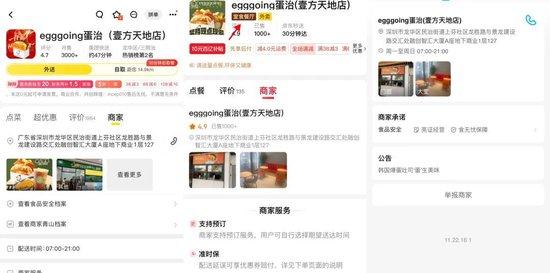
Core Viewpoint - The competition in the food delivery market is intensifying, leading to regulatory scrutiny and concerns over misleading practices by restaurants [14][15][17]. Group 1: Market Competition - Major platforms like Ele.me, Meituan, and JD.com are facing pressure from the State Administration for Market Regulation to standardize promotions and engage in rational competition [14][15]. - The food delivery market in China has reached a scale of approximately 1.2 trillion yuan, with 545 million online food delivery users, averaging daily spending of nearly 3.3 billion yuan [15]. Group 2: Misleading Practices - Many "no-dine-in" restaurants are falsely labeled as "dine-in restaurants" on delivery platforms, with discrepancies in actual locations and images uploaded [8][10][12]. - Specific examples include a restaurant named "egggoing蛋治" that misrepresented its location and dining conditions, leading to consumer confusion [3][11]. Group 3: Regulatory Responses - Various regions are exploring regulatory measures to enhance transparency and food safety, such as Guangzhou's "Internet + Bright Kitchen" initiative and Chongqing's new standards for "no-dine-in" services [17]. - Despite these efforts, the lack of unified legal regulations makes it challenging to ensure compliance and protect consumer rights effectively [17].
关税又升级了吗?内需与政策前景
2025-07-21 14:26
Summary of Key Points from Conference Call Records Industry or Company Involved - The discussion primarily revolves around the **U.S. tariff policies**, **Hong Kong internet companies**, and the **macro-economic environment** affecting these sectors. Core Points and Arguments 1. **U.S. Tariff Rates**: The effective tariff rate in the U.S. is maintained at 10%-14%, with tariffs on China around 40%-50%, generating annual revenue of $300-400 billion to offset new expenditures and prevent significant deficits [1][4][5]. 2. **Future Tariff Strategy**: The U.S. government is unlikely to set tariffs too high to avoid a simultaneous downturn in stocks, bonds, and currency. The expectation is for moderate inflation increases without sudden spikes [5][11]. 3. **Impact on Hong Kong Internet Companies**: Recent positive developments in chip technology have boosted Hong Kong internet companies, leading to improved market sentiment, although sustainability remains uncertain [2][6]. 4. **Market Sensitivity to Tariff Changes**: The market has become desensitized to tariff changes, viewing them as negotiation tactics rather than significant threats. The actual impact of recent tariff adjustments has been minimal [7][12]. 5. **Dollar and U.S. Stock Performance**: The U.S. dollar has strengthened significantly over the past few months, and U.S. stocks are expected to continue outperforming, driven by strong fundamentals and credit cycles [8][11]. 6. **Trade Agreements**: Recent agreements with trade partners like Indonesia and Japan are aimed at negotiating higher tariffs to facilitate discussions, but the outcomes often fall short of expectations [9][10]. 7. **Hong Kong Market Liquidity**: The liquidity in the Hong Kong market is primarily driven by southbound capital, with signs of tightening liquidity expected in Q3 due to weak growth and delayed policy actions [3][14]. 8. **Economic Indicators**: Recent GDP growth has slowed, with Q2 figures showing a decline from 5.4% to 5.2%. Inflation remains low, and consumer spending has been affected by various factors, including regulatory disruptions [18][19]. 9. **Banking Sector Performance**: The banking sector has shown strong performance despite recent market fluctuations, with improved financial data indicating a favorable investment environment [33][34][35]. Other Important but Possibly Overlooked Content 1. **Inflation and Monetary Policy**: Despite uncertainties surrounding tariffs, the Federal Reserve's path towards interest rate cuts remains unchanged, with expectations for potential rate reductions in the near future [11][12]. 2. **Sectoral Investment Strategies**: The current market structure suggests a focus on structural opportunities rather than overall index performance, with recommendations to consider sectors like insurance and innovative technologies for long-term investments [17][40]. 3. **Regulatory Impact on Competition**: The competitive landscape in the food delivery sector is under scrutiny, with regulatory measures aimed at promoting healthier competition and improving profitability for involved parties [36][37][39]. 4. **AI Sector Potential**: The AI sector is highlighted for its significant growth potential across various applications, including gaming, software, and education, which could drive economic benefits [16]. This summary encapsulates the key insights and implications from the conference call, providing a comprehensive overview of the current economic landscape and its impact on relevant industries.