
服务贸易

Search documents
9月我国国际收支货物和服务贸易 进出口规模同比增长6%
Jin Rong Shi Bao· 2025-11-03 01:27
Core Insights - The State Administration of Foreign Exchange reported that by September 2025, China's international balance of payments for goods and services trade reached 47,362 billion yuan, marking a year-on-year growth of 6% [1] Trade Summary - Goods trade exports amounted to 23,744 billion yuan, while imports were 17,062 billion yuan, resulting in a surplus of 6,682 billion yuan [1] - Service trade exports totaled 2,680 billion yuan, with imports at 3,876 billion yuan, leading to a deficit of 1,196 billion yuan [1] Service Trade Breakdown - Major components of service trade included: - Travel services with an import-export scale of 1,891 billion yuan - Transportation services with an import-export scale of 1,869 billion yuan - Other business services with an import-export scale of 1,078 billion yuan - Telecommunications, computer, and information services with an import-export scale of 682 billion yuan [1]
中外人士:海南自贸港有望成为中国-东盟自贸区3.0版“示范区”
Zhong Guo Xin Wen Wang· 2025-11-01 03:27
Core Viewpoint - Hainan Free Trade Port is expected to become a "demonstration zone" for the China-ASEAN Free Trade Area 3.0, aligning with its development direction and showcasing its potential as a pioneer in high-level openness [1][2] Group 1: Strategic Importance - Hainan's upcoming full closure operation will leverage its policy advantages of "zero tariffs, low tax rates, and simplified tax systems," enhancing its geographical advantages [1] - Hainan aims to establish three strategic hubs: connecting China's large market with the RCEP region, serving as a strategic hub for China-ASEAN economic cooperation, and facilitating China-ASEAN blue economy cooperation [1] Group 2: Economic Integration and Cooperation - The China-ASEAN Free Trade Area 3.0 upgrade includes new chapters on digital economy, green economy, and supply chain connectivity, aligning with Hainan's goals for high-level economic and trade rules [2] - Hainan can serve as a "transit station" for industrial investment between China and ASEAN, attracting Chinese enterprises to expand into ASEAN markets while providing a low-tax, convenient operational platform for ASEAN companies entering China [2] Group 3: Development Initiatives - Hainan is encouraged to enhance infrastructure, create a transparent legal business environment, and actively participate in bilateral and multilateral free trade arrangements to better integrate into high-level international trade rule systems [2] - The establishment of a "China-ASEAN Digital Talent Training and Certification Base" and a green energy investment fund are proposed initiatives to promote regional cooperation in digital talent development and energy transition [2]
绿色贸易首个专项政策文件出台,四部门详解
Di Yi Cai Jing Zi Xun· 2025-10-31 07:29
Core Viewpoint - The implementation of the "Implementation Opinions" by the Ministry of Commerce marks a significant step towards expanding green trade, aiming to optimize trade, support carbon neutrality goals, and enhance global climate governance [1][3]. Group 1: Green Trade Development - The "Implementation Opinions" is the first specialized policy document in the field of green trade, emphasizing innovation as a key characteristic [1]. - The goal of expanding green trade is to promote trade optimization and upgrade, contributing to the achievement of carbon neutrality targets [1]. - The Ministry of Commerce and other departments are committed to enhancing green service trade through various financial tools such as green credit, green bonds, and green equity funds [1][5]. Group 2: Green Design and Manufacturing - The foundation of green trade lies in green products and industries, with a focus on promoting green design and production among foreign trade enterprises [3]. - The Ministry of Industry and Information Technology has created 451 green design enterprises and developed over 40,000 green products, with green factories accounting for over 20% of total output [4]. - By 2030, the output value of national and local green factories is expected to increase to 40%, with an emphasis on energy conservation and carbon reduction [4]. Group 3: Financial Support for Green Services - Green service trade is identified as a crucial driver for global economic growth and structural adjustment, encompassing the green transformation of traditional services and digital delivery services [5]. - The People's Bank of China aims to support green service trade by applying green finance standards and encouraging financial institutions to lower financing thresholds for asset-light green service enterprises [5][6]. - The focus will also be on issuing green financial products in global markets to provide more Chinese green assets to international investors [6].

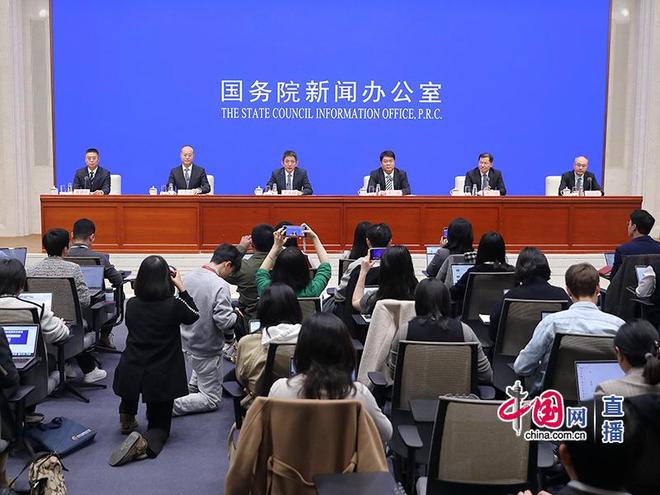
王文涛:完善出口管制和安全审查机制,全面提升出口管制科学列管、妥善应对等能力
Sou Hu Cai Jing· 2025-10-31 05:40
Core Points - The article emphasizes the importance of expanding high-level opening-up to promote trade innovation, enhance bilateral investment cooperation, and build the "Belt and Road" initiative [1] Group 1: Trade Innovation Development - The focus is on improving foreign trade quality and efficiency, aiming to build a strong trading nation [2] - There is an emphasis on optimizing and upgrading goods trade, expanding intermediate goods trade, and promoting green trade [2] - The article highlights the need for digital trade innovation, including the expansion of digital product trade and the optimization of digital service trade [2] Group 2: Import and Export Balance - The strategy includes actively expanding imports and enhancing the convenience of import trade [2] - It aims to cultivate national import trade innovation demonstration zones and promote balanced development of imports and exports [2] - The development of service trade is encouraged, particularly in knowledge-intensive services and traditional advantage services [2] Group 3: Trade Facilitation and New Business Models - The article discusses enhancing the functions of trade promotion platforms and organizing various trade fairs [2] - Support for new business models such as cross-border e-commerce and overseas warehouses is emphasized [2] - The need for improved export control and safety review mechanisms is also highlighted [2]
让中国大市场成为世界大机遇,进博会为世界注入更多确定性
Di Yi Cai Jing Zi Xun· 2025-10-28 13:16
Core Points - The 8th China International Import Expo (CIIE) will be held in Shanghai from November 5 to 10, aiming to expand openness and create opportunities for global markets [1] - The expo will feature over 36.7 million square meters of exhibition space with participation from 4,108 companies across 138 countries and regions, showcasing international confidence in the Chinese economy [1][2] - Shanghai has seen significant growth in imports and consumption, with a total import value of 2.45 trillion yuan expected in 2024, a 28% increase from 2017 [3] Group 1 - The CIIE aims to inject more certainty into the global market amidst profound changes in the global landscape, with a cumulative intended transaction amount exceeding 500 billion USD from the previous seven expos [1] - The expo will include six major exhibition areas focusing on medical devices, automotive, technology equipment, consumer goods, agricultural products, and service trade, reflecting new consumption trends [2] - Shanghai's import structure has been optimized through the CIIE, meeting the demands of domestic consumption and industrial upgrades, with a cumulative procurement amount of 56.2 billion USD from the expo [3] Group 2 - The city has hosted over 2,000 launch events this year, with 787 new stores opened in the first nine months, enhancing the supply of quality goods and services [4] - E-commerce transactions in Shanghai exceeded 3.27 trillion yuan in the first nine months, marking a 12.7% year-on-year growth, while live-streaming retail sales grew by 23.6% [4] - The integration of artificial intelligence in consumption has been promoted, with initiatives like the "AI + Consumption" carnival and the introduction of a special "ticket root code" for expo attendees [4]
今年前三季度海南自贸港跨境资金流动保持增长势头
Zhong Guo Xin Wen Wang· 2025-10-24 16:16
Core Insights - The cross-border capital flow in Hainan Free Trade Port has maintained a growth momentum in the first three quarters of this year, enhancing the level of cross-border trade and investment liberalization and facilitation [1] Group 1: Cross-Border Capital Flow - In the first three quarters, the cross-border payment and receipt scale in Hainan reached 804.6 billion USD, a year-on-year increase of 1.1% [1] - The total amount of foreign exchange settlement and sales was 179.8 billion USD, up 10.4% year-on-year; among which, the settlement scale was 46.3 billion USD, increasing by 22.5%, while the purchase scale was 133.5 billion USD, growing by 2.4% [1] Group 2: Trade Structure Characteristics - The scale of goods trade receipts and payments in Hainan was 352.8 billion USD, with a notable increase in bonded trade, which reached 45.9 billion USD, a growth of 5.4% [2] - The payment for imported duty-free goods grew rapidly, amounting to 21.4 billion USD, reflecting a year-on-year increase of 26.6% [2] Group 3: Service Trade Growth - The cross-border receipts and payments for service trade in Hainan totaled 50.4 billion USD, marking an 8.1% year-on-year growth [2] - Transportation services saw a revenue scale of 25.1 billion USD, increasing by 11.3%, while telecommunications and computer services grew significantly by 67.2% to 3.2 billion USD [2] - Cross-border travel services also experienced rapid growth, with receipts of 4.4 billion USD, up 25.7% [2] Group 4: Direct Investment Scale - The direct investment receipts and payments in Hainan reached 367.1 billion USD, reflecting a year-on-year increase of 4.2% [2] - Outward direct investment grew significantly, amounting to 37.6 billion USD, a rise of 23.1%, while inward direct investment surged to 66.6 billion USD, increasing by 28.5% [2]
四大关键词看扩大高水平对外开放丨四中全会解读
2 1 Shi Ji Jing Ji Bao Dao· 2025-10-23 14:53
Core Viewpoint - The Fourth Plenary Session of the 20th Central Committee of the Communist Party of China emphasizes the importance of high-level opening up to promote economic development and modernization in China [1][3]. Group 1: Key Concepts of Opening Up - The four key concepts for future opening up are "high-level," "win-win," "innovation," and "persistence" [2][4]. - "High-level" refers to the broad, deep, and multi-faceted nature of opening up, despite facing complex external challenges [2]. - "Win-win" highlights the importance of cooperation and shared opportunities, contrasting with unilateralism and protectionism [2]. - "Innovation" focuses on adapting to new international rules and leveraging advancements in technology to enhance trade [2]. - "Persistence" emphasizes the significance of bilateral investment and the Belt and Road Initiative in fostering a new development pattern [2]. Group 2: Significance of High-Level Opening Up - High-level opening up is crucial for stimulating new growth drivers, enhancing risk resilience, promoting high-quality economic development, and increasing international influence [3][4]. - It aids in attracting advanced technology and management practices, thereby improving overall industrial competitiveness [3]. - The expansion of visa-free policies has led to a rise in inbound tourism, with China now allowing visa-free or visa-on-arrival access to over 90 countries [3]. Group 3: Trade and Investment Opportunities - In the first three quarters of the year, China's trade with Belt and Road countries reached 17.37 trillion yuan, a 6.2% increase, accounting for 51.7% of total trade [4]. - Trade with ASEAN, Latin America, Africa, and Central Asia saw growth rates of 9.6%, 3.9%, 19.5%, and 16.7%, respectively [4]. - The focus on expanding diverse export markets and broadening sources of goods is a key aspect of the opening strategy [4]. Group 4: Strategies for Expanding High-Level Opening Up - Key strategies include steadily expanding institutional openness, maintaining a multilateral trade system, and encouraging innovation in trade practices [5][6]. - Institutional openness involves reducing tariffs and aligning domestic regulations with international standards to create a fair competitive environment [5]. - The promotion of service trade and digital trade, along with enhanced intellectual property protection, is essential for fostering innovation [5][6]. Group 5: Belt and Road Initiative as a Key Tool - The Belt and Road Initiative will continue to be a vital platform for practical cooperation in infrastructure, capacity, technology, and green development [7]. - The initiative aims to enhance inclusivity and sustainability in development projects, leveraging free trade zones for policy innovation [7].
进一步稳外贸 新政策将适时推出
Jing Ji Wang· 2025-10-23 02:39
Core Viewpoint - China's foreign trade is under pressure but showing signs of stability and improvement, with the Ministry of Commerce planning to enhance policy effectiveness, promote trade, and deepen trade cooperation [1][2][8] Group 1: Trade Performance - In the third quarter, China's goods trade imports and exports grew by 6% year-on-year, marking eight consecutive quarters of growth [2] - By September, both exports and imports had seen four consecutive months of year-on-year growth, with significant contributions from major provinces [7] - The western region's foreign trade maintained strong momentum, with a 10.2% year-on-year increase in imports and exports [7] Group 2: Policy Measures - The Ministry of Commerce will focus on three areas: releasing policy effectiveness, promoting trade, and deepening trade cooperation [2] - New policies will prioritize digital trade, green trade, and service trade as emerging growth engines [4] - Specific measures include enhancing financial services for foreign trade enterprises and optimizing customs processes [5] Group 3: Structural Changes and Challenges - Current challenges for foreign trade enterprises include costs, orders, and risks, necessitating a closed-loop response from problem identification to policy solutions [4] - Experts note that global economic recovery is uneven, and geopolitical tensions are adding structural and cyclical risks to foreign trade [3] - The transition towards high-tech and high-value-added sectors is critical for China's foreign trade, requiring diverse policy tools to support emerging business models [3] Group 4: Regional Development - The development of foreign trade is characterized by a new pattern of "coastal leadership, inland rise, and border breakthroughs," with tailored local measures enhancing trade performance [7] - The western land-sea new channel has seen significant growth, with container shipments increasing by 70.3% year-on-year [7] Group 5: Future Outlook - With the timely introduction of new policies and the continuous release of enterprise innovation, China's foreign trade is expected to withstand short-term pressures and achieve sustained growth on a high-quality development track [8]
世贸组织报告显示明年全球贸易前景不容乐观
Jing Ji Ri Bao· 2025-10-23 00:47
Core Insights - The World Trade Organization's latest report highlights the complexities and uncertainties facing global trade, predicting a strong performance in the first half of the year but a bleak outlook for the second half and into 2026 [1] Trade Volume and Growth Forecast - Global merchandise trade volume is expected to grow by 2.4% in 2025, with a significant slowdown to 0.5% in 2026, primarily due to trade policy uncertainties [2] - In the first half of 2025, U.S. companies engaged in stockpiling goods in anticipation of rising tariffs, leading to an unexpected surge in imports, particularly in machinery, equipment, and non-durable goods [2] - The short-term boost in global merchandise trade volume, which saw a year-on-year increase of 4.9%, is not sustainable, with North American trade flows expected to negatively impact growth in 2025 and 2026 [2] Artificial Intelligence Trade Growth - Trade in artificial intelligence-related goods saw a year-on-year increase of over 20% in the first half of 2025, significantly outpacing other categories and driving overall trade growth [3] - The growth in AI-related trade is attributed to investments in digital infrastructure and is not limited to developed countries, with emerging markets also playing a crucial role [3] - AI technology is reshaping trade dynamics by enhancing innovation and industrial upgrades, allowing emerging markets to better participate in international trade [3] Service Trade Trends - Global service trade grew by 5% year-on-year in the first half of 2025, a slowdown from previous years, with expectations of continued deceleration due to economic growth slowdowns and geopolitical tensions [4] - Despite current challenges, the long-term outlook for service trade remains optimistic, particularly with the rise of digital services as emerging markets develop economically [4] Trade Policy Impact - Trade policy uncertainties are impacting global trade by affecting corporate investment, consumer spending, and supply chain stability, leading to increased costs [4] - The report emphasizes the need for transparent and coordinated trade policies to enhance business confidence and promote trade investment [5] Recommendations for Trade Development - The report suggests several measures to address current trade challenges, including enhancing policy transparency, coordinating trade policies, and supporting developing countries to improve their trade competitiveness [5] - Promoting digital economy development and green trade initiatives are also highlighted as essential for sustainable global trade growth [5]
明年全球贸易前景不容乐观 贸易增速或降至0.5%
Jing Ji Ri Bao· 2025-10-23 00:39
Core Insights - The World Trade Organization's latest report indicates that while global trade showed strong performance in the first half of the year, the outlook for the second half and into 2026 is pessimistic due to rising tariffs and increased trade policy uncertainty [1] Group 1: Global Trade Performance - Global merchandise trade volume is projected to grow by 2.4% in 2025, but the growth rate is expected to drop to 0.5% in 2026, primarily due to trade policy uncertainty [2] - In the first quarter of 2025, U.S. imports surged beyond expectations as companies stockpiled goods in anticipation of future tariff increases, leading to a 4.9% year-on-year increase in global merchandise trade volume [2] Group 2: Artificial Intelligence Trade Growth - Trade in artificial intelligence-related goods grew by over 20% year-on-year in the first half of 2025, significantly outpacing other goods and becoming a key driver of trade growth [3] - The growth in AI-related trade is attributed to investments in digital infrastructure and includes contributions from both developed and emerging markets, with East Asia remaining a major supply chain hub [3] Group 3: Service Trade Trends - Global service trade grew by 5% year-on-year in the first half of 2025, a slowdown from the double-digit growth seen in 2023 and 2024, with expectations of continued deceleration due to global economic slowdown and geopolitical tensions [4] - Despite the current slowdown, there is optimism for long-term growth in service trade, particularly as emerging markets develop and demand for digital services increases [4] Group 4: Trade Policy Uncertainty - Trade policy uncertainty impacts global trade by affecting business investment, consumer spending, supply chain stability, and trade costs, leading to a potential decline in trade growth [4] Group 5: Recommendations for Trade Development - To address the challenges facing global trade, measures such as enhancing trade policy transparency, coordinating trade policies, and supporting developing countries' trade competitiveness are recommended [5] - Promoting digital economy development and green trade initiatives are also suggested to facilitate trade and ensure sustainable growth [5]