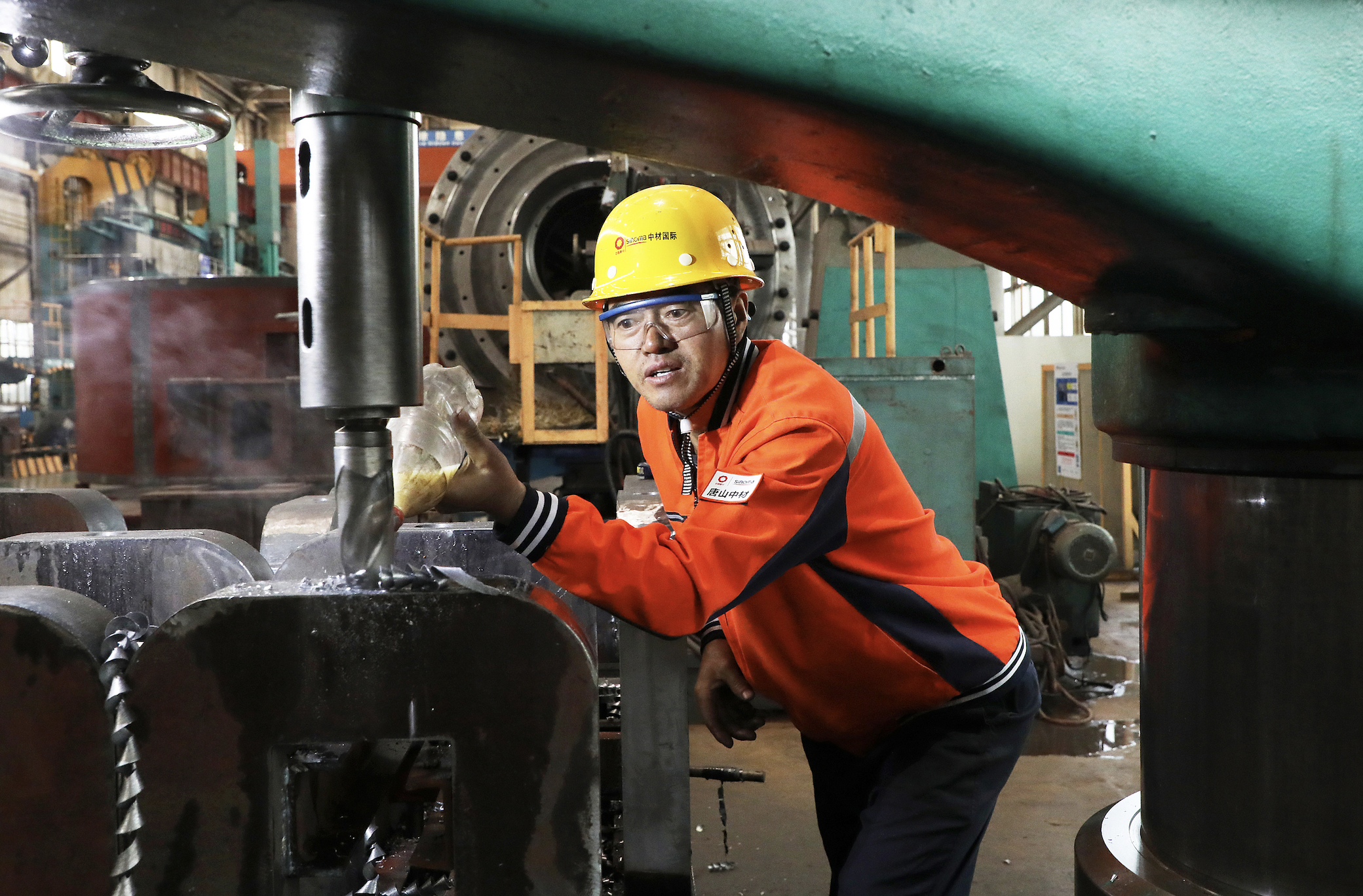
煤炭加工

Search documents
9月中国PPI同比降幅收窄 部分行业产能治理见效
Zhong Guo Xin Wen Wang· 2025-10-15 08:54
Core Insights - In September, China's Producer Price Index (PPI) decreased by 2.3% year-on-year, with the decline narrowing by 0.6 percentage points compared to the previous month [1] - The effects of macroeconomic policies are becoming evident, leading to positive price changes in certain industries [1] Industry Analysis - The price declines in several industries have narrowed, indicating effective capacity management and improved market competition. The following industries saw reduced year-on-year price declines: - Coal processing: down 8.3 percentage points - Black metal smelting and rolling: down 3.4 percentage points - Coal mining and washing: down 3.0 percentage points - Photovoltaic equipment and components manufacturing: down 2.4 percentage points - Battery manufacturing: down 0.5 percentage points - Non-metallic mineral products: down 0.4 percentage points - The combined downward impact on PPI from these six industries decreased by approximately 0.34 percentage points compared to the previous month [1] Price Trends - Structural upgrades and the release of consumer potential have led to price increases in related industries: - Aircraft manufacturing: up 1.4% year-on-year - Electronic special materials manufacturing: up 1.2% year-on-year - Wearable smart devices manufacturing: up 0.1% year-on-year - Policies aimed at boosting consumption are showing effects, with prices for arts and crafts and ceremonial goods rising by 14.7% year-on-year, and nutritional food manufacturing prices increasing by 1.8% year-on-year [1] Month-on-Month Analysis - The improvement in supply-demand structure has stabilized prices in certain industries: - Coal processing prices increased by 3.8% month-on-month - Coal mining and washing prices rose by 2.5% month-on-month - Black metal smelting and rolling prices increased by 0.2% month-on-month - Non-metallic mineral products and lithium-ion battery manufacturing prices decreased by 0.4% and 0.2% month-on-month, respectively, with declines narrowing by 0.6 and 0.3 percentage points compared to the previous month [2]
19个月首次破1%!9月核心CPI等指标走势释放重要信号
证券时报· 2025-10-15 08:30
Core Insights - The article highlights that the Consumer Price Index (CPI) remains low in September, but core inflation is showing signs of recovery, while the Producer Price Index (PPI) is experiencing a narrowing decline, indicating marginal improvement in industrial demand [1][2]. CPI Analysis - In September, the CPI increased by 0.1% month-on-month but decreased by 0.3% year-on-year. The core CPI, excluding food and energy, rose by 1.0% year-on-year, marking the fifth consecutive month of growth and the first time in 19 months that it has surpassed 1% [2][4]. - The decline in CPI is primarily driven by food prices, which fell by 4.4% year-on-year, with significant drops in pork, fresh vegetables, and eggs, down 17.0%, 13.7%, and 13.5% respectively [6][4]. - Analysts suggest that the high base effect will gradually diminish, and there is potential for the CPI to turn positive year-on-year within the year [7]. PPI Analysis - The PPI remained flat month-on-month and saw a year-on-year decline of 2.3%, with the rate of decline narrowing by 0.6 percentage points compared to the previous month [2][10]. - The improvement in PPI is attributed to the "anti-involution" policies that have led to price stabilization in several industries, including coal and steel, with coal processing prices rising by 3.8% month-on-month [9][10]. - The overall market environment is improving due to regulatory measures aimed at curbing disorderly competition, which is expected to enhance industrial capacity utilization and support a re-inflationary trend [11].


解读:2025年9月份核心CPI同比涨幅持续扩大 PPI同比降幅继续收窄
Guo Jia Tong Ji Ju· 2025-10-15 08:18
Group 1 - The consumer market in September showed overall stability, with the Consumer Price Index (CPI) rising by 0.1% month-on-month and decreasing by 0.3% year-on-year, while the core CPI excluding food and energy prices increased by 1.0%, marking the fifth consecutive month of growth [1][2][3] - Food prices rose by 0.7% month-on-month, with seasonal increases in fresh vegetables, eggs, fresh fruits, lamb, and beef prices ranging from 0.9% to 6.1%, while pork and aquatic product prices fell by 0.7% and 1.8% respectively [2][3] - The year-on-year CPI decline of 0.3% was primarily due to the tail effect, with food prices dropping by 4.4%, significantly impacting the CPI [3][5] Group 2 - The Producer Price Index (PPI) remained flat month-on-month, with a year-on-year decline of 2.3%, but the rate of decline narrowed by 0.6 percentage points compared to the previous month [4][5] - Improvements in supply-demand structure led to price stabilization in certain industries, such as coal processing and black metal smelting, which saw price increases of 3.8% and 0.2% respectively [4][5] - The implementation of macroeconomic policies and the deepening of the national unified market construction contributed to a reduction in the year-on-year price decline in various sectors, with notable improvements in coal processing and black metal industries [5]
重要数据公布!
新华网财经· 2025-10-15 06:48
Core Insights - The overall consumer market in September remained stable, with the Consumer Price Index (CPI) rising by 0.1% month-on-month and decreasing by 0.3% year-on-year, while the core CPI (excluding food and energy) increased by 1.0% year-on-year, marking the fifth consecutive month of growth [1][3][4]. CPI Analysis - The month-on-month CPI increase was driven by a 0.7% rise in food prices, contributing approximately 0.13 percentage points to the CPI increase. Seasonal price increases were noted in fresh vegetables, eggs, fresh fruits, lamb, and beef, with price changes ranging from 0.9% to 6.1% [3]. - Year-on-year, the CPI decline was primarily influenced by a 4.4% drop in food prices, which accounted for about 0.83 percentage points of the CPI decrease. Notably, pork, fresh vegetables, eggs, and fresh fruits saw significant price drops of 17.0%, 13.7%, 13.5%, and 4.2%, respectively [4]. - The core CPI's year-on-year growth rate has expanded for five consecutive months, reaching 1%, the highest in nearly 19 months. Prices for industrial consumer goods, excluding food and energy, rose by 1.8%, with notable increases in gold and platinum jewelry prices of 42.1% and 33.6%, respectively [4]. PPI Analysis - The Producer Price Index (PPI) remained flat month-on-month for two consecutive months, with a year-on-year decline of 2.3%, which is a narrowing of the decline by 0.6 percentage points compared to the previous month [5][6]. - The PPI's stability was attributed to improved supply-demand dynamics in certain industries, with coal processing prices rising by 3.8% and black metal smelting prices increasing by 0.2% [6]. - The decline in oil-related industry prices was influenced by falling international oil prices, with oil extraction prices decreasing by 2.7% and refined oil product prices down by 1.5% [6]. Market Dynamics - The construction of a unified national market has led to a narrowing of year-on-year price declines in several industries, including coal processing and black metal smelting, with reductions in PPI's downward pressure by approximately 0.34 percentage points [7]. - Upgrading industrial structures and releasing consumer potential have contributed to price increases in specific sectors, such as aircraft manufacturing and electronic materials, with notable price increases of 1.4% and 1.2%, respectively [7].

国家统计局:9月光伏设备及元器件制造价格上涨0.8%
Guo Jia Tong Ji Ju· 2025-10-15 05:41
Group 1 - In September, coal processing prices increased by 3.8% month-on-month, while prices in the coal mining and washing industry rose by 2.5% [1] - The prices in the black metal smelting and rolling processing industry saw a slight increase of 0.2%, marking two consecutive months of price rises across these sectors [1] - The price of photovoltaic equipment and components manufacturing shifted from a decrease of 0.2% last month to an increase of 0.8% this month [1] Group 2 - Prices in the non-metallic mineral products industry and lithium-ion battery manufacturing decreased by 0.4% and 0.2%, respectively, with the decline rates narrowing by 0.6 and 0.3 percentage points compared to the previous month [1] - The reduction in prices for coal processing, black metal smelting and rolling processing, coal mining and washing, photovoltaic equipment and components manufacturing, battery manufacturing, and non-metallic mineral products narrowed by 8.3, 3.4, 3.0, 2.4, 0.5, and 0.4 percentage points, respectively, compared to last month [1]
国家统计局:9月CPI同比下降0.3%,PPI同比下降2.3%
Ge Long Hui· 2025-10-15 05:38
Core Insights - In September, the Consumer Price Index (CPI) decreased by 0.3% year-on-year, while it increased by 0.1% month-on-month. The Producer Price Index (PPI) fell by 2.3% year-on-year and remained flat month-on-month [1][13]. CPI Analysis - The CPI's year-on-year decline was primarily driven by a 4.4% drop in food prices, which contributed approximately 0.83 percentage points to the CPI decrease. Notably, pork prices fell by 17.0%, fresh vegetables by 13.7%, and eggs by 13.5% [12][4]. - The core CPI, excluding food and energy, rose by 1.0% year-on-year, marking the fifth consecutive month of growth, the highest increase in 19 months [12][1]. - In September, food prices increased by 0.7% month-on-month, contributing about 0.13 percentage points to the CPI rise [10][11]. PPI Analysis - The PPI's year-on-year decline of 2.3% was a reduction of 0.6 percentage points compared to the previous month, indicating a narrowing of the decline [13][19]. - The prices of production materials decreased by 2.4%, significantly impacting the overall PPI level. The mining industry saw a 9.0% drop in prices, while the processing industry experienced a 1.7% decline [16][19]. - The PPI remained stable month-on-month, with the prices of production materials holding steady and life goods prices decreasing by 0.2% [17][19]. Price Changes by Category - In September, the prices of food, tobacco, and alcohol decreased by 2.6% year-on-year, with fresh vegetables and pork being the most significant contributors to this decline [4][12]. - The prices of clothing and household goods saw increases of 1.7% and 2.2% year-on-year, respectively, while transportation and communication prices fell by 2.0% [9][12]. - The service prices experienced a 0.3% decrease, influenced by seasonal factors such as the end of summer and the timing of the Mid-Autumn Festival [11][12].
核心CPI同比涨幅回升至1%
Sou Hu Cai Jing· 2025-10-15 05:14
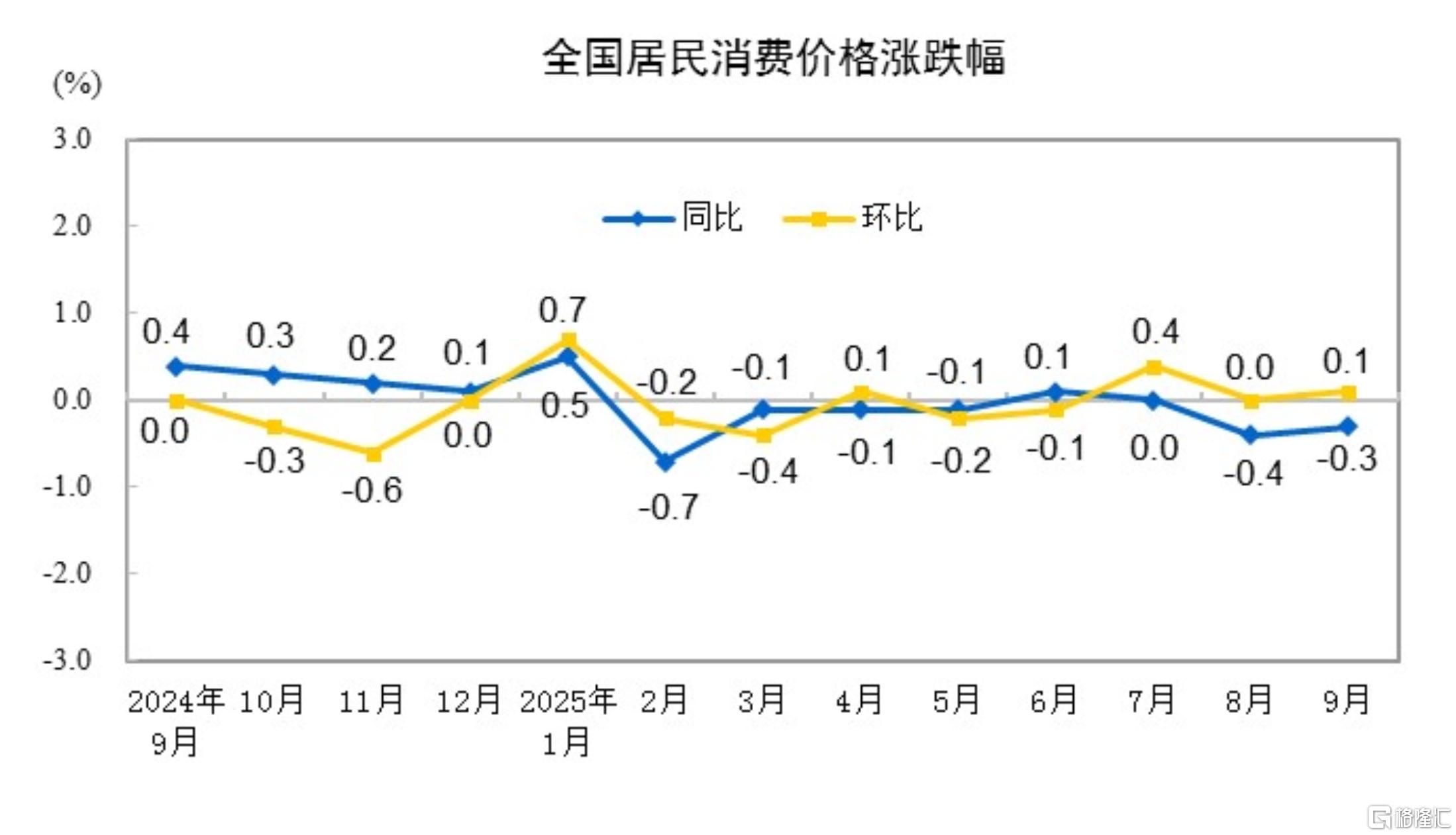
Core Insights - The Consumer Price Index (CPI) decreased by 0.3% year-on-year in September, while the core CPI, excluding food and energy, increased by 1.0%, marking the first return to a 1% increase in nearly 19 months [1][2][4] - The Producer Price Index (PPI) saw a year-on-year decline of 2.3%, but the rate of decline narrowed by 0.6 percentage points compared to August [5][6] CPI Analysis - The decline in CPI was primarily driven by a significant drop in food prices, which fell by 4.4% year-on-year, and energy prices, which decreased by 2.7%, contributing approximately 0.2 percentage points to the overall CPI decline [3] - Seasonal factors, such as the end of summer and the timing of the Mid-Autumn Festival, led to a decrease in prices for air tickets, hotel accommodations, and tourism services by 13.8%, 7.4%, and 6.1% respectively [3] Core CPI Insights - The continuous rise in core CPI reflects the effectiveness of domestic demand expansion policies and an improving market supply-demand relationship [4][7] - The core CPI's increase for five consecutive months indicates a positive trend in consumer spending and economic circulation [4] PPI Insights - The PPI remained flat month-on-month for two consecutive months, with certain industries showing positive price changes due to effective macroeconomic policies and capacity management [6] - Specific industries, such as coal processing and battery manufacturing, experienced a narrowing of price declines, indicating a potential recovery in those sectors [6] Future Outlook - Experts suggest that further efforts are needed to expand domestic demand and regulate competition among enterprises to promote reasonable price recovery [1][7] - The government is expected to continue implementing measures to boost consumption and effective investment, which may positively impact both CPI and PPI in the coming months [7]
产业结构升级和消费潜力释放带动回暖,9月份PPI同比降幅继续收窄|快讯
Hua Xia Shi Bao· 2025-10-15 03:54
Core Insights - In September, the Producer Price Index (PPI) for industrial producers in China decreased by 2.3% year-on-year, with the decline narrowing by 0.6 percentage points compared to the previous month, while remaining stable month-on-month [2] - The average PPI for January to September showed a decline of 2.8% year-on-year, with the purchase price index down by 3.2% [2] Group 1: Price Trends - The month-on-month PPI showed signs of stabilization in certain industries due to improved supply-demand dynamics, with coal processing prices rising by 3.8% and coal mining prices increasing by 2.5% [2] - The prices in the black metal smelting and rolling industry rose by 0.2%, marking two consecutive months of increases, while prices for photovoltaic equipment and components shifted from a 0.2% decline to a 0.8% increase [2] - Conversely, the prices in the petroleum-related sectors decreased month-on-month due to falling international oil prices [2] Group 2: Year-on-Year Price Changes - Year-on-year price declines in several industries narrowed, with coal processing, black metal smelting, coal mining, photovoltaic equipment manufacturing, battery manufacturing, and non-metallic mineral products showing reduced declines of 8.3, 3.4, 3.0, 2.4, 0.5, and 0.4 percentage points respectively [3] - The combined downward impact on the PPI from these six industries decreased by approximately 0.34 percentage points compared to the previous month [3] Group 3: Sector-Specific Price Increases - Upgrades in industrial structure and the release of consumer potential contributed to year-on-year price increases in certain sectors, including aircraft manufacturing (up 1.4%), electronic materials (up 1.2%), and waste resource recycling (up 0.9%) [3] - The demand for quality and upgraded consumption led to significant price increases in specific categories, such as arts and crafts (up 14.7%), sports balls (up 4.0%), and nutritional foods (up 1.8%) [4]
国家统计局:9月CPI环比由平转涨 核心CPI同比涨幅连续第5个月扩大
Qi Huo Ri Bao Wang· 2025-10-15 03:29
Core Insights - The consumer price index (CPI) in September showed a month-on-month increase of 0.1% and a year-on-year decrease of 0.3%, with the core CPI (excluding food and energy) rising 1.0% year-on-year, marking the first return to a 1% increase in nearly 19 months [1] - The producer price index (PPI) remained flat month-on-month and decreased by 2.3% year-on-year, with the decline narrowing by 0.6 percentage points compared to the previous month [1] Group 1: CPI Analysis - The month-on-month increase in CPI was influenced by a 0.7% rise in food prices, contributing approximately 0.13 percentage points to the CPI increase [1] - The core CPI's year-on-year decline of 0.3% was primarily due to a "tail effect," with the tail effect accounting for about -0.8 percentage points [1] Group 2: PPI Analysis - The month-on-month stability in PPI was attributed to improved supply-demand dynamics, with coal processing prices rising by 3.8% and coal mining prices increasing by 2.5% [2] - The year-on-year decline in PPI was influenced by macroeconomic policies, leading to a narrowing of price declines in various industries, supported by the ongoing construction of a unified national market [2]
宏观政策效果持续显现,9月PPI同比降幅收窄至2.3%
Xin Lang Cai Jing· 2025-10-15 02:53
Core Insights - The Producer Price Index (PPI) in September decreased by 2.3% year-on-year, with a narrowing decline of 0.6 percentage points compared to the previous month, and remained stable month-on-month for two consecutive months [1] Group 1: PPI Trends - The narrowing year-on-year decline in PPI is attributed to lower comparison bases from the previous year and the ongoing effectiveness of macroeconomic policies [1] - The construction of a unified national market has led to a reduction in the year-on-year price decline in related industries, with significant improvements in market competition and capacity management [1] - Specific industries such as coal processing, black metal smelting, and photovoltaic equipment manufacturing saw their price decline rates narrow by 8.3, 3.4, and 2.4 percentage points respectively, contributing to a reduced downward impact on PPI by approximately 0.34 percentage points [1] Group 2: Industry Performance - Upgrades in industrial structure and the release of consumer potential have resulted in year-on-year price increases in certain sectors, including a 1.4% increase in aircraft manufacturing and a 1.2% increase in electronic materials manufacturing [1] - The overall industrial product market is characterized by a "strong supply and weak demand" situation, with no fundamental changes expected in this trend [2] - Future PPI trends may face downward pressure due to fluctuations in the external economic environment and a steady increase in the PPI comparison base from October onwards, making it challenging for PPI to turn positive by year-end [4][5]