船舶

Search documents
今创集团(603680.SH)发预增,预计2025年度归母净利润5.4亿元到6.2亿元,同比增长78.77%到105.25%
智通财经网· 2026-01-15 09:18
Core Viewpoint - The company expects a significant increase in net profit for the fiscal year 2025, projecting a range of CNY 540 million to CNY 620 million, representing a year-on-year growth of 78.77% to 105.25% [1] Group 1 - The increase in net profit is attributed to a rise in the delivery volume of high-speed train components and changes in product structure, leading to an overall increase in gross profit margin compared to the previous year [1]

——12月进出口数据点评:再论出口强在中游:2026机电出口或延续景气
Huachuang Securities· 2026-01-15 08:43
Group 1: December Export Performance - In December, China's exports increased by 6.6% year-on-year, exceeding the expected 3% and the previous month's 5.9%[1] - The export growth rate in December was supported by four categories of electromechanical products: mobile phones, computers, vehicles, and integrated circuits[3] - Mobile phone exports in December saw a 10.5% increase in value, driven primarily by a low base effect from the previous year[15] Group 2: Key Product Insights - New energy vehicle exports reached 273,000 units in December, marking a 119.8% year-on-year increase, contributing significantly to overall vehicle export growth[20] - Integrated circuit exports surged by 48% year-on-year in December, benefiting from increased demand for technology imports driven by AI investments in developed markets[24] - Exports of computer parts showed strong performance, with a 36.6% year-on-year increase in November, while the overall equipment export remained weak[28] Group 3: Future Outlook for 2026 - The outlook for 2026 suggests continued strength in the midstream sector, supported by favorable product structures across electromechanical categories[49] - The overseas gross profit margin for midstream manufacturing has surpassed domestic margins, indicating improved competitiveness of Chinese products in international markets[59] - The share of intermediate goods in China's exports has risen from 41.8% in 2017 to 47.4% in 2025, while the share of consumer goods has declined from 36.6% to 28.8%[42]
今创集团:预计2025年度净利润为5.4亿元~6.2亿元,同比增长78.77%~105.25%
Mei Ri Jing Ji Xin Wen· 2026-01-15 08:37
Group 1 - The company expects a net profit attributable to shareholders of 540 million to 620 million yuan for the fiscal year 2025, representing an increase of approximately 238 million to 318 million yuan compared to the previous year, with a year-on-year growth of 78.77% to 105.25% [1] - The significant increase in net profit is primarily attributed to an increase in the delivery volume of high-speed train components, changes in product structure, and an overall rise in gross profit margin compared to the previous year [1]
今创集团:预计2025年净利润同比增长78.77%到105.25%
Xin Lang Cai Jing· 2026-01-15 08:27
Core Viewpoint - The company expects a significant increase in net profit for the fiscal year 2025, projecting a range of 540 million to 620 million yuan, representing a year-on-year growth of 78.77% to 105.25% [1] Financial Projections - The projected net profit attributable to shareholders, excluding non-recurring gains and losses, is expected to be between 560 million and 640 million yuan, indicating a year-on-year increase of 72.72% to 97.39% [1] - The increase in profit is attributed to a rise in the delivery volume of high-speed train components and changes in product structure, leading to an overall increase in gross profit margin [1]
再论出口强在中游:2026机电出口或延续景气——12月进出口数据点评
一瑜中的· 2026-01-15 08:27
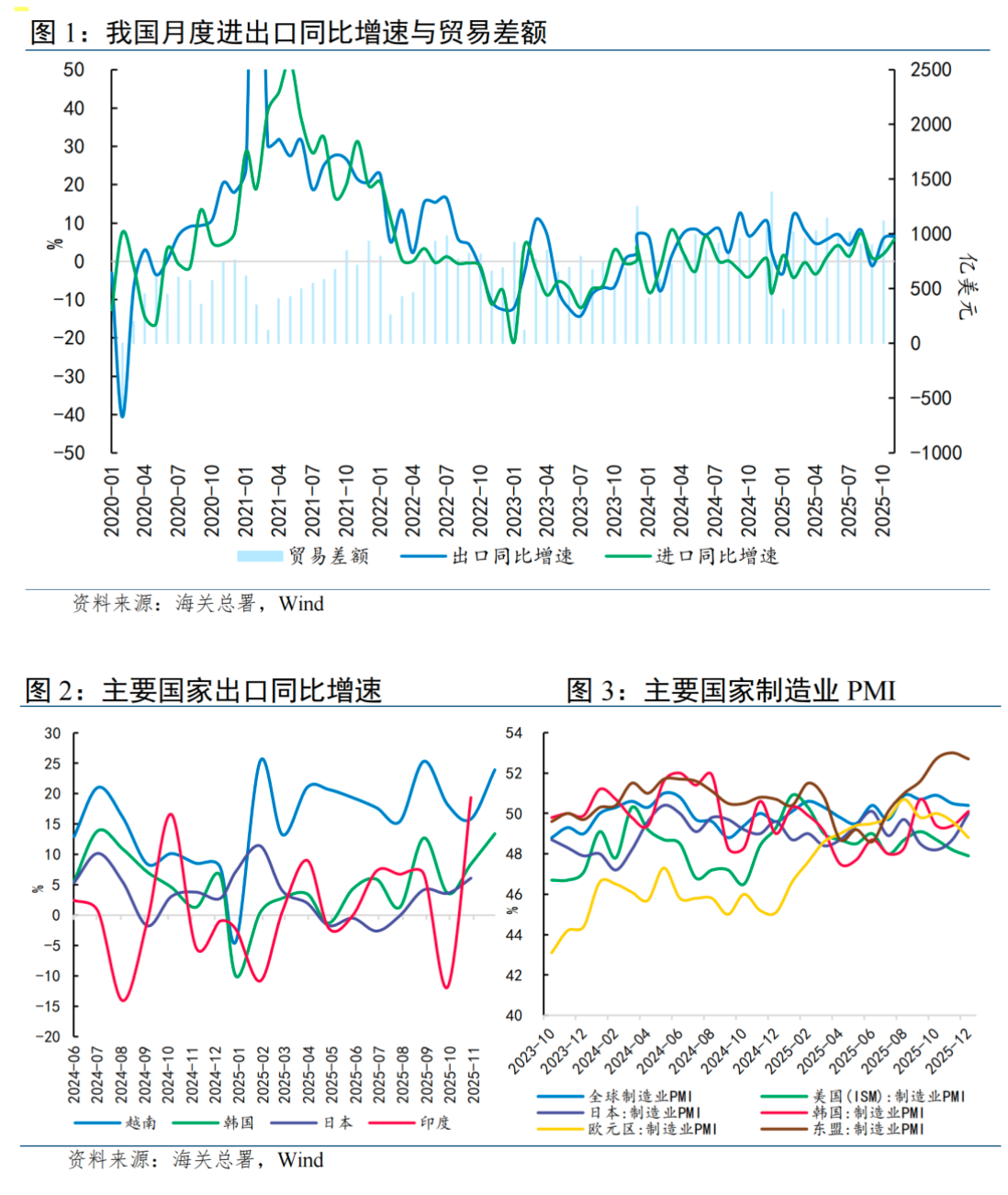
Core Viewpoint - In December, China's exports increased by 6.6% year-on-year, exceeding expectations of 3%, while imports rose by 5.7%, also surpassing the forecast of 0.9% [2][3] Group 1: December Export Performance - The increase in December exports was driven by four categories of electromechanical products: mobile phones, computers, vehicles, and integrated circuits [4][12] - Mobile phone exports improved mainly due to a low base effect from the previous year, with a year-on-year increase of 10.5% in December [14] - Vehicle exports, particularly in new energy vehicles, showed strong performance with a 119.8% year-on-year increase in December [18][19] - Integrated circuit exports surged by 48% year-on-year in December, benefiting from increased technology import demand [22] - Computer exports were mixed, with strong performance in parts and accessories, while the overall equipment export remained weak [24] Group 2: Outlook for 2025 and 2026 - The outlook for 2025 indicates sustained strength in electromechanical exports, with a projected growth of 8.4% for the year [28] - The contribution of intermediate goods to exports is increasing, while consumer goods are showing a negative contribution [34] - The profitability of midstream manufacturing has improved, with overseas gross margins exceeding domestic margins, indicating enhanced competitiveness [44] Group 3: Import and Export Data - December exports showed a significant recovery, with a month-on-month increase of 8.3%, higher than the historical averages [53] - The export quantity for major goods saw a substantial recovery, with a year-on-year increase of 17% in December [56] - The performance of major export regions varied, with the U.S. showing a decline of 30.6% in December, while non-U.S. markets performed strongly [65]


威奥股份(605001.SH):截至目前,公司尚未在商业航天领域开展相关业务
Ge Long Hui· 2026-01-15 08:19
Group 1 - The company, Weiao Co., Ltd. (605001.SH), has stated that it has not yet engaged in any business activities in the commercial aerospace sector as of now [1]

温彬:进出口高位收官,2026出口有望量稳质升
Di Yi Cai Jing· 2026-01-15 03:16
Core Viewpoint - China's export scale in December 2025 exceeded expectations, setting a historical monthly export record, while imports also reached a high point since 2022 [3][2]. Group 1: Import and Export Growth - In December 2025, China's total import and export value reached $601.42 billion, with a cumulative annual total of $635.48 billion, reflecting a year-on-year growth of 3.2% [2]. - Monthly exports amounted to $357.78 billion, a year-on-year increase of 6.6%, while annual exports totaled $3.77 trillion, up 5.5% [2]. - Monthly imports were $243.64 billion, showing a year-on-year growth of 5.7%, with annual imports at $2.58 trillion, remaining flat compared to the previous year [2]. Group 2: Factors Supporting Export Growth - Three main factors supported the high growth in exports: seasonal overseas stocking demand, AI-driven semiconductor industry growth, and steady international economic recovery [3]. - Seasonal demand from overseas retailers ahead of Christmas led to increased orders in consumer electronics, toys, and small appliances, contributing to a monthly export growth of 8.4% in December [3]. - The AI boom significantly boosted the semiconductor supply chain, with integrated circuit exports surging by 47.4%, and overall machinery and electronics product exports growing by 12.1% [3]. Group 3: International Economic Recovery - The global manufacturing PMI recorded 50.4 in December 2025, indicating a steady recovery in the international economy, with mixed performance among major economies [4]. - The U.S. ISM manufacturing PMI fell to 47.9, while the Eurozone and Japan showed slight declines, and South Korea's PMI rose to 50.1, reflecting a rebound in exports [4]. Group 4: Export Performance by Region - Exports to the U.S. in December 2025 were $34.2 billion, with a year-on-year decline of 30%, influenced by high base effects and tariff expectations [7]. - Exports to the EU reached $51.9 billion, the highest for the year, with an 11.6% year-on-year increase, driven by seasonal demand for consumer goods [7]. - Exports to ASEAN countries totaled $66.4 billion, also the highest for the year, with a year-on-year growth of 11.2% [9]. Group 5: Import Trends - Imports from the U.S. continued to decline for ten consecutive months, with a year-on-year drop of 28.7% in December 2025 [10]. - Imports from ASEAN countries fell by 5.3%, while imports from other regions, including Hong Kong and Japan, showed growth [10]. - High-tech product imports increased by 13.5%, indicating a diverse performance across various categories [15]. Group 6: Export Structure Improvement - The export structure continued to improve, with machinery and electronics leading the growth, particularly in automotive and semiconductor sectors [13]. - Exports of integrated circuits increased by 47.7%, with both volume and price rising [14]. - Labor-intensive products continued to decline, although the rate of decline has narrowed for some categories [14].
格林大华期货早盘提示:钢材-20260115
Ge Lin Qi Huo· 2026-01-15 01:40
Report Industry Investment Rating - The investment rating for the steel industry is "volatile" [1] Core Viewpoints - In 2025, the production and sales of automobiles reached a record high with a high growth rate of about 10%. In 2026, production and sales are expected to continue to increase, but the growth rate will slow down significantly. In the short term, steel supply increases, demand decreases, and inventory rises [1] Summary by Relevant Catalogs Market Review - On Wednesday night session, rebar and hot-rolled coils closed higher [1] Important Information - In 2025, China's automobile production and sales were 34.531 million and 34.4 million vehicles respectively, a year-on-year increase of 10.4% and 9.4% respectively. New energy vehicle production and sales exceeded 16 million, and domestic new car sales accounted for over 50%. Automobile exports exceeded 7 million, and new energy vehicle exports were 2.615 million, doubling year-on-year [1] - In December 2025, China exported 536 ships; from January to December, the cumulative export was 6,690 ships, a year-on-year increase of 16.2% [1] - In December 2025, China exported 994,000 automobiles; from January to December, the cumulative export was 8.324 million vehicles, a year-on-year increase of 30.0% [1] - From 2014 to 2024, the indirect steel exports of 74 countries increased from 325 million tons to 410 million tons, an increase of 26%. In 2024, the indirect steel trade volume was equivalent to 93% of the direct export volume [1] Market Logic - In 2025, automobile production and sales reached a new high with a high growth rate of about 10%. In 2026, production and sales are expected to continue to increase, but the growth rate will slow down significantly. In the short term, steel supply increases, demand decreases, and inventory rises [1] Trading Strategy - In the short term, it is volatile. The support level for the rebar main contract is 3,000, and the resistance level is 3,200 [1]
青岛威奥轨道股份有限公司 关于使用部分闲置募集资金临时补充流动资金的公告
Sou Hu Cai Jing· 2026-01-14 23:21
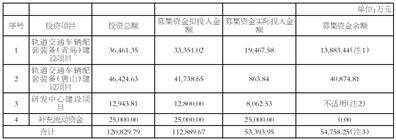
Core Viewpoint - Qingdao Weiao Rail Transit Co., Ltd. plans to use up to 200 million RMB from its initial public offering (IPO) funds to temporarily supplement working capital, with a usage period not exceeding 12 months from the date of approval by the board of directors [2][10]. Fundraising Basic Situation - The company has received approval from the China Securities Regulatory Commission for its IPO, issuing 75.56 million shares at a price of 16.14 RMB per share, raising a total of 1,219,538,400 RMB, with a net amount of 1,128,896,686.79 RMB after deducting issuance costs [2]. - The funds were fully received on May 15, 2020, and verified by an accounting firm [2]. Previous Use of Idle Funds - On April 28, 2022, the company approved the temporary use of 150 million RMB of idle IPO funds for working capital, which was fully returned to the special account by April 24, 2023 [3]. - On April 26, 2023, the company approved the use of 350 million RMB of idle IPO funds for working capital, with a commitment to return the funds by April 15, 2024 [4]. Current Use of Idle Funds - On January 15, 2025, the company approved the use of 250 million RMB of idle IPO funds for working capital, with a return deadline of January 14, 2026 [6]. - On April 16, 2025, the company approved another 350 million RMB for the same purpose, with a return deadline of April 15, 2026 [6]. Fund Investment Project Situation - As of December 31, 2025, the company adjusted the investment total for the rail transit vehicle supporting equipment project and allocated 48 million RMB of surplus funds for permanent working capital [7]. - The balance of the special account for fundraising as of December 31, 2025, was 3,379,349.81 RMB [9]. Plan for Temporary Use of Idle Funds - The company aims to use up to 200 million RMB of idle funds to temporarily supplement working capital, ensuring that this does not affect the normal operation of fundraising investment plans [10]. - The decision has been approved by the board of directors and complies with regulatory requirements [11].
他们是榜样,是最美的标杆
Xin Lang Cai Jing· 2026-01-14 22:45
Core Viewpoint - The article highlights the moral values and exemplary actions of ordinary people in Hebei, showcasing their contributions to social civilization and community spirit through selfless dedication and professional excellence [1][5][6]. Group 1: Ordinary People as Moral Exemplars - The "Hebei Good People" group consists of individuals who shine with moral integrity through their everyday actions, demonstrating the foundational values of social civilization [6]. - Examples include Jia Meilan, a 77-year-old street vendor known as "Fried Skewers Grandma," who maintains low prices to support her family despite personal hardships [6][7]. - Zhang Guqin, who has cared for her blind brother-in-law for 68 years, exemplifies unwavering commitment and familial love [6][7]. - Yue Shucheng, a villager who has dedicated 29 years to the voluntary patrol of the Great Wall, embodies responsibility and dedication to heritage [8]. Group 2: Professional Excellence and Dedication - The article emphasizes the importance of professional dedication in various fields, highlighting individuals who have achieved remarkable success through their commitment to excellence [9]. - Zhang Xuesong, a chief technician at CRRC Tangshan, played a crucial role in overcoming technical challenges in high-speed rail manufacturing, leading to significant advancements in the industry [10][12]. - Liu Shiyue, a retired medical expert, continues to serve the community through voluntary medical services, demonstrating lifelong dedication to his profession [13]. Group 3: Diverse Contributions Across Sectors - The "Most Beautiful Hebei People" initiative recognizes individuals from various sectors, including law enforcement, healthcare, and home services, who exemplify professional spirit and social responsibility [14][15][16]. - Han Yonghui, who returned to her hometown to establish a maternity center that also serves as a training base, has successfully trained numerous individuals, contributing to local employment [14]. - The recognition of these individuals serves to inspire others and promote a culture of excellence and responsibility across different professions [17].