玩具

Search documents
8月7日早餐 | 苹果大涨;美威胁加征芯片关税
Xuan Gu Bao· 2025-08-07 00:04
Group 1: Market Overview - US stock markets experienced gains, with the Dow Jones up 0.18%, Nasdaq up 1.21%, and S&P 500 up 0.73% [1] - Notable stock performances include Apple rising 5.09%, Amazon up 4.00%, and Tesla increasing by 3.62% [1] Group 2: Trade and Tariffs - Trump plans to impose a 100% tariff on chip products, with exemptions for companies like Apple that manufacture in the US [2] - Japan has raised concerns over US tariff announcements, demanding corrections, while the US will impose an additional 15% tariff on Japanese products [3] Group 3: Apple Developments - Apple is collaborating with Samsung to introduce innovative chip manufacturing technology for iPhone and other products [4] - Apple has partnered with Corning to produce 100% of iPhone and Apple Watch-related products in Kentucky, USA [5] - Apple is investing an additional $100 billion in US manufacturing amid tariff pressures [2] Group 4: Tesla Innovations - Tesla is training a new Full Self-Driving (FSD) model, which is expected to be ten times more capable than the current version [6][12] - The FSD system is anticipated to be publicly released by the end of next month, with advanced features being integrated [12] Group 5: Industry Trends - The Chinese pan-anime user base is growing, with the market expected to reach 597.7 billion yuan by 2024, driven by diverse product forms and a younger demographic [10] - The national integrated computing network is progressing, with the release of nine technical documents aimed at enhancing resource scheduling and security [14]



就业遇冷后的降息展望
2025-08-06 14:45
Summary of Conference Call Records Industry Overview - The records focus on the **U.S. economy**, particularly the **employment market**, **inflation**, and **monetary policy** implications due to recent economic data and political influences [1][2][5]. Key Points and Arguments 1. **Employment Market Weakness** - The U.S. employment market shows signs of fatigue, with a rising unemployment rate and a significant downward revision of previous job growth figures, leading to an average of only **50,000 new jobs** added over the past three months [2][6]. - The labor participation rate changes contribute to the overall weakness in supply and demand within the job market [2]. 2. **Interest Rate Cut Expectations** - Market expectations for a rate cut in Q4 have surged, with a **95% probability** of a **25 basis point** cut before October, driven by the weak employment and inflation data [1][2]. - The anticipated rate cuts are expected to alleviate pressures on the real estate and manufacturing sectors [5]. 3. **Inflation Trends** - Since the implementation of reciprocal tariffs in April, prices of goods heavily reliant on imports, such as furniture and appliances, have risen significantly [3]. - The effective tax rate from tariffs is projected to increase from **16.5%** to **17.5%**, which may further elevate inflationary pressures [3]. 4. **Political Influence on Monetary Policy** - Political pressures for looser monetary policy are increasing, especially with the potential for new Federal Reserve board members who may favor rate cuts [5]. - The upcoming Jackson Hole meeting and inflation data will significantly influence the market's pricing of September rate cut expectations [5]. 5. **Consumer Spending Dynamics** - Consumer spending constitutes **70%** of the U.S. economy, with high-income households showing resilience in their spending habits [6]. - Fixed-rate loans dominate the debt landscape, minimizing the impact of the current rate hike cycle on overall consumer debt pressure [6]. 6. **Economic Outlook** - The U.S. economy is transitioning from a "very good" state to a "not so good" state, indicating a slowdown but not an imminent recession [7]. - The narrative around the economy remains unchanged, with expectations of a gradual weakening rather than a linear decline into recession [7]. Additional Important Insights - The impact of tariffs on inflation is expected to manifest more clearly in the data by October, as inventory replenishment continues in various sectors [3][4]. - The sensitivity of middle and low-income groups to price changes may mitigate inflation transmission pressures compared to previous years [4].
万代南梦宫控股(7832):高达手游超预期,IP价值持续兑现
HTSC· 2025-08-06 13:49
Investment Rating - The report maintains a "Buy" rating for Bandai Namco Holdings [6] Core Views - Bandai Namco's 1QFY26 performance exceeded expectations, driven by strong sales from the Gundam mobile game and related merchandise, leading to a revenue increase of 7.1% year-on-year to 300.43 billion yen [1][5] - The company is actively exploring the value of its IP and expanding into overseas markets, indicating stable long-term growth potential in its gaming and toy businesses [1][11] Summary by Sections Financial Performance - In 1QFY26, total revenue reached 300.43 billion yen, surpassing Bloomberg's consensus estimate of 296.8 billion yen. Operating profit was 51.92 billion yen, exceeding the expected 44.1 billion yen, and net profit attributable to the parent company was 38.33 billion yen, higher than the anticipated 32.1 billion yen [1][5] - The gaming segment generated revenue of 107.77 billion yen, a year-on-year increase of 1.4%. Online gaming revenue was 55.6 billion yen, up 30.8%, primarily due to the successful launch of the new Gundam mobile game [2] - The toy segment achieved revenue of 146.89 billion yen, a 10.6% increase year-on-year, with Gundam-related toy sales reaching 25.4 billion yen, up 35.1% [3] Profitability - The company reported an operating profit of 51.92 billion yen, a year-on-year increase of 17.9%. The gaming business contributed an operating profit of 21.7 billion yen, up 47.3%, while the toy business generated 28.57 billion yen, a 6% increase [4] - The company has revised its 1HFY26 guidance for gaming operating profit to 32 billion yen from the previous 20.5 billion yen [4] Earnings Forecast and Valuation - The report slightly lowers FY26 and FY27 revenue estimates by 4.6% and 3.2% to 1,285.17 billion yen and 1,383.83 billion yen, respectively, while introducing a FY28 revenue forecast of 1,440.82 billion yen [5] - The target price is set at 6,052 yen, up from the previous 5,803 yen, based on a revised PE ratio of 29x for FY26, aligning with the average of comparable companies [11][5]
奇士达拟折让约19.4%配股 最高净筹约1610万港元
Zhi Tong Cai Jing· 2025-08-06 13:41
奇士达(06918)公布,于2025年8月6日,该公司拟透过配售代理向不少于六名承配人配售最多约1.25亿股 配售股份,每股配售股份0.133港元,较股份于配售协议日期在联交所所报的收市价每股0.165港元折让 约19.4%。 假设所有配售股份成功配售,净筹约1610万港元。约61.9%用于集团偿还债务;及约38.1%用作一般营运 资金(包括工资、租金及集团其他营运开支)。预期所得款项净额将于2025年年底前悉数动用。 ...
朱啸虎:我当年为什么那么早就投了小红书?
创业家· 2025-08-06 10:09
Core Viewpoint - The article emphasizes the importance of understanding consumer behavior and market dynamics in the context of Japan's evolving consumer landscape, which serves as a model for Chinese brands to adapt and innovate in a low-growth environment [19][20]. Group 1: Investment Insights - The early investment in Xiaohongshu occurred when the founder had not yet solidified a business model, showcasing the potential of visionary entrepreneurs [3][4]. - The initial products launched by Xiaohongshu were basic PDF guides, which received positive feedback despite their simplicity, indicating a strong market interest [8][10]. - The article reflects on the skepticism faced by early-stage companies like Xiaohongshu, Didi, and Ele.me, highlighting the common challenges in gaining investor confidence [10][11]. Group 2: Japanese Market Analysis - Japan's consumer market is characterized by a unique blend of low growth, aging population, and innovative business models, providing valuable lessons for Chinese entrepreneurs [19][20]. - The article outlines three core philosophies of enduring Japanese brands: supply chain-driven private brand (PB) products, continuous iteration of key products, and the ability to define lifestyles that resonate emotionally with consumers [21][23]. - Companies like Kobe Bussan and 7-11 exemplify successful supply chain strategies that meet latent consumer needs through data-driven product development [21][22]. Group 3: Learning Opportunities - The article promotes a learning trip to Japan, aimed at exploring the innovative practices of leading Japanese companies, which can inspire new business opportunities in China [15][16]. - The program includes insights from industry leaders and visits to successful brands, focusing on how they navigate market challenges and consumer expectations [24][30]. - Participants will gain firsthand experience in understanding the emotional and functional needs of consumers, which is crucial for developing competitive products in the current market landscape [30][31].

创业之路,要完成三个认知
创业家· 2025-08-06 10:09
Core Insights - The article emphasizes the importance of three key recognitions for entrepreneurs: understanding oneself, recognizing the core business of managing a company, and acknowledging that success stems from the main product rather than diversifying into multiple products [1]. Group 1: Japanese Market Insights - The Japanese consumer market serves as a "future laboratory" for Chinese brands, providing insights into consumer evolution over the next decade [7]. - The article highlights that Japan's experience during its "lost thirty years" offers valuable lessons for Chinese brands to win over consumers [7]. - Key strategies from successful Japanese brands include supply chain-driven private label (PB) products, continuous iteration of major products, and defining lifestyles that resonate emotionally with consumers [8][9]. Group 2: Successful Japanese Brands - Kobe Bussan utilizes a supply chain-driven model with over 350 factories globally, achieving a sales scale of 200 billion RMB and operating over 1,000 stores [16]. - 7-11 employs a TEAM MD mechanism to guide supply chain development based on consumer data, enhancing the creation of PB products [8]. - Nitori, known as the "king of Japanese furniture," applies automotive supply chain standards to achieve continuous revenue growth for 36 years [8]. Group 3: Emotional Resonance and Lifestyle Definition - Bandai focuses on developing products that tap into human instincts and desires, creating items that are both entertaining and addictive [10]. - Muji redefines user experience with its no-logo, affordable products, reflecting insights gained from economic bubbles [10]. - The article suggests that understanding the emotional and functional needs of consumers is crucial for brands to thrive in a changing market landscape [17].

港股收盘 | 恒指收涨0.03% “反内卷”题材活跃 新消费龙头表现亮眼
Zhi Tong Cai Jing· 2025-08-06 08:52
Market Overview - The Hong Kong stock market showed mixed performance with the Hang Seng Index closing at 24,910.63 points, up 0.03% or 8.1 points, with a total turnover of HKD 215.235 billion [1] - The Hang Seng China Enterprises Index fell by 0.21% to 8,932.68 points, while the Hang Seng Tech Index rose by 0.2% to 5,532.17 points [1] Blue Chip Performance - BYD Electronics (00285) led the blue-chip stocks, rising 6.72% to HKD 37.8, contributing 3.01 points to the Hang Seng Index [2] - Other notable performers included SMIC (00981) up 3.14% and China Shenhua (01088) up 2.99%, while Li Auto (02015) fell 5.35% [2] Sector Highlights - Large tech stocks had mixed results, with Tencent up 1.7% and Alibaba up 0.6%, while Xiaomi fell 0.55% [3] - The "anti-involution" theme was active, with paper, coal, and steel stocks generally rising, such as Nine Dragons Paper up over 10% [3][4] - New consumption concepts showed strength, with Pop Mart rising nearly 8% [3] Recent Developments - Pop Mart hosted the 2025 PTS Beijing International Trend Toy Expo, with Morgan Stanley analysts maintaining an "overweight" rating on the company, citing undervalued platform potential [4] - Upmeihua Holdings (02145) projected a revenue increase of 16.8%-17.3% for the first half of 2025, with net profit expected to rise by 30.9%-35.8% [4] - The domestic coal price increased by HKD 240 per ton to HKD 1,680 per ton, marking a 37% rise since early July [5] Robotics Sector - The robotics sector saw gains, with companies like Geek+ (02590) and MicroPort (02252) rising by 5.68% and 4.07% respectively [5][6] - The upcoming 2025 World Robot Conference is expected to showcase over 100 new products, nearly double from last year [6] Notable Stock Movements - Times Angel (06699) surged 18.29% after announcing a positive earnings forecast for the first half of 2025, expecting a net profit increase of approximately 538.1%-604.8% [7] - Crystal Technology (02228) rose 12.42% following a significant contract with DoveTree worth approximately HKD 470 billion [8] - China Shipbuilding Defense (00317) increased by 7.75% due to optimistic profit forecasts based on seasonal factors in the shipbuilding industry [9] - Zhenjiu Lidu (06979) saw a strong performance despite a projected revenue decline of 38.3%-41.9% for the first half of 2025 [10] - Cathay Pacific (00293) fell 9.66% after reporting mid-year earnings that fell short of expectations, particularly in passenger revenue [11]
美媒:关键数据下滑凸显关税危害 美经济裂痕持续加深
Sou Hu Cai Jing· 2025-08-06 06:12
据彭博社报道,美国商务部最新发布的数据显示,2025年上半年消费者支出这一关键数据出现罕见下 滑。在过去18年中,除去疫情期间,这种情况仅发生过一次——那是在2010年初,当时全球金融危机后 的复苏远未稳固,人们对经济陷入"双底衰退"充满担忧。 文章称,这一数据意义重大,毕竟消费者支出约占经济总量的三分之二。 彭博社分析指出,美国关税政策的弊端正日益凸显。最佳的行动方案应该是废除那些荒谬的贸易政策, 转而更多地专注于简化法规与制度,以提升美国企业的竞争力,并吸引更多外国产业入驻。 另一方面,企业"自我消化"的阶段可能已基本结束,关税影响正在全面传导至消费者端。 据美国《纽约时报》报道,越来越多企业已无力继续承担关税成本。阿迪达斯、宝洁等企业近期均向投 资者表示,已上调产品价格或计划在近期提价,以抵消关税成本。而沃尔玛、美泰等企业早前也已警 告,关税将推高商品售价。 6月,美国家具、家电、玩具等受关税政策显著影响的商品价格出现普遍上涨。据耶鲁大学预算实验室 估计,现行关税政策将导致美国GDP年损失约1150亿美元,并使每户家庭平均年收入减少2400美元。 中新网8月6日电 综合美媒报道,特朗普政府关税政策带来的 ...
重磅!2025年中国及31省市AI玩具行业政策汇总及解读(全) 持续推进“人工智能+”行动计划
Qian Zhan Wang· 2025-08-06 02:08
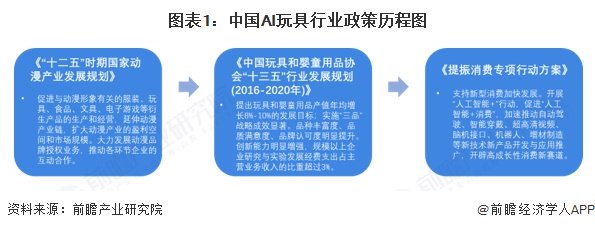
Core Viewpoint - The Chinese AI toy industry is experiencing significant policy support and development opportunities through the "Artificial Intelligence +" action plan, which aims to integrate AI technology with traditional and emerging industries, fostering a new development ecosystem [2][4]. Policy Development - From the "12th Five-Year Plan" to the "14th Five-Year Plan," the government has promoted quality improvement and innovation in the toy industry, encouraging the integration of toys with cultural industries [1]. - The "14th Five-Year Plan" continues to advance the "Artificial Intelligence +" action plan, creating a favorable environment for the development of the AI toy industry [1][2]. National Policy Summary and Interpretation - The government work report on March 5, 2024, introduced the "Artificial Intelligence +" action plan, emphasizing the deep integration of AI with traditional and new industries [2]. - The "Consumption Promotion Special Action Plan" released in March 2025 aims to support new consumption forms and accelerate the development of AI toys [4]. Key Policies Overview - A series of policies have been issued to support the AI toy industry, including: - The "Consumption Promotion Special Action Plan" which encourages AI toy R&D and product innovation [4]. - The "Light Industry Growth Stabilization Work Plan (2023-2024)" which aims to stimulate toy consumption and stabilize imports and exports [5]. Local Policy Summary - Various provinces have introduced policies to support the AI toy industry, focusing on technological paths and application scenarios for AI in toys [7][10]. - For instance, Guangdong Province's initiative aims to develop over 1,500 new intelligent interactive toy products by 2027 [10]. Industry Growth Points - The industry is encouraged to integrate with cultural sectors, enhance brand value, and implement quality safety projects for infant and child products [6]. - The establishment of high-quality exhibition platforms and the promotion of international cooperation are also emphasized to stimulate market consumption [6]. Standards and Regulations - The government is focusing on enhancing standards for quality improvement and cross-industry integration, with plans to revise and establish mandatory national standards for key products [6].






2025年AI玩具消费趋势白皮书
Sou Hu Cai Jing· 2025-08-05 13:27
Group 1 - The core viewpoint of the article is that AI toys are set to revolutionize the traditional toy industry, with significant market growth expected by 2025, marking it as the "year of AI toys" [2][7][18] - The global AI toy market is projected to exceed 100 billion by 2030, with a compound annual growth rate (CAGR) of over 50%, while China's AI toy market is expected to surpass 1 billion with a CAGR exceeding 70% [2][49][52] - The user demographic for AI toys has expanded beyond children to include parents from Generation Z, single adults, and the elderly, each with unique consumption motivations and usage scenarios [2][18] Group 2 - The technological support for AI toys includes a deep integration of software and hardware, featuring real-time communication, voice synthesis and recognition, large language models, and multimodal interaction technologies [2][11][18] - Successful case studies of AI toys include products like LING Universe's AI learning companion and Huo Huo Rabbit's AI early education story machine, which have achieved notable sales on the JD platform [2][18] - Future trends indicate a diversification of business models for AI toys, including subscription services, software revenue, and advertising income, with companies exploring new revenue channels from both B2B and B2C [2][18][56] Group 3 - The AI toy industry is characterized by a technology-intensive upstream, a manufacturing-focused midstream, and a diverse downstream distribution network [54][56] - The integration of AI technology into traditional toy manufacturing is expected to enhance production efficiency and create new product applications, catering to various age groups and needs [46][54] - Government policies are increasingly supportive of AI technology, creating a favorable environment for the development of the AI toy industry, which is expected to enhance brand confidence and promote sustainable growth [35][45]