
芯片

Search documents
爱芯元智:在港IPO拟发行约1.05亿股 定价28.2港元
Mei Ri Jing Ji Xin Wen· 2026-01-29 22:56
每经AI快讯,1月30日,爱芯元智在港交所公告,在港上市拟发行104,915,200股H股(视乎超额配股权行 使与否而定),定价28.2港元/股。预期H股将在2月10日开始交易。 ...
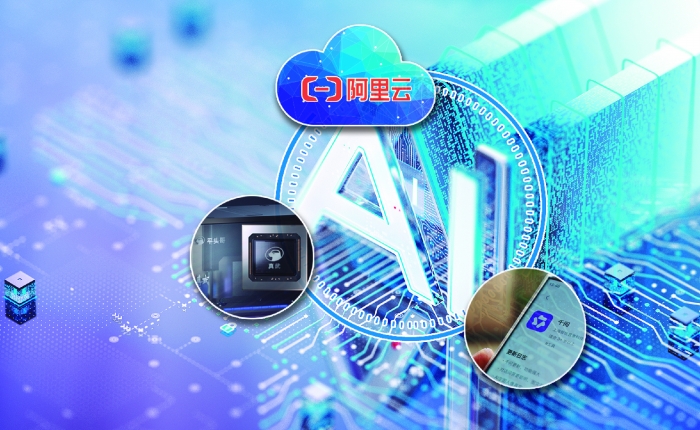
自研芯片露真容 阿里“通云哥”角逐全球AI赛场
Shang Hai Zheng Quan Bao· 2026-01-29 18:46
Core Insights - Alibaba has officially launched its high-end AI chip "Zhenwu 810E," marking a significant milestone in its transition from an e-commerce company to a high-tech enterprise driven by both e-commerce and AI [1][9] - The company has established a robust AI ecosystem, referred to as the "AI Golden Triangle," which integrates its self-developed chips, cloud computing capabilities, and top-tier open-source models [1][6] Group 1: AI Chip Development - The "Zhenwu" PPU features a self-developed parallel computing architecture and inter-chip communication technology, with a memory of 96G HBM2e and an inter-chip bandwidth of 700GB/s, suitable for AI training, inference, and autonomous driving [3] - The performance of the "Zhenwu" PPU surpasses that of mainstream domestic GPUs, and it has been deployed in over 400 clients, including major organizations like State Grid and Xpeng Motors [5] Group 2: AI Ecosystem and Market Position - Alibaba Cloud, established in 2009, has become one of the top four AI clouds globally, serving over 5 million customers and holding the largest market share in the Asia-Pacific region [6] - The company has launched over 400 open-source models, with the "Qianwen" model family exceeding 200,000 derivatives and over 1 billion downloads, making it the most popular large model in China [6] Group 3: Strategic Investments and Future Outlook - Alibaba is investing 380 billion yuan in AI infrastructure over three years, with plans for further investments to enhance its AI capabilities [9] - The company's cloud revenue reached 39.824 billion yuan in Q2 of the 2026 fiscal year, reflecting a 34% year-on-year growth, indicating potential for further acceleration in revenue and valuation [9]


北京奕斯伟计算技术股份有限公司(H0380) - 申请版本(第一次呈交)
2026-01-29 16:00
香港交易及結算所有限公司、香港聯合交易所有限公司與證券及期貨事務監察委員會對本申請版本的內容 概不負責,對其準確性或完整性亦不發表任何意見,並明確表示概不就因本申請版本全部或任何部分內容 而產生或因倚賴該等內容而引致的任何損失承擔任何責任。 Beijing ESWIN Computing Technology Co., Ltd. 北京奕斯偉計算技術股份有限公司 (「本公司」) (於中華人民共和國註冊成立的股份有限公司) 的申請版本 警告 本申請版本乃根據香港聯合交易所有限公司(「聯交所」)及證券及期貨事務監察委員會(「證監 會」)的要求而刊發,僅用作提供資料予香港公眾人士。 本申請版本為草擬本,其內所載資料並不完整,亦可能會作出重大變動。閣下閱覽本文件,即 代表閣下知悉、接納並向本公司、其各自保薦人、整體協調人、顧問或承銷團成員表示同意: 於本公司招股章程根據香港法例第32章《公司(清盤及雜項條文)條例》送呈香港公司註冊處處 長登記前,不會向香港公眾人士提出要約或邀請。倘於適時向香港公眾人士提出要約或邀請, 有意投資者務請僅依據於香港公司註冊處處長登記的本公司招股章程作出投資決定,該文件的 文本將於發售期內向 ...
搜索失速、大模型遇阻,李彦宏的AI生死局
Sou Hu Cai Jing· 2026-01-29 15:44
Core Viewpoint - The upcoming AI red envelope competition during the 2026 Spring Festival is expected to be a critical battle for survival among tech giants, rather than just a traffic frenzy [2] Group 1: Strategic Moves and Financial Performance - Baidu has announced significant strategic moves, including the independent listing of its AI chip subsidiary Kunlun and the restructuring of its business units to focus on AI [2][13] - In Q3 2025, Baidu reported a long-term asset impairment loss of 16.2 billion yuan, while AI cloud revenue grew by 33% year-on-year, indicating a clear path for transformation [3] - The core online marketing revenue, primarily from search ads, plummeted by 18% year-on-year to 15.3 billion yuan, highlighting a structural decline in its traditional business [5] Group 2: Challenges in Search and AI Business - The decline in search business is attributed to a shift in user attention towards platforms like Douyin and WeChat, with average daily usage of search engines dropping from 47 minutes in 2020 to just 12 minutes in 2025 [5] - Baidu's attempt to restructure its search model using AI has raised concerns about its traditional revenue model, as direct answers from AI could reduce ad clicks and revenue [6] - The competitive landscape in the AI model sector has intensified, with new entrants disrupting Baidu's previous advantages, forcing the company to adopt an open-source strategy [8][9] Group 3: Organizational Restructuring and Future Outlook - Baidu has initiated significant layoffs, with reductions of 10%-30% across various departments, focusing resources on AI development [11] - The restructuring is seen as a move to consolidate power under CEO Li Yanhong, who aims to directly oversee AI research and development [12] - The success of Kunlun's upcoming IPO is critical for Baidu, as it could alleviate cash flow pressures and enhance its position in the AI chip market [13][17] Group 4: Long-term Viability and Investment Risks - Baidu's future hinges on its ability to find sustainable profit models for its AI initiatives and the successful commercialization of its large models [17] - The company faces high execution risks in its AI transformation, with short-term performance likely to be under pressure [17] - 2026 is positioned as a pivotal year for Baidu, where the outcomes of its restructuring and market strategies will determine its survival in the AI era [16][17]

北京君正(300223.SZ):预计2025年净利润同比增长1.05%~10.05%
Ge Long Hui A P P· 2026-01-29 15:01
Core Viewpoint - The company expects a growth in net profit for 2025, with projections indicating an increase of 1.05% to 10.05% compared to the previous year, driven by recovery in various downstream markets and improved sales in storage and computing chip products [1][2]. Group 1: Financial Projections - The company anticipates a net profit attributable to shareholders of approximately 370.06 million to 402.99 million yuan for 2025, reflecting a year-on-year growth of 1.05% to 10.05% [1]. - The net profit, excluding non-recurring gains and losses, is projected to be between 307.91 million and 340.85 million yuan, indicating a change of -1.29% to 9.27% year-on-year [1]. Group 2: Market Trends and Revenue Growth - The storage product market is experiencing a cyclical recovery, driven by the gradual recovery of downstream industries such as automotive, industrial, and medical sectors [2]. - The demand for niche DRAM chips is entering an upward cycle, contributing to revenue growth in storage chip products [2]. - The computing chip product line has seen good year-on-year growth due to the application of embedded MPU products in more market areas and enhanced competitiveness in the smart security market [2]. - Continuous product development and market expansion in analog chips have also led to a year-on-year increase in sales revenue for analog and interconnected chips [2]. - The company expects total operating revenue for 2025 to be approximately 4.74 billion yuan, representing a year-on-year growth of about 12.52% [2].

芯片产业链,“涨”声不停
财联社· 2026-01-29 14:49
Core Viewpoint - The semiconductor industry is experiencing a "super cycle" driven by AI and data expansion, with rising prices for raw materials like metals increasing production costs for many chip companies, leading to a widespread price increase trend in the industry [2]. Price Increase Summary - Since the beginning of 2026, several companies in the semiconductor industry have raised prices for various products: - **Chip Design**: - January 27: Zhongwei Weiying increased prices for MCU and Norflash by 15%-50% [3] - January: Guokewai raised prices for KGD products by 40% for 512Mb, 60% for 1Gb, and 80% for 2Gb [3] - January 12: Zhongke Xinyi increased prices for some chip products by 10%-15% [3] - January 19: Fumanwei raised prices for LED display products by over 10% [3] - January 1: Yangzhou Jinxinwei increased prices for double-sided silver chips by 10% [3] - **Storage Chips**: - NAND flash prices increased by over 100% [3] - Samsung Electronics reported a price increase of over 80% for LPDDR memory used in iPhones in Q1 2026 [4] - SK Hynix reported a price increase close to 100% for the same LPDDR memory in Q1 2026 [4] - **Wafer Testing and Packaging**: - ASE increased prices for back-end wafer testing by 5%-20% in early 2026 [4] - **Passive Components**: - Yageo raised prices for some resistor products by 15%-20% starting February 1 [4] - Huaxinke increased prices for resistors across all values from "0201" to "1206" without specifying the increase [4]

全球AI巅峰角力,阿里“通云哥”坐上唯二顶级桌
Guan Cha Zhe Wang· 2026-01-29 14:00
Core Insights - Alibaba's new AI chip "Zhenwu 810E" has been launched, marking a significant breakthrough in domestic AI chip performance and application scale [1][5] - Alibaba is now one of the only two companies globally, alongside Google, to achieve a full-stack AI integration of "AI + Cloud + Chip" [3][15] - The global cloud computing market is dominated by four major players: Microsoft, Amazon, Google, and Alibaba, collectively holding over 80% market share [4] Group 1: AI Chip Development - The "Zhenwu 810E" chip features impressive specifications, including 96GB HBM2e memory, 700GB/s interconnect bandwidth, and a PCIe 5.0×16 interface, surpassing NVIDIA's A800 [5][10] - Alibaba's chip development journey began in 2018, with the establishment of Pingtouge, aimed at overcoming chip supply challenges [9][10] - The chip is a culmination of Alibaba's 17 years of technological investment in building a "Cloud + AI + Chip" ecosystem [6][10] Group 2: Strategic Positioning - Alibaba's full-stack self-research approach contrasts with Microsoft and Amazon's reliance on external technologies, providing a more stable long-term strategy [4][5] - The company plans to invest at least 380 billion RMB over the next three years in cloud computing and AI infrastructure, exceeding its total investment in the past decade [14] - Alibaba's "Tongyun Ge" AI triangle, consisting of Pingtouge, Alibaba Cloud, and Tongyi Laboratory, creates a synergistic effect that enhances both chip performance and cloud service efficiency [10][15] Group 3: Market Impact - The launch of the "Zhenwu" chip and the "Tongyun Ge" AI triangle positions Alibaba as a key player in the global AI infrastructure competition [12][15] - Alibaba's advancements in AI technology are expected to lead to a shift in global AI standards, with the company emerging as a significant competitor against U.S. tech giants [12][15] - The collaboration between chips and cloud services allows for rapid iteration and cost advantages, enhancing Alibaba's competitive edge in the AI market [15]
阿里平头哥发布自研AI芯片“真武” 性能对标英伟达H20
Xin Lang Cai Jing· 2026-01-29 13:37
Group 1 - Alibaba's self-developed AI chip "Zhenwu 810E" has been launched, marking the debut of the "Tongyun Ge" AI ecosystem, which includes Tongyi Lab, Alibaba Cloud, and Pingtouge [1][2] - The "Zhenwu" PPU features a 96GB HBM2e memory and a 700GB/s interconnect bandwidth, outperforming Nvidia's A800 and comparable to H20, with over 400 clients including State Grid and Xpeng Motors [2] - Pingtouge, established in 2018, was initially focused on meeting Alibaba's internal needs rather than being a commercial chip supplier, following a model of development from real-world applications [2] Group 2 - Alibaba is planning to restructure Pingtouge into an independent entity with employee stock ownership and is considering an IPO, although the company has not commented on this [3] - The "Tongyun Ge" initiative aims to create an AI supercomputer that integrates self-developed chips, cloud services, and advanced models for optimal efficiency in training and deploying large models [4] - Alibaba's CEO indicated a strong demand for AI solutions, with a significant investment plan of 380 billion yuan over three years for infrastructure, which may be increased due to rising demand [5]

补上全栈AI能力底层板块,阿里自研AI芯片“真武”亮相
Zhong Guo Zheng Quan Bao· 2026-01-29 13:01
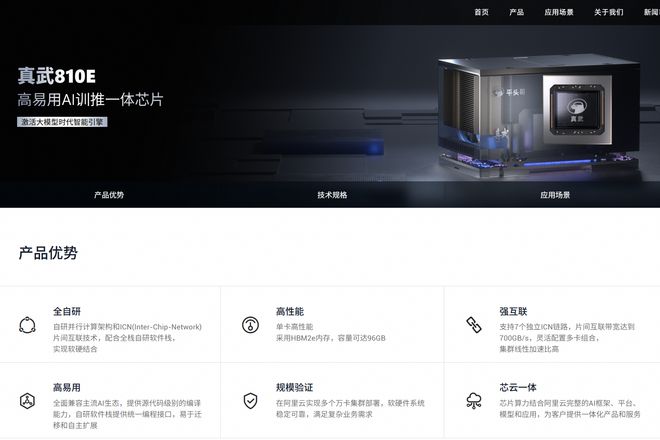
1月29日,阿里旗下平头哥官网上线一款名为"真武810E"的高端AI芯片,此前被央视曝光的阿里自研芯 片PPU正式亮相。 至此,"通云哥"也就是通义千问大模型、阿里云和平头哥半导体,共同构成阿里巴巴AI能力黄金三角, 在模型、云、芯片层面完成全栈布局。这也是一种追求AI最佳表现的路径选择,记者了解到,阿里巴 巴正在将"通云哥"打造成一台AI超级计算机,寻求在芯片架构、云平台架构和模型架构上的协同创新, 从而实现在云上训练和调用大模型时达到最高效率。 平头哥在2018年成立,在2018年阿里云栖大会上正式官宣。阿里把此前收购的中天微和达摩院自研芯片 业务整合成"平头哥半导体有限公司",由集团全资控股,推进云端一体化的芯片布局。 平头哥成立以来,发布过多款芯片,比如含光800(AI推理芯片NPU)、倚天710(服务器芯片CPU),以及 存储和网络芯片、端侧和IOT芯片等。2020年,新一轮AI技术爆发前夕,平头哥在内部启动PPU研发工 作。 据平头哥官网介绍,"真武"PPU采用自研并行计算架构和片间互联技术,配合全栈自研软件栈,实现软 硬件全自研。其内存为96G HBM2e,片间互联带宽达700GB/s,可应用于 ...
安凯微:公司12nm制程芯片拟集成多核异构CPU及高算力NPU模块
Zheng Quan Ri Bao Wang· 2026-01-29 12:43
Core Viewpoint - Ankai Micro is developing a 12nm process chip aimed at meeting market demands for high computing power, low power consumption, and high integration SoC [1] Group 1: Chip Features - The chip will integrate multi-core heterogeneous CPU and high-performance NPU modules [1] - It will also include a black light full-color high-performance AI ISP with low power consumption [1] Group 2: Application Areas - The chip is expected to be widely used in AI glasses and high-end display interactive terminals [1] - It will support complex edge AI processing capabilities in smart visual terminals [1]
