半导体制造

Search documents
中芯国际根据受限制股份单位而发行的12.99万股
Zhi Tong Cai Jing· 2025-09-02 11:43
于2025年9月2日,2014以认股权计划(于2013年6月13日获采纳)合计发行5.56万股。 中芯国际(00981)发布公告,于2025年9月2日,非本公司董事因行使根据2014以股支薪奖励计划(于2013 年6月13日获采纳)所授予的受限制股份单位而发行的12.99万股普通股股份。 于2025年9月2日,非本公司董事因行使根据2024年股份奖励计划(于2023年6月28日获采纳)所授予的限 制性股票单位而发行的9.93万股普通股股份。 ...

一家芯片公司,被疯抢
半导体芯闻· 2025-09-02 10:39
Core Viewpoint - Samsung and SK are engaged in a subtle psychological battle over the AI semiconductor company Rebellion, as both giants aim to secure a foothold in the next-generation AI chip market, making Rebellion's strategic direction highly significant [2]. Group 1: Investment and Valuation - Rebellion is currently undergoing a Series C funding round, with expected investments reaching up to $200 million (280 billion KRW) and a valuation of 1.55 trillion KRW. The company has attracted global investors, including Qatar Investment Authority, LionX Ventures, and Soros Fund Management, leading to a rapid increase in its valuation [2]. - Samsung Securities and Samsung Venture Investment are participating in this funding round, marking their first involvement in any financing round for Rebellion. The investment is reportedly funded indirectly through Samsung Electronics, although specific amounts have not been disclosed [2]. Group 2: Strategic Partnerships and Mergers - Rebellion has maintained a close business relationship with Samsung Electronics, integrating Samsung's HBM and other memory semiconductors into its products and utilizing Samsung's foundry for mass production. For its next-generation chip, Rebel Quad, Rebellion plans to communicate directly with Samsung Electronics [3]. - Rebellion is merging with SK Telecom's subsidiary, Sapion Semiconductor, which will make SK Group the largest shareholder. Sapion is an AI semiconductor company that was spun off from SK Telecom's internal R&D department [3]. Group 3: Technology and Product Development - Rebellion announced the launch of its next-generation AI semiconductor, REBEL-Quad, at the Hot Chips Symposium 2025. The chip utilizes Samsung's 4nm process technology, offers performance comparable to NVIDIA's Blackwell, and features HBM3E memory with a capacity of up to 144GB and a bandwidth of 4.8TB/s [7]. - The REBEL-Quad chip employs a chiplet architecture, making it the first product to implement high-speed chiplet-to-chiplet communication using the UCIe-Advanced standard, which enhances data transfer speed and reliability while reducing power consumption [7]. - Rebellion's proprietary memory processing technology enhances inference speed, enabling more stable and efficient model services in large-scale AI environments. The company also demonstrated the Qwen3 Model 235B MoE at the symposium, attracting significant attention from local AI experts [8]. Group 4: Competitive Landscape - There is a consensus that SK Hynix has a technological edge in HBM over Samsung, which could provide SK Group with an opportunity to promote its HBM technology. The choice of HBM supplier may significantly impact future chip production [5]. - Industry insiders suggest that the collaboration among major Korean companies like Samsung, SK, and KT to support Rebellion is drawing international attention, highlighting the competitive dynamics within the semiconductor ecosystem [5].

图解丨南下资金净买入港股92亿港元,连续第二日大幅加仓阿里
Ge Long Hui A P P· 2025-09-02 10:30
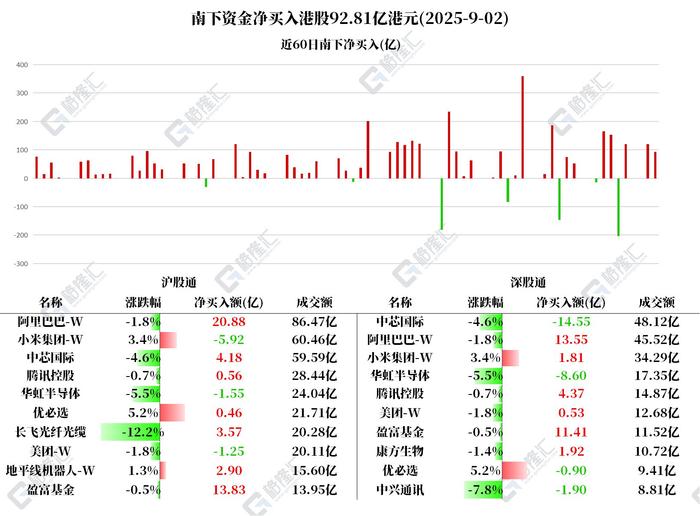
Group 1 - Southbound funds net bought Hong Kong stocks worth 9.281 billion HKD today [1] - Net purchases included Alibaba-W at 3.443 billion HKD, the Tracker Fund at 2.524 billion HKD, Tencent Holdings at 492 million HKD, and others [1] - Southbound funds have net bought Alibaba for 8 consecutive days, totaling 14.33952 billion HKD [1] Group 2 - Net sales included SMIC at 1.037 billion HKD, Hua Hong Semiconductor at 1.015 billion HKD, and Xiaomi Group-W at 410 million HKD [1] - Southbound funds have net sold Xiaomi for 8 consecutive days, totaling 5.40657 billion HKD [1]
东微半导9月2日现2笔大宗交易 总成交金额527.43万元 溢价率为-12.00%
Xin Lang Cai Jing· 2025-09-02 10:10
炒股就看金麒麟分析师研报,权威,专业,及时,全面,助您挖掘潜力主题机会! 9月2日,东微半导收跌1.56%,收盘价为82.10元,发生2笔大宗交易,合计成交量7.3万股,成交金额 527.43万元。 第1笔成交价格为72.25元,成交4.30万股,成交金额310.68万元,溢价率为-12.00%,买方营业部为中信 证券股份有限公司总部(非营业场所),卖方营业部为中信证券股份有限公司苏州分公司。 第2笔成交价格为72.25元,成交3.00万股,成交金额216.75万元,溢价率为-12.00%,买方营业部为中信 证券股份有限公司上海分公司,卖方营业部为中信证券股份有限公司苏州分公司。 进一步统计,近3个月内该股累计发生2笔大宗交易,合计成交金额为527.43万元。该股近5个交易日累 计上涨12.79%,主力资金合计净流入1.18亿元。 责任编辑:小浪快报 ...

味之素卡了全球芯片脖子
Sou Hu Cai Jing· 2025-09-02 03:16
Core Insights - Ajinomoto, a Japanese company known for producing MSG, has become a critical player in the global semiconductor industry due to its development of a high-performance insulation material called ABF (Ajinomoto Build-up Film) [1][2][9] - The ABF material is essential for chip manufacturing, significantly reducing production costs and improving efficiency while ensuring high-quality chips [2][10] - Ajinomoto's ABF accounts for approximately 2% of the company's revenue but boasts a profit margin of around 45%, generating annual profits of about 10 billion yen [2][12] Company Background - Ajinomoto was founded in 1908 and is recognized for inventing MSG, which was derived from the amino acid glutamate found in seaweed [4][6] - In the 1970s, the company began exploring the potential of by-products from MSG production, leading to the development of high-insulation materials [6][13] Industry Impact - The ABF material addresses the challenges posed by increasingly dense chip circuits, which require effective insulation to prevent signal interference [2][9] - Ajinomoto holds over 90% of the market share for this insulation material, making it an indispensable supplier for major chip manufacturers like Intel, Samsung, and TSMC [9][10] - The technology behind ABF has a high barrier to entry, making it difficult for competitors to replicate, thus contributing to the high costs associated with chip production [10][12] Technological Significance - The development of ABF was a result of years of research and preparation, highlighting the importance of long-term investment in technology [9][10] - The insulation material is crucial for the functioning of various electronic devices, including computers, smartphones, and AI chips, indicating its widespread application across the tech industry [16][18]

通胀超预期放缓+内需偏弱 韩国央行10月重启降息预期升温
智通财经网· 2025-09-02 01:17
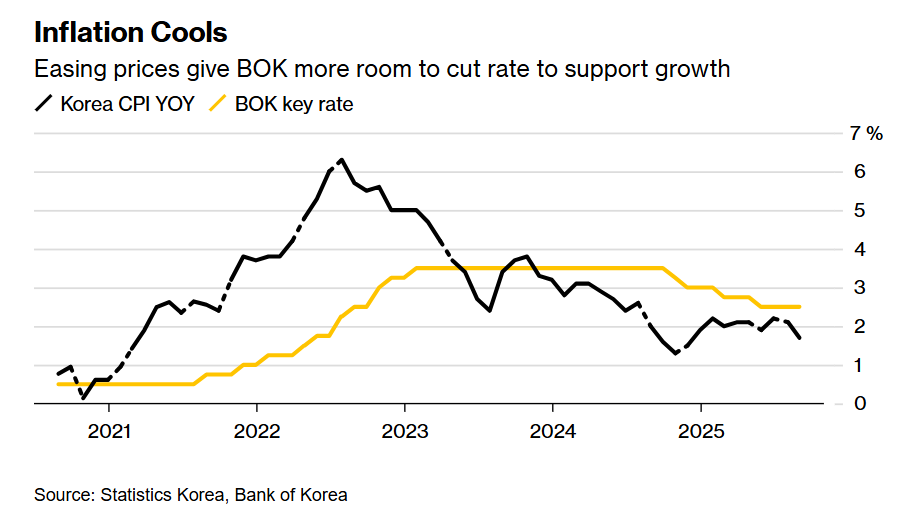
Group 1 - South Korea's consumer inflation has slowed to its lowest growth rate this year, with the Consumer Price Index (CPI) rising by 1.7% year-on-year in August, down from 2.1% in July, and below economists' expectations of around 1.9% [1][4] - The core inflation rate, excluding food and energy, increased by 1.3% year-on-year in August, significantly lower than the expected 1.7% and marking the slowest growth in four years [1][4] - The decline in communication costs, particularly due to SK Telecom's reduction of mobile phone bills for over 20 million affected users, contributed to the inflation slowdown, offsetting rising food costs [4][5] Group 2 - Despite higher tariffs imposed by the U.S., South Korea's export data remains robust, with semiconductor exports increasing by 27.1% year-on-year in August, supported by strong demand in the semiconductor and automotive sectors [5][6] - The Bank of Korea is considering more policy stimulus as businesses prepare for potential impacts from U.S. tariffs, with the central bank maintaining the benchmark interest rate at 2.5% amid concerns over the real estate market and rising mortgage levels [5][6] - The recent inflation data is expected to provide the Bank of Korea with more room to implement accommodative monetary policy to support economic growth, especially if housing market pressures ease [5][6][7]
美联储放鸽生变,A股压力来了!
Sou Hu Cai Jing· 2025-09-01 13:50
Group 1 - The core viewpoint of the article revolves around the implications of Federal Reserve Governor Waller's dovish remarks, suggesting a potential 25 basis point rate cut in September, which has stirred significant market reactions [1][2] - Waller's statements highlight the current economic conditions, including a potential inflation rate nearing the 2% target and increasing risks in the labor market, which appear to support the case for a rate cut [2][4] - The article emphasizes the disparity between market expectations and actual economic conditions, suggesting that market movements are often driven by perceived changes in expectations rather than the reality of economic data [5][15] Group 2 - There exists a cognitive gap between institutional investors and retail investors, with the former often having access to more sophisticated data analysis tools that inform their trading decisions [6][8] - The article illustrates that institutional trading behavior can be more indicative of underlying stock value than surface-level performance metrics, as seen in examples of stocks with contrasting institutional participation [11][13] - Waller's dovish comments are interpreted as having deeper implications, suggesting that investors should focus on actual market actions rather than solely on verbal statements from Federal Reserve officials [14][16] Group 3 - Recommendations for ordinary investors include avoiding superficial interpretations of Federal Reserve communications, focusing on real data regarding institutional fund flows, and developing a personal analytical framework for decision-making [15] - The article concludes that in an era of information overload, those who can discern the underlying truths in data will be better positioned to capitalize on market discrepancies [16]
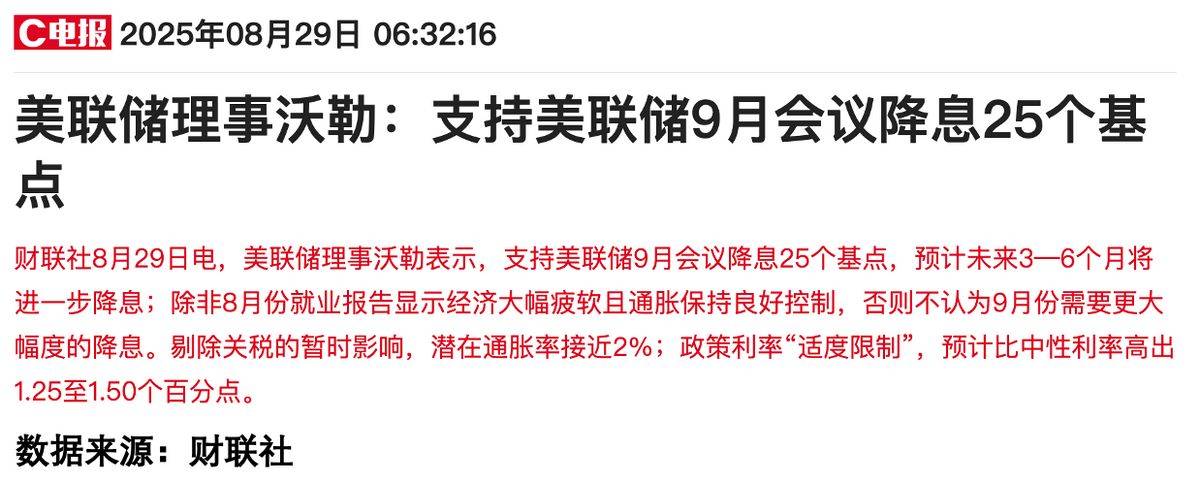
燕东微:8月份公司未回购股份
Zheng Quan Ri Bao Wang· 2025-09-01 12:46
证券日报网讯9月1日晚间,燕东微发布公告称,2025年8月份,公司未回购股份。截至2025年8月31日, 公司通过上海证券交易所交易系统以集中竞价交易方式累计回购公司股份2,629,186股,占公司总股 本的比例为0.1841%。 ...

人民币的升值对我们有什么影响
Sou Hu Cai Jing· 2025-09-01 12:13
Group 1 - The appreciation of the RMB is expected to benefit the general public by making imported goods, overseas travel, and studying abroad cheaper, which can help reduce imported inflation [7] - The RMB's exchange rate has reached new highs against the USD, with onshore and offshore rates hitting 7.1260 and 7.1155 respectively, marking the highest levels since November 2024 [2] - The appreciation of the RMB is supported by both external factors, such as the dovish stance of the Federal Reserve, and internal factors, including the strong fundamentals of the Chinese economy, which attract international capital inflows [3][4] Group 2 - Historically, the RMB has experienced three significant appreciation cycles, each coinciding with strong economic performance and financial opening policies, leading to increased foreign capital inflow into the A-share market [4] - The appreciation of the RMB is positively correlated with the performance of the A-share market, as it reflects increased confidence from international investors in the Chinese economy [4] - Industries with high foreign currency liabilities or significant import costs, such as airlines, paper, petrochemicals, and semiconductors, stand to benefit from RMB appreciation [5] Group 3 - The traditional view that RMB appreciation necessarily leads to a decline in exports is challenged by recent data, which shows that during periods of RMB appreciation, exports to the US and EU have actually increased significantly [6] - The current export landscape is dominated by high-value products, which mitigates the negative impact of RMB appreciation on competitiveness [6] - The overall impact of RMB appreciation on the economy is favorable, as it reduces the costs of energy and raw material imports, benefiting the macroeconomic structure [7]
立昂微:华夏基金投资者于8月29日调研我司
Zheng Quan Zhi Xing· 2025-09-01 11:40
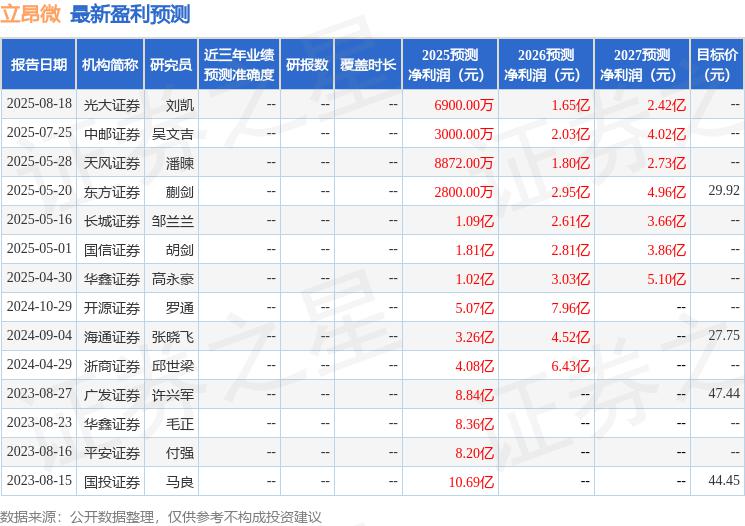
Core Viewpoint - Lian Micro (立昂微) has reported strong demand for its epitaxial wafers, leading to increased prices and a focus on high-value orders, despite a significant decline in net profit for the first half of 2025 [2][4]. Group 1: Company Performance - Lian Micro's main revenue for the first half of 2025 reached 1.666 billion yuan, a year-on-year increase of 14.18% [4]. - The net profit attributable to shareholders was -127 million yuan, a 90% decline year-on-year [4]. - The second quarter of 2025 saw a single-quarter revenue of 845 million yuan, up 8.41% year-on-year, but the net profit was -45.99 million yuan, a decline of 1141.26% [4]. Group 2: Product and Market Focus - The company is prioritizing the development of 8-12 inch heavily doped epitaxial wafers and is ramping up production capacity for 12-inch lightly doped silicon wafers [4]. - Lian Micro is expanding its product range in power device chips and focusing on high-value products such as automotive-grade products and FRD products [4]. - The company is also concentrating on enhancing production capacity for its compound semiconductor RF and optoelectronic chips, particularly in VCSEL chip processes and 6-inch silicon carbide-based gallium nitride products [4]. Group 3: Market Sentiment and Analyst Ratings - In the last 90 days, four institutions have rated the stock, with three giving a buy rating and one a neutral rating [5]. - The average target price set by institutions over the past 90 days is 31.0 yuan [5]. - Recent financing data indicates a net inflow of 118 million yuan in financing over the past three months, with an increase in financing balance [8].