投资银行

Search documents
高盛:应纳入商品「分散化」投资组合,「最坚定推荐」黄金
Hua Er Jie Jian Wen· 2025-09-07 02:42
Core Viewpoint - Goldman Sachs highlights the rising risk of institutional credibility in the U.S. and increased concentration in commodity supply, creating "tail risks" that may lead to soaring commodity prices while stocks and bonds decline. Gold is identified as the "highest-conviction long" investment in the commodity sector, with a mid-2026 target price of $4,000 per ounce, potentially exceeding $4,500 in extreme scenarios [1][2][5]. Group 1: Commodity Market Dynamics - The report indicates that the commodity index is expected to have only moderate positive returns over the next 12 months under the baseline scenario, with a bullish outlook on gold, copper, and U.S. natural gas, while anticipating a supply surplus in the oil market [4]. - Goldman Sachs emphasizes that the increasing concentration of commodity supply poses significant risks, particularly as key commodities are sourced from geopolitically sensitive regions, leading to frequent supply disruptions and price volatility [6][7]. Group 2: Structural Trends Supporting Commodity Bull Market - Three structural trends—de-risking energy, increased defense spending, and dollar diversification—are tightening commodity supply and demand systematically, supporting a long-term bullish outlook for commodities [8]. - The de-risking of energy is expected to drive significant copper demand due to global energy security policies, with projections indicating that investments related to the power grid will contribute to 60% of global copper demand growth by 2030 [8]. - Increased defense spending in Europe is projected to rise from 1.9% of GDP in 2024 to 2.7% in 2027, which will boost demand for industrial metals like copper, nickel, and steel [8]. - The trend of central banks diversifying away from the dollar has led to a fivefold increase in gold purchases since 2022, significantly driving up gold prices [9].

近7万人爆仓,比特币交易额锐减近72%
21世纪经济报道· 2025-09-07 00:25
Cryptocurrency Market - The cryptocurrency market has seen a significant downturn, with over 67,000 liquidations and a total liquidation amount of $118 million in the past 24 hours [2][3] - Bitcoin's price approached $110,209.2, with a trading volume drop of nearly 72%, while Ethereum's trading volume decreased by over 65% [2][3] Employment Data and Economic Outlook - The U.S. non-farm payroll report for August showed an increase of only 22,000 jobs, far below the expected 75,000, with the unemployment rate rising to 4.3%, the highest since the end of 2021 [5] - Analysts suggest that the weakening labor market and uncertainty in tariff policies may lead to a more accommodative monetary policy in the second half of the year [5] Gold Market - Gold prices have reached new highs, with spot gold surpassing $3,600 per ounce, reflecting a year-to-date increase of approximately 35% [7][10] - The rising gold prices are attributed to multiple risk factors, including expectations of interest rate cuts and concerns over economic downturns [10] - Analysts predict that if the proportion of gold in global central bank reserves continues to rise, gold prices could potentially exceed $4,500 per ounce, with some forecasts suggesting a possibility of surpassing $5,000 per ounce if investor confidence in U.S. Treasury bonds declines [10]


高盛:大宗商品正成为对冲传统资产风险的关键工具-财经-金融界
Jin Rong Jie· 2025-09-06 12:21
Group 1 - Goldman Sachs highlights that commodities, particularly gold, are becoming key tools for hedging risks associated with traditional assets due to factors like the independence risk of the Federal Reserve and supply chain concentration [1] - The firm maintains a bullish stance on gold, labeling it as the "highest-conviction long" and sets a target price of $3,700 per ounce by the end of 2025 and $4,000 per ounce by mid-2026, with a potential extreme scenario price exceeding $4,500 per ounce [1] - The report indicates that rising risks to U.S. institutional credibility and increased concentration in commodity supply create "tail risks," which could lead to soaring commodity prices while equities and bonds decline [1] Group 2 - Goldman Sachs emphasizes three structural trends (De-risking energy, Defense spending, Dollar diversification) that are systematically tightening the supply-demand dynamics in the commodity market, particularly affecting gold and copper, which respond slowly to price changes [2] - The firm notes that the current slowdown in U.S. job growth and elevated economic downturn risks are higher than historical averages, enhancing the appeal of commodities as a diversification tool in investment portfolios [2] - Goldman Sachs anticipates that the role of commodities in hedging against inflation and extreme risks is becoming increasingly significant [2]
数字黄金要来了
Sou Hu Cai Jing· 2025-09-06 06:06
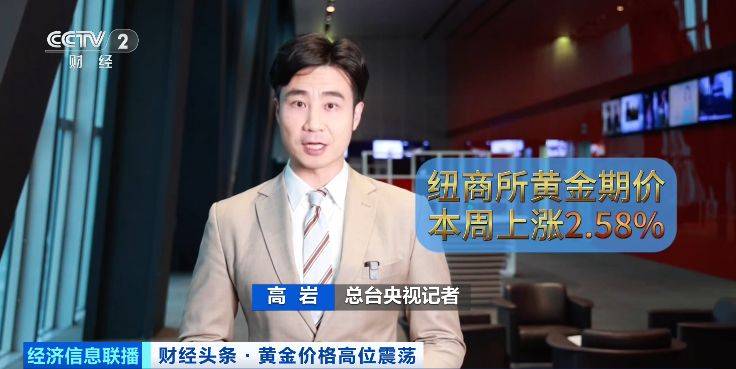
Core Viewpoint - The gold market is experiencing a historic moment with prices reaching new highs, driven by multiple favorable factors including expectations of interest rate cuts by the Federal Reserve and a weakening dollar [1][2][4]. Group 1: Gold Price Trends - Comex gold futures surpassed $3630 per ounce, while spot gold reached a high of $3565 per ounce, both breaking previous records from April [1]. - On September 5, spot gold surged over $50 in a single day, closing at $3596.13 per ounce, marking a 1.42% increase [1]. - Analysts from Morgan Stanley predict that the Federal Reserve will announce a 25 basis point rate cut during the upcoming meeting, which historically leads to an average 6% increase in gold prices within 60 days [3][4]. Group 2: Factors Supporting Gold Prices - The expectation of a rate cut by the Federal Reserve is fueled by concerns over a weak labor market, with July's non-farm payrolls increasing by only 73,000, significantly below the expected 110,000 [2][3]. - The recent inflation data shows a 2.9% year-over-year increase in the core personal consumption expenditures price index, further raising the likelihood of a rate cut [2]. - The resignation of Federal Reserve Governor Cook has raised questions about the independence of the Fed, leading to increased confidence in gold as a safe-haven asset [4]. Group 3: Digital Gold Initiatives - The World Gold Council is set to launch a new digital gold product called "Pooled Gold Interests" (PGI), which will allow investors to trade fractional ownership of physical gold stored in independent custodial accounts [5][6]. - PGI aims to enhance the digitalization of the gold market, allowing for ownership of as little as one-thousandth of an ounce of gold, thus increasing accessibility [5][6]. - The introduction of PGI is part of a broader strategy to modernize the gold market and improve its transparency and efficiency [6][7]. Group 4: Competition with Cryptocurrencies - Gold is facing competition from cryptocurrencies, particularly Bitcoin, which is increasingly viewed as "digital gold" due to its fixed supply and inflation-resistant properties [8][10]. - The World Gold Council's digital gold initiative aims to differentiate itself from previous failed attempts at creating gold-backed stablecoins by directly anchoring to physical gold [10]. - Supporters of digital gold believe it can coexist with stablecoins, providing complementary benefits in times of economic uncertainty [10][11].
这轮行情能否延续?关键看这4个信号!
大胡子说房· 2025-09-06 04:23
Core Viewpoint - The article discusses the current volatility in the A-share market, particularly after the index reached 3800 points, indicating uncertainty in market trends and the need for investors to assess various indicators to determine the sustainability of the bull market [3][4][6]. Group 1: Market Indicators - The first indicator to assess is the market leverage ratio, specifically the ratio of margin financing to market capitalization, which currently stands at approximately 6.8%, up from 6.5% at the end of July but still below the 7%-9.8% range seen during the 2015 bull market [12][13]. - The second indicator is the proportion of trading volume from margin financing, which is currently about 12%. Historical data suggests that if this ratio exceeds 12%-13%, regulatory measures may be implemented to cool the market [17][18]. - The third indicator is market trading volume, with a sustained volume above 2 trillion yuan typically supporting a bull market. Recently, the A-share market has seen trading volumes exceed this threshold for five consecutive days [20][21]. - The fourth indicator is the scale of newly issued public funds. Currently, the average weekly fundraising for public funds is 11 billion yuan, which is significantly lower than the peak levels seen in previous bull markets, indicating that retail investor enthusiasm is not yet at a high level [24][26]. Group 2: New Investor Activity - The number of new brokerage accounts opened is a critical metric, as new retail investors often signal the later stages of a bull market. Recent data shows that 1.96 million new accounts were opened in July, which is significantly lower than previous peaks [33][34]. - The current level of new account openings suggests that the bull market is still in its early stages, with a lack of significant inflow from retail investors into the stock market [35][36]. Group 3: Market Outlook - Based on the four indicators discussed, the A-share market is still in the initial phase of the bull market, with no signs of entering the acceleration phase yet [37]. - Investors are advised to hold onto their stocks while being cautious about entering the market at current levels, especially given the potential for significant downturns [39][42].

2025年港股增发承销排名:国泰海通合并后以量补规模 大项目突破能力薄弱
Xin Lang Zheng Quan· 2025-09-05 15:38
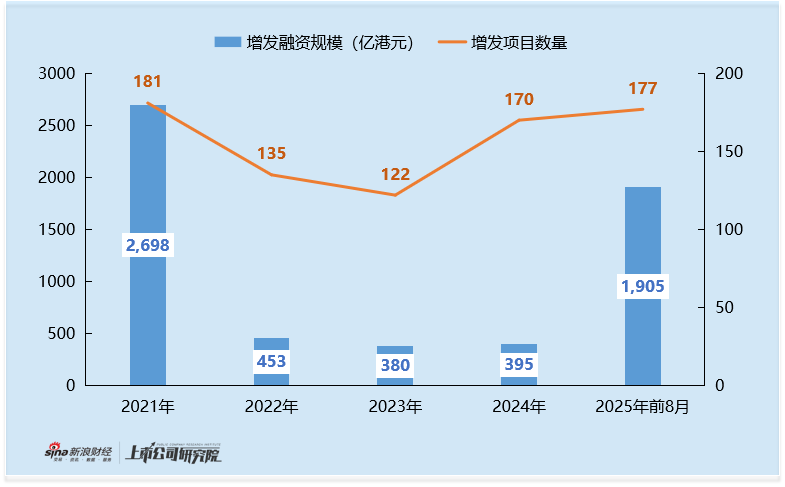
Group 1: Market Overview - The Hong Kong capital market is expected to see a significant recovery in 2025, with IPO financing reaching HKD 132.9 billion in the first eight months, a 50% increase compared to the total for 2024 [1] - The secondary market for Hong Kong stock offerings is performing even stronger, raising HKD 190.5 billion, which is 3.8 times higher than the total for 2024, with an average fundraising size of HKD 1.1 billion per project [1] Group 2: Underwriting Market Characteristics - The underwriting market for Hong Kong stock offerings in 2025 shows a "head concentration and foreign capital leading" characteristic, with six out of the top ten underwriters being foreign investment banks [3] - The top six underwriters have all surpassed HKD 15 billion in underwriting scale, collectively accounting for over 70% of the overall market [3] Group 3: Top Underwriters - Goldman Sachs leads the underwriting market with a scale of HKD 39.5 billion, holding a market share of approximately 21%, and has a strong focus on "head large projects" [5] - CITIC Securities ranks second with HKD 24.8 billion, but its underwriting structure is heavily reliant on a single large project, which limits its overall project diversity [6] - UBS ranks third with HKD 24.1 billion, demonstrating a balanced approach with both large and small projects, contributing to its competitive position [7] Group 4: Performance Discrepancies - CICC, while being the top underwriter for IPOs, has seen a significant drop in its performance in the secondary market, with only HKD 21.3 billion in underwriting scale, indicating a disconnect in core client cooperation [8][9] - Guotai Junan, despite having the highest number of projects at 27, has a low underwriting scale of HKD 9.7 billion, reflecting its inability to secure large projects [10]



2025年港股增发承销排名:瑞银承销规模排名第三 大中小项目均衡布局 承销规模紧追中信
Xin Lang Zheng Quan· 2025-09-05 15:38
Group 1: Market Overview - The Hong Kong capital market is expected to see a significant recovery in 2025, with IPO financing reaching HKD 132.9 billion in the first eight months, a 50% increase compared to the total for 2024 [1] - The secondary market for Hong Kong stock offerings is performing even stronger, raising HKD 190.5 billion, which is 3.8 times higher than the total for 2024, with an average fundraising size of HKD 1.1 billion per project [1] Group 2: Underwriting Market Characteristics - The underwriting market for Hong Kong stock offerings in 2025 shows a "head concentration and foreign capital leading" characteristic, with six out of the top ten underwriters being foreign investment banks [3] - The top six underwriters have all surpassed HKD 15 billion in underwriting scale, collectively accounting for over 70% of the overall market [3] Group 3: Top Underwriters - Goldman Sachs leads the underwriting market with a scale of HKD 39.5 billion, holding approximately 21% market share, and has a strong focus on "head large projects" [5] - CITIC Securities ranks second with HKD 24.8 billion, but its underwriting structure is heavily reliant on a single large project, which limits its overall capability [6] - UBS ranks third with HKD 24.1 billion, demonstrating a balanced approach with both large and small projects, contributing to its competitive position [7] Group 4: Performance Discrepancies - CICC, while being the top underwriter for IPOs, has seen a significant drop in its performance in the secondary market, with only HKD 21.3 billion in underwriting scale [8] - Guotai Junan, despite having the highest number of projects at 27, has a low underwriting scale of HKD 9.7 billion, indicating a lack of large project breakthroughs [10]


2025年港股增发承销排名:中金公司IPO与增发承销排名表现反差 核心客户合作断层
Xin Lang Zheng Quan· 2025-09-05 15:37
Group 1: Market Overview - The Hong Kong capital market is experiencing a significant recovery in 2025, with IPO financing reaching HKD 132.9 billion in the first eight months, a 50% increase compared to the total for 2024, marking a four-year high [1] - The secondary market for Hong Kong stocks is showing even stronger performance, with fundraising reaching HKD 190.5 billion, which is 3.8 times higher than the total for 2024, and an average fundraising size of HKD 1.1 billion per project [1] Group 2: Underwriting Market Characteristics - The underwriting market for Hong Kong stock issuances in 2025 is characterized by a concentration of top players, with foreign investment banks holding six of the top ten spots, including Goldman Sachs, UBS, and Morgan Stanley [2] - The top six underwriters have all surpassed HKD 15 billion in underwriting scale, collectively accounting for over 70% of the overall market [2] Group 3: Top Underwriters - Goldman Sachs leads the underwriting rankings with an underwriting scale of HKD 39.5 billion, holding a market share of approximately 21%, and is known for its focus on "head projects" [4][5] - CITIC Securities ranks second with HKD 24.8 billion in underwriting scale, but its performance is heavily reliant on a single large project, the HKD 43.5 billion issuance from BYD, which accounts for about 60% of its total underwriting [6] - UBS ranks third with HKD 24.1 billion, demonstrating a balanced approach by participating in both large and small projects, which enhances its structural resilience [7] Group 4: Performance Discrepancies - China International Capital Corporation (CICC) is the top underwriter for IPOs but has seen a significant drop in its performance in the secondary market, with only HKD 21.3 billion in underwriting scale, indicating a disconnect in core client cooperation [8][9] - Guotai Junan, despite having the highest number of projects at 27, ranks seventh in terms of underwriting scale at HKD 9.7 billion, primarily due to a lack of participation in large projects [10]


2025年港股增发承销排名:高盛头部项目全覆盖 少而精策略稳坐承销排名榜首
Xin Lang Zheng Quan· 2025-09-05 15:34
Group 1: Market Overview - The Hong Kong capital market is expected to see a significant recovery in 2025, with IPO financing reaching HKD 132.9 billion in the first eight months, a 50% increase compared to the total for 2024 [1] - The secondary market for Hong Kong stock offerings is performing even stronger, raising HKD 190.5 billion, which is 3.8 times higher than the total for 2024, with an average fundraising size of HKD 1.1 billion per project [1] Group 2: Underwriting Market Characteristics - The underwriting market for Hong Kong stock offerings in 2025 shows a "head concentration and foreign capital leading" characteristic, with six out of the top ten underwriters being foreign investment banks [3] - The top six underwriters have all surpassed HKD 15 billion in underwriting scale, collectively accounting for over 70% of the overall market [3] Group 3: Top Underwriters - Goldman Sachs leads the underwriting rankings with a scale of HKD 39.5 billion, holding a market share of approximately 21%, and has a strong focus on "head large projects" [5] - CITIC Securities ranks second with HKD 24.8 billion, but its underwriting structure is heavily reliant on a single large project, which limits its overall project diversity [6] - UBS ranks third with HKD 24.1 billion, demonstrating a balanced approach with both large and small projects, contributing to its competitive position [7] Group 4: Performance Discrepancies - CICC, while being the top underwriter for IPOs, has seen a significant drop in its performance in the secondary market, with only HKD 21.3 billion in underwriting scale, indicating a disconnect in core client cooperation [8][9] - Guotai Junan, despite having the highest number of projects at 27, ranks seventh in scale with HKD 9.7 billion, primarily due to a lack of participation in large projects [10]
国际金价近期屡创新高,背后上涨驱动因素是什么?记者观察→
Sou Hu Cai Jing· 2025-09-05 15:25
Core Viewpoint - The recent surge in international gold prices is driven by expectations of potential interest rate cuts by the Federal Reserve, concerns over government debt sustainability, and increased investment in gold as a safe haven asset [1][3][5]. Group 1: Factors Driving Gold Price Increase - The market's expectation of the Federal Reserve potentially starting to cut interest rates this month has risen significantly, with a probability of 99.4% following recent employment data indicating weakness in the U.S. job market [5][6]. - Major financial institutions, including Goldman Sachs, have indicated that if the Federal Reserve adopts a low-interest-rate monetary policy, inflation pressures may rebound, leading to higher long-term U.S. Treasury yields and a decline in the stock market, which could drive more retail investors towards gold [7]. - Concerns over unsustainable government debt have led investors to sell long-term government bonds from the U.S., Japan, the UK, and several Eurozone countries, with some of the outflow directed towards gold investments. In August, global gold ETFs saw a net inflow of $5.5 billion, primarily from North America and Europe [9]. Group 2: Long-term Outlook and Investment Strategy - Analysts suggest that gold and precious metal investments have structural characteristics, especially with central banks increasing their gold reserves. The long-term trend of "financial repression" may support future increases in gold prices [11]. - Current gold prices are reportedly above their long-term equilibrium price, indicating that investors should focus on the long-term value of gold rather than short-term speculative opportunities [13].