
电子商务

Search documents
京东11.11吃喝玩乐惊喜日重磅开启 11月4日超市好物5折起!
Zheng Quan Ri Bao Zhi Sheng· 2025-11-04 10:20
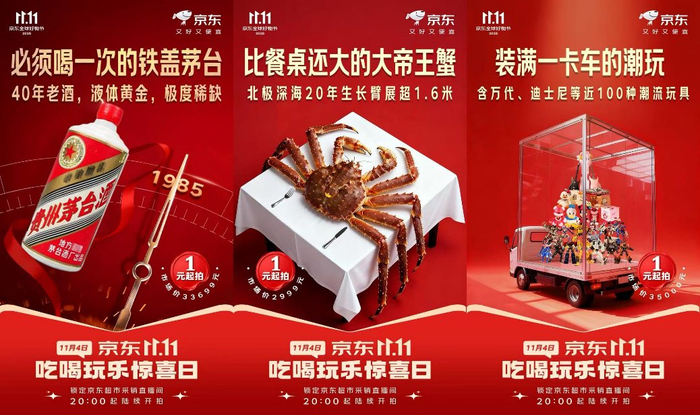
Group 1 - JD.com has launched the "Eat, Drink, Play, and Enjoy Surprise Day" as part of its 11.11 shopping festival, offering various benefits to consumers [1][3] - The event features auctions starting at 1 yuan for premium products such as Russian king crabs, truffles, and limited edition Moutai liquor, with total auction values exceeding 20,000 yuan [1][3] - The campaign includes exclusive discounts and promotions, such as 50% off coupons from celebrity Liu Yuning and various IP collaborations for limited-time offers [1][5] Group 2 - The event emphasizes gourmet food, showcasing unique items like wild black truffles from Yunnan and deep-sea caught Russian king crabs, enhancing the culinary experience for consumers [3][5] - JD.com is leveraging its supply chain advantages to provide fresh and affordable products across multiple categories, including dairy, alcohol, and fresh produce, with significant discounts [5] - The campaign also features exclusive products and limited-time offers, such as the 53-degree Moutai liquor available for 2,129 yuan and fresh milk from Mengniu at 49.9 yuan, ensuring quality assurance for consumers [5]


奂熹说税|私域交易也需要按季度报送涉税信息给税局吗
Jing Ji Guan Cha Bao· 2025-11-04 10:17
Core Viewpoint - The article discusses the requirement for online trading platforms in China to report tax-related information quarterly, clarifying which transactions are subject to this requirement and providing compliance suggestions for businesses engaged in private domain transactions [1][2][3][4] Group 1: Reporting Requirements - Online transactions that require reporting must involve three parties: the supplier, the customer, and the platform providing commercial services [2] - Platforms must report tax information for all merchants operating within them, regardless of whether they have the necessary licenses or registrations [2] - The reporting obligation encompasses all platforms that facilitate online transactions, ensuring comprehensive coverage of entities providing intermediary services [2] Group 2: Exempt Transactions - Transactions conducted through personal social tools like WeChat or QQ do not require reporting, as they lack the characteristics of a commercial platform [3] - Direct transactions between businesses and customers on self-operated platforms, such as proprietary e-commerce sites or apps, are also exempt from reporting [3] - Despite the exemption from reporting, businesses must still fulfill their tax obligations, as non-reporting does not eliminate the need for compliance [3] Group 3: Compliance Recommendations - Companies engaged in private domain transactions should analyze their business models to determine if they utilize platform services for online trading [4] - It is crucial for businesses to distinguish between public and private domain sales to avoid data confusion, especially when both types of transactions occur [4] - Maintaining documentation to prove transaction compliance is essential for demonstrating the legitimacy of transactions and adherence to tax regulations [4]
刘强东时隔两月再办网友见面会,三亚站台酒旅业务
Mei Ri Jing Ji Xin Wen· 2025-11-04 09:20
Group 1 - Liu Qiangdong will host the third wine tasting event on November 17 at the Sanya Poly Rosewood Hotel, marking his return to user engagement events after a two-month hiatus [1][2] - The previous two events included a cooking session where Liu prepared a local dish and a wine tasting in Shanghai featuring Lafite, showcasing a strategy to connect with users through personal interactions [1][2] - The upcoming event will offer attendees a chance to taste classic Wuliangye and enjoy a customized dinner at the hotel, with additional surprises planned for participants [2]

屯溪区“电商+快递”双线发力备战“双十一”
Zhong Guo Xin Wen Wang· 2025-11-04 08:36
Group 1 - The "Double Eleven" shopping festival in 2025 is being prepared with extended promotional periods by various platforms, focusing on "sufficient inventory, efficiency improvement, and safety assurance" to enhance consumer shopping experience [1][4] - Huangshan Huizhi Dao E-commerce Co., Ltd. has achieved a sales figure of 3.5 million yuan, with significant marketing efforts on Douyin, reaching 400,000 followers and over 80 million views for promotional videos [1] - The company has formed strategic investment partnerships with Huangshan Industrial Investment Group and Huangshan Supply and Marketing Group to enhance brand quality, expand channels, and improve services during the "Double Eleven" period [1] Group 2 - Yunda Express in Jiulong Park has reported a 15% to 20% increase in express delivery volume since starting "Double Eleven" operations on October 20, with ongoing growth as the second wave of promotions began on November 1 [2] - To manage peak business demands, companies are implementing scientific scheduling, hiring temporary workers, signing transportation guarantee agreements, and utilizing unmanned delivery vehicles to ensure smooth operations [4] - The "Double Eleven" shopping event is seen as a test of service efficiency in the business sector and a catalyst for regional consumption potential, with the Tuxi District Commerce Bureau committed to comprehensive support for merchants and consumers [4]

牵手OpenAI Shopify(SHOP.US)三季报AI合作与假日季指引成焦点
Zhi Tong Cai Jing· 2025-11-04 07:03
Core Viewpoint - Shopify is expected to report third-quarter earnings with revenue projected at $2.73 billion, up from $2.16 billion year-over-year, and earnings per share anticipated at $0.26, down from $0.66 the previous year [1] Group 1: Financial Performance Expectations - The total gross merchandise volume (GMV) is expected to grow by 28%, reaching $89.12 billion [1] - Deutsche Bank predicts a 27% increase in GMV, compared to a 30% increase in the same period last year [2] - Analysts expect revenue growth around 20% and gross profit growth around 20% for the fourth quarter, with GAAP operating expenses as a percentage of revenue around 30% [2] Group 2: Strategic Partnerships and Market Position - Shopify's stock price has risen following its partnership with OpenAI for "Instant Checkout," indicating potential benefits from advancements in AI and smart commerce [2] - The company is actively expanding its platform to attract larger enterprise clients, with notable partnerships including Starbucks and Miele [2] - Feedback from partners suggests strong market share growth in the enterprise customer segment, with expectations of surpassing competitors in new customer acquisition [2] Group 3: Market Sentiment and Holiday Season Outlook - Investors are looking for initial guidance for the fourth quarter as an indicator of holiday consumer trends and Shopify's ability to maintain growth compared to a weak performance last year [2] - Despite macroeconomic concerns, Shopify's stock has increased over 60% this year, driven by accelerated revenue growth and increased GMV share [2] - Analysts anticipate optimistic fourth-quarter guidance, supported by AI-driven efficiency improvements and cost control measures [2]

财报前瞻 | 牵手OpenAI Shopify(SHOP.US)三季报AI合作与假日季指引成焦点
Xin Lang Cai Jing· 2025-11-04 07:00
Core Viewpoint - Shopify is expected to report third-quarter earnings with revenue projected at $2.73 billion, an increase from $2.16 billion year-over-year, while earnings per share are anticipated to drop to $0.26 from $0.66 in the previous year [1] Group 1: Financial Performance Expectations - The total gross merchandise volume (GMV) is expected to grow by 28%, reaching $89.12 billion [2] - Analysts predict that Shopify's expansion in enterprise and international markets will boost performance [2] - Deutsche Bank forecasts a GMV growth of 27%, down from 30% in the previous year, indicating stable market demand despite inflation and tariff impacts [3] Group 2: Strategic Partnerships and Market Position - Shopify's collaboration with OpenAI on "Instant Checkout" has positively influenced its stock price, reinforcing the belief that Shopify and its merchants can benefit from advancements in AI and smart commerce [3] - The company has been actively expanding its platform to attract larger enterprise clients, with notable partnerships including Starbucks and Miele [3] - Feedback from partners suggests strong momentum in market share growth among enterprise clients, with expectations of surpassing competitors in new customer acquisition [3] Group 3: Holiday Season Outlook - Investors are keen to see preliminary guidance for the fourth quarter as an indicator of holiday consumption trends, especially given last year's weak performance [3] - Despite early-year market volatility and macroeconomic concerns, Shopify's stock has risen over 60% this year, driven by accelerated revenue growth in the second quarter [3] - Analysts expect fourth-quarter guidance to align with Wall Street expectations, projecting around 20% revenue growth and a similar increase in gross profit [3]
饿了么App最新内测版本已更名为“淘宝闪购”:正处于灰度测试阶段
Sou Hu Cai Jing· 2025-11-04 06:11
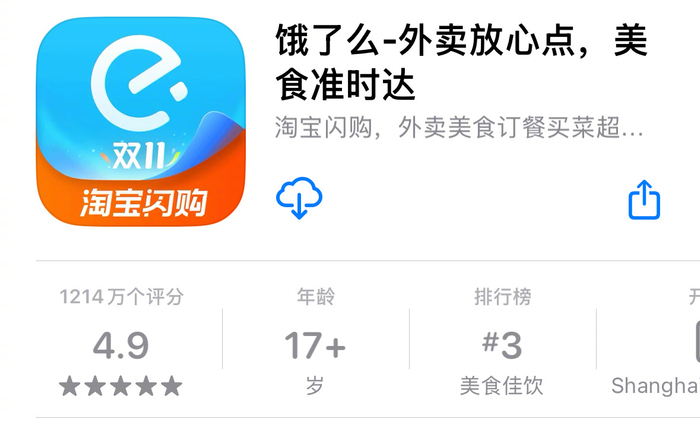
Core Insights - The latest internal test version of the Ele.me app has been renamed to "Taobao Flash Purchase," with the version number updated to 12.0.1 [1] - The rebranding is part of Alibaba Group's strategy to integrate its instant retail operations, aiming to strengthen "Taobao Flash Purchase" as a unified brand [1] - The integration transforms Ele.me from an independent food delivery platform into the fulfillment infrastructure for instant retail, collaborating with Taobao to achieve the goal of "30-minute delivery for everything" [1] Summary by Categories Product Development - "Taobao Flash Purchase" is currently in a gray testing phase, available to select users for experiencing food delivery and daily necessities instant delivery services [1] - The new slogan for "Taobao Flash Purchase" is "Order food with confidence, enjoy timely delivery" [1] Strategic Integration - The integration is seen as a response to competition from Meituan and JD.com in the instant retail sector, focusing on resource consolidation and brand unification to enhance delivery efficiency and user experience [1] - Ele.me's delivery capacity now fully supports Taobao Flash Purchase orders, covering a wider range of product categories [1] Market Positioning - Taobao Flash Purchase is an upgraded brand of Taobao's "Hourly Delivery," launched on April 30, 2025, with Ele.me providing supply, delivery capacity, and technical support [1] - This year marks the first Double 11 event for Taobao Flash Purchase, indicating its strategic importance in Alibaba's retail calendar [1]

Sensor Tower:2019–2025年全球电商应用下载量复合年增长率达6.5%
智通财经网· 2025-11-04 02:53
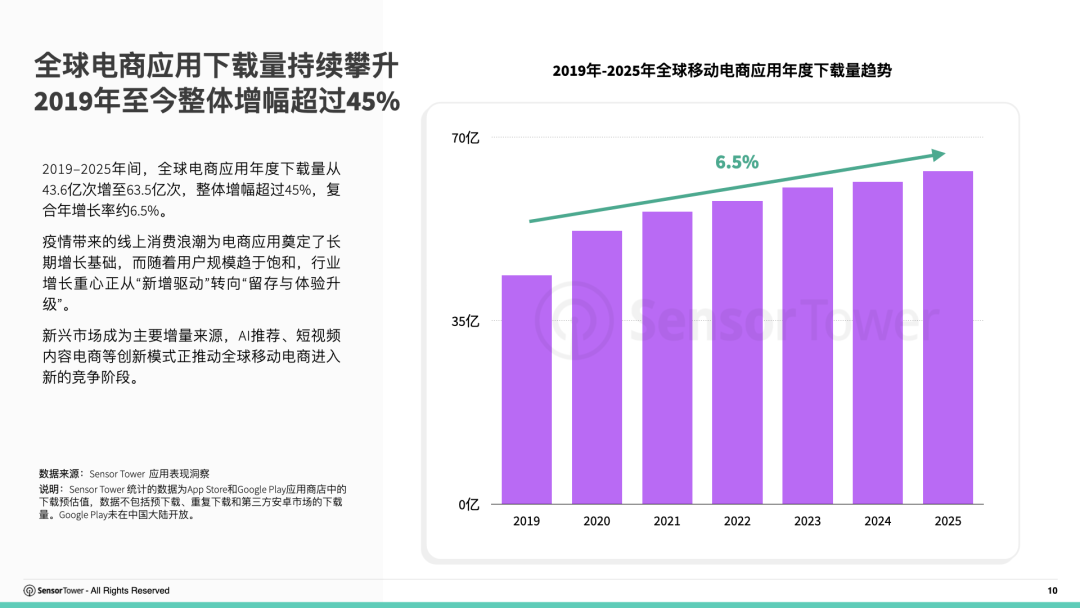
Core Insights - The pandemic has established a long-term growth foundation for e-commerce applications, with emerging markets becoming the main source of incremental growth driven by innovations like AI recommendations, short video content, social commerce, and instant delivery [1][3]. Group 1: Global E-commerce Trends - From 2019 to 2025, global e-commerce app downloads are projected to increase from 4.36 billion to 6.35 billion, representing an overall growth of over 45% and a compound annual growth rate (CAGR) of approximately 6.5% [1]. - By 2025, the growth focus of global e-commerce applications is shifting from mature markets to emerging regions, with Asia leading, while Latin America, Africa, and the Middle East become new engines for global download growth [3]. Group 2: Leading E-commerce Applications - "Temu" has maintained its position as the top global e-commerce app in terms of downloads and monthly active user (MAU) growth, particularly in emerging markets like Latin America, Africa, and the Middle East [6][16]. - "Blinkit" has emerged as a leading player in India's instant e-commerce sector, achieving significant growth with its "10-minute delivery" model, topping the global download growth chart for 2025 [7][23]. Group 3: Regional Highlights - In the Chinese iOS market, "Douyin Mall" has excelled, becoming the top app in both downloads and download growth, leveraging rich short video content and deep integration with shopping scenarios [10]. - In Africa and Latin America, "Temu" has seen a surge in downloads, with Latin America accounting for nearly 30% of its total downloads and Africa experiencing a 178% increase in download volume [19]. Group 4: User Demographics and Market Dynamics - "Blinkit" primarily attracts young urban males aged 25-34, with a significant female user base of 40%, indicating potential for growth in female-targeted marketing [26]. - "Naver Plus Store" has quickly become the top e-commerce app in South Korea, utilizing AI-driven recommendations and social commerce features to enhance user experience [30].
饿了么更名淘宝闪购开启灰度测试,承接阿里即时零售战略
Cai Jing Wang· 2025-11-04 02:32
Core Viewpoint - Ele.me has officially rebranded to "Taobao Flash Purchase" as part of Alibaba Group's strategy to integrate its instant retail services, aiming to enhance its positioning as a unified brand [1] Group 1: Rebranding and Strategy - The app update to version 12.0.1 marks the transition from Ele.me to "Taobao Flash Purchase," currently in a gray testing phase for select users [1] - The new slogan for "Taobao Flash Purchase" is "Order with confidence, food delivered on time," indicating a focus on reliable service [1] - This rebranding is part of Alibaba's broader strategy to transform Ele.me from an independent delivery platform into a foundational infrastructure for instant retail, aligning with Taobao's traffic [1] Group 2: Operational Changes - Ele.me's delivery capacity now fully supports orders from Taobao Flash Purchase, expanding the range of available products [1] - The initiative aims to achieve the goal of "30-minute delivery for everything" by integrating logistics and delivery services [1] - Starting from October 2025, visual elements such as rider uniforms and app icons will be updated to reflect Taobao's primary orange color, further solidifying brand identity [1]

胡麒牧:拼多多通过消费平权激发了消费潜力
Zhong Guo Jing Ying Bao· 2025-11-04 01:13
Core Insights - The annual "Double 11" e-commerce promotion is currently underway, with online retail accounting for over 30% of total retail sales in China [1] - Pinduoduo has successfully tapped into rural and western e-commerce markets, leveraging consumption equality to expand market size and stimulate consumer potential [1][2] - The e-commerce landscape has diversified over the past decade due to varying industry development stages, market entry timing, and technological capabilities of different platforms [1] E-commerce Expansion to the West - E-commerce's westward expansion is a new trend that involves mutual empowerment of consumption and industry, aiming for larger economies of scale [2] - Four reasons for this trend include: seeking new growth in a maturing market, the implementation of rural revitalization strategies, the vast consumer potential in the west, and the transfer of manufacturing from the east [2] - A balanced development between eastern and western regions can enhance the overall market size, aiding in the response to external shocks [2] Conditions for Successful Expansion - Successful westward expansion requires several conditions: cultivation of online shopping habits, increased income levels, improved infrastructure, and advancements in digital technology [3] - Challenges include matching supply and demand through platform algorithms, enhancing consumer experience, and utilizing subsidies to penetrate western markets [3] Pinduoduo's Strategy - Pinduoduo has rapidly gained market share by implementing significant subsidies to achieve economies of scale, attracting more resources and enabling profitable business models [4] - The company's strategic focus on e-commerce, avoiding diversification, and prioritizing direct consumer and industry subsidies over marketing has been crucial to its success [5][6] - Pinduoduo's unique "team purchase" model fosters secondary economies of scale by consolidating individual demands, enhancing user engagement, and expanding its ecosystem [6]
