旅游业

Search documents
免签游的俄罗斯,果真是个大坑吗?
3 6 Ke· 2025-12-18 04:05
Core Viewpoint - The initial wave of Chinese tourists to Russia after the visa-free policy has returned with mixed reviews, highlighting concerns about high prices, poor service, and inadequate internet connectivity, leading to hesitation among potential travelers [1]. Accommodation - Russian hotels are criticized for being expensive and of poor quality, largely due to the withdrawal of Western hotel brands and aging local facilities. However, some travelers found satisfactory options by choosing the right channels [3][4]. - In Moscow, hotel prices are comparable to Hong Kong, while St. Petersburg is more affordable, similar to major Chinese cities [3]. - Booking platforms like booking.com and Agoda are unavailable, but Chinese travelers can find good deals through domestic OTA platforms [4][5]. Transportation - Public transportation in major cities like Moscow and St. Petersburg is reported to be convenient, with affordable options such as a 72-hour public transport pass costing around 63 RMB [6]. - Train travel between cities is comparable to domestic experiences, but purchasing tickets can be complicated without a local bank card [6][7]. Internet Connectivity - Internet access in Russia is problematic, with unreliable signals and restrictions on popular social media platforms. Travelers are advised to purchase local SIM cards in advance [8][9]. Pricing - Prices in Moscow are notably high, often exceeding those in Tokyo and Hong Kong, while regions like Vladivostok and Lake Baikal offer better value [10][11]. - Travelers can manage expenses effectively by preparing cash and using local payment cards like YooMoney [10][11]. Service - Russian service culture is perceived as less warm compared to other countries, with some travelers noting a lack of enthusiasm from locals. However, experiences vary, and some found interactions to be positive [12][13][14]. Recommendations - The overall sentiment suggests that young Chinese travelers who are well-prepared and willing to navigate the challenges can have a rewarding experience in Russia, particularly those interested in its unique culture and history [15][16][17].
海南自贸港全岛今日封关,对河南有何影响?
Sou Hu Cai Jing· 2025-12-18 01:54
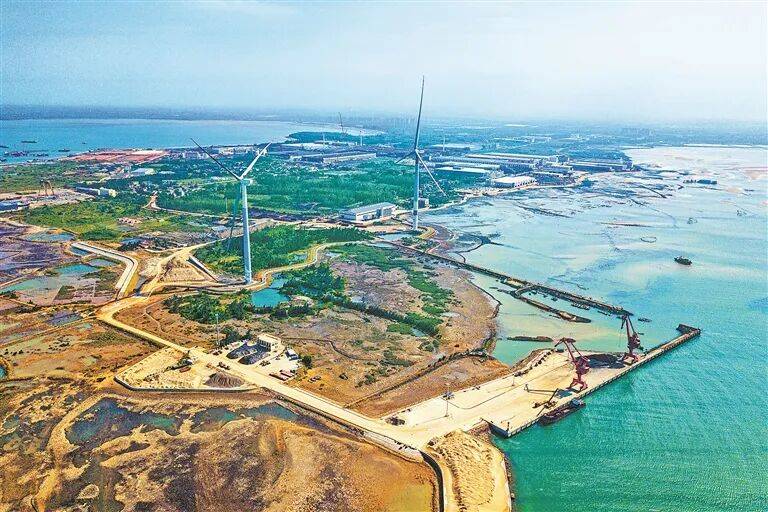
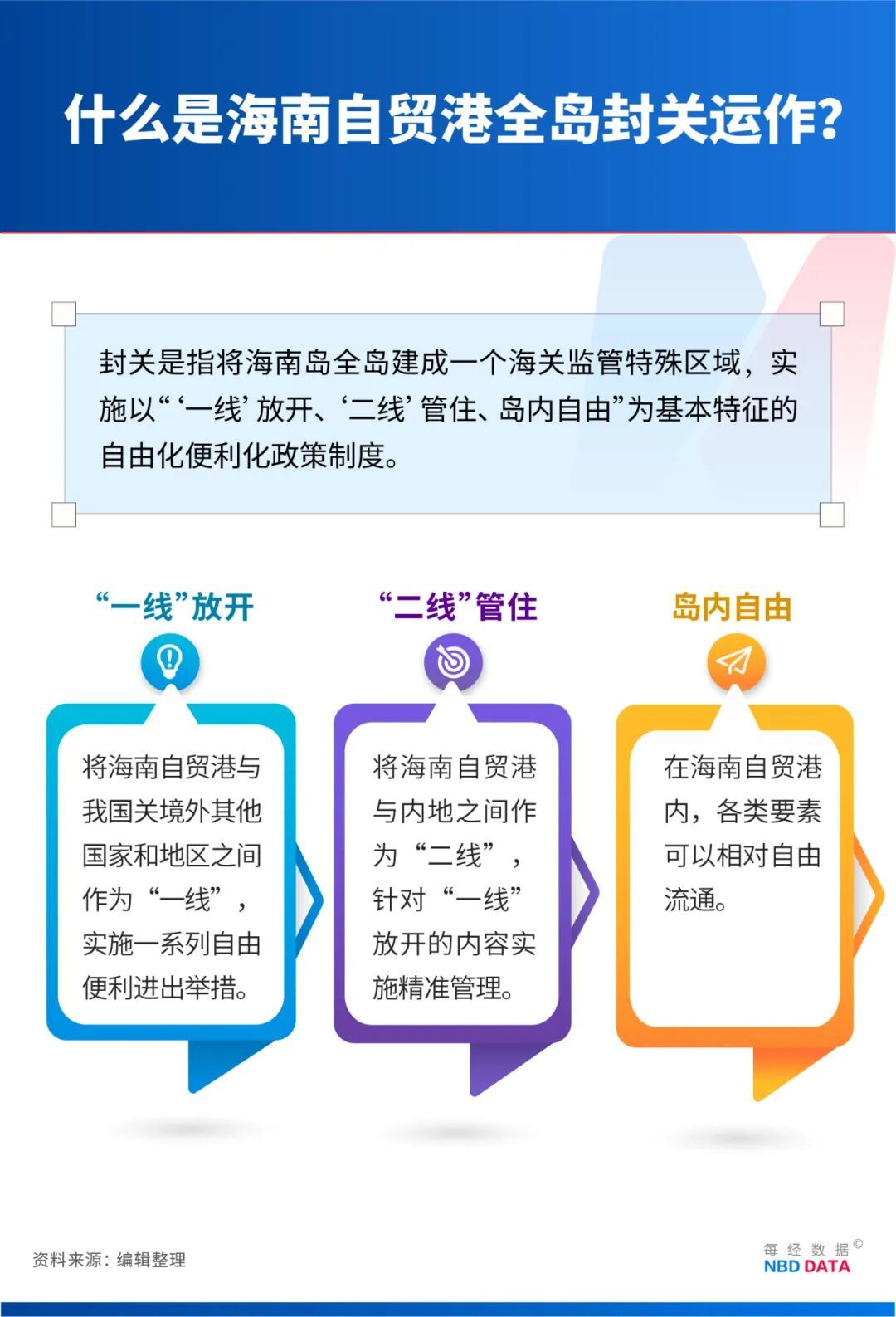
Group 1 - The official launch of the Hainan Free Trade Port's island-wide customs closure on December 18 aims to create a special customs supervision area with liberalized policies characterized by "open on one line, controlled on another, and free within the island" [1][3] - The implementation of "zero tariffs, low tax rates, and simplified tax systems" will gradually create conditions for broader tax benefits for enterprises, significantly increasing the number of zero-tariff goods to cover approximately 74% of product categories, benefiting key industries such as pharmaceuticals and high-end food processing [3][5] - The "Double 15%" tax incentive policy will allow eligible enterprises and core talents to enjoy a 15% income tax reduction, which is a core attraction of the Hainan Free Trade Port policies [3][5] Group 2 - After the customs closure, most imported goods, including production equipment, raw materials, and daily consumer goods, will be exempt from tariffs, VAT, and consumption tax, reducing import costs and enhancing trade freedom for enterprises [5][6] - The customs closure is expected to significantly boost tourism and consumer spending in Hainan, with no additional documentation required for travel or business trips to the island [6][10] - Hainan will transform into a large "bonded warehouse" and international shipping hub, enhancing logistics connectivity with inland regions like Henan, which is crucial for leveraging the benefits of the new policies [7][10] Group 3 - The opening of new logistics channels to Hainan is essential for Henan to capitalize on the benefits of the customs closure, with ongoing practices already demonstrating increased shipping activity [7][8] - The collaboration between Hainan and Henan can extend beyond trade and logistics to include industrial cooperation, leveraging Henan's industrial strengths in manufacturing and food processing [11][12] - The establishment of the "Yuqiong Food Industry Park" in Hainan aims to support cross-border trade and logistics for Henan food enterprises, facilitating access to international markets [12][13] Group 4 - Henan's recent implementation of measures to align with international high-standard trade rules aims to enhance its level of openness and promote systematic reforms [13] - The proactive approach of Henan's Free Trade Zone in engaging with enterprises to understand their needs and promote Hainan's customs closure policies reflects a strategic effort to maximize the benefits of the new trade environment [13][14]

视频丨畅游240小时 外国游客深度解锁“宝藏中国”
Yang Shi Xin Wen Ke Hu Duan· 2025-12-18 01:43
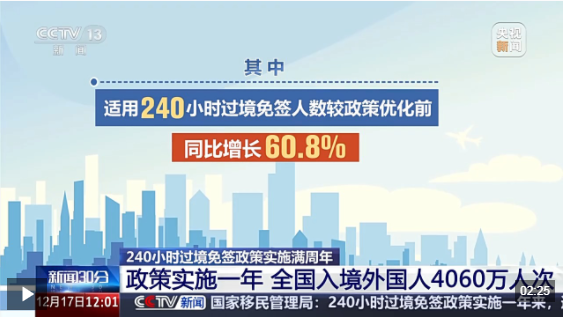
Core Insights - The implementation of the 240-hour visa-free transit policy has significantly enhanced the entry of foreign travelers into China, marking a year since its launch with a 60.8% increase in eligible travelers compared to the previous policy [1][3]. Group 1: Policy Impact - The policy has led to a total of 40.6 million foreign entries across various ports in China, reflecting a year-on-year growth of 27.2% [3]. - Major entry hubs like Beijing, Shanghai, and Guangzhou have seen substantial benefits, with over 340 million, 534.6 million, and 320 million foreign entries respectively, where 55% to 57% of these travelers utilized the visa-free option [5]. - Secondary ports have experienced explosive growth, with Xiamen seeing a threefold increase and Liaoning witnessing a 5.7-fold increase in foreign entries [5]. Group 2: Travel Experience Enhancements - Key ports have introduced dedicated channels and streamlined processes, such as "one-stop services" and online forms, to improve the travel experience for foreign visitors [7]. - The extended stay period has shifted traveler behavior from mere transit to deeper exploration, with 60% of travelers opting for interprovincial travel [10]. Group 3: Economic and Cultural Benefits - The policy has fostered new travel patterns, combining transit with in-depth tourism experiences, thus boosting inbound tourism consumption [8]. - Economic indicators show a significant increase in tourism spending, with Beijing's inbound tourist spending reaching 41.7 billion RMB, a 48% increase year-on-year [16]. - The synergy between the visa-free policy and tax refund services has effectively converted inbound traffic into economic growth, enhancing consumer spending and regional collaboration [17]. Group 4: Innovations in Tax Refund Services - The introduction of a streamlined tax refund process has led to a 229.8% increase in refund claims, with over 60% of refunds being reinvested into secondary purchases [21]. - Various regions have reported significant growth in tourism and retail sectors, with Hainan's duty-free shopping seeing an average spend of over 8,000 RMB per person among visa-free travelers [21]. Group 5: Future Prospects - The inclusion of 21 new ports under the visa-free policy is expected to further unlock inbound consumption potential, contributing to sustained economic growth [23].
从“去海南玩”到“去海南发展”:封关开启新机遇
Yang Shi Xin Wen· 2025-12-18 00:33
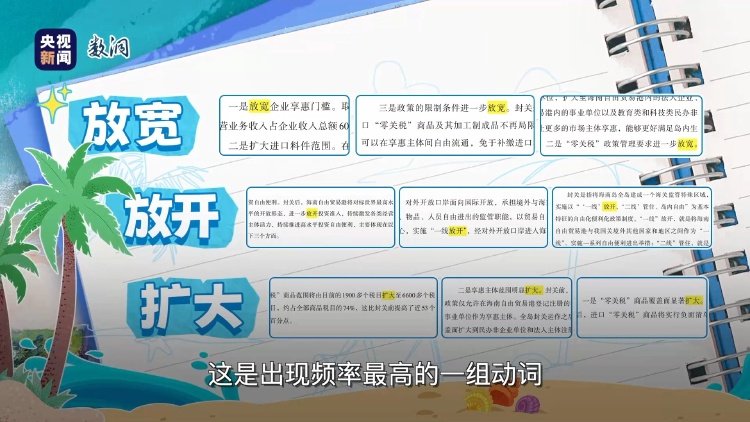
Core Viewpoint - The official launch of the Hainan Free Trade Port's full island closure operation marks a significant shift in focus from tourism to development opportunities, with a notable increase in interest for business and investment in Hainan [1][9]. Group 1: Policy Changes - The first key action is "release," indicating a relaxation of policies such as "zero tariff" management requirements and market access, creating opportunities for those looking to work and start businesses in Hainan [1][3]. - The second action is "exemption," which refers to cost reduction for enterprises. The number of zero-tariff items has expanded from 1,900 to 6,600, allowing a broader range of goods to enter Hainan tax-free. Goods that achieve over 30% value addition through processing in Hainan can also be exempt from import duties when entering the mainland [3][5]. - The third action is "simplification," focusing on the ease of personnel movement and administrative processes. Post-closure, personnel flow between Hainan and the mainland will be managed as domestic movement, with many cross-border and customs processes being streamlined [5][7]. Group 2: Economic Impact - The combination of these actions has led to a transformation in job opportunities in Hainan, with new positions emerging in customs, e-commerce, cross-border services, and aerospace support [7]. - There has been a significant increase in travel interest, with a 163% year-on-year rise in ticket bookings to Hainan during the off-peak season since the announcement of the closure [7]. - Data indicates that nearly 180 countries have seen a 26% increase in foreign visitors to Hainan this year, and there are approximately 7,000 job postings related to Hainan on international recruitment platforms [8].

【西安】吉林市冰雪主题推介会走进西安
Shan Xi Ri Bao· 2025-12-18 00:23
Core Viewpoint - The event held in Xi'an on December 17 aimed to enhance cultural and tourism cooperation between Jilin City and Xi'an, expanding the market for winter tourism in Northwest China [1] Group 1: Event Overview - The "Long White Snow" ice and snow theme promotion event showcased Jilin City's natural endowments, ice and snow resources, and cultural heritage [1] - Jilin City Museum highlighted valuable collections, including the "Jilin No. 7 Meteorite," emphasizing historical and cultural resources [1] - Jilin City Tourism Group introduced unique tourism products such as Beishan Ski Resort and night tours on the Songhua River, along with cultural creative products [1] Group 2: Market Engagement - Jilin City Tourism Association launched winter boutique travel routes specifically targeting the Xi'an market [1] - A special initiative, the "Dadong Cultural Tourism Privilege Card," was distributed through multiple channels to provide rich winter tourism options for Xi'an residents and tourism enterprises [1] Group 3: Public Response - Local residents expressed enthusiasm for Jilin's natural beauty and culinary offerings, indicating a positive reception towards the promotion of winter tourism [1]
新假期要做好配套与监管
Jing Ji Ri Bao· 2025-12-18 00:08
Core Viewpoint - The introduction of new school holidays in various regions of China, such as spring and autumn breaks, aims to alleviate academic pressure on students while simultaneously boosting tourism and consumption [1][2]. Group 1: Implementation of New Holidays - Multiple regions, including Zhejiang, Guangdong, and Sichuan, have begun to implement spring and autumn breaks, with northern provinces introducing winter holidays [1]. - The spring and autumn breaks originated in the 1960s as "busy farming holidays" to assist families with agricultural production, but have been reintroduced to provide students with time to adjust and relieve travel pressure during peak holiday seasons [1]. - Specific arrangements vary by region, such as Ningbo's spring break before the May Day holiday and Sichuan's three-day breaks, with schools offering free childcare services [1]. Group 2: Economic Impact - The flexible holiday system reflects advancements in educational philosophy and has led to significant consumer spending, with tourism product bookings in Sichuan increasing by over 50% year-on-year during the autumn break [2]. - Ticket bookings for scenic spots in Sichuan saw a 3.4 times increase compared to the previous year, and flight bookings from Chengdu rose by 22% week-on-week [2]. - In Xinjiang, ticket bookings for attractions increased by 16% during the specified period, indicating a positive economic impact from family-oriented travel and educational experiences [2]. Group 3: Challenges and Recommendations - The implementation of new holidays requires careful attention to ensure that the benefits are realized, particularly addressing the issue of parents not having time off when children are on break [3]. - Coordination between educational and labor departments is necessary to promote paid leave policies and explore flexible vacation models to support family time [3]. - There is a need for diverse childcare options and activities to assist families unable to care for their children during breaks, while also ensuring strict regulation to prevent misuse of the holiday system [3].
海南封关政策红利全解析:零关税、低个税、投资准入放宽……
Mei Ri Jing Ji Xin Wen· 2025-12-17 22:54
Core Viewpoint - The Hainan Free Trade Port will officially start its full island closure operation on December 18, 2025, marking a significant milestone in China's reform and opening-up process, with a focus on higher levels of openness to the world [1] Group 1: Policy Changes - The closure operation is not merely a policy adjustment but a comprehensive upgrade in the system, significantly enhancing the "zero tariff" level, optimizing processing and value-added tax exemptions, improving the investment environment, and facilitating entry and exit from Hainan [1][24] - The scope of "zero tariff" products will expand from 1,900 tax items to approximately 6,600 tax items, covering about 74% of all product tax items, an increase of nearly 53 percentage points compared to before the closure [7][11] - The beneficiaries of the "zero tariff" policy will broaden, allowing various enterprises and institutions with actual import needs to enjoy the benefits, rather than being limited to registered independent legal entities [7][11] Group 2: Tax Incentives - The low tax rate policy, known as the "two 15%" policy, will reduce corporate income tax to 15% for eligible enterprises, significantly lowering operational costs [12][24] - Individuals classified as high-end or urgently needed talents working in Hainan will have their personal income tax burden exceeding 15% exempted, providing a substantial incentive for talent retention [17][21] Group 3: Industry Focus - The Hainan Free Trade Port will prioritize the development of tourism, modern services, high-tech industries, and tropical characteristic efficient agriculture, aiming to create a modern industrial system with Hainan's unique characteristics [26][27] - The digital economy is expected to become a key industry, supported by robust infrastructure such as the Hainan-Hong Kong international submarine cable and the largest single data center in Hainan, enhancing data storage and processing capabilities for enterprises [28][29] Group 4: Comparison with Other Free Trade Ports - Unlike other international free trade ports, Hainan remains within China's customs territory, allowing for domestic circulation of goods and easier access for mainland residents [23][24] - Hainan's unique advantage lies in its access to China's vast domestic market, enabling it to better utilize both international and domestic resources [25]
全岛封关,去海南旅游购物有啥利好?
Xin Hua Wang· 2025-12-17 22:44
12月18日,海南自贸港正式启动全岛封关。什么是全岛封关?封关后去海南旅游购物有啥影响?会有哪些政 策利好?跟随海报一起了解。 加快吸引全球优质要素集聚,促进海南 自贸港高质量发展,为全国改革开放探 路开路,具有重要意义 关。这是我国坚定不移扩大高水平对外 开放、推动建设开放型世界经济的标志 性举措。什么是全岛封关? 封关对海 南旅游消费有啥影响? 封关运作后, 海南自贸港政策会有哪些变化? 什么是"全岛封关" 政策定义 海南岛全岛建成一个海关监管特殊区域, '一线' 管住、 实施以"'一线'放开、 ● ● 岛内自由"为基本特征的自由化便利化 政策制度 "一线"放开 海南与境外之间称为"一线",货物 进出更自由便利。其中,对符合条件 的"零关税"货物等径予放行 "二线"管住 海南与内地之间称为"二线","二线" 主要管住"一线"放开货物的税和证 岛内自由 在海南自贸港内,各类要素可以相对 自由流通 封关不是"封岛" 封关是为了开放,为了发展,准确讲就是 封关运作、扩大开放、加快发展 封关后海南与国际的往来将更加顺畅自 由,与内地的联系更加便捷高效 封关后去海南旅游 需要办理通行证吗 大家到海南岛出差、旅行,都 ...

240小时过境免签满周年 入境经济发展动力强劲
Yang Shi Wang· 2025-12-17 20:40
Group 1 - The core viewpoint of the news is the extension of the visa-free transit policy in China from 72 hours and 144 hours to 240 hours, effective December 17, 2024, which aims to enhance inbound consumption and tourism [1] - The policy covers 24 provinces and 65 ports, leading to a significant increase in inbound foreign visitors, with a total of 40.6 million arrivals, representing a year-on-year growth of 27.2% [1] - The number of visitors utilizing the 240-hour visa-free transit has increased by 60.8% compared to the period before the policy optimization [1] Group 2 - The combination of the enhanced entry policy and the departure tax refund system has resulted in over 10,000 departure tax refund stores nationwide, tripling the number expected by the end of 2024 [3] - The scale of departure tax refunds has surged by 22 times in the first three quarters of the year [3] - The average length of stay for tourists has increased from 5.3 days to 7.8 days, with spending on accommodation and dining growing by 85% [3]

海南全岛封关 购物、就业攻略请收好
Yang Shi Xin Wen· 2025-12-17 15:17
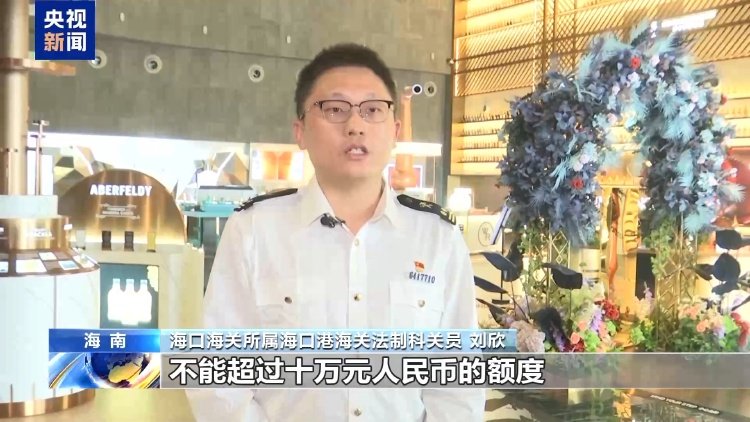
Core Viewpoint - Hainan Free Trade Port will officially start full island closure on December 18, 2025, aiming to enhance trade facilitation and establish itself as an international tourism consumption center while continuing the duty-free shopping policy and expanding the product list to meet changing consumer demands [1]. Policy Upgrades for Residents - The duty-free shopping policy for residents has been upgraded since November 1, allowing residents to purchase "immediate purchase and pick-up" items without limit on the number of purchases within a calendar year, provided they have at least one record of leaving the island [4][2]. - The "immediate purchase and pick-up" items are limited to 15 categories, including cosmetics, perfumes, clothing, and bags, with a single item price cap of 20,000 yuan, and an annual duty-free shopping limit of 100,000 yuan per person [6]. Integration of Duty-Free and Other Industries - The integration of duty-free shopping with tourism, culture, and entertainment industries is expected to deepen, promoting diverse consumption forms and creating more job opportunities in Hainan [9]. Talent Attraction and Business Environment - Hainan Free Trade Port offers incentives for attracting talent in key sectors such as tourism, modern services, high-tech industries, and agriculture, including personal income tax exemptions for high-income individuals [11]. - The corporate income tax for encouraged industries in Hainan is capped at 15%, significantly lower than the mainland average, providing a favorable environment for entrepreneurs [17]. - The streamlined process for starting a business allows entrepreneurs to begin operations with a written commitment to meet relevant requirements, reducing bureaucratic hurdles [15]. Future Opportunities - The opening of Hainan as a duty-free zone is expected to create a "national flow entry" for industries like cross-border e-commerce, high-end manufacturing, and logistics, leading to increased job opportunities and a demand for skilled labor [19]. - The policies implemented in Hainan are seen as a model for high-level opening up and can serve as a reference for other regions in China [21].