低空经济

Search documents
加快培育高质量发展主力军——深圳龙华区上市公司总市值突破2万亿元
Quan Jing Wang· 2025-09-26 15:06
Group 1 - The event "Brilliant Spark, Illuminate Longhua" was organized by CITIC Securities, Shenzhen Wealth Management Association, and Longhua District Development and Reform Bureau, focusing on connecting 11 A-share companies with a market value of over 10 billion [1] - CITIC Securities shared insights on market value management, mergers and acquisitions, and "A+H" listings in the context of the AI era [1] - The Shenzhen branch of Huishang Bank promoted a "one-stop" financial service solution for listed companies during the event [1] Group 2 - Longhua District is transitioning from an "industrial district" to a "strong industrial and manufacturing district," building an advanced manufacturing system led by the digital economy and supported by new energy and high-end medical devices [2] - As of late September 2025, Longhua District has 40 listed companies, ranking fourth among Shenzhen districts, with a total market value exceeding 2 trillion yuan, placing third citywide [2] - Over 80% of the listed companies in Longhua are private enterprises, and more than 70% are in advanced manufacturing [2] Group 3 - In June, Longhua District implemented a three-year action plan to promote the cultivation and service of listed companies, focusing on supporting mergers and acquisitions, project implementation, and "A+H" listings for companies with a market value of over 10 billion [3] - The district is building a mergers and acquisitions project database and aims to attract top financial institutions to invest in these projects, ensuring that quality projects can be realized and operational quickly [3] - Longhua District plans to continue inviting leading financial institutions like CITIC Securities to provide diverse financial services to manufacturing enterprises, aiming to reduce costs and enhance benefits for these companies [3]
保障青年就业、骑手安全与养老钱:人社部详解“十四五”成果
2 1 Shi Ji Jing Ji Bao Dao· 2025-09-26 12:30
Employment and Social Security Achievements - The "14th Five-Year Plan" has achieved significant results in employment and social security, with urban new employment reaching 59.21 million by the end of August, exceeding the target of 55 million [1][3] - The unemployment rate for urban youth aged 16-24 was reported at 18.9% in August, reflecting a slight increase from the previous year [1][3] New Employment Forms and Rights Protection - The rise of new employment forms, such as delivery workers and ride-hailing drivers, has led to increased focus on their rights, particularly regarding occupational injury protection [4][5] - Pilot programs for occupational injury protection have been initiated in seven provinces, expanding to 17 provinces, covering various industries [5] Skills Training Initiatives - A large-scale vocational skills training initiative aims to train 30 million people over three years, addressing the skills mismatch in the labor market [2][3] - Specific training programs are being implemented for different groups, including enterprise employees, migrant workers, and recent graduates [3] Pension System Enhancements - The social security system has been strengthened, with the number of basic pension insurance participants reaching 1.072 billion, an increase of over 73 million since the end of the "13th Five-Year Plan" [6] - The second pillar of pension insurance, enterprise annuities, has grown to 7.56 trillion yuan, with significant investment returns reported [7] Social Security Fund Management - The total scale of the three social insurance funds reached 69.27 trillion yuan during the "14th Five-Year Plan," with a cumulative surplus of 9.81 trillion yuan [7] - The national social security fund has grown to 3.22 trillion yuan, with a consistent annual investment return of 7.55% since its establishment [8]
智汇低空,融创未来——平安银行上海分行协办“AI赋能低空经济”论坛,以多元金融助力新质生产力发展
2 1 Shi Ji Jing Ji Bao Dao· 2025-09-26 05:08
9月23日,由上海市人工智能行业协会指导、平安银行(000001)上海分行等机构协办的"AI赋能低空经 济 共探智能融合新未来"主题论坛在浦东张江模力社区成功举办。本次活动汇聚了低空经济与人工智能 领域的70余家代表性企业、行业专家及金融机构代表,围绕AI与低空经济的融合路径、基础设施构建 与金融支持机制展开深入探讨。 作为本次论坛唯一的协办金融机构,平安银行上海分行在推动产业与金融融合方面展现出积极姿态。平 安银行上海分行公司业务管理部负责人王春旭受邀出席,并在主题发言中系统阐述了平安银行在服务科 创企业、赋能新兴产业发展方面的战略布局与实践成果。 聚焦科创企业全生命周期,平安银行推出多元化金融支持体系 王春旭表示,面对低空经济、人工智能等新兴技术驱动型产业,平安银行已构建覆盖企业全生命周期的 金融服务方案,包括初创期信用贷款、成长期供应链金融、成熟期跨境并购支持等综合化产品体系。他 指出,低空经济作为国家战略性新兴产业,具有技术密集、资本密集、周期较长的特点,银行机构需 以"三大心态"深度融入产业发展: 一是以"细致务实"的心态夯实产业基础服务,聚焦企业从研发到商业化各阶段的融资需求,积极参与低 空基础设 ...

推动低空经济产业从“概念热”走向“实质兴”
Ke Ji Ri Bao· 2025-09-25 23:57
Core Viewpoint - The low-altitude economy is emerging as a strategic new industry that integrates new infrastructure, new productivity, new technology, and new consumption, playing a crucial role in promoting high-quality economic and social development [1] Group 1: Industry Value and Impact - The core value of the low-altitude economy lies in shaping future industrial competitive advantages, driving overall productivity leaps, and restructuring regional growth patterns [2] - It promotes traditional industry transformation through the construction of a "low-altitude+" industrial ecosystem, leading to the rapid rise of new business forms such as eVTOL and flying cars [2] - The development of the low-altitude economy is closely linked to high-end equipment manufacturing, driving collaborative development across upstream and downstream industries, potentially forming a trillion-level industrial cluster [2] Group 2: Regional Development and Policy Framework - Local economies can gain new momentum by developing characteristic low-altitude industries tailored to regional resources and conditions [3] - A unified and coordinated policy system for the low-altitude economy is essential, addressing fragmentation in airworthiness certification and airspace management [5] - The central government is promoting a multi-level, systematic policy framework through top-level design and local innovative practices [5] Group 3: Key Technologies and Trends - Key technologies in low-altitude equipment development include overall configuration and structural design, energy power, flight control, airspace management, and safety assurance [6][7] - Current trends in low-altitude equipment development are moving towards electrification, unmanned operation, and intelligence [8] Group 4: Talent Development and Education - There is a significant talent gap in the low-altitude economy, necessitating the establishment of a rapid response talent cultivation mechanism [9] - The Ministry of Education is actively developing undergraduate and doctoral programs in low-altitude technology and engineering to meet the industry's needs [10] Group 5: Flying Cars and Urban Mobility - The development of flying cars is expected to fill the gap in urban low-altitude transportation, alleviating ground traffic congestion [12] - Flying cars can leverage existing road infrastructure for takeoff and landing while utilizing urban low-altitude airspace, promoting a three-dimensional transportation system [12] - The market for flying cars in China has surpassed 10 billion and is expected to grow rapidly, becoming a core pillar of the low-altitude economy [12]
杭州加速打开“空中增量”
Mei Ri Shang Bao· 2025-09-25 23:43
同城急件闪送,骑手携手无人机精准投送;喝杯下午茶,指尖一点便有"空中外卖"上门;空中游览时, 尽览钱塘江的奔涌壮阔;短途出行中,"打个飞的"就能享受点对点直达服务…… 杭州的千米低空,正迎来前所未有的繁忙,一个立体、高效、便捷的空中交通新时代,正加速向我们奔 赴而来。 昨日启幕的第四届全球数字贸易博览会,恰是一扇望向未来的窗口——它不仅让我们看见杭州低空经济 的"空中增量",更让我们清晰触摸到其突破场景边界、拓展产业维度的无限可能。 商报记者 潘婷婷 通讯员 范杨 李清 周鸣 赵薇 1"极速飞车"、岚鹰飞机…… "无人机天团"来了 在数智出行展区,进门右手边一架炫酷的"极速飞车"很惹眼,它拥有像赛车一样的车架、四轴八桨多旋 翼。 这是今年天目山实验室自主研发的"天目山十一号"Vortex-F1智能超轻型单人低空飞行器,它是一款面向 个人使用的智能超轻型低空飞行器,飞行距离可达30多公里,最大飞行速度100公里/小时,"设计目的 是让大众体验极速驾驶的飞行乐趣,飞行时长大约是15-20分钟。"现场工作人员介绍。 这只是天目山实验室带来的重磅科技成果之一,在余杭中国飞谷展区,这里展示了新型无人机——"天 目山一号 ...
中国城市观丨百岛之城珠海:“海上新广东”的场景制胜之道
2 1 Shi Ji Jing Ji Bao Dao· 2025-09-25 23:20
Core Viewpoint - The article emphasizes the strategic importance of marine economy for high-quality urban development, highlighting Zhuhai's transformation into a leading marine economy hub through innovation and infrastructure development [2][3][19]. Marine Economy Development - The Guangdong provincial government has prioritized the development of the marine economy, aiming to create a modern marine industry system with international competitiveness [2][3]. - Zhuhai, known as the "City of a Hundred Islands," is leveraging its strong manufacturing base, technological innovation capabilities, and rich marine resources to become a key player in the marine economy [3][4]. Economic Contributions - By 2024, Zhuhai's marine production value is projected to reach 100 billion yuan, accounting for 22.3% of the city's GDP, with a contribution rate of 26.4% to economic growth [3][4]. - The city aims to achieve a marine production value of over 130 billion yuan by 2027, with an average annual growth rate of 10% [4]. Innovation and Technology - Zhuhai is focusing on technological innovation to enhance its marine economy, with over 40 marine technology innovation platforms and more than 60 marine research teams across its universities [12][14]. - The establishment of the Southern Marine Laboratory has led to the development of advanced marine equipment and technologies, enhancing the city's competitive edge in marine industries [14]. Infrastructure Development - Zhuhai has launched 108 "new marine infrastructure" projects with a total investment of 110 billion yuan, aiming to create a comprehensive digital infrastructure system for marine development [19][20]. - The city is working on integrating land and marine infrastructure to enhance its regional competitiveness and establish itself as a marine center [19][20]. Application Scenarios - Zhuhai is developing various application scenarios for its marine economy, including low-altitude logistics and marine ranching, to drive industry growth and innovation [6][8][9]. - The city has introduced a "three lists" approach to identify and promote marine technology innovation opportunities, addressing the challenges of matching products with application scenarios [7][10].
“四轮驱动”重塑区域经济增长逻辑
Qi Lu Wan Bao· 2025-09-25 21:48
Core Insights - The establishment of the Penghui Energy zero-carbon manufacturing base in Qingdao represents a significant investment of 4 billion yuan and aims for a production capacity of 12 GWh, marking a pivotal shift in the region's industrial landscape towards green energy [1][4] - The transition from a rail transport-dominated economy to a diversified industrial base, including green energy, integrated circuits, and low-altitude economy, is being driven by technological breakthroughs and ecological restructuring [1][8] Industry Transformation - The rail transport industry was previously the backbone of the Qingdao economy, with CRRC Sifang Co., Ltd. generating 38.25 billion yuan in revenue in 2020, accounting for 34.5% of the total revenue of high-tech enterprises in the region [2] - A decline in industrial added value by 4.8% in 2021 highlighted the risks of over-reliance on a single industry, prompting the need for structural optimization and upgrades [2][3] Cross-Industry Innovation - The integration of rail transport's industrial capabilities into the low-altitude economy has led to innovations, such as using rail component testing technologies for drone reliability verification [2][3] - The successful transformation of existing industrial advantages into new productive forces is emphasized as a core driver of industrial upgrade [3][8] Ecosystem Development - The strategy of "leading chains and building ecosystems" has been pivotal in addressing the challenges of a single-industry structure, with CRRC Sifang contributing nearly 200 billion yuan in output during the 13th Five-Year Plan, increasing local suppliers from 162 to 235 [4][5] - The rapid establishment of the zero-carbon manufacturing base by Penghui Energy, from initial discussions to project signing in just six months, exemplifies effective chain-based招商 (investment attraction) strategies [4][5] Technological Advancements - Qingdao Heertai Intelligent Control Technology Co., Ltd. has developed a "no electrolytic capacitor" technology that reduces energy consumption by 20% and costs by 5% for smart appliances [6][7] - The "source-grid-load-storage" microgrid system developed by Qingdao Zhongdian Green Network New Energy Co., Ltd. showcases advanced technology for efficient renewable energy utilization, achieving zero-carbon power supply for various projects [7][8] Policy Support and Investment - The Qingdao region has implemented a "technological transformation and chain strengthening" initiative, mobilizing 697 million yuan in funding over three years to support over 600 new technological transformation projects, leading to nearly 20 billion yuan in industrial investment [8] - The region's industrial structure transformation has resulted in a 12.2% increase in industrial added value in 2024, with the green energy sector experiencing a revenue growth rate of 16.2% in the first half of the year [8]
广东省低空经济产业专题对接会举办
2 1 Shi Ji Jing Ji Bao Dao· 2025-09-25 16:09
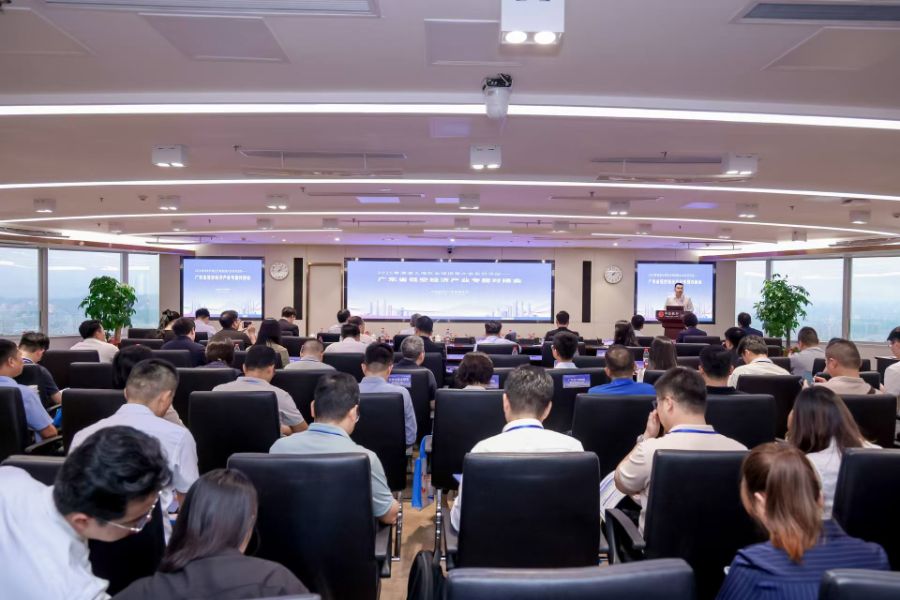
Core Insights - Guangdong's low-altitude economy has reached a scale of over 100 billion, with more than 15,000 related enterprises, accounting for over 30% of the national low-altitude economy industry chain, ranking first in the country [3] - The province aims to focus on airspace management reform, infrastructure connectivity, and industrial ecosystem cultivation, with expectations to exceed 1 trillion by 2026 [3] - The event served as a platform for resource matching and collaboration, promoting quality projects to connect with local cities, industrial parks, and financial institutions [1][3] Industry Development - The Guangdong Provincial Business Department has initiated a plan to establish a credible low-altitude data space by the end of 2027, enhancing the low-altitude data standard system [7] - The Guangzhou Development Zone is developing a 5 square kilometer low-altitude economic industrial park, including an 800-meter dedicated runway for testing new aviation vehicles [9] - As of July this year, Longhua District in Shenzhen has gathered 445 low-altitude economy-related enterprises, with a revenue of 3.8 billion in the first half of 2025, reflecting a 14% year-on-year growth [11] Financial Support - Citic Bank's Guangzhou branch plans to leverage its comprehensive financial services to support key segments of the low-altitude economy industry chain [5] - The bank showcased its unique products and services in technology finance, investment-loan linkage, and cross-border settlement to support innovation in the low-altitude industry [7] Project Matching and Collaboration - The event featured 23 project intentions for settling in Guangdong and 37 application scenario demands from 13 cities, facilitating discussions on financing and collaboration [12] - The low-altitude economy in Zhongshan's Tanzhou Town has attracted over 2 billion in investment over the past three years, with plans for future growth exceeding 2 billion [12]

经典重温 | “十五五”:产业破局与重构 ——“十五五”规划研究系列之三(申万宏观·赵伟团队)
申万宏源宏观· 2025-09-25 16:03
Core Insights - The article discusses the importance of industrial structure adjustment in China's 14th and upcoming 15th Five-Year Plans, emphasizing the shift from focusing on the ratio of the three industries to prioritizing technological innovation and R&D investment [3][5][28]. Group 1: Industrial Structure Adjustment in Five-Year Plans - Industrial structure adjustment is a crucial component of China's Five-Year Plans, serving as a key means to achieve core objectives [3][16]. - The focus of industrial structure adjustment has evolved from the ratio of the three industries to a greater emphasis on technological innovation and R&D investment [5][28]. - The 14th Five-Year Plan has introduced specific targets for R&D expenditure and digital economy core industries, reflecting a shift towards more refined and precise planning [5][28]. Group 2: Trends in Industrial Structure Adjustment - The direction of industrial structure adjustment has transitioned from emphasizing the three industries' ratios to focusing on technological innovation [5][28]. - The importance of the service sector has increased, with a notable shift from finance and real estate to information technology and production services [6][47]. - The 15th Five-Year Plan is expected to continue supporting technological innovation and address issues such as supply-demand mismatches and "involution" in the manufacturing sector [7][8][22]. Group 3: Key Areas of Focus in the 15th Five-Year Plan - The 15th Five-Year Plan is likely to prioritize emerging industries such as artificial intelligence, marine economy, and commercial aerospace [7][22]. - There is an anticipated increase in the emphasis on service industry development, particularly in enhancing service consumption and trade [8][26]. - The plan may also focus on improving the quality and efficiency of service industries, aligning with the broader economic development goals [8][49].

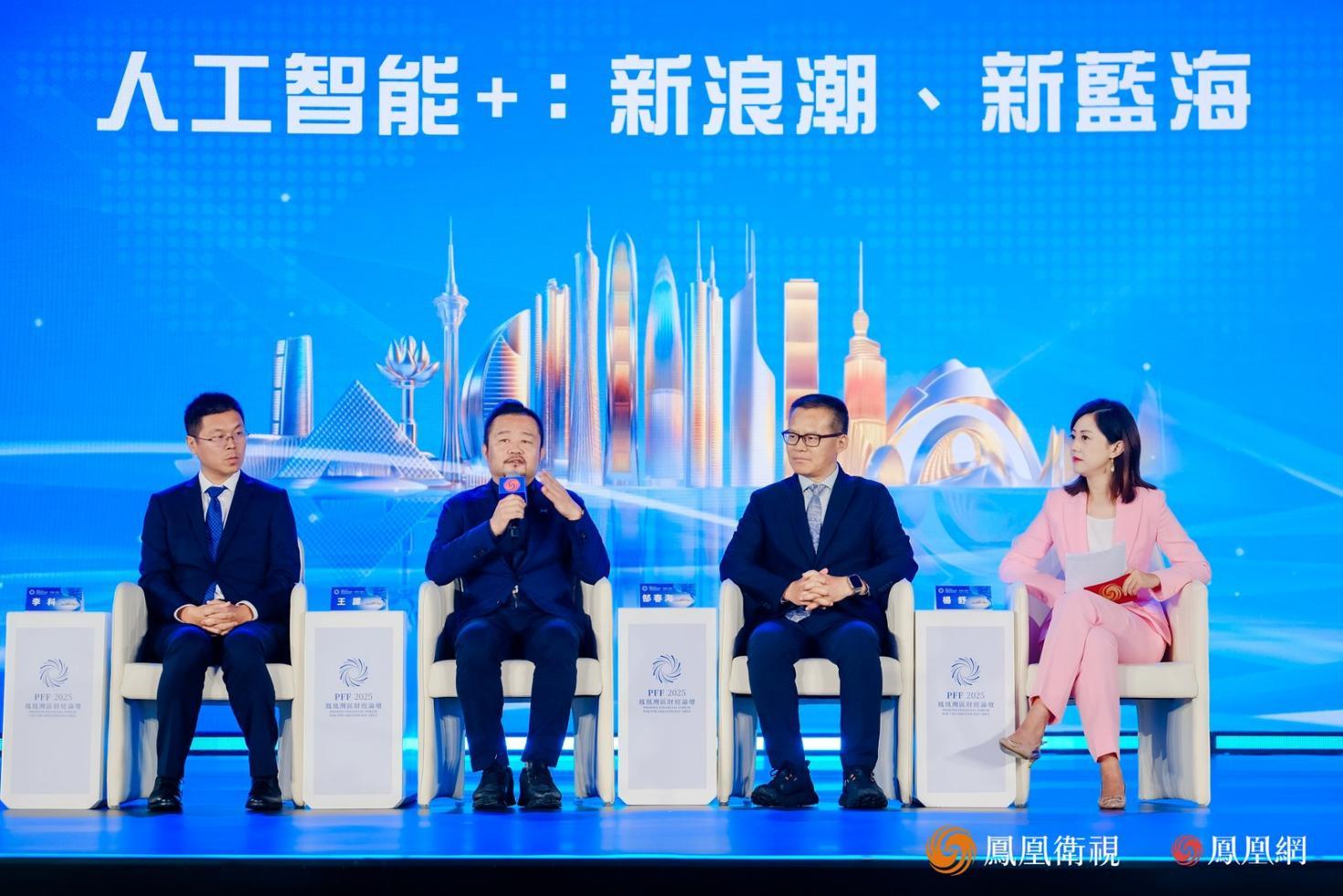
论道AI与低空经济,如何引领下一轮产业革命?
Feng Huang Wang Cai Jing· 2025-09-25 06:12
Group 1: Artificial Intelligence Insights - Artificial intelligence (AI) is deeply integrated into daily life and is becoming a crucial force in the intelligent transformation of traditional industries, with half of new subways in China already implementing unmanned driving [3][5] - AI's value lies in its continuous learning and evolution capabilities, which enhance operational precision over time, as illustrated by the use of AI-driven drone systems for tunnel inspections [5][11] - The development of large language models faces challenges due to insufficient Chinese language data, but leveraging high-quality data sources can improve model performance [7][10] Group 2: Low-altitude Economy Perspectives - The low-altitude economy is likened to the early stages of the automotive industry, with expectations of transitioning from empowering traditional industries to widespread logistics and eventual universal adoption [12] - The emergence of electric vertical takeoff and landing (eVTOL) aircraft aims to reduce costs associated with pilots and fuel, making air travel more accessible and efficient compared to traditional ground infrastructure [12] - China possesses a "latecomer advantage" in the low-altitude economy due to its relatively clean airspace, which facilitates the establishment of a management system primarily for unmanned aerial vehicles, supporting safe and scalable development [12]