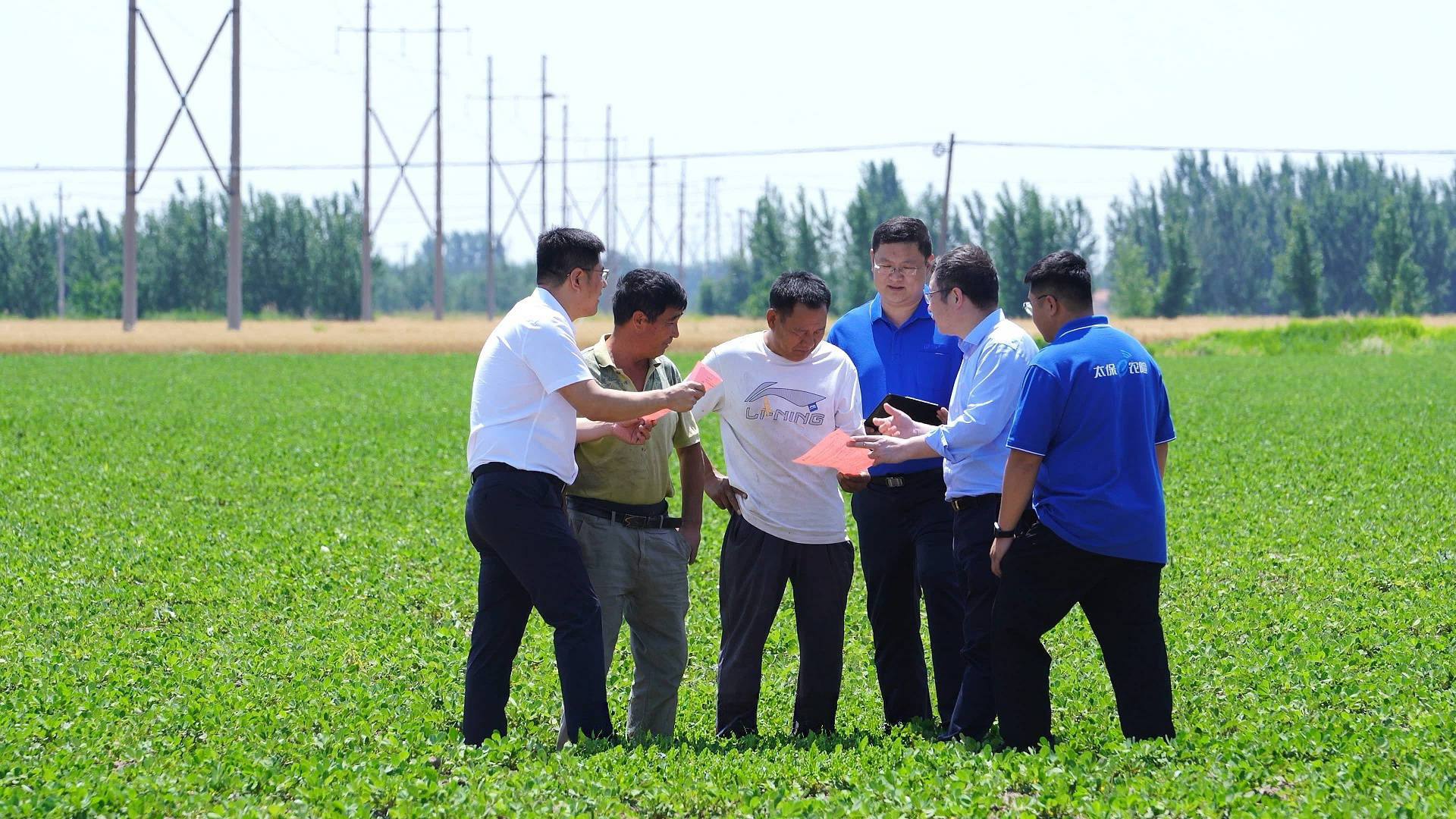
农产品种植

Search documents
2025年贺州市平桂区11个产品获“全国名特优农产品”称号
Xin Lang Cai Jing· 2026-01-14 09:22
Group 1 - The Ministry of Agriculture and Rural Affairs has released the third batch of national special and superior new agricultural products for 2025, with three products from Hezhou City, including Pinggui Eagle Mouth Peach and Pinggui Small Section Melon, successfully listed [1] - Pinggui District plans to add 10 green food certifications, 14 organic certification enterprises, and 3 selenium-rich certification enterprises by 2025, covering an area of 3,000 acres [3] - Eleven products, including Pinggui Liubao Tea, Pinggui Small Section Melon, and Pinggui Eagle Mouth Peach, have been awarded the title of "National Special and Superior Agricultural Products" [3] Group 2 - The district will incorporate the "Three Products and One Standard" initiative into the overall agricultural and rural development plan, with a budget allocation of 2.426 million yuan for certification enterprise support in 2025 [3] - The district is committed to strict adherence to the "Three Products and One Standard" certification review process, enhancing supervision and promoting the establishment of quality management systems among production entities [3][4] - Future plans include expanding the scale and coverage of the "Three Products and One Standard" initiative, strengthening brand cultivation and promotion, and improving the entire supply chain to enhance agricultural quality and efficiency [4]


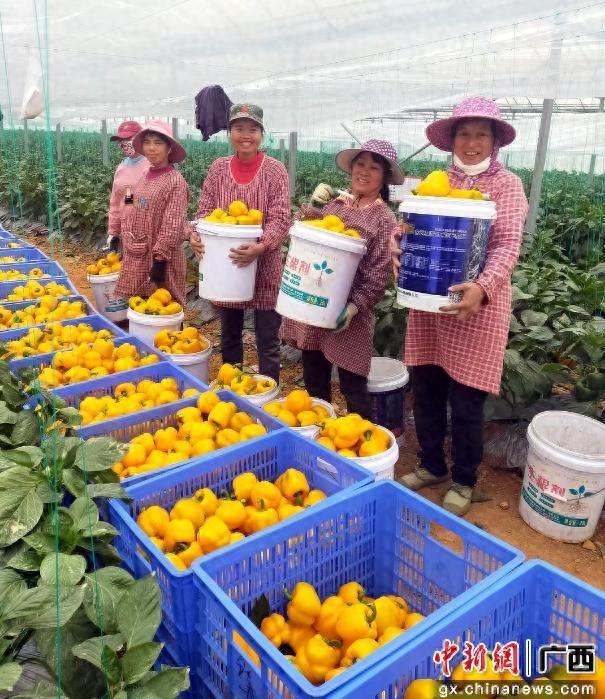
人民网评:农业根基更稳、底色更绿
Xin Lang Cai Jing· 2026-01-14 08:16
Group 1 - The total number of green, organic, and geographical indication agricultural products in China has reached 86,000, with the application of chemical fertilizers decreasing by 5% to 49.88 million tons compared to 2020, indicating that green development is a core driver of agricultural modernization [1] - The quality of agricultural products is improving, with the proportion of high-quality rice, specialized wheat, and high-oil, high-protein soybeans increasing year by year, and the health of livestock and aquaculture being promoted, leading to a rise in the supply of quality meat and aquatic products [1] - The monitoring of various vegetables shows that the compliance rate is mostly above 99%, with aquatic vegetables achieving a 100% compliance rate, ensuring consumers can enjoy safe and healthy food [1] Group 2 - The effective utilization coefficient of irrigation water in farmland has reached 0.580, with an average reduction of 14 cubic meters of actual irrigation water per mu, leading to a total annual reduction of 3.6 billion cubic meters of agricultural water [2] - In Dezhou, Shandong, the irrigation water volume for 2025 is projected to decrease by 35 million cubic meters compared to the average level during the "13th Five-Year Plan," while maintaining a grain yield of over 1 ton per mu and a total output exceeding 10 billion [2] - The time required for water transport in Liyang, Jiangsu, has been halved from 13 hours to 6 hours, reflecting advancements in water-saving technology and increased awareness among farmers [2] Group 3 - The utilization rates of fertilizers and pesticides for wheat, corn, and rice are projected to reach 43.3% and 44.1% respectively by 2025, an increase of 3.1 and 3.5 percentage points compared to 2020, indicating a positive shift in agricultural development methods [3] - The comprehensive utilization rate of crop straw has reached a high level, with various effective utilization models being explored, such as using straw for soil improvement, mushroom cultivation, and feed production [3] - The recycling of agricultural film is progressing steadily, with measures in place to establish recycling points and promote biodegradable films, reducing soil contamination and supporting sustainable agricultural development [3]

2026年第3周大豆实况转播,更新中
Xin Lang Cai Jing· 2026-01-13 10:52
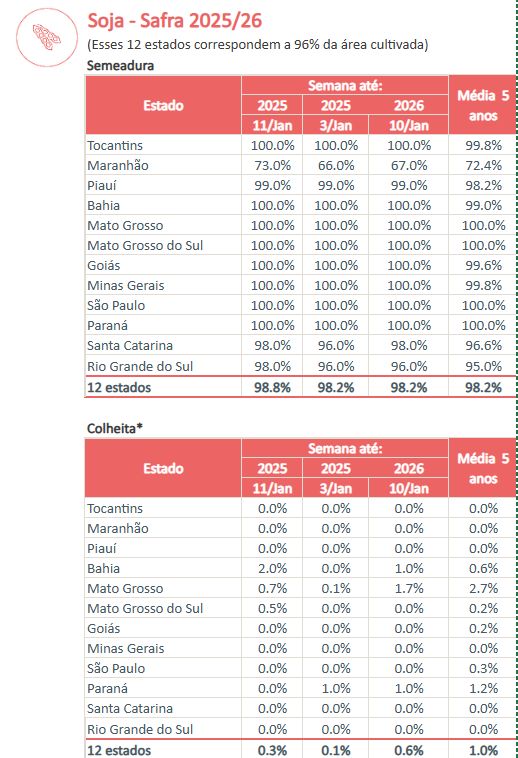
来源:市场资讯 (来源:南京玛合雅) 一、产业资讯:1、据巴西农业部下属的国家商品供应公司CONAB,截至1月10日,巴西大豆播种率为 98.2%,上周为98.2%,去年同期为98.8%,五年均值为98.2%;巴西大豆收割率为0.6%,上周为0.1%, 去年同期为0.3%,五年均值为1%。 | (Esses 12 estados correspondem a 96% da área cultivada) | | | | | | --- | --- | --- | --- | --- | | Semeadura | | | | | | | | Semana até: | | Média 5 : | | Estado | 2025 | 2025 | 2026 | anos | | | 11/Jan | 3/Jan | 10/Jan | | | Tocantins | 100.0% | 100.0% | 100.0% | 99.8% | | Maranhão | 73.0% | 66.0% | 67.0% | 72.4% | | Piauí | 99.0% | 99.0% | 99.0% | 98.2% | | B ...
油脂油料早报-20260113
Yong An Qi Huo· 2026-01-13 01:18
Report Summary 1. Report Industry Investment Rating No relevant information provided. 2. Core Viewpoints The report presents the latest data and trends in the global oilseeds and oils market, including soybean, palm oil, and rapeseed. There are changes in production, inventory, and export data of major countries, which will have an impact on the market supply and demand situation [1]. 3. Summary by Relevant Catalogs 3.1 2025/26 Annual US Soybean Information - The estimated ending inventory of US soybeans in 2025/26 is 350 million bushels, up from 290 million bushels in December [1]. - The estimated planted area is 81.2 million acres, and the harvested area is 80.4 million acres, both slightly increased compared to December [1]. - The estimated yield per acre is 53 bushels, the same as in December [1]. - The estimated production is 4.262 billion bushels, up from 4.253 billion bushels in December [1]. - The estimated export volume is 1.575 billion bushels, down from 1.635 billion bushels in December [1]. 3.2 2025/26 Annual Global Soybean Information - Brazil's estimated soybean production in 2025/26 is 178 million tons, up from 175 million tons in December, and the estimated export volume is 114 million tons, up from 112.5 million tons in December [1]. - Argentina's estimated soybean production is 48.5 million tons, and the estimated export volume is 8.25 million tons, both unchanged from December [1]. - China's estimated soybean import volume is 112 million tons, unchanged from December [1]. - The global estimated soybean production is 425.68 million tons, up from 422.54 million tons in December, and the estimated ending inventory is 124.41 million tons, up from 122.37 million tons in December [1]. 3.3 US Soybean Inventory on December 1, 2025 - The total soybean inventory in the US on December 1, 2025, was 3.29 billion bushels, a 6% increase from 3.1 billion bushels on December 1, 2024 [1]. - The on - farm inventory was 1.576 billion bushels, a 2% increase from the previous year, and the off - farm inventory was 1.714 billion bushels, a 10% increase from the previous year [1]. - The apparent consumption of soybeans from September to November 2025 was 1.3 billion bushels, a 20% decrease from the previous year [1]. 3.4 US Soybean Export Inspection Volume - As of the week ending January 8, 2026, the US soybean export inspection volume was 1,529,707 tons, higher than the market expectation of 800,000 - 1,275,000 tons [1]. - The export inspection volume to the Chinese mainland was 901,118 tons, accounting for 58.91% of the total [1]. - So far this crop year, the cumulative US soybean export inspection volume is 17,934,546 tons, compared with 31,324,934 tons in the same period of the previous year [1]. 3.5 Brazil's Soybean Harvest and Export - As of last Thursday, Brazil's 2025/26 soybean harvest rate was 0.6%, better than 0.3% in the same period of the previous year [1]. - Brazil exported 645,737.53 tons of soybeans in the first two weeks of January, with an average daily export volume of 107,622.92 tons, a 121% increase from the average daily export volume in January of the previous year [1]. 3.6 Malaysia's Palm Oil Situation - From January 1 - 10, 2026, Malaysia's palm oil export volume increased by 18% compared to the same period of the previous month, while the production decreased by 20.49% [1]. - Malaysia's palm oil inventory at the end of December 2025 soared to a nearly seven - year high, reaching 3.05 million tons, a 7.58% increase from the previous month [1]. - The palm oil production in December decreased by 5.46% to 1.83 million tons, but it was still the highest output in December in eight years [1]. - The palm oil export in December increased by 8.52% to 1.32 million tons, reversing the decline of the previous month [1]. 3.7 Global Rapeseed Situation - The estimated global rapeseed production in 2025/26 is 95.172 million tons, an increase of 9.174 million tons year - on - year, and the estimated ending inventory is 12.184 million tons, an increase of 2.384 million tons year - on - year [1]. - The estimated global rapeseed oil production is 35.65 million tons, an increase of 1.482 million tons year - on - year, and the estimated ending inventory is 3.299 million tons, an increase of 0.09 million tons year - on - year [1]. - The estimated global rapeseed meal production is 50.912 million tons, an increase of 1.846 million tons year - on - year, and the estimated ending inventory is 1.561 million tons, an increase of 0.125 million tons year - on - year [1]. - Canada's estimated rapeseed export volume in 2025/26 is 7.2 million tons, a decrease of 2.131 million tons year - on - year; the rapeseed oil export volume is 3.375 million tons, an increase of 0.035 million tons year - on - year; the rapeseed meal export volume is 5.6 million tons, a decrease of 0.199 million tons year - on - year [1]. 3.8 Spot Prices - From January 6 - 12, 2026, the spot prices of soybean meal in Jiangsu, rapeseed meal in Guangdong, soybean oil in Jiangsu, palm oil in Guangzhou, and rapeseed oil in Jiangsu fluctuated [2][3].
加快农业特色产业发展
Xin Lang Cai Jing· 2026-01-12 21:04
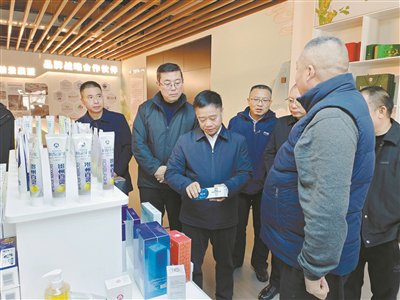
Group 1 - The research team from the Zunyi Municipal Committee of the Chinese Kuomintang conducted a study on accelerating the development of agricultural特色产业 and promoting comprehensive rural revitalization [3] - The team visited various locations including high-standard farmland for pea shoots, Guizhou Moutai's agricultural technology company, tea companies, and cosmetic manufacturing firms to assess the current status of特色农业, product processing, marketing development, and technological research capabilities [3] - Zunyi City has significant advantages in特色农业 such as tea, chili, ecological livestock, and traditional Chinese medicine, with a solid industrial foundation and vast development space, indicating a promising market outlook [3] Group 2 - The research team aims to produce a high-quality report with actionable recommendations to leverage特色资源优势 and support comprehensive rural revitalization [3]
一条条“村路”,运出农产品迎来观光客
Xin Lang Cai Jing· 2026-01-12 20:06
Core Insights - The implementation of a rural logistics system in Tianchang City has significantly improved the delivery of goods to villages, reducing delivery time from 2 days to 1 day and lowering agricultural product transportation costs by an average of 25% [1][4] Group 1: Rural Logistics and Transportation - Tianchang City has achieved full coverage of rural road and urban-rural passenger transport integration, establishing a three-tier delivery service system for rural logistics [1] - The city has built 1 city-level distribution center, 14 town-level service stations, and 175 village-level delivery points [1] - The rural road construction has reached 309 kilometers since the 14th Five-Year Plan, with a total rural road mileage exceeding 2,550 kilometers [4] Group 2: Economic Impact and Tourism Development - The rural logistics improvements have led to an increase in income for 61,300 farmers and have attracted over 500,000 tourists annually, generating more than 45 million yuan in rural tourism revenue [4] - The integration of transportation with tourism and e-commerce has created new business opportunities and enhanced the rural economy [2] - The development of themed roads, such as the "Tianchang 99 Road," has connected various tourist attractions and promoted rural tourism [2][3]
成都产多款农产品“绿色”上市
Xin Lang Cai Jing· 2026-01-12 18:00
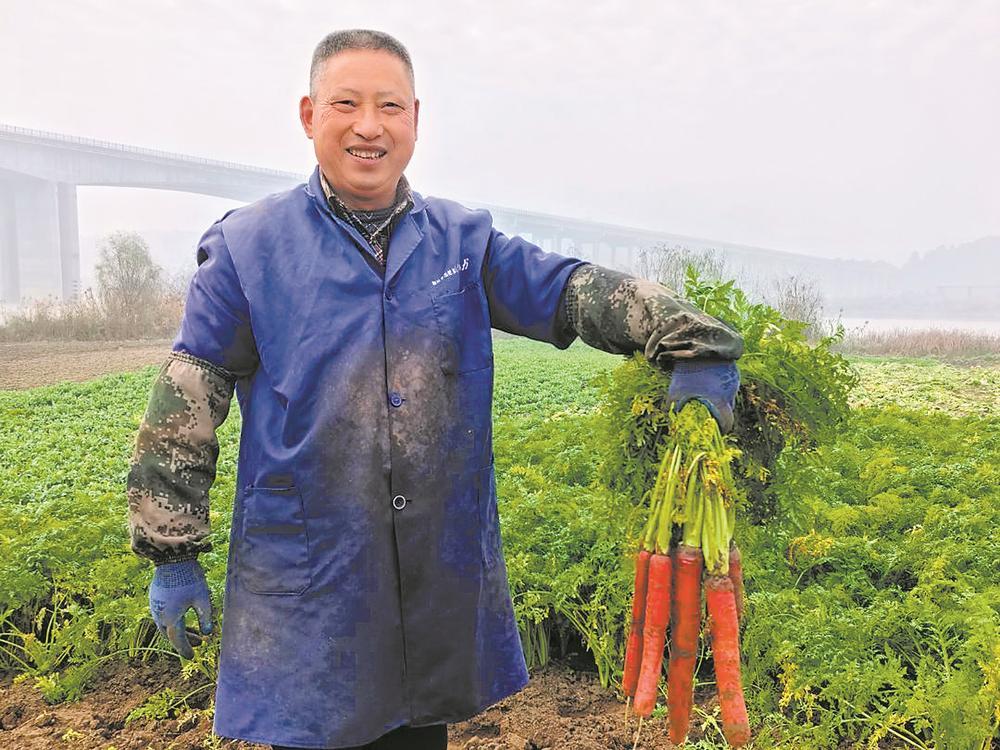
Group 1 - Chengdu is increasingly focusing on green and organic farming, with various agricultural products like truffles and carrots being highlighted for their health benefits and market potential [3][4] - The introduction of innovative farming techniques, such as the "forest cultivation" model, is enhancing the quality and yield of mushrooms, with expected production rates of 5,000 to 6,000 pounds per acre for certain varieties [3][4] - The "Tao Xin Hong" carrots from Longwang Village are achieving significant sales, with daily sales reaching 2,000 to 3,000 pounds, contributing nearly 30,000 yuan in income for farmers during the season [4] Group 2 - The production of truffles in Jintang County is set to continue until mid-March, with yields ranging from 300 to 800 kilograms per acre and market prices between 60 to 80 yuan per pound [4][5] - Jintang County is recognized as a leading global producer of truffles, with a stable quality and high demand, contributing to a significant portion of the national market [5] - The county's truffle cultivation spans nearly 30,000 acres, accounting for approximately 90% of the national trading volume, with an annual transaction value exceeding 8 billion yuan [5]
农业农村部发布1月中国农产品供需形势分析
Xin Hua Cai Jing· 2026-01-12 16:56
Core Insights - The Ministry of Agriculture and Rural Affairs of China released the January agricultural product supply and demand analysis, covering corn, soybeans, cotton, edible vegetable oil, and sugar [1] Corn - For the 2025/26 season, China's corn production data has been adjusted, with the planting area set at 44,961 thousand hectares, an increase of 0.5% year-on-year; the yield per hectare adjusted to 6,700 kg, up 1.6% year-on-year; and total production adjusted to 30,124 million tons, an increase of 2.1% year-on-year, reaching a historical high [2] - The current market for corn is active due to the traditional peak selling season, with sales progressing faster than last year and lower inventory levels among deep processing enterprises, indicating strong price support [2] Soybeans - The 2025/26 soybean production forecast aligns closely with the National Bureau of Statistics data, with minor adjustments made this month. The planting area is set at 10,255 thousand hectares, down 0.6% year-on-year; yield per hectare adjusted to 2,039 kg, up 1.9% year-on-year; and total production at 2,091 million tons, an increase of 1.3% year-on-year [3] - Domestic grain reserves are decreasing, leading to a strong market sentiment among traders, while high-protein soybean supplies are tight, prompting active procurement by processing enterprises [3] Cotton - The 2025/26 cotton production forecast has been adjusted, with the planting area set at 2,979 thousand hectares, an increase of 5.0% year-on-year; yield per hectare adjusted to 2,229 kg, up 2.6% year-on-year; and total production adjusted to 6.64 million tons, an increase of 7.7% year-on-year [4] - The sales pace of cotton has accelerated due to pre-Spring Festival inventory replenishment by textile enterprises, with the national cotton processing rate at 94.5% as of January 8, down 0.5 percentage points year-on-year, and the sales rate at 55.6%, up 24.1 percentage points year-on-year [4] Edible Vegetable Oil - The 2025/26 edible vegetable oil production forecast has been increased by 50,000 tons to 3,078 million tons, primarily due to increased production of cottonseed oil [5] - The import and consumption forecasts for edible vegetable oil remain unchanged from the previous month, with favorable weather conditions in major rapeseed production areas aiding growth [5] Sugar - The 2025/26 sugar supply and demand forecast remains consistent with last month, with northern beet sugar production concluding and southern cane sugar production peaking, leading to ample market supply [6] - As of the end of December, Guangxi's cumulative sugar production reached 1.94 million tons, with a sales rate of 45.56%, down 13.76 percentage points year-on-year; Yunnan's cumulative sugar production was 390,000 tons, with a sales rate of 71.72%, down 9.98 percentage points year-on-year [6]
南华浩淞大豆气象分析报告:巴西产区部分收获,阿根廷降雨偏少
Nan Hua Qi Huo· 2026-01-12 15:29
Report Industry Investment Rating - Not mentioned in the report Core Viewpoints - The report provides a detailed analysis of the soybean weather conditions in Brazil and Argentina, including sowing progress, growth stages, and potential impacts of rainfall on yields [1][2] Summary by Relevant Catalogs Brazil - Overall sowing progress reached 98.2%, with most crops in the reproductive growth stage, 32.8% in the flowering stage, 41.3% in the filling stage, 23.1% mature, and 0.53% in the harvest stage, leading last year by 0.05% [1][16] - In Mato Grosso state, the harvest has begun with a progress of 1.98%, faster than last year's 0.7% and the five - year average of 1.09%, but less rainfall may affect unharvested yields [1][16] - In Mato Grosso do Sul state, crop physiological development is normal, but effective rainfall is needed in the east and southwest. 85.7% of the farmland is in "good" condition [1][16] - In Goias state, sowing is completed, climate conditions are favorable, and areas sown at the beginning of the sowing window have entered the maturity stage, with harvesting即将开始 [1][16] - In Minas Gerais state, regular rainfall and temperature differences are beneficial for oilseed crop growth, but hail in the northwest damaged some crops [1][17] - In Rio Grande do Sul state, rainfall maintains good soil moisture, but crops sown in low - lying areas show signs of rust, partially affecting yields [1][17] - In Parana state, the western part has started harvesting, and rainfall is beneficial for crop growth [1][17] Argentina - Soybean sowing progress increased 6.3% week - on - week to 88.3%, about 10% behind the previous year [2][37] - Nearly 100% of the crops in the current production area are in excellent or good condition, and 99% have suitable moisture conditions [2][37] - 10% of the first - sown soybean area has entered the flowering stage, and 40% are gradually entering the key reproductive water - demanding period. The second - season soybean sowing area is 84% complete, mostly in the vegetative growth stage [2][37] - Less rainfall in the next two weeks may affect soil moisture in some areas [2] International Soybean Annual Focus Points - Different months have different focus points, such as US soybean exports, South American production, global soybean ending stocks, and Chinese imports [56] Soybean Growth Cycle and Weather Requirements - Different growth stages (planting, flowering, growing, harvesting) have different temperature, moisture requirements, and disaster risks [64]

从“保险+期货”看金融助农的温度与力量
Sou Hu Cai Jing· 2026-01-12 12:17
Core Insights - The "insurance + futures" model provides a risk management solution for farmers, allowing them to hedge against price fluctuations and income instability through a combination of insurance and futures contracts [1][2][4] - This innovative approach has expanded significantly since its inception in 2015, covering various agricultural products and reaching farmers across all 31 provinces in China [1][4] - The model has shown positive impacts on agricultural production, with increased planting areas and the establishment of a more robust agricultural industry in regions like Qingdao and Heilongjiang [4][5][8] Group 1: "Insurance + Futures" Model Overview - The "insurance + futures" model allows farmers to purchase price or income insurance, which is then hedged by insurance companies through futures contracts, effectively transferring risk [1] - The model has evolved to cover a wide range of agricultural products, including peanuts, soybeans, and corn, and has been implemented in various regions [1][4] Group 2: Impact on Farmers and Agricultural Practices - In Qingdao, the introduction of the "insurance + futures" income insurance project has provided coverage for over 90,000 peanut growers, leading to a 15% increase in planting area [4] - The "Yinqi Bao" tool introduced by Dalian Commodity Exchange has helped farmers manage price risks, resulting in significant compensation for losses due to price drops [5][8] - The overall implementation of the model has led to the establishment of over 320 companies in the peanut industry in Qingdao, supporting the growth of a sustainable agricultural sector [4][8] Group 3: Broader Implications and Future Prospects - By the end of 2025, the Dalian Commodity Exchange plans to support over 1,500 "insurance + futures" projects, benefiting approximately 1.83 million farmers and achieving over 2 billion yuan in compensation [8] - The model is recognized for its role in enhancing agricultural risk management, contributing to poverty alleviation, and supporting rural revitalization efforts in China [8]