
家居零售

Search documents
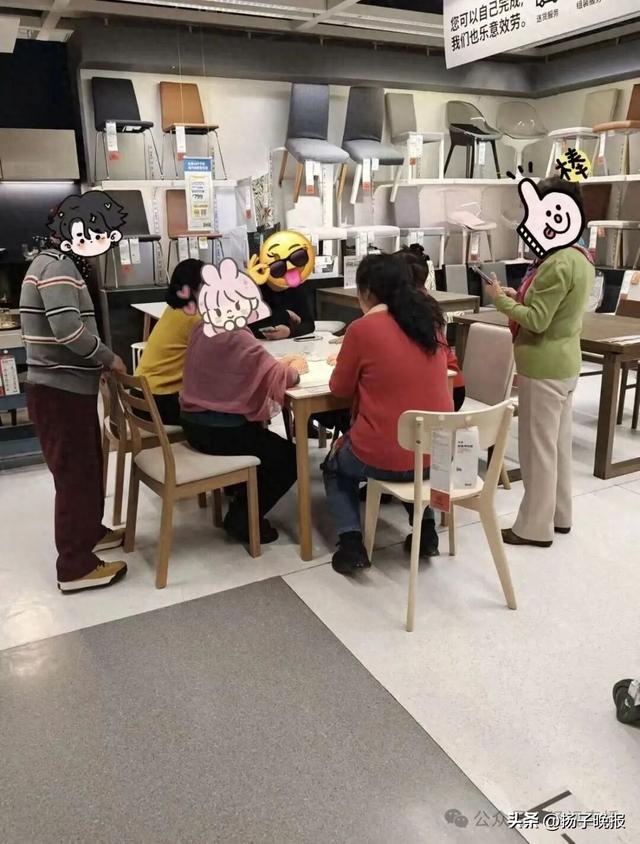
老人占用宜家店展桌打牌,网友:大声嚷嚷,行为很过分!门店:允许试坐、试躺展示家具,但不建议长时间占用
Xin Lang Cai Jing· 2026-01-11 16:13
转自:扬子晚报 对此,宜家家居东丽商场工作人员回应称,门店已关注到相关情况,将加强现场巡查与协调,在保障顾 客体验需求的同时,努力维护卖场秩序。 工作人员表示,宜家一向鼓励顾客亲身体验产品,允许试坐、试躺展示家具,但不建议长时间占用。店 内日常安排保安巡逻,会对长时间滞留行为进行礼貌提醒。近期天津另一家宜家中北商场店计划撤店, 东丽商场客流量明显增加,保安巡查范围扩大,个别情况可能未能及时处置。 工作人员称,理解顾客尤其是老年群体逛店时需要休息,但也希望大家合理使用展示区域,避免长时间 滞留。目前,安保人员已对部分占用展品的顾客进行劝离,引导大家有序流动。商场也呼吁,若顾客再 遇类似情况,可及时联系现场工作人员或通过电话反映,门店将第一时间处理。 来源 | 经视直播 近日,有网友发帖反映,在天津宜家家居东丽商场店内,看到多名顾客躺卧在展示床铺上休息,甚至有 七八位老人围坐在展示桌前打牌。 1月11日,该网友告诉记者,这类行为不仅占用体验设施,打牌时产生的较大噪声也严重影响其他顾客 的购物体验,令人感到不适。 ...

宜家中国将关闭7家门店;韩国版lululemon被收购;山姆499元羽绒服卖爆|品牌周报
36氪未来消费· 2026-01-11 12:26
Group 1: IKEA's Store Closures in China - IKEA China announced the closure of 7 stores by February 2, 2026, marking a rare event in its 20+ years in the Chinese market [3] - The closed stores are primarily large locations, including the Shanghai Baoshan store, which was once the largest IKEA in Asia, operating for over 12 years [3] - Post-closure, IKEA will have 34 physical locations, 3 proprietary digital channels, and 2 flagship e-commerce platforms in China [3] - The company plans to shift its strategy from "scale expansion" to "precise cultivation," focusing on Beijing and Shenzhen, with plans to open over 10 small stores in the next two years [3] - Recent sales declines in IKEA China are attributed to real estate adjustments, changing consumer psychology, and intense competition in the domestic furniture market [3][4] Group 2: Andar's Acquisition - Andar, a yoga apparel brand known as the "Korean version of Lululemon," was acquired by Bain Capital, with a transaction valuation of approximately 500 billion KRW (around 2.4 billion RMB) [5] - Founded in 2015, Andar has expanded its product line to include men's clothing and is priced more affordably compared to Lululemon, with expected sales of around 1 billion RMB in 2025 [5] - The acquisition reflects Bain's belief in Andar's potential for global expansion, as the brand has already entered markets in Japan, Australia, and Singapore [5][6] Group 3: Sam's Club's Success - Sam's Club recently sold out a down jacket priced at 499 RMB, with a filling weight of 400 grams, indicating strong consumer demand [7] - The jacket's popularity is attributed to a shift in consumer behavior towards functionality and simplicity in purchasing decisions [7] - In the past 12 months, Sam's Club has opened 8 new stores in China, marking its most aggressive expansion year [8] - Walmart China reported a net sales figure of 6.1 billion USD for the third quarter of 2026, a year-on-year increase of 21.8%, with Sam's Club continuing to show double-digit growth in transaction volume [8] Group 4: Nestlé's Recall Incident - Nestlé announced a precautionary recall of infant formula in 45 countries, including China, due to quality issues with a supplier's ingredient [9][10] - In China, 30 batches of products were recalled, affecting brands such as Nan and Wyeth, while other Nestlé products remain unaffected [10] - The recall has negatively impacted the stock price of supplier Jia Bi You, which has seen a cumulative decline of over 10% following the announcement [11] Group 5: Domino's Expansion in China - Domino's China reported a total of 1,315 stores by the end of 2025, with a net addition of 307 stores and expansion into 21 new cities [22] - The membership program "达人荟" reached 35.6 million members, a significant increase from 24.5 million the previous year [22] Group 6: Yuanqi Forest's Production Expansion - Yuanqi Forest's northern production base has begun trial production, with a daily capacity exceeding 1 million bottles [23] - The second phase of the project involves an investment of 560 million RMB and aims for a combined annual output value exceeding 1 billion RMB upon full production [23]

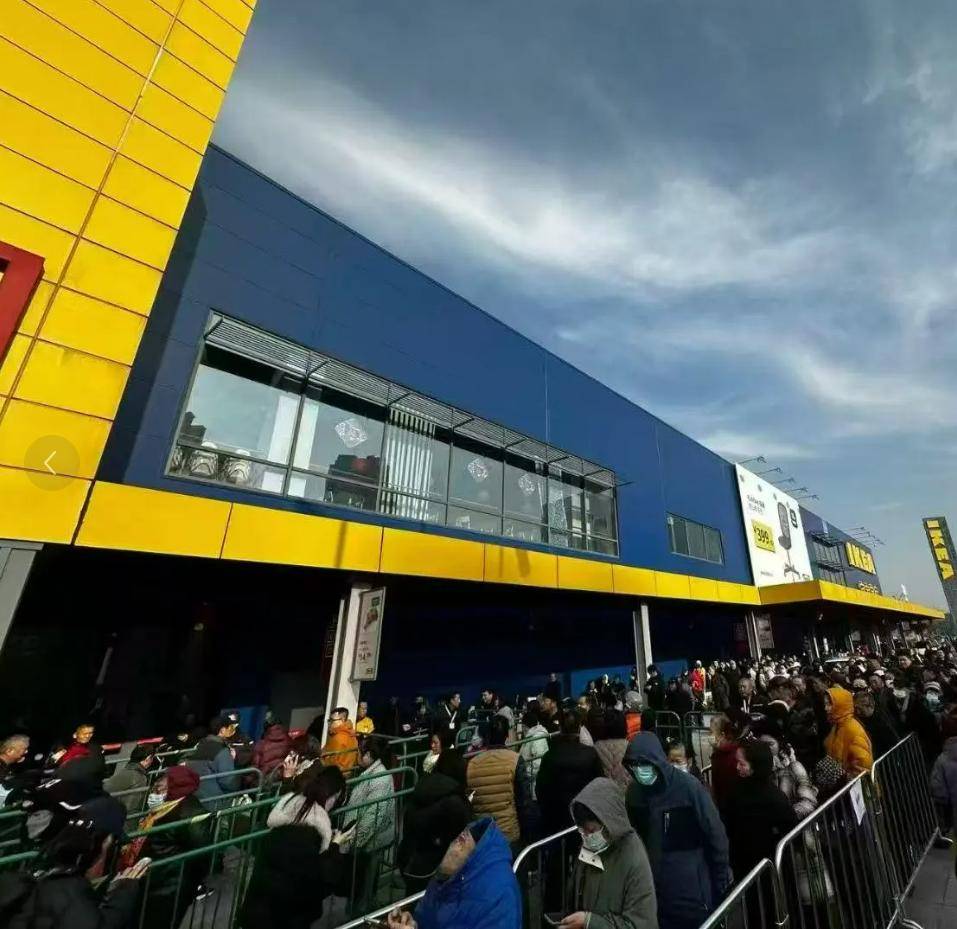
宣布闭店后的宜家人满为患 但打折活动15日才开启
Sou Hu Cai Jing· 2026-01-10 13:22
Core Viewpoint - IKEA is undergoing a significant strategic transformation in response to declining sales and changing consumer behaviors, moving away from large-scale expansion to focus on community-based smaller stores and online retail [1][19]. Group 1: Store Closures and Consumer Reactions - IKEA announced the closure of seven stores in China, including locations in Shanghai, Guangzhou, and Ningbo, effective February 2 [4][8]. - Following the announcement, there was a surge in customer traffic at the remaining stores, with long queues and crowded aisles as consumers rushed to take advantage of clearance sales starting January 15 [5][6]. - Many customers expressed nostalgia and shared memories associated with IKEA, highlighting its role as a significant part of their lives beyond just a shopping destination [5][10]. Group 2: Financial Performance and Market Challenges - IKEA's global revenue declined by 5.5% to €41.864 billion in 2024, while IKEA China's sales dropped from a peak of ¥15.77 billion in 2019 to approximately ¥11.15 billion in 2024, a nearly 30% decrease [19][20]. - The traditional drivers of the home goods market, such as new housing deliveries and large-scale renovations, are diminishing, impacting sales [20]. - The rise of local brands offering competitive pricing and tailored designs has intensified competition, with IKEA falling to seventh place in the Tmall furniture sales rankings during the 2024 Double Eleven shopping festival [20][21]. Group 3: Strategic Shift and Future Plans - IKEA is shifting its strategy to focus on smaller, community-oriented stores and enhancing its online presence, with plans to open over ten small stores in key cities like Beijing and Shenzhen in the next two years [21]. - The company aims to adapt to the evolving market by optimizing costs and improving efficiency, indicating a proactive approach to its transformation rather than a reaction to financial distress [19][21]. - The transition reflects broader trends in retail, where large-format stores are being replaced by smaller, more accessible formats to meet changing consumer preferences [21].

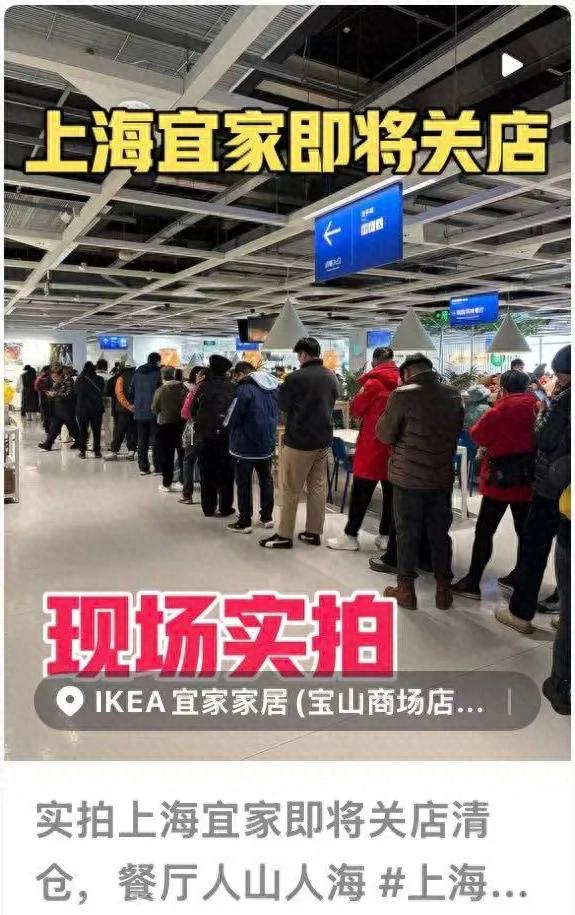
确定清仓闭店!大批上海人涌入,餐厅排队超40分钟,网友:这辈子没见过宜家这么多人
Xin Lang Cai Jing· 2026-01-10 10:13
Group 1 - IKEA China announced the closure of seven stores nationwide, including the Shanghai Baoshan store, which will officially close on February 2 this year [1] - The Baoshan store temporarily suspended operations from January 7 to 8, and reopened on January 9, attracting a large crowd [1][2] - Many customers expressed regret over the store's closure, with some visiting out of nostalgia and others hoping to find discounts [9][10] Group 2 - The closure announcement led to significant customer turnout at various IKEA locations, with reports of long lines and traffic congestion outside stores [11] - The clearance sale for the closing stores is set to begin on January 15, with discounts expected, although some rumors about specific discounts have been denied [11] - IKEA China is shifting towards smaller store formats to enhance store efficiency, planning to open over 10 small stores in Beijing and Shenzhen within two years [12]
浙江首家宜家商场即将停业,消费者需要一个新答案
Sou Hu Cai Jing· 2026-01-10 08:27
Core Insights - IKEA is closing its Ningbo store on February 2, marking the seventh closure in China, reflecting market changes and operational adjustments [1][7] - The shift in consumer shopping habits towards online platforms and IKEA's lag in digital transformation have contributed to its declining competitiveness [8][9] Group 1: Market Dynamics - The rise of local brands with better cost-performance ratios has significantly squeezed IKEA's market share [3] - Consumers now have a wider array of choices, and brand loyalty is no longer the primary consideration [10] - The operational costs of physical stores are high, and foot traffic is decreasing, leading to increased pressure on offline retail [9] Group 2: Consumer Preferences - There is a growing demand for localized innovation and enhanced services that cater to the rapidly changing needs of Chinese consumers [11] - IKEA's product design and pricing have not been sufficiently localized, making it difficult to meet the diverse demands of Chinese consumers [2][11] - The perception of IKEA's furniture quality and pricing is misaligned with consumer expectations, particularly for those frequently moving or renting [10] Group 3: Strategic Recommendations - IKEA needs to accelerate innovation and service upgrades to adapt to the fast-changing Chinese market [4] - The company should explore more flexible, smaller store formats to improve operational efficiency and adapt to changing consumer behaviors [9] - Embracing change and aligning with the characteristics of the Chinese market is essential for IKEA to remain relevant and appealing to consumers [12]

高价泡面、用户底线、资本困局与零售终局:商业世界的信任博弈与模式重塑
Sou Hu Cai Jing· 2026-01-10 06:10
Group 1: Key Insights on HeFu Lao Mian - HeFu Lao Mian's positioning as a "health noodle" is contradicted by the revelation that staff use pre-packaged ingredients, leading to consumer skepticism about the authenticity of their "freshly made" claims [3][4] - The brand's reliance on a narrative of health and craftsmanship is undermined when the reality of industrialized food preparation is exposed, resulting in a significant loss of consumer trust [7][8] - This incident serves as a cautionary tale for all dining brands that depend on appealing narratives to justify premium pricing, highlighting the importance of genuine consumer experiences over marketing rhetoric [7][8] Group 2: Key Insights on Xiaomi - Xiaomi's founder Lei Jun's live-streaming session aimed to clarify multiple controversies, emphasizing that user trust is paramount and announcing the termination of partnerships with KOLs who attacked users [3][11] - The live-stream was a proactive strategy to manage public perception and redirect discussions towards factual and technical aspects, countering fragmented narratives that could harm the brand [11][12] - This approach reflects a broader strategy of reinforcing brand values and establishing a clear boundary regarding user respect and product integrity amidst a competitive landscape [12][13] Group 3: Key Insights on Huiyuan Juice - Huiyuan Group's public statement accused its major shareholder of financial misconduct and using unverified materials to produce counterfeit products, leading to a takeover of Beijing Huiyuan [3][14] - The conflict highlights the clash between financial restructuring strategies and the operational realities of the food industry, where quality and safety are non-negotiable [16][18] - This situation serves as a warning to other national brands seeking capital assistance, emphasizing that financial strategies must align with industry standards to avoid jeopardizing brand integrity [17][18] Group 4: Key Insights on IKEA - IKEA's decision to close several large stores in China marks a shift from its previous "destination retail" model to a focus on smaller stores and enhanced online presence, reflecting changing consumer behaviors [3][21] - The new strategy aims to reduce costs and improve flexibility in urban areas, addressing the challenges posed by local competitors and the rise of e-commerce [21][22] - This transition signifies a broader trend in foreign retail operations in China, indicating that success now requires deep localization and adaptability rather than a one-size-fits-all global approach [22][23]
宣布闭店后的宜家人满为患
Sou Hu Cai Jing· 2026-01-10 00:55
Core Viewpoint - IKEA is undergoing a significant strategic transformation in China, moving away from large-scale expansion to focus on community-based small stores and online instant retail, prompted by declining sales and changing consumer habits [6][8][10]. Group 1: Store Closures and Consumer Response - IKEA announced the closure of seven stores in China, including locations in Shanghai, Guangzhou, and Ningbo, effective February 2 [4]. - Following the announcement, there was a surge in customer traffic at the remaining stores, with long queues and crowded aisles as consumers rushed to take advantage of the clearance sales starting January 15 [5][6]. - The closures have sparked nostalgia among consumers, who associate IKEA with personal memories and experiences, highlighting its role as a community space beyond just a furniture retailer [4][5]. Group 2: Financial Performance and Market Dynamics - IKEA's parent company, Ingka Group, reported a 5.5% decline in global revenue to €41.864 billion for the fiscal year ending August 2024, while IKEA China's sales dropped nearly 30% from a peak of ¥15.77 billion in 2019 to approximately ¥11.15 billion in 2024 [6][8]. - The traditional drivers of the home furnishings market, such as new housing deliveries and large-scale renovations, are diminishing, impacting sales [7]. - Changing consumer behavior, particularly among younger generations who prefer online shopping and efficient purchasing, has challenged IKEA's traditional large store model [7][8]. Group 3: Competitive Landscape and Strategic Shift - Local brands in China are gaining market share, with IKEA ranking seventh in sales during the 2024 Double Eleven shopping festival, behind brands like Yuan Shi Mu Yu and Lin Shi Home [8]. - These local competitors offer more flexible supply chains, designs that resonate with local aesthetics, and competitive pricing, making IKEA's traditional self-service model less appealing [8]. - In response, IKEA plans to open over ten small-format stores in key cities like Beijing and Shenzhen over the next two years, marking a shift towards a "small but beautiful" community store model [8][10].
宜家越开越小
经济观察报· 2026-01-09 14:51
Core Viewpoint - IKEA China is undergoing a significant structural transformation, shifting from large stores to smaller formats, emphasizing efficiency over personalized shopping experiences, and balancing online and offline channels [1][4]. Store Layout Changes - IKEA China announced the closure of seven large stores in cities like Shanghai and Guangzhou by February 2026, marking the largest scale of store closures to date [3][6]. - The new store strategy will focus on smaller stores, with plans to open over ten small-format stores in key markets like Beijing and Shenzhen within the next two years [7][8]. Small Store Concept - The design ordering center in Beijing, a small store model, is approximately 400 square meters, contrasting with traditional stores that typically exceed 30,000 square meters [9][12]. - This small store format includes a home solution exhibition area, a snack and beverage section, and a full-home design center, providing a more compact and focused shopping experience [9][10]. Online and Omnichannel Strategy - IKEA is enhancing its online presence, having entered the JD.com platform in August 2025, following its earlier launch on Tmall [17]. - The company reported that online channel visits reached 370 million in the 2024 fiscal year, with over 70% being active consumer visits [17]. Pricing Strategy - IKEA has initiated a significant price reduction strategy, starting in 2023, affecting over 300 products, with plans to invest 160 million RMB to introduce more than 150 lower-priced products in the Chinese market [18]. - Over the past two fiscal years, IKEA has invested more than 673 million RMB in pricing strategies, resulting in over 500 lower-priced products [18]. Market Context and Performance - The retail environment in China is undergoing unprecedented changes, with a reported 15.9% decline in real estate investment and a 2.95% drop in sales for major home furnishing markets in 2025 [20]. - IKEA's sales growth has slowed significantly, with a drop from 120.7 billion RMB to 111.5 billion RMB in the 2024 fiscal year [20][21]. Consumer Preferences - There is a growing consumer preference for high-cost performance and personalized products, with a demand for seamless shopping experiences that integrate online and offline channels [21][22]. - The shift in consumer behavior reflects a broader trend towards quality, rationality, and individualization in the home furnishing market [21].
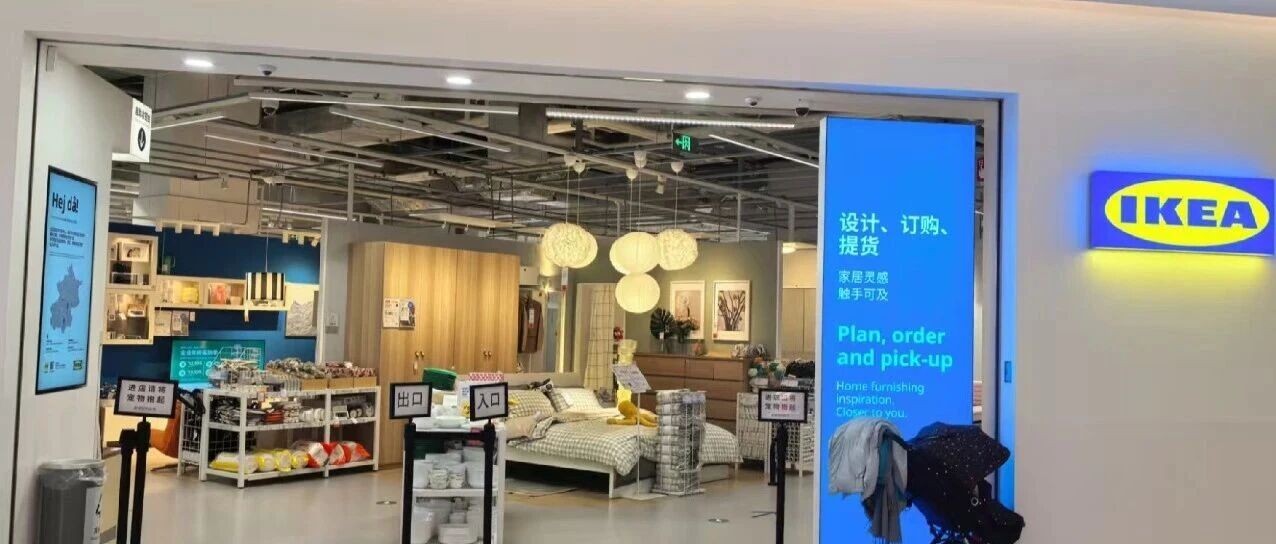
宜家“瘦身”: 一场被迫又主动的战略调整
Xin Lang Cai Jing· 2026-01-09 14:28
Core Insights - IKEA China will close seven stores starting February 2, 2026, as part of a strategic transformation to build a more resilient foundation for future growth and focus on local relevance [2][3] - The decision to close stores is driven by underperformance in profitability, with the company aiming to optimize costs and improve efficiency [3][4] - The retail environment for home furnishings is challenging, with a significant decline in the housing market affecting sales, particularly among younger consumers who prefer online shopping [4][7][9] Store Closures and Strategy - The seven stores being closed include locations in Shanghai, Guangzhou, Tianjin, Nantong, Xuzhou, Ningbo, and Harbin, reducing IKEA's physical presence from 41 to 34 locations [2][3] - IKEA plans to open over ten smaller stores in the next two years, focusing on urban core areas like Beijing and Shenzhen, indicating a shift from large warehouse-style stores to smaller, community-oriented formats [12][14] - The closures are part of a broader trend in the retail industry, where large store formats are being replaced by smaller, more efficient models [12][13] Market Challenges - The home furnishings sector is facing a downturn, with IKEA's sales projected to decline by 1.6% to €39 billion in the 2025 fiscal year, despite a slight increase in visitor numbers [6][11] - The Chinese furniture industry is experiencing a significant revenue drop, with a reported 9.1% decline in revenue for major enterprises from January to November 2025 [6] - Changing consumer behavior, particularly among younger generations, has shifted towards online shopping and away from traditional in-store experiences, impacting IKEA's sales [7][9][10] Future Outlook - IKEA aims to enhance its digital capabilities and improve in-store experiences to create a seamless, personalized omnichannel customer experience [5][15] - The company recognizes the need to adapt to the evolving market landscape and consumer preferences, emphasizing the importance of local relevance and competitive pricing [5][17] - Continued investment in the Chinese market is planned, with a focus on digital innovation and customer engagement strategies to capture market opportunities [16][17]

宜家越开越小
Jing Ji Guan Cha Wang· 2026-01-09 13:18
Core Viewpoint - IKEA China is undergoing a significant transformation by closing seven large stores and shifting focus towards smaller store formats and enhanced online presence, aiming for a more efficient and consumer-centric approach [1][2][12]. Group 1: Store Closures and New Formats - IKEA China announced the closure of seven large stores in cities including Shanghai, Guangzhou, and Tianjin, marking the largest scale of closures to date [1][3]. - The closed stores include locations in Shanghai, Guangzhou, Tianjin, Nantong, Xuzhou, Ningbo, and Harbin, with some cities losing their only IKEA store [3]. - The company plans to open over ten small stores in Beijing and Shenzhen within the next two years, starting with new locations in Dongguan and Tongzhou [4][5]. Group 2: Shift in Business Strategy - The strategy is described as a shift from large-scale expansion to precise cultivation, focusing on smaller, community-oriented stores and enhancing online capabilities [5][12]. - IKEA's design order centers, which are smaller than traditional stores, are part of this new approach, providing a more personalized shopping experience [5][6]. - The company aims to improve efficiency and resource allocation by closing underperforming stores and investing in more consumer-friendly channels [3][12]. Group 3: Market Context and Performance - The retail environment in China is undergoing significant changes, with a reported decline in real estate investment and consumer spending impacting the home goods sector [12][13]. - IKEA's sales growth has slowed, with a drop from 120.7 billion yuan to 111.5 billion yuan in the last fiscal year, reflecting broader trends in the retail industry [12][13]. - The company has recognized a shift in consumer preferences towards high-quality, personalized products, necessitating a reevaluation of its market strategy [12][14]. Group 4: Online and Pricing Strategies - IKEA has expanded its online presence by entering platforms like JD.com, following its earlier launch on Tmall, indicating a commitment to digital growth [10]. - The company has initiated a pricing strategy that includes lowering prices on over 300 products and investing 1.6 billion yuan to introduce more affordable options [11][12]. - This pricing strategy aims to meet the growing consumer demand for high-value, personalized products while enhancing the overall shopping experience [11][12].