
棉花种植与加工

Search documents
棉花周报:郑棉走弱,新棉即将上市-20250919
Guo Xin Qi Huo· 2025-09-19 10:02
1. Report Industry Investment Rating - No relevant content provided 2. Core Viewpoints of the Report - Domestically, with the upcoming seed - cotton purchase, the expected purchase price is 6.2 - 6.5 yuan/kg. The Zhengzhou cotton futures face significant hedging pressure above 14,000 yuan/ton, while there is insufficient motivation for hedging below 13,000 yuan/ton. The "Golden September and Silver October" in consumption is lackluster, and the downstream profits are poor, so the cotton price is expected to turn weak. [53] - Internationally, the cotton price has risen and then fallen. The impact of the US dollar interest - rate cut is not positive. However, the expected 3 interest - rate cuts in the US in 2025 by mainstream institutions may boost the cotton market later. The USDA's monthly supply - demand report has little impact on the market. The US cotton export data has improved, and the consumption provides some support, so the cotton price is expected to fluctuate. [53] 3. Summary by Directory 3.1 Cotton Market Analysis - **Futures Price Trends**: Zhengzhou cotton futures weakened this week with a weekly decline of 1.01%, while ICE cotton futures fluctuated slightly with a weekly increase of 0.03% [11] - **Spot Prices**: This week, the cotton price index rose. The 3128 index increased by 62 yuan/ton compared with last week, and the 2129 index increased by 70 yuan/ton [16] - **Cotton Imports**: In August, 70,000 tons of cotton were imported, a year - on - year decrease of 80,000 tons [21] - **Cotton Inventory**: At the end of August, the commercial cotton inventory was 1.4817 million tons, a decrease of 338,500 tons compared with the first half of August [25] - **Downstream Inventory**: In August, the yarn inventory was 26.58 days, a year - on - year increase of 1.35 days, and the grey fabric inventory was 33.87 days, a year - on - year increase of 4.11 days [30] - **Yarn Prices**: This week, yarn prices rose. The price of OEC10S and C32S increased by 20 yuan/ton compared with last week, and the price of JC40S increased by 60 yuan/ton [35] - **Zhengzhou Commodity Exchange Warehouse Receipts and Valid Forecasts**: This week, the total number of Zhengzhou cotton warehouse receipts and forecasts decreased by 567, with 4438 warehouse receipts and 12 valid forecasts, totaling 4450 [41] - **US Cotton Exports**: As of September 11, the net sales of US upland cotton for the current year increased by 186,100 bales, and the net sales for the next year were 19,000 bales [44] - **US Weather**: The total area in drought (D1 - D4) in the US is 34.2%, with different drought levels covering different percentages of the country [50] 3.2后市展望 - Domestic cotton is expected to turn weak, while international cotton is expected to maintain a fluctuating trend, with attention to be paid to macro - level changes [53]
棉花早报-20250919
Da Yue Qi Huo· 2025-09-19 02:17
Report Summary 1. Report Industry Investment Rating No investment rating is provided in the report. 2. Report's Core View The report analyzes the cotton market and concludes that the short - term trend of cotton is oscillating weakly. The market is affected by multiple factors, including high inventory, poor export data, and upcoming new cotton listings, although there are some positive factors such as reduced tariffs and lower commercial inventory year - on - year [4]. 3. Summary by Directory 3.1前日回顾 No content is provided for this section. 3.2每日提示 - **Fundamentals**: The expected national cotton output is 7.22 million tons, with a new high in Xinjiang. Different organizations' forecasts for the 2025/26 season vary. Textile and clothing exports in August were 26.54 billion US dollars, a 5% year - on - year decrease. Cotton imports in August were 70,000 tons, a 51.6% year - on - year decrease, while棉纱 imports were 130,000 tons, an 18.18% year - on - year increase. Overall, the fundamentals are bearish [4]. - **Basis**: The national average price of spot 3128b is 15,319 yuan, with a basis of 1,554 yuan (for the 01 contract), showing a premium over futures, which is bullish [4]. - **Inventory**: The expected ending inventory in the 2025/26 season by the Chinese Ministry of Agriculture in September is 8.22 million tons, which is bearish [4]. - **Market Chart**: The 20 - day moving average is downward, and the K - line is below the 20 - day moving average, indicating a bearish trend [4]. - **Main Position**: The net short position is increasing, and the main trend is unclear, which is bearish [4]. - **Expectation**: The "Golden September and Silver October" peak season is one - third over, and the market is sluggish. New cotton is about to be listed in large quantities, increasing hedging pressure. The resistance level for the main 01 contract is around 14,000 yuan, and the short - term trend is oscillating weakly [4]. 3.3今日关注 No content is provided for this section. 3.4基本面数据 - **USDA Forecast**: The global cotton production in 2025/26 is expected to be 25.622 million tons, and consumption is 25.872 million tons, with an ending inventory of 15.925 million tons [4]. - **ICAC Forecast**: The global cotton production in 2025/26 is 2.59 million tons, consumption is 2.56 million tons, ending inventory is 1.71 million tons, and the global trade volume is 970,000 tons. The price forecast for the Cotlook A index is 57 - 94 cents per pound [12]. - **Ministry of Agriculture Forecast**: In the 2025/26 season, production is 6.36 million tons, imports are 1.4 million tons, consumption is 7.4 million tons, and ending inventory is 8.22 million tons [4]. 3.5持仓数据 The main position is short - biased with an increasing net short position, and the main trend is unclear [4].
棉花:9月19日偏弱运行,短期或震荡走低
Sou Hu Cai Jing· 2025-09-19 01:43
Core Viewpoint - Recent macro policy changes need attention, and short-term cotton prices may experience weak fluctuations due to the impact of a rising dollar and a sluggish grain market [1] Group 1: Market Conditions - As of September 19, ICE cotton is operating weakly, influenced by the rise of the dollar and poor performance in the grain market [1] - Export reports indicate that the export situation for cotton is average, suggesting limited demand [1] Group 2: Domestic Production and Supply - In Xinjiang, there have been sporadic cotton picking activities, with expectations for machine harvesting in southern Xinjiang by the end of September [1] - The recovery of downstream textile enterprises is slow, indicating potential supply chain challenges [1] Group 3: Future Outlook - The market is advised to closely monitor macro policy changes, as these could significantly impact cotton prices in the short term [1]
每周快报:新棉采收有所提前 企业需要理性收购
Xin Lang Cai Jing· 2025-09-16 11:48
Group 1 - The China Cotton Association anticipates a total cotton production of 7.22 million tons for the 2025 season, representing an 8.3% year-on-year increase, with Xinjiang contributing 6.91 million tons, a 9.2% increase, marking a historical high [1] - The association has issued a set of recommendations for cotton purchasing enterprises to ensure smooth acquisition processes, including adjusting purchasing pace, maintaining market order, enhancing risk management, and improving quality standards [1] - Domestic cotton prices have been declining, with the China Cotton Price Index (CCIndex 3128B) averaging 15,308 yuan/ton, down 143 yuan/ton week-on-week, while Zhengzhou futures contract CF601 averaged 13,861 yuan/ton, down 163 yuan/ton [1] Group 2 - International cotton prices have shown a slight increase, with the Cotlook A Index averaging 77.8 cents/pound, up 0.1 cents/pound week-on-week, while the ICE cotton futures contract averaged 65.1 cents/pound, up 0.5 cents/pound [1] - In Xinjiang, cotton harvesting is in its peak stage, with a ginning rate nearing 50%, and initial selling prices ranging from 7.3 to 7.6 yuan/kg, primarily for testing purposes [2] - Weather conditions in Xinjiang are generally warm, with expected rainfall in the northern regions, necessitating flood prevention measures to protect cotton quality and yield [2]


棉花:市场关注新棉上市情况
Guo Tai Jun An Qi Huo· 2025-09-16 01:52
Report Industry Investment Rating - Not provided Core Viewpoints - The market is concerned about the situation of new cotton listing. The overall trading of domestic cotton spot is sluggish, with less inventory of high - quality lint. The pre - sale of some new cotton has relatively good transactions, and most of the spot sales basis is stable. The trading in the pure - cotton yarn market is mediocre, weaker than the same period in previous years. The sales of all - cotton grey fabrics remain stable, with thick - type fabrics having better sales [1][2]. Summary by Relevant Catalogs Fundamental Tracking - **Futures Data**: CF2601 closed at 13,885 yuan/ton yesterday with a daily increase of 0.18%, and 13910 yuan/ton in the night session with a night - session increase of 0.18%. CY2511 closed at 19,900 yuan/ton yesterday with a daily increase of 0.28%, and 20025 yuan/ton in the night session with a night - session increase of 0.63%. ICE US cotton 12 closed at 66.82 cents/pound yesterday with a daily increase of 0.09% [1]. - **Trading Volume and Position**: The trading volume of CF2601 yesterday was 279,205 lots, an increase of 70,791 lots compared with the previous day, and the position was 693,565 lots, a decrease of 7,369 lots. The trading volume of CY2511 yesterday was 11,551 lots, a decrease of 1,999 lots, and the position was 21,140 lots, an increase of 1,045 lots [1]. - **Warehouse Receipts**: The number of Zhengzhou cotton warehouse receipts yesterday was 4,899, a decrease of 118, and the effective forecast was 2, an increase of 2. The number of cotton yarn warehouse receipts was 89, a decrease of 1, and the effective forecast was 0, an increase of 90 [1]. - **Spot Prices**: The price of Northern Xinjiang 3128 machine - picked cotton was 15,152 yuan/ton, an increase of 25 yuan compared with the previous day, with a growth rate of 0.17%. The price of Southern Xinjiang 3128 machine - picked cotton was 14,845 yuan/ton, an increase of 25 yuan, with a growth rate of 0.17%. The price of cotton in Shandong remained unchanged at 15,282 yuan/ton. The price of cotton in Hebei was 15,215 yuan/ton, an increase of 7 yuan, with a growth rate of 0.05%. The 3128B index was 15,249 yuan/ton, an increase of 1 yuan, with a growth rate of 0.01%. The international cotton index M was 74.43 cents/pound, an increase of 0.23% [1]. - **Price Spreads**: The CF1 - 5 spread was 35 yuan/ton, a decrease of 5 yuan compared with the previous day. The spread between Northern Xinjiang 3128 machine - picked cotton and CF601 was 1,270 yuan/ton, unchanged from the previous day [1]. Macro and Industry News - **Domestic Cotton Spot**: The overall trading of cotton spot is sluggish. The inventory of high - quality lint is low, and the pre - sale of some new cotton has relatively good transactions. Most of the spot sales basis remains stable. The purchase price of seed cotton for wadding in Southern Xinjiang over the weekend has cooled down, and the current mainstream purchase price is around 7.4 - 7.45 yuan/kg, with cottonseed at 2.4 - 2.5 yuan/kg [2]. - **Domestic Cotton Textile Enterprises**: The trading in the pure - cotton yarn market is mediocre, weaker than the same period in previous years. Downstream enterprises mainly make rigid - demand purchases, and spinning enterprises negotiate real orders. Recently, with the decline of cotton prices, the cash flow of spinning enterprises has slightly improved. The sales of all - cotton grey fabrics remain stable, and the current market is mainly dominated by thick - type fabrics [2]. - **US Cotton Situation**: Yesterday, ICE cotton futures continued to fluctuate in a narrow range, with relatively light market news and trading [3]. Trend Intensity - The trend intensity of cotton is 0, indicating a neutral trend [5].
棉花(CF):棉市区间震荡,关注新棉开秤
Guo Mao Qi Huo· 2025-09-15 09:22
1. Report Industry Investment Rating - The investment view for the cotton industry is "oscillation", and the trading strategy suggests "wait - and - see" for both unilateral and arbitrage trading [3] 2. Core Viewpoints of the Report - The old crop inventory shortage has been priced in, and the new crop's weak reality of a bumper harvest is being priced. Spinning capacity is in excess, and the high operating rate keeps the industrial demand for cotton firm. The national commercial inventory is being depleted rapidly, while the national industrial inventory remains at a high level. The basis of Zhengzhou cotton has been oscillating this week, and the 1 - 5 month spread of Zhengzhou cotton has been stable. Xinjiang spinning has a slight loss, and inland spinning has a serious loss. The yarn - cotton price spread is running at a low level. The current absolute price of cotton is at a neutral - to - low level in the past four years. Domestically, the increasing domestic demand policies are beneficial for the long - term demand of domestic cotton, while internationally, the Sino - US trade negotiation is in a short - term deadlock, and the extension of the tariff exemption period has a negative impact on sentiment. In the short term, the demand side performs averagely, and the supply side remains loose, so the market may oscillate within a range [3] 3. Summary According to Relevant Catalogs 3.1 Main Viewpoints and Strategy Overview - **Supply**: Bearish. The old crop inventory shortage has been priced, and the new crop's weak reality of a bumper harvest is being priced [3] - **Demand**: Neutral. Excess spinning capacity and a high operating rate keep the industrial demand for cotton firm [3] - **Inventory**: Neutral. The national commercial inventory is being depleted rapidly, and the national industrial inventory remains at a high level [3] - **Basis/Spread**: Neutral. This week, the basis of Zhengzhou cotton oscillated, with the Xinjiang double - 28 spot basis at 1000 - 1200, and the 1 - 5 month spread of Zhengzhou cotton was stable [3] - **Profit**: Bearish. Xinjiang spinning has a slight loss, inland spinning has a serious loss, and the yarn - cotton price spread is running at a low level [3] - **Valuation**: Bullish. The current absolute price is at a neutral - to - low level in the past four years [3] - **Macro and Policy**: Neutral. Domestically, increasing domestic demand policies are beneficial for the long - term demand of domestic cotton, while internationally, the Sino - US trade negotiation is in a short - term deadlock, and the extension of the tariff exemption period has a negative impact on sentiment [3] - **Investment View**: Oscillation. In the short term, the demand side performs averagely, and the supply side remains loose, so the market may oscillate within a range [3] - **Trading Strategy**: Unilateral: Wait - and - see; Arbitrage: Wait - and - see [3] 3.2 Cotton Fundamental Data 3.2.1 Upstream Planting - The cotton planting area is expected to increase. The national cotton planting area in the first survey of 2025 is 4159.9 million mu, with a year - on - year increase of 1.88%, and the Xinjiang cotton planting area is 3678.8 million mu, with a year - on - year increase of 3.18% [8][9] - The cotton yield per mu in 2025 is estimated to be 149.9 kg nationwide and 158.5 kg in Xinjiang [10] 3.2.2 Mid - stream Inventory - The accumulation of finished product inventory has slowed down. Data on the raw material and finished product inventories of weaving and spinning mills are presented in the form of time - series charts [18][19][21] 3.2.3 Mid - stream Factory Load - The operating rate is declining. The operating rates of pure - cotton yarn mills and all - cotton grey fabric mills are presented in the form of time - series charts [25][26][27] 3.2.4 Mid - stream Spinning Mill Profit - Spinning mills are in the red. The immediate spinning profit and the yarn - cotton spot price spread are presented in the form of time - series charts [29][30][32] 3.2.5 Downstream Inventory - The downstream inventory is at a seasonal high. The inventories and finished product inventories of textile and clothing enterprises above the designated size are presented in the form of time - series charts [34][35][36] 3.2.6 Import and Export - Domestic cotton and cotton yarn import data are presented in the form of time - series charts. US cotton exports to different countries show different trends: exports to China and Pakistan are at a low level, exports to Vietnam have increased significantly year - on - year, and relevant data are presented in the form of time - series charts [39][41][50] 3.3 Cotton Capital - related Data 3.3.1 Zhengzhou Cotton Basis - The basis is oscillating at a high level. The basis of Zhengzhou cotton 09 and 01 contracts is presented in the form of time - series charts [63][64][65] 3.3.2 Zhengzhou Cotton Spread - The 09 - 01 and 01 - 05 spreads of Zhengzhou cotton are presented in the form of time - series charts [67] 3.3.3 Zhengzhou Cotton Position - The position of the Zhengzhou cotton 09 contract is rapidly declining. The position data of the 09 and 01 contracts are presented in the form of time - series charts [69][70][72] 3.3.4 Zhengzhou Cotton Warehouse Receipt - The virtual - to - real ratio of the Zhengzhou cotton 09 contract is rapidly declining. The total number of warehouse receipts and forecasts and the virtual - to - real ratio of the 09 contract are presented in the form of time - series charts [74][75] 3.3.5 Management Fund's Net Long Position in US Cotton - The net long position, long - position proportion of management funds in US cotton futures and options are presented in the form of time - series charts [81][83][84] 3.3.6 US Cotton Month Spread - The US cotton 12 - 03 month spread shows a "Deep Contango" pattern, and relevant data are presented in the form of time - series charts [86][87]
多空因素交织,盘面区间震荡
Guo Lian Qi Huo· 2025-09-15 05:17
Report Industry Investment Rating No relevant content provided. Core Viewpoints of the Report - The cotton market currently has a mix of bullish and bearish factors. New cotton will be in large supply, which exerts pressure on cotton prices. Although it has entered the traditional consumption peak season, downstream demand remains weak. On the other hand, the industrial chain inventory has dropped to a low level, and the domestic commercial cotton inventory is at a historical low, with seasonal restocking providing support at the bottom. The short - term market is expected to fluctuate, with the range between 13,800 - 14,300 yuan/ton. It is advisable to wait and see for single - side trading and buy far - month contracts after the market drops to an appropriate level. Also, pay attention to the 11 - 1 reverse spread opportunity [5]. Summary by Relevant Catalogs 01 Weekly Core Points and Strategies - **Supply**: USDA reduced the US cotton planting area by 8% to 9.3 million acres in August, and the harvested area by 15% to 7.4 million acres. The final US cotton production was reduced by 302,000 tons to 2.877 million tons compared to last month, with a neutral - to - bullish impact. China's new - season cotton production is at a historical low but was increased by 108,000 tons to 6.858 million tons, and there is still room for further increase [5]. - **Demand**: Domestic downstream consumption is sluggish. In the off - season, textile mills have weak inventory - building intentions. According to Steel Union data, the operating rate of textile mills increased slightly to 66.5% this week from 66% last week, and the weekly operating rate of weaving mills also increased slightly to 38% from 37.4% last week. The profit loss of spinning mills continued to narrow, with a profit of - 1,187 yuan/ton this week compared to - 1,352 yuan/ton last week [5]. - **Inventory**: BCO announced that the social cotton inventory at the end of July was 2.1898 million tons, a decrease of 640,000 tons from the end of June and a 21% year - on - year decline. The domestic commercial cotton inventory is at a historical low. According to Steel Union data, the national commercial inventory was 1.547 million tons this week. The raw material inventory of textile mills was 27.44 days this week compared to 27.5 days last week, and the yarn inventory of textile mills was 30.6 days this week compared to 31 days last week [5]. - **Warehouse Receipts**: As of September 12, the registered warehouse receipts of Zhengzhou cotton were 5,017, with 0 valid forecasts. The total of warehouse receipts and valid forecasts was 200,600 tons, compared to 233,100 tons on September 5 [5]. - **Basis**: According to Wind data, as of September 12, the spot price of Xinjiang cotton was 15,200 yuan/ton, and the closing price of the main CF2601 contract was 13,860 yuan/ton. According to Mysteel data, as of September 11, the arrival price of US cotton M1 - 1/8 was lowered to 16,940 yuan/ton. The price of domestic 3128B lint cotton fluctuated and adjusted, with a quotation of 15,220 yuan/ton. The price difference between domestic and foreign cotton shrank to 1,720 yuan/ton [5]. - **Cost**: The overall average cost of ginning mills this year, converted to the official standard, is 14,700 - 14,800 yuan/ton. In the new season, with some ginning capacity in northern Xinjiang exiting and the overall demand outlook not optimistic, the opening purchase price is not expected to be high. According to market feedback this week, the purchase of hand - picked cotton has started in southern Xinjiang, and the price of seed cotton has risen rapidly from the initial 7.3 - 7.4 yuan/kg to 7.6 - 7.7 yuan/kg [5]. - **Macro**: The market is considering whether China will introduce more stimulus policies in the fourth quarter. The US employment market is weak. The non - farm employment number was revised down by 911,000 from March last year, an average monthly reduction of nearly 76,000. The number of initial jobless claims in the US last week increased to 263,000, the highest in nearly four years. The overall CPI monthly rate is 0.382%, and the core CPI monthly rate is 0.346%. The market has priced in three interest rate cuts by the Fed this year [5]. - **Strategy**: Pay attention to the 11 - 1 reverse spread opportunity. The short - term market is expected to fluctuate, with a reference range of 13,800 - 14,300 yuan/ton. It is advisable to wait and see for single - side trading and buy far - month contracts after the market drops to an appropriate level [5]. 02 Weekly Data Charts - **Global Supply - Demand Balance Sheet**: From 2020/21 to 2025/26 (August), the initial inventory, production, import, total supply, export, consumption, total consumption, and ending inventory all show different trends. The inventory - to - consumption ratio decreased from 58.54% to 62.65% [9]. - **Production by Major Producing Countries**: The production of major cotton - producing countries such as China, the US, and India shows different trends from 2020/21 to 2025/26. In 2025/26, China's production is 6.858 million tons, the US is 2.877 million tons, and India is 5.117 million tons [10]. - **Demand Changes in Major Producing Countries**: The consumption of major cotton - consuming countries such as China, India, and Pakistan also shows different trends from 2020/21 to 2025/26. In 2025/26, China's consumption is 8.165 million tons, India is 5.443 million tons, and Pakistan is 2.373 million tons [11]. - **US Inventory Cycle**: The US overall inventory cycle is transitioning from passive destocking to active restocking. The inventory of US clothing wholesalers and retailers is transitioning from three - year destocking to moderate active restocking. However, due to the Geneva Economic and Trade Talks Joint Statement and tariff relief, the continuous restocking behavior has been weakened to some extent [17]. - **Domestic New - Season Situation**: The new - season planting area and production are expected to maintain a supply - abundant pattern. The national area and production, as well as Xinjiang's area and production, show different trends in the surveys from February to June [21][22]. - **Inventory and Operating Rates**: China's commercial cotton inventory is being depleted rapidly. The operating rates of textile and weaving mills show slight increases, and the inventory of textile and weaving mills also shows certain changes [42].
卓创资讯:2025年新疆棉采收将提前 开秤价格几何?
Xin Hua Cai Jing· 2025-09-12 04:23
Core Viewpoint - The cotton planting area in Xinjiang is expected to increase in 2025, leading to a significant rise in total cotton production, despite cautious purchasing attitudes from ginning enterprises due to macroeconomic fluctuations and tariff issues [1][2][5]. Group 1: Cotton Production and Growth - In 2025, the cotton planting area in Xinjiang is projected to increase by 8.68% year-on-year, primarily due to poor earnings from other crops in 2024 and the stability of cotton subsidies [2]. - The overall weather conditions in Xinjiang have been favorable, resulting in improved yield expectations, with a preliminary estimate of total cotton production reaching 7.1 million tons in 2024, an increase of approximately 11.29% year-on-year [2]. - The harvesting time for cotton in both northern and southern Xinjiang is expected to be 7-10 days earlier than last year, with some areas starting to harvest by September 20 [4][10]. Group 2: Market Pricing and Expectations - The expected opening price for cotton in Xinjiang for 2025 is projected to be between 6.1-6.5 yuan per kilogram, with a significant portion of market participants anticipating this range [5][10]. - A comparison of survey results from July and August indicates a shift in market sentiment, with participants now expecting lower opening prices due to tariff pressures and increased production expectations [7]. - The survey revealed that 33% of participants expect the opening price to be in the 6.1-6.5 yuan range, while 21% remain uncertain, and smaller percentages expect prices of 5.6-6.0 yuan and 6.6-7.0 yuan [5]. Group 3: Ginning Enterprises and Cost Management - Ginning enterprises are adopting a cautious approach due to poor profitability over the past three years, leading to a decline in rental fees for production lines [8]. - To mitigate potential losses, some ginning enterprises are pre-selling cotton in a basis spot format to lock in profits, while trade companies are also securing pre-purchases to capitalize on limited resources [8]. - The estimated production cost for cotton in 2025 is projected to be between 13,900-15,100 yuan per ton, which is relatively stable compared to previous years, although the opening price for cotton seeds is expected to be slightly higher than last year [8][9].

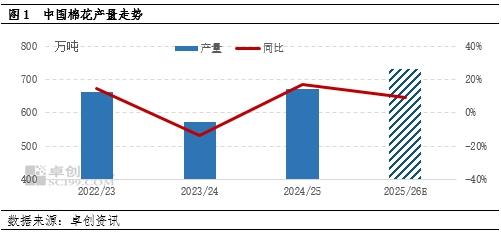
棉花棉纱周报:下游订单整体不足市场关注新棉情况-20250905
Zhe Shang Qi Huo· 2025-09-05 13:33
Report Industry Investment Rating - Not provided in the given content Core View - The cotton market is in an oscillating upward phase, and the price center is expected to rise in the later stage. In the short term, the macro - sentiment is improving, demand is seasonally picking up, and social inventory is continuously decreasing, providing phased support. In the medium to long term, the global cotton supply - demand pattern is improving, domestic production may remain high, demand is expected to recover, and the supply - demand situation is also expected to improve. Therefore, the short - term cotton price is supported, and the medium - to - long - term center is expected to move up. It is recommended to be long after adjustments [6]. Summary by Directory Domestic Supply and Demand - **Supply - demand balance**: From 2021/22, due to the macro - economic downturn and the pandemic, cotton consumption was affected, while production remained high, leading to inventory accumulation and a downward price center. In 2024/25, production was high, imports decreased, and demand was relatively stable. In 2025/26, production is expected to be high, demand may recover, and the supply - demand pattern is expected to improve. According to the August data of the Cotton Information Network, in 2025/26, production is expected to be high, consumption will slightly decrease, imports will recover, and the ending inventory will increase [12]. - **New cotton growth**: In 2024, the cotton planting area decreased slightly, but the yield per unit was good, and the national output reached a recent high. In 2025, the intended planting area increased, the weather in the producing areas was generally good, and the new cotton growth was generally in good condition. Some hand - picked cotton in southern Xinjiang has started to be harvested. Attention should be paid to the weather in the producing areas [18]. - **Inventory situation**: The market is in a de - stocking period, and the commercial inventory has significantly decreased. However, the industrial inventory has remained at a high level, and the overall industrial and commercial inventory is not low. There are concerns about potential tightness in the phased structural supply. As of the end of July, the commercial inventory was 218.98 million tons, a decrease of 64 million tons from the previous month; the industrial inventory was 89.84 million tons, a decrease of 0.46 million tons from the previous month [24][27]. - **Import situation**: The domestic cotton production and sales have a gap, and imported cotton is needed to supplement the supply. In 2025, the sliding - scale tariff quota was issued. Recently, the price difference between domestic and foreign cotton has widened. In July 2025, the cotton import volume was 5 million tons, a 66.7% increase from the previous month and a 73.2% decrease from the same period last year. From January to July 2025, the cumulative import volume was 52 million tons, a 74.2% decrease from the same period last year [34][37]. Downstream Demand - **Overall situation**: Overseas interest rate cuts are beneficial to demand, and the progress of China - US economic and trade consultations is expected to improve the foreign trade situation. Domestic policies are boosting the economy, and domestic demand is expected to gradually recover. However, recently, new orders for downstream gauze are insufficient, the operating load is still low, and the finished - product inventory is still at a high level year - on - year, indicating pressure in the industrial chain operation [42]. - **Export and retail data**: In July 2025, the export of textiles and clothing was 2.6766 billion US dollars, a 0.06% year - on - year decrease and a 2.01% month - on - month decrease. From January to July 2025, the cumulative export was 1.0041 billion US dollars, a 0.63% year - on - year increase. In July, the retail sales of clothing, hats, and knitted textiles were 980.1 billion yuan, a 1.8% year - on - year increase and a 24.63% month - on - month decrease. From January to July, the cumulative retail sales were 831.1 billion yuan, a 2.9% year - on - year increase [43][45]. Policy - Reserve Rotation - In 2023, the state reserve cotton rotation out started on July 31 and ended on November 14. The planned rotation out was 1.2121 million tons, the actual transaction was 0.8639 million tons, the transaction rate was 71.27%, and the average transaction price was 17,430.49 yuan/ton. Attention should be paid to the stabilizing effect of the state reserve cotton on the market [49]. Global Supply and Demand - **Global situation**: In the 2024/26 period, global cotton production is expected to increase, consumption will significantly recover, and the inventory - to - consumption ratio will slightly rise. In 2025/26, global production is expected to decrease, demand will be stable, and the ending inventory will decrease. The new cotton in the Southern Hemisphere is in the harvest period with an optimistic yield expectation, while the major producers in the Northern Hemisphere are in the sowing and growing period. Some US cotton - producing areas are experiencing drought, and the sowing in India is behind schedule [58]. - **US situation**: In the 2024/25 period, the US cotton planting area increased, the harvest area increased significantly, but the yield per unit decreased due to drought, and production increased. In 2025/26, the planting area is expected to decrease, the yield per unit is expected to decline, but production is expected to recover. US textile and clothing demand has recovered, but future demand still needs to be tracked. The US cotton export sales progress is slow [59]. - **Other countries**: In the 2024/25 period, Brazil's cotton production is expected to increase to 3.938 million tons, a 7.2% year - on - year increase. As of August 30, 2025, India's cotton planting area in the 2025/26 period was 10.847 million hectares, a 2.9% year - on - year decrease [65]. Spread and Basis - The data on cotton spreads (such as 1 - 5, 9 - 1, 5 - 9 spreads) and basis (such as 01, 05, 09 basis) are provided, showing their historical trends and fluctuations [73][78].
棉花月报:抛压较大且消费暂无起色,郑棉冲高回落-20250905
Wu Kuang Qi Huo· 2025-09-05 13:24
1. Report Industry Investment Rating No relevant content provided. 2. Core Viewpoints of the Report - The current downstream market consumption is still average during the "Golden September and Silver October" consumption season, and there is an expectation of a bumper harvest in the new domestic cotton season. However, the current domestic cotton inventory is at a historically low level, with both bullish and bearish factors intertwined. - In the short - term, Zhengzhou cotton prices rose and then fell, facing significant selling pressure, and cotton prices may continue to fluctuate at high levels [9]. 3. Summary by Directory 3.1 Monthly Assessment and Strategy Recommendation - **Market Review** - **External Market**: In August, the price of US cotton futures showed a weak oscillation. As of August 29, the closing price of the December contract of US cotton futures was 66.53 cents per pound, a decrease of 0.69 cents per pound from the previous month, a decline of 1.03%. The spread between the December and March contracts of US cotton weakened slightly, reaching - 1.9 cents per pound, a decrease of 0.52 cents per pound from the previous month. - **Domestic Market**: In August, the price of Zhengzhou cotton rose. As of August 29, the closing price of the January contract of Zhengzhou cotton was 14,240 yuan per ton, an increase of 400 yuan per ton from the previous month, a rise of 2.89%. The China Cotton Price Index (CCIndex) 3128B was 15,328 yuan per ton, an increase of 3 yuan per ton from the previous month. The basis weakened, reaching 1,128 yuan per ton, a decrease of 453 yuan per ton from the previous month. The spread between the January and May contracts of Zhengzhou cotton decreased slightly, reaching 40 yuan per ton, a decrease of 25 yuan per ton from the previous month [9]. - **Industry Information** - As of the week of August 29, the spinning mill operating rate was 65.9%, a decrease of 3.4 percentage points from the same period last year; the weaving mill operating rate was 37.2%, a decrease of 8.4 percentage points from the same period last year; the weekly commercial cotton inventory was 1.55 million tons, a decrease of 360,000 tons from the same period last year. - At the end of August, the National Development and Reform Commission announced matters related to the electronic application for the processing trade import quota of preferential tariff rates outside the cotton tariff quota in 2025. The total volume of the sliding - scale duty processing trade quota for cotton imports in 2025 is 200,000 tons. - According to the August forecast data of the US Department of Agriculture, the global cotton production forecast for the 2025/26 season is 25.39 million tons, a decrease of 390,000 tons from the July forecast. Among them, the US production forecast was reduced by 300,000 tons to 2.88 million tons due to a 15% reduction in the planted area compared to the July forecast; the Chinese production forecast was increased by 110,000 tons to 6.86 million tons; the production forecasts of Brazil and India remained unchanged. The global consumption forecast was reduced by 30,000 tons to 25.69 million tons, and the ending inventory was reduced by 740,000 tons to 16.09 million tons. The US inventory - to - consumption ratio was reduced by 6.12 percentage points to 26.28% [9]. - **Viewpoints and Strategies** - Based on fundamental analysis, the short - term cotton prices may continue to fluctuate at high levels. The short - term assessment of various factors shows that the basis weakened slightly, the monthly spread oscillated, the spinning immediate profit remained inverted, and the marginal changes in the Zhejiang - Xinjiang spread and cost were not significant [9][10]. 3.2 Spread Trend Review The report presents multiple spread trend charts, including the China Cotton Price Index, the basis trend of the Zhengzhou cotton main contract, import profit, Zhengzhou cotton monthly spreads, US cotton contract spreads, and external market spreads, to show the historical trends and changes of these spreads [26][27][29]. 3.3 Domestic Market Situation The report shows multiple charts related to the domestic cotton market, including domestic cotton production (processing and inspection quantity, processing volume), cotton import volume (monthly and annual cumulative), US export contract quantity to China,棉纱 import volume, downstream operating rates (spinning and weaving mills), national sales progress, cotton inventory (weekly commercial and monthly commercial + industrial), and spinning mill raw material and finished product inventories [38][40][42]. 3.4 International Market Situation - **CFTC Positions**: Charts of CFTC fund net positions and commercial net positions are presented [58]. - **US Situation**: The report shows the US cotton planting situation (proportion of non - drought - affected planting area, excellent - good rate), production situation (bi - weekly and cumulative processing volume), production and planting area forecasts, export contract progress, export shipment volume, supply surplus/shortage, and inventory - to - consumption ratio [60][62][64]. - **Brazil Situation**: Charts of Brazil's cotton planting area, production, export volume, supply surplus/shortage, and inventory - to - consumption ratio are presented [73][76]. - **India Situation**: The report shows India's cotton planting area, production, consumption, import and export volume, supply surplus/shortage, and inventory - to - consumption ratio [81][84].