
汽车及零部件

Search documents
特朗普赚大了,欧盟拟取消对美关税,印度、加拿大关税影响凸显!
Sou Hu Cai Jing· 2025-09-01 08:49
Group 1 - The EU plans to eliminate tariffs on all US industrial products and provide favorable treatment for various agricultural products, indicating a strategic move to enhance US export advantages [3][5] - The US has committed to reducing tariffs on automobiles and parts to 15% and implementing zero or near-zero tariffs on certain products, suggesting a temporary mutual benefit in US-EU relations [5][7] - The EU has agreed to purchase $750 billion worth of US energy products and $40 billion in US chips over the next three years, reflecting a significant shift in trade dynamics [7] Group 2 - The EU's proposal has faced criticism from within Europe, particularly from the German machinery sector, which argues that it unfairly benefits US products while European industries face punitive tariffs [10] - India's economy is suffering due to increased US tariffs, with a projected GDP loss of about 1 percentage point, particularly affecting labor-intensive small and medium enterprises [12] - Canada has experienced a significant economic downturn, with a 1.6% annualized GDP decline and a 27% drop in exports, raising concerns about future economic stability [14] Group 3 - The short-term benefits of US tariffs include increased government revenue, but long-term effects may lead to higher production costs, reduced export volumes, and overall trade contraction [16] - The US inflation rate is rising, with the PCE price index increasing by 2.6% year-on-year, driven by higher service costs, indicating that tariffs are contributing to domestic inflationary pressures [18] - The current trade strategy may damage the US's international credibility and relationships with allies, potentially leading to a search for alternative trade partners by other nations [18]


第十五届中国—东北亚博览会闭幕 为各方深度合作搭台
Zhong Guo Xin Wen Wang· 2025-08-31 14:29
Group 1 - The 15th China-Northeast Asia Expo concluded in Changchun, showcasing the deepening and broadening of cooperation among participating countries [1][2] - The expo is the only international comprehensive exhibition involving six Northeast Asian countries, promoting trade and investment cooperation in the region for 20 years [1] - A total of 20,733 guests from 45 countries and regions attended, including executives from 44 Fortune Global 500 companies, indicating a rising level of international participation [1] Group 2 - The expo emphasized the concept of "exhibition promotes trade, conference promotes investment," focusing on industry and project matching, and facilitating economic and cultural exchanges [2] - A total of 34 main and thematic activities were held, creating a multi-level and wide-ranging communication mechanism [2] - Successful events included the Russia Business Day and China-Japan Economic and Trade Exchange, enhancing cooperation in sectors like hydrogen energy [2]
幸福长沙“三重奏”
Chang Sha Wan Bao· 2025-08-30 03:27
Core Insights - Changsha has been recognized as the "most livable city" for 17 consecutive years, attributed to its vibrant urban development and innovative industries [6][7][9] - The city is enhancing its economic strength through advanced manufacturing and innovation, with a focus on building a modern industrial system [8][9] - Changsha is actively promoting itself as a global research and development hub, with significant investments in technology and talent [9][10] Economic Development - Changsha's economy is bolstered by seven trillion-level industrial clusters and three national-level advanced manufacturing clusters, ranking fifth among China's advanced manufacturing cities [8] - The city's GDP is projected to exceed 1.5 trillion yuan in 2024, laying a solid foundation for its development as a "happy city" [8] - The number of operating entities in Changsha reached 1.845 million, with a notable increase in specialized and innovative small and medium-sized enterprises [9] Innovation and Talent - Changsha is focusing on becoming a core technology innovation hub, implementing five major landmark projects to attract talent and foster innovation [9] - The city has introduced multiple talent policies to create a youth-friendly environment, with a total talent pool exceeding 3.15 million [9] Urban Development and Quality of Life - The city is enhancing its urban landscape by integrating natural beauty with modern urban design, aiming to attract over 200 million tourists and generate 200 billion yuan in tourism revenue by 2024 [12] - Changsha's cultural heritage is preserved through its historical sites and artifacts, contributing to the city's unique charm [13][14] - The city is recognized for its vibrant nightlife and culinary scene, with significant foot traffic in popular districts [14] Governance and Digital Economy - Changsha is advancing its digital governance capabilities, integrating AI and video resources to enhance urban management and public services [15][16] - The city has been awarded titles such as "leading smart city" and "digital economy new first-tier city," reflecting its commitment to efficient governance and quality of life [18][19]

欧盟:拟取消部分美国商品关税
财联社· 2025-08-28 15:44
Core Viewpoint - The European Commission has proposed two legislative measures to implement the joint statement between the EU and the US regarding tariff reductions, aiming to enhance transatlantic trade and investment stability and predictability [1][2] Group 1: Legislative Proposals - The proposals include the EU's plan to eliminate certain tariffs on US industrial products and provide preferential market access for some seafood and non-sensitive agricultural products, while extending zero-tariff treatment for shrimp [1] - The US has committed to reducing tariffs on EU automobiles and parts from 27.5% to 15%, and will implement zero or near-zero tariffs on several products including softwood, aircraft and parts, generic drugs, and chemical precursors starting September 1 [1] Group 2: Legislative Process - These proposals are necessary legislative steps to fulfill the first part of the commitments made in the EU-US joint statement, requiring approval from the European Parliament and the EU Council through the ordinary legislative procedure before the tariff measures can take effect [2]

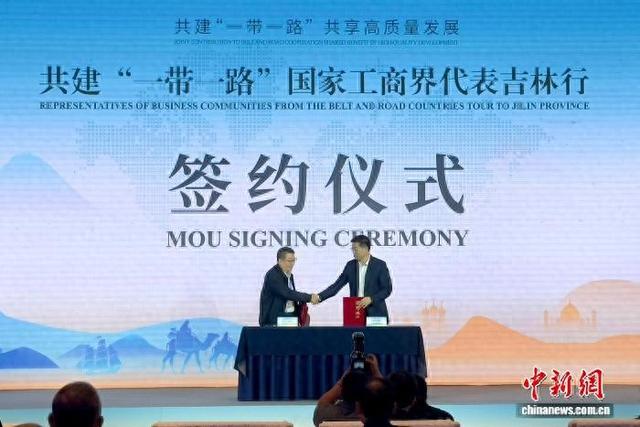
12国工商界代表走进吉林 推动深化产业对接
Zhong Guo Xin Wen Wang· 2025-08-28 11:29
Group 1 - The core viewpoint of the article highlights the gathering of business representatives from 12 countries, including Thailand, Indonesia, Tanzania, Mongolia, and Nepal, in Jilin, China, to discuss economic and industrial cooperation, leveraging the Belt and Road Initiative [1][3] - Jilin province is focusing on enhancing its traditional industries such as automotive, equipment manufacturing, ice and snow tourism, and agricultural product processing, aiming to establish deeper cooperation with Belt and Road countries [3][4] - The signing of cooperation memorandums between Jilin's trade promotion association and various foreign business associations signifies a commitment to fostering international partnerships and exploring new growth opportunities [3][4] Group 2 - The article mentions that China has been Thailand's largest trading partner for 12 consecutive years, with increasing investments from Chinese enterprises in Thailand, particularly in the fields of new energy and smart logistics [3] - Representatives from various countries introduced their local industries and discussed policies to attract foreign investment, indicating a strong interest in expanding cooperation through joint ventures and factory investments [3][4] - The ongoing 15th China-Northeast Asia Expo serves as a platform for Jilin enterprises to connect with foreign representatives, facilitating direct discussions on potential collaborations [4]

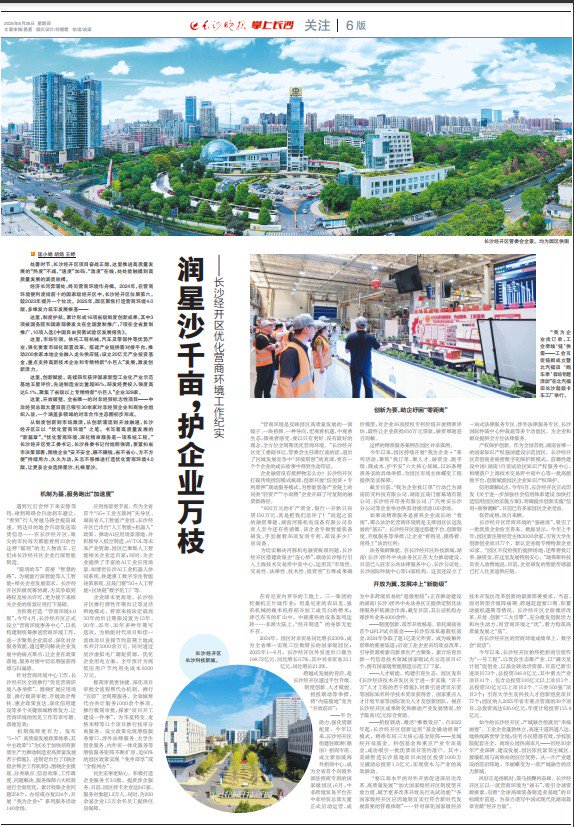
润星沙千亩,护企业万枝——长沙经开区优化营商环境工作纪实
Chang Sha Wan Bao· 2025-08-27 23:36
Core Insights - Changsha Economic Development Zone is advancing high-quality development with a focus on optimizing the business environment, achieving a ranking of sixth among national economic development zones in terms of business environment convenience for 2024, up one position from 2023 [3][4] - The zone has established 16 provincial-level institutional innovation achievements, with three being promoted nationwide and seven within the province, indicating a strong commitment to institutional support for development [3][4] - The zone is actively fostering innovation and market-driven reforms, with over 329 specialized and innovative "little giant" enterprises and a significant investment in R&D, reaching an intensity of 5.1% [4][6] Business Environment Optimization - The establishment of the "Business Environment Affairs Center" aims to enhance service efficiency and address enterprise pain points, with a focus on simplifying approval processes and providing targeted support [6][8] - A comprehensive "1+N" high-quality development policy system has been released, which includes measures to stabilize and assist enterprises, resulting in the resolution of 234 out of 258 reported issues [7][8] - The zone has implemented flexible land transfer terms, saving over 50 million yuan in costs for specific projects, and has introduced measures to optimize electricity usage, potentially saving 60 million yuan annually for businesses [7][8] Innovation and Support for Enterprises - The zone has been recognized as a national model for new industrialization for four consecutive years, with advanced manufacturing accounting for over 95% of its industry [4][10] - Innovative financing solutions, such as "credit loans + patent pledges," have been developed to assist small and asset-light enterprises in overcoming financing challenges [10][11] - The "I Serve Enterprises" initiative has facilitated over 100 supply-demand matching events, enhancing business opportunities for local companies [12][14] International Trade and Investment - The zone has seen a 230% year-on-year increase in trade with Africa, becoming the only national-level zone in the province to achieve triple-digit growth [17][18] - The establishment of overseas investment promotion offices and a cross-border trade platform has strengthened the zone's position as a hub for international trade [17][18] - The introduction of the first QFLP pilot fund in Hunan has attracted over $100 million in foreign investment, enhancing the zone's appeal to international investors [18][19] Overall Development and Future Goals - The zone has registered over 3,000 new business entities in the first half of the year, indicating a robust entrepreneurial environment [14][20] - With a focus on integrating industry and urban development, the zone aims to become a global hub for high-end equipment manufacturing, leveraging its strategic location and infrastructure [20]
欧盟对美作出重大贸易让步:拟本周快速立法取消所有工业品关税
智通财经网· 2025-08-27 11:11
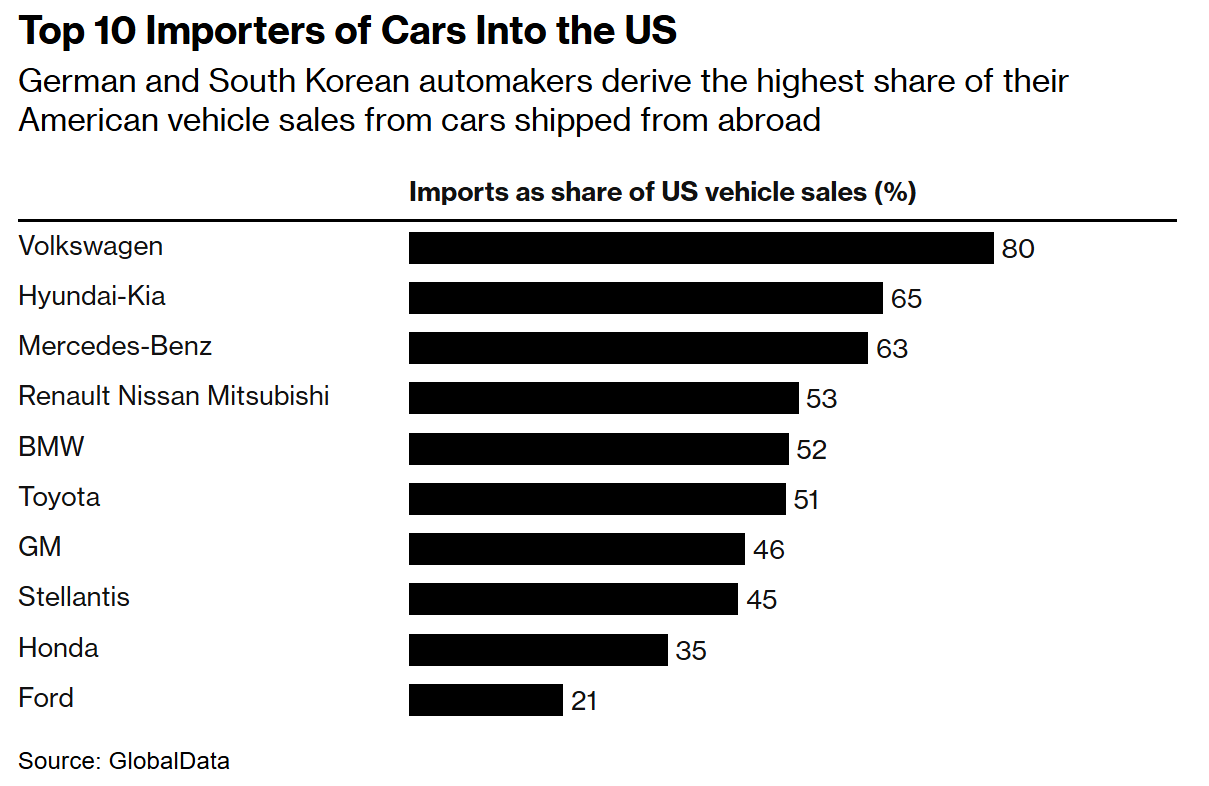
Group 1 - The EU plans to seek rapid legislative approval to eliminate all import tariffs on U.S. industrial goods, a condition set by President Trump for reducing tariffs on EU car exports [1][6] - The EU will also offer preferential tariff rates on certain seafood and agricultural products, acknowledging that the trade arrangement favors the U.S. but is necessary for providing stability and certainty for businesses [1] - The EU Commission President referred to the agreement as a "strong (if not perfect) deal" [1] Group 2 - Currently, EU cars and parts face a 27.5% tariff when exported to the U.S. Although a trade agreement has been reached to reduce U.S. tariffs on nearly all European products to 15%, Trump stated that this rate would not apply to cars unless industrial tariffs are legislatively removed [6] - If the EU proposes legislation by the end of the month, the 15% tariff on European cars will be retroactive to August 1 [6] - Cars are a significant export product for the EU to the U.S., with Germany exporting $34.9 billion worth of new cars and parts to the U.S. in 2024 [6] - To expedite the process, the EU Commission will skip the usual impact assessment for the proposal [6]
综述丨美关税政策拖累日本多行业
Xin Hua Wang· 2025-08-26 06:11
Group 1 - The U.S. tariff policy has significantly negatively impacted multiple Japanese industries, including automotive, steel, and chemicals, leading to profit shrinkage and concerns over production cuts among SMEs [1][2] - Japan's exports to the U.S. have declined, with July exports dropping 10.1% year-on-year to 1.73 trillion yen, marking four consecutive months of decline [1] - The automotive sector experienced a 28.4% year-on-year decrease in exports to the U.S. in July, with export volume down 3.2% to 123,500 vehicles [1] Group 2 - The net profit of 1,069 companies listed on the Tokyo Stock Exchange fell by 12% year-on-year in Q2, marking the first decline in three years, with the automotive sector suffering the most, seeing a profit drop of approximately 980 billion yen, or 45% [1][2] - The steel industry reported losses in Q2, prompting Tokyo Steel to revise its earnings forecast for the fiscal year 2025 [2] - The chemical sector's profits decreased by 25% in Q2, with Mitsubishi Chemical Group's performance notably affected by the tariff policy [2] Group 3 - SMEs are under greater pressure due to the tariff impacts, with 50% of surveyed SMEs expressing concerns about order reductions, an increase of 12 percentage points since April [3] - The food industry, primarily composed of SMEs, has also been affected, with companies like Tamano Hikari Sake Brewery reporting a 30% year-on-year drop in sales to the U.S. due to order cuts from American importers [2]
聊城汽车及零部件产业链上半年完成产值161亿元
Da Zhong Ri Bao· 2025-08-26 04:10
Core Insights - The automotive and parts industry chain in Liaocheng achieved an output value of 16.1 billion yuan in the first half of the year, representing a year-on-year growth of 14.9%, the highest among 12 industry chains [1] - Liaocheng has implemented the "Manufacturing Strong City" strategy, focusing on the integration of technological and industrial innovation to promote collaborative development and quality upgrades across the industry chain [1] - The city currently has 71 enterprises above designated size, including 2 "little giant" enterprises, 48 specialized and innovative small and medium-sized enterprises, and 12 gazelle enterprises [1] - Key automotive manufacturing enterprises include Zhongtong Bus, Zhongtong New Energy, and Shifeng Group, along with various companies producing aluminum alloy materials, battery components, air conditioning, and wiring harnesses [1] - The city has cultivated 56 high-tech enterprises and 35 technology-based small and medium-sized enterprises, and has initiated the "One Chain, One Institute" action to promote collaboration between leading enterprises and educational institutions [1] - Liaocheng aims to leverage its industrial foundation and innovation resources to drive the automotive and parts industry towards high-end, intelligent, and green transformation and upgrades [1]
【财经分析】美关税政策拖累日本多行业
Xin Hua She· 2025-08-26 03:16
Group 1: Impact on Exports and Trade - Japan's exports to the U.S. have significantly declined, with July exports dropping 10.1% year-on-year to 1.73 trillion yen, marking four consecutive months of decline [1] - Exports of automobiles to the U.S. fell by 28.4% year-on-year in July, amounting to 422 billion yen, with export volume decreasing by 3.2% to 123,500 vehicles [1] - The high tariff of 27.5% on Japanese automobiles remains in effect, as the trade agreement to reduce it to 15% has not yet been implemented [1] Group 2: Financial Performance of Companies - The net profit of 1,069 companies listed on the Tokyo Stock Exchange declined by 12% year-on-year in Q2, totaling 12.3 trillion yen, marking the first drop in three years [2] - The automotive and parts sector was the hardest hit, with profits down approximately 980 billion yen, a decline of 45% [2] - Honda's net profit decreased by 50% due to increased tariff costs [2] Group 3: Sector-Specific Challenges - The steel industry reported losses in Q2, prompting Tokyo Steel to revise its earnings forecast for the fiscal year 2025 [2] - The chemical industry saw a profit decline of 25%, with Mitsubishi Chemical Group's performance notably affected [2] - Small and medium-sized enterprises (SMEs) are under greater pressure, with concerns about reduced orders and job cuts due to rising costs from tariffs [2][3] Group 4: SME Sentiment and Future Outlook - A survey indicated that 11% of SMEs have already felt the impact of U.S. tariffs, while 50% are worried about order reductions, an increase of 12 percentage points since April [3] - Analysts suggest that U.S. tariff policies are undermining the free trade system, urging Japanese SMEs to enhance risk management and strategic planning [3]
