保险业

Search documents
新华社权威快报|5年来银行业保险业为实体经济提供新增资金170万亿元
Sou Hu Cai Jing· 2025-09-22 07:47
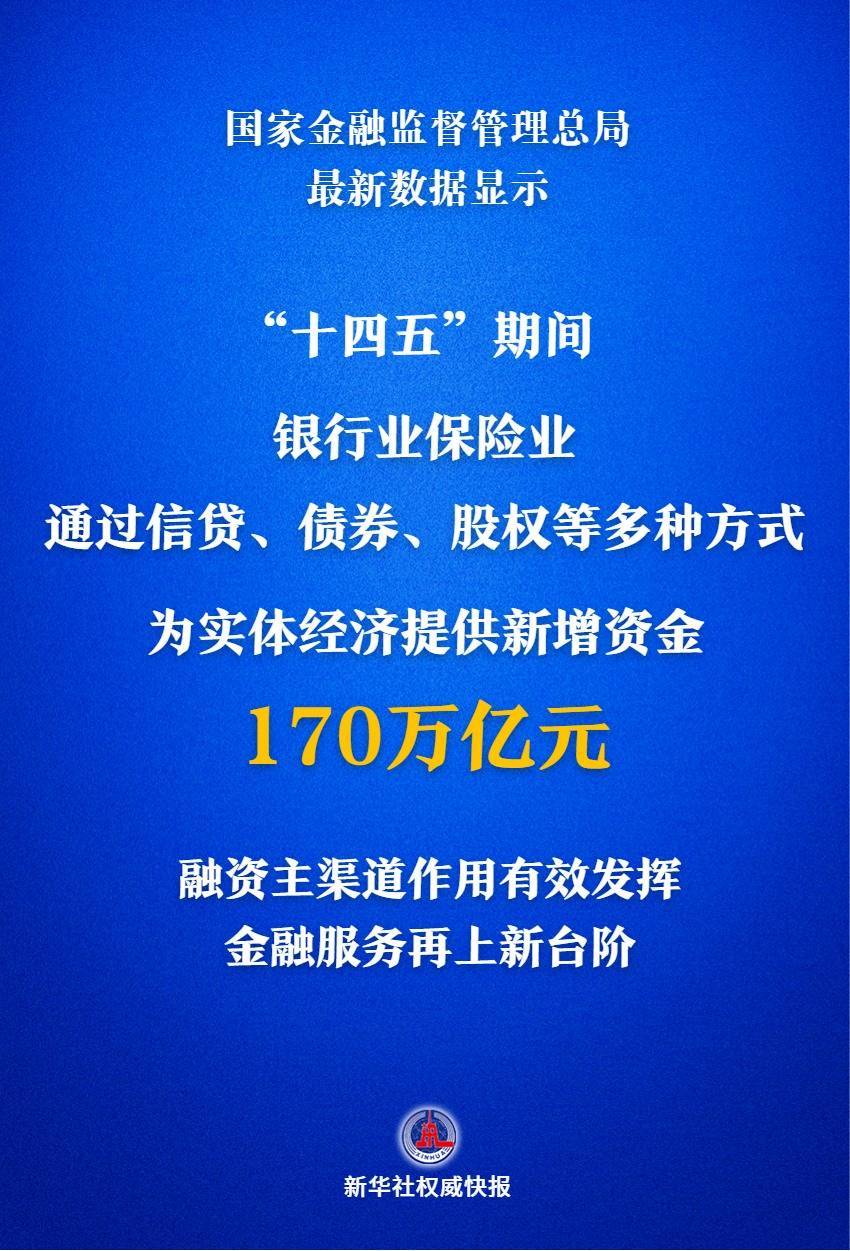
Core Viewpoint - The banking and insurance sectors have effectively played their role as the main financing channels for the real economy, providing an additional 170 trillion yuan in funding during the "14th Five-Year Plan" period, marking a significant enhancement in financial services [1][3]. Group 1: Funding and Financial Services - Over the past five years, the banking and insurance industries have provided 170 trillion yuan in new funding through various means such as credit, bonds, and equity [3]. - The average annual growth rates for loans in key areas are as follows: scientific and technological loans at 27.2%, medium to long-term loans for manufacturing at 21.7%, and infrastructure loans at 10.1% [3]. - The balance of inclusive loans for small and micro enterprises has reached 36 trillion yuan, which is 2.3 times that of the end of the "13th Five-Year Plan," with interest rates decreasing by 2 percentage points [3].

一行一局一会,最新发声
券商中国· 2025-09-22 07:35
Core Viewpoint - The press conference focused on the achievements of the financial industry during the "14th Five-Year Plan" period, emphasizing long-term development rather than short-term policy adjustments [2]. Financial System Stability - The overall financial system in China is stable, with healthy financial institutions and smooth market operations [3]. Loan Growth - During the "14th Five-Year Plan," loans to technology-based small and medium-sized enterprises, inclusive small and micro loans, and green loans grew at an average annual rate of over 20% [4]. Monetary Policy Framework - A modern monetary policy framework with Chinese characteristics has been gradually formed and continuously improved, promoting reasonable growth in financial totals and optimizing credit structure [5]. International Financial Governance - China's participation, influence, and voice in international financial governance have significantly increased, driven by structural reforms in the financial supply side and the development of a multi-level financial market [6]. Central Bank System Improvement - The People's Bank of China will accelerate the improvement of the central bank system to support high-quality economic development [7]. Regulatory Health Indicators - Major regulatory indicators such as non-performing loans, capital adequacy, and solvency are stable and within a healthy range, with a 40% increase in the disposal of non-performing assets compared to the "13th Five-Year Plan" [8][10]. Asset Growth in Banking and Insurance - The total assets of the banking and insurance sectors have exceeded 500 trillion yuan, with an average growth of nearly 9% over the past five years [9][10]. Funding for the Real Economy - The banking and insurance sectors provided an additional 170 trillion yuan in funding to the real economy over the past five years, with significant growth in loans for key areas such as research and technology [11]. Regulatory Effectiveness - Regulatory effectiveness has improved, with a comprehensive regulatory framework established and strict enforcement leading to significant penalties for violations [12][17]. Capital Market Development - The basic system and regulatory logic of the capital market have been comprehensively restructured, supporting stable development [13]. Technology Sector Growth in Capital Markets - The market capitalization of the technology sector in A-shares has exceeded 25%, indicating a significant increase in the market's focus on technology [14]. Direct Financing Growth - In the past five years, the total financing through stock and bond markets reached 57.5 trillion yuan, with a steady increase in the proportion of direct financing [15]. Shareholder Returns - Listed companies distributed over 10.6 trillion yuan in dividends and buybacks, significantly increasing compared to the "13th Five-Year Plan" [16]. Foreign Investment in Domestic Markets - By the end of July, foreign institutions and individuals held over 10 trillion yuan in domestic stocks, bonds, and deposits, indicating robust cross-border investment activity [18]. Foreign Exchange Market Stability - Foreign exchange reserves have remained stable above 3 trillion USD, playing a crucial role in economic stability [20].
滚动更新|“十四五”期间科技型中小企业贷款年均增速超20%
2 1 Shi Ji Jing Ji Bao Dao· 2025-09-22 07:32
Core Insights - During the "14th Five-Year Plan" period, the average annual growth rate of loans to technology-based small and medium-sized enterprises (SMEs) exceeded 20% [3] Group 1: Financial Contributions to the Real Economy - Over the past five years, the banking and insurance sectors have provided an additional 170 trillion yuan to the real economy through various financing methods, effectively playing a key role in financing channels [2] - The average annual growth rates for loans in key areas are as follows: scientific and technological loans at 27.2%, medium to long-term loans for manufacturing at 21.7%, and infrastructure loans at 10.1% [2] - The balance of inclusive loans for small and micro enterprises reached 36 trillion yuan, which is 2.3 times that of the end of the "13th Five-Year Plan," with interest rates decreasing by 2 percentage points [2] Group 2: Achievements in Financial Services - The financial services to the real economy have significantly improved in quality and efficiency during the "14th Five-Year Plan" period, with average annual growth rates for technology-based SMEs, inclusive small and micro loans, and green loans all exceeding 20% [3] - As of June this year, the total assets of the banking sector in China approached 470 trillion yuan, ranking first in the world, while the stock and bond market sizes ranked second globally [4] - China's foreign exchange reserves have maintained the world's largest position for 20 consecutive years, and the country leads in green finance, inclusive finance, and digital finance [4]
新华社权威快报丨5年来银行业保险业为实体经济提供新增资金170万亿元
Xin Hua Wang· 2025-09-22 07:20
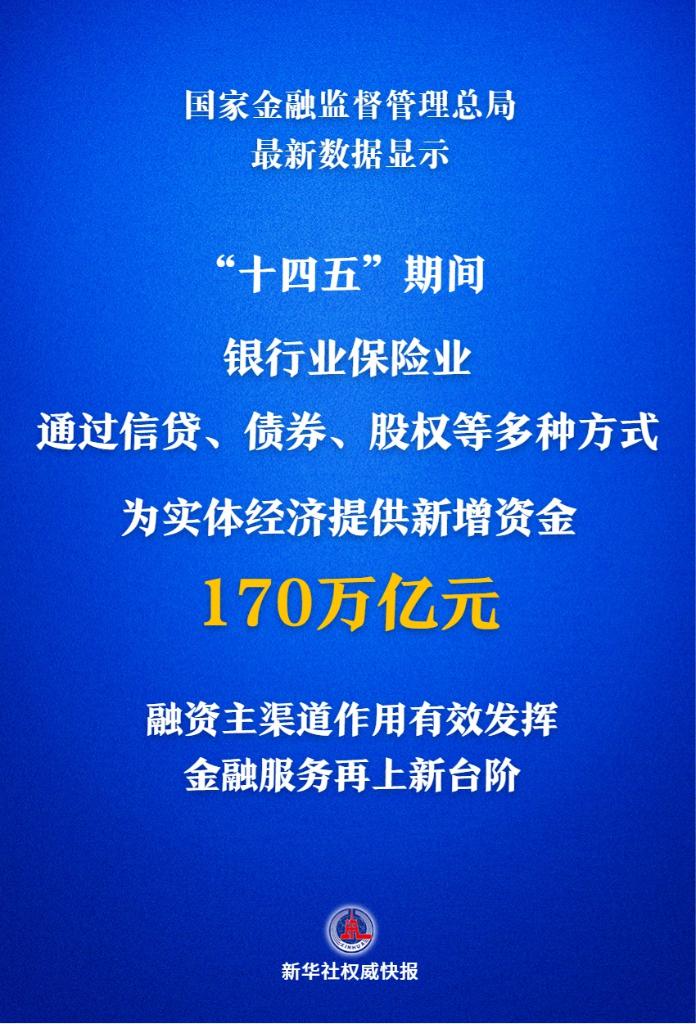
记者:李延霞、张千千 海报制作:刘羽佳 新华社权威快报 金融监管总局局长李云泽9月22日在国新办举行的"高质量完成'十四五'规划"系列主题新闻发布会上介 绍,5年来,银行业保险业通过信贷、债券、股权等多种方式,为实体经济提供新增资金170万亿元,融 资主渠道作用有效发挥,重点领域投放精准有力,民生保障显著增强,金融服务再上新台阶。 据介绍,5年来,科研技术贷款、制造业中长期贷款、基础设施贷款年均增长27.2%、21.7%、10.1%。 目前普惠型小微企业贷款余额36万亿元,是"十三五"末的2.3倍,利率下降2个百分点。 国家金融监督管理总局 最新数据显示 "十四五"期间 银行业保险业 通过信贷、债券、股权等多种方式 为实体经济提供新增资金 170万亿元 融资主渠道作用有效发挥 金融服务再上新台阶 新华社国内部出品 【纠错】 【责任编辑:王佳宁】 ...
5年来银行业保险业为实体经济提供新增资金170万亿元
Xin Hua She· 2025-09-22 07:16
金融监管总局局长李云泽9月22日在国新办举行的"高质量完成'十四五'规划"系列主题新闻发布会上介 绍,5年来,银行业保险业通过信贷、债券、股权等多种方式,为实体经济提供新增资金170万亿元,融 资主渠道作用有效发挥,重点领域投放精准有力,民生保障显著增强,金融服务再上新台阶。 据介绍,5年来,科研技术贷款、制造业中长期贷款、基础设施贷款年均增长27.2%、21.7%、10.1%。 目前普惠型小微企业贷款余额36万亿元,是"十三五"末的2.3倍,利率下降2个百分点。 (文章来源:新华社) ...
美联储降息后,各国利率如何分化
GUOTAI HAITONG SECURITIES· 2025-09-22 05:58
Group 1 - The report highlights that the Federal Reserve's recent interest rate cut of 25 basis points has initiated a new easing cycle for 2025, leading to increased cross-border capital inflows into investment-grade corporate bonds and a rapid expansion in corporate bond financing [7][8] - The European Central Bank and the Bank of England have maintained their interest rates, emphasizing the importance of high rates in controlling inflation, while geopolitical and fiscal pressures continue to affect market confidence [7][8] - The report notes that the yield on medium to long-term U.S. Treasury bonds has risen significantly, while some short-term yields have slightly decreased, indicating a steepening yield curve [9][10] Group 2 - The report indicates that the overall credit risk remains stable globally, with no significant downgrades in sovereign or corporate ratings, reflecting a controlled credit environment [11] - The offshore RMB sovereign bonds (dim sum bonds) have seen a notable decline in yields, with the 10-year yield dropping to 1.8558%, which is lower than the onshore counterpart, indicating improved cross-border liquidity [15][16] - The issuance of dim sum bonds remains active, with a focus on financial and government bonds, while credit bonds are primarily led by large industrial bonds, showcasing a diverse financing landscape [18][20] Group 3 - The report suggests that the overseas bond allocation strategy should focus on the expectations of the Federal Reserve's interest rate cuts and global interest rate differentiation, prioritizing medium to short-duration high-rated U.S. dollar-denominated bonds [8] - It emphasizes the need for a defensive selection of bonds, diversification of duration, and flexible adjustment of positions as core strategies in the current overseas bond market [8]
河南金融监管局同意长城人寿河南分公司泰隆营销服务部变更营业场所
Jin Tou Wang· 2025-09-22 03:44
2025年9月16日,河南金融监管局发布批复称,《长城人寿保险股份有限公司河南分公司关于变更泰隆 营销服务部营业场所的请示》(长寿豫分发〔2025〕72号)收悉。经审核,现批复如下: 二、长城人寿保险股份有限公司河南分公司应按照有关规定及时办理变更及许可证换领事宜。 一、同意长城人寿保险股份有限公司河南分公司泰隆营销服务部将营业场所变更为:河南省郑州市中原 区中原中路220号裕达国际贸易中心A座26层2601室。 ...
宝城期货资讯早班车-20250922
Bao Cheng Qi Huo· 2025-09-22 03:11
1. Report Industry Investment Rating No relevant content provided. 2. Core Viewpoints of the Report - The global financial and commodity markets are experiencing various changes. In the commodity market, precious metals are rising due to factors like Fed rate - cut expectations and geopolitical risks, while basic metals face a complex situation with supply - demand imbalances. In the financial market, the stock market shows positive trends, and the bond market is in a state of low - interest - rate and complex trading strategies. The currency market also has fluctuations influenced by multiple factors [4][32][24]. - The Chinese economy has both positive and negative aspects. The GDP maintains a certain growth rate, but there are also challenges in areas such as inflation and fixed - asset investment. The government is taking measures to promote economic development and environmental protection, and the financial sector is actively adjusting policies and structures [1]. 3. Summary by Directory 3.1 Macro Data - GDP in Q2 2025 had a 5.2% year - on - year growth at constant prices, slightly lower than the previous quarter [1]. - In August 2025, the manufacturing PMI was 49.4%, the non - manufacturing PMI for business activities was 50.3%, and the CPI had a - 0.4% year - on - year change [1]. - M1 and M2 money supply had year - on - year growth in August 2025, with M1 at 6% and M2 at 8.8% [1]. 3.2 Commodity Investment 3.2.1 Metals - International precious metals are rising due to Fed rate - cut expectations, a weak dollar, and geopolitical risks. London basic metals mostly fell, with supply disturbances and weak demand in a complex situation [4]. - As of September 18, tin, zinc, lead, copper, and nickel inventories decreased, while aluminum, cobalt, and alloy inventories remained stable [5]. - Platinum futures prices have risen over 50% this year, outperforming gold futures, and global platinum demand in Q1 2025 increased by 10% year - on - year [5]. 3.2.2 Coal, Coke, Steel, and Minerals - Shanxi's coalbed methane production in the first 8 months of this year reached 9.81 billion cubic meters, a record high [6]. - Congo (Kinshasa) will lift the cobalt export ban on October 16 and set export quotas. If the ban is extended, cobalt prices may rise [6][7]. 3.2.3 Energy and Chemicals - China's Jintan salt - cavern gas storage expanded its capacity, with a 60% increase in daily gas injection and a 2 - fold increase in daily peak - shaving gas extraction [8]. - The EU proposed new sanctions on Russia, including a ban on Russian LNG imports and a $47.6 per - barrel oil price cap [8]. - As OPEC+ voluntary production cuts end, Iraq increased oil exports and earned additional revenue [8]. 3.2.4 Agricultural Products - China's irrigated farmland area has reached 1.086 billion mu, and water - saving irrigation projects have expanded [10]. - The US will cancel the annual food insecurity survey, but the 2024 results will still be released [10]. 3.3 Financial News 3.3.1 Open Market - On September 19, the central bank conducted 354.3 billion yuan of 7 - day reverse repurchase operations, with a net investment of 124.3 billion yuan [12]. - This week, 1.8268 trillion yuan of reverse repurchases and 300 billion yuan of MLF are due. The central bank adjusted the 14 - day reverse repurchase operation method [12]. 3.3.2 Key News - China and the US leaders had a phone call, emphasizing the importance of stable bilateral relations and a good business environment for Chinese companies in the US [15]. - On September 22, the LPR will be announced, and the market expects it to remain unchanged [17]. - 8 - month foreign exchange market data shows stable operation, with increased cross - border receipts and payments and net capital inflows [18]. 3.3.3 Bond Market Summary - Bank - to - bank bond yields generally rose, and bond futures prices fell. The money market improved, and the DR001 weighted average rate dropped to around 1.46% [24]. - In the exchange bond market, some bonds rose and some fell. The convertible bond index also declined [24][25]. 3.3.4 Foreign Exchange Market - The on - shore RMB against the US dollar closed down 46 points at 7.1125, and the RMB central parity rate was down 43 points [28]. - The US dollar index rose 0.30%, and most non - US currencies fell [28]. 3.4 Research Report Highlights - Yangtze River Fixed Income believes that bond funds will maintain a medium - to - high duration level [29]. - Guosheng Fixed Income points out that fiscal revenue and expenditure declined in August, and the sustainability of fiscal stimulus is uncertain [29]. 3.5 Stock Market - Since the implementation of "9·24" policies, China's capital market has become more stable, with increased trading volume and new accounts [32]. - Institutions have been actively researching A - share companies, especially in "hard - tech" sectors. High - profile institutions are optimistic about the sustainable rise of the Chinese stock market [33]. - After the Fed's rate cut, foreign institutions expect more capital to flow back to A - shares and Hong Kong stocks [34]. - Private equity institutions' positions have reached a new high this year [34].
多家公司受到证监会行政处罚,亿元级罚单频现|财富周历 动态前瞻
Sou Hu Cai Jing· 2025-09-22 00:59
A-shares Market - On September 18, A-shares experienced a rapid decline after an initial rise, with the Shanghai Composite Index closing at 3831.66 points, down 1.15%, and the Shenzhen Component Index at 13075.66 points, down 1.06%. The ChiNext Index fell by 1.64% to 3095.85 points. Despite the decline, the trading volume in the Shanghai and Shenzhen markets reached 3.135 trillion yuan, an increase of 758.4 billion yuan from the previous trading day, marking the third-highest trading volume of the year [2] - On September 18, 18 A-shares registered for equity distribution, with 17 companies proposing dividends and one company planning to implement dividends, capital increase, or stock distribution simultaneously [2] - The China Securities Regulatory Commission has imposed strict penalties on several companies for financial fraud, including *ST Dongtong and Yili Clean Energy, sending a strong signal of "zero tolerance" for such behaviors [2] - The Beijing Stock Exchange continues to see high activity in new stock listings, with the stock of Sanxie Electric rising by over 860% on its first trading day, closing up 785.62%, marking the highest first-day increase of the year [2] Insurance Sector - In the first half of the year, listed insurance companies showed a mixed performance in investment returns. Companies like Xinhua Insurance and China Ping An reported strong results after increasing their equity allocations, particularly in high-dividend stocks. Conversely, China Taiping's investment performance weakened significantly, with total investment income dropping by 41.6% year-on-year, and the annualized total investment return rate falling from 5.27% to 2.68% [3] Banking and Financial Products - Current bank deposit rates have generally fallen below 2%, although some private banks like Huari Bank and WeBank still offer large-denomination certificates of deposit with rates exceeding 2%. These high-yield products are in high demand and are quickly sold out [4] - As of September 12, the number of domestic securities investment private equity firms with assets exceeding 10 billion yuan has reached 92, with quantitative private equity firms making up nearly 50% of this group [4] - The Hong Kong Monetary Authority announced a reduction in the base interest rate to 4.5%, effective immediately, based on a formula referencing the lower limit of the current U.S. federal funds rate target range plus 50 basis points [4] Government Bonds - On September 17, the Ministry of Finance announced the completion of the competitive bidding for the second issuance of the 2025 ultra-long special government bonds, with a total face value of 35 billion yuan for a 20-year fixed-rate bond. The overall issuance scale of ultra-long special government bonds this year has reached 1.148 trillion yuan, with an issuance progress of 88.3% [4] Real Estate Market - In August, the sales prices of commercial residential properties in 70 large and medium-sized cities continued to show a narrowing year-on-year decline, with positive signals in property sales, inventory reduction, and corporate financing. A series of supportive policies have improved market expectations and accelerated demand release [6] Tax Revenue - In the first eight months of the year, tax revenue collected by the tax authorities increased by 2% year-on-year, with significant growth in July and August due to heightened activity in the capital markets, where tax revenue from the securities industry grew by over 70% in both months [7] - From January to August, the general public budget revenue reached 148.198 billion yuan, a year-on-year increase of 0.3%. Tax revenue was approximately 121.085 billion yuan, showing a slight increase of 0.02% [8]

中金:“十五五”的潜在政策动态
中金点睛· 2025-09-21 23:54
Core Viewpoint - The "14th Five-Year Plan" marks a critical period for China's financial cycle and economic transformation, shifting from reliance on real estate and traditional infrastructure to a new economic development model focused on innovation, green development, coordination, openness, and sharing [2][4]. Economic Transformation - The economic development model is transitioning to rely more on new economies, with a notable decline in housing prices and a slowdown in credit growth, leading to increased downward pressure on economic growth [2][4]. - The "14th Five-Year Plan" has seen most major indicators completed ahead of schedule, including GDP growth and labor productivity [6][9]. Innovation and Technology - R&D investment has significantly increased, with total R&D expenditure reaching 3.6 trillion yuan in 2024, up 1.2 trillion yuan from the end of the "13th Five-Year Plan" [10]. - The complexity of China's economy has risen, with advancements in key technologies such as integrated circuits and artificial intelligence [12][21]. Green Development - China has made significant strides in green development, with forest coverage exceeding 25% and a notable reduction in PM2.5 levels [21][22]. - The energy structure is rapidly transforming, with non-fossil energy consumption expected to reach around 20% by 2025 [22]. Regional and Urban-Rural Coordination - The "14th Five-Year Plan" emphasizes balanced development between urban and rural areas, with significant improvements in agricultural infrastructure and rural self-development capabilities [27][28]. - Urbanization rates have increased, with the urbanization rate reaching 67% by 2024, ahead of the planned target [28][45]. High-Level Opening Up - China's exports showed resilience, with total exports reaching 3.58 trillion USD in 2024, an increase of nearly 1 trillion USD from the end of the "13th Five-Year Plan" [30][34]. - The negative list for foreign investment has been continuously reduced, with all restrictions in the manufacturing sector eliminated [38][40]. Shared Development - The "14th Five-Year Plan" prioritizes people's well-being, with a focus on reducing income and public service disparities [43][44]. - The average disposable income per capita increased from 32,200 yuan in 2020 to 41,300 yuan in 2024, reflecting a growth rate of approximately 5.8% [44][46].