商业地产

Search documents
利嘉阁:香港7月工商铺买卖登记环比升7%至441宗 为近3个月高位及年内次多
Zhi Tong Cai Jing· 2025-08-05 08:32
Group 1 - The overall economic and business environment in Hong Kong has been improving, leading to a steady increase in the transaction volume of commercial properties [1] - In July 2025, there were 441 registrations of commercial property transactions, a 7% increase from June's 412, marking the highest level in three months and the second highest this year [1] - The total value of transactions in July reached HKD 6.624 billion, a significant month-on-month increase of 92.8%, driven by several transactions exceeding HKD 1 billion [1] Group 2 - The market for industrial buildings remains strong, with 220 registrations in July, up 5.3% from June's 209, maintaining an average of over 200 registrations per month [1] - The total value of industrial building transactions in July was HKD 1.311 billion, a slight decrease of 1.4%, with an average price of approximately HKD 5.96 million per transaction [1] Group 3 - The number of commercial building transactions reached 100 in July, a 7.5% increase from June's 93, marking the second month this year with over 100 transactions [2] - The total value of commercial building transactions surged 2.3 times to HKD 2.637 billion, supported by several large transactions exceeding HKD 100 million [2] Group 4 - The retail and dining sectors are experiencing a revival due to an increase in tourist arrivals, leading to a rise in demand for retail properties [2] - In July 2025, there were 121 registrations of shop transactions, a significant month-on-month increase of 10%, the highest level in over three years [2] - The total value of shop transactions doubled to HKD 2.676 billion, the highest since April of the previous year, indicating a recovery from previous downturns [2]
午评:沪指震荡走强涨0.53% PEEK材料概念股集体爆发
Xin Hua Cai Jing· 2025-08-05 04:04
Market Performance - A-shares showed mixed performance on August 5, with the Shanghai Composite Index rising to 3602.13 points, up 0.53%, and the Shenzhen Component Index increasing by 0.14% to 11056.69 points, while the ChiNext Index fell by 0.26% to 2328.36 points [1] - The total trading volume in the Shanghai and Shenzhen markets reached 1.01 trillion yuan, an increase of 84.9 billion yuan compared to the previous trading day [1] Sector Performance - The PEEK materials sector saw significant gains, with stocks like Zhongxin Fluorine Materials hitting the daily limit, and others like Xinhan New Materials and Nanjing Julong rising over 10% [1] - Other sectors that performed well included consumer electronics, small home appliances, banks, carbon fiber, and photolithography machines [2] - Conversely, the pharmaceutical sector experienced a collective decline, with stocks like Qizheng Tibetan Medicine hitting the daily limit down, and others like Anglikang and Nanjing New Medicine dropping over 9% [1][2] Institutional Insights - Huatai Securities expressed optimism about the commercial real estate sector, highlighting that leading operators' shopping center assets exceed the fair value of investment properties, with C-REITs providing a smoother path for realizing this value [3] - CITIC Securities suggested focusing on the new round of innovation cycle expected in the second half of 2025, particularly in the AI industry chain and structural innovations in fintech and special IT [3] - China International Capital Corporation noted the trend towards lightweight humanoid robots, emphasizing the benefits of lightweight materials like aluminum, magnesium, and PEEK in enhancing performance and safety [3] Industry News - The China Real Estate Association announced initiatives to support the healthy development of small and medium-sized real estate companies, including financial services and sales promotion mechanisms [4]
太古地产(01972.HK)2025年上半年运营数据点评:商圈头部优势显著 购物中心零售额持续改善
Ge Long Hui· 2025-08-05 03:30
Core Viewpoint - The company reported strong retail performance in its shopping centers, with most locations showing year-on-year growth in retail sales for the first half of 2025, indicating a robust recovery in the retail sector [1][2]. Group 1: Retail Performance - Shanghai Xinyi Taikoo Hui saw a retail sales increase of 13.5% year-on-year, while Beijing Sanlitun Taikoo Li grew by 6.8% [1]. - Chengdu Taikoo Li and Shanghai Qiantan Taikoo Li reported retail sales growth of 4% and 0.2% respectively, with Beijing Yiti Port remaining flat and Guangzhou Taikoo Hui declining by 2.1%, a significant improvement from a 10.7% decline in 2024 [1]. - The overall trend indicates that major shopping centers are benefiting from the continued entry of luxury brands, which is expected to further enhance retail sales and rental income in the coming years [1]. Group 2: Hong Kong Market Insights - Hong Kong shopping centers maintained full occupancy with a slight improvement in retail sales growth, contrasting with street shops affected by tourist spending [2]. - Taikoo Place, Taikoo City Centre, and Cityplaza reported retail sales growth of 1.4%, 2%, and a decline of 3.3% respectively, with a consistent 100% occupancy rate for six consecutive quarters [2]. - The Hong Kong office market remains under pressure due to historical rent reductions, with new supply continuing to impact rental rates, although new lease rates have not seen significant declines [2]. Group 3: Investment Outlook - The company’s assets are primarily located in prime shopping districts, providing a strong competitive advantage and operational capabilities that enhance project performance [2]. - Projected net profit growth for the company is estimated at 449%, 54%, and 37% for 2025 to 2027, with dividends expected to grow at 5% annually [2]. - The current estimated net present value per share is HKD 23.92, with a projected dividend yield of 5.6% for 2025, maintaining a "recommended" rating [2].

香港房地产_与仲量联行香港主席专家会议的要点-Hong Kong Property_ Takeaways from expert meeting with JLL HK chairman
2025-08-05 03:20
Summary of Key Points from J.P. Morgan's Expert Meeting on Hong Kong Property Sector Industry Overview - **Industry**: Hong Kong Property Sector - **Expert**: Mr. Joseph Tsang, Chairman of Jones Lang LaSalle (JLL) Hong Kong Core Insights Residential Property - JLL forecasts a **5% decline** in home prices for mass units and **5-10% decline** for luxury units in 2025, primarily due to oversupply and financial pressures on developers [1][4] - JLL expects home prices to stabilize in 2026 (up or down **1-2%**) if HIBOR remains low and geopolitical shocks are absent [1][4][8] - J.P. Morgan's more optimistic forecast anticipates a **3-5% rebound** in home prices in 2026 if certain conditions are met [1][4] - Rental growth is expected to be **0-5%** in 2025 due to an influx of new talent and students [1][4] Office Market - JLL predicts **5% decline** in Grade-A office rents and **5-10% decline** in capital values in 2025, with high vacancy rates (13.2%) persisting [1][4][13] - Rising IPO activity may stimulate demand, but insufficient to reverse current trends [1][4][13] - Tenants prefer newer office buildings with ESG specifications, leading to pressure on older assets [1][4][13] Retail Sector - Retail rents and capital values are expected to drop **5-10%** in 2025, but substantial corrections have already occurred (high-street shops are **72% below peak**) [1][4][18] - JLL anticipates a stabilization of retail rents in 2026, supported by active leasing momentum [1][4][18] - Retail assets yielding **~6%** are attracting strong buyer interest, indicating a potential floor for valuations [1][4][5] Additional Considerations - **CRE Risks**: Overall debt associated with commercial real estate (CRE) risks may exceed **HK$400 billion**, with 34% classified as high risk [1][5][16] - **Mainland Chinese Buyers**: They account for **~50%** of homebuyers in urban districts, significantly influencing market dynamics [1][10] - **Government Response**: While the government is aware of the CRE situation, no comprehensive strategy has been implemented yet [1][16] Investment Recommendations - Top picks in the sector include: - **Swire Properties**: Improving China retail and potential buyback - **Link REIT**: Improving HK retail and Stock Connect - **Wharf REIC**: Stabilizing HK discretionary retail - **Henderson Land**: Stabilizing HK residential market with high yield [1][5] This summary encapsulates the key insights and forecasts regarding the Hong Kong property sector as discussed in the expert meeting, highlighting potential investment opportunities and risks.
以“江南水乡”为特色 杭州商业再添亮色
Mei Ri Shang Bao· 2025-08-05 03:09
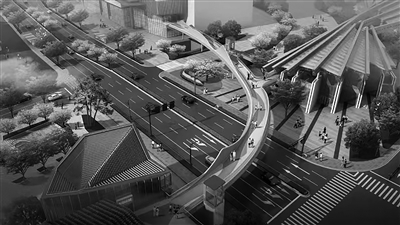
Group 1 - The core project "Qinwang Water Street" in Fuyang District is set to open on September 30, enhancing the commercial landscape in southwest Hangzhou [3] - The project features a total length of 430 meters and a building area of 45,000 square meters, with 25,000 square meters above ground and 20,000 square meters underground [3] - The current occupancy rate of Qinwang Water Street has reached 90%, with over 80% of merchants already in construction, covering diverse sectors such as specialty dining, cultural retail, and life services [3] Group 2 - The pedestrian bridge, part of the "City Eye" urbanization project, has completed 45% of its total construction, including the installation of the main steel box girder structure [4] - The bridge, designed with a curved shape, will connect Qinwang Water Street, the Science Museum, and Qinwang Square, enhancing connectivity and pedestrian safety [4] - The bridge is expected to be completed by the end of September, coinciding with the opening of Qinwang Water Street, and aims to improve traffic efficiency and support commercial prosperity in the area [4]

A股三大指数开盘集体上涨,创业板指高开0.65%
Feng Huang Wang Cai Jing· 2025-08-05 01:41
Group 1 - A-shares opened collectively higher with the Shanghai Composite Index up 0.15%, Shenzhen Component Index up 0.34%, and ChiNext Index up 0.65% [1] - CPO, HBM, and Zhongbing system sectors showed significant gains [1] Group 2 - CITIC Securities interprets the recently issued "Implementation Plan for the Childcare Subsidy System" as a measure to support families in raising infants and toddlers, which may help improve birth rates [2] - The market showed cautious expectations regarding the effectiveness of the subsidy policy, with related sectors such as dairy, maternal and infant products, and toys experiencing initial gains followed by slight declines [2] Group 3 - Huatai Securities expresses optimism about the commercial real estate sector under a value reassessment logic, noting that leading operators' shopping center assets exceed their book value [3] - The C-REITs channel facilitates the realization of this value, enhancing liquidity and making valuations more meaningful [3] Group 4 - CICC highlights multiple macroeconomic factors supporting the performance of the Chinese stock market despite the need for improvement in economic indicators [4] - Confidence in China's medium to long-term economic outlook has improved since last year's fourth quarter, particularly due to positive effects from DeepSeek [4] - The declining proportion of real estate in the economy has reduced its negative impact, and policymakers are increasingly focused on the economy, stock market, and real estate market [4] - There is a rising motivation among residents to allocate to risk assets, especially equities, due to limited returns on safe assets [4] - Future policies addressing debt issues are crucial for enhancing economic vitality and capital market significance [4]

券商晨会精华 | 宏观视角有多个原因支撑中国股市表现
智通财经网· 2025-08-05 00:50
Market Overview - The market opened lower yesterday but rebounded slightly, with the three major indices showing small gains. The Shanghai Composite Index rose by 0.66%, the Shenzhen Component Index increased by 0.46%, and the ChiNext Index gained 0.5% [1] - The total trading volume in the Shanghai and Shenzhen markets was 1.5 trillion yuan, a decrease of 99.8 billion yuan compared to the previous trading day [1] - Sectors such as military industry, precious metals, humanoid robots, and commercial aerospace saw the largest gains, while insurance, film and television, photovoltaics, and snacks experienced the most significant declines [1] Policy Insights - CITIC Securities interprets the recently issued "Implementation Plan for the Childcare Subsidy System" as a measure to support families in raising infants and toddlers, which may lead to the introduction of various comprehensive policies in the future [2] - The childcare subsidy aims to improve birth rates or prevent further declines, but achieving an increase in birth intentions is a long-term process that cannot be solely addressed by economic subsidies [2] - Following the announcement, related sectors such as dairy, maternal and infant products, and toys experienced a brief surge before slightly retreating, indicating cautious market expectations regarding the policy's effectiveness [2] Commercial Real Estate Outlook - Huatai Securities expresses optimism about the commercial real estate sector under the logic of value reassessment, noting that leading operators' shopping center assets exceed the fair value of their investment properties [3] - The C-REITs channel facilitates a smoother realization of this value, enhancing liquidity and making the valuation more meaningful [3] - Companies focused on development in commercial real estate and those with operational management premiums are expected to face growth opportunities [3] Macro Economic Perspective - CICC highlights several macroeconomic factors supporting the performance of the Chinese stock market, despite the need for improvement in economic indicators [4] - Since the fourth quarter of last year, market confidence in China's medium to long-term economic outlook has significantly improved, particularly due to positive effects from DeepSeek [4] - Although the real estate sector is still adjusting, its impact on the economy has diminished as its proportion in the economy has significantly decreased [4] - Policymakers are increasingly focused on the economy, stock market, and real estate, leading to reduced concerns about downside risks in these areas [4] - The increase in the proportion of safe asset allocations among Chinese residents, coupled with limited returns on safe assets, has heightened the motivation to allocate to risk assets, especially equities [4] - Looking ahead, addressing debt-related policies during financial downturns is crucial for improving balance sheets and enhancing economic vitality, which is also significant for capital markets [4]



华泰证券:看好价值重估逻辑下的商业地产板块
Zheng Quan Shi Bao Wang· 2025-08-04 23:55
人民财讯8月5日电,华泰证券研报表示看好价值重估逻辑下的商业地产板块:头部运营商购物中心资产 均超越账面投资性房地产公允价值,而更为关键的是,C-REITs通道使得这一价值的实现路径更为通 畅,流动性增厚使得这一估值更具有参考意义。在商业地产着重布局的开发类企业以及具备运营管理溢 价的物管标的都面临发展机遇。 ...
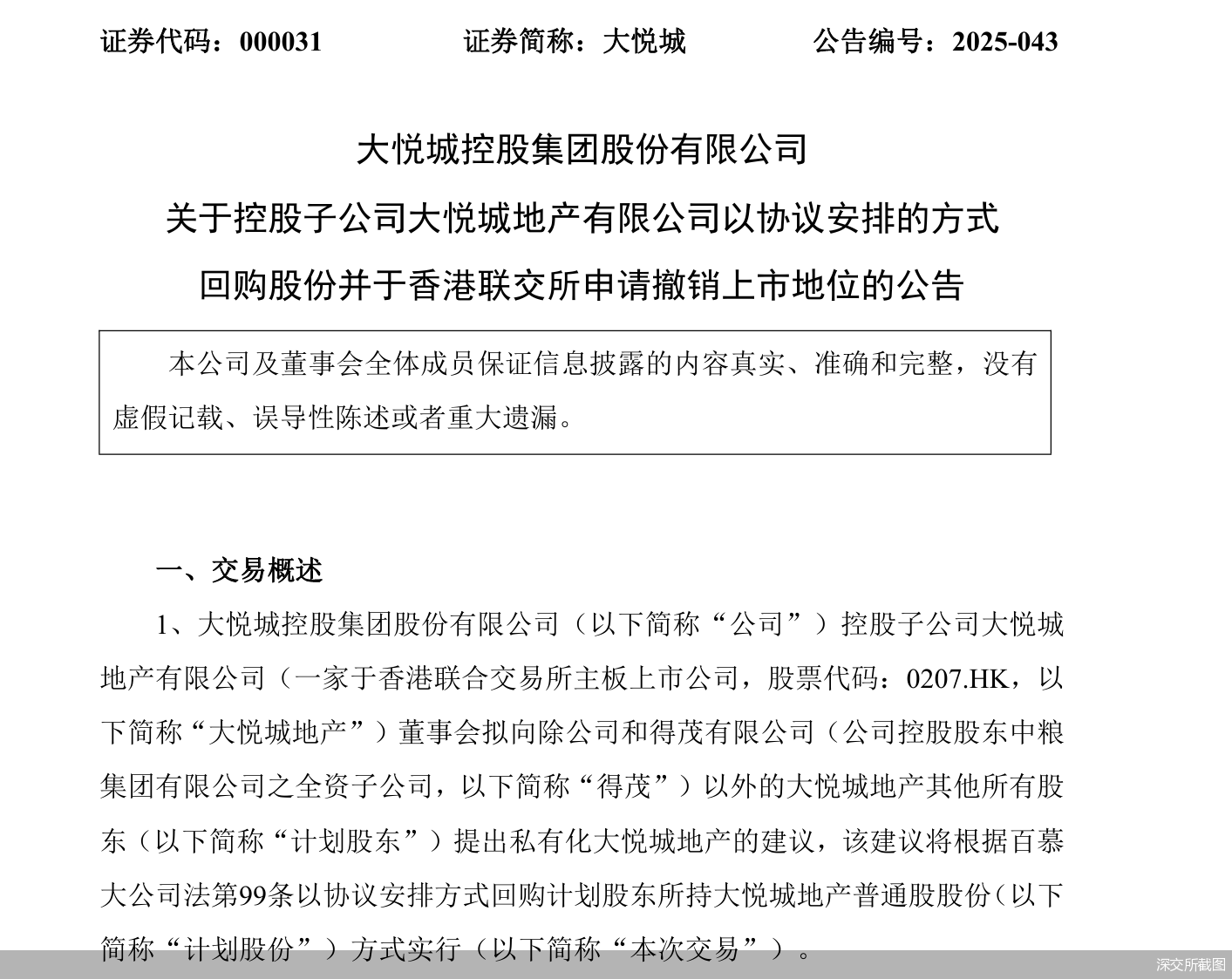
启动私有化 大悦城地产自救未完
Bei Jing Shang Bao· 2025-08-04 15:57
Core Viewpoint - Dalian Wanda's real estate subsidiary, Dalian Wanda Commercial Properties, plans to privatize and delist from the Hong Kong Stock Exchange, offering shareholders a buyback price of HKD 0.62 per share, totaling approximately HKD 29.32 billion, which represents a significant premium over recent trading prices [1][5][6]. Group 1: Privatization Details - Dalian Wanda Commercial Properties, established in 1992 and listed in 2013, is set to end its 12-year presence in the Hong Kong market by submitting a proposal to delist by 2025 [2]. - The buyback will increase Dalian Wanda Holdings' stake in Dalian Wanda Commercial Properties from 64.18% to 96.13%, while the remaining shareholders will hold 3.87% [2][4]. - The company operates primarily in developing and managing urban complexes under the Dalian Wanda brand, with a portfolio that includes 32 projects across major Chinese cities and luxury hotels [3][4]. Group 2: Financial Implications - The transaction is expected to enhance Dalian Wanda Holdings' equity in Dalian Wanda Commercial Properties, potentially improving net profit and operational efficiency [3]. - Dalian Wanda Holdings reported a revenue of approximately CNY 35.79 billion for 2024, a decrease of 2.7% from 2023, with a net loss of CNY 2.98 billion, while Dalian Wanda Commercial Properties had a revenue of CNY 19.83 billion and a net profit of CNY 779 million [4]. Group 3: Market Context and Strategy - The privatization reflects a trend of consolidation within COFCO Group's real estate operations, aiming to streamline governance and improve decision-making efficiency [4][7]. - The long-term strategy post-privatization will focus on enhancing asset quality and cash flow management, shifting away from short-term profit pressures [6][7]. - Dalian Wanda Commercial Properties aims to strengthen its competitive position in the commercial real estate sector by optimizing asset management and operational efficiency [8].

退市不等于自救 大悦城地产拟用29.32亿港元启动私有化
Bei Jing Shang Bao· 2025-08-04 11:15
Core Viewpoint - Dalian Wanda Commercial Properties is planning to privatize and delist from the Hong Kong Stock Exchange, offering shareholders a buyback price of HKD 0.62 per share, totaling approximately HKD 29.32 billion, which represents a significant premium over recent trading prices [1][5][9] Group 1: Privatization Details - Dalian Wanda Commercial Properties, established in 1992 and listed in 2013, is set to end its 12-year presence in the Hong Kong market by submitting a proposal to delist by 2025 [5] - The buyback will increase Dalian Wanda Holdings' stake in Dalian Wanda Commercial Properties from 64.18% to 96.13%, while the stake of other shareholders will decrease [5][8] - The company operates primarily in developing and managing urban complexes under the Dalian Wanda brand, with four main business segments: investment properties, property development, hotel operations, and management services [5] Group 2: Financial Implications - Following the transaction, Dalian Wanda Holdings expects to enhance its equity in Dalian Wanda Commercial Properties, which could improve its net profit attributable to shareholders [6] - Dalian Wanda Holdings reported a revenue of approximately CNY 357.91 billion for 2024, a decrease of 2.70% from 2023, with a net loss of about CNY 29.77 billion, a significant improvement of 103.14% [8] - Dalian Wanda Commercial Properties reported a revenue of CNY 198.31 billion for 2024, with a net profit of CNY 7.79 billion and total assets of CNY 1,067.71 billion, alongside total liabilities of CNY 735.78 billion [8] Group 3: Market Context and Strategy - The stock price of Dalian Wanda Commercial Properties has been below HKD 1, making the privatization offer attractive to shareholders, providing a premium of 67.57% over the last closing price [9] - The company has faced challenges in raising funds from the capital market due to low liquidity and a significant discount to net asset value, prompting the need for privatization [9][10] - Experts suggest that privatization will allow Dalian Wanda Commercial Properties to focus on long-term value investments and asset optimization, reducing pressure from short-term financial metrics [10][12] Group 4: Operational Efficiency - The current governance structure complicates decision-making, and privatization is expected to streamline operations and enhance management efficiency [12] - Post-privatization, the company will have greater flexibility in strategic decision-making, allowing for quicker responses to market changes [12] - The focus will shift towards improving asset quality and cash flow management, with a more concentrated investment strategy in core commercial real estate projects [9][12][13] Group 5: Future Outlook - Dalian Wanda Commercial Properties aims to enhance its competitive edge in the commercial real estate sector through asset optimization and operational efficiency [14] - The company is recognized as a leader in experiential retail and cultural trends, with plans to deepen brand value and establish its projects as urban landmarks [14]