建筑

Search documents
基本面高频数据跟踪:出口运价下行
GOLDEN SUN SECURITIES· 2025-08-18 10:36
Report Industry Investment Rating No relevant content provided. Core View of the Report The report updates the high - frequency data on various aspects of the economy from August 8th to August 15th, 2025, including the overall fundamental situation, production, demand, prices, inventory, transportation, and financing. The overall fundamental high - frequency index shows a stable trend, while different sub - indicators have different changes, such as the increase in the industrial production high - frequency index, the decline in the real - estate sales high - frequency index, etc. [1][8] Summary by Relevant Catalogs Total Index: Fundamental High - Frequency Index Stable - The current Guosheng fundamental high - frequency index is 127.2 points (previous value: 127.0 points), with a week - on - week increase of 0.1 points and a year - on - year increase of 5.4 points, and the year - on - year growth rate remains unchanged. The long - short signal of interest - rate bonds remains unchanged, with a signal factor of 4.8% (previous value: 4.7%). [1][8] Production: PTA Operating Rate Declines - The industrial production high - frequency index is 126.4, with a week - on - week increase of 0.1 points and a year - on - year increase of 5.1 points, and the year - on - year growth rate rises. The PTA operating rate is 75.0%, a decrease from the previous value of 75.9%. [1][8][15] Real - Estate Sales: Transaction Land Premium Rate Declines - The real - estate sales high - frequency index is 43.3, with a week - on - week decrease of 0.1 points and a year - on - year decrease of 6.4 points, and the year - on - year decline rate remains unchanged. The transaction land premium rate of 100 large - and medium - sized cities is 1.9%, a decrease from the previous value of 3.6%. [1][8][29] Infrastructure Investment: Petroleum Asphalt Operating Rate Rises - The infrastructure investment high - frequency index is 120.3, with a week - on - week increase of 0.2 points and a year - on - year increase of 5.1 points, and the year - on - year growth rate expands. The operating rate of petroleum asphalt devices is 32.9%, an increase from the previous value of 31.7%. [1][8][45] Export: Export Container Freight Rate Index Continues to Decline - The export high - frequency index is 143.8, with a week - on - week increase of 0 points and a year - on - year increase of 2.9 points, and the year - on - year growth rate narrows. The CCFI index is 1193 points, a decrease from the previous value of 1201 points. [1][8][47] Consumption: Daily Average Movie Box Office Declines - The consumption high - frequency index is 119.8, with a week - on - week increase of 0.1 points and a year - on - year increase of 2.7 points, and the year - on - year growth rate remains unchanged. The daily average movie box office is 20,674 yuan, a decrease from the previous value of 24,143 yuan. [1][8][67] CPI: Pork Wholesale Price Declines - The CPI monthly - on - monthly forecast is 0.2% (previous value: 0.2%). The latest average wholesale price of pork is 20.2 yuan/kg, a decrease from the previous value of 20.4 yuan/kg. [1][8][68] PPI: Steam Coal Price Rises - The PPI monthly - on - monthly forecast is 0.2% (previous value: 0.2%). The ex - warehouse price of steam coal (produced in Shanxi) at Qinhuangdao Port is 692 yuan/ton, an increase from the previous value of 674 yuan/ton. [1][8][73] Transportation: Passenger Volume Remains Stable Overall - The transportation high - frequency index is 129.8, with a week - on - week increase of 0.2 points and a year - on - year increase of 9.2 points, and the year - on - year growth rate expands. The subway passenger volume in first - tier cities is 40240,000 person - times, an increase from the previous value of 38860,000 person - times. [2][9][84] Inventory: Electrolytic Aluminum Inventory Declines - The inventory high - frequency index is 161.3, with a week - on - week increase of 0.1 points and a year - on - year increase of 9.0 points, and the year - on - year growth rate narrows. The electrolytic aluminum inventory is 161,000 tons, a decrease from the previous value of 197,000 tons. [2][9][92] Financing: Net Local Bond Financing Turns from Positive to Negative - The financing high - frequency index is 234.5, with a week - on - week increase of 0.6 points and a year - on - year increase of 29.8 points, and the year - on - year growth rate expands. The net local bond financing is - 1.37 billion yuan, a decrease from the previous value of 8.28 billion yuan. [2][9][103]
瑞港建设(06816.HK)8月18日收盘上涨23.08%,成交224.48万港元
Jin Rong Jie· 2025-08-18 08:25
Company Overview - 瑞港建设控股有限公司 is a long-established contractor in Hong Kong, providing maritime construction services to both private and public sectors. The company operates in Hong Kong, Macau, and Southeast Asia, offering services such as dredging, land reclamation, and marine facility construction [2]. Financial Performance - As of December 31, 2024, 瑞港建设 reported total revenue of 1.511 billion HKD, a year-on-year decrease of 23.26%. The net profit attributable to shareholders was -147 million HKD, an increase of 15.77% year-on-year. The gross profit margin stood at 7.98%, while the debt-to-asset ratio was 94.21% [1]. Stock Performance - On August 18, the stock price of 瑞港建设 closed at 0.32 HKD per share, marking a 23.08% increase with a trading volume of 6.366 million shares and a turnover of 2.2448 million HKD. Over the past month, the stock has risen by 138.53%, and year-to-date, it has increased by 154.9%, outperforming the Hang Seng Index by 25.97% [1]. Industry Valuation - The average price-to-earnings (P/E) ratio for the construction industry is 10.94 times, with a median of 0.28 times. 瑞港建设 has a P/E ratio of -1.31 times, ranking 195th in the industry. Comparatively, other companies in the sector have P/E ratios ranging from 0.73 to 2.14 times [1]. Future Outlook - It is anticipated that 瑞港建设 will report a profit of approximately -49 million HKD for the mid-year results in 2025, reflecting a year-on-year reduction in losses of 20.97% [3].
仇保兴:绿色建筑是尊重自然、文化与民众长远利益的共同选择
Xin Hua Cai Jing· 2025-08-18 08:12
Core Viewpoint - The report emphasizes the evolution and future of green buildings in China, highlighting the significant progress made over the past 20 years and the need for innovative practices in the context of carbon neutrality goals [1][2]. Summary by Relevant Sections Evolution of Green Buildings - Over the past 20 years, China's green building sector has transitioned from concept introduction to large-scale promotion, developing a diverse range of building types including energy-efficient and zero-energy buildings [1]. Six Key Characteristics of Green Buildings - The six fundamental characteristics of green buildings include: 1. Climate adaptability, allowing structures to adjust to seasonal changes [2]. 2. Diversity in form and type, promoting multidisciplinary design to create green communities [2]. 3. Lifecycle carbon reduction, assessing the sustainability of green buildings [2]. 4. Waste circularity, positioning green buildings as "urban mines" [2]. 5. Economic affordability, ensuring green buildings are accessible and comfortable for the public [2]. 6. Cluster decarbonization, leveraging energy internet to enhance regional green low-carbon initiatives [2]. International Case Studies - The report presents various international examples of "vertical garden" buildings, such as the "Vertical Forest" in Milan and the "Terraced Laboratory" in Bangkok, showcasing innovative practices in green architecture [2]. Innovation and Future Directions - Green building is characterized as a multi-modal system that encourages the innovation of various technologies and practices, with a focus on sustainability and respect for nature and culture [2]. The promotion of green buildings is seen as a pathway to establish a circular economy and a new green economic system in society [2].
潮玩新风口,2.2亿收购上市公司,26岁地产富二代崛起
Sou Hu Cai Jing· 2025-08-18 06:10
Core Insights - The acquisition by Wanjing Capital, a newly established company, marks a significant shift in the power dynamics and wealth transfer within the New City family, particularly with the emergence of the young leader Wang Kaily [1][5][12] Group 1: Acquisition Details - On August 11, 2025, China New Retail Supply Chain Group Co., Ltd. announced its resumption of trading, sparking speculation about its underlying motives [1] - Wanjing Capital, registered on July 11, 2025, is solely owned by 26-year-old Wang Kaily, who is closely linked to the "Hua Sheng Trust" established by family member Wang Zhenhua [1][4] - The acquisition funding comes from internal resources through trust equity realization, without external loans, indicating a strategic financial maneuver [1][6] Group 2: Wang Kaily's Background - Wang Kaily has an impressive academic background, graduating from Peking University in 2021 and obtaining a master's degree from the University of Sydney in 2023, followed by another degree from University College London in 2025 [3] - Her career began in investment holding at Astrum Apex Investments Limited, focusing on project evaluation and investment opportunities, which aligns her with the family's traditional industries [3][4] Group 3: Business Performance - The core business of China New Retail Supply Chain Group remains traditional construction, primarily operating in Singapore, with annual revenues of 6.66 million, 5.56 million, and 5.55 million Singapore dollars from 2022 to 2024, alongside net losses of 1.5 million, 1 million, and 800 thousand Singapore dollars [4] Group 4: Implications of the Acquisition - The acquisition signifies a generational shift in control over real estate and new consumer projects, reflecting a redistribution of power and influence within the New City family [5][12] - The family trust serves as both a financial reservoir and a risk buffer, highlighting the family's sophisticated approach to wealth management across generations [6][12] Group 5: Future Prospects - The new generation's focus on trendy sectors like digital media and strategy public relations contrasts sharply with the traditional real estate and construction industries, indicating a cultural shift [8] - The success of Wang Kaily's ventures will depend on her ability to convert family trust funds into tangible business value, as the operational challenges ahead are significant [10][12]

中国成功发射试验二十八号B星02星;AG600批产第二架机完成首次生产试飞丨智能制造日报
创业邦· 2025-08-18 03:32
Group 1 - The world's largest underwater shield tunnel, with a diameter of 17.5 meters, successfully completed its construction in Jinan, marking a significant milestone in engineering [2] - Xiaomi's automotive factory in Beijing has achieved 100% automation in key processes, producing over 300,000 electric vehicles in just over a year, reflecting a transformative shift in traditional manufacturing [2] - China's successful launch of the experimental satellite No. 28 B star 02, which is intended for space environment detection and related technology testing, demonstrates advancements in aerospace capabilities [2] - The second production aircraft of the AG600 amphibious plane has successfully completed its first production test flight, indicating readiness for delivery and compliance with design specifications [2] Group 2 - The production of new energy vehicles in Beijing reached 262,000 units in the first half of the year, representing a year-on-year increase of 150% [2] - The North Vehicle New Energy Xiangjie Super Factory, set to commence production in 2024, is positioned as a pioneer in the ongoing industrial transformation [2]

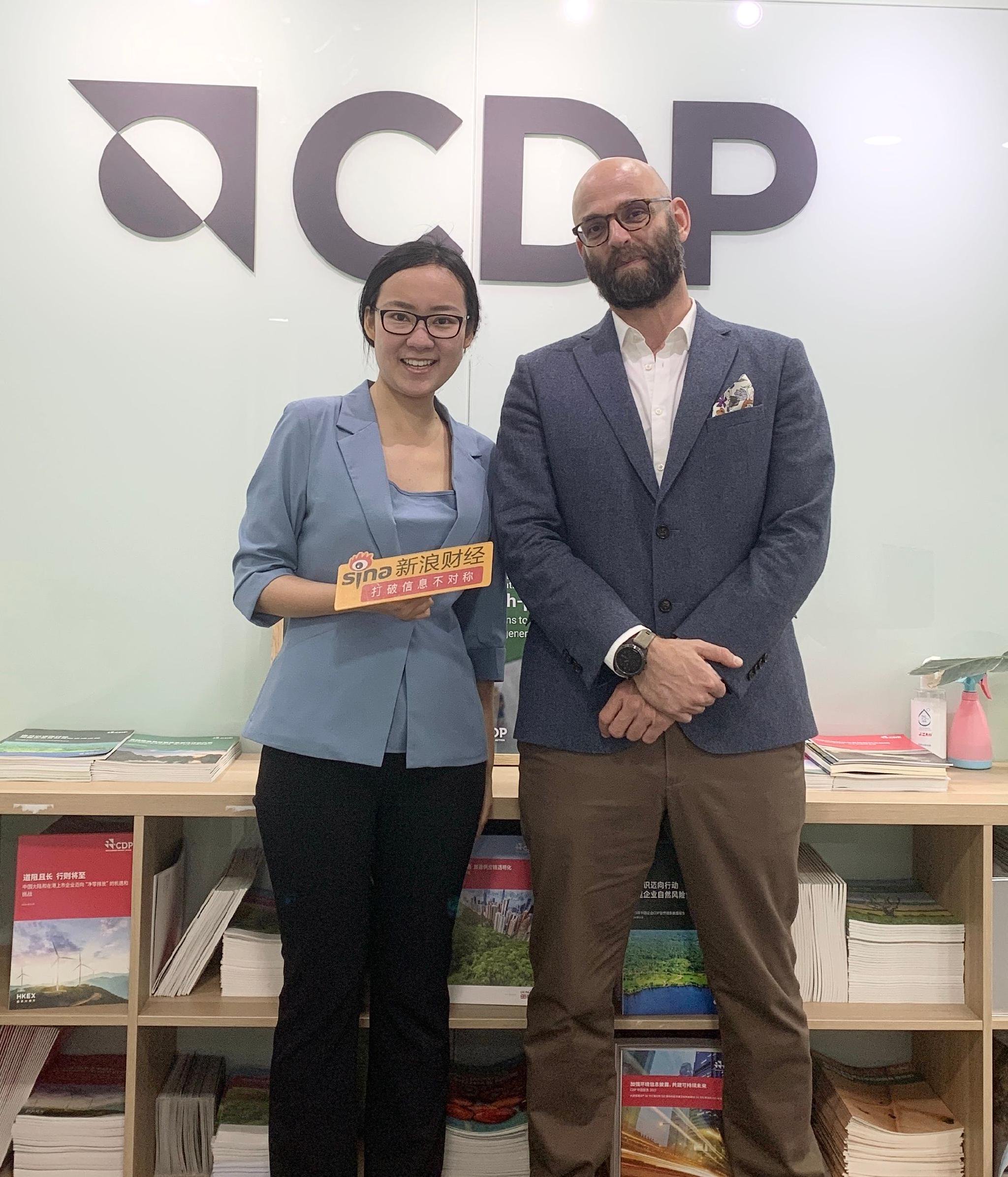
CDP气候变化总监:气候行动正从公关宣传转向核心商业战略
Xin Lang Cai Jing· 2025-08-18 03:14
Core Viewpoint - Climate action and economic growth are mutually reinforcing rather than opposing forces, with companies increasingly viewing environmental sustainability as a necessary risk management measure and a source of competitive advantage [4][5][6]. Group 1: Climate Action and Economic Growth - Scientific evidence supports the reality of climate change, and companies are recognizing the importance of integrating climate considerations into their core operations [4][5]. - The market acknowledges that avoiding climate change responses is the real conflict, with a significant portion of companies disclosing climate-related data through CDP [6][7]. - Companies that strategically manage climate risks can transition from risk mitigation to seizing opportunities, identifying over $16 trillion in climate-related opportunities [7]. Group 2: Industry Perspectives on Decarbonization - Industries can be categorized into three groups: those at risk of obsolescence, those in a balanced state, and those critical for survival, such as energy and agriculture [8][9]. - The energy sector is expected to undergo significant transformation, presenting substantial opportunities, while also facing challenges related to emotional resistance and financial timelines [9][10]. Group 3: Climate Data Disclosure - The evolution of climate-related data disclosure reflects a shift from data collection to strategic focus, with simplification aimed at enhancing credibility [4][10][11]. - Many companies are prepared to implement sustainability reporting directives, and there is a growing recognition of the importance of coherent data over sheer volume [11][12]. Group 4: China's Climate Action Progress - Chinese companies are increasingly participating in CDP disclosures, with a 6.3% growth in the number of companies disclosing from 2023 to 2024 [12]. - However, only 19% of Chinese companies have set climate targets, which is below the global average of 33%, indicating a need for improvement in target-setting practices [12][13]. Group 5: Future of Climate Governance - Recent fluctuations in climate action enthusiasm among some companies are viewed as temporary, reflecting deeper issues that are being addressed [14][15]. - Companies are internalizing climate risks into their core strategies, driven by investor expectations and public opinion, moving beyond mere compliance to proactive engagement [15][16]. Group 6: Support for Renewable Energy Initiatives - The recognition of China's Green Electricity Certificates (GECs) by the RE100 initiative marks a significant development, with CDP continuing to play a technical partnership role in supporting this transition [17].
深度解读_红利高股息:从商业模式角度挖掘低估值红利资产
2025-08-18 01:00
Summary of Conference Call Records Industry Overview - The focus is on the construction industry, particularly high-dividend construction companies in the Hong Kong market, which is becoming increasingly stringent in its evaluation of these companies [1][3]. Key Points and Arguments - **Market Trends**: The decline in deposit rates has led investors to pursue dividend yields of 6%-7%, shifting focus from business models to yield considerations [1][3]. - **Selection Criteria for High-Dividend Companies**: Key factors include positive free cash flow, stable operating assets, stable profits and orders, low interest-bearing debt ratios, high major shareholder ownership, and low valuations (PB) [1][4]. - **Dividend Capability Indicators**: Important metrics for assessing dividend capability include the free cash flow/net profit ratio and the actual yield calculated from stock price and annual reports [1][5][7]. Company-Specific Insights - **江河集团 (Jianghe Group)**: Leads with a 7.3% dividend yield, positive free cash flow, low interest-bearing debt ratio, and a commitment to an 80% dividend payout over the next three years [1][8]. - **中国建筑 (China State Construction)**: Positive cash flow from operations and investments, with a free cash flow/net profit ratio of 0.29 and a stable dividend yield of 4.88% [1][8][9]. - **中国铁建 (China Railway Construction) and 中国交建 (China Communications Construction)**: Both companies have seen declines in profits due to PPP suspensions and real estate impairments, but their order growth remains above expectations [1][10]. Financial Performance of Other Companies - **安徽建工 (Anhui Construction)**: Negative free cash flow, 35% interest-bearing debt ratio, and a dividend yield of 5.6% [1][8]. - **隧道股份 (Tunnel Shares)**: Free cash flow/net profit ratio of 2.5, 77% debt ratio, and a dividend yield of 4.95% despite recent profit declines [1][8]. - **四川路桥 (Sichuan Road and Bridge)**: Negative free cash flow/net profit ratio of -0.93, 79% debt ratio, and a commitment to a 60% dividend payout with a yield of 4.93% [1][8]. - **中材国际 (China National Materials)**: Free cash flow/net profit ratio of 0.3, 61% debt ratio, and a dividend yield of 4.89% [1][8]. Challenges Facing the Industry - The construction industry is facing challenges such as declining construction volumes, increased revenue pressure, rising receivables, and financial risk mitigation [1][10][11]. - The period from late August to early September is identified as particularly risky for the industry, suggesting a cautious approach to investment during this time [1][11]. Future Investment Strategies - A recommendation to gradually increase positions in high-dividend assets if mid-year performance is poor, as these assets are favored by long-term investors due to their low valuations and stable returns [1][12]. - Optimism for the fourth quarter is based on expected growth-stabilizing policies, with a suggestion to start accumulating shares in September [1][13]. Conclusion - The construction industry is under scrutiny, with a focus on high-dividend companies. Key indicators for investment include financial stability, dividend capability, and market conditions. Caution is advised in the short term, with a potential for recovery in the fourth quarter.
申万宏源建筑周报:7月固投走弱,基建投资承压-20250817
Shenwan Hongyuan Securities· 2025-08-17 10:42
Investment Rating - The industry investment rating is "Overweight" indicating a positive outlook for the sector compared to the overall market performance [1]. Core Insights - The report highlights a weak overall investment environment, with infrastructure investment under pressure. However, regional investments may gain flexibility as national strategic layouts deepen [2][3]. - Key statistics show that from January to July 2025, national fixed asset investment increased by 1.6% year-on-year, while manufacturing investment rose by 6.2%. In contrast, real estate investment decreased by 12.0% [10][12]. - Infrastructure investment (including all categories) grew by 7.3% year-on-year, although this represents a slowdown compared to previous months [10][12]. Summary by Sections 1. Market Performance - The construction industry experienced a weekly decline of 0.51%, underperforming against major indices such as the Shanghai Composite Index (+1.70%) and the Shenzhen Component Index (+4.55%) [3][5]. - The best-performing sub-industries included international engineering (+4.36%), private infrastructure (+1.83%), and professional engineering (+0.81%) [5][8]. 2. Key Company Developments - China Power Construction signed a contract for the South Africa Mokolo-Crocodile River (West) water supply expansion project, valued at approximately 6.994 billion yuan, representing 1.10% of its 2024 revenue [13]. - China Metallurgical Group reported new contracts worth 611.34 billion yuan from January to July 2025, a decrease of 18.5% year-on-year, while overseas contracts increased by 38.0% [13][14]. 3. Investment Analysis - The report recommends low-valuation state-owned enterprises such as China Chemical, China Railway, and China Railway Construction, while also highlighting private companies like Zhi Te New Materials and Honglu Steel Structure as potential investment opportunities [2][12]. - The report emphasizes the importance of monitoring new contract signings by key companies to gauge future performance [14].
欧洲最高楼建得有讲究
Jing Ji Ri Bao· 2025-08-16 21:48
Core Points - The Lakhta Center is the tallest building in Europe, with a height of 462 meters including the spire, surpassing the previous record held by the Federation Tower in Moscow at 370 meters [2] - The building has won multiple prestigious architectural awards, including the Emporis Skyscraper Award and the Best Tall Building Award from the Council on Tall Buildings and Urban Habitat [2] - The design and construction of the Lakhta Center faced significant challenges due to extreme temperature fluctuations and strong winds in St. Petersburg, necessitating innovative engineering solutions [3] Group 1: Architectural Significance - The Lakhta Center features a unique twisting design, with each floor rotated at a certain angle relative to the one below, creating a "smooth twisting shape" [2] - The building's entrance arch has an impressive column-free span of 88 meters, utilizing glass as a load-bearing component, a first in architectural history [2] - The building's silhouette resembles a torch, symbolizing the Gazprom company, and its façade consists of over 16,000 "cold-bent glass units" [3] Group 2: Functional Aspects - Although primarily an office building, the Lakhta Center includes multifunctional halls, a 7,000 square meter educational center, and a spherical planetarium that can accommodate up to 140 people [4] - It features a panoramic restaurant at 320 meters, the highest dining venue in Europe, and an observation deck at 360 meters equipped with interactive telescopes for visitors [4] - The Lakhta Center has become a modern symbol of St. Petersburg, enhancing the city's tourism potential and urban environment quality [4]
国资穿透之痛:从国资委到三级子公司的数据突围
经济观察报· 2025-08-16 03:15
Core Viewpoint - The State-owned Assets Supervision and Administration Commission (SASAC) is advancing a comprehensive "penetrating supervision" system across all levels and processes, marking a significant data revolution within the state-owned enterprise (SOE) system [1][5][34]. Group 1: Risk Cases and Data Management - A case involving an engineering payment of 860 million yuan disappearing for three months highlighted weaknesses in SOE supervision, revealing that funds could be mismanaged without detection [2][3]. - In 2023, a municipal-level company concealed a 50 million yuan overdue advance payment through an independent ERP system, resulting in a total asset loss of 120 million yuan for the year [3][10]. - The 2024 audit revealed significant issues in asset management, including idle assets, unauthorized transfers, and poor fund management, with substantial amounts involved [3][12]. Group 2: Implementation of Penetrating Supervision - The SASAC aims to establish an intelligent penetrating supervision system to enhance regulatory efficiency, focusing on real-time monitoring of fund flows within SOEs [5][6]. - The "Guangdong Smart Management" system increased the digitalization rate of core business operations to 98% for 1,901 enterprises [5]. - The system aims to provide transparency in fund flows, allowing for real-time alerts on irregular transactions, such as a 20 million yuan payment to a company with a registered capital of only 500,000 yuan [15][20]. Group 3: Challenges and Resistance - Some enterprises resist the transparency required by the new regulations, citing operational flexibility concerns, as seen in a case where project approvals were delayed due to system alerts [24][30]. - The SASAC is addressing the balance between regulatory oversight and operational autonomy, with ongoing discussions about the implications of stringent data governance on business agility [34][36]. - The challenge of aligning traditional performance metrics with new data governance initiatives remains a significant issue for many SOEs [25][26]. Group 4: Future Directions and Innovations - The SASAC's penetrating supervision is seen as a response to past regulatory failures and aims to mitigate systemic risks associated with complex ownership structures in SOEs [33][34]. - The initiative includes the development of a data middle platform to standardize data outputs across various systems, enhancing the ability to detect and prevent financial misconduct [20][21]. - The ultimate goal is to enable SOEs to identify risks while maintaining operational speed, requiring a careful balance between oversight and flexibility [36].