
生猪养殖

Search documents
招商证券:三行业整治内卷进展突出 中美元首会谈聚焦TikTok
智通财经网· 2025-09-21 00:51
Domestic Policy Insights - The Chinese government is making progress in addressing "involution" in the automotive, pig farming, and photovoltaic sectors, with a focus on pig farming and silicon materials [2] - The automotive industry is seeing the release of a payment standard initiative aimed at ensuring supplier payments do not exceed 60 days [2] - In pig farming, a meeting has been held to discuss reducing the number of breeding sows, with accompanying financial measures suggested [2] - The photovoltaic sector is tightening energy consumption standards, which may accelerate the exit of outdated production capacity, particularly in silicon material pricing [2] Autonomous Driving Developments - The Ministry of Industry and Information Technology has released a draft for mandatory national standards on intelligent connected vehicle driving assistance systems, aiming to fill safety gaps in large-scale applications [3] - The new standards emphasize safety boundaries and monitoring of driver status, suggesting a focus on three types of companies: leading autonomous driving suppliers, companies enhancing driving safety, and automotive testing institutions [3] Service Consumption Policies - The Ministry of Commerce and other departments have announced measures to boost service consumption, with 19 initiatives aimed at stimulating demand and supporting high-quality economic development [4] - Key areas of focus for future investment include cultural tourism, intellectual property consumption, and sports consumption [4] International Relations and Business Implications - Recent talks between Chinese and U.S. leaders have been described as pragmatic and constructive, with discussions on the TikTok transaction being a central issue [5] - The TikTok deal involves core algorithms and shareholding ratios, with Oracle and other companies potentially becoming buyers [5] Industry Policy Updates - The State Council is actively discussing policies related to ecological protection and domestic product standards in government procurement [6] - Recent industry policies include a growth plan for light industry and various regional initiatives to integrate artificial intelligence into industrial processes [7]

龙大美食放弃收购五仓农牧股权 专注食品主业精细化运营
Zheng Quan Shi Bao Wang· 2025-09-19 15:09
Core Viewpoint - Longda Food has decided to abandon the acquisition of Wucang Agricultural Group due to high debt levels, industry uncertainties, and the company's current financial situation, which does not support the acquisition [1][2][3] Group 1: Acquisition Decision - Longda Food announced the abandonment of the acquisition of Wucang Agricultural Group, citing a focus on its core food business and the high debt ratio of Wucang Agricultural [1] - The decision was influenced by the need to avoid increasing the company's debt burden, as it had already planned to develop pig farming projects in Shandong [1][2] - Wucang Agricultural Group has a high asset-liability ratio of 98.73%, with total borrowings around 1.95 billion and cash reserves of only 3.89 million, posing significant repayment risks [2][3] Group 2: Financial Performance - Longda Food's revenue for the first half of the year was 4.97 billion, a year-on-year decrease of 1.4%, while net profit dropped by 39.5% to 35.17 million [3] - The company has approximately 9.73 billion in cash and interest-bearing liabilities of about 3.22 billion, with short-term debt making up 57.72% of the total [3] - The company faces repayment pressure due to the large scale of short-term borrowings and liabilities due within one year, making it unable to finance the acquisition [3] Group 3: Strategic Focus - Since 2021, Longda Food has been actively seeking strategic transformation to mitigate the impact of industry cycles, focusing on a "one body, two wings" development strategy [2] - The company aims to ensure raw material cost control and meet traceability requirements for major clients through its pig farming business [2] - The decision to abandon the acquisition allows Longda Food to maintain stable cash flow and financial health while concentrating on refined operations in its core food business [3]


2025 年中报总结:养殖盈利回升,宠物食品景气延续
Shenwan Hongyuan Securities· 2025-09-19 11:02
Investment Rating - The report indicates a positive investment outlook for the agriculture, forestry, animal husbandry, and fishery sector, highlighting significant profit growth across various sub-sectors [2][11]. Core Insights - The agriculture, forestry, animal husbandry, and fishery sector achieved a substantial year-on-year profit increase of 208% in the first half of 2025, with total net profit reaching 207.8 billion yuan [2][11]. - The sub-sectors with the highest profit growth included seed industry (+1212%), pig farming (+663%), and agricultural product processing (+60%) [2][11]. - The report emphasizes the recovery of profitability in pig farming, driven by improved cost efficiency and increased production volume, despite a slight decline in pig prices [2][17]. - The poultry sector, particularly white feathered chicken, is experiencing pressure due to oversupply and weak demand, while yellow feathered chicken prices have significantly dropped [2][17]. - The pet food industry is noted for its continued growth, with domestic brands gaining market share and profitability, despite challenges in export due to increased tariffs [2][3]. Summary by Sections 1. Overview of the Agriculture, Forestry, Animal Husbandry, and Fishery Sector - The sector's net profit for H1 2025 was 207.8 billion yuan, marking a 208% increase year-on-year [11]. - The second quarter of 2025 also showed a profit increase of 26% compared to the previous year, with notable growth in agricultural product processing and pig farming [15]. 2. Sub-sector Performance 2.1 Pig Farming - The pig farming sector reported a total revenue of 201.9 billion yuan in H1 2025, a 17.9% increase year-on-year, with net profit soaring to 159.24 billion yuan, up 866% [2][17]. - Despite a slight decline in pig prices, the sector benefited from increased production and reduced costs, leading to significant profit improvements [2][17]. 2.2 Poultry Farming - The white feathered chicken sector is stabilizing, with a slight recovery in profitability due to cost improvements, while the yellow feathered chicken sector faces significant price declines [2][17]. 2.3 Pet Food - The pet food sector saw a revenue increase of 21.4% in H1 2025, driven by domestic brand growth and improved profitability [2][3]. 2.4 Animal Health - The animal health sector experienced a revenue increase of 26.44% in H1 2025, with net profit rising by 68.35% [4]. 2.5 Feed - The feed sector reported a revenue increase of 13.3% in H1 2025, with net profit up 29.5% [4]. 2.6 Seed Industry - The seed industry faced challenges with a revenue decline of 9.7% in H1 2025, attributed to falling grain prices [4]. 3. Investment Analysis - The report suggests that the pig farming industry is entering a phase of stable, high-quality development, with potential for significant profit stability and valuation reassessment for leading companies [3][5]. - The pet food sector is expected to continue its long-term growth trajectory, supported by increasing pet ownership and spending [3][5].
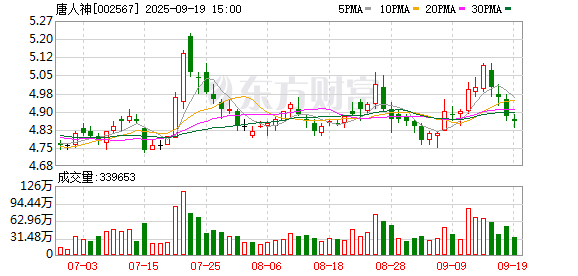
唐人神:公司密切关注并响应国家相关政策导向
Zheng Quan Ri Bao· 2025-09-19 10:15
Group 1 - The company is closely monitoring and responding to national policy directions to promote high-quality development in the pig farming industry [2] - The company is making efforts to reduce pig farming costs and enhance its profitability [2]


中国银河证券:行业集中度加速提升 猪价持续创年内低点
智通财经网· 2025-09-19 09:09
Core Viewpoint - The report from China Galaxy Securities highlights a significant increase in the market share and output of listed pig farming companies in 2025, driven by cost optimization and a favorable policy environment, despite a downward trend in pig prices [1][2][5]. Group 1: Industry Performance - In the first half of 2025, 15 listed pig companies collectively produced 96.62 million pigs, a year-on-year increase of 32.4%, achieving a market share of 26.4%, which is a historical high [1][2]. - The animal health and breeding sectors have shown exceptional returns, with the breeding industry rising by 28.5% from the beginning of 2025 to September 17 [1][2]. Group 2: Price Trends and Profitability - Monthly pig prices have been on a downward trend since 2025, significantly below the industry average, leading to profit compression across the industry [3][4]. - In August, the total sales volume of the 15 listed pig companies reached 15.58 million pigs, with a month-on-month increase of 7.2% and a year-on-year increase of 22.9% [3]. Group 3: Supply and Demand Dynamics - The supply side is expected to accelerate after August, which may lead to fluctuations in pig prices despite overall demand continuing to expand [4][5]. - The average number of breeding sows in 2025 is estimated at 40.42 million, a decrease of 1.68 million year-on-year, indicating a significant contraction in breeding capacity [4]. Group 4: Investment Recommendations - China Galaxy Securities suggests that despite the downward trend in pig prices, the cost optimization by leading pig companies will allow them to maintain profitability [5]. - The report recommends focusing on large pig companies such as Wens Foodstuffs Group and Muyuan Foods, as well as smaller companies like Tiankang Biological, while keeping an eye on other related firms in the sector [5].

生猪市场周报:供过于求格局延续,生猪价格承压-20250919
Rui Da Qi Huo· 2025-09-19 08:40
1. Report Industry Investment Rating - No information provided regarding the industry investment rating 2. Core Viewpoints of the Report - The supply - demand imbalance in the pig market persists, with supply exceeding demand, causing downward pressure on pig prices. In the short - term, the supply side has pressure, and the demand growth is limited. However, it is expected that the supply - demand pattern will gradually improve in the second half of 2026, which will support long - term prices. It is recommended to conduct reverse arbitrage operations in pig futures [6]. 3. Summary by Relevant Catalogs 3.1 Weekly Highlights Summary - **Market Review**: Pig prices broke through downward, with the main contract 2511 falling 3.24% weekly [6][10]. - **Market Outlook**: The supply side has pressure in the near - term. The demand has slightly recovered but the growth is limited. The oversupply situation continues, leading to weak price performance. It is expected that the supply - demand pattern will improve in the second half of 2026, supporting long - term prices. It is recommended to conduct reverse arbitrage operations in pig futures [6]. 3.2 Futures Market Situation - **Price Movement**: The main contract 2511 fell 3.24% weekly [10]. - **Net Position and Warehouse Receipts**: As of September 19, the net short position of the top 20 holders in pig futures was 25,804 lots, an increase of 10,059 lots from last week. The number of futures warehouse receipts was 428, unchanged from last week [16]. - **Contract Spreads**: The spread between lh2511 and lh2601 contracts was - 525, and the spread between lh2511 and lh2603 contracts was - 15 [21]. 3.3 Spot Market Situation - **Base Difference**: The base difference of the September contract was - 85 yuan/ton, and that of the November contract was 75 yuan/ton this week [26]. - **Spot Price**: The national average pig price was 12.97 yuan/kg this week, a decrease of 0.52 yuan/kg from last week and 6.22% from last month. The average price of 15 - kg weaned piglets was 28.00 yuan/kg, unchanged from last week and a 1.93% decrease from the same period last month [33]. - **Pork and Sow Price**: On September 11, the national average pork price was 24.7 yuan/kg, a decrease of 0.13 yuan/kg from the previous week. The average price of binary sows was 32.51 yuan/kg, unchanged from the previous week [37]. - **Pig - Grain Ratio**: As of the week of August 20, 2025, the pig - grain ratio was 5.89, a decrease of 0.05 from the previous week [42]. 3.4 Upstream Situation - **Sow Inventory**: In late July 2025, the sow inventory was 40.41 million heads, a decrease of 10,000 heads from the previous month and a 0.025% decrease year - on - year, reaching 103.6% of the normal inventory. In August, the sow inventory of 123 large - scale farms decreased by 0.83% month - on - month and increased by 1.86% year - on - year. The inventory of 85 small and medium - sized farms decreased by 0.09% month - on - month and increased by 5.92% year - on - year [47]. - **Pig Inventory**: In Q2 2023, the national pig inventory was 424.47 million heads, an increase of 7.16 million heads from the end of the previous quarter and 9.14 million heads year - on - year. In August, the pig inventory of 123 large - scale farms increased by 1.11% month - on - month and 5.28% year - on - year. The inventory of 85 small and medium - sized farms in July increased by 2.49% month - on - month and 7.23% year - on - year [53]. - **Slaughter Volume and Average Weight**: In August, the slaughter volume of 123 large - scale farms was 10.7035 million heads, an increase of 2.56% month - on - month and 23.49% year - on - year. The slaughter volume of 85 small and medium - sized farms in July was 473,700 heads, a decrease of 1.44% month - on - month and an increase of 54.30% year - on - year. The average slaughter weight of national outer - ternary pigs this week was 123.51 kg, an increase of 0.04 kg from last week [58]. 3.5 Industry Situation - **Breeding Profit**: As of September 19, the breeding profit of purchased piglets was a loss of 199.31 yuan/head, with the loss increasing by 37.38 yuan/head. The breeding profit of self - bred and self - raised pigs was a loss of 24.44 yuan/head, a decrease of 41.28 yuan/head month - on - month. The egg - laying hen breeding profit was 0.17 yuan/head, an increase of 0.19 yuan/head week - on - week, and the 817 meat - hybrid chicken breeding profit was 1.54 yuan/head [63]. - **Import Volume**: In August, China's pork import volume was 80,000 tons, a 11.11% year - on - year decrease. From January to August, the cumulative pork import volume was 710,000 tons, a 1.43% year - on - year increase [68]. - **Substitute Products**: As of the week of September 19, the white - striped chicken price was 14.3 yuan/kg, unchanged from last week. As of the week of September 18, the average national price difference between standard and fat pigs was - 0.42 yuan/kg, an increase of 0.02 from last week [73]. - **Feed Situation**: As of September 18, the soybean meal price was 3025.43 yuan/ton, a decrease of 54 yuan/ton from the previous week, and the corn price was 2360.59 yuan/ton, a decrease of 5.49 yuan/ton from the previous week. As of September 19, the Dalian Commodity Exchange pig feed cost index closed at 898.03, a 1.84% decrease from last week. The price of fattening pig compound feed was 3.35 yuan/kg, unchanged from last week. In August 2025, the monthly feed output was 2.9272 million tons, an increase of 99,900 tons month - on - month [78][82][86]. - **CPI**: As of August 2025, China's CPI decreased by 0.4% year - on - year [90]. 3.6 Downstream Situation - **Slaughter and Inventory**: In the 38th week, the slaughter enterprise's开工 rate was 31.77%, an increase of 0.37 percentage points from last week and higher than the same period last year. The domestic frozen product storage rate was 17.56%, unchanged from last week [93]. - **Slaughter Volume and Catering Consumption**: As of July 2025, the slaughter volume of designated pig slaughtering enterprises was 31.66 million heads, a 5.32% increase from the previous month. In August 2025, the national catering revenue was 44.957 billion yuan, a 2.1% year - on - year increase [98]. 3.7 Pig - Related Stocks - The report mentions the stock trends of Muyuan Co., Ltd. and Wens Co., Ltd., but no specific analysis content is provided [99]
【财经分析】政策利好不断 生猪为何仍跌跌不休?
Xin Hua Cai Jing· 2025-09-19 08:01
Core Viewpoint - The Chinese government is implementing stricter measures to control pig production capacity due to ongoing supply pressures and declining pig prices, which have reached a new low since 2021 [1][2]. Supply Side - The Ministry of Agriculture and Rural Affairs reported that as of July 2025, the national breeding sow inventory was 40.42 million heads, which is 103.6% of the normal level [2]. - The third quarter saw a month-on-month increase in the number of pigs slaughtered, with expectations for continued high slaughter volumes [2]. - Major pig farming companies are responding to the pressure by planning to reduce production, with Muyuan planning to cut 130,000 breeding sows by the end of the year, totaling a reduction of 320,000 heads [2][3]. - Current pig prices have dropped below 13 yuan per kilogram, leading to increased production cuts and intensified policy controls [2][3]. Demand Side - Despite being a traditional peak demand season, the demand for pigs remains weak, with market participants exhibiting a cautious attitude [3]. - The ongoing decline in pig prices has led to panic selling in the market, further exacerbating the supply-demand imbalance [3]. - Lower production costs for large-scale farming enterprises are affecting the pace of capacity reduction, making it difficult for pig prices to find support [3]. Market Outlook - The market is expected to remain in a weak state in the short term, with supply pressures likely to manifest in the fourth quarter [3][4]. - The key to stabilizing pig prices lies in the reduction of slaughter volumes, which may not be realized until the third quarter of 2026 [4]. - Seasonal demand during upcoming holidays may provide temporary support for slaughter rates, but overall, the market is anticipated to face challenges due to excess supply [5].
农林牧渔行业2025年中报总结:养殖盈利回升,宠物食品景气延续
Shenwan Hongyuan Securities· 2025-09-19 07:12
Investment Rating - The report maintains a positive outlook on the agriculture, forestry, animal husbandry, and fishery industry, indicating a "Buy" rating for the sector [2]. Core Insights - In the first half of 2025, the listed companies in the livestock sector experienced a significant recovery in profitability, with a total net profit of 20.78 billion yuan, representing a year-on-year increase of 208% [3][14]. - The sub-industries with the highest profit growth included seed industry (+1212%), pig farming (+663%), and agricultural product processing (+60%) [3][15]. - The report highlights a notable divergence in performance among companies within the sector, driven by industry dynamics and operational conditions [3]. Summary by Sections 1. Overview of the Agriculture, Forestry, Animal Husbandry, and Fishery Sector - The agriculture, forestry, animal husbandry, and fishery sector's net profit for the first half of 2025 reached 20.78 billion yuan, a substantial increase of 208% year-on-year [14]. - The second quarter of 2025 also showed a continued growth trend, with a net profit of 10.84 billion yuan, up 26% year-on-year [18]. 2. Sub-sector Performance Review and Investment Strategy 2.1 Pig Farming - The pig farming sector reported a total revenue of 201.9 billion yuan in the first half of 2025, a year-on-year increase of 17.9%, with net profit reaching 15.92 billion yuan, up 865.5% [21]. - Despite a slight decline in pig prices, companies improved profitability through increased volume and reduced costs, with average breeding costs down by 7.2% [21][33]. 2.2 Poultry Farming - The white feather chicken segment showed signs of stabilization, with revenue growth of 0.6% year-on-year, while the yellow feather chicken segment faced significant price declines, leading to a sharp drop in profitability [3][21]. 2.3 Pet Food - The pet food sector saw a revenue increase of 21.4% year-on-year, driven by domestic brand growth and a favorable pricing environment [3][21]. 2.4 Animal Health - The animal health sector experienced a recovery in demand, with total revenue of 8.61 billion yuan, reflecting a year-on-year increase of 26.44% [5][21]. 2.5 Feed - The feed sector's revenue reached 81.91 billion yuan, up 13.3% year-on-year, benefiting from improved profitability in livestock farming [5][21]. 2.6 Seed Industry - The seed industry faced challenges with a revenue decline of 9.7% year-on-year, attributed to falling grain prices and reduced planting enthusiasm among farmers [5][21]. 3. Investment Analysis and Recommendations - The report suggests that the pig farming industry is entering a phase of stable, high-quality development, with potential for significant profit recovery and valuation reassessment for leading companies [4][6]. - The pet food sector is expected to maintain strong growth, supported by increasing pet ownership and spending per pet [4][6].



从巨亏阴霾到盈利暴增,牧原股份靠什么实现“周期逆袭”?
Sou Hu Cai Jing· 2025-09-19 05:58
Core Viewpoint - Muyuan Foods has made a remarkable turnaround from a net loss of 4.263 billion yuan in 2023 to a significant profit increase in 2025, with a 34.46% revenue growth and a 1170% increase in net profit in the first half of 2025 [1][9]. Group 1: Company Performance - In the first half of 2025, Muyuan Foods achieved a revenue of 76.46 billion yuan, marking a year-on-year increase of 34.46% [9]. - The company's net profit reached 10.53 billion yuan, showing a dramatic year-on-year growth of approximately 1170% [9]. - The total cost of pig farming for Muyuan Foods was reported to be below 12.1 yuan/kg by June 2025, indicating a continuous decline in production costs [9]. Group 2: Industry Context - The "pig cycle" has been a significant factor affecting the industry, with fluctuations in pig prices and supply leading to periods of profitability and loss for companies like Muyuan Foods [3][6]. - The recent pig cycle began in 2019, influenced by African swine fever, which caused a drastic drop in pig inventory and a subsequent surge in prices, reaching as high as 40 yuan/kg [5]. - By 2023, the market faced an oversupply situation, leading to a 20% decrease in average pig sales prices compared to 2022, resulting in losses for many companies, including Muyuan Foods [6]. Group 3: Strategic Initiatives - Muyuan Foods has adopted various strategies to mitigate risks associated with the pig cycle, including optimizing feed formulas and enhancing disease prevention systems [7]. - The company has focused on a full industry chain layout to counter price fluctuations, moving towards an integrated development strategy [7]. - Plans for international expansion include partnerships in Southeast Asia and a potential IPO in Hong Kong to support global growth initiatives [11]. Group 4: Market Trends - Despite a continued decline in domestic pig prices, which hit a low of 13.32 yuan/kg in September 2023, Muyuan Foods has managed to maintain a recovery in performance [10]. - The company's stock price has seen a significant increase of 44.69% since late May 2023, reflecting positive market sentiment [12].

天域生物跌2.07%,成交额5571.88万元,主力资金净流入45.23万元
Xin Lang Cai Jing· 2025-09-19 02:09
Company Overview - Tianyu Biological Technology Co., Ltd. is located in Yangpu District, Shanghai, established on June 21, 2000, and listed on March 27, 2017 [2] - The company's main business includes landscape greening engineering design, construction, and maintenance; municipal public engineering construction; environmental comprehensive governance; river and lake pollution control; soil pollution control; and seedling planting and sales [2] - Revenue composition: 72.29% from pig farming, 19.78% from ecological landscape engineering, 3.89% from red yeast products, 3.17% from photovoltaic power generation, and 0.87% from other sources [2] - Tianyu Biological is classified under the agricultural, forestry, animal husbandry, and fishery industry, specifically in pig farming [2] Financial Performance - For the first half of 2025, the company achieved operating revenue of 412 million yuan, a year-on-year decrease of 2.62%, while net profit attributable to the parent company was 10.82 million yuan, a year-on-year increase of 73.68% [2] - Cumulative cash dividends since the A-share listing amount to 34.54 million yuan, with no dividends distributed in the last three years [3] Stock Performance - As of September 19, Tianyu Biological's stock price was 9.01 yuan per share, with a market capitalization of 2.614 billion yuan [1] - Year-to-date, the stock price has increased by 11.93%, but it has decreased by 16.50% over the last five trading days [1] - The stock has appeared on the "Dragon and Tiger List" three times this year, with the most recent appearance on September 16, where net buying amounted to 1.1632 million yuan [1]
