进出口贸易

Search documents
外贸发展看广东丨前7月广东外贸进出口同比增4.3%
Guang Zhou Ri Bao· 2025-08-13 03:04
Group 1 - Guangdong's foreign trade import and export reached 5.4 trillion RMB in the first seven months, a growth of 4.3% year-on-year, outpacing the national growth rate by 0.8%, accounting for 21% of the national total [1] - Exports amounted to 3.44 trillion RMB, growing by 1.7%, while imports reached 1.96 trillion RMB, increasing by 9.3% [1] - General trade and bonded logistics showed growth, with general trade imports and exports at 3.19 trillion RMB (up 3.6%) and bonded logistics at 1.09 trillion RMB (up 13%), while processing trade declined by 1.4% to 1.06 trillion RMB [1] Group 2 - Private enterprises accounted for over 60% of Guangdong's foreign trade, with imports and exports totaling 3.47 trillion RMB (up 4.7%), representing 64.2% of the total [1] - Foreign-invested enterprises saw the fastest growth, with imports and exports at 1.68 trillion RMB (up 5.9%), making up 31.2% of the total, while state-owned enterprises experienced a decline of 13.8% to 224.33 billion RMB [1] Group 3 - ASEAN was Guangdong's largest trading partner, with imports and exports of 889.23 billion RMB (up 5.8%), followed by Hong Kong at 675.48 billion RMB (up 8.5%) and the EU at 643.05 billion RMB (up 7.8%) [1] Group 4 - Guangdong exported 2.33 trillion RMB in electromechanical products in the first seven months, a growth of 7.4%, accounting for 67.8% of total exports, an increase of 3.6 percentage points year-on-year [2] - Key components included computers and parts at 252.14 billion RMB (up 12.5%), electrical equipment at 245.16 billion RMB (up 18%), and integrated circuits at 202.88 billion RMB (up 30.9%) [2] Group 5 - The import of electromechanical products significantly contributed to growth, totaling 1.37 trillion RMB (up 17.4%), which accounted for 70% of total imports, boosting overall import growth by 11.3 percentage points [2]
南非公布五大举措 直面美方贸易霸凌
Yang Shi Wang· 2025-08-13 01:54
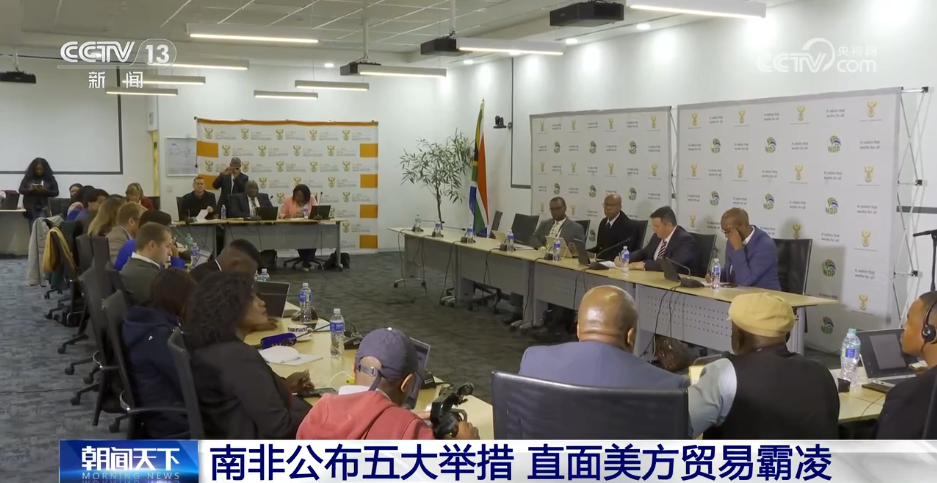
Core Points - The South African government has announced five key measures to address the 30% unilateral tariffs imposed by the US on South African exports since August 7 [1][3] - These measures include ongoing tariff negotiations with the US, diversification of export markets, economic support initiatives, trade defense actions, and domestic demand stimulation plans [1][3] Group 1: Tariff Negotiations - South Africa has submitted a revised trade agreement to the US, addressing concerns raised by the US and making adjustments on import access for poultry, blueberries, and pork [1] - The US trade agency has confirmed that it will begin exporting poultry and pork to South Africa from multiple states within two weeks [1] Group 2: Export Market Diversification - South Africa aims to accelerate the development of the African Continental Free Trade Area and expand into markets in Europe, Asia, and the Middle East [3] - The government plans to deploy trade and agricultural commissioners to enhance export certification and biosecurity standards, thereby increasing economic resilience [3] Group 3: Economic Support Initiatives - The economic support plan includes establishing an export enterprise consulting service platform and creating a localized support fund [3] - An export and competitiveness support program will be launched, along with employment security measures for affected workers in collaboration with the labor department [3] Group 4: Trade Defense Measures - South Africa will implement anti-dumping, countervailing, and safeguard measures as necessary, in accordance with WTO rules, to prevent surges in imports and low-priced dumping that could harm domestic industries [3] Group 5: Domestic Demand Stimulation - A platform for promoting local brands will collaborate with businesses and retailers to expand the sales of domestic products, leveraging domestic demand to support the economy [3] - The South African government emphasizes the importance of maintaining the US market while accelerating market diversification to ensure employment and industrial stability [3]

前7月广东外贸进出口增长4.3% 民企占比超六成
2 1 Shi Ji Jing Ji Bao Dao· 2025-08-12 14:20
Core Insights - Guangdong's foreign trade import and export reached 5.4 trillion RMB in the first seven months of the year, growing by 4.3% year-on-year, which is 0.8 percentage points faster than the national average, accounting for 21% of the national total [1] Group 1: Trade Performance - Exports totaled 3.44 trillion RMB, an increase of 1.7%, while imports reached 1.96 trillion RMB, growing by 9.3% [1] - The import of electromechanical products significantly contributed to trade growth, with imports amounting to 1.37 trillion RMB, a 17.4% increase, making up 70% of total imports [1] - Key imports included integrated circuits (718.18 billion RMB, +15.2%), computers and components (220.23 billion RMB, +60%), and semiconductor manufacturing equipment (49.49 billion RMB, +48.7%) [1] Group 2: Export Dynamics - The export of electromechanical products rose to 2.33 trillion RMB, a 7.4% increase, representing 67.8% of total exports, up 3.6 percentage points from the previous year [2] - Notable export growth was seen in computers and components (252.14 billion RMB, +12.5%), electrical equipment (245.16 billion RMB, +18%), and integrated circuits (202.88 billion RMB, +30.9%) [2] - Labor-intensive product exports decreased by 9.2% to 428.97 billion RMB, accounting for 12.5% of total exports [2] Group 3: Trade Partners - ASEAN emerged as Guangdong's largest trading partner with trade reaching 889.23 billion RMB, a growth of 5.8% [3] - Hong Kong ranked second with 675.48 billion RMB in trade, growing by 8.5%, while the EU was third with 643.05 billion RMB, increasing by 7.8% [3] - Trade with countries involved in the Belt and Road Initiative amounted to 2.1 trillion RMB, a 4% increase, representing 39% of Guangdong's total trade [3]
前7月广东外贸进出口增长4.3%,民企占比超六成
2 1 Shi Ji Jing Ji Bao Dao· 2025-08-12 13:33
Core Insights - Guangdong's foreign trade import and export reached 5.4 trillion RMB in the first seven months of the year, growing by 4.3% year-on-year, which is 0.8 percentage points faster than the national average, accounting for 21% of the national total [1] - The import of electromechanical products significantly contributed to the growth of foreign trade, with imports reaching 1.37 trillion RMB, a growth of 17.4%, making up 70% of total imports [1] - Exports of electromechanical products also increased, totaling 2.33 trillion RMB, a growth of 7.4%, and accounting for 67.8% of total exports [2] Trade Performance - Exports of computers and their components reached 252.1 billion RMB, growing by 12.5%, while electrical equipment and integrated circuits saw growths of 18% and 30.9% respectively [2] - Labor-intensive product exports decreased by 9.2%, totaling 428.97 billion RMB, which represents 12.5% of total exports [2] Trade Partners - ASEAN emerged as Guangdong's largest trading partner with a trade volume of 889.23 billion RMB, growing by 5.8%, followed by Hong Kong and the EU [3] - Trade with countries involved in the Belt and Road Initiative reached 2.1 trillion RMB, growing by 4%, accounting for 39% of Guangdong's total trade [3] Trade Entities - Private enterprises accounted for over 60% of the trade, with their import and export volume reaching 3.47 trillion RMB, a growth of 4.7% [2] - Foreign-invested enterprises showed the fastest growth at 5.9%, while state-owned enterprises experienced a decline of 13.8% [2]
今年上半年俄罗斯贸易顺差同比下降18.39%
Xin Lang Cai Jing· 2025-08-12 09:11
Core Insights - Russia's trade surplus decreased by 18.39% year-on-year in the first half of 2025, amounting to $63.9 billion [1] - Total exports fell by $13.3 billion to $195.5 billion, while imports saw a slight increase of $1.1 billion, reaching $131.6 billion [1] - The total foreign trade volume declined by 3.6% to $327.1 billion during the same period [1] Export Structure - Mineral products constituted the largest share of exports, totaling $110.1 billion, which represents a decrease of 16.2% [1] - Metals and metal products ranked second, with exports rising by 15.1% to $31.9 billion [1] - Agricultural products were third, with export values at $17.8 billion, reflecting a decline of 14.6% [1]
加力支持跨境电商、离岸贸易、海外仓等新业态新模式发展——金融活水加大服务稳外贸
Xin Hua Wang· 2025-08-12 06:25
Core Viewpoint - The People's Bank of China has issued a notice to support cross-border RMB settlement for new foreign trade business models, aiming to enhance financial services for the development of these new business forms [1][5]. Group 1: Support for Cross-Border Settlement - The notice aims to facilitate better financial services for cross-border e-commerce, market procurement, offshore trade, and overseas warehouses, which have seen significant growth in recent years [1][2]. - In the first four months of this year, the scale of cross-border RMB payments for goods trade reached 2.2 trillion yuan, a year-on-year increase of 26%, accounting for 16% of total cross-border payments in goods trade [3]. - The China Export & Credit Insurance Corporation has supported new foreign trade business models with a total underwriting amount of 88.9 billion USD this year, indicating strong demand for risk coverage in the current international environment [10][11]. Group 2: Financial Institutions' Role - Financial institutions are encouraged to collaborate and provide convenient financial services to foreign trade enterprises with real transaction backgrounds, as outlined in the government's opinions [7][12]. - Agricultural Bank of China has actively promoted foreign exchange derivative transactions to help companies manage exchange rate risks, successfully facilitating a 200 million yuan forward foreign exchange transaction for a local fruit import company [2]. - China Merchants Bank has reported a 24% year-on-year increase in international trade settlement services and a 44% increase in import and export trade financing in the first four months of this year [7]. Group 3: Innovative Financial Products - Construction Bank has developed a dedicated product for cross-border e-commerce, allowing companies to efficiently manage their overseas sales funds [9]. - Xinyu Group has benefited from innovative financing solutions provided by banks, ensuring smooth capital turnover for its overseas subsidiaries amid challenges in accessing traditional financing channels [8]. - The introduction of various financial products aims to reduce costs and improve efficiency for cross-border enterprises, helping them expand revenue streams [4][9].



新华全媒+ | 2025年前7个月我国外贸保持向上向好势头
Xin Hua Wang· 2025-08-12 06:05
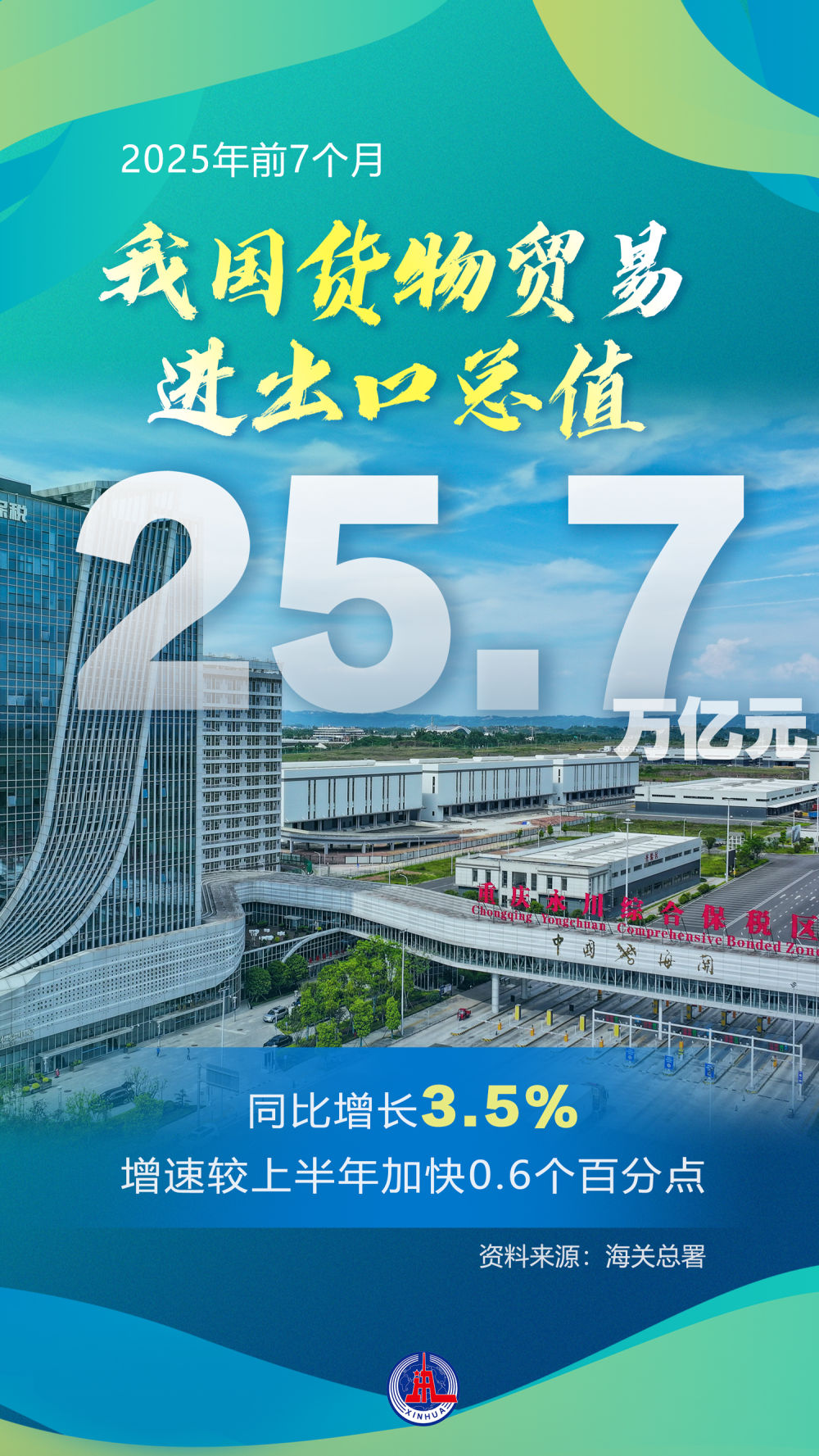
Group 1 - In July, China's total goods trade import and export value reached 3.91 trillion yuan, a year-on-year increase of 6.7%, marking the highest growth rate this year [1] - For the first seven months, the total goods trade import and export value was 25.7 trillion yuan, with a year-on-year growth of 3.5%, accelerating by 0.6 percentage points compared to the first half of the year [1][3] - The Director of the Statistical Analysis Department of the General Administration of Customs stated that China's economy is showing steady progress amid a complex external environment, with foreign trade maintaining an upward trend [1] Group 2 - In the first seven months of 2025, the import and export value reached 15.31 trillion yuan, with a year-on-year increase of 7.3% [4] - The export of mechanical and electrical products grew by 9.3%, accounting for 60% of total exports, with integrated circuits, automobiles, and automatic data processing equipment and their components seeing increases of 21.8%, 10.9%, and 1.1% respectively [8] - Private enterprises accounted for 57.1% of China's total foreign trade, with their import and export value increasing by 7.4% [10][11]
中国成为全球贸易“稳定之锚”
Xin Hua Wang· 2025-08-12 05:57
Core Insights - China's economic performance in the first quarter exceeded expectations, with a GDP growth of 5.4% year-on-year, which is significantly higher than analysts' forecasts [4][5][10] - The 137th Canton Fair and the 5th China International Consumer Products Expo showcased China's role as a global trade stabilizer, attracting a record number of international buyers and exhibitors [3][4][9] Economic Data - In the first quarter, China's import and export scale reached a historical high, exceeding 10 trillion yuan for eight consecutive quarters [4][6] - The Canton Fair attracted 148,585 overseas buyers from 216 countries and regions, marking a 20.2% increase compared to the previous session [3][4] - The Consumer Expo featured over 1,700 companies and 4,200 brands, with participation from 65 Fortune 500 companies, setting a new record for scale [4][9] Trade Relations - ASEAN remains China's largest trading partner, with a year-on-year growth of 7.1% in trade volume [6] - Trade with the EU grew by 1.4%, while trade with Belt and Road Initiative countries reached 5.26 trillion yuan, a 2.2% increase year-on-year [6][7] Policy and Market Outlook - China is implementing policies to boost domestic demand and consumption, aiming to stabilize and expand consumer spending [7][10] - The government is committed to high-level opening-up and expanding institutional openness, which is expected to create greater opportunities for global enterprises [8][10] Global Impact - China's contribution to global economic growth remains around 30%, reinforcing its role as a key engine for world economic recovery [10] - The Consumer Expo serves as a platform for global consumption, facilitating the entry of international products into the Chinese market and promoting Chinese goods abroad [9][10]

第137届广交会已有22万多名境外采购商到会 创同期新高
Xin Hua Wang· 2025-08-12 05:57
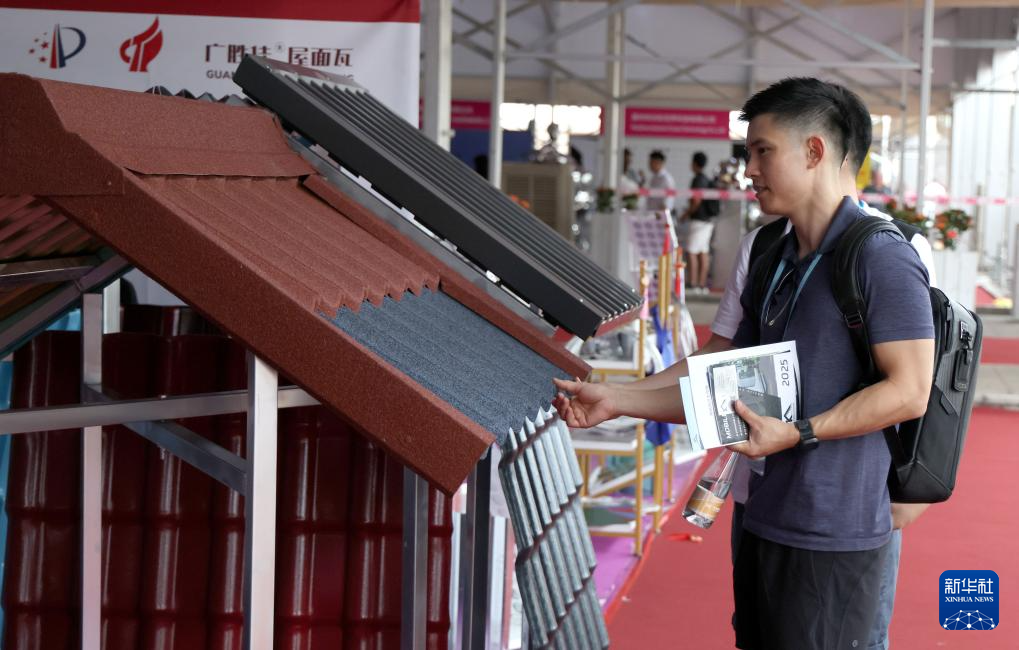
Group 1 - The 137th Canton Fair's second phase concluded on April 27, attracting a record high of 224,372 overseas buyers from 219 countries and regions [1] - The second phase of the fair focused on "Quality Home" with an exhibition area of 515,000 square meters, featuring 24,735 booths and 10,313 participating companies, an increase of 273 companies compared to the previous session [3] - The fair emphasized the "big home" concept, showcasing products across three main categories: household goods, gifts and decorations, and building materials and furniture, catering to the demand for upgraded consumer experiences [3] Group 2 - The vibrant atmosphere and active negotiations at the Canton Fair reflect global business confidence in China's economic outlook, providing a boost to China's foreign trade development [5]
权威数读丨“含金量”“含新量”不断提高!这几组外贸数据要关注
Xin Hua Wang· 2025-08-12 05:50
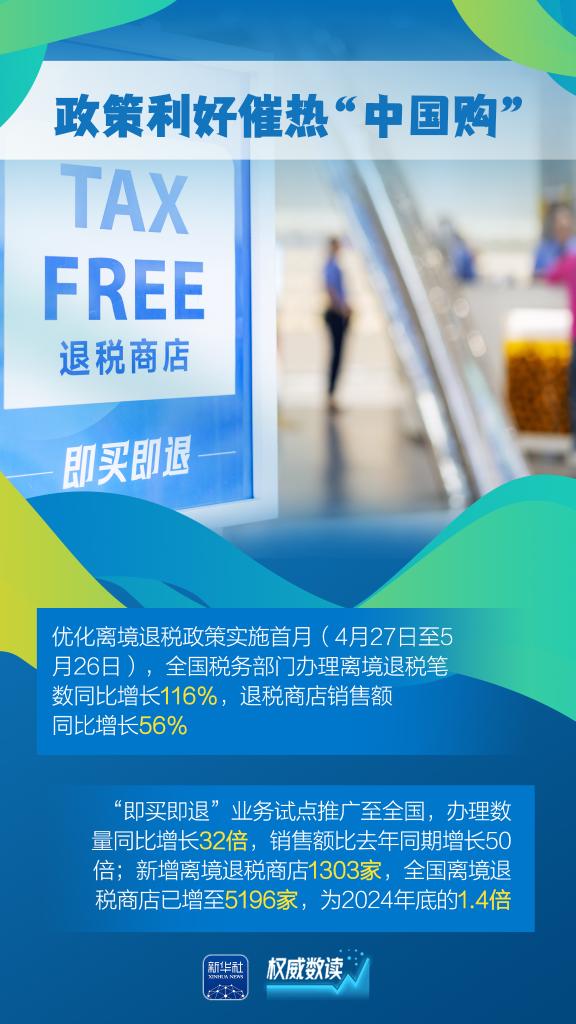
Core Insights - China's foreign trade has shown resilience and vitality in a complex environment, with significant growth in various sectors and markets [1] Group 1: Foreign Trade Performance - In the first five months of the year, China's imports and exports to countries involved in the Belt and Road Initiative increased by 4.2% [9] - Exports to ASEAN countries grew by 9.1%, while exports to Africa rose by 12.4%, indicating a diversification of market patterns [9] - Private enterprises' imports and exports increased by 7%, accounting for 57.1% of China's total foreign trade, a 2.4 percentage point increase from the previous year [12] Group 2: High-Value and High-Tech Products - In the first five months, exports of electromechanical products grew by 9.3%, making up 60% of total exports [15] - Notable growth was seen in integrated circuit exports, which increased by 18.9%, and electric vehicle exports, which rose by 19% [15] Group 3: New Trade Dynamics - The implementation of the optimized departure tax refund policy led to a 116% year-on-year increase in the number of tax refund transactions and a 56% increase in sales at refund stores [4] - The "immediate purchase and refund" business model has been expanded nationwide, with a 32-fold increase in transaction numbers and a 50-fold increase in sales compared to the previous year [4] Group 4: E-commerce and International Cooperation - The number of Silk Road e-commerce partner countries has reached 35, with the establishment of 120 online and offline national pavilions [22] - The fourth China-Africa Economic and Trade Expo resulted in 176 signed projects worth $11.39 billion, a 45.8% increase in project quantity compared to the previous session [25] Group 5: Future Trade Projections - Trade between China and South Asian countries is projected to approach $200 billion by 2024, doubling over the past decade with an average annual growth rate of approximately 6.3% [28]