建筑

Search documents
我国推动碳达峰碳中和取得重要成果
Jing Ji Ri Bao· 2025-08-15 22:43
Group 1: Carbon Reduction and Economic Transformation - China has established the most comprehensive carbon reduction top-level design and policy system globally, achieving significant results in the green transformation of the economy and society through coordinated efforts in carbon reduction, pollution reduction, greening, and growth [1] - The optimization and upgrading of industrial structure are steadily advancing, with 66 national strategic emerging industry clusters, over 6,400 national green factories, and more than 490 green industrial parks cultivated [1] Group 2: Energy Transition - The energy structure is undergoing a significant green and low-carbon transition, with coal consumption's share decreasing from 56.8% in 2020 to 53.2% in 2024, while the share of non-fossil energy consumption is increasing from 15.9% to 19.8% [1] - As of June this year, China's renewable energy installed capacity reached 2.159 billion kilowatts, the largest globally [1] Group 3: Transportation and Urban Development - A green, clean, and low-carbon transportation system is being rapidly improved, with annual production and sales of new energy vehicles exceeding 12 million units, maintaining the global lead for ten consecutive years [2] - By 2024, over 97% of newly built urban buildings will be green buildings, and energy consumption in public institutions is expected to decrease by 4% and 5.1% respectively compared to 2020 [2] Group 4: Ecological and Carbon Sequestration Efforts - China is enhancing the effectiveness of carbon sequestration through large-scale land greening actions, with forest coverage exceeding 25%, contributing to a quarter of the world's new greening area [2] Group 5: Promotion of Low-Carbon Lifestyles - A green and low-carbon lifestyle is becoming a social norm, with initiatives like the "Clean Plate Campaign" and active participation in tree planting and waste sorting [3] Group 6: Global Climate Governance Contributions - China plays a significant role in global climate governance, being the largest clean energy exporter and investor, with wind and solar power costs dropping over 60% and 80% respectively in the past decade [3] - The country has signed project documents with 42 nations, mobilizing over 177 billion yuan for climate change projects [3]
国资穿透之痛:从国资委到三级子公司的数据突围
Jing Ji Guan Cha Wang· 2025-08-15 12:53
Core Viewpoint - The article discusses the implementation of a "penetrating supervision" system by the State-owned Assets Supervision and Administration Commission (SASAC) to enhance oversight of state-owned enterprises (SOEs) and address issues of financial opacity and risk management in the sector [1][24]. Group 1: Issues Identified - A significant amount of 860 million yuan in project funds was unaccounted for in the financial reports of a state-owned infrastructure company, eventually reaching the account of a discredited supplier, triggering alarms in the new supervision system [1]. - In 2023, a municipal-level company concealed a 50 million yuan overdue advance payment through an independent ERP system, leading to a total asset loss of 120 million yuan for the year [2]. - The 2024 audit revealed widespread issues in asset management, including idle assets, unauthorized transfers, and lax financial controls, with substantial amounts involved [2]. Group 2: Implementation of Penetrating Supervision - The SASAC aims to establish an intelligent penetrating supervision system to improve regulatory efficiency, focusing on all levels of SOEs [4][5]. - The system in Zhuzhou has digitized the core business of 1,901 enterprises, achieving a digitalization rate of 98% [4]. - The system is designed to provide real-time alerts for financial anomalies, such as excessive payments beyond contract amounts, and has already identified significant risks in transactions [12][15]. Group 3: Data Management Challenges - Many SOEs operate multiple disparate systems, leading to inconsistencies in financial reporting and data synchronization issues, which complicate oversight [13][14]. - The energy company faced challenges in consolidating data from seven different systems, resulting in mismanagement of over 600 million yuan due to delayed reporting [14][16]. - The SASAC's initiative to unify data standards and create a centralized data platform has begun to address these issues, with significant improvements in data transparency and risk detection [15][16]. Group 4: Balancing Regulation and Operational Flexibility - The new supervision system has created tensions between regulatory compliance and operational flexibility, with some enterprises reporting delays in project execution due to stringent oversight [18][19]. - The energy company reported increased management costs due to data governance efforts, despite a significant reduction in risk losses [19]. - There are ongoing discussions about how to balance regulatory demands with the need for operational agility, particularly in competitive sectors [25][26].
瑞港建设(06816.HK)预期中期税前亏损不少于4900万港元
Ge Long Hui· 2025-08-15 12:46
Core Viewpoint - The company anticipates a pre-tax loss of no less than HKD 49 million for the six months ending June 30, 2025, which represents an improvement compared to a pre-tax loss of HKD 62 million for the same period in 2024, indicating a reduction in loss by approximately HKD 13 million [1] Group 1: Financial Performance - The general construction business is expected to show improvement, with a projected increase in gross profit of approximately HKD 28 million for the mid-2025 period [1] - However, the maritime engineering segment experienced a setback due to the settlement results of a completed project, leading to a decrease in gross profit by about HKD 16 million [1] - Overall, despite the improvement in the general construction business, operational earnings are insufficient to cover administrative expenses and financial costs, resulting in the anticipated loss for mid-2025 [1]
大涨,巴菲特“抄底”保险巨头
Zheng Quan Shi Bao· 2025-08-15 12:07
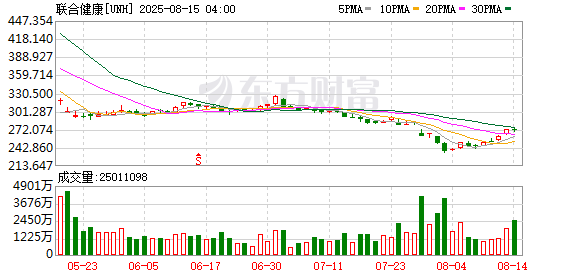
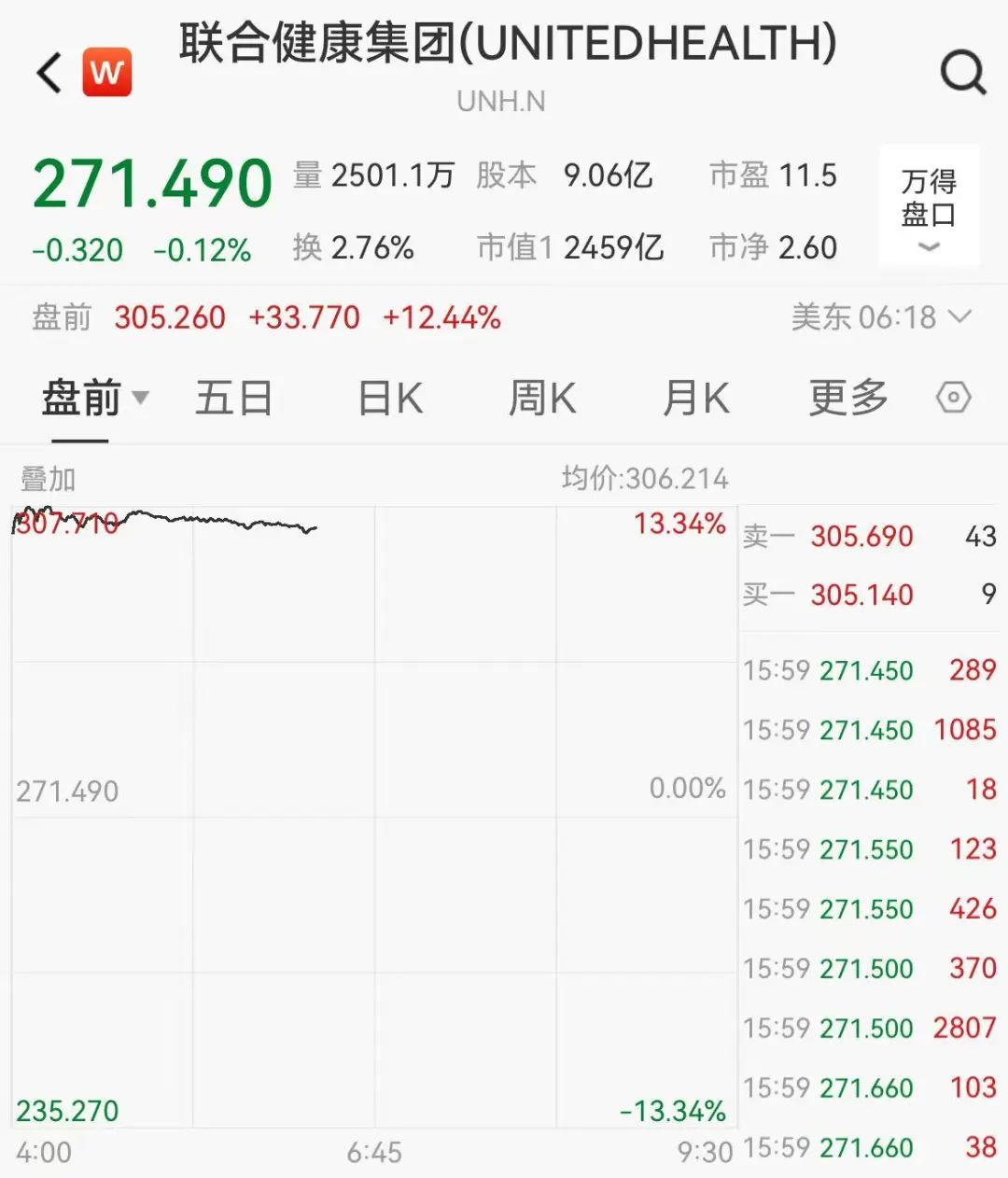
Core Viewpoint - Despite nearing retirement, Buffett's ability to identify valuable investments remains strong, as evidenced by significant stock purchases in the second quarter by Berkshire Hathaway, particularly in UnitedHealth Group, which saw a notable pre-market surge of over 12% [1][4]. Group 1: UnitedHealth Group - UnitedHealth Group's stock price has experienced a dramatic decline of over 50% in the past 12 months, resulting in a market value loss of nearly $270 billion [4]. - The company is currently under investigation by the U.S. Department of Justice regarding its Medicare Advantage billing practices, with allegations of improper diagnosis coding to inflate patient risk scores for higher reimbursements [6]. - Following a series of scandals and disappointing earnings reports, UnitedHealth's management underwent significant changes, including the appointment of a new CEO after a 27% stock price drop in May [6][4]. - Buffett's Berkshire Hathaway acquired over 5 million shares of UnitedHealth in the second quarter, with a market value of approximately $1.57 billion at the end of the quarter [7]. Group 2: Other Stocks Purchased by Berkshire Hathaway - In addition to UnitedHealth, Berkshire Hathaway also made significant purchases in six other stocks during the second quarter, including Nucor Steel (over 6.6 million shares), Lennar (over 7 million shares), and D.R. Horton (148,500 shares) [10]. - The total market value of these new positions at the end of the second quarter was approximately $3.65 billion [10]. - Other stocks that saw price increases in the pre-market include Nucor Steel (over 7%), Lennar (over 6%), and D.R. Horton (over 5%) [10].


大涨!巴菲特“抄底”保险巨头
Zheng Quan Shi Bao· 2025-08-15 11:33
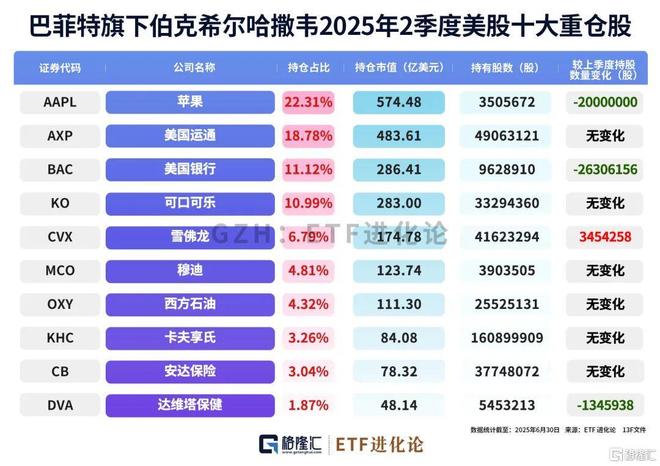
Group 1 - Despite nearing retirement, Buffett's investment prowess remains strong, as evidenced by significant stock purchases in the second quarter [1] - Berkshire Hathaway made substantial investments in six stocks during the second quarter, with UnitedHealth Group seeing a pre-market surge of over 12% [1][3] - UnitedHealth's stock price rebounded significantly after a series of scandals and a sharp decline, attracting attention from major investors [3][6] Group 2 - The U.S. Department of Justice is investigating UnitedHealth's billing practices related to Medicare Advantage, raising concerns about potential overbilling [5] - UnitedHealth has faced multiple challenges, including a recent lawsuit aimed at blocking its acquisition of Amedisys and disappointing quarterly earnings [5] - In the second quarter, Buffett acquired over 5 million shares of UnitedHealth, with a market value of approximately $1.57 billion at the end of the quarter [6] Group 3 - In addition to UnitedHealth, Berkshire's second-quarter investments included Nucor Steel, Lennar, D.R. Horton, Lamar Advertising, and Allegion, with a total market value of approximately $3.65 billion [8] - Berkshire also reduced its holdings in Apple and Bank of America, while increasing positions in Chevron and other companies [9]
澳门统计暨普查局:澳门二季度GDP终值同比增长5.1%
Zhi Tong Cai Jing· 2025-08-15 08:40
Group 1 - The revised GDP for Macau in Q2 2025 is 100.39 billion MOP, reflecting a real growth of 5.1% year-on-year, with the economy recovering to 88.8% of the level seen in the same period of 2019 [1] - The number of visitors to Macau increased by nearly 20% year-on-year in Q2, leading to a 6.0% rise in overall service exports, with other tourism services and gaming service exports increasing by 5.9% and 9.9% respectively [1] - Government final consumption expenditure and private consumption expenditure rose by 1.0% and 0.3% year-on-year in Q2, while fixed capital formation fell by 3.7% due to a decrease in private construction projects [1] Group 2 - The revised GDP for Macau in the first half of the year is 200.15 billion MOP, showing a real increase of 1.8% year-on-year, with the economic total recovering to 87.0% of the level seen in the same period of 2019 [2] - Service exports increased by 1.0% year-on-year in the first half, while government final consumption expenditure, private consumption expenditure, and fixed capital formation rose by 1.1%, 0.3%, and 1.8% respectively [2] - The implicit price deflator for GDP decreased by 0.5% year-on-year, indicating a decline in overall price changes [2]
7月经济数据点评:消费还有哪些潜在空间?
Soochow Securities· 2025-08-15 08:18
Economic Overview - In July, industrial added value increased by 5.7% year-on-year, down from 6.8% in June, while the service production index rose by 5.8%[1] - External demand showed unexpected strength with exports growing by 7.2%, surpassing the expected 5.9%, while internal demand weakened with retail sales increasing by only 3.7% compared to 4.8% in June[1] Consumer Trends - Retail sales growth declined from 6.4% in May to 4.8% in June and further to 3.7% in July, primarily driven by a slowdown in goods sales[1] - The sales growth of "trade-in" subsidy products fell from an average of 17.5% to 12.7%, indicating a significant impact on overall retail performance[1] Investment Insights - Fixed asset investment growth dropped from 2.6% in June to 1.6% in July, with construction investment showing negative growth for the first time since August 2020, at -0.8%[1] - Manufacturing investment growth decreased from 7.5% in June to 6.2% in July, highlighting a divergence in investment performance across different sectors[2] Future Outlook - Despite potential pressures in Q4 due to high base effects and demand front-loading, there are three supporting factors for consumer growth in the second half of the year: gradual recovery in dining growth, the release of childbirth subsidies, and consumer loan interest subsidies[1] - The construction sector is expected to face continued pressure in August due to adverse weather conditions, but policy-driven financial tools may provide support in Q4[2]
香港屋宇署:6月批出6份建筑图则 新落成楼宇报价总值约114亿港元
智通财经网· 2025-08-15 08:05
智通财经APP获悉,香港屋宇署6月共批出6份建筑图则,其中九龙3份及新界3份,当中包括2项住宅及 商住发展、2项工厂及工业发展,以及2项社区服务发展。 屋宇署同时发出18份入伙纸,包括中港岛3份、九龙7份及新界8份。其中住宅用途建筑楼面面积约18.08 万平方米,共2637个单位;非住宅用途建筑楼面面积约7.78万平方米。 6月份新落成楼宇的报价总值约为114亿港元。 获准动工的建筑工程项目有11个,工程完成后将提供住宅用途建筑楼面面积约8.58万平方米,涉及单位 1815个;非住宅用途建筑楼面面积约19.6万平方米。另外,该署亦接获3个建筑项目的上盖工程动工通 知。 ...
巴菲特最新建仓!段永平持仓来了!
Ge Long Hui· 2025-08-15 06:41
巨佬们最新动向来了! 随着13F文件出炉,巴菲特最新买入的神秘公司揭晓。 伯克希尔在二季度大手笔建仓503.9万股陷入困境的联合健康(UNH),建仓成本价为314美元,季末持 仓市值达15.7亿美元,为伯克希尔的第18大持仓,在总持仓中占比0.61%。 报告发布后,联合健康股价盘后大涨超10%。 值得一提的是,巴菲特曾在2006至2009年期间持有约118万股联合健康股票,随后在2010年全部清仓。 联合健康股价年内暴跌45%。去年12月4日,联合健康集团高管、联合健康保险公司CEO布莱恩·汤普森 在纽约曼哈顿的一家希尔顿酒店外遭枪杀,引发全美对医疗体系的广泛讨论。 联合健康暂停了年度业绩预测、更换了首席执行官,公司目前还在接受美国政府对其医疗保险计费做法 的调查。 有观点认为,建仓联合健康的可能不是巴菲特本人,而是两位投资副手Todd Combs和Ted Weschler的操 作。 13F报告显示,巴菲特旗下伯克希尔二季度建仓联合健康、纽柯钢铁、地产股莱纳建筑、霍顿房屋、拉 马尔户外广告、安防产品供应商安朗杰; 增持雪佛龙、星座集团、Pool、达美乐、海科航空、莱纳B; 减持苹果、美国银行、德维特、威瑞信、 ...
巴菲特持仓报告出炉,为何花16亿美元重新建仓联合健康?
Xin Hua Cai Jing· 2025-08-15 04:44
Core Viewpoint - Berkshire Hathaway has continued its trend of net stock selling for the 11th consecutive quarter, with a reported long position in U.S. stocks amounting to $257.5 billion as of the end of Q2 2025 [2] Group 1: Berkshire Hathaway's Investment Actions - In Q2, Berkshire Hathaway restarted selling Apple shares, continued to reduce its stake in Bank of America, and increased its holdings in Chevron and the food and beverage sector [2] - Six new positions were established, including significant investments in UnitedHealth, Nucor Steel, Lennar, and Lamar Advertising, with a total market value of approximately $3.65 billion at the end of the quarter [2][5] Group 2: UnitedHealth's Performance and Market Reaction - UnitedHealth reported Q2 revenue of $111.6 billion, a year-on-year increase of 13%, but adjusted net profit fell over 23.7% to $3.406 billion, leading to a decline in stock price [6] - Following Berkshire's announcement of re-establishing a position in UnitedHealth, the stock price surged over 8% in after-hours trading [5][6] Group 3: Market Sentiment and Future Outlook - Analysts suggest that Berkshire's renewed investment in UnitedHealth may be due to its stock price reaching a multi-year low, with a current P/E ratio of 11.55, indicating potential for long-term returns [7] - Despite the challenges, if profit margins improve, the stock could return to a fair value of around $360, with conservative estimates placing the target price above $300 [7]