智能硬件

Search documents
歌尔股份:盈利水平显著提升,把握AI端侧创新机遇-20250328
Tai Ping Yang· 2025-03-28 00:23
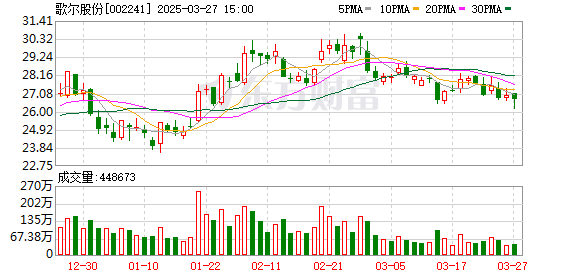
2025 年 03 月 27 日 公司点评 买入/维持 歌尔股份(002241) 昨收盘:26.95 盈利水平显著提升,把握 AI 端侧创新机遇 ◼ 走势比较 (10%) 12% 34% 56% 78% 100% 24/3/27 24/6/7 24/8/18 24/10/29 25/1/9 25/3/22 歌尔股份 沪深300 ◼ 股票数据 总股本/流通(亿股) 34.91/30.84 总市值/流通(亿元) 940.75/831.02 12 个月内最高/最低价 (元) 30.63/14.57 相关研究报告 证券分析师:张世杰 E-MAIL:zhangsj@tpyzq.com 分析师登记编号:S1190523020001 证券分析师:罗平 请务必阅读正文之后的免责条款部分 守正 出奇 宁静 致远 公 司 研 究 E-MAIL:luoping@tpyzq.com 分析师登记编号:S1190524030001 事件:歌尔股份发布 2024 年报,2024 年公司实现营收 1009.54 亿元,同 比增长 2.41%,实现归母净利润 26.65 亿元,同比增长 114.93%;单 Q4 来 看,2024Q4 公司实现 ...

得益于消费电子行业的整体复苏以及AI技术浪潮的双重推动 歌尔股份营收重返千亿元级
Zheng Quan Ri Bao· 2025-03-27 17:09
Core Viewpoint - Goer Technology Co., Ltd. has returned to a revenue scale of over 100 billion yuan, achieving significant growth driven by the recovery of the consumer electronics industry and the AI technology wave [1] Group 1: Financial Performance - In the fiscal year 2024, Goer Technology reported a revenue of 100.95 billion yuan, a year-on-year increase of 2.41% [1] - The net profit attributable to shareholders reached 2.665 billion yuan, marking a substantial year-on-year growth of 144.93% [1] Group 2: Strategic Focus - The company continues to adhere to its product strategy of "precision components + intelligent hardware," focusing on serving leading global clients in the technology and consumer electronics sectors [2] - Goer Technology is actively promoting the development of emerging smart hardware businesses, including VR, MR, AR, AI smart glasses, smart wireless earphones, and smart home devices [2] - The company has strengthened its business expansion in automotive electronics, particularly in MEMS sensors and AR HUD modules [2] Group 3: Collaboration with Apple - Goer Technology has been a crucial partner for Apple since 2010, participating in the production of numerous Apple products, including microphones, speakers, and AirPods [2] - The collaboration has not only advanced hardware manufacturing but also established a benchmark in the green supply chain, achieving 100% renewable energy production for Apple products in its Chinese factories [3] Group 4: AI and Market Trends - The rapid development of generative AI technology is bringing new opportunities to the consumer electronics sector, particularly in AR products and AI smart glasses [4] - Goer Technology has strategically positioned itself in the manufacturing of AI smart glasses and related components, including acoustic, optical, and sensor modules [4] - Industry experts suggest that Goer Technology should increase R&D investment and accurately position product directions to seize opportunities in the AI smart glasses market [4][5] Group 5: Future Outlook - Although the hardware technology and application scenarios for AI smart glasses are not yet mature, significant growth is expected in the coming years due to the active investment from leading industry players [5] - The development of generative AI is anticipated to enhance content creation efficiency, providing strong support for the long-term growth of VR/MR products [5]

小米集团-W(01810):生态优势稳,汽车绘蓝图
Ping An Securities· 2025-03-26 11:12
Investment Rating - The report gives a "Recommended" rating for Xiaomi Group [1] Core Views - Xiaomi Group is transitioning into a "people, car, and home" ecosystem, with the launch of its automotive business marking a significant step forward. The company aims to become one of the top five automotive manufacturers globally, with a target annual sales volume exceeding 6 million units [6][20][44]. Summary by Sections 1. Company Overview - Xiaomi Group, founded in 2010, has evolved from a smartphone manufacturer to a comprehensive technology ecosystem, now including electric vehicles. The first model, SU7, is set to launch in 2024, with a planned investment of $10 billion over the next decade for its automotive division [10][21]. 2. Automotive Business Vision - The SU7 model has received strong market interest, with a significant number of pre-orders. The company plans to introduce additional models, including the YU7 SUV, by mid-2025 [20][27]. - Xiaomi's automotive business is supported by strong internal resources and leadership from CEO Lei Jun, enhancing its market visibility and supplier confidence [6][40]. 3. Financial Projections - Revenue projections for Xiaomi Group show a significant increase, with expected revenues of 365.9 billion CNY in 2024 and 471.4 billion CNY in 2025, reflecting a year-on-year growth of 35% and 28.8% respectively [5]. - Net profit is projected to grow from 17.5 billion CNY in 2023 to 35.4 billion CNY in 2025, indicating a robust growth trajectory [5]. 4. Market Position and Strategy - Xiaomi maintains a strong position in the smartphone market, ranking third globally with a market share of 13.8% in 2024. The company is also expanding its IoT ecosystem, which is expected to enhance user engagement and brand loyalty [47]. - The automotive division is expected to leverage Xiaomi's existing brand reputation and global sales network, facilitating its entry into international markets by 2027 [44][46]. 5. Ecosystem Integration - The integration of automotive products into Xiaomi's existing ecosystem is seen as a unique advantage, allowing seamless connectivity between devices and vehicles. This "people, car, and home" ecosystem is anticipated to enhance user experience and drive sales across all product lines [6][22].

【招商电子】比亚迪电子:Q4受研发和激励费用增加拖累,关注公司智驾、算力及机器人进展
招商电子· 2025-03-26 10:13
Core Viewpoint - The company reported a record total revenue of 177.31 billion yuan for 2024, reflecting a year-on-year increase of 36.4%, but experienced a decline in profitability due to product structure adjustments and increased depreciation costs from new business ventures [1]. Group 1: Financial Performance - In 2024, the company achieved total revenue of 177.31 billion yuan, with a gross profit of 12.30 billion yuan and a net profit attributable to shareholders of 4.27 billion yuan, representing year-on-year increases of 36.4%, 17.9%, and 5.6% respectively [1]. - The gross margin for 2024 was 6.9%, down 1.1 percentage points year-on-year, while the net margin was 2.4%, down 0.7 percentage points year-on-year [1]. - In Q4, the company reported revenue of 55.18 billion yuan, a year-on-year increase of 45.9%, but the gross profit decreased to 3.24 billion yuan, reflecting a year-on-year increase of 27.9% but a quarter-on-quarter decline of 12.1% [2]. Group 2: Business Segments - The consumer electronics segment generated revenue of 141.23 billion yuan, up 45.0% year-on-year, with component revenue increasing by 161.5% to 35.66 billion yuan and assembly revenue rising by 26.0% to 105.58 billion yuan [3]. - The new energy vehicle segment achieved revenue of 20.5 billion yuan, marking a year-on-year increase of 45.5%, driven by the growth in smart cockpit products and the launch of intelligent suspension products [3]. - The new intelligent products segment saw a revenue decline of 15.6% to 15.56 billion yuan, although there was stable growth in drone, smart home, and gaming hardware sectors [3]. Group 3: Future Outlook - The company is optimistic about growth driven by three main areas: A customers, automotive, and computing power, particularly in AI applications [4]. - The consumer electronics sector is expected to benefit from accelerated AI applications and a new replacement cycle, with significant contributions anticipated from A customer products [4]. - The new energy vehicle business is projected to experience rapid growth in volume, price, and market share, supported by collaborations with major clients like NVIDIA [4]. - The company aims to expand its presence in the AI robotics field, leveraging its experience in system integration and sensor technology [4]. Group 4: Investment Potential - The company is recognized as a leading precision manufacturing enterprise with strong capabilities in materials research, product design, and vertical integration [5]. - There is potential for revenue growth in the A customer segment and new energy vehicles, as well as in 3D printing and AI-related products [5].

出海速递|“中国式内卷”闯关巴西/商务部:将组织摸排外贸企业内销需求
3 6 Ke· 2025-03-25 10:53
Group 1 - The article discusses the competitive landscape in Brazil, highlighting the "Chinese-style involution" phenomenon where low-price strategies and live-streaming sales are key battlegrounds for market dominance [3] - Understanding Brazilian consumer preferences is crucial for success in the Latin American market, suggesting that only those who truly grasp local demands will thrive [3] Group 2 - Miniso reported a 42.7% increase in overseas revenue for Q4, achieving a record high gross margin of 47% [4] - Guangzhou-based Ebike component suppliers have secured significant financing, indicating a move to break the monopoly of major players in the U.S. and Japan [5] - A robot developed by a Chinese PhD in the U.S. has generated over one million in revenue by assisting farmers in apple picking, showcasing innovation in agricultural technology [6] Group 3 - The Chinese Ministry of Commerce plans to assess the domestic sales needs of foreign trade enterprises and establish a list of key foreign trade quality enterprises [7][8] - The China-ASEAN Free Trade Area 3.0 version special joint committee meeting was held to expedite the legal review of the upgrade protocol, aiming for comprehensive cooperation in emerging fields [8] Group 4 - South Korea's retail sales grew by 4.4% year-on-year in February, driven by strong demand for e-commerce services, with online retail sales surging by 16.7% [9] - OpenAI announced a leadership restructuring, with CEO Sam Altman focusing more on research and product development [9] - Alibaba's chairman noted signs of a bubble in AI data center investments, indicating a potential oversaturation in the market [9] Group 5 - Tesla's new car sales in Europe fell by 40% year-on-year in February, with a 43% drop in the first two months of the year, contrasting with a 31% growth in the overall electric vehicle market [11] - BYD projected a revenue of 777.1 billion for 2024, marking a 29.02% increase, with a net profit of 40.25 billion, up 34% [11] - Hyundai Motor Group announced a $21 billion investment plan in the U.S. by 2028, focusing on automotive production, steel, and energy sectors [12]



阿里投资的AR公司,倒在AI眼镜风口|36氪独家
36氪· 2025-03-25 09:37
Core Viewpoint - The article discusses the challenges faced by the AR glasses startup "奇点临近" (QIDI), highlighting its financial struggles and product missteps that led to its decline in the competitive AR glasses market [4][6][8]. Group 1: Company Overview - "奇点临近" was founded in late 2021 and initially showed promise in the AR glasses industry, benefiting from a surge in global AR glasses sales [7]. - The company was backed by notable investors including Alibaba and had a strong founding team led by Zhang Huimin, a former chief scientist at Huawei [7][8]. Group 2: Product Launch and Marketing - The launch of the QIDI Vida AR glasses was heavily marketed, featuring celebrity endorsements, but ultimately resulted in disappointing sales figures, with only a few hundred units sold on major platforms [10][11]. - The product aimed to combine multiple functionalities for cycling enthusiasts but received negative feedback regarding its performance and usability [11][12]. Group 3: Technical and Strategic Missteps - The company faced significant issues with product definition and technical choices, leading to a misalignment with market needs and consumer expectations [8][14]. - The decision to pursue an aggressive all-in-one design using unproven light guide technology resulted in high costs and poor user experience, contributing to financial strain [18][19]. Group 4: Market Context and Comparisons - The article contrasts "奇点临近" with competitors like Ray-Ban Meta, which successfully simplified their product offering and focused on user experience, leading to better market reception [22][24]. - The AR glasses industry is characterized by a "impossible triangle" of cost, weight, and functionality, making it challenging for startups to deliver viable products [24][26]. Group 5: Lessons and Future Directions - The decline of "奇点临近" serves as a cautionary tale for other AR glasses manufacturers, emphasizing the need for realistic product definitions and a focus on user experience rather than solely on technological advancements [21][26]. - The industry consensus suggests that future AR glasses will need to integrate more functionalities while remaining lightweight and user-friendly, requiring ongoing investment in technology [25][26].

“AI+”辐射消费企业,机构加码调研!
券商中国· 2025-03-23 09:51
Group 1: AI Integration in Consumer Products - The "AI+" concept is extending to consumer-facing companies, with investment institutions focusing on the application of AI technology in product development and innovation [1] - Consumer companies are integrating AI into products such as smart audio, smart home devices, and wearables, indicating a potential shift towards a smart ecosystem era [1] Group 2: Jiahe Intelligent's Market Position - Jiahe Intelligent is a leading manufacturer in the audio product sector, having established partnerships with both international and domestic clients, including Harman and Lenovo [2] - The company sees a promising future for AI glasses, particularly with the upcoming launch of Ray-Ban Meta AI smart glasses, which successfully combines traditional eyewear advantages with AI functionalities [2][3] - AI smart audio glasses are gaining popularity due to their stylish design and convenience, with prices now comparable to regular glasses, enhancing their value proposition [3] Group 3: Yingshi Network's Smart Home Solutions - Yingshi Network is a provider of smart home services and IoT cloud platforms, focusing on visual interaction-based products and AI algorithm services [4] - The company is integrating its products with DeepSeek technology, with some devices already in user testing phases [4] - Yingshi Network emphasizes its commitment to security, having invested in a robust safety system and external audits to mitigate privacy risks associated with smart home devices [5][6] Group 4: Guoguang Electric's Business Focus - Guoguang Electric specializes in audio products and lithium battery businesses, with a focus on AI+IoT, VR/AR, and automotive audio sectors [7] - The company claims competitive advantages in customer resources, technology R&D, and vertical integration, particularly in AI hardware components [7][8] - Guoguang Electric is actively pursuing the development of AI audio products and has achieved mass production in several smart terminal devices [8]

小米集团-W(01810):全年业绩超预期,高端化战略持续兑现
Shenwan Hongyuan Securities· 2025-03-20 06:15
Investment Rating - The report maintains a "Buy" rating for Xiaomi Group [4][7][8] Core Insights - Xiaomi Group's 2024 and Q4 performance reached historical highs, with 2024 revenue of 365.9 billion RMB, a year-on-year increase of 35%, and adjusted net profit of 27.2 billion RMB, up 41% [7][8] - The company has raised its 2025 delivery target for electric vehicles to 350,000 units, up from 300,000, with a projected revenue of 32.8 billion RMB from this segment [7][8] - The smartphone segment continues to validate its high-end strategy, targeting 180 million units shipped in 2025, with a revenue of 191.8 billion RMB in 2024, a 22% increase [7][8] - The IoT segment saw a significant revenue increase, surpassing 100 billion RMB, with a target of 50% growth in 2025 [7][8] - The internet services segment achieved record revenue and gross margin, with a total revenue of 34.1 billion RMB in 2024, a 13.3% increase [7][8] - Xiaomi's retail strategy includes expanding its store count to 20,000 by 2025, with a focus on AI and core technologies [7][8] Financial Data and Profit Forecast - Revenue projections for Xiaomi Group are as follows: - 2023: 270.97 billion RMB - 2024: 365.91 billion RMB - 2025E: 469.36 billion RMB - 2026E: 572.04 billion RMB - 2027E: 684.43 billion RMB - Net profit projections are: - 2023: 19.27 billion RMB - 2024: 27.31 billion RMB - 2025E: 37.62 billion RMB - 2026E: 45.74 billion RMB - 2027E: 55.77 billion RMB [3][8]
“网红”猫王妙播音响押注AI,创始人曾德钧:不为大模型打工
Zheng Quan Shi Bao Wang· 2025-03-20 04:23
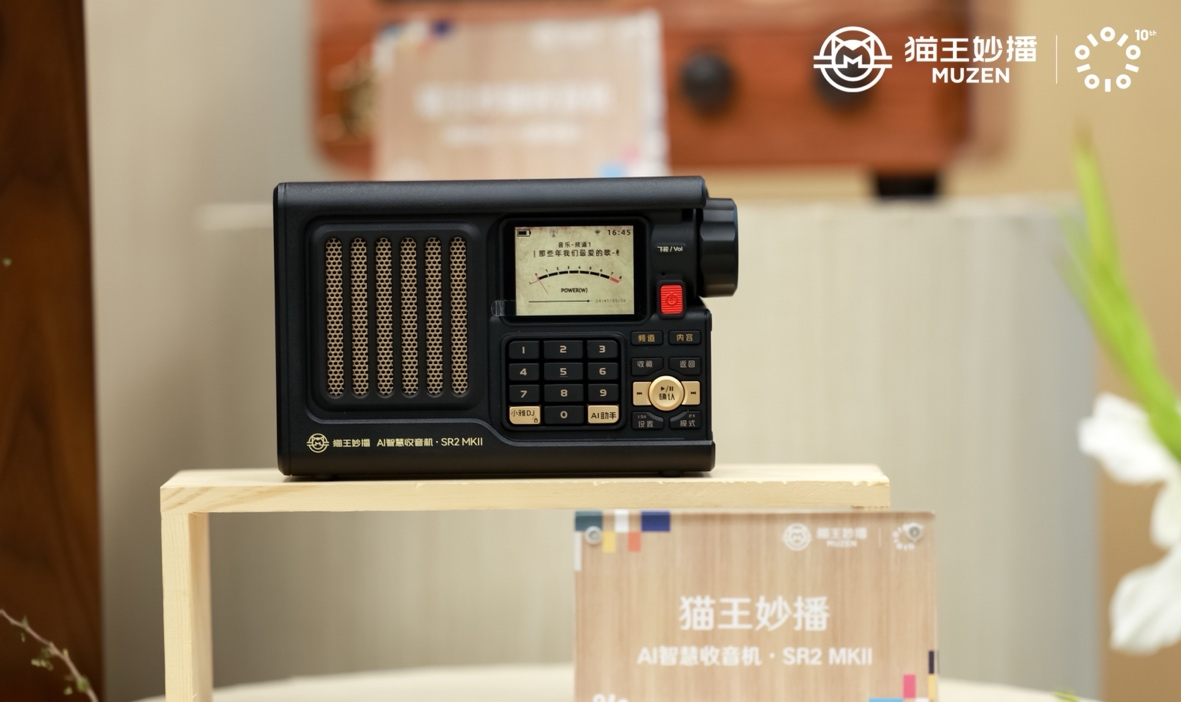
Core Viewpoint - A traditional hardware company, Cat King Sound, has rebranded as "Cat King Miao Bo" and launched four AI smart speakers, aiming to transform from a conventional playback device to one that provides emotional companionship [1][2]. Group 1: Product Development - The four new products include the SR2 MK2·AI Smart Radio, which features personalized radio content generation, and the Xiao Wang Zi OTR·AI Smart Speaker, which supports full voice interaction [1][2]. - Cat King Miao Bo's products are not designed as IoT device gateways but focus on basic functionalities like radio programs and music playback, achieving significant revenue from investments by major internet companies [2][3]. Group 2: Market Positioning - The company differentiates itself by prioritizing user needs for content over merely providing audio hardware, recognizing that users seek engaging audio experiences rather than just sound output [3][4]. - Cat King Miao Bo has survived in a competitive market by embracing AI to enhance user understanding and content delivery, believing that all products should be reimagined with AI [3][4]. Group 3: Technological Integration - The company aims to create a seamless experience that integrates cloud, mobile, and speaker technologies, requiring a comprehensive software and hardware solution [4]. - Cat King Miao Bo is focused on developing a unique operational system and cross-platform resource integration, which it claims is currently unmatched in the market [4]. Group 4: Future Outlook - The CEO predicts that the next generation of audio products will emerge within 3-5 years, emphasizing the need for Cat King Miao Bo to remain relevant in the evolving landscape [5].
2025年春天还没来,第一批儿童AI硬件已经死了|焦点分析
36氪· 2025-03-18 09:35
Core Viewpoint - The article discusses the challenges and opportunities in the children's smart hardware market, emphasizing the need for products that align with children's cognitive logic rather than adult expectations [2][4][15]. Group 1: Market Overview - The demand for AI in children's education has been validated, with various smart hardware products flooding the market, including smartwatches, early education robots, and interactive storybooks [4][5]. - The children's smart hardware market in China reached a scale of 52.2 billion yuan in 2023, but the growth rate has declined from 35% in 2019 to 12%, indicating a shift from enthusiasm to rational competition [6][9]. Group 2: Successful Case Studies - The Xiaotian Genius smartwatch, under the BBK Electronics brand, has sold over 20 million units in its first seven years and is now present in over 100 countries, dominating the market for users under 14 years old [4][5]. - The product's success is attributed to its basic functionalities and competitive pricing, which allows it to compete with higher-end products like the Apple Watch SE [4][12]. Group 3: Challenges in Product Development - Many children's smart hardware products fail due to high costs and lack of engaging content, with examples like the Moxie emotional robot, which faced a low repurchase rate and high production costs [5][6]. - A significant gap exists between parents' educational needs and children's entertainment preferences, leading to dissatisfaction with current products [9][10]. Group 4: Technological Limitations - Voice recognition technology, crucial for children's smart devices, has a lower accuracy rate for children compared to adults, which hampers user experience [10][11]. - The complexity of children's cognitive development makes it challenging to design products that effectively meet their needs, often resulting in products that do not resonate with their behavior and preferences [11][12]. Group 5: Future Directions - Companies are encouraged to focus on simple, direct functionalities that address children's social and educational needs rather than overcomplicating products with unnecessary features [7][15]. - The market may see innovations such as multimodal interactions and screenless designs, but the core focus should remain on understanding children's cognitive logic [14][15].