潮玩

Search documents
成都数字文创(潮玩)专场路演活动举行,释放潮玩产业机遇
Mei Ri Jing Ji Xin Wen· 2025-11-18 13:32
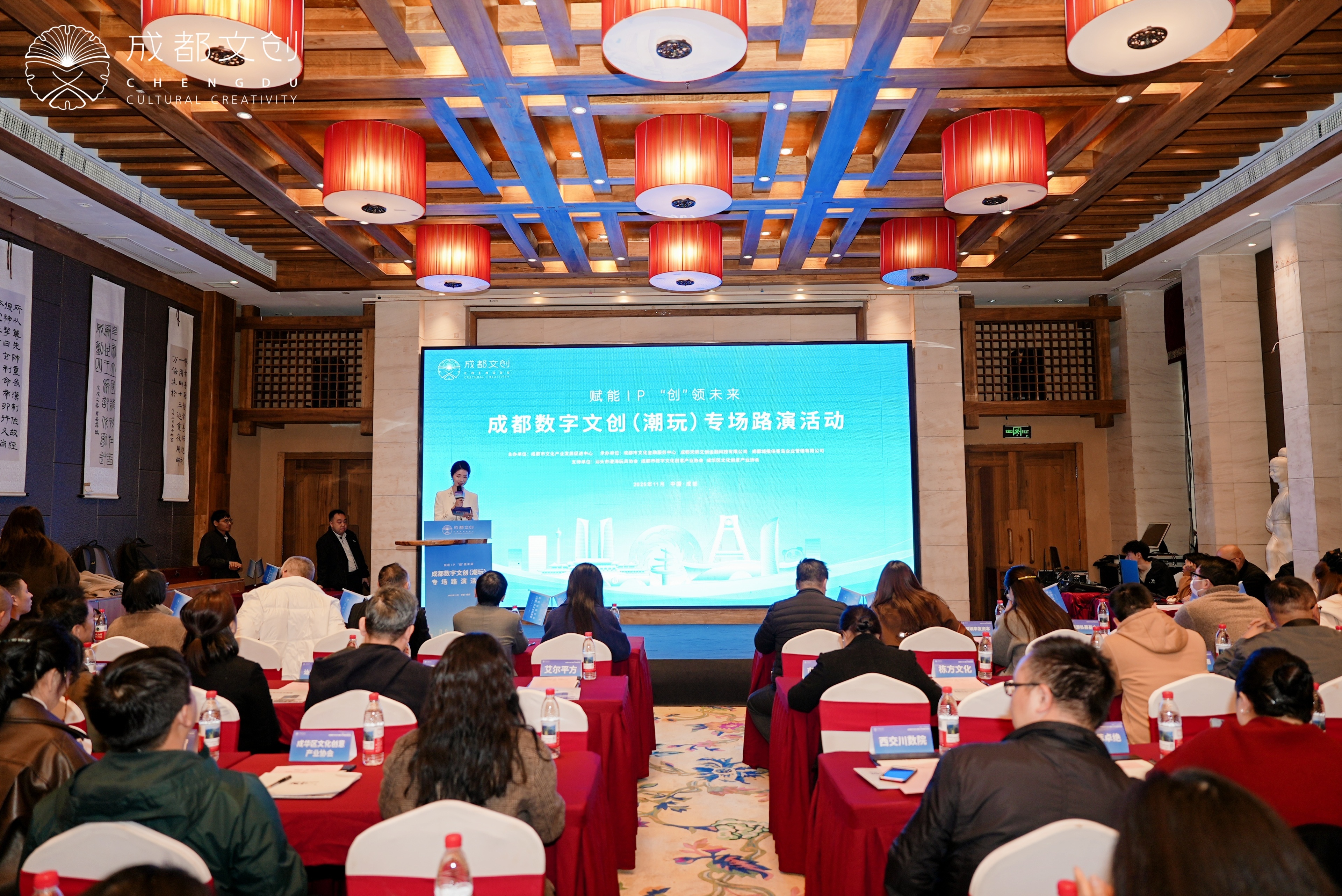
每经记者|谢陶 每经编辑|唐元 11月18日,一场以"赋能IP 创领未来"为主题的成都数字文创(潮玩)专场路演活动在蓉拉开帷幕。本次活动由成都市文化产业发展促进中心主办,成都市文 化金融服务中心、成都天府文创金融科技有限公司、成都城投侠客岛企业管理有限公司承办。 活动现场,黑玩科技、栋方文化、四川漫光年文化科技等50家来自潮玩及创意产业的企业,以及成都科幻与未来产业基金、上海毕友资本、珠海厚为资本、 深圳探贝资本等10余家投资机构代表齐聚一堂,深入探讨成都潮玩产业的最新机遇与发展趋势。 本次活动,从数字文创政策宣讲,到文创企业登台路演,再到重要文创项目的签约等环节,都紧扣这座城市最新的产业发展潮流——以潮玩之名,汇聚起更 多优质产业资源,打通潮玩关键链路。 事实上,通过常态化组织IP供需对接,将进一步提升成都IP设计、生产、制造等产业链环节,聚力打造更高质量的原生供应链,吸引更多文创产品生产企业 加速来蓉落地。我们也应看到,以潮玩产业为代表的数字文创产业不断迭代升级、推陈出新的背后,离不开一个底蕴深厚的文化土壤和一个能够滋养各个市 场主体的产业生态。 聚焦企业成长难点,持续释放"政策红利" 作为一座深受年轻人 ...

综合体小东小西店为啥越来越多?“无用之用”成为消费新趋势
Yang Zi Wan Bao Wang· 2025-11-18 12:42
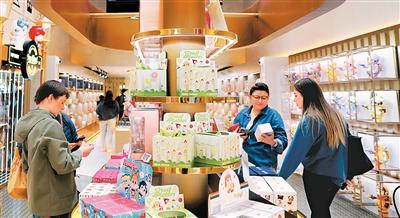
Core Insights - The emotional economy in China is projected to reach 2.3 trillion yuan in 2024 and exceed 4.5 trillion yuan by 2029, indicating a significant growth in consumer spending focused on emotional value rather than practicality [1] - Over 40.1% of young consumers prioritize "emotional value and interest" when shopping, surpassing practicality (22.3%) and cost-effectiveness (18.7%) [1] Group 1: Market Trends - The popularity of "small shops" selling non-essential items, such as toys and collectibles, is increasing in urban shopping complexes, with these stores attracting foot traffic comparable to popular dining establishments [3][6] - The trend of emotional consumption is evident, as consumers often purchase items for their emotional benefits rather than their utility, with many shoppers admitting to buying collectibles to relieve stress [2][6] Group 2: Consumer Behavior - Young consumers are increasingly engaging in shopping as a social activity, often visiting stores with friends to unwind and relieve stress, highlighting the importance of the shopping experience itself [2][6] - The demographic for collectible toys is expanding beyond just younger generations, with older consumers also participating in this market, driven by celebrity endorsements and a broader appeal [6] Group 3: Retail Strategy - Retailers are leveraging the emotional value of products to enhance customer experience and extend the time spent in shopping complexes, creating a consumption loop that benefits both small shops and essential retailers [8] - The integration of "small shops" into larger retail environments is seen as a strategy to diversify offerings and attract a wider audience, ultimately benefiting overall sales and foot traffic [8]
从茶饮热销到潮玩圈粉
Ren Min Ri Bao Hai Wai Ban· 2025-11-18 07:40
Group 1: Chinese Beverage Brands - Chinese beverage brands such as Bawang Chaji, Mixue Ice City, Nayuki, and Heytea are expanding internationally, leveraging a "culture + product" model to stand out in overseas markets [2] - Bawang Chaji's stores in Malaysia feature design elements like wooden furniture and ink wash wall decorations, creating a "Chinese aesthetic" ambiance [2] - The popularity of Chinese milk tea in Malaysia is attributed not only to taste but also to brand image, aesthetic representation, and cultural innovation [2] Group 2: Chinese Cultural Influence in Vietnam - Chinese historical dramas have gained significant popularity in Vietnam, with many young viewers actively discussing and engaging with the content [3] - Vietnamese youth are increasingly interested in Chinese culture, as evidenced by the formation of clubs dedicated to watching Chinese historical dramas [3] - The themes of loyalty, filial piety, and national sentiment in Chinese dramas resonate deeply with Vietnamese audiences [3] Group 3: Chinese Toy Brands - Chinese toy brand Pop Mart has opened 10 stores in major UK cities and plans to add 12 more by the end of 2026, indicating strong market expansion [4] - The brand Miniso has seen a significant increase in sales in the UK, with one blind box selling every three minutes, leading to a 63% sales growth over the past year [5] - Chinese toys are increasingly incorporating cultural elements, with brands like 52TOYS achieving success in Thailand through unique designs based on Chinese cultural symbols [5] Group 4: Market Trends and Consumer Engagement - The rise of Chinese trendy toys has created a fashion wave, appealing to emotional needs of consumers, which is a departure from traditional Chinese brands focused on electronics and automobiles [5] - The success of these brands in international markets highlights a new trend in cultural exchange and consumer engagement through innovative product offerings [5]


21社论丨强大创新生态不断催生“商业新物种”
21世纪经济报道· 2025-11-18 04:08
Core Insights - The article highlights the unique phenomenon of Chinese companies expanding globally, with international chains selling stakes in their Chinese operations to local firms, while Chinese brands like Mixue Ice City, Pop Mart, and Miniso establish their presence in various overseas markets [1] Group 1: Chinese Companies' Global Expansion - Chinese chain businesses are leveraging their accumulated advantages to expand internationally, showcasing a distinctive global outreach [1] - The rise of Chinese companies in the global market is attributed to the long-term accumulation of unique advantages, including a large domestic market and a culture of entrepreneurship [2] Group 2: Digital Infrastructure and Innovation - China's commitment to building a digital society has resulted in advanced infrastructure that supports various market needs, such as communication, mobile payments, logistics, and e-commerce [2] - The large pool of programmers and a young workforce provide cost advantages and human resource support for digital business development [2] Group 3: Manufacturing and Supply Chain - As the world's largest manufacturing country, China offers diverse manufacturing services, allowing entrepreneurs to efficiently combine smart manufacturing and flexible supply chains with consumer brands [2] - The robust supply chain system supports innovation and enables companies to produce high-quality, cost-effective products [2] Group 4: Market Size and Consumer Culture - China's vast market size and consumer culture that embraces new ideas create a large "application testing ground" for business innovations [2] - The digitalization of businesses allows for rapid expansion at low costs, with the ability to optimize products quickly based on user feedback and data [2] Group 5: Competitive Advantage in Global Markets - Compared to many countries, China possesses a unique combination of advanced digital economic infrastructure, a complete manufacturing system, and a large market, giving Chinese companies a competitive edge when expanding abroad [3] - Chinese companies like Douyin and Kuaishou have defined the global short video era, influencing social media trends and consumer behavior worldwide [3] Group 6: Integration of Manufacturing and Internet - China is the only country capable of deeply integrating super manufacturing capabilities with a highly developed internet, achieving large-scale commercialization [4] - This integration challenges companies to enhance supply chain efficiency and user insight while continuously evolving through trial and error [4] Group 7: New Business Ecosystem - The emergence of "new business species" is rooted in a new digital and integrated innovation ecosystem, resulting from the combination of proactive government policies and effective market dynamics [5]
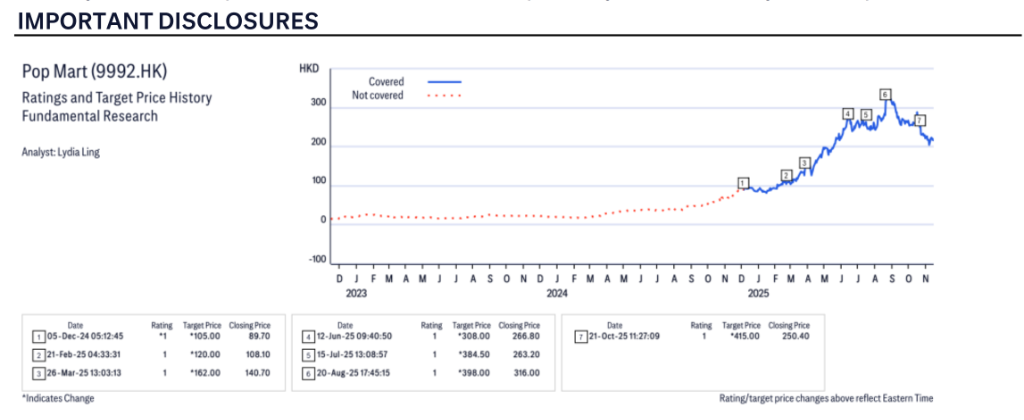
大跌36%后,泡泡玛特仍获华尔街大行力挺:Labubu明年推4.0版,价值尚未完全释放
Hua Er Jie Jian Wen· 2025-11-18 02:36
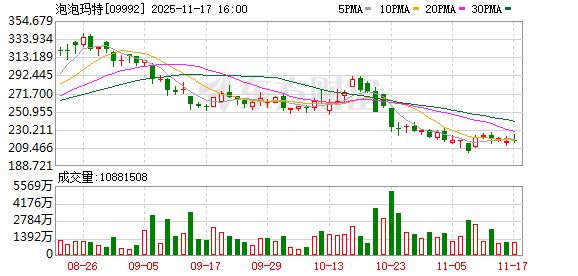
Core Viewpoint - The market's concerns regarding Pop Mart's growth sustainability and single IP risk are considered excessive, with the company's core value lying in its unparalleled IP incubation and operational capabilities [1][4]. Group 1: IP Strength and Growth - The flagship IP Labubu has strong vitality, with its 4.0 version postponed to 2026 due to high demand for Labubu 3.0, and Sony Pictures is reported to have acquired the film adaptation rights, potentially enhancing the IP's global recognition [4][8]. - The company is diversifying its growth engines by actively managing online pre-sale scales to ensure sustainable IP operations, with a successful IP matrix formed around Labubu, SKULLPANDA, and CRYBABY, effectively mitigating risks [4][9]. Group 2: Global Expansion and Market Performance - Pop Mart's global expansion is exceeding expectations, particularly in the U.S. and Japan, with plans to optimize operations and deepen local market channels [6][10]. - The company aims to operate over 60 stores in the U.S. by the end of 2025, with additional plans for Canada, Latin America, and the Middle East, emphasizing localized operations and partnerships [10]. Group 3: Financial Performance and Valuation - Financial projections indicate significant growth, with net profit expected to rise from 1.082 billion RMB in 2023 to 23.169 billion RMB by 2027, and diluted EPS increasing from 0.807 RMB to 17.370 RMB over the same period [7]. - Citi has set a target price of 415.00 HKD for Pop Mart, representing a potential upside of 91.8% from the closing price of 216.40 HKD, based on a 28x P/E ratio for 2026 [1][13].

反常的港股
Sou Hu Cai Jing· 2025-11-18 00:06
Group 1 - The A-share market is dominated by domestic investors, particularly public and private funds, which are highly sensitive to policy information and prefer sectors with high policy visibility [2] - In contrast, the Hong Kong stock market has seen significant gains from certain stocks, referred to as the "three sisters," with prices skyrocketing, such as Old Poo Gold rising 11 times and Pop Mart increasing by 617% [3][4] - The Hang Seng Index rose from around 17,000 to a peak of 24,800, reflecting a 40% increase, with trading volume tripling, indicating a narrative of "global value gap" [5] Group 2 - The "three sisters" in the Hong Kong market share a commonality of concentrated liquidity and sentiment-driven trading, leading to rapid corrections once sentiment wanes [6] - Despite global liquidity improvements, the Hong Kong market has struggled due to tightening local liquidity, with the overnight Hibor rising significantly, indicating a decrease in market liquidity [9][10] - The relationship between the Hong Kong market and U.S. Treasury yields is inverse; when U.S. yields rise, funds tend to flow out of Hong Kong, putting pressure on the market [12][15] Group 3 - The local liquidity tightening has been exacerbated by the Hong Kong Monetary Authority's interventions to maintain the currency peg, leading to increased funding costs and reduced liquidity in the banking system [16][17] - The overall economic fundamentals in Hong Kong have been under pressure, with weak domestic demand and declining profits across various sectors, although there are signs of marginal improvement [20][21] - Analysts have begun to adjust earnings expectations positively, indicating a potential shift in the economic trajectory, which could support the Hong Kong market [22][24] Group 4 - The market's recovery is contingent on two main factors: improvement in economic fundamentals and more abundant liquidity [31][33] - The ongoing uncertainty regarding the U.S. Federal Reserve's interest rate decisions adds to the volatility, with the market awaiting clearer signals on future rate cuts [35][36] - The current environment suggests that while short-term risks remain, the long-term outlook for the Hong Kong market may present more opportunities than risks [36]

情绪消费兴起,企业竞逐“心灵生意”
Xin Hua Wang· 2025-11-17 23:46
Core Insights - The rise of emotional consumption reflects the psychological needs of contemporary society and is a significant driver of consumption upgrade, with the market expected to exceed 2 trillion yuan by 2025 [1][6] Group 1: Market Trends - Emotional consumption has seen an average annual growth rate of 12% since 2013, indicating a robust market potential [1] - The emotional consumption market is projected to surpass 2 trillion yuan by 2025, becoming a key component of consumption upgrade [1] - The popularity of emotional value products, such as plush toys and aromatherapy, highlights a shift in consumer preferences towards emotional resonance and connection [2] Group 2: Consumer Behavior - Over 90% of young consumers recognize emotional value, with nearly 60% willing to pay for it, showcasing a new consumer attitude [4] - Young consumers are increasingly seeking experiences and emotional connections rather than mere material possession, as evidenced by their engagement with interactive and community-driven products [2][3] - The transformation of traditional spaces into creative markets and experience-driven venues has led to significant increases in foot traffic and sales, reflecting the demand for unique emotional experiences [5] Group 3: Business Strategies - Companies are focusing on product innovation and brand building to enhance the overall image and competitiveness of domestic brands in the emotional consumption sector [6] - The integration of technology, education, and cultural tourism into emotional consumption is seen as a future development direction, aiming to create new economic growth engines [6] - The emphasis on visually impactful and shareable experiences in commercial spaces has resulted in notable sales increases, demonstrating the effectiveness of innovative retail strategies [6]
反常的港股
虎嗅APP· 2025-11-17 23:45
Core Viewpoint - The article discusses the contrasting performance of A-shares and Hong Kong stocks during the current bull market, highlighting the dominance of domestic investors in A-shares and the influence of external liquidity and local market conditions on Hong Kong stocks [2][10]. Group 1: A-shares vs. Hong Kong Stocks - A-shares are primarily driven by domestic investors, particularly public and private funds, who are highly sensitive to policy information and favor "industry tracks" with high visibility [2]. - In contrast, Hong Kong stocks have seen significant price increases in certain assets, referred to as the "three sisters," with notable price surges: Old Poo Gold's stock price increased 11 times, Pop Mart rose 617%, and Mixue Group saw a maximum increase of 165% [3][4]. Group 2: Market Dynamics - The surge in these assets has amplified market sentiment, contributing to a 40% increase in the Hang Seng Index, which rose from around 17,000 to 24,800 points, with trading volume tripling [4]. - However, the "three sisters" share a common trait of concentrated liquidity and sentiment-driven trading, leading to rapid corrections once sentiment wanes [5][6]. Group 3: Liquidity Factors - Despite global liquidity improvements, Hong Kong stocks have struggled due to tightening local liquidity conditions, particularly as the overnight Hibor rate surged, indicating a decrease in market liquidity [10][18]. - The relationship between the Hang Seng Index and U.S. Treasury yields is highlighted, with the index typically responding inversely to changes in U.S. interest rates [11][13]. Group 4: Economic Fundamentals - The article emphasizes that global liquidity improvements do not necessarily equate to a recovery in risk appetite, as market confidence ultimately hinges on economic fundamentals [22][23]. - Recent trends show a marginal improvement in Hong Kong's corporate earnings, with a decrease in the rate of decline in net profits for the Hang Seng Index from a 7.2% drop in 2024 to a 1.4% decline in Q1 2025 [23][24]. Group 5: Future Outlook - The article suggests that the key factors influencing the future of Hong Kong stocks include the improvement of economic fundamentals and the establishment of a more accommodative liquidity environment [30][32]. - The potential for a more favorable liquidity situation is contingent upon the confirmation of a U.S. Federal Reserve rate-cutting cycle, which could lead to a decrease in local funding costs and an increase in market liquidity [33].

21社论丨强大创新生态不断催生“商业新物种”
2 1 Shi Ji Jing Ji Bao Dao· 2025-11-17 23:16
Group 1 - The article highlights the trend of international chain enterprises selling their stakes in China to local companies, while Chinese chains like Mixue Ice City, Pop Mart, and Miniso are expanding their online and offline businesses in various countries, showcasing a unique phenomenon of Chinese enterprises going global [1] - The globalization of Chinese chain businesses is a result of long-term accumulation of unique advantages, with the internet innovation centers being primarily in the US and China, leading to the emergence of large enterprises in China through localized innovation in a massive domestic market [1][2] - China's continuous entrepreneurial and innovative activities stem from its unique advantages, including government support for building advanced infrastructure, a large programmer workforce, and a consumer culture that embraces new ideas, providing a vast "application testing ground" for business innovations [2][3] Group 2 - China stands out globally as the only country capable of deeply integrating super manufacturing capabilities with a highly developed internet, achieving large-scale commercialization, which tests supply chain efficiency and user insight [4] - The rapid evolution of Chinese enterprises is driven by a new digital and integrated innovation ecosystem, resulting from a combination of proactive government policies and entrepreneurial spirit [4] - Chinese companies, such as SHEIN and Pop Mart, are leveraging their experience in short video platforms to capture global young consumers, indicating a significant competitive advantage in the international market [3][4]
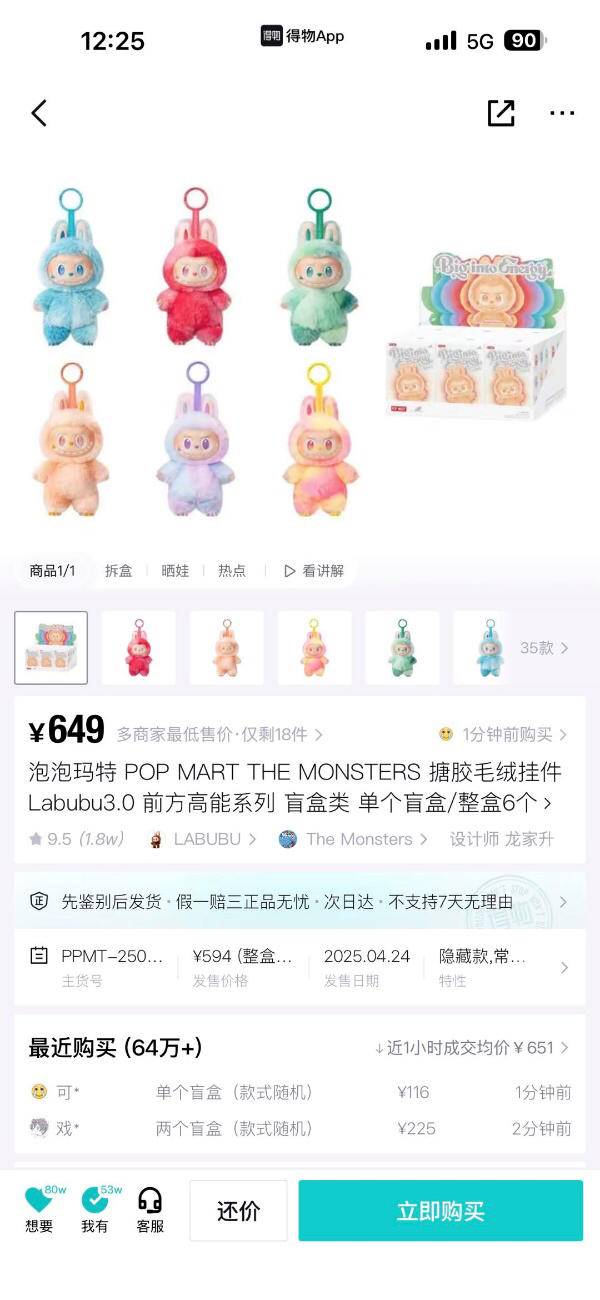
泡泡玛特努力为IP注入故事与内涵
Zheng Quan Ri Bao· 2025-11-17 16:13
Core Viewpoint - Sony Pictures has reportedly acquired the film adaptation rights for the LABUBU IP owned by Pop Mart, which plans to create a related film series, although details regarding producers and directors remain undecided [2] Group 1: Film Adaptation and IP Development - If the rumors are true, collaborating with a top Hollywood studio could significantly enhance LABUBU's global recognition and IP value, further advancing Pop Mart's globalization efforts [2] - Pop Mart has already taken steps towards IP film adaptation, having established a film studio in January 2025 and registered the script for the animated series "LABUBU and Friends" [2] - The LABUBU family includes other character IPs such as ZIMOMO and MOKOKO, which will appear in the upcoming animated series [2] - The release date for "LABUBU and Friends" is currently uncertain, with projections indicating a premiere year of 2028 on the Douban platform [2] Group 2: Market Expansion and Collaboration - LABUBU has global influence, but if Pop Mart handles the film adaptation, success in overseas markets may be challenging; Sony's involvement could facilitate entry into international film markets [3] - Pop Mart's founder, Wang Ning, has indicated that many Hollywood companies have sought collaboration for a LABUBU film, and the company is considering whether to produce independently or partner with Hollywood [3] - Collaborating with overseas companies or having a major foreign studio lead the project could leverage their distribution networks and resources, which is crucial for Pop Mart's success in the global market [3] Group 3: Financial Performance - In the third quarter of 2025, Pop Mart reported significant revenue growth across regions: 170% to 175% in the Asia-Pacific, 1265% to 1270% in the Americas, and 735% to 740% in Europe and other regions [4] Group 4: Strategic Direction - Pop Mart is shifting from merely exporting products to embedding organizational capabilities in key markets, indicating a commitment to enriching its IP with stories and content [5] - Successful film adaptations could extend the lifecycle of Pop Mart's IPs and create a positive cycle for its ecosystem, including parks and merchandise [5] - The company has numerous exploration avenues ahead, emphasizing the importance of storytelling in sustaining the popularity of its trendy toy IPs [5]