
半导体制造

Search documents
核心资产将被司法拍卖 皇庭国际或触发 财务类强制退市风险警示
Sou Hu Cai Jing· 2025-08-12 17:09
Core Viewpoint - The core asset of Huangting International, Shenzhen Huangting Plaza, is set to be auctioned due to the company's ongoing debt crisis, which has resulted in significant financial losses over the past five years [1][2][4]. Financial Performance - Huangting International has reported continuous losses since 2020, with cumulative losses exceeding 4.4 billion yuan from 2020 to 2024, including net profits of -292 million yuan, -1.157 billion yuan, -1.231 billion yuan, -1.127 billion yuan, and -640 million yuan respectively [1][4]. - The company's revenue from its main real estate business has been declining, with commercial operations generating 350 million yuan in 2024, a year-on-year decrease of 1.95%, and property management revenue dropping to 230 million yuan, down 21.43% year-on-year [4]. Asset and Debt Situation - As of the end of 2024, the book value of Shenzhen Huangting Plaza is 5.75 billion yuan, accounting for 71.57% of Huangting International's total assets, and it generated 370 million yuan in revenue, representing 56.03% of total operating income [1][2]. - The auction of Shenzhen Huangting Plaza is a result of a key financing deal in 2016, where the property was used as collateral for a 3 billion yuan loan from Citic Trust, which has since led to overdue payments and subsequent legal actions [2][3]. Strategic Failures - Huangting International's attempt to diversify into the semiconductor industry has not yielded positive results, with the acquisition of a 27.81% stake in Yifa Power Semiconductor Co., resulting in significant goodwill impairment of 154 million yuan due to continuous losses from the subsidiary [5]. - The revenue from Yifa Power has drastically decreased from 151 million yuan in 2022 to 72.67 million yuan in 2024, with cumulative revenue over three years falling short of 350 million yuan [5]. Future Risks - The potential auction of Shenzhen Huangting Plaza could lead to a significant asset restructuring, impacting the company's financial health and possibly triggering a warning for forced delisting under the Shenzhen Stock Exchange's regulations [2][3].

核心资产将被司法拍卖,皇庭国际或触发财务类强制退市风险警示
Di Yi Cai Jing· 2025-08-12 10:25
Core Viewpoint - The company, Huangting International, is facing a severe financial crisis due to a significant decline in its real estate business and a failed transition to the semiconductor industry, resulting in cumulative losses exceeding 4.4 billion yuan over the past five years [1][4]. Group 1: Financial Performance - Huangting International has reported continuous losses since 2020, with net profits of -292 million yuan, -1.157 billion yuan, -1.231 billion yuan, -1.127 billion yuan, and -640 million yuan from 2020 to 2024, totaling over 4.4 billion yuan in losses [4]. - The company anticipates a loss of 140 million to 200 million yuan for the first half of 2025, primarily due to increased financing costs from litigation related to existing loans [4]. - As of the end of the first quarter, the company's cash reserves were only 91.93 million yuan, with short-term borrowings and current liabilities totaling 4.013 billion yuan, leading to a high debt-to-asset ratio of 97.12% and a net asset value of only 276 million yuan [6]. Group 2: Core Asset and Debt Issues - The core asset, Shenzhen Huangting Plaza, has a book value of 5.75 billion yuan, accounting for 71.57% of the company's total assets, and generated revenue of 370 million yuan in 2024, representing 56.03% of total revenue [2]. - The asset is set to be auctioned due to a 3 billion yuan loan secured against it, which has been overdue since 2021, triggering judicial seizure by the creditor [2][3]. - The company has attempted debt restructuring and asset sales, but efforts to sell the 100% stake in its subsidiary have failed, with the asking price dropping from 7.493 billion yuan to 5.62 billion yuan without finding a buyer [2][3]. Group 3: Semiconductor Transition Failure - Huangting International's attempt to diversify into the semiconductor sector has exacerbated its financial troubles, with the acquisition of a 27.81% stake in Yifa Power Semiconductor Co., resulting in a goodwill impairment of 154 million yuan due to continuous losses from the subsidiary [4][5]. - The semiconductor subsidiary reported a gross profit of -15.385 million yuan and -9.847 million yuan for 2023 and 2024, respectively, with total revenue plummeting from 151 million yuan in 2022 to 72.67 million yuan in 2024 [5].
港股收评:恒指涨0.25%,科技股分化,金融股活跃,半导体股齐涨
Ge Long Hui· 2025-08-12 08:27
Market Overview - The Hong Kong stock market showed mixed results with the Hang Seng Technology Index rising by 0.25%, briefly surpassing the 25,000-point mark, while the Hang Seng Index increased by 0.32% and the Hang Seng Technology Index fell by 0.38% [1] Sector Performance - Large technology stocks exhibited divergent trends, with Xiaomi up by 1.77%, NetEase rising by 1%, and JD.com and Meituan also in the green, while Kuaishou plummeted over 9%, Alibaba dropped by 1.6%, and Baidu fell by 1.34% [1] - The semiconductor sector was boosted by rumors, leading to a surge in shares of Cambricon Technology, which hit the 20% daily limit, driving up Hong Kong semiconductor stocks collectively, with Hongguang Semiconductor rising by 11.5% and SMIC and Hua Hong Semiconductor increasing by over 5% [1] - Insurance stocks performed well as a result of a scheduled interest rate cut and an increase in the proportion of dividend insurance, with China Pacific Insurance leading the gains, rising over 6% [1] - Other active sectors included coal, dairy products, Apple concept stocks, Chinese brokerage firms, domestic property stocks, oil, brain-computer interface concepts, and shipping stocks [1] Declining Sectors - The rare earth concept stocks and paper industry stocks experienced significant declines, while the biopharmaceutical sector showed a high open but low close, with BGI Genomics and Livzon Pharmaceutical leading the losses among innovative drug stocks [1] - Logistics, vocational education, and military industry stocks also saw declines [1]
CVC也不玩了?超6成机构未出手,90家“已退圈”丨投中嘉川
投中网· 2025-08-12 07:03
Core Viewpoint - The CVC (Corporate Venture Capital) landscape is experiencing differentiation, with a significant decline in investment activity since 2021, indicating a shift in market dynamics and investor sentiment [4][20][23]. Group 1: CVC Investment Overview - A total of 574 CVCs have executed 16,310 investment events, with a cumulative investment amount of 1.16 trillion yuan [4][13]. - In 2024, CVC investments dropped to under 1,000 events, totaling 48.247 billion yuan, representing less than half of both the number and amount compared to 2021 [4][20]. - 375 CVCs, accounting for 65.3% of the total, have not made any investments this year, while 90 CVCs have ceased investing since 2021, making up 15.7% of the total [20][21]. Group 2: CVC Establishment Trends - The majority of the 574 CVCs were established after 2010, with a peak of 76 new CVCs in 2015, followed by 59 and 62 in the subsequent years [6][9]. - The establishment peak can be attributed to the maturation of the venture capital market and the "Double Innovation" policy, which created more investment opportunities [10][11]. - Since 2017, the establishment of new CVCs has declined rapidly, with only three new CVCs established in 2024 [11][12]. Group 3: Investment Peaks - The first investment peak occurred in 2018, with 1,565 investment events totaling 161.404 billion yuan, driven by internet giants like Tencent and Alibaba [16][17]. - The second peak was in 2021, with 2,106 investment events amounting to 124.638 billion yuan, showcasing a more diverse range of active CVCs, including those from the automotive and semiconductor sectors [17][18]. Group 4: Current Investment Activity - In 2023, CVCs executed 1,404 investment events totaling 99.697 billion yuan, with projections for 2024 indicating a continuation of this trend [20]. - The top 20 CVCs have maintained a steady investment frequency, with several institutions making over 20 investments in 2024 [22].





寒武纪登顶A股吸金榜!光模块三巨头领涨,A股成长型宽基“小霸王”——双创龙头ETF(588330)盘中涨超2.5%
Xin Lang Ji Jin· 2025-08-12 06:54
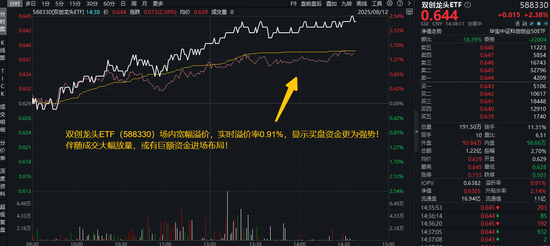
Group 1 - The core viewpoint highlights the strong performance of the "Double Innovation Leader ETF" (588330), which saw a price increase of over 2.5% and a trading volume of 1.22 billion yuan, indicating robust buying interest [1] - The ETF is experiencing a significant premium in the market, with a real-time premium rate of 0.91%, suggesting strong capital inflow [1] - Key sectors to watch include optical modules and electronics, with major players like Zhongji Xuchuang leading in the 1.6T field and Xinyi Sheng benefiting from unexpected 800G orders [1][2] Group 2 - In the electronics sector, there is a strong upward trend in computing power driven by North America, with companies like TSMC raising their revenue growth forecast from approximately 25% to 30% due to sustained AI demand [2] - The semiconductor industry is showing optimistic order demand, with companies like SMIC and Huahong nearing full capacity in Q2 2025, reinforcing the high prosperity of the sector [2] - The market outlook suggests a focus on high-growth sectors, with recommendations to invest in areas such as anti-involution, technological independence, and innovative pharmaceuticals [2] Group 3 - The "Double Innovation Leader ETF" is characterized by cross-market diversification, focusing entirely on strategic emerging industries, including new energy, semiconductors, and medical devices [5] - The ETF serves as a high-elasticity tool for capturing technology market trends, with a low investment threshold allowing entry at less than 100 yuan [5] - The ETF is designed to track the CSI Star Market and Growth Enterprise Market 50 Index, which includes 50 large-cap companies from these sectors [6]


金融云早餐|央行推进金融支持水利投资;工商银行宣布关停其电商平台;兴业银行综合施策拓宽企业“融资路”
Xin Hua Wang· 2025-08-12 06:26
Policy and Financial Support - The State Council issued guidelines to further promote fiscal system reform below the provincial level, focusing on five key reform measures [1] - The People's Bank of China and the Ministry of Water Resources held a meeting to enhance financial support for water infrastructure projects, emphasizing the use of an additional 800 billion yuan credit quota [1] Investment and Growth - In the first five months of the year, China completed water conservancy construction investments of 310.8 billion yuan, a 54% increase compared to the same period last year [2] - The Civil Aviation Administration of China released a plan aiming for 3,500 general aviation aircraft by the end of the "14th Five-Year Plan" [2] - The International Semiconductor Industry Association projected a 20% year-on-year increase in global front-end wafer fab equipment spending, reaching a historical high of 109 billion dollars in 2022 [2] Banking Sector Developments - Industrial Bank has increased financial support for the real economy, with corporate loan balances reaching 2.35 trillion yuan, an increase of over 195 billion yuan since the beginning of the year [4] - China Bank introduced ten measures to support new citizens in various financial needs, focusing on employment and entrepreneurship [4] - The Agricultural Development Bank of China announced 30 measures to enhance credit support for the agricultural sector [5] Market Dynamics - On June 13, the Shanghai Composite Index fell by 0.89%, while the Shenzhen Component Index and the ChiNext Index also experienced declines [7] - U.S. stock indices saw significant drops due to concerns over aggressive interest rate hikes by the Federal Reserve and potential economic recession [7] - European and Japanese stock markets also faced declines, with the DAX30 and Nikkei 225 indices dropping by 2.43% and 3.01%, respectively [7] Commodity Market Trends - International oil prices increased, with WTI crude oil rising by 1% and Brent crude by 0.34%, while international gold futures prices fell by 2.95% [8]


港股午评:恒指涨0.09%,恒生科指跌0.39%,食品饮料板块大涨,半导体板块涨幅居前,现代牧业涨超15%,快手大跌6.72%
Jin Rong Jie· 2025-08-12 04:21
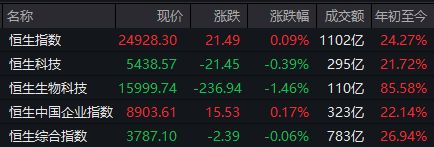
Market Overview - The Hang Seng Index rose by 0.09% to 24,929.34 points, while the Hang Seng Tech Index fell by 0.39% to 5,438.57 points [1] - The year-to-date performance of the Hang Seng Index is up 24.27%, and the Hang Seng Tech Index is up 21.72% [2] Technology Sector - Major tech stocks showed mixed performance: Alibaba fell by 1.35%, Tencent by 0.27%, while JD.com rose by 0.16% and Xiaomi by 0.79% [2] - Apple-related stocks performed strongly, with Hon Teng Precision rising over 7% and BYD Electronics over 4% [3] Food and Beverage Sector - The food and beverage sector saw significant gains, with Modern Dairy up over 15%, China Shengmu up over 11%, and other companies like Mengniu Dairy and Nongfu Spring also rising [3][4] - A new subsidy policy for families with infants is expected to boost dairy consumption, particularly in low-tier cities, benefiting the infant formula market [4] Dairy Industry Insights - The dairy industry is transitioning from scale expansion to value enhancement, with solid dairy products like cheese and butter gaining traction [4] - The B-end dairy market is projected to exceed 40 billion by 2024, with a CAGR of 14.3% expected from 2025 to 2028 [4] Beer Industry Outlook - The beer industry is expected to maintain stable consumption, with a long-term trend towards premiumization [5] - The exploration of second growth curves is anticipated to open up long-term growth opportunities [5] Semiconductor Sector - The semiconductor sector saw gains, with Hua Hong Semiconductor rising over 3% [6] - Goldman Sachs forecasts a 10% to 13% quarter-on-quarter revenue growth for Hua Hong Semiconductor in Q3, with a gross margin expectation of 10% to 12% [6]

新洁能:关于使用暂时闲置的募集资金进行现金管理的公告
Zheng Quan Ri Bao Zhi Sheng· 2025-08-11 11:46
Core Points - The company announced the approval of a proposal to use temporarily idle raised funds for cash management, with a maximum amount not exceeding 110 million RMB [1] - The approved amount can be rolled over by the company and its subsidiaries and is valid for one year from the date of the board's approval [1] - The management is authorized to implement the relevant matters without the need for shareholder meeting approval [1]

瞭望 | 建立技术输出博弈思维
Sou Hu Cai Jing· 2025-08-11 08:58
Group 1 - The Ministry of Commerce and the Ministry of Science and Technology have adjusted the "Catalog of Technologies Prohibited and Restricted from Exporting," implementing export controls on battery cathode material preparation technology, indicating a significant shift in China's approach to technology trade towards self-innovation and global leadership [1] - China's R&D expenditure for 2024 is projected to reach 36,130 billion yuan, maintaining the second position globally, while the Global Innovation Index ranks China 11th, marking it as one of the fastest-growing economies in innovation over the past decade [1] - China has transitioned from a technology follower to a rule-maker in various fields, necessitating a reevaluation of technology output strategies due to its enhanced technological capabilities [1] Group 2 - Key technologies such as semiconductor manufacturing, quantum computing, and advanced materials are crucial for economic security and must be protected from improper outflow, which could undermine China's economic advantages [2] - A scientific classification and management system for core technologies is needed, with differentiated strategies for technology cooperation based on the partner's profile [2] - The establishment of a dynamic technology evaluation mechanism and a negative list for technology output is essential to prevent the improper outflow of core technologies [3] Group 3 - Enterprises play a vital role in technology innovation and should establish dedicated compliance departments for technology exports, enhancing internal review processes [3] - Government departments are encouraged to provide policy guidance and establish a whitelist system to simplify the approval process for compliant enterprises [3] - Strengthening legal frameworks for technology security and improving early warning mechanisms for technology trends are necessary for effective technology output management [3]
江苏33家企业跻身全球独角兽榜单
Xin Hua Ri Bao· 2025-08-11 05:27
Group 1 - The core viewpoint highlights the emergence of unicorn companies in Jiangsu, which are driven by technological innovation and high-level talent, becoming a new engine for regional economic growth [1][2] - In the first half of 2025, Jiangsu had 33 companies listed as unicorns, accounting for nearly 10% of the national total, covering sectors such as new energy, biotechnology, and artificial intelligence [1] - Suzhou leads the province with 12 unicorns, particularly in artificial intelligence, while Nanjing and Changzhou also show strong representation in software, hardware, and new energy sectors [1][2] Group 2 - The financial technology, software services, and AI sectors are witnessing rapid growth among new unicorns, with 2023 being termed the "empowerment year" for AI integration into industries [2] - Jiangsu's unicorns are forming a "symbiotic cluster," with advancements in various fields such as new energy, semiconductors, and artificial intelligence, enhancing the sustainability of new economic drivers [2] - The government is focusing on enhancing core competitiveness by encouraging increased R&D investment and collaboration between enterprises and universities in cutting-edge technologies [3] Group 3 - Jiangsu has introduced policies to accelerate the cultivation of unicorn and gazelle companies, including financial incentives and support for R&D tasks [4] - By 2027, Jiangsu aims to develop 80 unicorn companies and establish 20 new leading technology tracks in high-tech zones, reinforcing its position in global technology competition [4] - The implementation of these measures is expected to reshape the industrial landscape and contribute significantly to Jiangsu's high-quality economic development [4]