自动驾驶

Search documents
小马智行-W涨超3% 公司商业化拐点确立 三季度Robotaxi业务强劲
Zhi Tong Cai Jing· 2025-12-02 07:18
Core Viewpoint - The company, Xiaoma Zhixing, has achieved a significant milestone with its seventh-generation Robotaxi becoming profitable in Guangzhou, indicating a successful transition towards commercialization in the autonomous driving sector [1] Financial Performance - For the third quarter, the company reported total revenue of 181 million RMB, representing a year-on-year increase of 72%, marking three consecutive quarters of revenue growth [1] - Revenue from the Robotaxi business reached 47.7 million RMB in the third quarter, showing a year-on-year growth of 89.5%, with passenger fare income increasing by over 200% [1] Business Expansion - The company is set to achieve its target of deploying 1,000 Robotaxis ahead of schedule, with plans to expand to over 3,000 vehicles by the end of 2026 [1] - Dongwu Securities highlighted that the company has established a commercial turning point and is building a competitive moat through multi-dimensional capabilities [1] Industry Outlook - With advancements in technology and supportive policies, the company is expected to continue benefiting from the shift in the autonomous driving industry from "technology validation" to "scale production" [1]
自动驾驶独角兽毫末智行停摆 复工时间未定
Xi Niu Cai Jing· 2025-12-02 06:07
Core Insights - The autonomous driving unicorn company, Haomo Zhixing, has halted operations with an uncertain timeline for resumption, marking a significant operational standstill for a company that was once valued over $1 billion [2] Group 1: Company Background - Haomo Zhixing was established in 2019, emerging from Great Wall Motor's intelligent driving division, benefiting from substantial resources [2] - The company achieved a post-financing valuation exceeding $1 billion after raising nearly 1 billion yuan in its Series A funding round in December 2021, and has since accumulated around 2 billion yuan through multiple funding rounds [2] - The major shareholder, "Great Wall System," holds over 53% of the company's shares, and Haomo Zhixing has developed a three-dimensional system encompassing passenger vehicles, logistics vehicles, and smart hardware [2] Group 2: Business Developments - The HPilot system is integrated into nearly 20 models under Great Wall Motor, and the "Little Magic Camel" delivery vehicle has commenced operations [2] - The company has also launched the MANA data intelligence system and the DriveGPT generative model [2] Group 3: Challenges and Setbacks - In 2024, Haomo Zhixing's goal of achieving city NOH coverage in 100 cities fell drastically short, with only 8 cities covered by year-end, while competitors like Huawei and XPeng have surpassed 200 cities [3] - The reliance on Great Wall Motor's orders has begun to deteriorate, as Great Wall invested $100 million in a competitor, Yuanrong Qixing, and switched to their intelligent driving system for new models, severing Haomo Zhixing's core revenue source [3] - Signs of a financial crisis are becoming evident in 2025, with issues such as unpaid employee wages and potential social security payment interruptions arising, leading to the company being listed as an executor due to a debt of 31,500 yuan [3] Group 4: Employee Response - Employees in Beijing and Baoding are experiencing anxiety, with approximately 280 employees initiating rights protection actions, and some filing for labor arbitration [3]


文远知行:"木头姐"41.7万股重仓看好,美银首次覆盖看涨超45%
Ge Long Hui· 2025-12-02 05:36
Core Insights - Cathie Wood's ARK Invest has acquired 417,000 shares of WeRide (NASDAQ: WRD), indicating confidence in the company's long-term prospects [1] - Bank of America has initiated coverage on WeRide with a "Buy" rating and a target price of $12 for US stocks and HK$31 for Hong Kong stocks, suggesting potential upside of approximately 45.6% and 50% respectively [1] - WeRide is focused on autonomous driving technology, developing a full-stack technology platform ranging from Level 2 to Level 4, with products including Robotaxi, Robobus, Robovan, Robosweeper, and Level 2 driver assistance solutions [1] Financial Performance - In Q3 2025, WeRide reported revenue of 171 million yuan, a year-on-year increase of 144.3% [2] - The core business, Robotaxi, saw a remarkable revenue increase of 761% year-on-year, with a gross margin of 32.9%, leading the industry [2] - WeRide has deployed over 1,600 autonomous vehicles globally, including nearly 750 Robotaxis, and recently obtained the first city-level pure unmanned commercial operation license outside the US in Abu Dhabi [2]

希迪智驾通过港交所聆讯,商用车自动驾驶的故事还在继续
Cai Jing Wang· 2025-12-02 05:09
Core Viewpoint - Xidi Intelligent Driving Technology Co., Ltd. is poised to become the first publicly listed company focused on autonomous mining trucks, having passed the Hong Kong Stock Exchange hearing, marking a significant step in the commercialization of autonomous driving in the mining sector [1] Industry Overview - The mining industry is undergoing a technological transformation driven by automation, with the Chinese intelligent mining market projected to exceed 2.3 trillion yuan by 2030, including 1.41 trillion yuan for intelligent coal mines and 910.7 billion yuan for non-coal mines [2] - Policies are supporting the push for intelligent mining, with guidelines aiming for at least 60% of coal mining capacity to be automated by 2026 [2] Company Development - Xidi Intelligent Driving began commercializing its autonomous driving technology for commercial vehicles in 2018, making it one of the earliest companies in China to achieve this milestone [1][2] - The company has successfully delivered 14 electric autonomous mining trucks for a project in Jiangsu, achieving operational efficiency exceeding human performance by 4% and saving millions in operational costs [3][6] - As of 2025, Xidi Intelligent Driving is expected to serve 152 clients and has delivered 304 autonomous mining trucks, indicating strong market acceptance [4][8] Financial Performance - Xidi Intelligent Driving's revenue surged from 31 million yuan in 2022 to 410 million yuan in 2024, reflecting a compound annual growth rate of 263% [6] - The company's gross profit is projected to grow from 27 million yuan in 2023 to 101 million yuan in 2024, with autonomous driving services accounting for 62.1% of total revenue [6] Technological Advancements - The company focuses on a vehicle-centric technology approach, enabling advanced perception capabilities and efficient coordination between autonomous and human-driven vehicles [7] - Xidi Intelligent Driving employs a light-asset model, collaborating with manufacturers to develop autonomous mining trucks, which enhances profit margins and reduces project timelines [7] Market Outlook - The autonomous mining truck sector is gaining traction, with significant market potential driven by policy support and technological advancements, positioning Xidi Intelligent Driving favorably for future growth [2][8]
文远知行韩旭:双重上市后,英才校招300万起步
Sou Hu Cai Jing· 2025-12-02 04:37
邓思邈 李根 发自 纽凹非寺 量子位 | 公众号 QbitAI 韩旭变了。 文远知行创始人、CEO韩旭,现在是"全球Robotaxi第一股"的董事长,并且刚实现了港交所挂牌上市——双重资本认可。 文远知行的Robotaxi落地也全球开花结果,通行八国。在广州、北京、南京、苏州、鄂尔多斯、阿布扎比、苏黎世、新加坡,都有"WeRide"标识的无人驾 驶出租车运营……按商业化落地的Robotaxi车队规模来排名,文远知行即便不是全球最大也是最大之一。 一度被百炼千锤的文远知行,现在可谓苦尽甘来。 但以诗人性情闻名的CEO韩旭,现在无意谈论"Robotaxi格局"、拒绝预测"X年后谁还能在牌桌上",甚至表态Robotaxi也好任何AI黑科技落地也好—— "少关注一些竞争对手,多关注一些市场和用户反馈。" 韩旭的变化不光是言辞之变,更早之前的美股IPO上市,他甚至没去现场,朋友圈也找不到一张庆祝的纪念照片。港股挂牌去了,但没有典型的上市庆 祝,重点转发了一条"三年不减持"的公告,表明决心。 如果对文远知行堪称坚韧的创业历程熟悉,对韩旭"不服比一比"的耿直风格了解,就能感知到变化之大反差之强烈。 韩旭说对于过去和现状,没 ...

永安期货早盘提示-20251202
Xin Yong An Guo Ji Zheng Quan· 2025-12-02 02:19
Economic Indicators - The US manufacturing sector is experiencing its largest contraction in four months, with the ISM manufacturing index dropping to 48.2, indicating a decline in factory activity[9] - The US manufacturing index has remained below the neutral level of 50 for nine consecutive months, reflecting ongoing challenges in the sector[13] - In China, the manufacturing PMI for November is reported at 49.20, indicating a slight contraction in the manufacturing sector[17] Market Performance - The Shanghai Composite Index closed up 0.65% at 3914.01 points, while the Shenzhen Component rose by 1.25% and the ChiNext Index increased by 1.31%[1] - The Hang Seng Index in Hong Kong gained 0.67% to close at 26033.26 points, with the Hang Seng Tech Index up 0.82%[1] - Major US indices closed lower, with the Dow Jones down 0.9%, the S&P 500 falling 0.53% to 6812.63 points, and the Nasdaq decreasing by 0.38%[1] Commodity Trends - Precious metals are showing strength across the board, indicating a potential safe-haven demand amid market volatility[1] - The ISM prices paid index in the US has increased, suggesting a rise in raw material costs, which could impact manufacturing margins[13] Corporate Developments - DeepSeek has launched new AI models that reportedly perform comparably to leading models like GPT-5 and Gemini-3.0-Pro, showcasing advancements in AI technology[9] - The Chinese government has instructed data providers to halt the release of monthly real estate sales data, which may increase uncertainty in the property market[13]





东吴证券晨会纪要-20251202
Soochow Securities· 2025-12-02 01:33
Macro Strategy - The report indicates that the normalization of government bond trading may become a primary channel for injecting long-term liquidity, rather than showing immediate effects in the short term [1][18] - The expectation for a December interest rate cut by the Federal Reserve has increased to 83%, driven by dovish comments from Fed officials and progress in the Russia-Ukraine conflict negotiations [1][20] - The report highlights the importance of the voting structure and future interest rate guidance in the upcoming FOMC meeting [1][20] Financial Products - The A-share market is expected to experience a rebound rather than a full recovery, with a macro timing model scoring -2 for December, indicating a potential adjustment [2][20] - The report suggests that the technology growth sector may regain attractiveness after adjustments in November, but more incremental capital is needed [2][20] - Fund allocation recommendations lean towards a balanced and slightly aggressive ETF configuration due to anticipated upward market trends [2][20] Fixed Income - The report emphasizes the potential for convertible bonds to benefit from the upcoming "expansion" market in 2026, focusing on mid-cap and niche themes [5][24] - It notes that the 10-year government bond yield fluctuated between 1.75% and 1.85%, with expectations for a return to a 40 basis point spread between 30Y and 10Y bonds by 2026 [6][26] - The report discusses the sensitivity of bond yields to regulatory changes and market conditions, suggesting that recent volatility presents good allocation opportunities [6][25] Industry Recommendations - The report highlights Huadian Co., Ltd. (002463) as a company accelerating its globalization efforts, with revenue forecasts for 2025-2027 at 18.339 billion, 25.492 billion, and 29.315 billion yuan, respectively [9] - Ding Tai High-Tech (301377) is noted for benefiting from increased demand for PCB processing due to AI computing needs, with profit forecasts for 2025-2027 at 400 million, 630 million, and 900 million yuan [10][11] - Salted Fish Shop (002847) is recognized for its strong multi-channel layout and product innovation, with profit forecasts for 2025-2027 at 820 million, 1.01 billion, and 1.22 billion yuan [12] - Meituan-W (03690.HK) is under scrutiny due to lower-than-expected profits, with adjusted profit forecasts for 2025-2027 now at -1.42 billion, 1.2 billion, and 2.46 billion yuan [13] - Alibaba-W (09988.HK) is projected to maintain healthy growth in its core business, with adjusted profit forecasts for 2026-2028 at 101.525 billion, 141.564 billion, and 184.647 billion yuan [15]
英伟达拿出推理版VLA:Alpamayo-R1让自动驾驶AI更会动脑子
机器之心· 2025-12-02 00:17
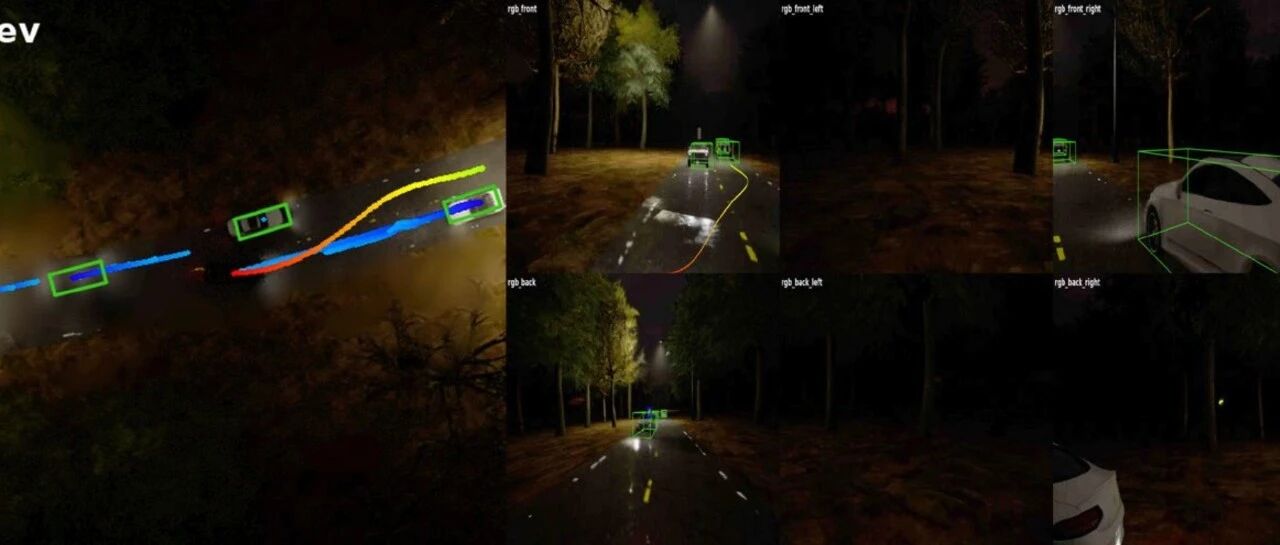
Group 1 - The core challenge in autonomous driving is not just perception but understanding the reasoning behind actions taken by the model [1] - Traditional end-to-end systems struggle with rare but critical scenarios, leading to potential accidents [1][2] - NVIDIA's Alpamayo-R1 introduces a reasoning capability that allows vehicles to infer causal relationships before making decisions [1][6] Group 2 - Alpamayo-R1 features a new dataset called Chain of Causation (CoC), which includes not only actions taken but also the reasons for those actions [2][3] - The model employs a diffusion-based trajectory decoder to generate feasible driving trajectories under real-time constraints [5] - A multi-stage training strategy is utilized, starting with basic mapping from vision to action, followed by supervised fine-tuning on CoC data, and concluding with reinforcement learning for optimization [6][15] Group 3 - The performance of Alpamayo-R1 shows significant improvements, particularly in long-tail scenarios where traditional models often fail [6][20] - The model's input consists of multi-camera and temporal observations, allowing for integrated multi-modal semantic understanding [8] - The CoC dataset employs a human-machine collaborative annotation mechanism, resulting in improved planning accuracy and reduced error rates [10][11] Group 4 - The training process of Alpamayo-R1 is divided into three phases: supervised fine-tuning, CoC supervision, and reinforcement learning-based post-training optimization [15][17] - The model incorporates a multi-dimensional reward mechanism to enhance reasoning accuracy and action consistency [17] - The design of AR1 represents a shift from "black box" to "white box" in autonomous driving, enabling the model to explain its decisions [19][20] Group 5 - The significance of Alpamayo-R1 lies not only in performance enhancement but also in establishing a closed loop between AI reasoning and physical actions [20][21] - The model aims to ensure safety and build trust in autonomous driving by providing explanations for its decisions [21]

Feed-forward 3DGS,正在吸引业内更多的关注......
自动驾驶之心· 2025-12-02 00:03
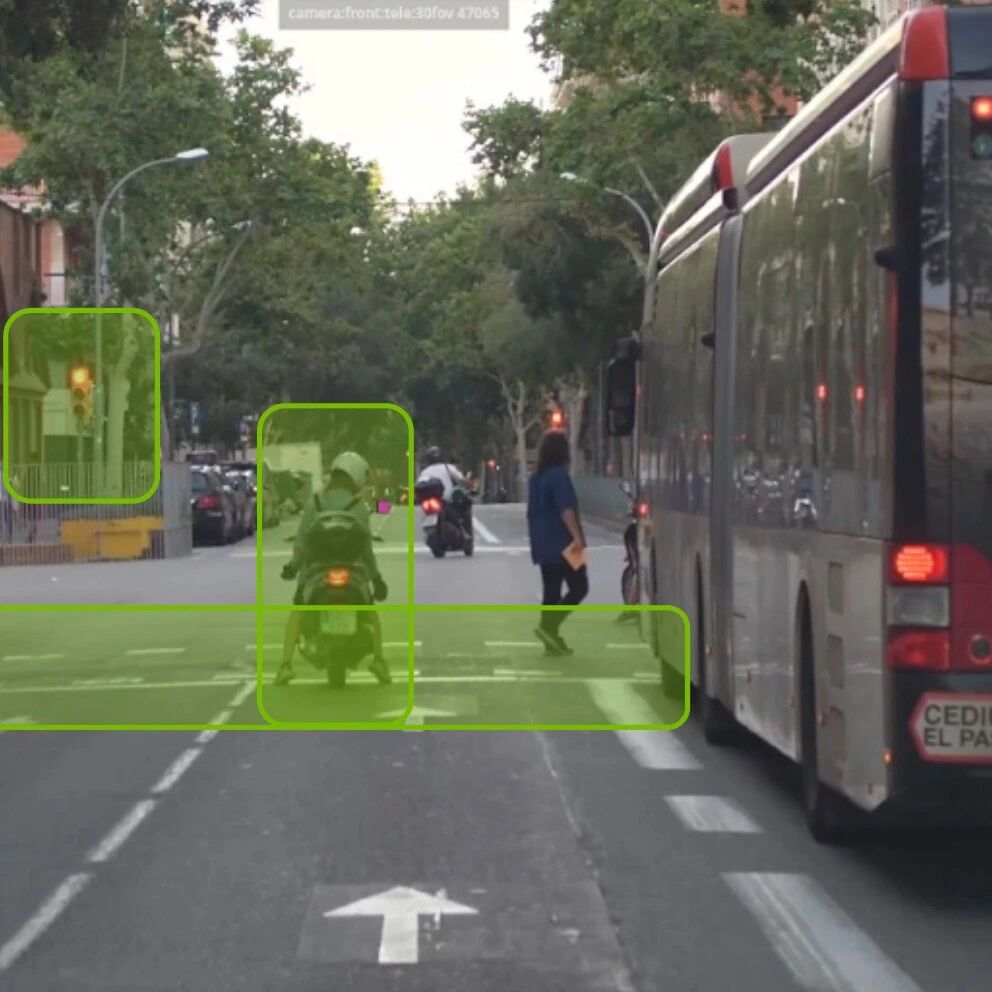
Core Insights - The article discusses the rapid advancements in 3D Gaussian Splatting (3DGS) technology, highlighting its significance in the field of autonomous driving and the growing interest in this area among professionals [2][4]. Group 1: Course Overview - A new course titled "3DGS Theory and Algorithm Practical Tutorial" has been developed to provide a structured learning path for individuals interested in 3DGS technology, covering both theoretical and practical aspects [4]. - The course is designed to help participants understand point cloud processing, deep learning theories, real-time rendering, and coding practices [4]. Group 2: Course Structure - The course consists of six chapters, starting with foundational knowledge in computer graphics and progressing to advanced topics such as dynamic reconstruction and surface reconstruction [8][9]. - Each chapter includes practical assignments and discussions on relevant algorithms and frameworks, such as the use of NVIDIA's open-source 3DGRUT framework [9][10]. Group 3: Target Audience and Requirements - The course is aimed at individuals with a background in computer graphics, visual reconstruction, and programming, specifically those familiar with Python and PyTorch [17]. - Participants are expected to have a GPU with a computational power of at least 4090 and a basic understanding of probability and linear algebra [17]. Group 4: Learning Outcomes - By the end of the course, participants will have a comprehensive understanding of the 3DGS technology stack, including algorithm development frameworks and the ability to train open-source models [17]. - The course also facilitates networking opportunities with peers from academia and industry, enhancing career prospects in internships and job placements [17].
超越ORION!CoT4AD:显式思维链推理VLA模型(北大最新)
自动驾驶之心· 2025-12-02 00:03
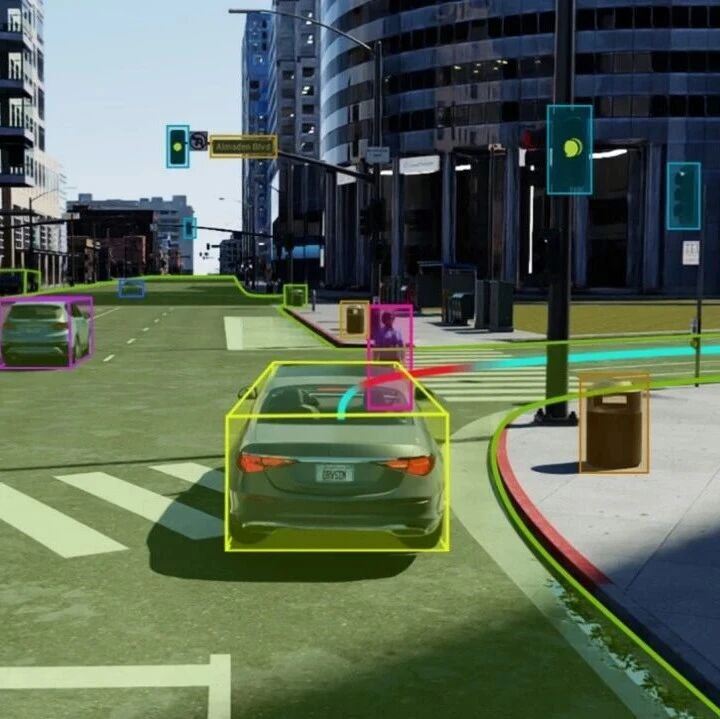
Core Insights - The article introduces CoT4AD, a new Vision-Language-Action (VLA) framework designed to enhance logical and causal reasoning capabilities in autonomous driving scenarios, addressing limitations in existing VLA models [1][3][10]. Background Review - Autonomous driving is a key research area in AI and robotics, promising improvements in traffic safety and efficiency, and playing a crucial role in smart city and intelligent transportation system development [2]. - Traditional modular architectures in autonomous driving face challenges such as error accumulation and limited generalization, leading to the emergence of end-to-end paradigms that utilize unified learning frameworks [2][3]. CoT4AD Framework - CoT4AD integrates chain-of-thought reasoning into end-to-end autonomous driving, allowing for explicit or implicit reasoning through a series of downstream tasks tailored for driving scenarios [3][10]. - The framework combines perception, language reasoning, future prediction, and trajectory planning, enabling the generation of explicit reasoning steps [6][10]. Experimental Results - CoT4AD was evaluated on the nuScenes and Bench2Drive datasets, achieving state-of-the-art performance in both open-loop and closed-loop assessments, outperforming existing LLM-based and end-to-end methods [10][19]. - In the nuScenes dataset, CoT4AD achieved L2 distance errors of 0.12m, 0.24m, and 0.53m at 1s, 2s, and 3s respectively, with an average collision rate of 0.10% [17][18]. Contributions of CoT4AD - The model's design allows for robust multi-task processing and future trajectory prediction, leveraging a diffusion model integrated with chain-of-thought reasoning [10][12]. - CoT4AD demonstrates superior performance in complex driving scenarios, enhancing decision-making consistency and reliability across diverse environments [19][23]. Ablation Studies - The effectiveness of various components, such as perception tokenizers and the chain-of-thought design, was validated through ablation studies, showing significant performance improvements when these elements were included [26][28]. - The model's ability to predict future scenarios was found to be crucial, with optimal performance achieved when predicting four future scenarios [29]. Conclusion - CoT4AD represents a significant advancement in autonomous driving technology, demonstrating enhanced reasoning capabilities and superior performance compared to existing methods, while also highlighting areas for future research to improve computational efficiency [30][32].