乳业

Search documents
基于碳账户改革的衢州“双碳”实践
Xin Lang Cai Jing· 2026-01-06 19:29
Core Viewpoint - Quzhou, a city in Zhejiang Province, faces the dual pressure of industrial development and ecological protection, necessitating a green transformation driven by digitalization and a carbon account system to facilitate systemic change towards carbon neutrality [1][3]. Group 1: Financial Institutions' Role - In 2020, Quzhou was designated as a national green finance reform and innovation pilot zone, but faced challenges in accurately supporting carbon reduction due to a heavy reliance on high-energy-consuming industries [3][4]. - A digital revolution initiated the establishment of a carbon account system that collects energy consumption data from enterprises, allowing for precise carbon emission and reduction metrics [4]. - The first national "carbon credit" reporting mechanism was created, integrating carbon performance into the credit assessment process of 27 financial institutions, enabling better financing conditions for low-carbon enterprises [4][5]. Group 2: Industrial Enterprises' Transformation - The establishment of the carbon account system in late 2021 allowed companies like Mingwang Dairy to identify their energy efficiency and carbon reduction potential, leading to proactive transformation strategies [6][7]. - Through third-party energy management contracts, enterprises can achieve significant cost savings and improved carbon performance, with over 50 similar cases resulting in a total reduction of 1.6 billion yuan in costs [7]. Group 3: Citizens' Engagement - Quzhou's personal carbon account system incentivizes low-carbon behaviors among citizens, allowing them to earn carbon credits for actions like using shared bikes and recycling, which can be redeemed for financial benefits [8]. - The city has issued green loans based on personal carbon accounts totaling 34.9 billion yuan, benefiting over 1.6 million residents [8]. Group 4: Service Institutions' Evolution - Service providers in Quzhou are transitioning from traditional energy-saving roles to comprehensive carbon solution providers, implementing integrated services that include real-time carbon monitoring [9]. - Successful projects in public institutions have led to the replication of energy-saving models across multiple facilities, enhancing the overall carbon reduction efforts in the region [9]. Group 5: Government's Strategic Shift - The local government is evolving its approach from strict regulatory measures to facilitating a market-oriented carbon management system, aiming to transform carbon emissions into a productive factor [10][11]. - The launch of the carbon account 2.0 upgrade focuses on creating a reliable data space, enhancing governance capabilities, and promoting market accessibility for low-carbon initiatives [11].
2025年食品行业并购盘点:从万辰的“联邦”到涪陵的“败局”,有钱花不出去的“大厂”与被榨干的效率
3 6 Ke· 2026-01-06 05:36
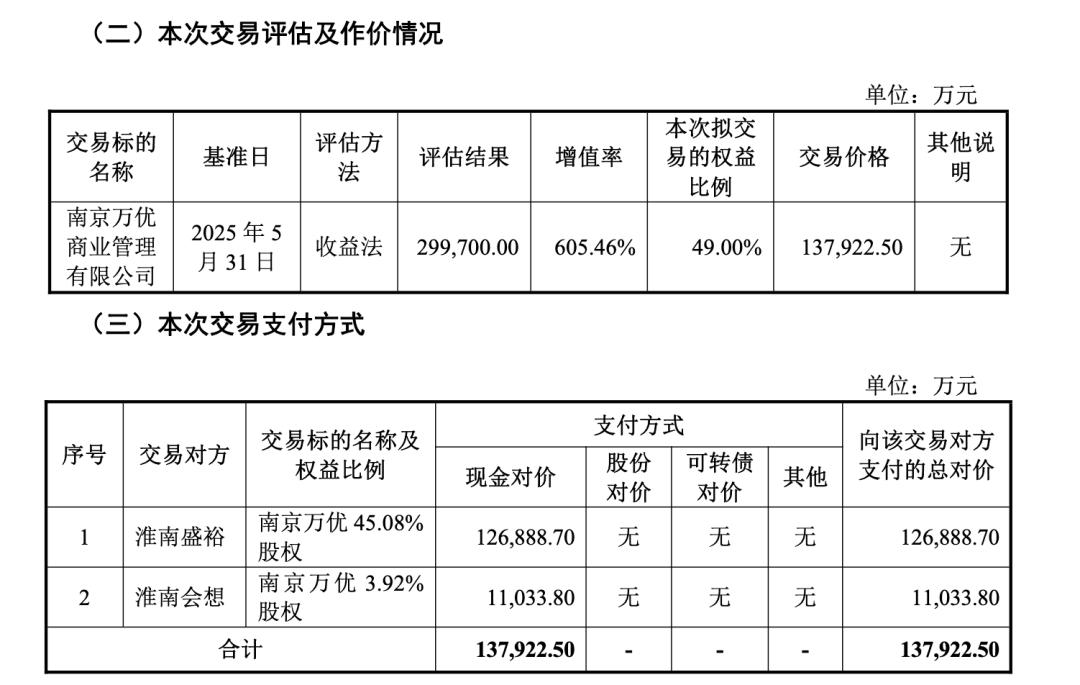
Core Insights - The mergers and acquisitions (M&A) in the Chinese food industry in 2025 are characterized by a focus on necessary integrations rather than large-scale deals, reflecting a shift towards survival in a saturated market [1] Group 1: Snack Industry Developments - Wanchen Group has transformed from a grassroots brand into a significant capital player, acquiring 49% of Nanjing Wanyou for 1.379 billion yuan, which is crucial for its brand integration strategy [2][3] - Nanjing Wanyou, under the "Good Idea" brand, generated 4.1 billion yuan in revenue in the first five months of 2025, highlighting its importance in Wanchen's portfolio [2] - The rapid expansion strategy of Wanchen has slowed significantly, with daily store openings dropping from 26 to less than 7, indicating market saturation and operational challenges [4] Group 2: Dairy Industry Trends - New Hope Dairy's acquisition of Fuzhou Aoni has taken six years to finalize, reflecting a cautious approach in a changing dairy market [7][9] - The acquisition is seen as a strategic move to solidify New Hope's presence in the southern market, but the company has shifted its focus from aggressive acquisitions to more sustainable growth strategies [9] - Junyao Health has adopted a different strategy by acquiring Runying Biotechnology, focusing on probiotic products, which saw a 60% revenue increase in the first three quarters of 2025 [9][10] Group 3: New Tea Beverage Sector - Mixue Ice City has made headlines by acquiring a 53% stake in the craft beer brand "Xianpi Fulu Jia" for nearly 300 million yuan, aiming to create a "day tea, night beer" business model [11][13] - The acquisition has faced criticism for its high premium, but the company leverages its extensive cold chain logistics to address the challenges of craft beer distribution [11] - In contrast, Heytea has paused its expansion plans, reflecting the industry's struggle with over-saturation and declining profitability [13] Group 4: Condiment Industry Challenges - Fuling Mustard's attempt to acquire Sichuan Weizimei has failed due to valuation disagreements, highlighting the difficulties traditional food companies face in finding growth opportunities [14][16] - The condiment industry is experiencing stagnation, with Fuling Mustard holding significant cash but struggling to identify viable growth avenues [16] - Industry leader Haitian Flavoring has opted for a Hong Kong listing to enhance its international presence and repair its reputation following regulatory challenges [16] Group 5: Overall Industry Trends - The 2025 M&A wave in the Chinese food and beverage sector reflects a broader theme of disillusionment, with consumers prioritizing value over brand prestige [17] - Companies are increasingly focusing on cost efficiency and profitability, as evidenced by Wanchen's and New Hope's strategic shifts [17] - The industry is moving towards consolidation, with larger firms dominating the market and employing data-driven strategies to optimize costs across the supply chain [17][18]




潘刚带领伊利加速国际化布局,从规模扩张迈向质量并举新阶段
Sou Hu Cai Jing· 2026-01-06 05:07
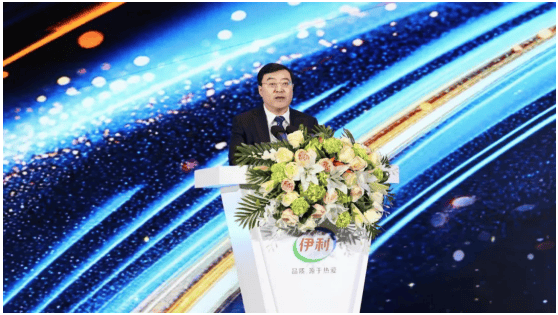
Core Viewpoint - The article highlights the growing strength of Chinese enterprises in international competition, emphasizing that globalization is essential for resource integration and market risk management. It focuses on Yili's recent investor day event, showcasing its achievements, innovative technologies, and future strategic plans. Group 1: Yili's Internationalization Strategy - Yili has viewed internationalization as a key development strategy since 2006, establishing a global resource, innovation, and market system under the leadership of Chairman Pan Gang [3] - The company has over 2,000 global partners across six continents and 39 countries, with 15 R&D innovation centers and 81 production bases, selling products in over 60 countries and regions [3] - Yili's international business is organized into three main systems, with a focus on regional hubs in Indonesia and Thailand, leading to significant market penetration in Southeast Asia and the Middle East [3][4] Group 2: Performance and Growth - Yili's revenue for the first three quarters of 2025 reached 90.564 billion yuan, with strong performance in overseas markets, particularly in ice cream and infant goat milk powder [4] - The company is transitioning from a focus on scale expansion to a dual emphasis on quality and growth, aiming to reshape the global dairy industry with strong Chinese influence [4] - Yili's internationalization journey is set to evolve further, with plans to move from being "Asia's first" to "the world's first" in the dairy sector under Pan Gang's leadership [4]

西部牧业(300106.SZ):12月自产生鲜乳2828.20吨 同比下降3.58%
智通财经网· 2026-01-06 04:06
Group 1 - The core point of the article is that Western Dairy (300106.SZ) announced a production forecast for fresh milk, estimating 2828.20 tons for December 2025, which represents a year-on-year decrease of 3.58% [1]

A股指数涨跌不一:创业板指跌0.45%,商业航天、CPO等板块跌幅居前
Feng Huang Wang Cai Jing· 2026-01-06 01:36
Market Overview - The three major indices opened mixed, with the Shanghai Composite Index up 0.06% and the Shenzhen Component Index up 0.01%, while the ChiNext Index opened down 0.45% [1] - The human brain engineering and lithium mining sectors showed significant gains, while commercial aerospace and CPO sectors experienced declines [1] Index Performance - Shanghai Composite Index: 4026.02, up 0.06%, with 1018 gainers and 808 losers [2] - Shenzhen Component Index: 13830.30, up 0.01%, with 1318 gainers and 1066 losers [2] - ChiNext Index: 3279.81, down 0.45%, with 650 gainers and 552 losers [2] External Market - U.S. stock indices closed higher, with the Dow Jones reaching a record high, driven by strong financial stocks [3] - The Dow Jones increased by 594.79 points (1.23%) to 48977.18, the Nasdaq rose by 160.19 points (0.69%) to 23395.82, and the S&P 500 gained 43.58 points (0.64%) to 6902.05 [3] - Most Chinese concept stocks saw gains, with the Nasdaq Golden Dragon China Index up 0.49% [3] Institutional Insights - Huatai Securities anticipates a strengthening spring market, recommending investments in growth sectors such as electric equipment and renewable energy, as well as sectors related to domestic demand improvement [4] - CITIC Securities highlights a "growth first, liquor accumulation" trend in the cross-year market, with a focus on sectors like snacks and dairy that show clear growth potential [5] - Huaxi Securities predicts 2026 will be a significant year for the market, supported by favorable macro policies and improving corporate earnings [6] - Guojin Securities expects 2026 to be the year of recoverable commercial rockets, emphasizing the importance of cost reduction through recoverable technology [7][8] - Tianfeng Securities sees growth potential in cosmetics, gold jewelry, and duty-free sectors amid the recovery of high-end consumption [9]





做强实业 爱拼会赢——2025年民营企业迎难而上务实创新
Jing Ji Ri Bao· 2026-01-05 23:07
Group 1: BYD's Global Expansion - BYD's 14 millionth electric vehicle rolled off the production line in Brazil, marking a significant milestone for Chinese automakers in the South American market [1] - In 2025, BYD's overseas sales of passenger cars and pickups exceeded 1.0496 million units, a year-on-year increase of 145%, with a presence in over 119 countries and regions [1] - BYD's strategy focuses on local adaptation, including product customization, localized production, autonomous logistics, and brand contextualization to overcome market barriers [1][2] - The company emphasizes local talent recruitment, with approximately 80% of the workforce at its Brazilian factory being local residents [1] Group 2: Technological Advancements and Market Strategy - BYD plans to enhance its overseas market expansion and increase the global adoption of electric vehicles and renewable energy products [2] - The company aims to strengthen its technological leadership by investing in electric and intelligent technology, ensuring that innovations translate into market competitiveness [2] Group 3: SF Express's Logistics Innovations - SF Express has significantly increased its blueberry shipping volume from 50,000 items in 2018 to over 10 million items in 2025, enhancing the freshness experience for consumers [3] - The company has implemented a drone logistics network in key blueberry production areas, utilizing AI and high-spectral imaging technology to improve product quality [3] - SF Express has introduced a "late delivery compensation" service to enhance customer rights and service quality, initially launched in ten cities [4] Group 4: iFLYTEK's AI Developments - iFLYTEK's AI model has undergone five iterations in 2025, achieving core capabilities in language understanding and mathematical reasoning, supporting over 130 languages [5][6] - The company focuses on using domestic computing power for model training to ensure long-term development security and independence [6] - iFLYTEK has expanded its AI applications across various sectors, including education and automotive, serving millions of users and facilitating significant interaction volumes [6] Group 5: Yili's Industry Growth - Yili Group's intelligent production base in Inner Mongolia has a daily processing capacity of 6,500 tons of fresh milk, emphasizing quality control throughout the production chain [7] - The company has successfully developed technologies that significantly enhance the retention of lactoferrin in long-life milk products [7] - Yili aims to increase its international market share and product value, positioning itself as a leading global health food provider [8] Group 6: Skyworth's New Energy Business - Skyworth's new energy business revenue reached 13.801 billion yuan in the first half of 2025, a nearly 54% year-on-year increase, accounting for 38% of total revenue [9] - The company is developing a comprehensive green energy ecosystem through innovations in photovoltaic technology and integrated energy solutions [9][10] - Skyworth plans to enhance its competitiveness in smart home appliances and expand its presence in the global green energy market [10]



一鸣食品:公司在核心业务发展上锚定国家种业振兴战略
Zheng Quan Ri Bao Zhi Sheng· 2026-01-05 14:12
Core Viewpoint - Yiming Foods is leveraging molecular breeding and AI breeding technologies through Zhejiang Zhongxing Animal Husbandry Technology Co., Ltd. to cultivate specialized dairy cow breeds, aiming to meet consumer demand for high-quality, high-immunity, and high-activity functional dairy products [1] Group 1: Business Development - The company is aligning its core business development with the national seed industry revitalization strategy, focusing on breeding dairy cow populations that are highly adapted to the subtropical climate of southern China [1] - This initiative aims to fill the structural gap in China's dairy cow breeding industry and fundamentally change the reliance on foreign sources for high-quality dairy breeds in southern China [1] Group 2: Technological and Market Challenges - The breeding cycle for new dairy cow strains is long, and core traits require multi-generational validation, which presents challenges for industrial promotion and market recognition [1] - The transformation of related technological achievements into cost advantages or quality premiums is not yet fully clear at the current time [1]

与时俱进 内蒙古经济稳中求进向未来
Xin Lang Cai Jing· 2026-01-04 19:01
Economic Strength - Inner Mongolia's economic strength has significantly improved during the "14th Five-Year Plan" period, with the total economic output surpassing 2.6 trillion yuan in 2024, marking a return to the national mid-tier after five years [3] - The average annual GDP growth rate for the first four years of the "14th Five-Year Plan" is 6.1%, which is 0.6 percentage points higher than the national average [4] - By 2024, the per capita GDP in Inner Mongolia has exceeded 110,000 yuan, 1.15 times the national average [5] - Fixed asset investment in Inner Mongolia has maintained double-digit growth for three consecutive years from 2022 to 2024, rising from the third-lowest to the second-highest ranking nationally [6] Technological Innovation - Inner Mongolia has implemented the "Science and Technology Prosperity" initiative, significantly enhancing its innovation capabilities, with key indicators of technological input and output ranking in the top 10 nationally [8][9] - Notable achievements include the development of the world's largest capacity grid-type energy storage prototype and the first "zero carbon emission" heavy-duty mining truck in China [10] Industrial Structure Optimization - The region has successfully diversified its industrial structure, moving away from a coal-dominated economy, establishing a modern industrial system [11] - Coal production remains stable at over 1 billion tons annually, with over 60% of output sent to other provinces, ensuring supply for more than two-thirds of the country [12] - Inner Mongolia is advancing its renewable energy sector, with total installed capacity expected to reach 135 million kilowatts by the end of 2024, surpassing thermal power capacity [12] - The agricultural sector has shown significant growth, with grain production reaching 82 billion jin in 2024, ranking sixth nationally, and dairy production leading the country [14][15] - The region is also focusing on ten major industrial clusters and 21 industrial chains, with traditional industries undergoing intelligent and green transformations [15][16]
食品饮料行业周报:茅台调整线上渠道,落实市场化转型-20260104
Shenwan Hongyuan Securities· 2026-01-04 15:13
Investment Rating - The report maintains a positive outlook on the food and beverage industry, particularly on the liquor sector, with a focus on high-quality companies for long-term investment [3][7]. Core Insights - The report emphasizes the importance of domestic demand, which has been highlighted by authoritative media and government officials since mid-December 2025. It notes that the high-end liquor prices have recently declined, indicating a market shift towards finding a balance between volume and price [3][7]. - For 2026, the report anticipates a double-digit decline in sales volume in Q1, with a potential stabilization in Q2 and a turning point in fundamentals by Q3. If the fundamentals recover as expected, a dual boost in valuation and performance is anticipated towards the end of 2026 and into 2027 [3][7]. - The report recommends several key liquor companies, including Luzhou Laojiao, Shanxi Fenjiu, Guizhou Moutai, and Wuliangye, while also suggesting attention to other brands like Yingjia Gongjiu and Jinhuijiu [3][7]. - In the consumer goods sector, the report highlights opportunities in the supply chain related to condiments, frozen foods, and dairy products, recommending companies such as Anjijia, Yili, and Qianhe Flavoring [3][10]. Summary by Sections 1. Food and Beverage Weekly Insights - The food and beverage sector experienced a decline of 2.26% last week, with liquor down 2.79%, underperforming the broader market [6][33]. - The report notes that the liquor sector's performance is closely tied to the upcoming Spring Festival, with expectations of improved market conditions compared to the previous months [11]. 2. Market Performance of Food and Beverage Sectors - The report indicates that the food and beverage industry underperformed the Shenwan A index by 1.95 percentage points, with the liquor sector lagging behind by 2.48 percentage points [33][34]. 3. Key Company Updates - Guizhou Moutai announced a significant adjustment to its online sales strategy, which is expected to have a profound impact on both the company and the industry. The adjustment includes a new product matrix aimed at better consumer engagement and market pricing [8][11]. - The report also mentions that Moutai's product prices have seen a decline, with the retail price for its flagship product dropping to 1490 yuan per bottle, reflecting a broader trend in the high-end liquor market [8][19].





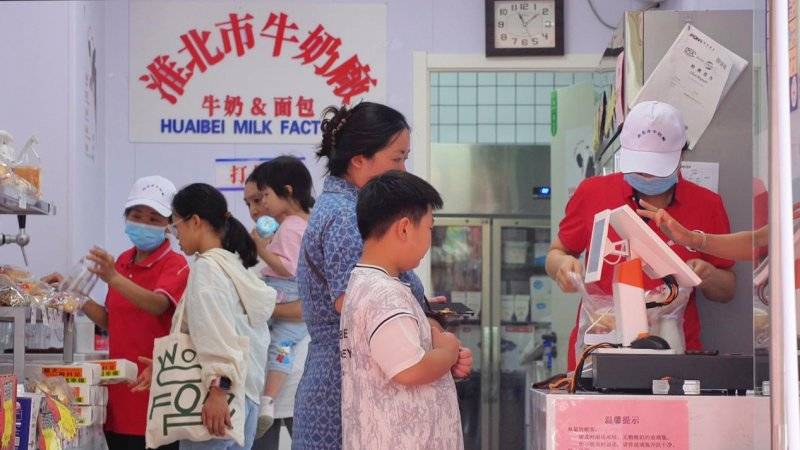
曦强乳业:以“现打鲜奶”撬动新消费
Sou Hu Cai Jing· 2026-01-04 14:16
Core Viewpoint - Xi Qiang Dairy Industry is leveraging digitalization and innovative production methods to enhance efficiency and meet rising consumer demands for quality and freshness in milk products [1][3][4] Group 1: Company Overview - Xi Qiang Dairy Industry, established in 1958, has evolved into a modern large-scale agricultural enterprise integrating research, breeding, processing, sales, and logistics [1] - The company adheres to the principle of "producing as much milk as cows are raised" [1] Group 2: Business Model and Innovations - The company has introduced a new consumption model called "freshly squeezed milk," emphasizing freshness and quality, which is a response to consumer preferences [3] - Challenges in this model include ensuring quality safety, balancing freshness with scalability, and leveraging technology for efficiency [3] - To address these challenges, Xi Qiang Dairy has implemented advanced milking equipment, established a comprehensive cold chain logistics system, and collaborated with research institutions for continuous product and process innovation [3] Group 3: Economic and Environmental Benefits - The "freshly squeezed milk" model has led to a 15% reduction in unit product costs and a 20% increase in production efficiency, while also improving market response times [3] - The quality control system has achieved a product qualification rate of 99.9%, significantly higher than the market average [3] - Environmentally, the model has reduced energy consumption per unit product by approximately 10% and lowered carbon emissions through decreased transportation and excessive packaging [3] Group 4: Sales Strategy and Financial Performance - Xi Qiang Dairy employs an online-offline integrated sales strategy, allowing consumers to experience fresh products in-store or conveniently order online for home delivery [4] - The company reported an annual revenue of approximately 200 million yuan, with digital investments around 6 million yuan [4] - Xi Qiang Dairy has received multiple honors, including recognition as a high-tech enterprise and a model for digital transformation in small and medium enterprises in Anhui Province [4]