厨电

Search documents
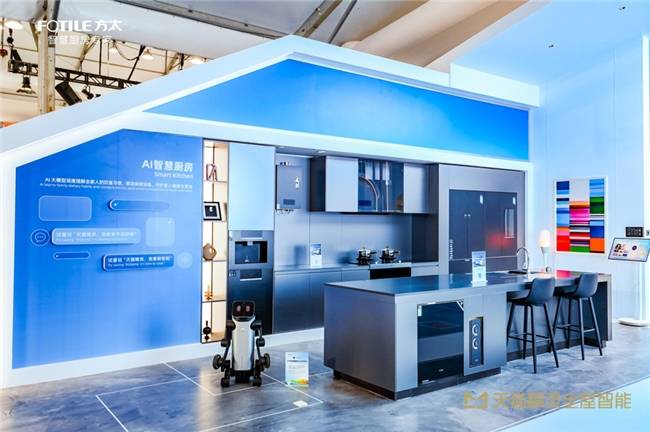
天猫精灵联合方太推出全屋智能3.0,智能厨房迎来“空间觉醒”时代
Sou Hu Cai Jing· 2025-10-16 07:55
Core Insights - The release of Tmall Genie Whole House Smart 3.0 at the 2025 Yunqi Conference marks a significant shift in the industry from "device networking" to "space awakening" [3][4] - FOTILE's deep involvement as the first kitchen appliance partner signifies that smart kitchens are becoming a core entry point for whole house intelligence [3][6] Group 1: Whole House Intelligence - The 2025 Yunqi Conference, held from September 24 to 26, focused on the theme "Cloud Intelligence Integration, Carbon and Silicon Symbiosis," emphasizing the evolution of AI technology [3] - Tmall Genie Whole House Smart 3.0 introduces the concept of "space intelligence," aiming to transform traditional smart homes from passive tools to active service partners [3][4] - This transformation relies on three core capabilities: spatial perception, spatial understanding, and ecological service [4] Group 2: Technological Advancements - Tmall Genie Whole House Smart 3.0 achieves three major technological breakthroughs, redefining the relationship between people, space, and devices [4] - The new Kunlun T20S distributed spatial network host builds a WiFi 7 network for the entire house, enabling rapid scene control and local processing of user commands [4] - AI spatial sensors can cover spaces of up to 64 square meters and track the dynamics of five individuals simultaneously, enhancing user experience through precise location recognition [4] Group 3: FOTILE's Role in Smart Kitchen Revolution - FOTILE showcased its fully integrated kitchen solutions at the conference, including ultra-thin refrigerators and advanced dishwashers, highlighting its commitment to the smart home ecosystem [6] - The collaboration with Tmall Genie goes beyond product connectivity, establishing a deep strategic partnership that allows FOTILE appliances to actively respond to user habits and environmental conditions [6] - FOTILE's integration into the Tmall Genie ecosystem signifies a shift from passive devices to intelligent terminals that provide proactive services [6] Group 4: Industry Growth and Future Prospects - The establishment of the Alibaba "Genie Future Home Space Intelligent Designer Alliance" indicates a comprehensive approach to smart home solutions, covering design, renovation, and usage [8] - The smart home market in China is projected to reach 620 billion yuan in 2024 and exceed 700 billion yuan in 2025, driven by the integration of AI, 5G, and IoT technologies [8] - The collaboration between Tmall Genie and industry leaders like FOTILE is reshaping the definition of home, transforming kitchens into hubs that connect family emotions and needs [8]

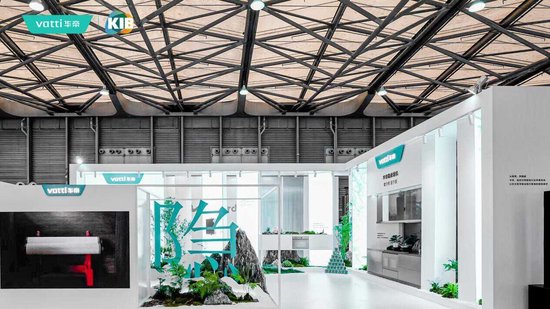
2025KIB上海盛大启幕,华帝携“致净致隐”全隐套系亮相
Xin Lang Zheng Quan· 2025-10-14 07:46
Core Insights - The 2025 China International Kitchen and Bathroom Home Expo (KIB) was held from October 10 to 12 in Shanghai, showcasing the latest trends in the kitchen and bathroom industry, emphasizing the integration of functionality and aesthetics [1] - Vatti, a prominent exhibitor, presented its "Invisible Aesthetics" concept, merging Eastern lifestyle philosophy with modern kitchen appliance technology, featuring a diverse product matrix aimed at enhancing kitchen experiences for consumers [1][13] Group 1: Awards and Recognition - During the expo, Vatti's products received multiple accolades, including the "Boutique Award" for the Max-S66 range hood and "Excellent Product Awards" for several other appliances, highlighting the company's innovation and quality [3][5] - The Max-S66 range hood features a "three ultra-thin" design that allows for seamless integration with standard cabinets, addressing common issues such as protrusion and dust accumulation [5] - The GW6i beauty bath water heater, awarded the "Excellent Product Award," incorporates advanced technology to enhance skin hydration and reduce wrinkles, marking a significant advancement in the product category [6] Group 2: Product Innovations - Vatti's full-hidden series emphasizes "Invisible Aesthetics," with products designed to blend seamlessly into kitchen spaces, including the zero-inset range hood that utilizes a lift structure for complete visual integration [7] - The QX05 integrated cooking center features innovative technology for balanced functionality and space utilization, addressing traditional heating issues with a unique hidden heating element design [9] - The B7Pro dishwasher, recognized for its advanced spray technology, achieves a first-level cleaning coverage certification, showcasing Vatti's commitment to high-end market standards [9] Group 3: Strategic Direction - Vatti's design philosophy is deeply rooted in Eastern philosophy and architectural art, aiming to create a kitchen space that harmonizes with daily life rather than being dominated by cold appliances [13] - The company is focused on the future of embedded kitchen appliances, emphasizing the integration of health and intelligence, and aims to transition these products from "luxury" to "necessity" [15] - Vatti's strategy includes a comprehensive approach to user needs, targeting traditional family-oriented users with reliable, high-end products while appealing to emerging families by transforming kitchens into social spaces [15]

家电行业 2025 年三季报业绩前瞻:内销将面临以旧换新高基数,关税扰动下出口不改长期增长趋势
Shenwan Hongyuan Securities· 2025-10-13 12:56
Investment Rating - The report maintains a positive investment outlook for the home appliance industry, highlighting the potential for growth driven by real estate policies and the "old-for-new" replacement program [4][6]. Core Insights - The home appliance sector is experiencing a recovery, with significant growth in both domestic and export sales, particularly in the white goods and kitchen appliance segments, supported by favorable government policies [6][7]. - The report identifies three main investment themes: 1) White goods benefiting from real estate policy changes and the "old-for-new" program, with a focus on leading companies like Haier, Midea, and Gree [8][14]. 2) Export opportunities driven by large customer orders and recovering overseas demand, particularly for companies like Ousheng Electric and Dechang [8][14]. 3) Core components seeing increased demand due to the recovery in the white goods sector, with recommendations for companies like Huaxiang and Shun'an [8][14]. Summary by Sections 1. Domestic Sales Growth - From January to August 2025, the air conditioning sector saw a cumulative production of 149.32 million units, a 6% year-on-year increase, with sales reaching 152.57 million units, up 7%, and domestic sales growing by 9% [11][12]. - The refrigerator and washing machine sectors also reported domestic sales growth of 4% and 6%, respectively, during the same period [11][12]. 2. White Goods and Components - The average price of white goods is expected to rise due to the "old-for-new" policy and increasing raw material costs, with air conditioning prices projected to continue their upward trend [23][24]. - Key companies in the white goods sector are expected to report varying revenue growth for Q3 2025, with Midea projected to grow by 3% in revenue and 8% in profit, while Gree anticipates flat revenue and profit [24][25]. 3. Kitchen Appliances - The kitchen appliance sector is benefiting from real estate policies and the "old-for-new" program, with significant sales growth in major categories like range hoods and gas stoves [7][8]. - Companies like Robam and Vatti are expected to see mixed results, with Robam projecting a 2% revenue increase but a 7% decline in profit [24]. 4. Small Appliances - The small appliance sector is experiencing a revival, particularly in exports, with companies like Supor and Joyoung expected to report positive revenue growth [7][8]. - The "old-for-new" policy is expected to significantly boost sales in small kitchen appliances, with new categories like microwaves and rice cookers included in the subsidy program [14][15]. 5. New Displays and Lighting - The report notes a turning point in the emerging display sector, with stable prices in the panel market and growth potential in the lighting industry [8][9]. 6. Investment Highlights - The report emphasizes the importance of real estate and export chains, recommending investments in companies that are well-positioned to benefit from the ongoing transformation in the home appliance sector [8][14].



家电行业2025年三季报业绩前瞻:内销将面临以旧换新高基数,关税扰动下出口不改长期增长趋势
Shenwan Hongyuan Securities· 2025-10-13 10:15
Investment Rating - The report maintains a positive outlook on the home appliance industry, particularly for the white goods sector, indicating a "Buy" recommendation for key players like Midea, Haier, and Gree [4][8]. Core Insights - The home appliance sector is benefiting from real estate policies and the "trade-in" program, leading to a sustained growth trend in domestic sales [6][14]. - The report highlights three main investment themes: white goods, export opportunities, and core components, with a focus on companies that are expected to outperform in these areas [8][17]. Summary by Sections 1. Domestic Sales Growth - From January to August 2025, the air conditioning industry produced 149.32 million units, a 6% year-on-year increase, with sales reaching 152.57 million units, up 7%, and domestic sales growing by 9% [6][14]. - The refrigerator and washing machine sectors also saw domestic sales growth of 4% and 6%, respectively, during the same period [6][14]. 2. White Goods and Components - The report notes that the average price of white goods is increasing due to the trade-in program, with air conditioning prices expected to rise further [27]. - Key companies are projected to show varied performance in Q3 2025, with Midea expected to see a 3% revenue increase and an 8% rise in profits, while Gree anticipates flat revenue and profit [28][29]. 3. Kitchen Appliances - The kitchen appliance sector is experiencing a recovery driven by real estate and trade-in policies, with significant growth in online sales for range hoods and gas stoves [6][14]. - Major players like Robam and Vatti are expected to see mixed results, with Robam projecting a 2% revenue increase but a 7% decline in profits [6][14]. 4. Small Appliances - The small appliance sector is benefiting from domestic trade-in policies, with companies like Supor and Joyoung expected to see revenue growth of 3% and a profit turnaround, respectively [6][14]. - The report highlights significant growth for companies like Stone Technology, which anticipates an 80% revenue increase [6][14]. 5. New Displays and Lighting - The emerging display sector is at a turning point, with companies like Hisense and Xiaomi expected to report revenue growth of 8% and 15%, respectively [6][14]. - The lighting industry is anticipated to see gradual improvements as market conditions stabilize [6][14]. 6. Investment Highlights - The report emphasizes the attractiveness of the white goods sector due to its low valuation, high dividends, and stable growth potential, recommending a combination of leading companies [8][17]. - Export opportunities are highlighted for companies like Ousheng Electric and Dechang, which are expected to benefit from increased orders and stable profitability [8][17]. 7. Trade-in Policy Impact - The trade-in policy has been expanded to include 12 categories of appliances, significantly boosting sales and consumer interest [17][18]. - The report notes that the trade-in program has already led to over 62 million units sold in 2024, generating nearly 270 billion yuan in consumption [17][18].



抢公章、堵审计,内斗11年终“改姓”:昔日“厨电第一股”,快被拖垮了
商业洞察· 2025-10-13 09:23
Core Viewpoint - Vatti Holdings, once hailed as the "first stock in kitchen appliances," has transformed into a family business after 11 years of internal strife, culminating in a board dominated by the Pan family and the removal of restrictions on family members holding executive positions [2][4]. Group 1: Internal Struggles and Governance Changes - The recent shareholder meeting resulted in the election of Sun Dongbo as an independent director, leaving four out of the seven board members as members of the Pan family [2][4]. - The company amended its articles of association to remove the clause prohibiting relatives of founders from holding executive positions, overturning the previous agreement established by the "Seven Gentlemen of Vatti" [4][6]. - The internal conflict peaked in March 2023 when the former chairman of Vatti Electronics, Wu Gang, refused to cooperate with the parent company's audit, leading to a dramatic confrontation that ended with Vatti Holdings acquiring 60% of Vatti Electronics from Wu Gang and others [4][22]. Group 2: Financial Performance and Market Position - Vatti's revenue in 2024 was only 6.3 billion yuan, significantly trailing behind competitors like Fotile and Boss Appliances, which reported revenues of 17.6 billion yuan and 11.2 billion yuan, respectively [4][22]. - The company's performance continued to decline in Q1 2025, with revenue and net profit dropping by 8.8% and 14.33%, respectively, compared to the same period last year [22][23]. - From 2017 to 2022, Vatti's revenue compound annual growth rate was only 0.31%, and net profit fell from 510 million yuan to 143 million yuan [22][24]. Group 3: Product and Brand Challenges - Vatti's traditional product lines, including stoves and disinfection cabinets, have seen significant declines, with disinfection cabinet sales plummeting by 18.96% and cabinet sales dropping by 57.59% [26][27]. - The company's market share in the high-end kitchen appliance segment has drastically decreased, with a 6.8 percentage point loss in the mid-range market over five years [26][27]. - Vatti's reputation has suffered due to numerous consumer complaints regarding product quality and inadequate after-sales service, with thousands of complaints filed on platforms like Black Cat Complaints [27][28]. Group 4: Research and Development Investment - In 2024, Vatti's R&D investment was 263 million yuan, representing only 4.13% of its revenue, while its sales expenses reached 702 million yuan [31]. - The company holds 3,287 effective patents, which is less than half of Fotile's, and less than 30% of these are invention patents [31][31]. - Vatti's strategic focus on marketing over R&D has contributed to its declining brand loyalty and market position, as it struggles to keep pace with competitors [28][31].

高端化战略持续发力 华帝推动厨电高质量发展
Xin Lang Zheng Quan· 2025-10-11 03:00
Core Viewpoint - Vatti's half-year report for 2025 shows resilience in a challenging market, with revenue of 2.8 billion yuan and net profit of 272 million yuan, driven by product optimization and a high-end strategy [1][3]. Group 1: Financial Performance - In the first half of 2025, Vatti achieved operating revenue of 2.8 billion yuan and a net profit of 272 million yuan despite industry slowdowns and intensified price competition [1]. - The overall kitchen appliance market saw a retail sales growth of 3.9%, lower than the home appliance sector's 9.2% growth [3]. Group 2: Product Strategy - Vatti's high-end strategy is reflected in the improved gross margin, with offline channels generating 1.486 billion yuan in revenue and a gross margin of 45.89%, up 6.83 percentage points year-on-year [3]. - The company launched several differentiated new products focusing on "healthy cooking, healthy cleaning, and healthy bathing," including the TC5i/GW6i water heater and the QH1i wall-mounted boiler [5]. - High-end product sales have increased, with significant breakthroughs in the 4,000 yuan and above segment for water heaters, indicating a shift towards quality and health in consumer preferences [6]. Group 3: Market Trends - The high-end kitchen appliance segment is gaining traction, with sales of range hoods priced above 3,500 yuan increasing by 2.3% and gas stoves above 2,000 yuan rising by 2.4% during the "618" shopping festival [6]. - Consumer focus is shifting from price to quality, health, and smart features, providing new momentum for the high-end market [6]. Group 4: Channel Expansion - Vatti has expanded its channel strategy with a "full-link, multi-scenario" approach, conducting nearly 2,000 promotional events across 26 provinces and cities [7]. - The company is enhancing its online presence by solidifying traditional e-commerce channels while also leveraging content e-commerce platforms like Douyin for product promotion [9]. - Over 1,000 new retail stores were opened in the first half of the year, significantly improving channel coverage and sales efficiency [9]. Group 5: Brand and Service Enhancement - Vatti is integrating a "new Chinese-style fashionable healthy living" concept into its brand positioning, engaging younger consumers through various marketing activities [9]. - The service system is being improved with nationwide product trial points and a mature NPS and VOC feedback mechanism, allowing user feedback to inform product and service enhancements [9].

2025年半年报观察:厨电价格战愈演愈烈,华帝毛利率为何攀至新高?
Xin Lang Zheng Quan· 2025-10-11 02:47
Core Insights - The core viewpoint of the articles is that Vatti's high-end strategy is successfully enhancing its profitability and market position despite a challenging environment in the kitchen appliance industry, characterized by price wars and declining average prices [1][2][9]. Financial Performance - Vatti reported a revenue of 2.8 billion yuan and a net profit of 272 million yuan for the first half of 2025, with a gross margin of 43.54%, an increase of 2.86% year-on-year [1]. - The overall kitchen appliance market saw a decline in average prices, with a 5.8% drop during the 618 shopping festival [1]. High-End Strategy - Vatti's product strategy focuses on high-end offerings, launching products like the GW6i gas water heater and FA50P steam oven, which align with consumer trends towards premium products [2][3]. - The company emphasizes the importance of differentiation in the high-end market, competing against both international and domestic brands [2]. Product Innovation - The "Beauty Bath Water Heater" exemplifies Vatti's innovation, achieving a 63.69% increase in sales volume and a 74.69% increase in sales revenue in the first half of 2025 [3]. - Core categories such as range hoods and gas stoves also saw significant growth in gross margins, with increases of 3.36% and 3.60% respectively [6]. Channel Strategy - Vatti's channel strategy includes empowering offline channels and enhancing retail capabilities, resulting in a 45.89% gross margin for offline channels, up 6.83% year-on-year [7]. - The company has expanded its new retail channels, achieving a gross margin of 41.51% in this segment [7]. Brand Positioning - Vatti is focused on building a high-end brand image, integrating the concept of "New Chinese Fashion Health Life" into its marketing and product development [8][9]. - The company is actively engaging younger consumers through digital marketing initiatives and collaborations with popular media [10]. Overall Strategy - Vatti's approach can be visualized as a three-dimensional framework where product, channel, and brand work synergistically to drive high-quality growth [12].

浙江美大:积极调整策略应对市场挑战,战略性投资智能驾驶把握新增长点
Quan Jing Wang· 2025-10-11 02:23
Core Viewpoint - Zhejiang Meida Industrial Co., Ltd. is actively responding to market changes by adjusting its business strategy and investing in the smart driving sector to create value for investors [1] Group 1: Investment and Strategic Moves - The company approved an investment of 110 million yuan in Magic View Intelligent Technology (Shanghai) Co., Ltd. to acquire a 4.8657% stake, marking its entry into the smart driving field [1] - This investment aims to capitalize on growth opportunities in the smart driving industry and enhance shareholder returns while maintaining core competitiveness in kitchen appliances [1] Group 2: Industry Trends - The smart driving sector is experiencing significant breakthroughs, with advancements in technology and policy support driving the industry towards commercialization [2] - Notable developments include the global launch of L4.5 autonomous driving technology and Huawei's deployment of smart driving systems in 1 million vehicles, indicating a shift towards large-scale commercial use [2] Group 3: International Expansion - Since entering the Southeast Asian market in 2009, the company has focused on promoting its innovative kitchen concepts globally, supported by 229 proprietary intellectual property rights [3] - The company plans to further expand its international market presence while adapting products to meet diverse consumer needs [3] Group 4: Business Performance - In the first half of 2025, the company achieved total revenue of approximately 212 million yuan and a net profit of about 12.28 million yuan, demonstrating resilience amid industry challenges [3] - The company continues to prioritize high-quality development, driven by market demand and technological innovation [3] Group 5: Product and Sales Strategy - The company offers a diverse product matrix, including integrated stoves, ovens, dishwashers, and water purification systems, aiming to create a comprehensive and healthy home environment [4] - It has established partnerships with major home improvement retailers and expanded its online sales channels through platforms like Tmall and JD.com [4] Group 6: Future Outlook - Looking ahead to the second half of 2025, the company will focus on core business areas, enhance product diversity, and deepen channel integration to promote sustainable high-quality development [5] - The company aims to solidify its internal capabilities and seize new opportunities during the industry's adjustment period [5]

既要“颜值”又要 “听话”,华帝精准契合年轻人家电消费新主张
Xin Lang Zheng Quan· 2025-10-11 01:49
Core Insights - The young consumer group is becoming the core driving force in the home appliance market, with a significant shift in their consumption concepts towards aesthetics and smart functionality [1][6] - The demand for smart home appliances is surging, with AI-equipped major appliances expected to see a 47% year-on-year sales increase in 2024, and the 25-35 age group contributing 42% of smart appliance sales [1][4] Group 1: Consumer Trends - Young consumers prioritize not only the functionality of home appliances but also their aesthetic appeal and integration into lifestyle scenarios [1][3] - The "smartness" of appliances significantly influences purchasing decisions, with 68% of young consumers valuing the level of intelligence in their buying choices [1][4] Group 2: Product Innovations by Vatti - Vatti has introduced products that align with young consumers' preferences, such as the S66 ultra-thin range hood, which features a sleek design that enhances kitchen aesthetics and functionality [3][4] - The AG glass material used in Vatti's cooktops offers a luxurious appearance while being easy to clean, catering to the convenience sought by younger consumers [3][4] Group 3: Smart Features - Vatti's smoke and stove set includes intelligent features like automatic activation of the range hood when cooking begins, enhancing user convenience [4][9] - The new smoke machine also incorporates PM2.5 detection to monitor air quality, addressing health concerns for consumers [4][9] Group 4: Market Positioning - Vatti is positioning itself uniquely in the crowded kitchen appliance market by focusing on a "new Chinese fashion health" value proposition, appealing to the detailed lifestyle quality demands of the Z generation [7][9] - The introduction of the "skin-care" water heater reflects Vatti's commitment to innovation, providing a product that not only supplies hot water but also offers skin benefits, thus elevating the consumer experience [7][9] Group 5: Future Directions - Vatti aims to continue its focus on understanding young consumer needs, enhancing product development and innovation to create aesthetically pleasing, intelligent, and meaningful home appliances [9][10]

抢公章、堵审计,内斗11年终“改姓”:昔日“厨电第一股”,快被拖垮了
首席商业评论· 2025-10-10 04:34
Core Viewpoint - The article discusses the decline of Vatti Corporation, once a leading player in the kitchen appliance industry, highlighting internal conflicts, management issues, and market competition as key factors contributing to its downfall [4][7][26]. Group 1: Internal Conflicts and Management Changes - Vatti Corporation has experienced prolonged internal strife, culminating in a board reshuffle that solidified the dominance of the Pan family, with the majority of board members now being family members [5][6]. - The company has modified its bylaws to remove restrictions on family members holding executive positions, signaling a shift towards a family-controlled enterprise [6][7]. - The internal power struggle peaked in 2023 when a conflict over control of Vatti Electronics led to a public dispute involving accusations of misconduct and a subsequent acquisition of shares to resolve the issue [22][24]. Group 2: Financial Performance and Market Position - Vatti's revenue has significantly lagged behind competitors, with 2024 revenues at 6.3 billion yuan, far below the 17.6 billion yuan of Fotile and 11.2 billion yuan of Boss Appliances [7][24]. - The company has seen a compound annual growth rate (CAGR) of only 0.31% from 2017 to 2022, with net profit plummeting from 510 million yuan to 143 million yuan during the same period [24][26]. - In Q1 2025, Vatti reported a revenue decline of 8.8% and a net profit drop of 14.33%, indicating ongoing financial struggles [25][24]. Group 3: Product and Brand Challenges - Vatti's product sales have suffered, with significant declines in key categories such as disinfection cabinets (down 18.96%) and cabinets (down 57.59%) in 2024 [28][29]. - The company's market share in the high-end segment has drastically decreased, with a notable loss of 6.8 percentage points in the mid-range market over five years [28]. - Consumer complaints regarding product quality and after-sales service have surged, reflecting a deteriorating brand reputation [29][31]. Group 4: Research and Development Investment - Vatti's R&D investment in 2024 was only 263 million yuan, representing a mere 4.13% of revenue, compared to competitors with higher R&D spending [32][33]. - The company holds 3,287 effective patents, which is less than half of Fotile's, and less than 30% of these are invention patents, indicating a lack of innovation [33]. Group 5: Future Outlook - Vatti faces a critical juncture, needing to address internal issues and adapt to a rapidly changing market landscape to avoid further decline [33]. - The company must decide whether to continue its current trajectory or make significant changes to regain market relevance and consumer trust [33].