新能源车

Search documents
我国年用电量首破10万亿千瓦时
Xin Lang Cai Jing· 2026-01-17 21:49
Core Insights - China's total electricity consumption surpassed 10 trillion kilowatt-hours in July and August 2025, marking a historic global record for a single country, equivalent to more than double the annual electricity consumption of the United States and exceeding the combined annual consumption of the EU, Russia, India, and Japan [1][2][5] - The increase in electricity consumption from 5 trillion to 10 trillion kilowatt-hours occurred in just over a decade, highlighting China's unique growth rate among major economies and reflecting improvements in energy security [2][3] Group 1: Factors Driving Electricity Consumption - The growth in electricity consumption is driven by a stable macroeconomic environment and increased demand for residential electricity due to high temperatures and enhanced electrification [2][3] - High-end manufacturing has emerged as a core engine for electricity consumption growth, with electricity usage in the new energy vehicle and wind power equipment manufacturing sectors increasing by over 20% and 30%, respectively [3] - The rapid development of the digital economy and emerging technologies has created new electricity consumption points, with internet and related services seeing over 30% growth, and the charging and swapping industry approaching a 50% increase in electricity consumption [3] Group 2: Energy Supply and Infrastructure - China has established a collaborative supply system involving power sources, grids, and demand to support the 10 trillion kilowatt-hours achievement, ensuring stable and orderly operation of the electricity system [3] - On the supply side, coal power continues to provide a safety net, while hydropower, nuclear power, and thermal power work together to maintain a solid foundation, with renewable energy sources like wind and solar playing a significant role in increasing capacity [3] - The construction of a unified national electricity market is accelerating, with policies such as time-of-use pricing and peak-valley pricing being implemented to guide users in managing electricity demand dynamically [3] Group 3: Structural Changes in Energy Consumption - While electricity consumption in emerging industries is steadily increasing, the overall growth rate of high-energy-consuming industries is declining, with sectors like black metal smelting and non-metal mineral products experiencing a downward trend [4] - High-energy-consuming industries are undergoing structural adjustments and energy-saving transformations, leading to a gradual exit of outdated production capacity and the widespread application of advanced energy-saving technologies [4] - The continuous decline in energy consumption per unit of GDP indicates a shift towards a greener and more efficient economic model, enhancing the quality of GDP growth [4][5]
我国年用电量首破10万亿千瓦时彰显超大规模经济体强劲韧性
Xin Lang Cai Jing· 2026-01-17 21:49
Group 1 - The core point of the article highlights that China's total electricity consumption is projected to exceed 10 trillion kilowatt-hours by 2025, marking a historic milestone and reflecting the resilience of China's large-scale economy [1][2] - This electricity consumption figure is more than double that of the United States and surpasses the combined annual consumption of the EU, Russia, India, and Japan [1] - The growth in electricity consumption is driven by a stable macroeconomic environment and increased demand for electricity due to high temperatures and enhanced electrification levels [2] Group 2 - High-end manufacturing is identified as a key engine driving electricity consumption growth, with electricity usage in the new energy vehicle and wind power equipment manufacturing sectors expected to grow by over 20% and 30%, respectively [3] - The rapid development of the digital economy and emerging technologies has created new electricity consumption points, with internet and related services seeing over 30% growth, and the charging and swapping industry approaching a 50% increase [3] - The electricity supply system has been strengthened through a collaborative approach involving power sources, grids, and demand, ensuring stable operation amidst rising electricity loads [3] Group 3 - While electricity consumption in emerging industries is steadily increasing, high-energy-consuming industries are experiencing a slowdown, with sectors like black metal smelting and non-metal mineral products showing a decline [4] - The overall trend in high-energy-consuming industries is towards structural adjustment and energy-saving transformations, leading to a continuous decrease in energy consumption per unit of GDP [4] - The achievement of 10 trillion kilowatt-hours underscores the solid foundation of China's manufacturing sector and the steady improvement in electrification levels, reflecting the effectiveness of the energy supply system and the transition towards a greener economy [4]
10.4万亿千瓦时!中国1年用电量是美国的2倍多,比欧盟+俄罗斯+印度+日本总和还高?
Sou Hu Cai Jing· 2026-01-17 19:37
Core Insights - China's total electricity consumption has reached a historic milestone of 10.4 trillion kilowatt-hours in 2025, marking a 5% year-on-year increase, which is more than double the annual electricity consumption of the United States and exceeds the combined total of the EU, Russia, India, and Japan [1][3]. Group 1: Understanding the Scale of Electricity Consumption - The figure of 10.4 trillion kilowatt-hours translates to nearly 7,500 kilowatt-hours per person annually for China's 1.4 billion population, sufficient for an average household to use continuously for over 60 years [3]. - This consumption level is double that of China's total electricity usage in 2015, indicating a significant growth over the past decade [3]. Group 2: Drivers of Electricity Consumption Growth - The surge in electricity consumption is primarily driven by three key factors: the strong performance of emerging industries, increased residential consumption, and robust green electricity supply [5]. - Emerging industries, particularly high-tech and equipment manufacturing, have seen substantial electricity consumption growth, with electric vehicle manufacturing exceeding 20% and wind energy equipment manufacturing surpassing 30% [6]. - Residential electricity consumption has increased by 6.3% due to the rise of smart appliances and electric vehicles, while the recovery in the service sector, including tourism and dining, has contributed to an 8.2% increase in electricity usage [7]. - The share of green electricity is also rising, with wind and solar power installations expected to reach approximately 370 million kilowatts, accounting for 22% of total electricity generation [8]. Group 3: Implications for Global Energy Landscape - China's record electricity consumption not only signifies a numerical achievement but also reshapes multiple energy dynamics, showcasing the strength of its power system with a total installed capacity of 3.8 billion kilowatts and a reliability rate of 99.924% [9]. - From a global perspective, China is becoming the core engine of electricity demand growth, contributing significantly to the expected 4% annual increase in global electricity demand over the next three years, with emerging economies accounting for 85% of this growth [9]. - The increase in green electricity supply offers a "Chinese solution" for global energy transition, exemplified by the cross-regional transmission of green electricity from Inner Mongolia to Hainan [9].

用电量首破10万亿千瓦时:见证中国经济的活力
Xin Hua Wang· 2026-01-17 10:41
Core Insights - China's total electricity consumption is projected to exceed 10 trillion kilowatt-hours by 2025, marking a historic milestone and reflecting the resilience of its large-scale economy [1][2] - This consumption level is more than double that of the United States and surpasses the combined annual electricity usage of the EU, Russia, India, and Japan [1] Group 1: Factors Driving Electricity Consumption - The growth in electricity consumption is supported by a stable macroeconomic environment and increased demand for residential electricity due to high temperatures and enhanced electrification [2] - The rapid increase from 5 trillion to 10 trillion kilowatt-hours in just over a decade is unprecedented among major economies, highlighting China's manufacturing prowess and improved energy security [2] Group 2: Sectoral Contributions to Electricity Demand - High-end manufacturing is becoming a key driver of electricity consumption, with sectors like new energy vehicles and wind power equipment expected to see growth rates exceeding 20% and 30%, respectively [3] - The digital economy and emerging technologies are creating new electricity demand points, with infrastructure like charging stations and 5G bases driving over 30% growth in related sectors [3] Group 3: Energy Supply and Management - A robust energy supply system has been established, integrating power generation, grid management, and demand-side measures to ensure stable electricity supply [3] - The energy mix includes coal, hydropower, nuclear, and renewable sources, with significant investments in energy storage and grid infrastructure to manage fluctuations [3] Group 4: Trends in High Energy Consumption Industries - While emerging industries are seeing steady increases in electricity consumption, traditional high-energy sectors like black metal smelting are experiencing a decline [4] - The overall trend in high-energy industries is towards structural adjustment and energy efficiency improvements, contributing to a decrease in energy consumption per unit of GDP [4]
我国年用电量突破10万亿度,在全球单一国家中尚属首次
Yang Shi Xin Wen· 2026-01-17 10:37
Core Insights - China's total electricity consumption is projected to exceed 10 trillion kilowatt-hours for the first time in 2025, marking a significant milestone in energy consumption growth [1][2] - The growth in electricity consumption reflects a shift towards high-end manufacturing and digital economy, indicating a structural transformation in the economy [5][6][7] Group 1: Electricity Consumption Data - In 2025, total electricity consumption is expected to reach 10,368.2 billion kilowatt-hours, representing a year-on-year growth of 5.0% [1] - The breakdown of electricity consumption shows that the primary industry consumed 149.4 billion kilowatt-hours (up 9.9%), the secondary industry 6,636.6 billion kilowatt-hours (up 3.7%), and the tertiary industry 1,994.2 billion kilowatt-hours (up 8.2%) [1] - The contribution of the tertiary industry and urban-rural residential electricity consumption to the overall growth is 50% [1] Group 2: Global Comparison - China has become the first country to surpass 10 trillion kilowatt-hours in annual electricity consumption, which is more than double that of the United States and exceeds the combined consumption of the EU, Russia, India, and Japan [2] - The electricity consumption has doubled from 5 trillion kilowatt-hours in 2015 to 10 trillion in 2025, showcasing unprecedented growth among major economies [2] Group 3: Energy Supply and Infrastructure - By 2025, China aims to establish a clean and low-carbon power generation system, with non-fossil energy sources accounting for over 60% of total installed capacity [3] - The installed capacity of wind and solar power reached 1.76 billion kilowatts by November 2025, a 34% increase from the previous year [3] - The construction of four ultra-high voltage transmission corridors has been completed, enhancing the cross-regional transmission capacity to 370 million kilowatts [3] Group 4: Energy Storage Development - By the end of 2025, China's pumped storage capacity is expected to exceed 66 million kilowatts, maintaining its position as the world leader for ten consecutive years [4] - The installed capacity of new energy storage has surpassed 10 million kilowatts, growing over 30 times compared to the end of the 13th Five-Year Plan [4] Group 5: Economic Transformation Reflected in Electricity Usage - The second industry, accounting for approximately 64% of total electricity consumption, is shifting from high-energy-consuming sectors to high-end manufacturing [6] - In Jiangsu, the electricity consumption of the computer, communication, and other electronic equipment manufacturing sectors has surpassed 50 billion kilowatt-hours, overtaking traditional industries [6] - The growth in electricity consumption in the tertiary sector, particularly in electric vehicle charging services, has surged nearly 50%, reflecting a consumer shift towards green transportation [7]
今年置换新能源车,能省多少钱?
新华网财经· 2026-01-17 04:06
Core Viewpoint - The new round of automobile consumption subsidy policy will be officially implemented in 2026, which, when combined with vehicle purchase tax exemptions, can significantly reduce the cost of buying a car [1]. Group 1: Subsidy Details - The "old-for-new" subsidy, also known as the "national subsidy," has expanded its support scope in 2026. If an old car is scrapped and a new energy vehicle is purchased, a subsidy of 12% of the new car's sales price will be provided, with a maximum of 20,000 yuan. If an old car is replaced with a new energy vehicle, an 8% subsidy will be provided, with a maximum of 15,000 yuan. This helps offset the increased purchase costs due to tax adjustments [5]. - For a new energy vehicle priced at 100,000 yuan (excluding VAT), scrapping an old car can save a total of 16,425 yuan, while replacing an old car can save 12,425 yuan [5]. Group 2: Eligibility and Application Process - Not all new energy vehicles are eligible for these subsidies; vehicles must be listed in the directory published by the Ministry of Industry and Information Technology [8]. - The application process for the "national subsidy" is straightforward and can be done through the "National Automobile Flow Information Management System" website or the "Automobile Old-for-New" WeChat mini-program. After approval, the subsidy will be directly transferred to the individual's bank account [8]. - The vehicle purchase tax exemption is even simpler, as it does not require a separate application. After purchasing a new car, the tax authority will automatically verify and calculate the tax exemption during the vehicle purchase tax declaration process [10].

白银疯了!柜台排长龙、大妈抢断货,三思而后行
Sou Hu Cai Jing· 2026-01-17 00:41
Group 1 - The core viewpoint of the article highlights a significant surge in silver prices, driven by strong demand from green technology sectors, financial speculation, and supply constraints, leading to a "silver frenzy" across China [1] - The price of physical silver has surpassed 20 yuan per gram, marking an over 80% increase in just 50 days, significantly outpacing gold [1] - Key drivers of this surge include the demand from photovoltaic, electric vehicle, and AI server industries, alongside expectations of interest rate cuts by the Federal Reserve, and increased buying from India while China tightens exports [1] Group 2 - Despite the excitement, the silver market is characterized by high volatility, with its market size being only one-tenth that of gold, and fluctuations being 2-3 times greater than gold [3] - Recent market events have seen drastic price drops, such as a 13% decline in a single day, resulting in substantial losses for leveraged investors [3] - The market is polarized, with bullish forecasts from firms like Goldman Sachs predicting prices could reach $300 per ounce, while technical analysts warn of overbought conditions indicated by an RSI of 93.8 [3]
港股科技ETF(513020)回调0.5%,港股或将吹响反攻的号角
Mei Ri Jing Ji Xin Wen· 2026-01-16 06:44
Group 1 - The core viewpoint of the article suggests that the Hong Kong stock market, particularly the technology sector, is poised for a rebound driven by three factors: a weakening US dollar attracting international capital, appreciation of the RMB drawing back Chinese capital from overseas, and a potential debt restructuring policy improving China's fundamentals [1] - The Hong Kong technology sector is expected to underperform compared to A-share technology in 2025, but current valuations are low relative to historical levels, indicating a high potential upside [1] - The Hang Seng Technology Index is anticipated to experience a "Davis Triple Play" in 2026, making it one of the most elastic investment directions [1] Group 2 - The Hong Kong Technology ETF (513020) tracks the Hong Kong Stock Connect Technology Index (931573), which includes core assets in sectors such as internet, semiconductors, innovative pharmaceuticals, and new energy vehicles, reflecting the diversified characteristics of the technology industry in Hong Kong [1] - The Hong Kong Stock Connect Technology Index has outperformed the Hang Seng Technology Index significantly, with a cumulative return of 256.46% since the base date at the end of 2014, compared to 96.94% for the Hang Seng Technology Index, indicating a strong long-term performance relative to similar indices [1]
美股全线下跌,大盘17连阳后首次收绿,今日走势将定义行情是歇脚还是转向
Sou Hu Cai Jing· 2026-01-16 00:36
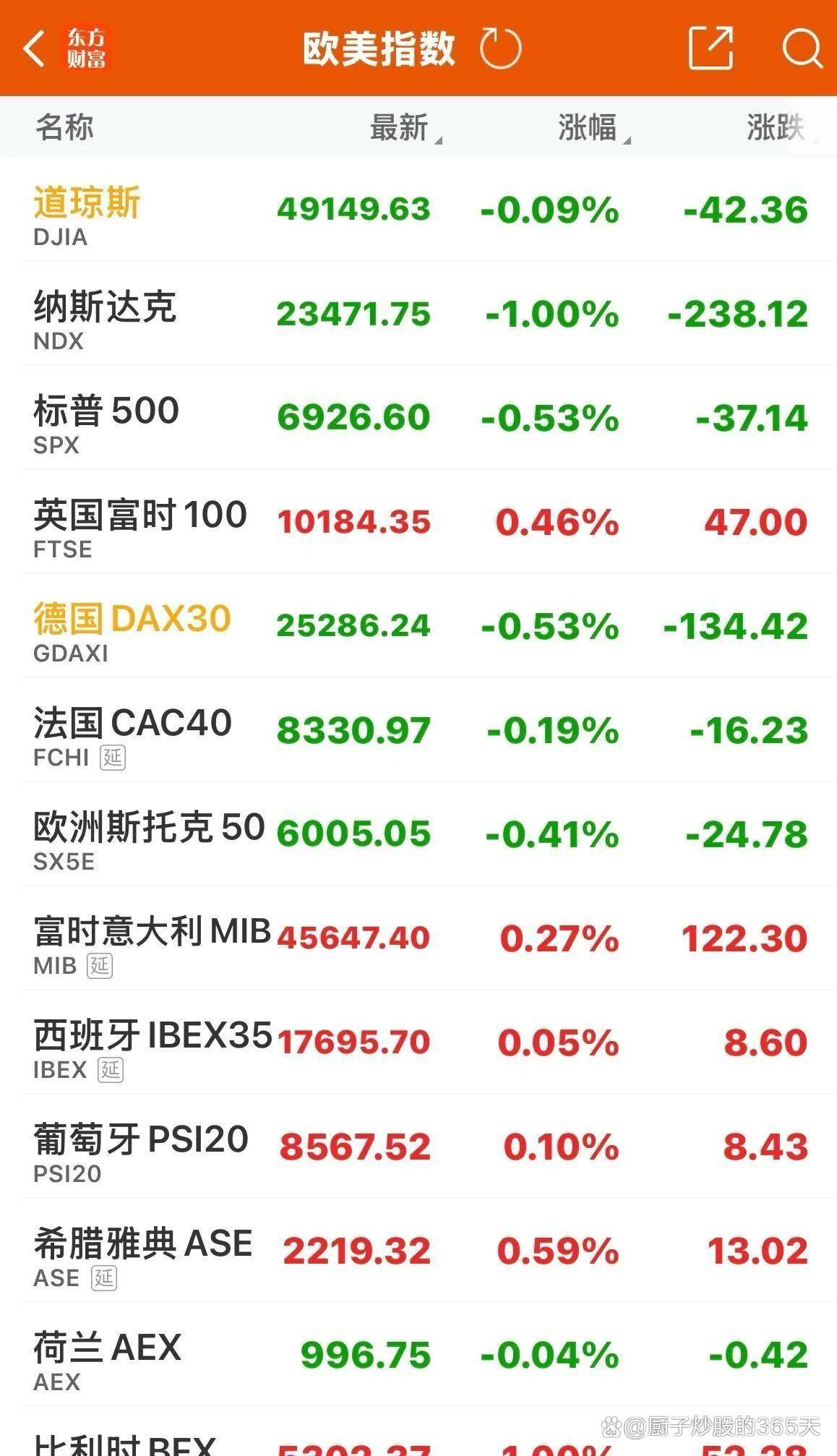
市场的下跌力量主要来自两个核心领域:银行和半导体。 银行股方面,富国银行以跳空低开3%开局,盘中毫无抵抗,收盘时跌幅扩大至4.61%。 美国银行 下跌3.71%,花旗集团下跌3.37%,就连巨头摩根大通也下跌了0.98%。 半导体板块同样惨淡,艾马克技术重挫6.31%,福尼克斯下跌5.87%,博通跌幅为4.13%,就连近期风光无限的英伟达也下跌了1.38%。 | く 気 | 欧美指数() | | 17 ( | | --- | --- | --- | --- | | 名称 | 最新 | 涨幅, | 浙 | | 道現新 | 49149.63 -0.09% -42.30 | | | | DJIA | | | | | 纳斯达完 | 23471.75 -1.00% -238.12 | | | | NDX | | | | | 标普 500 | 6926.60 -0.53% | | -3741 | | SPX | | | | | 英国富时100 10184.35 0.46% 47.00 | | | | | FTSE | | | | | 德国DAX30 25286.24 -0.53% -134.42 | | | | | GD ...
碳酸锂开年凶猛,冲破17万关口后向哪里去?
Tai Mei Ti A P P· 2026-01-15 11:26
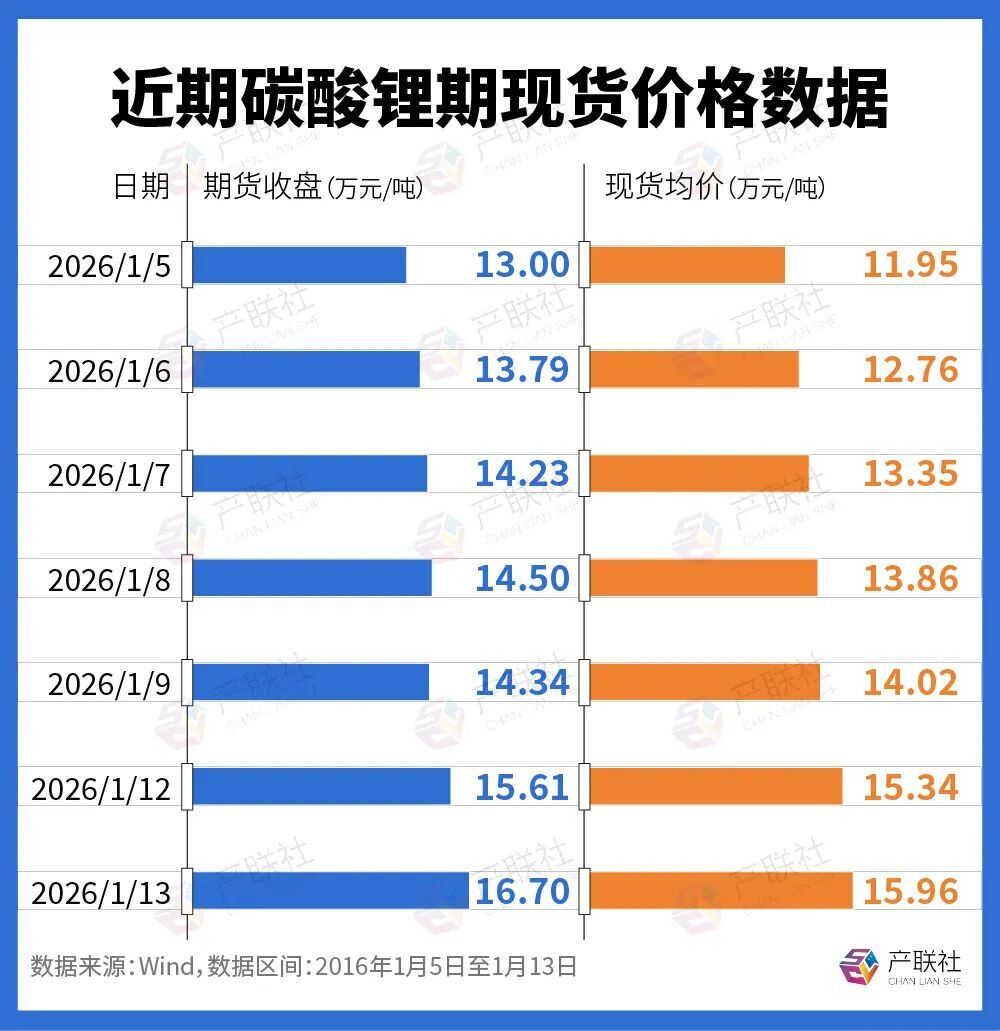
Core Viewpoint - The price of lithium carbonate futures has experienced a rapid increase, driven by multiple factors including policy adjustments, strong downstream demand, and supply disruptions, leading to significant impacts on the entire lithium battery supply chain [1][14]. Price Trends - Lithium carbonate futures prices rose from 130,000 yuan/ton on January 5, 2026, to a peak of 174,000 yuan/ton on January 13, 2026, marking a 33.8% increase within just eight trading days [1][3]. - From a low of 60,000 yuan/ton in the second half of 2025, prices have surged over 180% [3]. Policy Impact - The adjustment of the export tax rebate for battery products, effective April 1, 2026, from 9% to 6%, and its complete cancellation by January 1, 2027, has prompted downstream battery manufacturers to accelerate their procurement of lithium carbonate [6][14]. - This policy change is expected to create a concentrated demand surge before the tax adjustment, particularly benefiting the materials used in ternary batteries and energy storage [6]. Demand Growth - In 2025, China's retail sales of new energy passenger vehicles reached 12.809 million units, a year-on-year increase of 17.6%, with December exports soaring by 255% [8]. - Global sales of new energy vehicles are projected to reach 24.75 million units in 2026, continuing to drive demand for lithium battery materials [8]. - The new energy storage sector saw an addition of 34 GW/87 GWh in installed capacity in the first three quarters of 2025, reflecting a growth of over 65% [8]. Supply Disruptions - The cancellation of mining rights for 27 lithium mines in Yichun, Jiangxi, at the end of 2025 has raised concerns about short-term supply constraints, despite limited actual production capacity [9]. - Domestic lithium salt production decreased by 3.2% month-on-month in December 2025, coupled with maintenance at some enterprises, limiting supply growth [9]. Industry Chain Impact - The rise in lithium carbonate prices is expected to increase cost pressures on battery manufacturers, potentially leading to higher end-product prices for new energy vehicles [11]. - Midstream companies may enhance R&D investments to improve production efficiency and mitigate costs, while some smaller firms may face profit compression and exit the market [11]. - The overall market remains resilient, with consumer demand for new energy vehicles likely to continue growing despite price pressures [11]. Future Outlook - In the short term (Q1 2026), lithium carbonate prices are expected to remain high due to pre-export demand and post-holiday replenishment needs, with some forecasts suggesting prices could reach 180,000 to 200,000 yuan/ton [13]. - However, after the initial demand surge, prices may face downward pressure as inventory levels rise and production resumes [13]. - Long-term, the supply-demand gap is anticipated to widen due to slow new capacity releases, supporting a systemic increase in lithium prices [13].