生命科学

Search documents
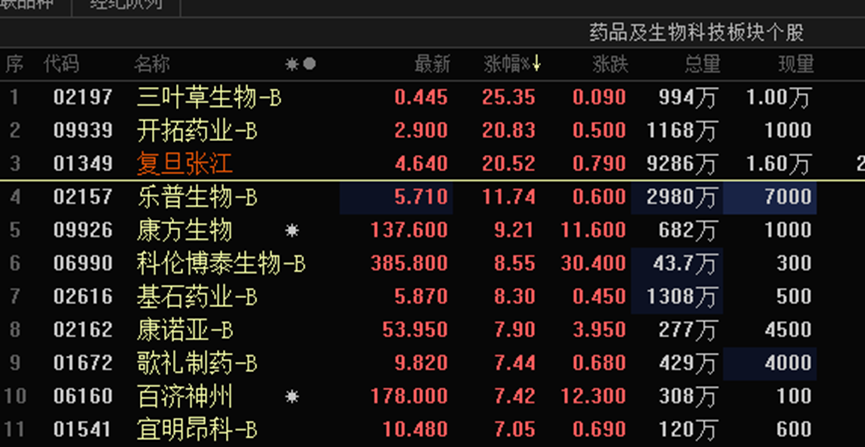
港股医药生物板块持续活跃 复旦张江等上涨超20%
Zheng Quan Shi Bao Wang· 2025-07-17 02:36
Group 1 - The National Healthcare Security Administration has initiated the 11th batch of centralized drug procurement, with 55 drug varieties included in the reporting range [1] - The procurement principles emphasize maintaining clinical stability, ensuring quality, preventing collusion, and avoiding excessive competition, with a focus on non-new drugs [1] - The current valuation of leading innovative drug companies in Hong Kong is attractive, with a forward 12-month price-to-sales ratio around 3 times, lower than the US average of 4 times [1] Group 2 - Domestic interest in innovative drugs has surged this year, with significant BD transactions and increased R&D investment from innovative drug companies [2] - The Hong Kong pharmaceutical and biotechnology sector has shown strength, with notable stock price increases for companies like 开拓药业 (over 20%) and 复旦张江 (over 20%) [2] - The CXO and upstream life sciences sectors are expected to stabilize and improve, presenting systemic recovery opportunities [2]


镜像世界、手机消失、人类爱上AI:“硅谷精神之父”凯文·凯利的2049预言
创业邦· 2025-07-14 09:57
Core Viewpoint - The article discusses Kevin Kelly's new book "2049: The Possibilities of the Next 10,000 Days," which envisions a hopeful future shaped by technology and human agency, emphasizing the importance of imagining and actively working towards a desirable future [5][10][12]. Group 1: Future Scenarios and Technology - Kelly's book outlines optimistic scenarios for the future, including advancements in transportation, employment, the internet, and entertainment, while also considering China's role in the global landscape [9][10]. - The concept of "scenario building" is introduced, where multiple potential futures are imagined, encouraging proactive steps to achieve a positive outcome [12][13]. - The dual nature of technology is highlighted, where it can bring both positive and negative impacts, necessitating a balanced perspective [6][15]. Group 2: Education and Learning - The future of education is discussed, emphasizing the need for lifelong learning and the integration of AI as a core component of the educational experience [17][19]. - Kelly suggests that the focus should shift from acquiring specific knowledge to mastering the ability to learn effectively, as future careers may not yet exist [20][22]. - The importance of teaching students how to ask good questions is emphasized, as this skill will be crucial in a world where AI can provide answers [20][22]. Group 3: AI and Content Creation - The article explores the impact of AI on the content industry, suggesting that while AI will generate content, human journalists will still be needed to manage and take responsibility for the output [26][28]. - Kelly predicts that the role of journalists will evolve, with a greater emphasis on accountability and quality assurance in the age of AI-generated content [28][29]. Group 4: The "Mirror World" Concept - Kelly introduces the idea of a "mirror world," where augmented reality (AR) and virtual reality (VR) technologies will blend the physical and digital realms, fundamentally changing how people interact with their environment [35][37]. - The realization of this mirror world depends on the affordability and efficiency of AI technologies integrated into smart glasses [40]. Group 5: Future Technologies - Five key technologies are identified for future exploration: robotics, autonomous driving, space travel, life sciences, and brain-computer interfaces, each with the potential to revolutionize various aspects of life [50][51]. - Kelly expresses skepticism about the widespread adoption of humanoid robots in households, suggesting they will first be utilized in controlled work environments [52]. - The future of autonomous vehicles is discussed, with the expectation that driving will become less common as AI takes over more driving tasks [56]. Group 6: Population Dynamics and Longevity - Kelly predicts a demographic shift towards an aging population, which will pose challenges for innovation and societal structure [68]. - The potential for advancements in life sciences, including vaccines for major diseases, is seen as a way to extend healthy lifespans, but the overall impact on societal dynamics remains complex [66][68]. Group 7: The Future of Silicon Valley - The article concludes with reflections on the future of Silicon Valley, suggesting that while established companies may decline, new startups will emerge, potentially changing the landscape of innovation and competition [74][75].

“硅谷精神之父”的2049预言
Hu Xiu· 2025-07-11 09:19
Core Insights - Kevin Kelly, known as K.K., discusses his new book "2049: The Possibilities of the Next 10,000 Days," which envisions a hopeful future 25 years from now, covering various aspects such as technology, society, and the role of China in the world [4][5][7][8]. Group 1: Future Scenarios and Predictions - K.K. emphasizes that the book is not about making predictions but constructing scenarios that explore optimistic futures, including advancements in AI and technology [10][11]. - The book aims to inspire readers to actively imagine and work towards a desirable future rather than passively waiting for it to happen [12][13]. - K.K. believes that technology is a double-edged sword, and while it can bring positive changes, it also poses challenges that need to be addressed [7][15]. Group 2: Education and Workforce - K.K. argues that education systems must adapt to a future where lifelong learning and AI assistance are the norms, emphasizing the importance of teaching students how to learn effectively [18][19]. - He suggests that the focus should be on developing the ability to ask good questions and optimize learning processes rather than acquiring specific knowledge or skills [19][21]. - K.K. reassures that AI will not replace jobs but will change the nature of work, encouraging graduates to pursue their passions rather than solely focusing on financial rewards [22][24]. Group 3: Media and Content Creation - K.K. asserts that the media industry will still require human journalists to manage AI-generated content and ensure accountability [26][30]. - He predicts that new forms of content creation will emerge, including immersive experiences that enhance the way news is reported [27][28]. - K.K. advises content creators to remain adaptable and willing to experiment with new formats and technologies to stay relevant in the evolving landscape [30][31]. Group 4: Technological Advancements - K.K. identifies five key technologies that will shape the future: robotics, autonomous driving, space exploration, life sciences, and brain-computer interfaces [49]. - He expresses skepticism about the widespread adoption of humanoid robots in households, suggesting they will first be used in controlled environments like warehouses [51][55]. - K.K. believes that while autonomous vehicles will become more prevalent, the need for human drivers will still exist, albeit in a more specialized capacity [57][58]. Group 5: The "Mirror World" Concept - K.K. introduces the idea of a "mirror world," where augmented reality will blend the physical and digital realms, facilitated by smart glasses [32][34]. - He outlines four layers of this mirror world, including virtual reality experiences, spatial digital avatars, and enhanced environments for AI interactions [35][36][39]. - K.K. predicts that the development of this mirror world will depend on the affordability and efficiency of AI technology [37][40]. Group 6: Future of Smart Glasses - K.K. anticipates that the competition in the smart glasses market will be fierce, with potential for Chinese companies to emerge as leaders due to their manufacturing advantages [42][46]. - He highlights the significant technical challenges that need to be overcome for smart glasses to become mainstream, including battery life and user experience [43][45]. - K.K. believes that the timeline for achieving widely accepted smart glasses could extend to 10-25 years [46]. Group 7: Societal Implications of AI and Longevity - K.K. discusses the potential for AI to contribute to longer, healthier lives, while also acknowledging the societal challenges posed by an aging population [70][71]. - He emphasizes the need for innovative solutions to address the demographic shifts, particularly in cultures with a high proportion of elderly individuals [72][73]. - K.K. expresses cautious optimism about advancements in life sciences, suggesting that breakthroughs in health technology could lead to significant improvements in quality of life [68][69].

回购,正在逼“死”一部分医疗企业
3 6 Ke· 2025-07-10 01:31
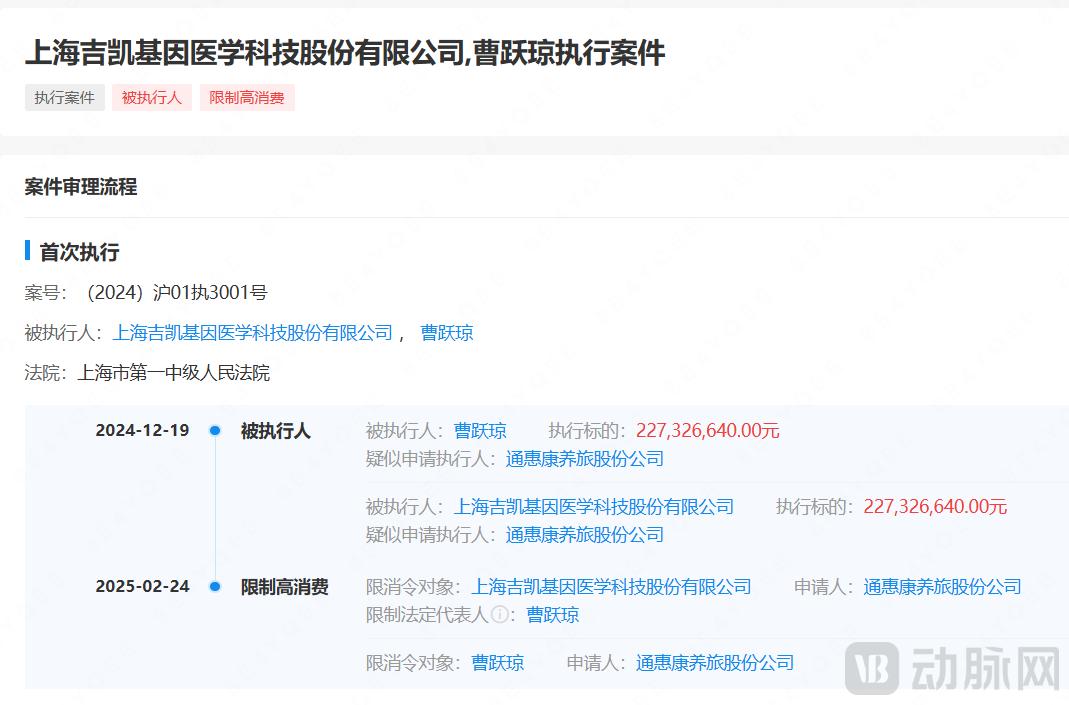
Core Viewpoint - The "buyback" issue has become a significant concern in the venture capital industry, particularly affecting medical companies, leading to a survival crisis for many of them [2][3]. Group 1: Impact of Buybacks on Medical Companies - Ji Kai Gene, led by scientist Cao Yueqiong, faced legal action due to an inability to repay 227 million yuan in buyback debt, highlighting the severe consequences of buyback obligations [2]. - Other medical companies, such as Si Microbiology and Zhiben Medical, have also suffered from buyback pressures, resulting in operational halts and bankruptcy [2][3]. - A report indicates that approximately 130,000 projects involving around 14,000 companies, many in the medical sector, will soon face exit pressures due to buyback obligations [2]. Group 2: Misuse of Buyback Agreements - The buyback mechanism, initially intended to protect investors, has been misused in China, with its application rate in private equity projects reaching 80% to 90%, creating a coercive financing environment [7][8]. - The original intent of buyback clauses was to ensure company growth without harming operations, but the reality often leads to aggressive legal actions against founders, resulting in a high percentage of them being labeled as dishonest executors [8][9]. - The average recovery rate for buyback cases entering judicial proceedings is only 6%, indicating that even with buyback clauses, investors may not recover their investments [11]. Group 3: Recommendations for Improvement - Medical companies should avoid external capital if they can sustain themselves, focusing on risk management and understanding their capabilities before entering buyback agreements [11][12]. - Investment institutions should adopt reasonable terms in buyback agreements, avoiding excessive demands that could jeopardize the company's survival [12][13]. - The industry should explore alternative exit strategies to alleviate the pressure caused by buybacks, as the current environment has led to a vicious cycle of financial distress [13][14].
佰金生命科学:股票暂停买卖
news flash· 2025-07-02 01:26
Group 1 - The company, Baijin Life Sciences, announced that its stock will be suspended from trading starting at 9 AM today [1]
医疗与消费周报:2025中国生命科学行业概-20250701
Huafu Securities· 2025-07-01 09:46
Core Insights - The report indicates a positive outlook for China's life sciences sector, driven by government support, continuous funding, and regulatory reforms that simplify approval processes and promote innovation [2][7][9] - The pharmaceutical index showed positive returns across six sub-sectors, reflecting strong market performance [2][17] - Significant growth is anticipated post-2024, with expectations of robust trading activities among life sciences companies [2][9] Industry Overview - From 2019 to 2023, revenue for large biopharmaceutical companies in China increased from $30 billion to $50 billion, achieving a compound annual growth rate (CAGR) of 10.1% [7] - The application of artificial intelligence and robotics is enhancing efficiency and cost savings in life sciences companies [8] - The surgical robot market in China is projected to grow at a CAGR of 38.4% from 2021 to 2032, driven by a large patient population and increasing use of robots in surgeries [8] Innovation and Regulatory Changes - The number of innovative drugs developed in mainland China rose from 9 in 2018 to 34 in 2023, while innovative medical devices increased from 21 to 61, with respective CAGRs of 30.5% and 23.8% [9] - In 2024, the National Medical Products Administration approved over 110 innovative drugs, marking an 11.1% year-on-year increase [9] - The external licensing transaction scale in China is expected to grow significantly, with a CAGR of 59.2% from 2020 to 2024, increasing from $605 million to $3.885 billion [16] Market Performance - The medical services and medical device sectors showed the highest weekly gains of +2.92% and +2.10%, respectively, while traditional Chinese medicine and chemical pharmaceuticals had lower gains of +1.29% and +0.71% [17] - The valuation levels for chemical pharmaceuticals and biological products were the highest at 80.49 times and 66.16 times, respectively [17] Technological Advancements - The DAMO GRAPE AI model, developed for early detection of gastric cancer, demonstrates a sensitivity of 85.1% and specificity of 96.8%, significantly outperforming human radiologists [29] - The model is being deployed in various provinces, enhancing early detection capabilities in the healthcare system [29] Policy Developments - The 2025 adjustment of the medical insurance directory includes commercial health insurance for innovative drugs, indicating a shift towards a more integrated healthcare financing system [30] - The implementation of "zero tariff" policies in Hainan Free Trade Port has led to significant imports of drugs and medical devices, totaling $1.14 billion [31]
能源价格高昂、全球不确定性持续,英国吸引FDI项目创十八年新低
Di Yi Cai Jing· 2025-06-27 11:29
Group 1 - High energy prices and ongoing global uncertainty have weakened the flow of foreign direct investment (FDI) globally [1][3] - In the fiscal year ending March 2023, the UK saw 1,375 FDI projects, a 12% decrease from the previous year, marking the lowest level in 18 years [1] - The IT and financial services sectors attracted the most FDI projects, but new project numbers declined by 2.3% and 5% respectively [1] Group 2 - The high cost of energy is a significant factor impacting investment interest, with UK industrial consumers facing an average electricity price of 25.8 pence per kWh, nearly 50% higher than France and Germany, and four times that of the US and Canada [3] - The UK manufacturing sector has seen a one-third decline in output for energy-intensive industries since early 2021, reaching the lowest level since 1990 [3] - A ten-year industrial development strategy by the UK government aims to reduce energy costs and optimize energy infrastructure to support key industries [3] Group 3 - Other European countries are also struggling to attract FDI, with a reported 58% drop in FDI inflows [4][5] - The UNCTAD's 2025 World Investment Report indicates a slight global FDI growth of 4% in 2024, but a real decline of 11% when excluding certain European financial transactions [5] - The EY's 2025 European Attractiveness Survey shows a 5% decrease in overall FDI projects in Europe, the lowest in nine years, with a 16% drop in jobs created by FDI [5]

唐劲草会长获聘出任2025福布斯中国科创人物评委
母基金研究中心· 2025-06-27 09:32
Group 1 - The 2025 Forbes China Science and Technology Innovation Person Selection has officially commenced, aiming to discover benchmark figures in China's science and technology innovation field and showcase their outstanding contributions [1][14] - The selection process is designed to identify business leaders, scientific pioneers, and cross-border innovators who reshape industry patterns with a global and disruptive vision [5][21] - The 2024 selection saw participating companies in the "Influence" category achieve a total market value exceeding 10 trillion yuan, with over 10,000 patents accumulated [5][6] Group 2 - In the past year, China's technology innovation has shown vigorous development, with leading enterprises making significant breakthroughs across various fields, including artificial intelligence, intelligent manufacturing, aerospace, and life sciences [6][9] - The official data indicates that China's R&D investment has increased from 1 trillion yuan in 2012 to 3.34 trillion yuan in 2023, with the R&D intensity (as a percentage of GDP) rising to 2.65% [11] - The selection will provide a platform for participants to achieve multi-point technology integration and business scenario traction within a global science and technology innovation ecosystem [12] Group 3 - The selection committee consists of a strong international panel of experts from various sectors, ensuring that the evaluation adheres to three core standards: originality of technological breakthroughs, leadership in industrial transformation, and global impact of innovation results [21] - The event aims to highlight the core forces driving China's science and technology innovation, including leading entrepreneurs, top scientists breaking technological boundaries, and cross-border elites promoting international collaboration [21]

贸易战转折点在何时?彭森:物极必反,最后还是要回到正确的道路上
Sou Hu Cai Jing· 2025-06-25 02:27
Core Viewpoint - The 16th Davos Forum highlighted the profound changes in the global economic, political, and security landscape, emphasizing the rise of trade protectionism and geopolitical conflicts impacting global supply chains and economic fragmentation [2]. Group 1: Economic Challenges and Responses - The disruption of supply chains is a global issue, necessitating China's contribution to stabilizing the entire industrial and supply chain [2]. - China should transform the pressures from trade wars into opportunities for industrial restructuring and upgrading [2]. - The need for traditional industries in China to undergo further transformation and upgrading over the next decade was emphasized [2]. Group 2: Strategic Emerging Industries - Seven major strategic emerging industries must achieve qualitative improvements to gradually dominate global markets, including new-generation information technology, biotechnology, new materials, and new energy vehicles [3]. - Future industries should receive targeted support and guidance, particularly in AI technology and life sciences [4]. Group 3: Global Economic Recovery - Many companies face difficulties in global expansion, which could significantly impact global economic recovery and growth [4]. - The turning point for the global economy may arise from significant setbacks, leading countries to return to correct economic paths [4]. - According to the theory of comparative advantage, countries should leverage their strengths to produce high-quality, cost-effective products, forming a beneficial global supply chain [4].

1.5万字质粒提取知识汇总,生命科学从业必备(文内福利,抢价值3999元大奖)
仪器信息网· 2025-06-20 07:48
Core Viewpoint - The article emphasizes the importance of plasmid extraction in life sciences, highlighting its relevance for professionals ranging from students to scientists and its critical role in molecular-level work [1][2]. Summary by Sections Essential Knowledge Points - A qualified plasmid consists of several key components, including the origin of replication (Ori), antibiotic resistance genes, multiple cloning sites (MCS), promoters/enhancers, terminators, and poly(A) signals [5][10][11][12]. - Understanding how to read plasmid maps is crucial, focusing on the location of Ori, selection markers, MCS, and the size of foreign DNA inserts [14][15][19][20]. - The principles of plasmid extraction involve separating plasmid DNA from chromosomal DNA and proteins, utilizing methods like alkaline lysis [21][24][26][28][29]. Common Methods for Plasmid Extraction - Plasmid extraction methods include alkaline lysis, boiling lysis, and silica membrane adsorption, each with specific advantages and disadvantages [37][39][40][45][46]. - Alkaline lysis is the most common method, effective for various E. coli strains, but can damage DNA if not performed correctly [41][43]. - Boiling lysis is quick and simple but may yield lower purity and stability [45]. - Silica membrane adsorption is widely used for its high purity and efficiency, though it can be more costly [46][47]. Considerations for Plasmid Extraction - Proper bacterial culture conditions are essential, including selecting appropriate strains and media, and controlling growth parameters [63][64]. - Careful handling during cell lysis and purification is necessary to avoid contamination and ensure high-quality plasmid DNA [65][66][67]. - Using nuclease-free materials and reagents is critical to prevent DNA degradation [68][69]. Methods to Improve Plasmid Extraction Concentration - Strategies to enhance plasmid DNA concentration include optimizing lysis conditions, ensuring complete enzymatic treatment, and increasing initial cell quantities [70][71][72][74]. - Proper sample storage and equipment maintenance are also important for achieving higher yields [75][77]. Small-Scale Plasmid Preparation - Plasmids are circular DNA molecules that can replicate independently within bacterial cells, making them ideal for gene cloning [78][79]. - The alkaline lysis method is commonly used for small-scale plasmid preparation, allowing for the removal of proteins and RNA [80][81]. - The extraction process typically involves bacterial growth, harvesting, lysis, and purification steps [82][83]. Common Issues and Solutions in Plasmid Extraction - Problems such as excessive bacterial culture volume or inadequate lysis can lead to low yields and purity, requiring adjustments in protocol [97][98].