
建筑工程

Search documents
*ST创兴:行政处罚落地 新实控人赋能公司经营趋势好转
Zheng Quan Shi Bao Wang· 2025-11-25 11:11
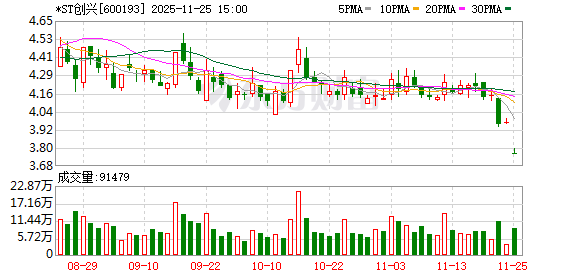
Core Viewpoint - *ST Chuangxing has received administrative regulatory measures from the Shanghai Securities Regulatory Bureau due to issues related to revenue cost recognition and inaccurate disclosure of related party transactions, but the company asserts that these measures will not affect its normal operations [2] Group 1: Regulatory Measures - The Shanghai Securities Regulatory Bureau issued a decision on November 24, indicating that *ST Chuangxing has issues with revenue cost recognition and related party transaction disclosures from 2022 to 2024 [2] - The company has committed to addressing the issues raised in the decision and will submit a written rectification report to the regulatory authority [2] - *ST Chuangxing emphasizes that the regulatory measures will not impact its normal production and management activities [2] Group 2: Capital Increases and Business Development - In July, *ST Chuangxing announced a capital increase for its subsidiary, Wenzhou Zhisheng Construction Engineering Co., Ltd., raising its registered capital from 1 million RMB to 50 million RMB [3] - In August, the company further increased the capital of its wholly-owned subsidiary, Ningbo Yuyi Construction Co., Ltd., from 10,000 RMB to 2.369 million RMB to support its operational needs [3] - The company signed a related party transaction framework agreement with Lio Group for construction and related services, estimating a total contract amount of no more than 20 million RMB over the next 12 months [3] Group 3: Financial Performance - In Q3, *ST Chuangxing reported a single-quarter revenue of 18.35 million RMB, a 49-fold increase compared to the first half of the year and a 121.25% increase year-on-year [4] - The company's net loss for the first three quarters of 2025 was 14.49 million RMB, a reduction of 516,000 RMB or 26.3% compared to the same period in 2024 [4] - Cash and cash equivalents reached 21.16 million RMB by the end of Q3, a 409.7% increase from the end of 2024 [4] Group 4: Market Outlook - Analysts believe that despite the cumulative revenue for the first three quarters being lower than the previous year, the explosive growth in Q3 indicates a reversal in the company's operational trend [5] - The ongoing acquisition of new orders and steady business expansion are expected to further improve the company's operational fundamentals [5]


GC CONSTRUCTION(01489.HK)上半年净亏损900万港元
Ge Long Hui· 2025-11-25 08:57
Core Viewpoint - GC CONSTRUCTION (01489.HK) reported a significant decline in mid-term performance for the six months ending September 30, 2024, with revenues of approximately HKD 155.9 million, a year-on-year decrease of 41.2% due to a cautious strategy leading to fewer projects being undertaken [1] Financial Performance - Revenue for the period was approximately HKD 155.9 million, down 41.2% year-on-year [1] - Gross profit was around HKD 800,000, reflecting a decrease of 72.3% compared to the previous year [1] - The company reported a loss attributable to shareholders of approximately HKD 9 million, with a basic loss per share of about HKD 0.009 [1] Project Pipeline - As of September 30, 2025, the company has 33 projects on hand, an increase from 32 projects as of March 31, 2025 [1] - The total value of projects in hand is approximately HKD 739.2 million, up from about HKD 343.3 million as of March 31, 2025 [1]
民营经济人士话高质量发展:科技创新是核心驱动力
Zhong Guo Xin Wen Wang· 2025-11-25 06:17
百年前,"状元"张謇在南通兴实业、办教育、建城镇,铸就"中国近代第一城"的传奇;百年后,一群来 自全国各地的"企二代"齐聚张謇企业家学院,展开一场关于企业家精神与高质量发展的时代对话。 11月18日至21日,由国家发展改革委联合中央统战部、全国工商联共同举办的新时代民营经济人士培育 赋能第六期培训班在南通举行,130余名年轻民营企业家代表参与学习。 上海港湾集团董事长首席助理鲍美萍坦言,"常听企业家感叹'做企业难',但我总建议他们来这里静心 学习。与张謇先生当年的创业艰辛相比,我们今天面对的困难其实不算什么。" "你若芬芳,蝴蝶自来。"谈及民营企业如何实现高质量发展,鲍美萍指出,科技创新是第一生产力,企 业必须牢牢掌握核心技术,才能让产品和服务在市场上立于不败之地。 上海港湾集团超九成业务布局海外,海外员工占比高达85%。"无论是海外还是国内市场,我们靠的都 是技术实力赢得项目、获得认可。"鲍美萍强调,科技创新离不开人才,公司研发团队专注于技术攻 关,其余事务均有专人服务,确保他们心无旁骛。 理想汽车相关负责人对此深表认同。自成立之初,理想汽车便将自主创新作为企业发展的核心引 擎。"掌握核心技术,是构建长期竞 ...

现恒建筑一度升88% 预计中期扭亏为盈至最多3000万港元
Zhi Tong Cai Jing· 2025-11-25 05:54
现恒建筑(01500)早盘一度升88%,截至发稿,涨51.43%,报0.106港元,成交额178.34万港元。 消息面上,现恒建筑发布公告,集团预期截至2025年9月30日止6个月期间的未经审核综合溢利约为2500 万港元至3000万港元,而上年度同期取得1720万港元未经审核综合亏损。主要由于(其中包括)集团期间 内承接项目的收益及毛利增加而上年度同期部份项目仍处于建筑的初步阶段。 ...
债市早报:央行开展万亿元MLF操作;资金面宽松无虞,债市整体窄幅震荡
Sou Hu Cai Jing· 2025-11-25 05:19
Group 1: Domestic News - President Xi Jinping and US President Trump had a phone call, emphasizing the importance of stable and positive Sino-US relations and the need for cooperation to benefit both nations and the world [2] - The People's Bank of China (PBOC) conducted a 1 trillion yuan MLF operation, marking the ninth consecutive month of increased net issuance, aligning with market expectations [2] Group 2: Bond Market Dynamics - The interbank market saw significant participation from private enterprises, with over 5.3 billion yuan in sci-tech bonds issued, representing more than 10% of the total issuance in the interbank market [3] - The bond market experienced narrow fluctuations, with the yield on the 10-year government bond slightly decreasing to 1.8120% [9] Group 3: Credit Bond Events - Several companies announced delays in bond repayments, including Fanghai Holdings, which postponed the repayment of approximately 3.56 billion USD in overseas notes until May 2026 [11] - Other companies, such as Fangyuan Real Estate and Xian Construction Group, also reported adjustments to repayment dates or overdue debts, indicating potential credit risks in the market [12][18] Group 4: Convertible Bonds - The convertible bond market saw a collective rise in major indices, with the market's trading volume increasing significantly to 618.80 billion yuan, indicating a rebound following previous declines [19] - Notable individual convertible bonds, such as Zhuomei Convertible Bond, experienced a surge of 57%, while others like Tianci Convertible Bond saw declines [19]


*ST创兴因年报虚假记载等问题被责令改正,董事长刘鹏等责任人被警示
Sou Hu Cai Jing· 2025-11-25 03:33
Core Viewpoint - *ST Chuangxing has received an administrative supervision decision from the China Securities Regulatory Commission due to violations related to revenue and cost misstatements in its construction and decoration business, as well as inaccurate disclosures of related party transactions [2] Group 1: Company Overview - *ST Chuangxing was established on August 25, 1996, with a registered capital of 425.373 million RMB, and is headquartered in Shanghai [2] - The main business activities include construction engineering, mobile information services, and computing power services [2] - The current chairman is Liu Peng, with a total of 68 employees and 19 affiliated companies [3] Group 2: Financial Performance - The company's operating revenues for 2022, 2023, 2024, and the first three quarters of 2025 were 264 million RMB, 130 million RMB, 84.013 million RMB, and 18.7286 million RMB, reflecting year-on-year declines of 61.81%, 50.58%, 35.53%, and 59.10% respectively [4] - The net profit attributable to the parent company for the same periods were 6.2248 million RMB, -21.1352 million RMB, -193 million RMB, and -14.485 million RMB, with year-on-year changes of -68.59%, -439.53%, -814.99%, and 26.27% respectively [4] - The asset-liability ratios for the same periods were 56.18%, 58.85%, 81.91%, and 83.76% [4] Group 3: Regulatory Actions - The company has committed to actively rectify the identified issues and enhance its operational and information disclosure management to prevent similar incidents in the future [2] - The administrative measures imposed will not affect the company's normal production and operational management activities [2]
从订单降速到清欠发力,“一揽子”化债第二阶段建筑企业信用风险怎么看?
Lian He Zi Xin· 2025-11-24 14:52
Report Industry Investment Rating - There is no information provided regarding the report industry investment rating. Core Viewpoints of the Report - Since the first stage of the current round of debt resolution, the orders and revenues of sample construction enterprises related to local government projects have decreased, and the collection and turnover efficiency have deteriorated. Especially, local construction state - owned enterprises with a high proportion of local government projects face relatively large short - term solvency pressure. - In the second stage of the current round of debt resolution, under the background of optimizing the central - local debt structure and establishing a long - term mechanism for preventing and resolving local government debt risks, it is expected that the overall demand structure of the construction industry will continue to adjust, and the credit levels of construction enterprises will diverge more significantly. [2] Summary According to Relevant Catalogs "One - Package" Debt Resolution Policy Review - Since 2014, China has promoted multiple rounds of local government debt resolution. The first round from 2014 - 2018 mainly included incorporating existing debts into budget management and "explicitizing" them through the issuance of replacement bonds, with a total issuance of about 12.2 trillion yuan of local government replacement bonds. The second round from 2019 - 2020 focused on the debts of counties and districts with weak fiscal strength, using replacement bonds to resolve the implicit debts of pilot counties, issuing 157.9 billion yuan of local government replacement bonds. The third round from 2020 - July 2023 used special refinancing bonds to replace local implicit debts, and some regions carried out pilot projects to eliminate implicit debts, with a cumulative issuance of 612.8 billion yuan of special refinancing bonds for implicit debt replacement and over 500 billion yuan issued in Beijing, Shanghai, and Guangdong for implicit debt elimination. - The current round of debt resolution started in July 2023. The central government put forward a "one - package debt resolution plan" with the core idea of "preserving the stock and controlling the increment". A series of policies such as "Document 35", "Document 47", "Document 14", "Document 134", and "Document 150" were successively introduced, covering aspects such as defining support policies, tightening bond - issuing policies for urban investment enterprises, controlling government investment projects, and guiding the orderly exit of financing platforms. - In 2024 - 2025, policies such as increasing the local government debt limit to replace existing implicit debts, emphasizing compliance in debt resolution, and clarifying the specific path for urban investment entities in key areas to exit the government financing platform were introduced. The policy framework involves four key dimensions: differential control of new financing, restriction of project investment scope and scale of urban investment platforms, specification of bond - issuing approval processes, and standardization of the mechanism for lifting financing restrictions after the exit of urban investment entities from the government financing platform. The debt resolution policy has shifted from emergency response to systematic governance. [4][5][8] Impact Path of the Current Round of Debt Resolution on Construction Enterprises Demand Side - Construction enterprises are highly dependent on local governments on the demand side. Local government - related projects, including infrastructure projects, urban renewal projects, and public service projects under the PPP model, have long accounted for a major share of construction enterprises' contract amounts. As of the end of June 2025, among 74 sample bond - issuing construction enterprises, 26 had an average proportion of local government - related projects in new contracts over the past three years of more than 70%, and from 2022 - 2024, the proportion of new local government - related contracts in the total new contracts of sample enterprises was between 36% - 43%. - The current round of debt resolution has led to a significant decline in construction demand in areas related to local government investment. It has imposed dual constraints of hierarchical control and policy regulation on local government investment, and squeezed the traditional infrastructure funding sources of local governments. In high - risk debt areas, new government investment projects are restricted, the approval cycle of some projects is extended, and some projects are suspended or postponed. For PPP projects, relevant policies have restricted project promotion. In addition, the decline in land transfer income, the adjustment of the use structure of special bonds, and the restart of land reserve special bonds have all affected traditional infrastructure funding. [12][13] Cash Flow Side - Construction enterprises are highly dependent on local governments on the cash flow side. Their accounts receivable are highly concentrated in the government and urban investment platforms, and they often need to advance a large amount of funds for government - related projects. The PPP projects carried out with local governments over the past decade have also occupied a significant amount of funds, and the repayment progress of PPP project financing is related to the government's payment rhythm. - The current round of debt resolution has led to a decline in the payment ability of local governments and the liquidity pressure of urban investment platforms, which has directly affected the collection of construction enterprises' project funds. The settlement and collection cycles of local government - related projects have been extended, and the proportion of progress payment has decreased significantly. In 2024, the issuance scale of urban investment bonds decreased by 17.02% year - on - year to 4.914114 trillion yuan, and the net financing turned from a net inflow of 1.144279 trillion yuan in 2023 to a net repayment of 333.294 billion yuan. In the first half of 2025, the net financing of urban investment bonds was - 178.050 billion yuan, with the net repayment scale expanding significantly year - on - year and narrowing slightly quarter - on - quarter. [16][17] Performance of the Construction Industry in the First Stage of the Current Round of Debt Resolution Newly Signed Contracts - In 2023, the newly signed contract amounts of sample enterprises in key provinces and cities related to local government projects decreased significantly due to debt resolution policies. In 2024, the overall newly signed contracts of sample enterprises related to local government projects decreased significantly, with central enterprises experiencing the largest decline and local state - owned enterprises the smallest decline. However, due to business composition, the year - on - year decline in the total newly signed contract amounts of sample central enterprises was lower than that of local state - owned enterprises. From 2023 - 2024, the year - on - year growth rates of the total newly signed contract amounts of sample enterprises related to local government projects were 2.74% and - 9.58% respectively, significantly lower than the year - on - year growth rates of the total newly signed contract amounts of sample enterprises (8.14% and - 1.07% respectively). [19][20] Revenue - In 2024, the revenues of sample construction state - owned central and local enterprises with a relatively high proportion of local government projects decreased significantly. For sample construction central enterprises from 2023 - 2024, the higher the proportion of local government projects, the lower the year - on - year growth rate of construction revenue, and the revenue growth rate decreased significantly in 2024 compared with the previous year. For sample construction local state - owned enterprises, the median year - on - year growth rates of revenues of sample enterprises with a proportion of local government projects over 70% ranked the highest and lowest in 2023 and 2024 respectively. Sample enterprises with a proportion of local government projects between 30% - 50% were mainly engaged in housing construction and infrastructure, and their construction revenues in 2024 decreased by more than 10% due to the decline in local government demand and real estate demand. [21][22] Accounts Receivable Turnover and Aging - Since 2022, the turnover speed of accounts receivable of sample construction enterprises has slowed down overall, and the turnover efficiency of local state - owned enterprises decreased significantly in 2024 due to debt resolution. From 2022 - 2024, the turnover efficiency of each group of sample enterprises showed a continuous decline, and the turnover rate of central enterprises was generally better than that of local state - owned enterprises. For sample construction central enterprises, the group with a proportion of local government projects in the range of 30 - 50% had the best performance in turnover efficiency indicators. For sample construction local state - owned enterprises, the turnover rate of the two groups with a proportion of local government projects over 50% decreased significantly, and the turnover rates of the two groups with a proportion of local government projects over 70% and less than 30% were weak in 2024, mainly affected by local debt resolution, the contraction of housing construction demand, and the lag in revenue and collection. - The proportion of accounts receivable within one year of sample central enterprises generally showed an upward trend, while that of sample local state - owned enterprises decreased overall, and the high - proportion group of local government projects decreased significantly in 2024. [23][24] Cash Flow - The sample enterprises as a whole maintained a net cash inflow from operating activities, but the coverage ratio of sales cash collection to current liabilities continued to weaken. Local state - owned enterprises with a high proportion of local government projects faced relatively large short - term solvency pressure. From 2022 - 2024, the operating cash inflow of the group of sample local state - owned enterprises with a proportion of local government projects greater than 70% continued to decline, but except for a few samples, the operating cash flow as a whole remained in a net inflow state. The coverage ratio of sales cash collection to current liabilities of sample construction enterprises continued to weaken, especially for local state - owned enterprises with a high proportion of local government projects, indicating a weakening of their collection situation as a whole. [27][28] Impact Assessment of the Policies in the Second Stage of the Current Round of Debt Resolution on the Construction Industry - The "6 - trillion - yuan" plan is expected to alleviate the squeezing of infrastructure investment funds by debt resolution. However, the decline in government fund revenues and the progress of the issuance and implementation of new special bonds have affected the growth rate of local infrastructure investment. The implementation of subsequent policies is expected to accelerate. The "6 + 4+ 2 - trillion - yuan" debt resolution plan approved in November 2024 is estimated to reduce the total implicit debt of local governments to be digested from 14.3 trillion yuan at the end of 2023 to 2.3 trillion yuan, saving about 600 billion yuan in interest expenses over five years. Although the total amount of newly issued local government special bonds in 2025 increased, the issuance progress of special bonds other than those related to debt resolution was relatively slow, and the decline in land transfer income also affected local infrastructure investment. The cumulative year - on - year growth rate of narrow - sense infrastructure investment in the first three quarters of 2025 slowed down to 1.10%, lower than 4.10% in the same period of 2024. - Under the background of optimizing the central - local debt structure and establishing a long - term mechanism for preventing and resolving local government debt risks, the central government has increased leverage, and the demand structure of the construction industry has continued to adjust. Although local government investment has been affected by debt resolution, the central government has emphasized the use of a more proactive fiscal policy. The issuance of treasury bonds and ultra - long - term special treasury bonds will support large - scale standardized projects, especially "two major" projects (major strategic implementation and key - area security capacity building). It is expected that future infrastructure investment will be more targeted at areas in line with "high - quality development" and "high social benefits", such as "two major" and new infrastructure fields. - As of the end of June 2025, the effect of the arrears - clearing action on alleviating the cash flow of bond - issuing construction enterprises was not significant. It is expected that the arrears - clearing action will accelerate in 2026, which will be beneficial to improving the cash return of the construction industry. A series of policies on arrears - clearing have been introduced, and the scope of key arrears - clearing entities has been defined. The total amount of arrears of four types of units involved in financial arrears - clearing is about 1.8 trillion yuan. Although the cash flow performance of sample construction enterprises has improved to some extent in the first half of 2025, the overall effect of arrears - clearing on cash flow is not significant. In the long run, the accounts receivable of construction state - owned central and local enterprises are expected to be recovered, and their financial statements are expected to improve. [30][34][37] Outlook on the Credit Change Trend of Construction Enterprises under the Background of Debt Resolution - The credit levels of construction enterprises will face differentiation under the background of debt resolution, and enterprises with policy resources, technological barriers, diversified and international layouts, and financial robustness are expected to dominate the market. - Enterprises with complete qualifications and diversified construction capabilities are expected to survive the cycle and develop in the long term. They can reduce risks in a single market and better cope with policy regulation and market uncertainties, and are expected to find new growth points in the field of new - quality productivity. - Enterprises with stable operation and finance are more likely to survive in the downward period of the industry. The traditional high - leverage and large - scale advance payment operation model in the industry is facing challenges, and enterprises with financial stability, sufficient capital reserves, or stable financing channels can better cope with risks and seize market opportunities. - The competition pattern will further differentiate, and regional risk differences will continue. Leading construction central enterprises are expected to maintain their competitive advantages, and state - owned construction enterprises in regions with strong financial resources or with strong competitiveness in niche markets will have better development prospects. Construction central enterprises have advantages in project acquisition, financing costs, and channels, and are expected to participate in major projects in countries and regions along the "Belt and Road". Local state - owned enterprises mainly engaged in housing construction and traditional infrastructure in regions with weak economic strength and high debt pressure will face business contraction pressure, while those in economically active and financially strong regions and enterprises with advantages in new fields will have good development opportunities. [41][42]
11月24日这些公告有看头
Di Yi Cai Jing Zi Xun· 2025-11-24 13:42
Major Announcements - ST Xifa plans to acquire the remaining 50% stake in Lhasa Beer from Carlsberg for cash, aiming for 100% ownership, but the transaction is still in the planning stage and the company is undergoing pre-restructuring [3] - ST Sansheng has received a total of 254 million yuan from all restructuring investors, with the funds paid by Hebei Jiheng Group and its designated financial investors [4] - Zhongshui Fishery's stock price has deviated by over 100% in the last 7 trading days, prompting a risk warning, although the company states that its operations are normal [5] - Dongzhu Ecology is involved in litigation with a claimed amount of 552 million yuan, with a total of 16 undisclosed lawsuits amounting to 630 million yuan [6] - Zhongding Co. has become a supplier for liquid cooling systems, with an estimated project value of 15 million yuan [7] - Petty Co. plans to repurchase shares worth between 50 million to 70 million yuan at a price not exceeding 26 yuan per share [8] - Huiding Technology has repurchased 0.026% of its shares, totaling 957.28 million yuan [9] Shareholding Changes - Jianghuai Micro's major shareholder reduced their stake by 1.23%, bringing their holding down to 15.40% [10] - Lege Co.'s controlling shareholder plans to increase their stake by 40 million to 80 million yuan, with a maximum purchase price of 25 yuan per share [11] Major Contracts - Tongji Technology's subsidiary won a construction project in Xi'an worth 866 million yuan [12] - Guangdong Construction signed a contract for an energy storage project valued at 1.888 billion yuan, with a construction period of 120 days [13] - Jinguang Electric is a candidate for a procurement project from the State Grid, with a bid amount of 32.32 million yuan [14] - Wansheng Intelligent is a candidate for a State Grid project with an estimated bid amount of 42.99 million yuan [16]
正利控股发布中期业绩,纯利288.9万港元 同比减少23.27%
Zhi Tong Cai Jing· 2025-11-24 13:25
Core Viewpoint - Zhengli Holdings (03728) reported a revenue of HKD 792 million for the six months ending September 30, 2025, representing a year-on-year increase of 38.16%. However, net profit decreased by 23.27% to HKD 2.889 million, with earnings per share at HKD 0.29 [1] Revenue Performance - The increase in revenue is primarily attributed to a significant rise in construction services [1]
北新路桥:关于股票交易异常波动的公告
Zheng Quan Ri Bao Zhi Sheng· 2025-11-24 13:06
Core Viewpoint - The stock of Xinjiang Beixin Road and Bridge Group Co., Ltd. experienced a significant price fluctuation, with a cumulative increase of over 20% in closing prices over two consecutive trading days [1] Summary by Relevant Sections - **Stock Performance** The company's stock price increased by more than 20% over two trading days, specifically on November 21 and November 24, 2025 [1] - **Regulatory Compliance** The price fluctuation is classified as an abnormal trading situation according to the Shenzhen Stock Exchange trading rules, indicating that the company and its controlling shareholder have no undisclosed significant matters related to the company [1]
