
可再生能源

Search documents
第四次中法能源对话成功举办
国家能源局· 2025-05-20 06:32
为配合第十次中法高级别经济财金对话, 2025年5月16日,中国国家能源局副局长任京东与法国 能源与气候总司总司长苏菲·穆隆在法国巴黎共同主持召开第四次中法能源对话。 本次对话聚焦能源安全与绿色转型,双方就核电、可再生能源、绿色电力证书、氢能和储能等议题 深入交换意见,探讨深化中法清洁能源领域合作。双方均强调,中法在能源领域具有广泛共同利益 和广阔合作空间,愿继续秉持相互尊重、互利共赢的原则,加强政策交流和务实合作,为全球能源 转型进程贡献中法智慧与方案,为中法双边关系持续健康发展不断注入新动能。 国家能源局有关司负责同志,中核集团、中国华能、国家电投、中广核及法国电力、道达尔等十余 家中法能源企业负责人,共计约 40名代表参加对话 。 ...


欧盟能否对俄罗斯能源“断舍离”
Jing Ji Ri Bao· 2025-05-19 22:02
Core Viewpoint - The European Union (EU) has announced a roadmap to completely eliminate its dependence on Russian energy by the end of 2027, aiming to reshape Europe's energy security and green future, although the plan faces significant uncertainties due to differing member state opinions, high economic costs, and turbulent international energy markets [1][4]. Group 1: Plan Overview - The EU's plan focuses on three main areas: cutting off Russian energy imports, transitioning energy structures, and enhancing market regulation to weaken Russia's influence [2]. - The EU aims to ban new natural gas contracts by the end of 2025 and terminate existing long-term agreements by the end of 2027, alongside measures to combat "shadow fleets" of oil tankers [2]. - The EU plans to enforce the use of green hydrogen in steel and chemical industries to reduce natural gas demand and accelerate the deployment of renewable energy [2]. Group 2: Support and Challenges - The EU's confidence stems from ongoing renewable energy projects like the North Sea wind triangle and Mediterranean solar corridor, with the U.S. currently supplying 45% of the EU's LNG imports [2]. - However, the plan faces challenges, including significant disparities in member states' energy needs, particularly from Eastern European countries like Hungary and Slovakia, which heavily rely on Russian energy [3]. - Rising energy costs could undermine the EU's economic competitiveness, leading to the risk of energy-intensive industries relocating to Asia and North America [3]. Group 3: Potential Outcomes - If successful, the EU could achieve a transition away from fossil fuels, but this may come at the cost of industrial hollowing and diminished public welfare [4]. - Conversely, failure could exacerbate economic recession and deepen geopolitical tensions, highlighting the EU's struggle amid crises related to geopolitics, climate, and economy [4].
施罗德投资Gopi Mirchandan:人工智能、机器人发展对算力需求大幅提升,云计算、芯片迎来投资机遇
Xin Lang Cai Jing· 2025-05-19 06:32
Group 1 - The Shenzhen Stock Exchange hosted the 2025 Global Investor Conference, focusing on new productive forces and investment opportunities in China, particularly in the context of open innovation [1] - Gopi Mirchandan highlighted significant advancements in artificial intelligence and robotics in China, with companies like DeepSeek leading the way, reshaping the innovation landscape and closing the gap with Western AI developments [1] - The open AI models are expected to reduce computing costs, enabling more Chinese companies to develop AI products and services, enhancing internal efficiency and customer experience [1] Group 2 - The development of general generative AI and robotics is crucial for the semiconductor and IT industries, as these technologies can perform human-like tasks, improving productivity and reducing labor costs [3] - There is an anticipated surge in demand for cloud computing power to support the operations of AI agents and robots, benefiting hardware and chip providers [3] - Ensuring the economic feasibility of computing power is essential for maintaining progress and development in these sectors [3] Group 3 - Schroders has established a sustainable infrastructure team in China, focusing on renewable energy expertise to combine global knowledge with local needs [4] - The company aims to assist foreign enterprises in achieving supply chain decarbonization and net-zero goals in China, leveraging its role as a "super connector" [4] - Schroders announced a strategy for renewable energy in China, including over $100 million investment from Apple, aiming to provide long-term stable cash flows for institutional investors while generating positive environmental impacts [4]

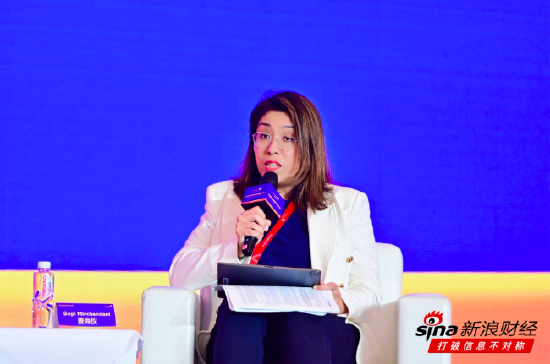
施罗德投资Gopi Mirchandan:中国AI创新引领全球,部分领域已超越西方,云计算、芯片迎来重大机遇
Xin Lang Cai Jing· 2025-05-19 06:25
Group 1 - The Shenzhen Stock Exchange hosted the 2025 Global Investor Conference, highlighting China's advancements in AI, robotics, and green energy, reshaping the global industrial landscape through technological innovation and sustainable development [1] - Gopi Mirchandan emphasized that Chinese AI technology has achieved leapfrog development, with local companies like DeepSeek significantly reducing reliance on high-end chips and hardware for AI training, opening up opportunities for more Chinese enterprises to develop AI products and services [2] - The widespread adoption of generative AI is enhancing operational efficiency and user experience for businesses, while also establishing China's global competitiveness in AI capital investment [2] Group 2 - Schroders is accelerating its green infrastructure strategy in China, having formed a dedicated team to integrate European renewable energy expertise with local experience, focusing on renewable energy development [3] - In April, Schroders launched a renewable energy fund exceeding $100 million in collaboration with Apple, aimed at providing institutional investors with stable long-term cash flows while promoting supply chain decarbonization [3] - The energy transition in China holds significant value potential, and Schroders aims to act as a "super connector" between international capital and China's green infrastructure needs, aligning with global ESG investment trends [3]
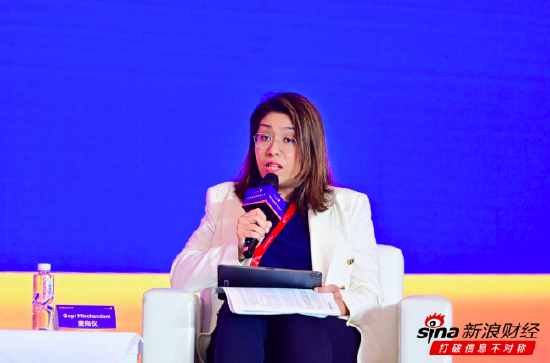
安太资本Irene Goh:科技革命新周期 技术应用加速与新兴市场机遇凸显
Xin Lang Cai Jing· 2025-05-19 04:26
Core Insights - The Shenzhen Stock Exchange hosted the 2025 Global Investor Conference, focusing on "New Quality Productivity: Investment Opportunities in China - Open Innovation in the Shenzhen Market" [1] - The rise of new quality productivity in China is occurring against the backdrop of a reshaped global economic landscape, characterized by both competition and cooperation, which will impact global asset allocation and investment decisions [1] Group 1 - The conference featured keynote speeches, roundtable discussions, and company roadshows to showcase the investment value of Chinese assets and the A-share market [1] - Irene Goh from Aberdeen Investment highlighted that the current technological revolution is marked by faster adoption rates and broader coverage compared to the internet revolution, with a 33% increase in technology adoption speed over the past 20 years [2] - Investors are encouraged to adopt a more dynamic and agile approach to capture opportunities, necessitating more time spent on research and opportunity identification [2] Group 2 - China's clean energy sector is particularly noteworthy, with Chinese investments accounting for half of the global total in this area, showcasing a significant advantage in renewable energy infrastructure [2] - This trend is evident not only in production capacity, with China responsible for 70% of global solar panel production and 60% of electric vehicle battery capacity, but also in technology application and industry chain collaboration [2]
李昇董事长会见气候组织首席执行官海伦·克拉克森一行
Sou Hu Cai Jing· 2025-05-19 03:22
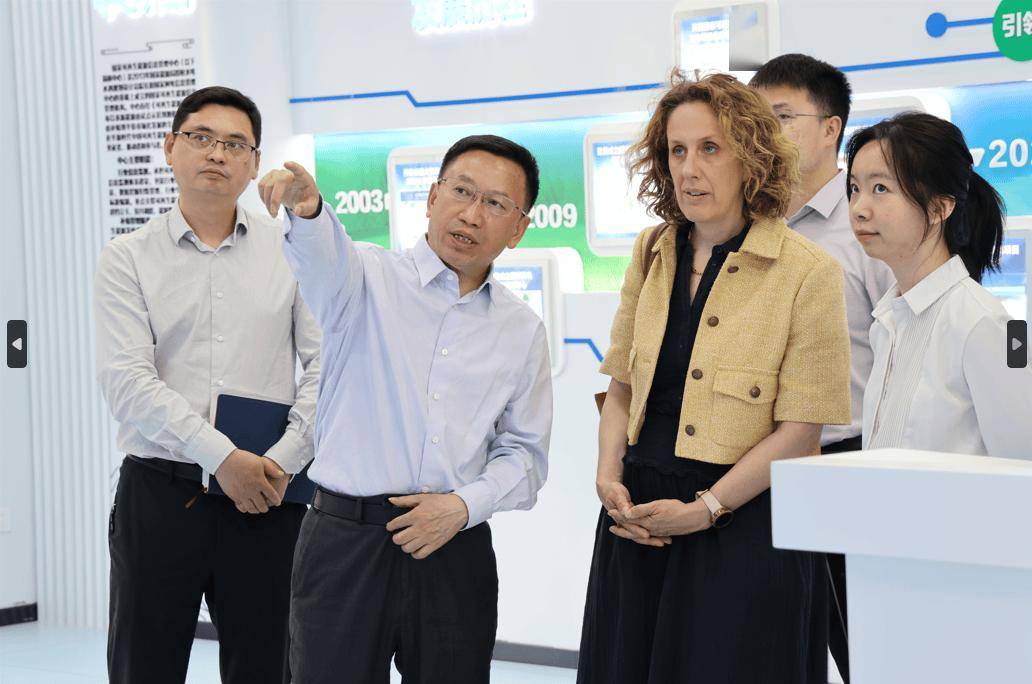
Core Viewpoint - The meeting between the company and the CEO of the Climate Organization focused on the development of renewable energy in China, the green certificate system, and potential business cooperation [1][2]. Group 1: Green Certificate System - The company showcased the green certificate service hall, highlighting the history of the National Renewable Energy Information Management Center and the green certificate trading platform, emphasizing the transparency and competitiveness of the Chinese green certificate system [1]. - The green certificate market in China is rapidly developing, with a projected trading volume exceeding 446 million in 2024, surpassing all previous transactions before 2023, and nearly 200 million traded in the first quarter of this year [2]. Group 2: International Cooperation - The CEO of the Climate Organization expressed gratitude for the company's efforts in promoting the unconditional recognition of Chinese green certificates under the RE100 initiative and acknowledged the importance of the green certificate market for achieving 100% renewable energy goals [4]. - The company anticipates that the full recognition of Chinese green certificates by RE100 in 2025 will significantly impact the market, leading to increased procurement from multinational and supply chain companies [2].
中拉合作跑出“加速度”(国际论道)
Ren Min Ri Bao Hai Wai Ban· 2025-05-18 22:02
中国—拉美和加勒比国家共同体论坛第四届部长级会议5月13日在北京举行。本届会议正值中拉论坛正 式运行10周年之际,吸引了国际社会广泛关注。多家外媒发文积极评价中拉论坛10年来取得的丰硕成果 以及本届会议达成的重要共识,称赞中拉务实合作造福世界。 五大工程是推动中拉合作的务实举措 2015年,中拉论坛成立。10年来,在元首外交战略引领和双方精心培育下,中拉论坛已经从一棵稚嫩幼 苗长成挺拔大树。 德国之声网站近日报道称,多位拉美国家领导人和官员到访北京参加本届会议。近年来,中国加强了与 拉美国家的合作。多个拉美国家加入了共建"一带一路"倡议,中国是巴西、秘鲁和智利等国的最大贸易 伙伴。 阿根廷《第十二页报》发文指出,中拉论坛10年来结出累累硕果。对中国而言,地理距离不是障碍,中 拉始终平等互信,铸就了团结协作、友好互助的深厚情谊。目前,中国正致力于深化这条南南合作共赢 之路。 本届会议期间,中方宣布愿同拉方携手启动"团结工程""发展工程""文明工程""和平工程""民心工程"五 大工程,共同落实三大全球倡议。会议通过多份成果文件,涉及双方在科技创新、经贸投资、人工智 图为在厄瓜多尔首都基多,人们体验宇通双源无轨电车 ...

中国优质绿色产能助力世界能源转型
Jing Ji Ri Bao· 2025-05-18 21:56
Core Insights - The International Renewable Energy Agency reports that global renewable energy installed capacity will reach a historic high in 2024, with China accounting for 60% of the global increase in renewable energy generation [1] - Despite this growth, there remains a significant gap compared to the targets set by the COP28, highlighting the importance of China's green industry in the global energy transition [1] Group 1: Global Renewable Energy Demand - The demand for green capacity is rapidly increasing globally, with renewable energy becoming the primary means for many countries to achieve carbon neutrality [1] - In 2024, 80% of the global power generation increase will be met through renewable energy and nuclear power, with the combined share exceeding 40% for the first time [1] - To meet green transition goals, global renewable energy installed capacity needs to grow by 16.6% annually until 2030, particularly due to significant potential demand from developing countries [1] Group 2: Technological Advancements and Green Products - Continuous technological advancements are driving the development of the green industry, with innovations such as smart grids and carbon capture storage expanding new fields [2] - New green products and services, like electric vehicles and solar panels, are stimulating global green consumer demand due to their energy-saving and resource-conserving benefits [2] - Climate change remains a global challenge, and as long as there is room for carbon reduction, global green capacity is considered insufficient rather than excessive [2] Group 3: China's Role in Global Energy Transition - China's high-quality green capacity is not only enhancing its energy security but also contributing significantly to a diversified global energy supply structure [2] - In 2023, China's overseas supply of "new three samples" products, including electric vehicles, lithium batteries, and photovoltaic products, surpassed 1 trillion yuan for the first time [2] - In 2024, exports of wind turbine units from China increased by 71.9%, while photovoltaic products have consistently exceeded 200 billion yuan in exports for four consecutive years [2] Group 4: Cost Reduction and Supply Chain Optimization - China's rapid iteration of new energy technologies has led to significant cost reductions in green products, with the average cost of wind and solar projects dropping over 60% and 80% respectively in the past decade [3] - Chinese companies are localizing their operations in export countries, enhancing the global green industry supply chain through international cooperation and resource sharing [3] - Examples include CATL establishing a battery factory in Hungary and various photovoltaic companies setting up production bases in Southeast Asia [3] Group 5: Global Trade Dynamics - China's high-quality green capacity has become a core driving force in the global energy transition, demonstrating a strong commitment to addressing climate change [4] - In contrast, some developed countries are imposing trade barriers that hinder the global circulation of green technologies and products, which contradicts the goal of sustainable development [4]
2024年促进有效的能源转型报告
Sou Hu Cai Jing· 2025-05-18 04:23
Energy Transition Status and Challenges - The global energy transition has made progress in sustainability, with renewable energy capacity increasing significantly, showing a 50% growth in 2023 compared to 2022. China accounted for a substantial portion of this growth in solar photovoltaic installations, matching the total global capacity added in 2022 [1] - Energy security risks have intensified due to geopolitical tensions, particularly in Europe, which has shifted from Russian gas to coal, resulting in increased carbon emissions. Additionally, energy equity remains a critical issue, with 770 million people still lacking access to electricity [1] - The momentum for energy transition has slowed, with the global Energy Transition Index (ETI) showing a compound annual growth rate of only 0.22% over the past three years, down from 0.83% in 2021 [1] Key Dimension Performance - System Performance: Sustainability scores have increased by 6% over the past decade, while equity scores have decreased by 1%, influenced by energy price volatility and subsidy policies. High-income countries excel in energy security but lag in sustainability due to high energy intensity [2] - Transition Readiness: Key drivers include policy frameworks, infrastructure, and human capital. Emerging economies like China and South Korea excel in renewable energy infrastructure, but innovation growth is slowing. In 2023, global clean energy investments reached $1.8 trillion, with 90% concentrated in developed economies and China, leaving emerging markets with less than 15% [2] Regional and National Disparities - Nordic countries such as Sweden and Denmark lead in ETI rankings due to diversified energy structures and effective policies. Emerging economies like China and Brazil are advancing in renewable energy but still rely heavily on coal, leading to higher emissions [3] - Sub-Saharan Africa has made significant strides in energy equity, improving access, but lacks international investment and infrastructure support. Oil-exporting countries perform well in security and equity but score low in sustainability, necessitating reinvestment in energy transition [3] Future Pathways and Actions - The report advocates for "tailored transition pathways" that consider regional, income, and resource-specific strategies. Europe should enhance grid upgrades and renewable deployment, while Asia needs to address energy equity and coal dependency. Africa should leverage distributed renewable energy to improve accessibility [4] - Policy and technology recommendations include implementing carbon pricing, reducing fossil fuel subsidies, and promoting AI and digital technologies to enhance energy system efficiency, potentially saving over $500 billion annually for energy companies [5] - Global collaboration is essential, with developed nations urged to provide financing and technology transfer to developing countries. By 2030, clean energy investments in emerging markets need to increase from $270 billion to $1.6 trillion to meet global climate goals [5] Summary - The global energy transition is at a critical juncture, with notable advancements in renewable energy and policy frameworks. However, challenges such as geopolitical tensions, uneven funding distribution, and technological gaps persist. The report emphasizes the need for customized strategies, international cooperation, and technological innovation to accelerate the transition towards an equitable, secure, and sustainable energy system, aiming for net-zero emissions by 2050 [6]

国家主权财富基金国际论坛CEO邓肯·邦菲尔德答每经问:中国已被证明是一个非常好的主权财富基金投资市场
Mei Ri Jing Ji Xin Wen· 2025-05-18 01:52
Group 1 - The core theme of the 2025 Tsinghua Wudaokou Global Financial Forum is "Sharing the Future: Building an Open and Inclusive Economic and Financial System" [1] - Sovereign wealth funds are increasingly attracted to investments in hard assets, particularly in digital technology and server hosting, due to their favorable return characteristics [1] - China has proven to be an ideal investment market for many sovereign wealth funds, which have previously invested in major companies like Tencent and Alibaba [1][2] Group 2 - Sovereign wealth funds are seeking long-term investments both geographically and within specific industries and companies, maintaining a positive outlook on the Chinese market unless there are significant changes in trade regulations [2] - Renewable technologies and climate-related energy investments, such as batteries, power grids, wind farms, and solar power, are key areas of interest for sovereign wealth funds, especially in the context of high inflation [2] - The "Santiago Principles," established in 2008, aim to enhance the understanding and credibility of sovereign wealth funds, promoting capital flow, compliance with host country regulations, and transparent governance [2][3] Group 3 - The "Santiago Principles" serve as a self-regulatory framework for sovereign wealth funds, reflecting a voluntary self-regulation model due to their sovereign nature [3] - Sovereign wealth funds have become a mature component of the investment industry, recognized for their good reputation and significant asset ownership [3] - The self-regulation model and the Santiago Principles are expected to continue playing a vital role in the governance of sovereign wealth funds [3]