文旅

Search documents
【数说经济】城乡联动做活乡村消费大文章
Sou Hu Cai Jing· 2025-12-18 23:56
Group 1 - The core viewpoint of the articles highlights the growing significance of rural consumption in China, driven by increased farmer income and improved social security, leading to a notable rise in consumption capabilities and willingness [2][3] - Rural consumption has shown a consistent growth rate higher than urban consumption, with rural retail sales increasing by 2.8% year-on-year compared to urban sales growth of 1.0% in November [2] - By the end of 2024, China's rural population is projected to be approximately 465 million, representing 33% of the total population, indicating a substantial market potential [2] Group 2 - Digital transformation is injecting strong momentum into rural consumption, with mobile phones becoming essential tools and live streaming emerging as a new method for agricultural promotion [3] - The rural market is experiencing a shift from survival-based consumption to development-oriented consumption, with increasing demand for appliances, smartphones, and services in culture, tourism, education, and health [2][3] - There are significant regional differences in rural consumption, with eastern coastal areas nearing urban consumption levels while central and western regions still have considerable room for growth [3] Group 3 - To unlock rural consumption potential, it is essential to strengthen county economies and develop local industries, creating more job opportunities that allow farmers to remain connected to their communities [4] - Enhancing the rural consumption environment is critical, with over 2,100 county-level logistics centers and more than 340,000 village-level logistics service stations established during the 14th Five-Year Plan [5] - Cultural elements from rural areas can be transformed into unique consumer attractions, such as traditional festivals and local crafts, which can drive consumption when creatively marketed [5]


吉林邀全球旅行商组织游客体验冰雪文旅多元魅力
Zhong Guo Xin Wen Wang· 2025-12-18 23:44
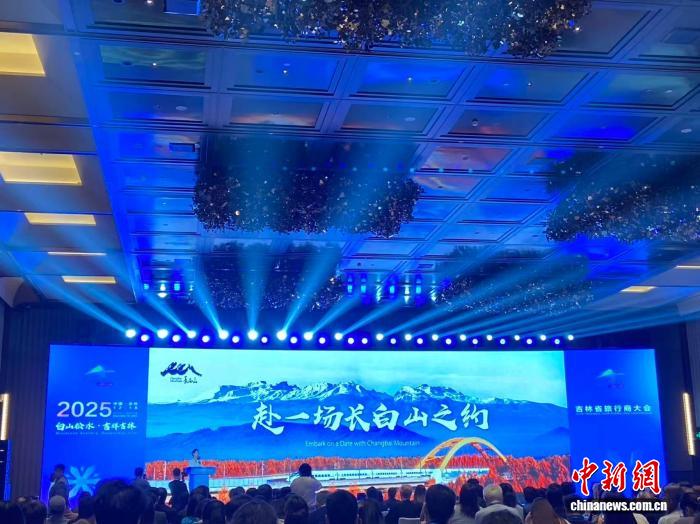
携程集团发布了《2025吉林省冰雪季旅游数据洞察》,基于携程数据解析吉林省冰雪旅游核心发展态势 与趋势。Tripadvisor猫途鹰(中国)现场发布联合吉林打造的《吉林省旅游玩法指南》。 会上,长白山、吉林市、延边州三地进行了文旅主题推介,从交通升级、产品创新、体验提质等维度, 立体展现吉林省冰雪文旅的多元魅力与发展潜力。多家国际知名旅游企业与吉林省本地文旅企业集中签 约,达成一系列深度合作共识。(完) 来源:中国新闻网 编辑:董文博 吉林邀全球旅行商组织游客体验冰雪文旅多元魅力 中新网长春12月18日电 (金乔)18日,2025吉林省旅行商大会在长春举行,来自32个国家和地区的近300 位国际旅行商及机构代表、联合国旅游组织大使、全国重点文旅企业负责人等与会,深化入境游市场对 接。 吉林省地处东北亚地理几何中心,形成了全季全域的旅游发展新格局,游客数量与出游花费连续多年保 持两位数增长。当下,吉林省正全力推动冰雪全产业链发展,邀请海内外旅行商、旅游企业及头部OTA 平台深化线路联动、项目建设、业态创新等全方位合作。 当天,吉林省文化和旅游厅发布了4条以长春为枢纽的冰雪主题旅游线路,介绍了吉林省文旅核心优势 ...
国际消费中心城市商圈焕新升级
Sou Hu Cai Jing· 2025-12-18 23:15
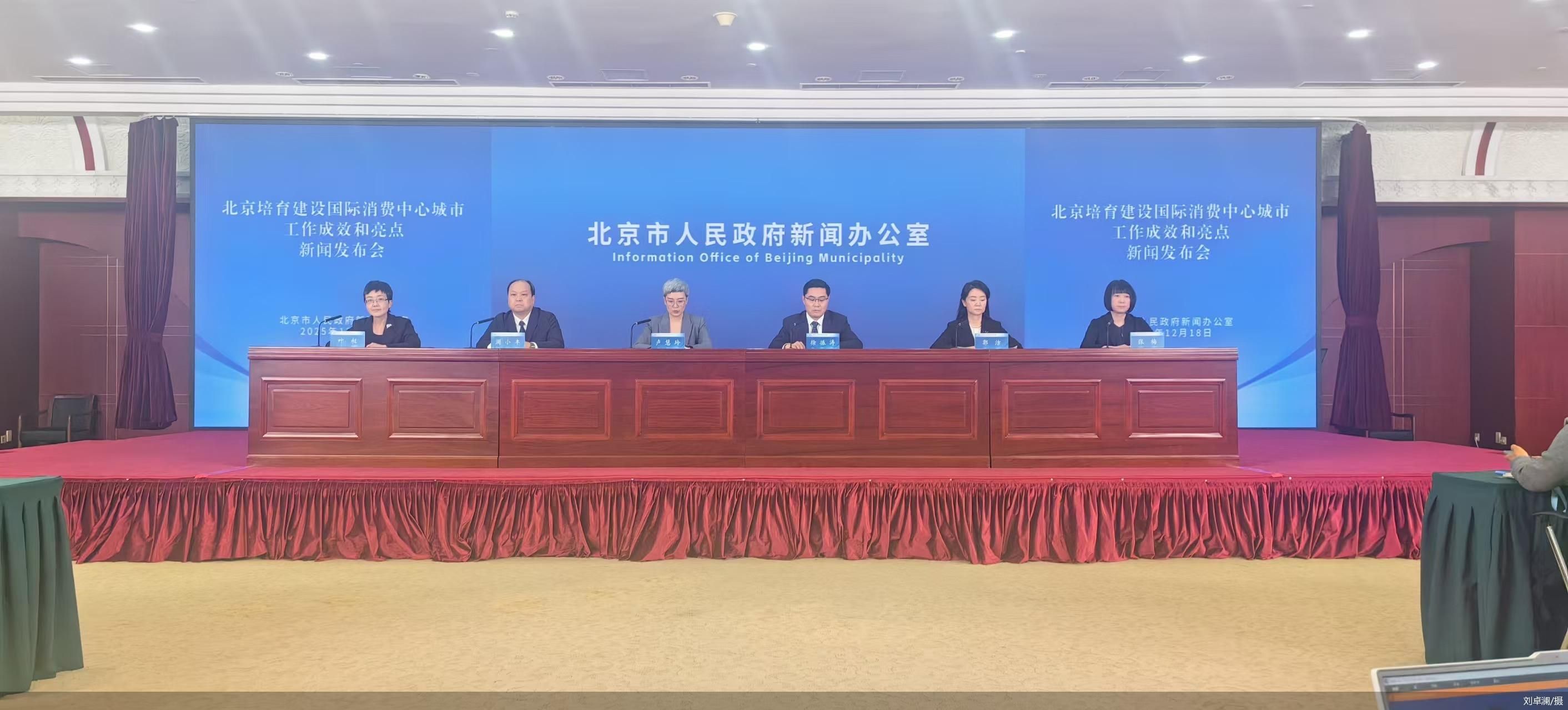
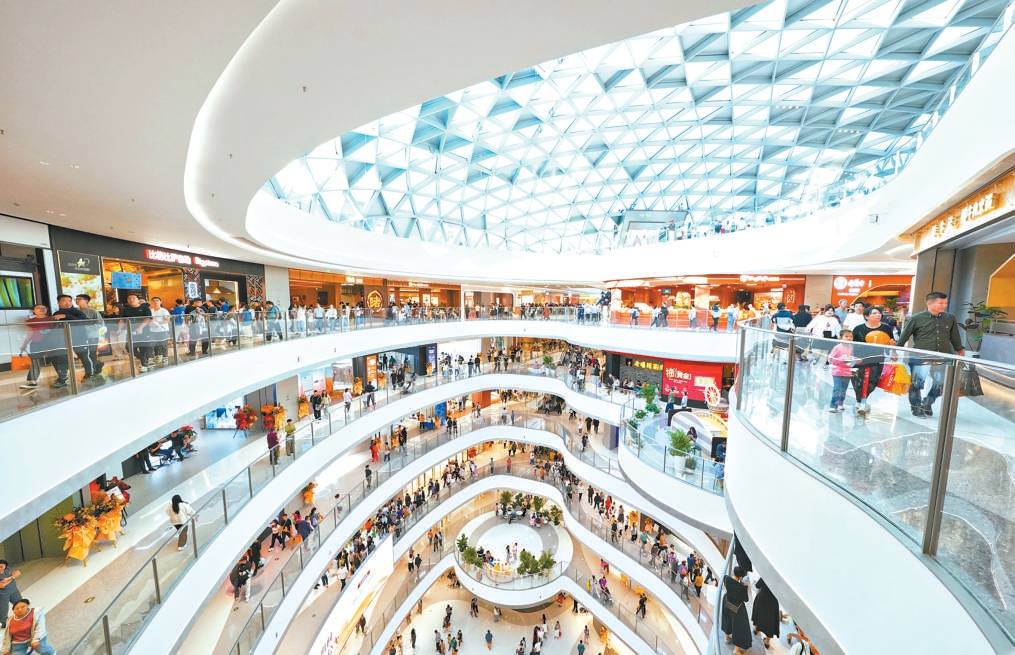
本报记者 杨天悦 位于城市副中心的首开通州万象汇人气十足,为国际消费中心城市建设锦上添花。 本报记者 方非摄(资料照片) 昨天,北京培育建设国际消费中心城市工作成效和亮点新闻发布会召开。记者获悉,近年来,北京首发经济潜能不断释放,商圈消费持续焕新 升级,文商旅体展加速融合发展,成为推动国际消费中心城市建设的重要增长极。 过去六年培育12个全球首发中心 工厂、园区、博物馆"变身"沉浸式课堂,探访汽车工厂、参观智能产线、打卡工业博物馆,成为深受游客喜爱的"硬核体验";亮马河、通州北运 河、朝阳坝河等相继实现通航,滨水旅游品质不断提升;大运河文化带、西山永定河文化带等精品旅游线路不断吸引游客前往;300家"北京网 红打卡地"和20家"北京微度假"目的地影响力日渐提升…… 近年来,本市旅游产业加速发展,旅游产品已从过去单一的打卡、观光模式,转变为融合体验、休闲、消费于一体的综合沉浸式生活方式。多 元文旅新业态的出现,推动着旅游产业不断升级,文旅消费已成为推动国际消费中心城市建设的重要增长极。 "来北京看演出"成为潮流消费新名片,为文旅消费注入新动能。数据显示,今年以来,全市大型精品演出数量达241场,全市累计认定演艺 ...
绿色颜值金色产值共生——云南西双版纳扩大高水平对外开放
Jing Ji Ri Bao· 2025-12-18 22:11
热带雨林与产业园区同框,绿色颜值与金色产值共生。近年来,云南省西双版纳州依托自身丰富的热区 资源,立足沿边开放高地,紧紧依托中老铁路"黄金通道",不断扩大高水平对外开放,把资源优势转化 为经济优势,把区位优势升级为开放胜势。 西双版纳州委书记朱家伟表示,西双版纳走出了一条"生态立州、产业富州、开放活州、人才兴州、文 化润州、创新强州、依法治州"的发展之路。近3年全州经营主体净增8.4万户,增长55%,民营经济占 地区生产总值比重达64.1%。 产业更优动能强 "西双版纳有近500万亩橡胶种植量,每40年要进行更新,依托这一资源,利用胶树及其小径材、枝丫材 等材料生产高端刨花板,对西双版纳州深化橡胶木资源的高效综合利用具有重要意义。"该公司董事长 叶光华说。 天然橡胶是西双版纳的传统支柱产业。据统计,2024年,西双版纳州天然橡胶种植面积占全国的 27.8%,目前全州涉胶企业134家,形成了从种植、加工到制品生产、木材综合利用全链条体系。今年 前三季度,橡胶全产业链实现产值205.74亿元,同比增长22.17%,其中综合加工产值107.11亿元,增长 26%,附加值持续提高。 橡胶是西双版纳推动传统产业向价值链 ...
内蒙古外贸行广州启动 全球并购基金与中关村支持产业赋能
Sou Hu Cai Jing· 2025-12-18 18:15
Core Viewpoint - The event held in Guangzhou on December 17 aimed to promote trade and economic cooperation between Inner Mongolia and international markets, showcasing Inner Mongolia's industrial clusters and development opportunities [1][3]. Group 1: Event Overview - The trade and economic negotiation event was organized by the China Council for the Promotion of International Trade and the Inner Mongolia government, with participation from representatives of various countries including the USA, Singapore, Spain, and others [1]. - The event gathered hundreds of political and business representatives to discuss collaboration and opportunities for open trade [1][3]. Group 2: Strategic Agreements - A tripartite agreement was signed between the Global M&A Fund, Zhongguancun Development Investment Co., and Inner Mongolia Tianyi International Cultural Trade Group to establish a long-term strategic partnership focused on industrial collaboration between Guangdong-Hong Kong-Macao Greater Bay Area and Inner Mongolia [4][6]. - The agreement aims to create a "Guangdong-Mongolia Industrial Collaborative Innovation Center" to attract enterprises from the Greater Bay Area to set up regional headquarters and R&D centers in Inner Mongolia [6]. Group 3: Empowering Local Enterprises - Regular events such as "Inner Mongolia Quality Products Promotion Conference" and "Supply Chain Matching Meetings" will be organized to connect Inner Mongolia enterprises with buyers and large corporations in the Greater Bay Area [7]. - The collaboration will provide comprehensive capital services for high-quality Inner Mongolia enterprises planning financing, mergers, or listings [7]. Group 4: Innovation and Productivity - The partnership will facilitate the establishment of "Guangdong-Mongolia Collaborative Innovation Industrial Parks" to support the production and regional business of Greater Bay Area enterprises in Inner Mongolia [8]. - A "New Quality Productivity Empowerment Plan" will be implemented to enhance the technological innovation capabilities and market competitiveness of local enterprises through expert consultations and training [8]. Group 5: Investment Fund Initiatives - The three parties are exploring the establishment of a market-oriented investment fund focused on "Guangdong-Mongolia Industrial Collaboration," targeting high-growth local enterprises in Inner Mongolia and modern service projects [9]. Group 6: Support for Cultural and Tourism Industries - The Global M&A Fund's chairman emphasized the importance of capital and mechanisms in commercializing and internationalizing Inner Mongolia's cultural and tourism resources, aligning with the "14th Five-Year Plan" to develop new quality productivity [11]. - The use of Real Data Assets (RDA) through blockchain technology is proposed to transform resources into marketable assets, providing new financing pathways for cultural tourism projects [13]. Group 7: Broader Collaborative Actions - Three major collaborative actions were proposed, including an "Asset Going Global Plan" to connect Inner Mongolia's quality cultural tourism projects with global capital, a "Platform Co-construction Action" to establish a promotion center in Hong Kong, and a "Fund Interaction Action" to support the upgrade and internationalization of Inner Mongolia's cultural tourism and agricultural industries [15].

两部门:抓紧出台“三新”试点资金管理办法
Zheng Quan Shi Bao· 2025-12-18 18:09
商务部服贸司司长孔德军此前指出,开展消费"三新"试点城市建设主要有两方面考虑:一方面是丰富高 品质服务供给,另一方面是发挥消费联动作用。"消费新业态新模式新场景往往具有较强辐射性和跨区 域性,一个成功的消费场景,既能够促进本地文旅、交通、住宿等关联产业发展,又能带动周边消 费。"孔德军称。 本次会议进一步指出,开展"三新"试点工作是落实《提振消费专项行动方案》、扩大优质商品和服务供 给的重要举措,有关地方商务主管部门要深刻认识开展"三新"试点的重要意义,准确把握试点工作定 位,坚持促消费与惠民生相结合,当好消费体制机制改革的排头兵,以改革、开放、创新激发新业态新 模式新场景发展活力,打造消费创新发展的新高地,培育消费能级提升的新引擎。 会议强调,各试点城市要进一步完善实施方案,建立健全工作推进和保障机制,抓紧出台试点资金(项 目)管理办法,紧扣"三新"试点支持方向,精心筛选支持项目,强化项目动态管理。加强宣传引导,引 导社会各界积极参与,增强试点支持项目的消费拉动作用。试点城市商务主管部门要发挥好牵头协调作 用,推动解决试点面临的堵点痛点问题。 近日,商务部会同财政部召开"三新"试点(即"消费新业态新模式新场 ...
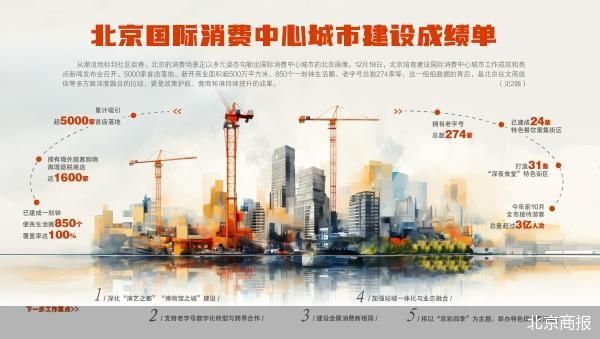
北京交出国际消费中心城市成绩单
Bei Jing Shang Bao· 2025-12-18 16:00
Core Insights - Beijing is transforming into an international consumption center, showcasing diverse consumption scenarios and significant achievements in various sectors, including commerce, culture, and tourism [1][3] Group 1: Consumption Growth - Since 2019, Beijing has attracted over 5,000 first stores, establishing 12 global launch centers, with Chaoyang District leading by introducing nearly 2,800 first stores [3] - The "first store economy" has become a key driver of consumption in Beijing, with notable local brands like Pop Mart and Xiao Xian Stewed [3] - In the cultural and tourism sector, from January to October this year, Beijing received over 300 million tourists, with tourism spending exceeding 600 billion yuan, marking year-on-year increases of 5.4% and 7.2% respectively [4] Group 2: Infrastructure and Convenience - By November 2025, Beijing has established 850 community convenience circles, achieving 100% coverage, with Chaoyang District leading in the number of circles [4] - The city has developed over 500 themed routes and 300 "internet celebrity check-in spots," enhancing nighttime consumption diversity [4] Group 3: Policy and Regulatory Environment - Beijing has implemented reforms to improve the business environment, including online registration for foreign enterprises and a bilingual guide for foreign investment [7] - The city has upgraded its enterprise credit information system and introduced measures to restore good credit for over 270,000 businesses [7][8] - Policies aimed at boosting cultural and tourism consumption have been introduced, with over 88 quality projects rewarded, directly stimulating nearly 1 billion yuan in related consumption [8] Group 4: Future Development Plans - Beijing aims to enhance its international consumption center status by focusing on service quality, product innovation, and multi-dimensional integration [9][10] - The city will support the development of new consumption scenarios and improve the international consumption environment, including enhancing payment services and providing multi-language support in key areas [10][11]
“犒赏经济”崛起:情绪买单撬动千亿消费新蓝海
Jin Rong Jie· 2025-12-18 13:53
Core Insights - The article defines "Reward Economy" as a new engine for driving domestic demand and expanding consumption, particularly among the younger demographic, with the collectible toy industry projected to reach a market size of 110.1 billion yuan by 2026 [1] Economic New Concept - "Reward Economy" is characterized by consumers purchasing non-essential goods or experiences to fulfill psychological needs and achieve immediate gratification, differing fundamentally from the "lipstick effect" which is a reaction to economic downturns [2] Market New Forces - The collectible toy industry exemplifies the "Reward Economy," experiencing explosive growth and evolving beyond the single "blind box" model into a multi-billion yuan "emotional business" [4] - As of April 2025, there are over 50,000 collectible toy-related companies in China, with leading brand Pop Mart expected to surpass 10 billion yuan in revenue for the first time in 2024 [4][5] Consumer New Portrait - Young consumers are reshaping their spending habits under the "Reward Economy," balancing frugality in essential goods with willingness to spend on emotionally resonant items like collectible toys and experiences [6] - Female consumers are increasingly driving demand, especially in artistic collectible toys, while over 60% of consumers spend no more than 5,000 yuan on collectibles [6] Industry New Changes - The rise of the "Reward Economy" is fostering innovation and cross-industry integration, leading to new business models like "Emotion+" that extend beyond collectibles into beauty and travel sectors [7] - Cultural consumption is being revitalized, with significant spending in areas like domestic cultural products and traditional crafts, contributing to the growth of the cultural industry [7] Cultural and Tourism New Scenes - The "Reward Economy" is invigorating the cultural and tourism sectors, emphasizing immersive experiences and personalized satisfaction, with local governments promoting this trend through various events [8] - Innovative models like "ticket root economy" are connecting tourism with consumption, enhancing the value of experiences through discounts and integrated services [8] Future New Directions - The future of the "Reward Economy" presents challenges, including the risk of over-commercialization and the need for sustainable product and IP development [9] - There is potential for deeper integration with technology, such as AI in design and personalized recommendations, which could enhance consumer interaction and experience [9] Regulatory New Guidance - The healthy development of the "Reward Economy" requires regulatory frameworks to promote rational consumption and address issues like quality and pricing in the market [10] - Companies are encouraged to focus on high-quality products that provide emotional value rather than merely selling experiences, fostering a market based on genuine consumer connection [10]

北京消费版图上新,这事成“流量密码”!西单大悦城跻身“全球首发中心”…
Bei Jing Shang Bao· 2025-12-18 13:50
Core Insights - Beijing is intensifying efforts to develop into an international consumption center city, showcasing diverse consumption scenarios and significant achievements in various sectors [1][8] Group 1: Economic Performance - Since 2019, Beijing has attracted over 5,000 first stores, establishing 12 global launch centers, with Chaoyang District leading by introducing nearly 2,800 first stores [2] - The "first store economy" has become a key driver of consumption in Beijing, with notable contributions from local brands like Pop Mart and Xiao Xian Stewed [2] Group 2: Tourism and Cultural Consumption - From January to October this year, Beijing received over 300 million tourists, generating over 600 billion yuan in tourism spending, marking year-on-year increases of 5.4% and 7.2% respectively [3] - The city has recognized over 100 new performance spaces and hosted over 50,000 commercial performances, attracting more than 12 million viewers and generating ticket sales of 4.5 billion yuan [3] Group 3: Community Convenience - By November 2025, Beijing aims to establish 850 community convenience circles, achieving 100% coverage, with Chaoyang District leading in the number of circles [4] - The city’s overall index for building an international consumption center is projected to reach 109.9 in 2024, reflecting a 19.6 increase since the end of 2020 [4] Group 4: Business Environment - Beijing has implemented reforms to enhance the business environment, including a streamlined registration process for foreign enterprises and the introduction of a bilingual registration guide [5][6] - The city has also upgraded its enterprise credit information system and launched initiatives to restore good credit for over 270,000 businesses [5] Group 5: Policy Support for Cultural and Tourism Consumption - The city has introduced reward measures for new cultural and tourism consumption projects, distributing over 62 million yuan in rewards and stimulating nearly 1 billion yuan in related consumption [7] - The "Beijing Gift" brand has expanded to include 141 quality enterprises and 932 unique products, becoming a significant cultural and tourism consumption hotspot [7] Group 6: Future Development Plans - Beijing plans to focus on service quality, product innovation, and ecological optimization to further enhance its international consumption center status [8][9] - The city will support the development of new consumption scenarios and improve the international consumption environment, including enhancing payment services and tax refund processes for foreign visitors [9][10]

消费活力持续释放 北京建设国际消费中心城市交出“新答卷”
Bei Jing Shang Bao· 2025-12-18 13:50
Core Insights - Beijing is evolving into an international consumption center, showcasing diverse consumption scenarios through significant achievements in various sectors such as culture, commerce, tourism, and sports [1][3] Group 1: Consumption Growth - Since 2019, over 5,000 first stores have opened in Beijing, with notable global launch centers established, particularly in the Chaoyang District, which has introduced nearly 2,800 first stores [3] - The tourism sector has seen over 300 million visitors and spending exceeding 600 billion yuan from January to October this year, marking a year-on-year growth of 5.4% and 7.2% respectively [4] - The city has recognized over 100 new performance spaces and hosted more than 50,000 commercial performances, attracting over 12 million attendees and generating ticket sales of 4.5 billion yuan [4] Group 2: Community and Convenience - By November 2025, Beijing has established 850 community convenience circles, achieving 100% coverage, with Chaoyang leading with 170 circles [5] - The city has improved its commercial environment, with a total index of 109.9 for the international consumption center city construction, reflecting a 19.6 increase since the end of 2020 [5] Group 3: Policy and Regulatory Environment - Beijing has implemented reforms to enhance the business environment, including online registration for foreign enterprises and a bilingual registration guide to facilitate cross-border investment [7] - The city has upgraded its enterprise credit information system and introduced mechanisms for credit restoration, benefiting over 270,000 businesses [7][8] - Policies aimed at boosting cultural and tourism consumption have led to the issuance of over 62 million yuan in rewards for quality projects, stimulating nearly 1 billion yuan in related consumption [8] Group 4: Future Development Plans - Beijing aims to enhance its international consumption center status by focusing on service quality, product innovation, and multi-dimensional integration [9][10] - The city has been approved for pilot programs to develop new business models and international consumption environments, with plans to support the establishment of first-store centers and diverse consumption scenarios [10] - Districts like Chaoyang and Xicheng are planning to develop unique consumption landmarks and enhance the integration of culture, commerce, and tourism [11]