基金

Search documents
红利风格配置需求增强,高股息策略或寻求结构性切换
Sou Hu Cai Jing· 2026-02-10 01:54
Core Viewpoint - The market is experiencing structural differentiation among major industries, with institutional funds showing stability in high-dividend sectors while retail investors follow suit [1][13]. Fund Performance - The China Securities Dividend Quality ETF (159209) saw a net inflow of 35.72 million yuan on February 9, with a total net inflow of 465 million yuan year-to-date, reaching a new high of over 1.2 billion yuan [1]. - The latest dividend yield of the China Securities Dividend Quality Index is 3.79%, compared to 2.31% for the CSI 300 Index and 1.81% for the ten-year government bond yield [7]. Market Outlook - Short-term market conditions are expected to remain structurally active with index fluctuations, while mid-term strategies will focus on high-dividend sectors that are undervalued, stable in earnings, and have high dividend certainty [1][16]. - The market style is anticipated to shift from "high elasticity trading" to "certainty allocation" as policies for growth stabilization and consumption promotion are gradually realized [16]. Index Characteristics - The China Securities Dividend Quality Index (932315) is an innovative index that combines dividend and quality factors, covering 50 stocks with stable dividends and strong earnings sustainability [1]. - Unlike traditional dividend indices that are heavily concentrated in financial and energy sectors, the dividend quality strategy includes leading companies in consumer, pharmaceutical, and high-end manufacturing sectors, enhancing portfolio resilience [1]. Industry Distribution - As of January 31, 2026, the industry distribution of the China Securities Dividend Quality Index is more balanced, with no single industry exceeding 20% and excluding bank stocks, focusing instead on stable and growth-oriented sectors [9][10].


成交额超2000万元,国债ETF5至10年(511020)实现3连涨
Sou Hu Cai Jing· 2026-02-10 01:43
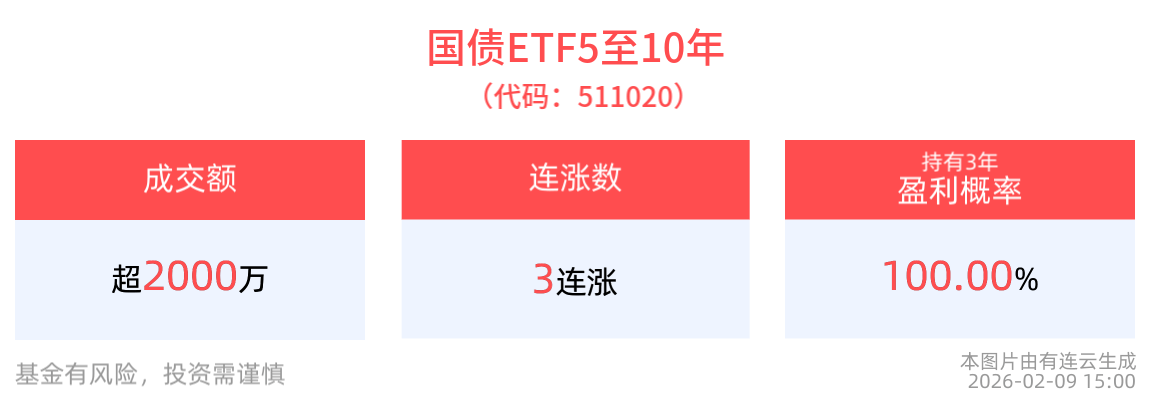
Group 1 - Institutions remain bullish on long-term bonds, driven by allocation strategies. From January 1 to February 6, brokerages and funds net sold over 108.6 billion yuan of ultra-long-term bonds (maturity over 20 years), compared to a net sale of only 5.7 billion yuan in the same period last year. Meanwhile, insurance funds net bought 120.6 billion yuan of ultra-long-term bonds, and rural commercial banks net bought 50 billion yuan, increasing by 55.4 billion yuan and 68.8 billion yuan year-on-year respectively [1] - Despite significant net selling by brokerages and funds, the rise in bond yields has enhanced the allocation value, prompting rural commercial banks and insurance funds to increase their holdings in ultra-long bonds. The current steep yield curve indicates that while the cost of liabilities for rural commercial banks has decreased significantly, the spread on bonds with maturities of 7 years or less is low, necessitating longer durations for better returns [1] - The People's Bank of China purchased 100 billion yuan of government bonds in January, an increase of 50 billion yuan from the previous month, which may continue at this level or higher, improving the supply-demand relationship for government bonds. Additionally, bank deposits grew well in January, and with the central bank's interest rate cuts on monetary tools, the motivation for banks to issue interbank certificates of deposit is low [1] Group 2 - As of February 9, 2026, the China Bond 5-10 Year Treasury Active Bond Index (net price) rose by 0.03%. The Treasury ETF for 5 to 10 years (511020) increased by 0.08%, marking its third consecutive rise, with the latest price at 116.1 yuan. Over the past week, the Treasury ETF for 5 to 10 years has accumulated a rise of 0.23% [3] - In terms of liquidity, the Treasury ETF for 5 to 10 years had a turnover of 1.99% during the trading session, with a transaction volume of 23.17 million yuan. Over the past year, the average daily transaction volume for this ETF has been 600 million yuan [3] - The latest size of the Treasury ETF for 5 to 10 years reached 1.166 billion yuan. The maximum drawdown for this ETF since the beginning of the year is 0.21%, with a relative benchmark drawdown of 0.08%. The recovery days after the drawdown were 5 days [3]
公告速递:华泰柏瑞交易货币基金B类基金份额、C类基金份额、D类基金份额和E类基金份额2026年春节前暂停代销机构申购和转换转入业务
Sou Hu Cai Jing· 2026-02-10 01:43
证券之星消息,2月10日华泰柏瑞基金管理有限公司发布《华泰柏瑞交易型货币市场基金B类基金份 额、C类基金份额、D类基金份额和E类基金份额2026年春节前暂停代销机构申购和转换转入业务的公 告》。公告中提示,为保证基金的平稳运作,维护基金持有人利益,自2026年2月12日起华泰柏瑞交易 型货币市场基金B类基金份额、C类基金份额、D类基金份额和E类基金份额2026年春节前暂停代销机构 申购和转换转入业务,下属分级基金调整明细如下: 以上内容为证券之星据公开信息整理,由AI算法生成(网信算备310104345710301240019号),不构成 投资建议。 ...

公告速递:东吴增鑫宝货币基金2026年春节假期前调整大额申购、大额转换转入业务限额
Sou Hu Cai Jing· 2026-02-10 01:43
证券之星消息,2月10日东吴基金管理有限公司发布《东吴增鑫宝货币市场基金2026年春节假期前调整 大额申购(含定期定额投资)、大额转换转入业务限额的公告》。公告中提示,为保护基金份额持有人 的利益,保障基金平稳运作,根据《东吴增鑫宝货币市场基金基金合同》《东吴增鑫宝货币市场基金招 募说明书》及其更新的有关规定,自2026年2月12日起东吴增鑫宝货币市场基金2026年春节假期前调整 大额申购(含定期定额投资)、大额转换转入业务限额,申购、转换转入上限金额为1.0万元,下属分 级基金调整明细如下: 以上内容为证券之星据公开信息整理,由AI算法生成(网信算备310104345710301240019号),不构成 投资建议。 ...
公告速递:红土创新货币基金2026年春节假期前的申购提示性
Sou Hu Cai Jing· 2026-02-10 01:43
证券之星消息,2月10日红土创新基金管理有限公司发布《红土创新货币市场基金2026年春节假期前的 申购提示性公告》。公告中提示,为保护基金份额持有人的利益,自2026年2月12日起红土创新货币市 场基金2026年春节假期前的申购提示性,申购、转换转入上限金额为100.0万元,下属分级基金调整明 细如下: 以上内容为证券之星据公开信息整理,由AI算法生成(网信算备310104345710301240019号),不构成 投资建议。 ...
成交额超1亿元,国开债券ETF(159651)实现3连涨
Sou Hu Cai Jing· 2026-02-10 01:38
Group 1 - The overall risk in the cross-year bond market is controllable, with a short-term warm sentiment expected to continue. The focus is on the yield curve flattening or becoming concave, particularly the 10-2 year spread narrowing and the 30-10 spread maintaining around 40 basis points [1] - Recent changes in the bond market include an improvement in the supply-demand relationship for long-term bonds, a notable technical improvement, and a stable decline in funding rates, although future space for decline is limited [1] - The 10-year government bonds and policy financial bonds present a high cost-performance ratio, as their rebound has not fully absorbed the benefits of monetary easing, indicating clear potential for recovery [1] Group 2 - For medium and short-term bonds, the benefits of monetary easing have been fully realized, leading to limited downward space and insufficient odds for further declines. The long-term bonds are viewed with a neutral to optimistic stance, with moderate speculation on new bonds [2] - The 30-year government bonds are expected to mainly follow the recovery of 10-year bonds, with compression space in spreads but expected to remain above 40 basis points. Older 30-year bonds face liquidity issues and the challenge of "buying new and selling old" [2] - As of February 9, 2026, the National Development Bank bond ETF has seen a 0.01% increase, marking three consecutive days of gains, with a current price of 107.05 yuan and a one-year cumulative increase of 1.11% [2] Group 3 - The National Development Bank bond ETF has experienced a significant growth of 45.973 million yuan over the past three months [3] - The maximum drawdown for the National Development Bank bond ETF this year is 0.04%, with a relative benchmark drawdown of 0.02%, and a recovery period of 5 days [3] Group 4 - The management fee for the National Development Bank bond ETF is 0.15%, and the custody fee is 0.05% [4] - As of February 9, 2026, the tracking error for the National Development Bank bond ETF over the past three months is 0.009%, closely tracking the China Bond - 0-3 Year National Development Bank Bond Index [5]
对话中欧国际工商学院单宏宇:完善验证机制、培育长期资金,是推动ESG权益市场发展的关键
Xin Lang Cai Jing· 2026-02-10 01:30
Core Viewpoint - The development of ESG (Environmental, Social, and Governance) finance in China is currently uneven, with the fixed income market showing more robust growth compared to the equity market, which has not met previous expectations in terms of fund issuance and fundraising effectiveness [1][4][20]. Group 1: ESG Market Development - The equity market's progress in ESG finance is relatively slow, with ESG-themed funds and related stocks not performing as anticipated [4][21]. - In contrast, the fixed income market for ESG is thriving, driven by government initiatives promoting green loans and bonds, which are well-received by enterprises [4][21]. - Green bonds often have financing rates that are approximately 50 basis points lower than similar products, making them attractive for companies looking to reduce financing costs [4][21]. Group 2: Challenges in Equity Market - Two essential conditions are necessary for the growth of green funds: the presence of investors willing to pay a premium for "green" attributes and a reliable mechanism for confirming the authenticity of these products [5][24]. - The current lack of stringent ESG standards among major financial institutions in China contributes to the underdevelopment of the equity market [26]. Group 3: International Comparison - The European green finance market, particularly in equities, is more mature, supported by a stable demand structure from sovereign and large pension funds that incorporate ethical and social responsibility standards in their investment decisions [6][25]. - The EU's SFDR (Sustainable Finance Disclosure Regulation) has established a rigorous anti-greenwashing regulatory framework, ensuring that the "green attributes" of funds are verified by regulatory bodies [6][25]. Group 4: ESG Disclosure and Financial Importance - There is a need for improved ESG disclosure in China, emphasizing the principle of "financial materiality" to protect shareholder interests and provide relevant information regarding long-term risks [2][18][19]. - The financial importance of ESG is evident in four key scenarios: market and supply chain access, business model dependency on ESG, investment responsibility of financial institutions, and financing needs through green bonds and loans [30][32]. Group 5: Regulatory Environment - China's ESG disclosure requirements are more cautious compared to the EU, focusing primarily on larger, more influential companies rather than applying a uniform standard across all enterprises [33][35]. - The timeline for implementing ESG disclosure in China is more gradual, allowing for observation of the effects in other economies before full-scale implementation [36].
基金早班车丨宽基ETF资金流出,化工通信有色ETF逆势吸金
Jin Rong Jie· 2026-02-10 00:53
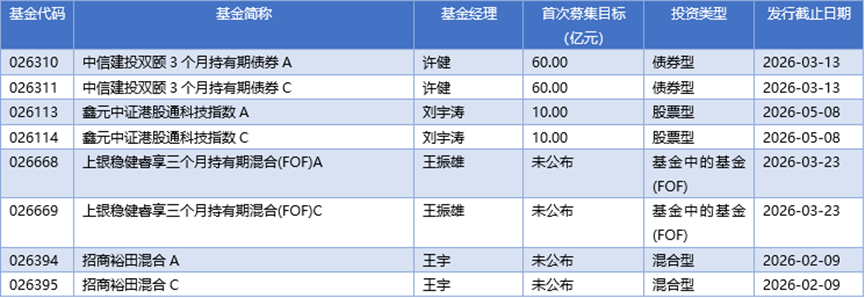
Group 1: Market Trends - In early 2026, A-share ETF fund flows have changed, with continuous net outflows from broad-based products like CSI 300 and CSI 500, while high-growth sectors such as chemicals, communications, and non-ferrous metals have seen inflows [1] - The market is experiencing a strong rebound, with the Shanghai Composite Index rising by 1.41% to 4123.09 points, the Shenzhen Component Index up 2.17% to 14208.44 points, and the ChiNext Index increasing by 2.98% to 3332.77 points [1] Group 2: Fund News - On February 9, 2026, eight new funds were launched, primarily bond funds and funds of funds (FOF), with a fundraising target of 6 billion yuan for the CITIC Securities Dual Yield 3-Month Holding Period Bond A [2] - The number of new fund accounts opened in January reached 546,300, a significant increase of 168% compared to the same period in 2025, indicating a notable rise in investor enthusiasm [2] - Credit bond ETFs have faced a "tide of withdrawal," with a cumulative reduction of over 100 billion yuan in scale over five weeks, particularly affecting the Sci-Tech Innovation Bond ETF, which shrank by more than 70 billion yuan [2] Group 3: Fund Dividends - On February 9, 2026, several funds distributed dividends, with the highest payout being 0.1330 yuan per 10 fund shares for the China Europe National Index Free Cash Flow Index A fund [5] - Other notable dividend distributions include 0.1310 yuan for the China Europe National Index Free Cash Flow Index C fund and 0.0870 yuan for the Bosera Yukun 3-Month Fixed Open Bond fund [5]
四大证券报精华摘要:2月10日
Zhong Guo Jin Rong Xin Xi Wang· 2026-02-10 00:04
Group 1: Tungsten Market and Related Industries - Tungsten prices have been rising, with ammonium paratungstate (APT) price reaching over 1 million yuan per ton, attracting significant attention from the capital market [1] - Affected by the price increase of tungsten-related products, listed companies in the industry are expected to report strong performance in their 2025 earnings forecasts, with noticeable growth in product sales [1] - The price surge in the MLCC (multi-layer ceramic capacitors) market, driven by AI trends, has seen a nearly 20% increase in spot prices in South Korea, with expectations for continued growth [1] Group 2: Sodium Battery Development - Changan Automobile and CATL have launched the world's first mass-produced sodium battery passenger vehicle, marking a significant step towards large-scale application of sodium batteries in the automotive sector [2] - Sodium batteries are gaining traction due to their abundant resource availability, wide temperature range, long cycle life, and high safety, transitioning from laboratory to large-scale applications [2] Group 3: A-Share ETF Market Trends - The A-share ETF market is experiencing a shift, with traditional broad-based ETFs seeing outflows while ETFs in high-growth sectors like chemicals, telecommunications, and non-ferrous metals are attracting inflows [3] - Recent earnings forecasts from listed companies indicate a positive market sentiment, with a focus on AI, price increase chains, and overseas expansion as key investment themes [3] - Over the past month, 148 brokerages have conducted research on over 560 listed companies, a 26% increase compared to the same period last year, highlighting a growing interest in sectors such as electronics and machinery [3] Group 4: Solar Energy and Space Initiatives - Tesla is ramping up hiring for solar panel manufacturing, aiming to become the largest solar component manufacturer in the U.S., while SpaceX has acquired xAI to build a space-based data center [4] - The A-share photovoltaic sector responded positively to these developments, with a 4.53% increase in stock prices and a net inflow of 4.058 billion yuan in the photovoltaic equipment sector [4] Group 5: Banking Sector Insights - Since the beginning of 2026, listed banks have seen a surge in institutional research, particularly among small and medium-sized banks in coastal economic regions, with 54 institutional visits recorded [5] - Key topics of interest include the performance of credit in the new year, the "14th Five-Year Plan," and wealth management strategies [5] Group 6: Dye Industry Price Increases - The dye industry is experiencing a price increase trend, with companies like Fulaient notifying customers of price adjustments for various disperse dye products due to rising raw material costs [6] - The current price surge in the dye industry is driven by multiple factors, primarily the increase in prices of key upstream intermediates [6] Group 7: Fund Issuance and Foreign Investment - As of February 9, 29 new funds are set to be issued in the coming weeks, with a focus on mixed equity funds and passive index funds [7] - A total of 224 foreign institutions have conducted 569 research visits to A-share listed companies, with firms like Goldman Sachs maintaining a "overweight" rating on Chinese stocks [7] Group 8: Night Economy Initiatives - Various local governments are incorporating night economy strategies into their work reports to stimulate consumption, with initiatives in cities like Shanghai and Fujian focusing on expanding service consumption [8] - The night economy is recognized as a key driver for activating consumer potential and enhancing service consumption quality [8]
【光大研究每日速递】20260210
光大证券研究· 2026-02-09 23:06
Group 1: TMT Sector - TMT theme funds experienced significant net value decline, while passive funds increased their positions in TMT theme products. The overall stock market saw fluctuations, with consumer and new energy theme funds performing well, while other theme funds struggled. A total of 24.3 billion yuan flowed out of mid and large-cap theme ETFs, while Hong Kong stock ETFs saw inflows exceeding 10 billion yuan [5]. Group 2: Metals Sector - The prices of non-ferrous metals fell across the board, but gold, tungsten, molybdenum, and vanadium prices increased month-on-month. The financing environment index for small and medium enterprises rose by 6.62% to 50.27 in January. Weekly inventory levels for hot-rolled coils were at a five-year low, while the price of oriented silicon steel hit a new low since 2018 [5][6]. Group 3: Renewable Energy and Environmental Protection - The market remains optimistic about space photovoltaic developments, with a focus on auxiliary materials and equipment. The hydrogen and ammonia sector performed well, with expectations for future carbon policies to enhance green electricity consumption. The dual control of carbon and non-electric applications is anticipated to drive supply optimization [7]. Group 4: Public Utilities - The utilization rates for wind and solar power in 2025 were 94.3% and 94.8%, respectively, both showing year-on-year declines. There is a positive outlook for non-electric applications of renewable energy and direct connections for green electricity, with recommendations to focus on companies like Electric Investment Green Energy and Jinkai New Energy [8]. Group 5: Pharmaceutical Industry - The Ministry of Industry and Information Technology and other departments issued a plan for the high-quality development of traditional Chinese medicine, aiming for a collaborative system by 2030. This policy is expected to raise compliance thresholds and enhance industry concentration, benefiting leading companies with strong integration, quality control, and research capabilities [8]. Group 6: Company Analysis - Yujian Xiaomian - Yujian Xiaomian, a leading chain of Sichuan-Chongqing flavor noodle restaurants, is expanding its national presence through a combination of direct and franchise operations. The company has shown continuous revenue growth and profitability improvements, despite challenges such as high debt and rental costs. The management team is experienced, and operational optimization is expected to further enhance profitability [9].