
数据中心

Search documents
市场最大“黑天鹅”:AI资本支出放缓,三大巨雷会是美股噩梦
Hua Er Jie Jian Wen· 2025-09-25 22:32
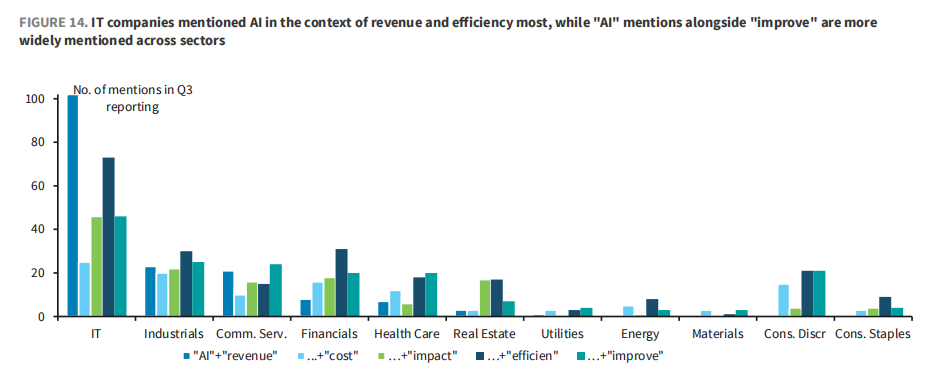
尽管AI投资主题基础依然稳固,但巴克莱指出数据中心资本支出放缓可能成为美股最大的系统性风险。 据硬AI,9月25日巴克莱股票策略团队发表研报,指出如果数据中心资本支出在未来两年下降20%,标普500指数将面临3-4%的盈利下行 压力,更严重的是估值可能下跌10-13%。 报告指出了可能引爆这场危机的三大潜在"巨雷": 技术与效率风险:AI模型效率的飞速提升可能导致现有计算设施被"过度建设",重演科网泡沫时期的"暗光纤"悲剧。 物理限制风险:日益严重的电力短缺正成为数据中心建设无法逾越的"硬墙",可能强制性地给资本支出降温。 资金流动性风险:当资本支出增长开始超越现金流创造能力时,融资压力和枯竭的VC资本可能成为压垮骆驼的最后一根稻草。 AI热潮根基稳固,但并非无懈可击 首先,报告肯定了AI投资主题的坚实基础。 即便是在一个预计每年增长30%的数十万亿美元资本支出预测下,市场对算力的需求仍然远超供应。 高级推理模型和AI代理的普及进一步推高了需求天花板。数据显示,标普1500指数中,有十分之一的公司在财报中提及AI带来的效率提 升。 报告将当前超级巨头的资本支出/销售额占比(约25%)与科网泡沫时期的电信公司( ...

AI基建建设“快马加鞭” 上市公司积极布局智算中心细分赛道
Zheng Quan Ri Bao· 2025-09-25 17:39
Group 1 - Alibaba Group is actively advancing its AI infrastructure construction with an investment of 380 billion yuan and plans for larger scale investments [1] - The competition among technology companies in AI infrastructure is intensifying, benefiting the development of related industries such as data center construction, chip manufacturing, and software development [1] - The proportion of intelligent computing power in China's total computing power is expected to increase from 3% in 2016 to 35% by 2025, indicating rapid development in intelligent computing center construction [1] Group 2 - The investment scale of China's intelligent computing center market is expected to reach 288.6 billion yuan by 2028, driven by various factors [2] - Qinhuai Data plans to invest 24 billion yuan to build three zero-carbon super-large intelligent computing parks in Zhongwei City, with a total capacity of 1.2 GW [2] - Unisplendour is expanding its Turing Town project and has established strategic cooperation with several provinces, with seven Turing Towns currently built or under construction [2] Group 3 - Unisplendour launched a high-density liquid cooling cabinet solution in the first half of 2025, supporting the deployment of 64 high-performance AI accelerator cards or thousand-core CPUs [3]

AI基建建设“快马加鞭”上市公司积极布局智算中心细分赛道
Zheng Quan Ri Bao Zhi Sheng· 2025-09-25 17:37
Group 1 - Alibaba Group is actively advancing its AI infrastructure construction with an investment of 380 billion yuan and plans for larger investments [1] - The competition among technology companies in AI infrastructure is intensifying, benefiting the development of related industries such as data center construction, chip manufacturing, and software development [1] - The proportion of intelligent computing power in China's total computing power is expected to increase from 3% in 2016 to 35% by 2025 [1] Group 2 - The investment scale of China's intelligent computing center market is expected to reach 288.6 billion yuan by 2028 [2] - Beijing Qinhuai Data Co., Ltd. plans to invest 24 billion yuan to build three zero-carbon super-large intelligent computing parks in Zhongwei City, with a total capacity of 1.2 GW [3] - Unisplendour Corporation is expanding its intelligent computing center construction and has established strategic cooperation with several provinces, with seven Turing Towns currently built or under construction [4] Group 3 - Unisplendour has launched a high-density liquid cooling cabinet solution that supports 64 high-performance AI accelerator cards or thousand-core CPUs, meeting the stringent energy consumption requirements of high-computing clusters [4]


液冷冷却液+AI数据中心+氟化工,最全龙头公司产业链梳理(附名单)
Sou Hu Cai Jing· 2025-09-25 15:48
Core Viewpoint - The article discusses the growing importance of liquid cooling technology in data centers due to increasing power consumption and heat generation from AI server chips, highlighting the shift from traditional air cooling to liquid cooling solutions. Group 1: Liquid Cooling Technology Types - Liquid cooling technology is categorized into two main types: cold plate and immersion cooling, with cold plate cooling holding a 91% market share in 2022 due to its maturity and compatibility [3][31]. - Immersion cooling, while having the highest heat dissipation capability, accounts for about 8% of the market and is represented by companies like Shuguang Data and Guangdong He Yi [4][31]. - Cold plate cooling primarily uses water-based coolants, offering advantages such as low cost and fast heat dissipation [5]. Group 2: Cooling Liquid Material Systems - The main types of cooling liquids include water-based, oil-based, and fluorinated coolants [7]. - Water-based coolants are mainly used in single-phase cold plate cooling, supplied by companies like Compton and Unification [8]. - Oil-based coolants are used in single-phase immersion cooling, with suppliers like China Petroleum and Unification [8]. - Fluorinated coolants are crucial for high reliability and extreme physical conditions, with companies like Juhua and Dongyue Group achieving large-scale production [8]. Group 3: Microchannel Liquid Cooling Breakthroughs - Microchannel cold plate technology is becoming a focus for AI chip manufacturers, with companies like Nvidia and Microsoft pushing for MLCP standards [9]. - Domestic companies such as Highlan and Feirongda are gaining certifications and expanding their market share in this area [9]. Group 4: Market Size and Price Logic - By 2028, the global AI data center installation capacity is expected to reach 59 GW, corresponding to a cooling liquid demand exceeding 89,000 tons [10]. - The Chinese market for liquid-cooled data centers is projected to grow at a compound annual growth rate (CAGR) of 51.4%, with the industry scale expected to exceed 100 billion yuan by 2027 [10]. Group 5: Leading Projects - Major companies like Alibaba, Shuguang, Huawei, and Lenovo are implementing liquid-cooled data center demonstration projects, with Alibaba achieving a PUE of 1.12 in its 5A green liquid-cooled data center [14][15]. - Shuguang has realized the world's first large-scale commercial application of immersion phase change liquid cooling [15]. - Huawei's cloud data center in Ulanqab utilizes indirect evaporative cooling, achieving a PUE of 1.15 [16]. Group 6: Mainstream Cooling Pathways - The article outlines the mainstream cooling pathways, including water-based, oil-based, and fluorinated cooling liquids, emphasizing the rapid growth of the liquid cooling market [18][21].




活力中国调研行 | 全球首个商用海底数据中心在海南陵水稳定运行
Sou Hu Cai Jing· 2025-09-25 15:17
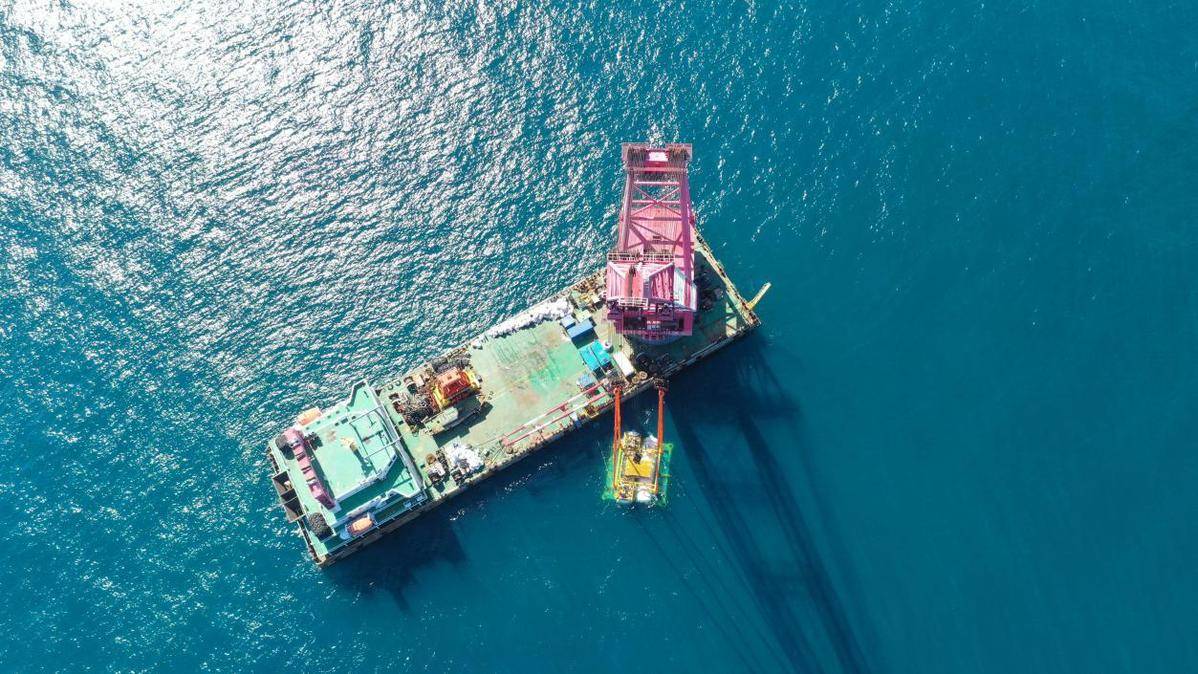
Core Insights - The world's first commercial underwater data center has successfully commenced operations in Hainan, marking a new zero-carbon computing model for China [1] - The project is part of Hainan's "14th Five-Year Plan" for marine economic development, focusing on the research and construction of underwater data centers [1] - The underwater data center will support the "East Data West Computing" initiative and extend services to Southeast Asia and Belt and Road countries [1] Project Overview - The project, initiated in 2022, is divided into three phases with plans to construct 100 data pods [1] - The first phase is expected to be completed by November 2023, with the Hainan Underwater Intelligent Computing Center cluster already operational since February [2] - The center integrates offshore wind power with data center infrastructure, creating a new model for renewable energy and computing [2] Technical Advantages - Underwater data centers utilize natural seawater cooling, resulting in a low Power Usage Effectiveness (PUE) and high energy efficiency [2] - The server failure rate in underwater data centers is only one-eighth that of traditional land-based data centers [2] - The modular construction allows for rapid deployment within 90 days, saving land and ensuring high reliability with minimal maintenance [2] Market Demand and Future Outlook - The demand for intelligent computing centers in China is expected to grow significantly, with AI computing needs projected to increase by 500 times and general computing needs by 10 times by 2030 [3] - The development of underwater data centers positions China to gain a competitive edge in the global digital infrastructure landscape [3]
龙虎榜复盘 | 知名游资2亿大买服务器概念股,机构集体扫货特斯拉机器人间接供应商
Xuan Gu Bao· 2025-09-25 11:30
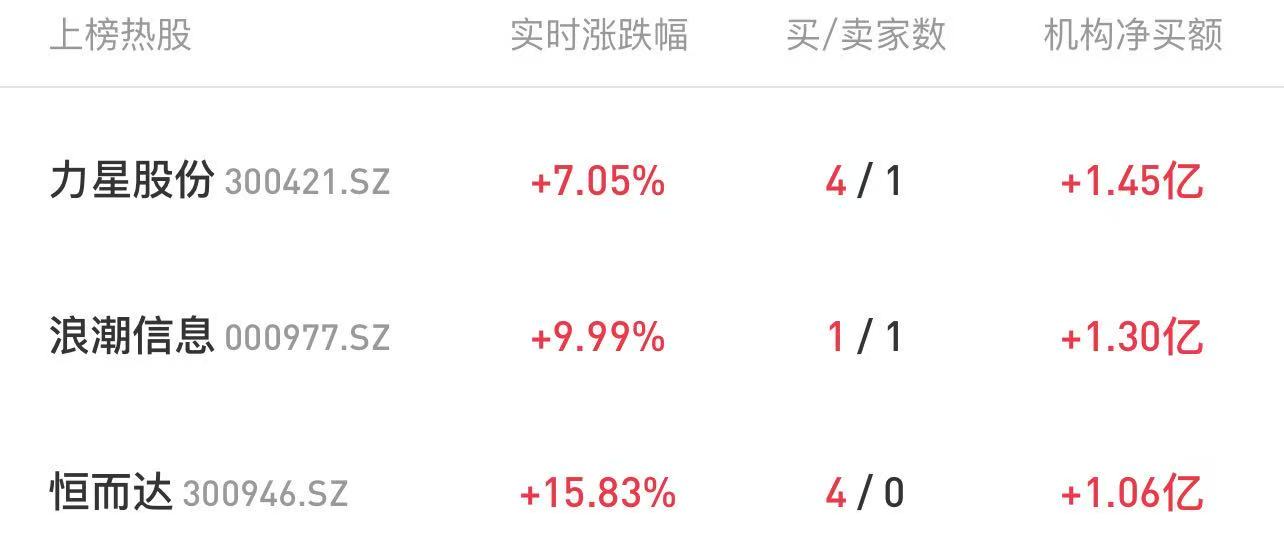
Group 1: Stock Market Activity - 28 stocks were listed on the institutional trading leaderboard, with 12 stocks seeing net buying and 16 stocks experiencing net selling [1] - The top three stocks with the highest net buying by institutions were: Lixing Co., Ltd. (1.45 billion), Inspur Information (1.3 billion), and Heng'erda (1.06 billion) [1] Group 2: Key Stocks Overview - Lixing Co., Ltd. (300421.SZ) saw a price increase of 7.05% with 4 buyers and 1 seller [2] - Inspur Information (000977.SZ) experienced a price increase of 9.99, with 1 buyer and 1 seller [2] - Heng'erda had 4 institutions net buying 1.06 billion, and the company is actively promoting the localization of high-precision thread grinding machines and the industrialization of ball screws and planetary roller screws [3] Group 3: Industry Developments - Alibaba Cloud is expanding its global infrastructure, adding data centers in Brazil, France, and the Netherlands, supported by nine departments for establishing international data centers and cloud computing centers in various regions [3] - Inspur Information has maintained the top position in China's liquid cooling server market for three consecutive years, with over 700 core patents in liquid cooling technology [3] - China Fusion Company is set to build a fusion experimental device in Shanghai to verify its high-temperature superconducting magnets [5] - Shanghai Electric is actively involved in the nuclear fusion industry, focusing on the mainstream research direction of magnetic confinement with Tokamak technology [5]


科华数据:公司已推出了液冷数据中心全生命周期服务
Zheng Quan Ri Bao· 2025-09-25 09:17
Core Insights - The company, Kehua Data, is a pioneer in the liquid cooling sector, leveraging years of technical expertise and experience in data center construction and operation [2] - Kehua Data has launched a full lifecycle service for liquid cooling data centers, including a range of self-developed liquid cooling products [2] - The company has partnered with Muxi Co., Ltd. to introduce a high-density liquid cooling computing POD, focusing on core technology solutions for high-performance computing needs [2] Product Offerings - The company offers a variety of liquid cooling products, including air-liquid drawer CDU, liquid-liquid drawer CDU, and liquid-liquid cabinet CDU [2] - Integrated products include WiseCooling plate liquid cooling micro-modules, liquid cooling containers, and liquid cooling all-in-one machines [2] Strategic Partnerships - The collaboration with Muxi Co., Ltd. aims to explore solutions for high-performance computing demands, providing stable, efficient, and flexible real-time support [2]

美股异动|万国数据盘前续涨3% 美银上调其目标价至53.8美元
Ge Long Hui· 2025-09-25 08:41
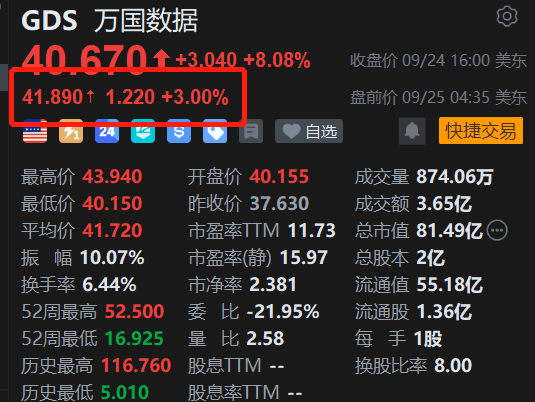
Group 1 - GDS Holdings (GDS.US) experienced an 8% increase in stock price yesterday and continued to rise by 3% in pre-market trading, reaching $41.89 [1] - Bank of America reported that Alibaba plans to double its token consumption every 2 to 3 months, indicating a rise in AI workloads [1] - Alibaba is set to invest over 380 billion RMB in AI and cloud computing over the next three years, which is expected to support GDS's growth [1] Group 2 - Bank of America has raised its adjusted EBITDA forecast for GDS for 2026 to 2027 by 1% to 3% based on the positive developments in AI and cloud computing [1] - The report highlights that the progress of domestic chips is satisfactory, which will support the growth of data center orders [1]
美银:上调万国数据-SW目标价至52.8港元 维持“买入”评级
Zhi Tong Cai Jing· 2025-09-25 07:53
Group 1 - Bank of America has raised the target price for GDS Holdings (GDS.US) by 6%, from HKD 49.7 to HKD 52.8 for Hong Kong stocks, and from USD 50.6 to USD 53.8 for US stocks, maintaining a "Buy" rating [1] - Alibaba recently announced at the 2025 Alibaba Cloud Conference that its token consumption doubles every 2 to 3 months, indicating an increase in AI workloads [1] - Alibaba plans to invest over RMB 380 billion in AI and cloud computing over the next three years, reflecting a strong commitment to these sectors [1] Group 2 - The report highlights that the progress of domestic AI chips is good, supporting the growth of data center orders [1] - Based on the improved outlook, Bank of America has adjusted GDS's EBITDA forecast for 2026 to 2027 upwards by 1% to 3% [1]
9月25日沪深两市涨停分析
Xin Lang Cai Jing· 2025-09-25 07:22
Group 1 - Nuclear power companies are focusing on upstream suppliers for valves and welding materials, with significant applications in controlled nuclear fusion projects [2] - Shanghai Electric is a key player in the domestic magnetic confinement nuclear fusion mainframe system [2] - Alibaba plans to increase capital expenditure beyond the initial 380 billion [2] Group 2 - Global second-largest copper mine has halted production due to a major accident [3] - Precision cold-formed components are expected to see extended applications across multiple fields [5] - TSMC is raising prices for advanced processes, indicating a trend in semiconductor pricing [3] Group 3 - The company is a leader in printer-compatible consumable chip technology, collaborating with major partners for laser printer control [4] - Nvidia is set to invest 100 billion in OpenAI, highlighting the growing importance of AI technology [4] - The company has developed various types of 800G series products, which are currently in customer testing [4] Group 4 - The company has a photovoltaic power generation capacity of 130 MW [6] - The company is involved in supply chain services for cross-border e-commerce [6] - The company is testing deep ultraviolet lithography equipment manufactured by a specific supplier [6] Group 5 - The company is focusing on high-frequency and high-speed copper cable connections, primarily for AI applications [7] - OpenAI is collaborating with a precision electronics manufacturer to produce AI devices [7] - The company is a leading player in the market for freeze-dried powder injection products [7]
