美妆

Search documents
布局高端美妆!上美股份联合春楠重磅推出化妆师品牌NAN beauty
Ge Long Hui· 2025-08-15 14:32
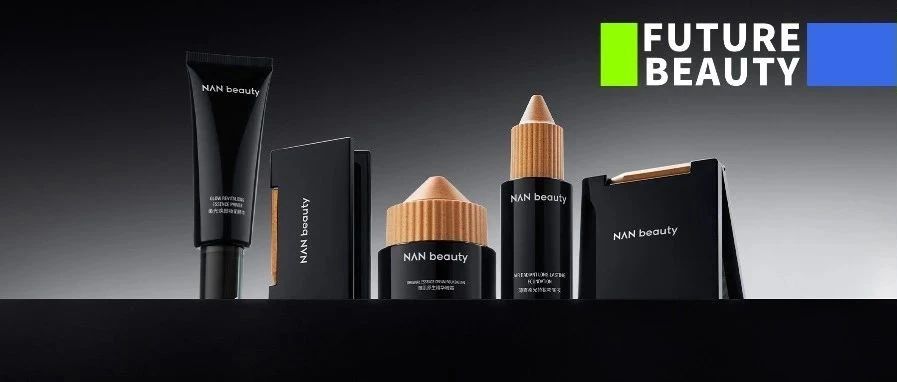
Core Viewpoint - The launch of NAN beauty, a high-end makeup brand co-created by Shangmei Co. and renowned makeup artist Chun Nan, marks a significant expansion into the professional makeup sector for Shangmei, following its successful ventures in skincare, maternal and infant products, and hair care [1][2][10]. Group 1: Brand Launch and Product Offering - NAN beauty was officially unveiled at a brand launch event in Shanghai, featuring Chun Nan as the brand ambassador and partner, showcasing the initial product line including "Black Coffee Primer Essence," "CP Concealer Palette," "Beginner Powder Cream," "Stick Foundation," and "Smart Research Honey Powder Cake" [1][2]. - The first batch of NAN beauty products is set to be available for purchase on Douyin starting September 9, coinciding with Chun Nan's first live streaming event [2]. Group 2: Brand Positioning and Philosophy - NAN beauty is positioned as a mid-to-high-end professional makeup brand, representing Chun Nan's first makeup brand after 25 years in the industry, emphasizing a philosophy of showcasing natural beauty without excessive effort [4][7]. - The brand's design philosophy, "Deconstructing Modern Beauty with Eastern Wisdom," aims to meet consumer desires for natural and authentic makeup experiences, encapsulated in the concept of "Eastern Light and Transparent Aesthetics" [4]. Group 3: Product Innovation and Technology - NAN beauty's product line focuses on technology to restore the skin's natural beauty, utilizing micron-level powder to reflect natural light, breathable membrane technology for oil control and moisture retention, and light-reflecting particles for precise concealing [5]. Group 4: Strategic Team and Talent - The collaboration between Chun Nan and retail expert Gu Mai creates a "golden combination," combining top-tier aesthetic and product expertise with commercial success capabilities, enhancing NAN beauty's competitive edge [6][8]. - Chun Nan's extensive experience and influence in the industry, along with Gu Mai's background in e-commerce and brand management, provide NAN beauty with a unique positioning in the market [7][8]. Group 5: Strategic Goals and Market Position - The establishment of NAN beauty signifies Shangmei's strategic upgrade, entering the mid-to-high-end makeup market and supporting its goal of reaching 30 billion by 2030 and 100 billion by 2035 [10]. - NAN beauty is positioned as a key driver for achieving these ambitious targets, leveraging the current market dynamics where international brands are retracting, and domestic brands with professional makeup artist endorsements are emerging as strong contenders in the high-end market [10].
逸仙电商上涨2.11%,报9.7美元/股,总市值8.95亿美元
Jin Rong Jie· 2025-08-15 14:00
Financial Performance - Yatsen Holding Limited reported a total revenue of 834 million RMB for the fiscal year ending March 31, 2025, representing a year-over-year growth of 7.78% [1] - The company achieved a net profit attributable to shareholders of -5.303 million RMB, which is a significant increase of 95.74% compared to the previous year [1] Stock Performance - On August 15, Yatsen's stock price increased by 2.11%, reaching $9.70 per share, with a trading volume of $2.1438 million [1] - The total market capitalization of Yatsen is approximately $895 million [1] Upcoming Events - Yatsen is scheduled to disclose its fiscal year 2025 interim report on August 21, prior to the market opening (Eastern Time) [2] - The company operates primarily through its subsidiary, Guangzhou Yatsen E-commerce Co., Ltd., which was established in 2016 and is a leading player in the Chinese beauty market [2] Brand Portfolio - Yatsen's brand portfolio includes high-growth cosmetic and skincare brands such as Perfect Diary, Little Ondine, Abbys Choice, Galenic, DR.WU, EVE LOM, Pink Bear, and EANTiM [2] - The company engages customers through both online and offline channels, with a strong presence on major e-commerce, social, and content platforms in China [2]

美妆IPO狂飙:32家企业上市背后的盛宴与隐忧
Sou Hu Cai Jing· 2025-08-15 12:41
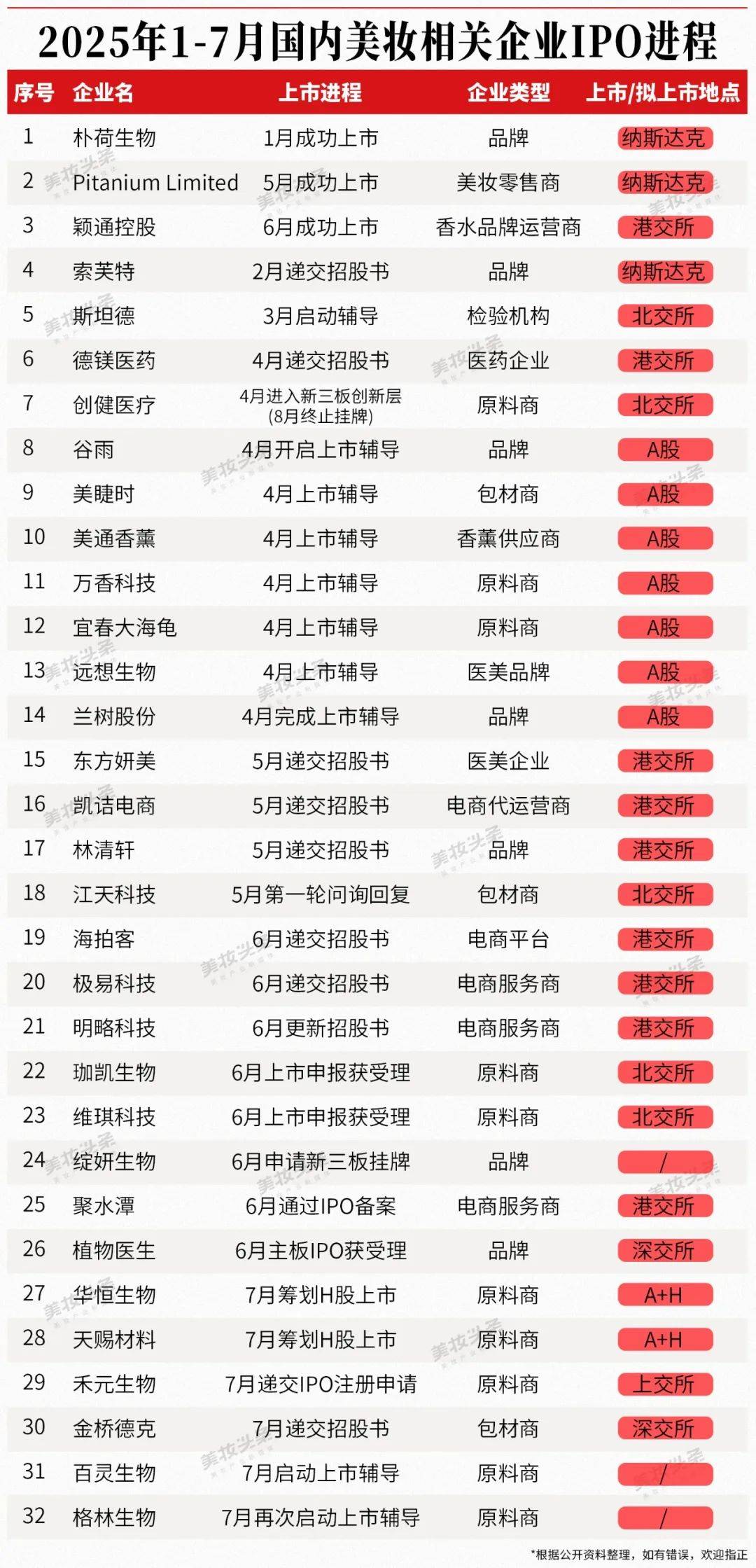
Group 1 - The beauty industry is experiencing a significant wave of capital influx, with over 30 beauty-related companies expected to pursue IPOs in the first half of 2025, nearly three times the total for 2023 [5][6][9] - The number of beauty companies waiting for IPOs continues to rise, with more than 20 companies rapidly advancing their IPO processes, including 8 companies that made progress in June alone [2][4] - The recent policy changes from regulatory bodies, including the support for quality enterprises in the consumption sector, have created a favorable environment for beauty companies to access capital markets [7][8][16] Group 2 - The beauty industry has seen a drastic reduction in IPO activity during 2023-2024, with only 10 companies listed compared to 17 in 2021-2022, indicating a cold market sentiment [6][7] - The Hong Kong Stock Exchange has become a popular choice for listings, with many companies, including Ying Tong Holdings and Lin Qingxuan, opting for this market due to its favorable conditions and high international capital recognition [14][16][17] - The competition for being the "first stock" in various segments of the beauty industry is intensifying, with companies like Lin Qingxuan and Gu Yu aiming for significant titles in the market [9][11][18] Group 3 - The beauty industry is entering a phase of high-quality development, with the market size exceeding 1 trillion yuan for two consecutive years, making it the largest cosmetics market globally [20][21] - Companies are increasingly focusing on technological innovation and brand building, which are essential for gaining capital market recognition and achieving sustainable growth [28][30][32] - The future competitive landscape will favor companies that can establish strong research and development capabilities and effective multi-channel operations, as these will be key to long-term success [30][32]

NAN beauty上市,会再造上美下一个增长神话吗?
FBeauty未来迹· 2025-08-15 11:51
Core Viewpoint - NAN beauty, a new makeup brand under Shangmei Co., has officially launched, aiming to penetrate the competitive domestic beauty market and achieve a revenue target of 10 billion yuan [3][21]. Group 1: Brand Positioning and Strategy - NAN beauty's slogan "Effortless Beauty, Confident You" reflects its understanding of the current makeup market, which is crowded with both international brands and domestic newcomers [4]. - The brand differentiates itself by leveraging the expertise of top makeup artist Chun Nan and former Tmall beauty general manager Gu Mai, focusing on a "makeup artist IP brand" approach [4][10]. - The brand targets modern young consumers aged 20-30, who seek natural and transparent makeup looks and are willing to invest in self-expression [9]. Group 2: Product Innovation and Technology - NAN beauty's product logic is based on Chun Nan's 25 years of experience, emphasizing "breathable" makeup through three patented technology layers: Light Layer, Breathable Layer, and Shaping Layer [4][6]. - The brand's philosophy, "Oriental Light and Transparent Aesthetics," aims to enhance natural beauty rather than cover it up, making professional techniques accessible to the general public [6][12]. Group 3: Marketing and User Engagement - Each product is accompanied by Chun Nan's instructional videos, simplifying professional techniques for everyday users [7][12]. - The brand has initiated a project called "Chun Nan and 100 Girls," using real-life examples to reinforce its commitment to "effortless beauty" [7]. Group 4: Market Expectations and Growth Potential - The launch of NAN beauty is a strategic move for Shangmei Co. to expand its brand portfolio and penetrate the high-end makeup market [21][22]. - The company anticipates a revenue of 4.09 to 4.11 billion yuan for the first half of 2025, with a year-on-year growth of 16.8% to 17.3%, indicating strong market potential [24]. - NAN beauty's model offers a new approach for domestic brands to achieve high-end positioning by combining professional expertise with effective market strategies [24][25].
好的商业模式,一定是创造了全局性增量
创业家· 2025-08-15 10:13
Core Viewpoint - Business model innovation creates efficiency by altering the transaction structure among stakeholders, ensuring that all parties earn more than before, thus generating overall incremental value [1]. Group 1: Japanese Market Insights - The Japanese consumer market serves as a "future laboratory" for Chinese brands, providing insights into consumption evolution over the next decade [6]. - Japan's experience during its "lost thirty years" offers valuable lessons for Chinese brands to win over a generation of consumers [6]. - Key strategies from Japanese brands include supply chain-driven private brands (PB), continuous iteration of major products, and defining lifestyles that resonate emotionally with consumers [7][8]. Group 2: Supply Chain and Product Development - Kobe Bussan utilizes a supply chain-driven model with over 350 factories globally, achieving a sales scale of 200 billion RMB through integrated PB products [7]. - 7-11 leverages data from its extensive network to develop PB products that meet latent consumer needs, enhancing supply chain efficiency [7]. - Nitori, a leader in furniture, applies automotive supply chain standards to achieve consistent revenue growth for 36 years [7]. Group 3: Emotional Resonance and Lifestyle Definition - Bandai focuses on developing products that tap into fundamental human desires, creating items that are both entertaining and addictive [9]. - Muji redefines user experience with its no-logo, affordable products, reflecting lifestyle changes post-economic bubble [9]. - The concept of "loneliness economy" is explored, emphasizing the importance of emotional connection in product development [9]. Group 4: Learning and Networking Opportunities - The event features prominent figures from the industry, including insights from 7-11's former CIO and product development leaders from major Japanese brands [11][14]. - Participants will engage in hands-on learning experiences, including visits to successful Japanese retail locations [11][13]. Group 5: Event Details - The study tour is scheduled from September 21 to 26, 2025, in Tokyo, with a focus on exploring innovative business models and consumer insights [20]. - The program is limited to 35 participants, specifically targeting company founders seeking new business opportunities [20].

国货美妆逆袭传统高端 国际巨头防线动摇?
Jin Tou Wang· 2025-08-15 07:12
Group 1 - The popularity of Chinese beauty products in overseas markets is increasing, with a 12% year-on-year growth in cosmetic exports, reaching 18.7 billion RMB (approximately 2.6 billion USD) in the first half of this year [1] - Major export destinations for Chinese cosmetics include the United States, the United Kingdom, Indonesia, the Netherlands, and Japan [1] - The overseas sales of Chinese beauty products on AliExpress doubled in the past year, with Europe, Mexico, Brazil, and Japan being the best-performing markets [1] Group 2 - A McKinsey survey revealed that 63% of consumers do not believe high-end brands are superior to mass-market brands, contributing to a 5% and 4% increase in global market share for mass skincare and makeup products, respectively, over the past five years [1] - Since June of last year, 24% of consumers have shifted towards cheaper beauty products, particularly notable in Southeast Asia [1] - The compound annual growth rates for Chinese mass makeup, skincare, and facial care brands in Southeast Asia from 2019 to 2024 are projected to be 70%, 115%, and 111%, respectively [2] Group 3 - Chinese brands are leveraging their cost-performance advantage and extensive digital marketing to penetrate international markets, with over 50 domestic beauty brands already expanding overseas [2] - Brands like Huaxizi and HuazhiXiao have gained significant recognition in overseas markets, particularly through platforms like TikTok [2] - Despite rapid growth, Chinese brands face challenges in establishing credibility and reputation in new markets, requiring strong supply chains, marketing, and mature sales channels for success [2]
东吴证券晨会纪要东吴证券晨会纪要2025-08-15-20250815
Soochow Securities· 2025-08-15 02:03
Macro Strategy - The report highlights that government bonds support the improvement of social financing, while an active stock market boosts M2 growth, downplaying the negative growth in monthly loans [1][16] - In July 2025, new social financing reached 1.16 trillion yuan, an increase of 389.3 billion yuan year-on-year, with government bond financing being a major contributor [16][17] - The M2 growth rate increased by 0.5 percentage points to 8.8% in July 2025, driven by an active stock market and improved fiscal spending [16][17] Fixed Income Analysis - The report discusses the comparative value of non-ETF component bonds in the sci-tech bond market, suggesting a shift towards these bonds for better liquidity and potential inclusion in ETF [1][18] - The analysis indicates that the credit spreads of non-ETF component bonds are generally higher than those of ETF component bonds, suggesting a larger selection of bonds with compression potential [1][19] - The report emphasizes the importance of monitoring the performance of sci-tech bonds in the context of market fluctuations and the potential for future inclusion in ETFs [1][19] Industry Insights - The "anti-involution" policy is compared to the supply-side reform, indicating a shift in focus towards new industries such as renewable energy, semiconductors, and high-end equipment [2][22] - The report notes that the current economic environment shows signs of structural and institutional overcapacity, particularly in emerging industries like photovoltaics and lithium batteries [2][22] - The analysis suggests that the "anti-involution" policy aims to enhance quality development rather than merely reducing capacity, with a focus on market-driven measures [2][22] Company Recommendations - Jinlang Technology is projected to benefit from increased demand in Europe and Asia, with a forecasted net profit growth of 68% in 2025 [8] - Upme Holdings is expected to achieve significant profit growth through its multi-brand strategy, with a projected net profit increase of 42.3% in 2025 [9] - Nasda is recognized as a leading domestic printer manufacturer, with a focus on enhancing competitiveness through R&D investments [10]



逸仙电商上涨2.15%,报9.5美元/股,总市值8.76亿美元
Jin Rong Jie· 2025-08-14 20:01
Group 1 - The stock price of Yatsen Holding Limited (YSG) increased by 2.15% on August 15, reaching $9.50 per share, with a trading volume of $4.5492 million and a total market capitalization of $876 million [1] - As of March 31, 2025, Yatsen's total revenue is projected to be 834 million RMB, representing a year-on-year growth of 7.78%, while the net profit attributable to shareholders is expected to be -5.303 million RMB, showing a significant year-on-year increase of 95.74% [1] Group 2 - Yatsen Holding Limited is a Cayman Islands-registered holding company that primarily operates through its domestic subsidiary, Guangzhou Yatsen E-commerce Co., Ltd. [2] - Founded in 2016, Yatsen is a leading player in the Chinese beauty market, aiming to create an exciting journey of beauty exploration for consumers in China and around the world [2] - The company owns several high-growth cosmetic and skincare brands, including Perfect Diary, Little Ondine, Abbys Choice, Galenic, DR.WU, EVE LOM, Pink Bear, and EANTiM, and engages customers through both online and offline channels across major e-commerce, social, and content platforms in China [2]
邀请函|国泰海通证券2025消费品年会-上海
国泰海通证券研究· 2025-08-14 13:29
Core Viewpoint - The article discusses the upcoming 2025 Consumer Goods Annual Conference organized by Guotai Junan Securities, focusing on future consumption trends, opportunities in various sectors, and the impact of demographic changes on consumer behavior [3][7]. Group 1: Conference Agenda Highlights - The conference will feature a keynote speech on future consumption trends from a demographic perspective by a population expert [7]. - Sessions will cover topics such as the resurgence of domestic beauty brands, the era of functional health products, and the jewelry industry in the new consumption era [7]. - A roundtable forum will discuss opportunities in the beauty industry, emphasizing growth and policy support [7]. Group 2: Industry Insights - The conference will address the high demand and technological innovations in the cleaning appliance sector, highlighting the interplay of policy, technology, and consumer needs [10]. - The luxury goods industry will be analyzed for trends and brand differentiation, providing insights into market dynamics [11]. - The pet economy's growth will be explored, identifying potential leading companies in this sector [11].

毛戈平业绩涨30%,股价却跌23%!“美妆茅台”光环不灵了?
Sou Hu Cai Jing· 2025-08-14 12:19
Core Insights - The beauty brand Mao Geping (stock code: 1318.HK) reported impressive financial results for the first half of the year, with expected revenue between 2.57 billion to 2.60 billion, representing a year-on-year increase of over 30% [1] - The company's profit is projected to be between 665 million to 675 million, reflecting a growth of 35% to 37% compared to the same period last year [1] Financial Performance - Revenue for the first half of the year is expected to grow by 30.4% to 31.9% compared to the previous year [1] - Profit growth is anticipated to be between 35% and 37% year-on-year [1] - The revenue growth rate has slowed compared to last year's 40.7% [5] Stock Performance - Mao Geping's stock price reached a peak of 130 HKD per share in June, with a market capitalization exceeding 60 billion HKD [3] - As of August 13, the stock price closed at 98.5 HKD, marking a decline of nearly 23% from the June peak, resulting in a market value loss of over 10 billion HKD [3][5] Market Competition - The beauty industry is highly competitive, with brands vying for market share in niche segments, particularly in the "makeup artist brand" category [7] - Mao Geping faces competition not only from international brands like Bobbi Brown and M.A.C but also from emerging local brands that resonate well with younger consumers [7] - The brand's target demographic is older and its pricing is relatively high, which may pose a risk of losing market share to newer, more youth-oriented brands [7]