汽车制造

Search documents
瑞银:梅赛德斯-奔驰股东获得11%现金回报以等待复苏
Ge Long Hui A P P· 2026-02-17 10:48
Core Viewpoint - Mercedes-Benz's performance expectations are disappointing, but the company announced a cash return of approximately €6 billion by 2026, with a yield of 11%, which enhances its performance outlook [1] Group 1: Financial Performance - The automotive business profit margin forecast is set at 3%-5%, while the market average expectation is 4%-6%, indicating a potential downward adjustment in expectations [1] - UBS has lowered the target price for the stock from €63 to €58, maintaining a neutral rating [1] Group 2: Shareholder Returns - The management proposed an unexpectedly high dividend and may further buy back shares while shareholders await a recovery in profit margins driven by products and costs [1] - The first batch of Daimler truck shares held by Mercedes-Benz is expected to be sold this year, with more sales anticipated in the future, enhancing cash return potential [1] Group 3: Market Reaction - Following the announcement, the stock rose by 1.2% to €58.35 [1]
特斯拉Cybercab今年4月投产;长安汽车董事长:智能汽车正在学会“思考”丨汽车交通日报
创业邦· 2026-02-17 10:32
Group 1 - The chairman of Changan Automobile, Zhu Huarong, stated that smart cars are developing the ability to "think" like experienced drivers, thanks to real-time data processing and deep learning algorithms [2] - Tesla's CEO Elon Musk reiterated that the Cybercab will enter initial production in April 2026, emphasizing confidence in the aggressive production timeline [2] - Apple is reportedly integrating the AppleTV app into the CarPlay system, allowing users to watch content while parked, requiring an iPhone login for access [2] Group 2 - Leap Motor's second model, the B10, has entered the Australian market, with Stellantis' Rick Clayton claiming it is the most "European-style" SUV from China [2]


特朗普的“新世界秩序”正推动瑞典转向欧元
Xin Lang Cai Jing· 2026-02-17 10:08
Core Viewpoint - Sweden is considering adopting the euro, marking a significant shift in its monetary policy, influenced by geopolitical concerns and its recent NATO membership [1][6][7] Group 1: Political Developments - The Swedish government has initiated discussions on the pros and cons of joining the eurozone, led by Finance Minister Elisabeth Svantesson [2][5] - Lars Calmfors, a prominent economist, has shifted his stance to support eurozone membership, citing changed geopolitical dynamics and the need for stronger European cooperation [8][10] - Political support for euro adoption is fragmented, with only the Liberal Party firmly in favor, while other parties remain undecided or opposed [11][10] Group 2: Economic Implications - Joining the eurozone could enhance Sweden's political ties within Europe and provide a stronger voice in monetary policy, potentially benefiting trade and investment [7][9] - Sweden's economy is increasingly synchronized with the eurozone, reducing the necessity for an independent monetary policy [3][8] - The volatility of the Swedish krona has been a concern for business leaders, who argue that adopting the euro would stabilize the currency and benefit the industrial sector [3][8] Group 3: Public Sentiment and Challenges - Public opinion remains divided, with nearly half of Swedes opposing euro adoption, although support has increased compared to a decade ago [10][11] - A significant barrier to euro adoption is the need for broad political and public support, as previous decisions have relied on public referendums [10][11] - If obstacles are overcome, transitioning from the krona to the euro could take at least four years, including a two-year period to establish exchange rate stability [11][10]

贵州开行今年首趟中欧班列
Xin Lang Cai Jing· 2026-02-17 10:06
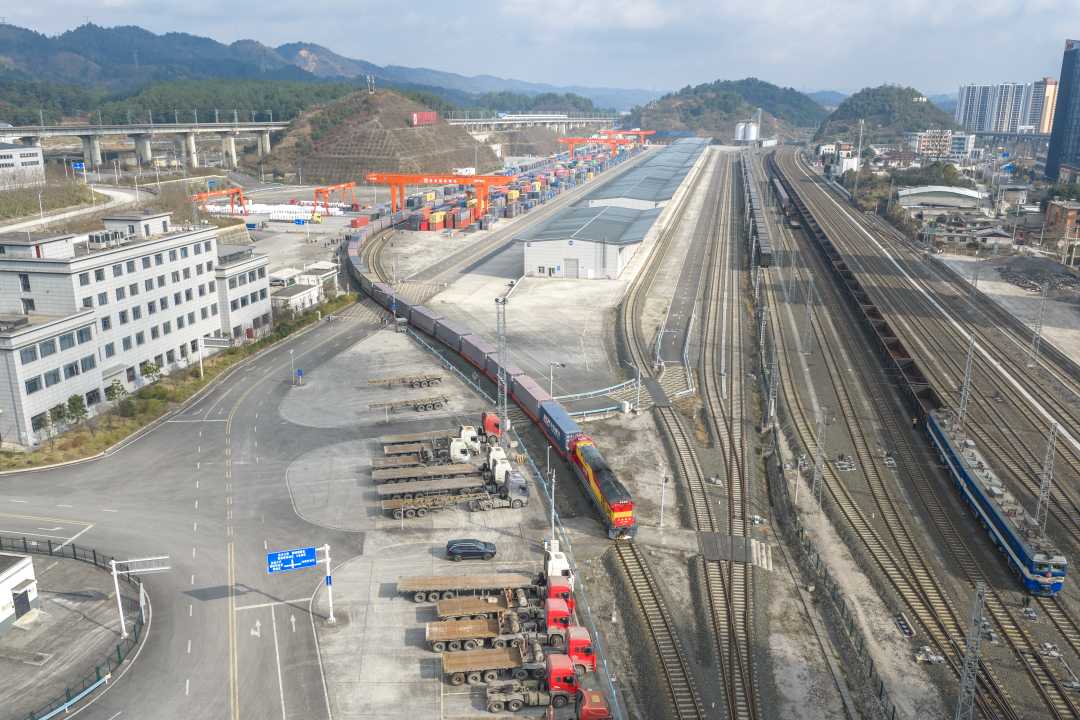
Core Insights - The first China-Europe freight train of the year, loaded with vehicles and components from Guizhou Geely Automobile, departed from the Guiyang International Land Port on February 15 [1] Group 1: Freight Train Details - The freight train carried 55 containers, weighing over 2,000 tons, and is expected to reach the Zhodino station in Minsk region, Belarus, in approximately 15 days, covering a distance of about 11,650 kilometers [2] - The Chengdu Railway Bureau's Guiyang Railway Logistics Center coordinated resources to ensure efficient transportation, allowing the train to depart without intermediate stops or container changes, significantly enhancing transport efficiency [2] Group 2: Customs and Logistics Support - Guiyang Customs implemented various facilitation measures, including "one warehouse collection," "in-zone direct transfer," and "one ticket multiple vehicles," to streamline customs procedures, allowing all formalities to be completed before departure [2] - The Guizhou Comprehensive Bonded Zone is providing a full chain of services for export goods, including customs declaration, logistics, and tax refunds, and is promoting a shift from traditional "point-to-point" to "hub-to-hub" logistics models [2] Group 3: Future Export Opportunities - The China-Europe freight train is expected to enhance the export of "Guizhou-made" new energy vehicles, electromechanical equipment, specialty agricultural products, liquor, and other quality industrial goods to Europe and countries involved in the Belt and Road Initiative [2]

中国生产和制造了几乎所有的东西,为何美国经济仍比中国强大?
Sou Hu Cai Jing· 2026-02-17 09:38
Core Insights - China's manufacturing output is projected to account for nearly 30% of global production by 2025, while the U.S. will be around 13%, highlighting China's dominance in manufacturing despite a lower GDP compared to the U.S. [1][3] - By 2025, China's GDP is expected to exceed $20 trillion, while the U.S. GDP will be approximately $30 trillion, resulting in a significant gap of $9 trillion [3][5] - The disparity in GDP figures is influenced by currency exchange rates, with the nominal GDP calculation favoring the U.S. due to the stronger dollar [5][7] Group 1: Manufacturing and Economic Output - China's manufacturing sector is not just a national industry but a global manufacturing hub, producing a wide range of goods from solar panels to toys [1][3] - The purchasing power parity (PPP) method shows that China's GDP could reach approximately 40.7 trillion international dollars by 2024, surpassing the U.S. [7] - The U.S. maintains a significant advantage in controlling the value chain, with major global companies headquartered there, which impacts GDP calculations [11][19] Group 2: Currency and Financial Dynamics - The U.S. dollar serves as the primary global trade and reserve currency, allowing the U.S. to leverage its currency for economic advantages [13][15] - The U.S. has a substantial overseas direct investment of $9.7 trillion, which is three times that of China, enhancing its global economic influence [15] - The ability of the U.S. to print dollars and influence global markets creates a unique economic position that China is still working to overcome [13][15] Group 3: Innovation and Future Prospects - China is transitioning from being a manufacturing powerhouse to focusing on innovation and technology, with significant investments in R&D, particularly in sectors like electric vehicles and telecommunications [17][19] - The competitive landscape suggests that while the U.S. currently leads in nominal GDP, China's advancements in manufacturing capabilities and innovation may shift the balance in the coming years [21] - The future economic competition will hinge on technological control and the ability to influence global markets, rather than just GDP figures [21]

连涨5年突刹车!中俄闹掰了?普京逼中国二选一,8倍黄金杀疯了!
Sou Hu Cai Jing· 2026-02-17 05:50
Core Insights - The trade volume between China and Russia is projected to decline in 2025 after five years of rapid growth, raising concerns about the stability of their relationship [1][3]. Export Dynamics - China's exports to Russia are expected to drop by over 10% in 2025, significantly impacting the automotive industry [4]. - The decline is attributed to Russia's introduction of a "scrappage tax," which increases the cost of imported vehicles, forcing Chinese automakers to either absorb the tax or localize production [6][8]. Import Trends - Surprisingly, China's imports from Russia, particularly in oil, are also decreasing despite an overall increase in China's crude oil imports [9]. - This strategic reduction in reliance on Russian energy resources is aimed at diversifying supply sources and ensuring energy security [9]. Gold Trade Surge - In contrast to the overall trade decline, Russia's gold exports to China have surged eightfold, indicating a shift in trade settlement methods [10][13]. - This increase in gold transactions reflects both countries' efforts to reduce dependence on the US dollar and explore new financial cooperation models [13]. Cultural and Educational Cooperation - Despite the trade downturn, cultural exchanges between China and Russia are thriving, with the announcement of 2026-2027 as the "China-Russia Education Year" [15][16]. - This initiative aims to deepen cooperation in education, culture, and talent development, fostering stronger social ties between the two nations [16]. Strategic Relationship Evolution - The decline in trade volume signifies a transition from a honeymoon phase based on soaring trade figures to a more rational and pragmatic phase of stability in Sino-Russian relations [16]. - Both countries are carefully navigating their interdependence while maintaining a degree of independence, which is seen as a sustainable approach for major powers [16].

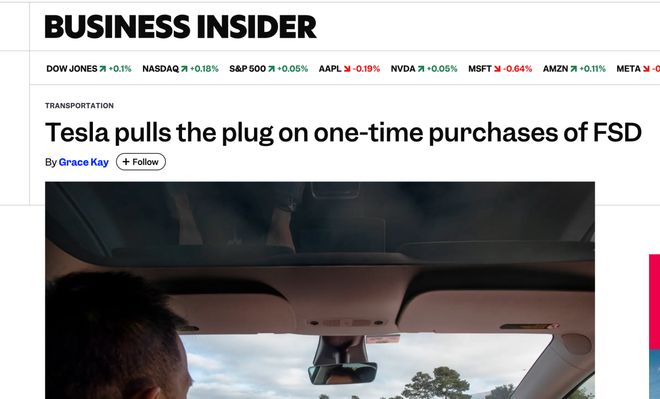
特斯拉 FSD 转向订阅制,购买 Model S/X/Cyberbeast 仍可一次性买断
Xin Lang Cai Jing· 2026-02-17 04:26
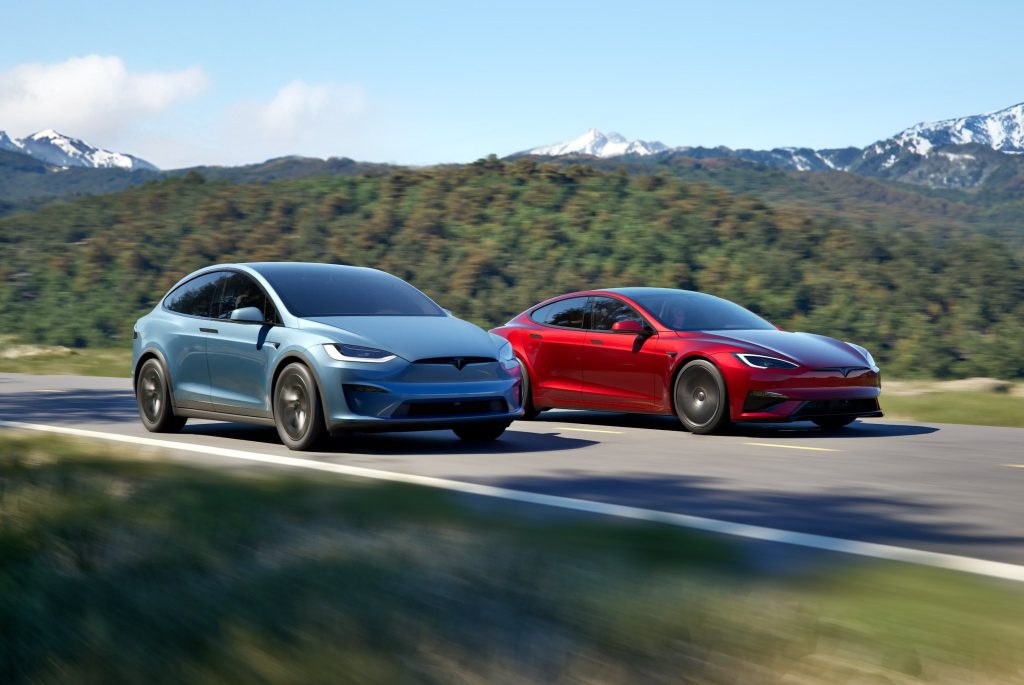
Group 1 - Tesla has officially removed the option for a one-time purchase of the Full Self-Driving (FSD) package from its online configurator in the U.S., shifting to a subscription-only model [1] - There remains a way to purchase FSD outright without monthly fees, but it is limited to buyers of the Model S or Model X through a luxury package [3] - The luxury package includes FSD and supercharging rights, but new terms state these benefits are non-transferable to subsequent owners or other vehicles [6] Group 2 - The current subscription fee for Tesla's FSD in the U.S. is $99 per month, which is approximately 684.3 RMB at the current exchange rate [6] - Future price increases for the subscription are anticipated as features are upgraded, with potential for different pricing models for supervised and unsupervised FSD versions [6] - In other countries, such as Australia, Tesla has postponed the deadline for one-time purchases of FSD to March 31 [6]

长安汽车董事长:智能汽车正在学会“思考”
Zhong Guo Xin Wen Wang· 2026-02-17 04:15
Core Insights - The chairman of Changan Automobile, Zhu Huarong, emphasizes that smart cars are learning to "think" through advanced data processing and deep learning algorithms, showcasing significant technological progress in the industry [1][4]. Group 1: Technological Advancements - Changan's smart vehicles are now capable of driving decisions akin to experienced drivers, indicating a leap in autonomous driving technology [1]. - The company plans to initiate large-scale testing of L3 autonomous driving by the end of 2025, marking a significant milestone in the field [4]. - Zhu Huarong outlines four stages of technology development: virtual simulation testing, closed-course system testing, real-world scenario challenges, and open-road pilot testing [4]. Group 2: Industry Evolution - The initial goal of replacing human drivers has evolved into a focus on providing higher safety standards for human travel, reflecting a broader understanding of the industry's direction [3]. - The Chinese automotive industry has transitioned from relying on foreign technology to exporting its own innovations through international collaborations [3]. Group 3: Legislative and Regulatory Framework - Zhu advocates for accelerating the legislative process in the autonomous driving sector and establishing a forward-looking standard system to lead in global autonomous driving regulations [4]. - Addressing data security concerns, he stresses the importance of creating a regulatory framework to protect user privacy alongside technological advancements [4]. Group 4: Global Market Expansion - Changan's Thailand factory represents a successful localization of production for its electric vehicles, expanding its market reach to Southeast Asia and Europe [6]. - The company is shifting its focus from domestic auto shows to international platforms, enhancing the global presence of Chinese automotive products [6]. - Zhu Huarong envisions smart cars as "intelligent automotive robots," redefining the relationship between humans and vehicles, emphasizing safety and technological aspirations [6].


汽博科普|马年知“马力”
Xin Lang Cai Jing· 2026-02-17 03:56
Group 1 - Since the introduction of the Bugatti Veyron in 2005, over 30 production cars with more than 1000 horsepower have emerged globally, primarily among supercars, with electric vehicles increasingly joining the competition [3] - Chinese automakers are making significant strides in the race for high horsepower vehicles, showcasing their advancements in electric vehicle technology [3] Group 2 - The concept of horsepower was established by James Watt in 1765 to explain the power of steam engines, using a horse as a reference point for measuring work done [5][7] - One horsepower is defined as the ability to lift 1000 pounds 33 feet in one minute, which became the basis for the unit of power [8] - Horsepower has evolved into different definitions, including imperial horsepower (hp) and metric horsepower (ps), with 1 hp approximately equal to 746 watts and 1 ps approximately equal to 735 watts [10][11] Group 3 - The automotive industry sees a trend where higher horsepower does not necessarily equate to better performance, as factors like torque, vehicle weight, and driving conditions also play crucial roles [15] - Many consumers prioritize a balance between power and efficiency, especially in everyday driving scenarios, rather than merely seeking high horsepower [15][18] - The historical context of horsepower tax, which was used to regulate automotive consumption and encourage lower horsepower vehicles, has largely been abandoned in favor of other tax systems [20]

特斯拉取消FSD永久购买选项 仅保留订阅模式
Huan Qiu Wang Zi Xun· 2026-02-17 02:47
Core Insights - Tesla has made a significant change to its Full Self-Driving (FSD) service by eliminating the one-time purchase option of $8,000 in the U.S. market, now only available through a monthly subscription of $99 [1][3] - CEO Elon Musk had previously indicated that this adjustment would take effect soon, emphasizing that Tesla vehicles will have "appreciating asset" characteristics as software capabilities continue to improve [3] - The pricing strategy for FSD has fluctuated over the years, with initial prices around $5,000, peaking at $15,000, and recently adjusted to $8,000 in 2024 [3] - The subscription model was first introduced in 2021 at $199 per month, later reduced to $99, with potential for future price increases as FSD features enhance [3] - Tesla has ceased offering the basic Autopilot feature for free to new car owners, which previously served as a standard highway driving assistance feature, while FSD requires additional payment for urban navigation capabilities [3] - The shift to a subscription model reflects a broader trend in the automotive industry towards software-as-a-service [3] - Musk's compensation is linked to the number of active FSD subscribers, with a target of 10 million subscribers as part of a performance plan approved last year [3]