
潮玩

Search documents
泡泡玛特毛利率70.3%持平爱马仕,直播事故员工称79元挂链定价过高
3 6 Ke· 2025-11-07 09:36
Core Viewpoint - In the first half of 2025, Pop Mart's gross profit margin reached 70.3%, significantly higher than major competitors such as Apple (47.18%), LVMH (66.84%), Richemont (67.2%), and nearly on par with Hermès (70.67%) [1] Group 1 - Pop Mart's gross profit margin of 70.3% in the first half of 2025 is a strong indicator of its financial health and competitive positioning in the market [1] - The company’s gross profit margin is notably higher than that of leading luxury brands, suggesting a robust pricing strategy and brand strength [1] - A recent incident during a live stream raised concerns about the company's public image, as a staff member commented on the high price of a product, indicating potential issues with customer perception [1]



泡泡玛特,股价重挫!回应直播事故→
Zheng Quan Shi Bao· 2025-11-07 09:17
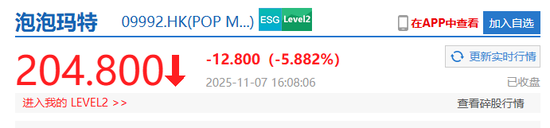
Core Insights - The recent incident involving a live broadcast by Pop Mart has sparked significant discussion, leading to the dismissal of two staff members, although the company has stated that it will not terminate the employees involved in the incident [1][2]. Group 1: Company Performance - Pop Mart's stock price fell significantly by 5.882% as of November 7 [2]. - For the third quarter of 2025, Pop Mart reported an overall revenue growth of 245%-250% year-on-year, with the Chinese market growing by 185%-190% and overseas markets showing remarkable growth of 365%-370% [2]. - The Americas market experienced a year-on-year increase of over 1200%, while Europe saw a growth of over 700% [2]. Group 2: Market Expansion - Pop Mart opened its first store in the Middle East at Hamad International Airport in Doha, which operates 24/7, indicating a strategic focus on tourism-related retail as part of its global expansion [2]. - The company has established over 570 physical stores worldwide, emphasizing its commitment to expanding its international presence [2]. Group 3: Industry Insights - According to China International Capital Corporation (CICC), the Chinese market benefits from a rich variety of IP sources, including online literature, domestic animation, and mobile games, which provide fertile ground for IP development [2]. - The domestic collectible toy market is continuously growing, with consumers increasingly accepting creative and culturally rich IP derivatives, creating opportunities for both domestic and foreign IP [2].
泡泡玛特,股价重挫!回应直播事故→
证券时报· 2025-11-07 09:09
Core Viewpoint - The recent incident involving a live broadcast at Pop Mart has sparked significant discussion, leading to a drop in the company's stock price, despite strong revenue growth reported for Q3 2025. Group 1: Incident and Response - A live broadcast incident occurred where two staff members discussed the high price of a product, leading to public outcry and trending discussions online [1] - Reports indicate that the involved staff members were not terminated, and the company is conducting an internal investigation [1] Group 2: Financial Performance - For Q3 2025, Pop Mart reported an overall revenue growth of 245%-250% year-on-year, with the Chinese market growing by 185%-190% and overseas markets by 365%-370% [3] - The Americas saw a remarkable growth of over 12 times, while Europe experienced a growth of over 7 times [3] Group 3: Expansion and Market Strategy - Pop Mart opened its first store in the Middle East at Hamad International Airport in Doha, which operates 24/7, highlighting its focus on tourism-related retail as a key expansion strategy [3] - The company has established over 570 physical stores globally, indicating a strong commitment to international growth [3] Group 4: Market Potential - According to CICC, China's diverse IP sources from various sectors provide fertile ground for the development of creative and culturally rich IP derivatives, which is crucial for the growth of domestic IP and the introduction of foreign IP [3]
泡泡玛特直播称盲盒贵遭用户不满
Xin Lang Cai Jing· 2025-11-07 08:33
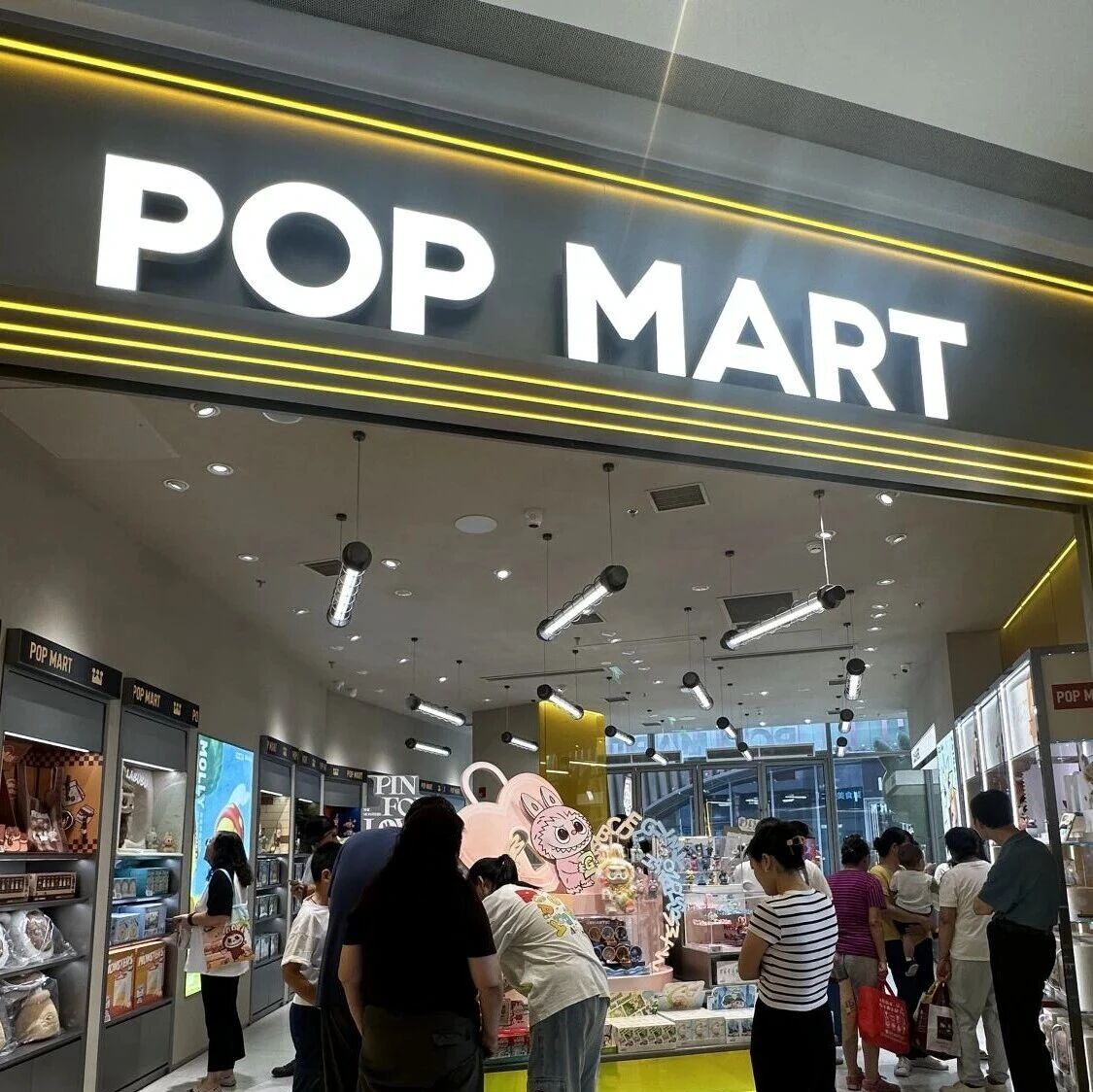
Core Viewpoint - The live broadcast by Pop Mart revealed dissatisfaction among users regarding the pricing of blind boxes, specifically a DIMOO blind box priced at 79 yuan, which was deemed expensive by staff during the live session [1] Group 1: User Reactions - Users expressed strong dissatisfaction after a staff member commented that the 79 yuan price for the DIMOO blind box was "a bit expensive" during a live broadcast [1] - The comment was made in real-time, leading to immediate backlash from viewers [1] Group 2: Company Response - Another staff member in the live broadcast reassured that "there will be people willing to pay," indicating a belief in continued consumer demand despite the criticism [1]

中消协:潮玩商品问题多,成消费者投诉热点
Zhong Guo Xin Wen Wang· 2025-11-07 08:22
Core Insights - The rapid growth of the潮玩 (trendy toy) economy has led to significant consumer complaints regarding product quality and after-sales service [1][2] Group 1: Consumer Complaints - There is a high incidence of product quality issues, with consumers reporting defects such as paint peeling, breakage, and missing parts in trendy toys purchased online [1][2] - Refund and return processes are problematic, with platforms often denying refund requests even when products are not shipped or are found to be defective upon receipt [1][2] - After-sales service is lacking, with consumers experiencing long wait times for customer support and unresolved complaints despite multiple attempts to contact the service [1][2] Group 2: Industry Responsibility - The 中消协 (China Consumer Association) emphasizes the need for a fair and orderly market environment to support the growth of the潮玩 industry, urging operators to prioritize consumer rights [2] - Innovative business models in the潮玩 sector should not be used as an excuse to evade legal responsibilities, and platforms must adhere to the Electronic Commerce Law of the People's Republic of China to ensure transparency and fairness in transactions [2] Group 3: Other Consumer Complaint Trends - Other notable complaint trends include issues with weight loss products, frequent disputes in pet consumption, shortcomings in travel platform services, persistent problems with automatic renewals, limitations in smart driving technology, increased complaints about charging services, and insurance marketing practices needing regulation [3]
恒生指数收跌0.92% 恒生科技指数跌1.8%
Zheng Quan Shi Bao Wang· 2025-11-07 08:17
Market Performance - The Hang Seng Index decreased by 0.92% [1] - The Hang Seng Tech Index fell by 1.8% [1] Company Movements - Tianqi Lithium (002466) saw an increase of over 7% [1] - Ganfeng Lithium (002460) rose by more than 3% [1] - Gold stocks experienced gains, with Zifeng Gold rising over 5% and WanGuo Gold Group increasing by more than 2% [1] - Dipu Technology experienced a significant drop of over 30% [1] - Silis (601127) declined by nearly 8% [1] - Pop Mart fell by nearly 6% [1] - Dongfang Zhenxuan decreased by over 5% [1]
突发利空!2700亿潮玩一哥跳水,股价自历史高点已跌近40%!当前是否值得投资?股民吵起来了...
雪球· 2025-11-07 08:05
Market Overview - The market experienced fluctuations with all three major indices retreating after initial gains, with the Shanghai Composite Index down 0.25%, the Shenzhen Component down 0.36%, and the ChiNext Index down 0.51% [2] - The total trading volume in the Shanghai and Shenzhen markets was 2 trillion yuan, a decrease of 56.2 billion yuan compared to the previous trading day, with over 3,100 stocks declining [3] Sector Performance - Sectors such as organic silicon, fluorine chemicals, phosphorus chemicals, and batteries saw significant gains, while AI models and software development sectors faced notable declines [4] Company Spotlight: Pop Mart - Pop Mart's stock fell over 5%, reaching a new low since the recent adjustment, with a market capitalization of 274.7 billion HKD, marking a 40% drop from its historical peak [7][10] - The controversy arose from a live-stream incident where staff questioned the pricing of a product, leading to public backlash and trending discussions on social media [10] - Despite the controversy, Pop Mart reported a 245% year-on-year increase in overall revenue for Q3, and analysts remain optimistic about its long-term value, especially with the upcoming holiday sales season [11] Investor Sentiment on Pop Mart - Investor opinions on Pop Mart are divided, with some expressing skepticism about its ability to sustain high valuations given its current revenue and profit levels [12] - Others argue that Pop Mart's business model, which targets consumers less concerned with price, remains strong, suggesting that the recent stock drop is more driven by market sentiment than fundamentals [12] - The potential success of Pop Mart's international strategy is seen as a key factor in determining its future valuation [13] Semiconductor Sector - The storage chip sector showed signs of activity, with companies like Demingli reaching historical highs, driven by tight supply and demand dynamics [14][18] - SK Hynix's negotiations with Nvidia for HBM4 supply indicate a price increase of over 10% compared to previous expectations, with DDR5 spot prices rising by 25% [18] Organic Silicon Sector - The organic silicon sector has been on a strong upward trend, with significant gains in stock prices, particularly for companies like Dongyue Silicon Material [19][20] - The demand for organic silicon is projected to grow significantly, with consumption expected to rise from 1.062 million tons in 2019 to 1.816 million tons by 2024, reflecting a compound annual growth rate of 11.3% [23]

热搜第一!泡泡玛特直播“翻车”,最新回应
Sou Hu Cai Jing· 2025-11-07 06:56
Core Viewpoint - The incident involving "Bubble Mart live streaming accident" has gained significant attention on social media, particularly on Weibo, where it became a trending topic on November 7 [1]. Group 1: Incident Details - On November 6, during a live stream showcasing the DIMOO pendant blind box priced at 79 yuan, a staff member made an inappropriate comment about the product's price, which sparked dissatisfaction among viewers [2]. - Following the incident, there were rumors that the two involved staff members had been fired, but internal sources from Bubble Mart confirmed that while an investigation is ongoing, no employees would be dismissed [4]. Group 2: Product Information - The DIMOO pendant blind box is part of a newly launched series by Bubble Mart, which includes 6 regular items and 1 hidden item, with the regular item probability being 1:6 and the hidden item probability being 1:72. The price for a single blind box is 79 yuan, while a full box costs 474 yuan [5][6].

中消协:第三季度共受理消费者投诉536761件
Zhong Guo Xin Wen Wang· 2025-11-07 06:56
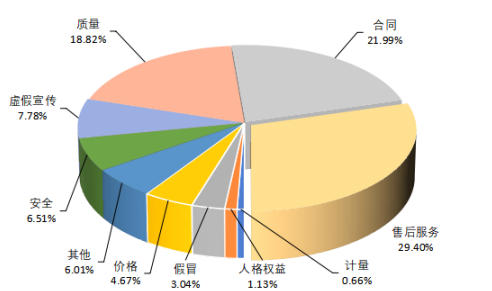
Core Points - The China Consumers Association reported a total of 536,761 consumer complaints in the third quarter of 2025, representing a year-on-year increase of 7.9% [1] - A total of 274,427 complaints were resolved, recovering economic losses of 236 million yuan for consumers [1] - The number of consumer visits and consultations reached 155,900 [1] Complaint Nature Analysis - After analyzing the nature of complaints, after-sales service issues were the most prominent, accounting for 29.4% of total complaints [2] - Compared to the third quarter of 2024, complaints regarding false advertising, safety, and contract issues increased, while complaints about after-sales service, quality, and measurement decreased [4] Complaint Classification by Issues - In the third quarter of 2025, complaints related to after-sales service totaled 157,786, representing 29.4% of total complaints, while contract-related complaints were 118,043 (21.99%) [5] - Quality complaints accounted for 101,001 (18.82%), and false advertising complaints were 41,739 (7.78%) [5] Product and Service Category Analysis - Product-related complaints totaled 283,263, making up 52.77% of total complaints, while service-related complaints were 231,542 (43.14%) [6] - The top five categories for product complaints included home electronics, daily goods, food, clothing, and transportation tools [6] - For service complaints, the leading categories were life and social services, internet services, education and training services, cultural and entertainment services, and sales services [6] Complaint Hotspots and Typical Cases - The rise of the trendy toy economy has led to significant complaints regarding product quality and after-sales service, particularly in blind box and figurine purchases [11] - Complaints about misleading advertising and safety issues in the weight loss product market have also surged, with many consumers reporting adverse health effects [15] - Pet consumption disputes have increased, with issues such as hidden health problems and misleading marketing practices being reported [19] - Complaints related to overseas travel services have highlighted shortcomings in information accuracy and service fulfillment by travel platforms [23] - The issue of automatic renewal services continues to rise, with complaints about hidden terms and lack of cancellation options [27] - Complaints regarding smart driving technology have emerged, focusing on performance limitations and lack of transparency in data sharing [31] - A significant increase in complaints about power banks has been noted, particularly concerning product recalls and safety concerns [37] - Insurance consumption complaints have risen, with issues related to misleading marketing and unauthorized automatic renewals being prevalent [38]
中消协点名潮玩商品质量问题多发
Jing Ji Guan Cha Wang· 2025-11-07 06:51
Core Insights - The report highlights significant consumer complaints regarding the quality and service of certain trendy toy platforms, indicating a need for improved regulations and practices in the industry [1] Group 1: Product Quality Issues - Consumers frequently report quality defects in trendy toys purchased from platforms, including issues such as paint peeling, breakage, and missing parts [1] Group 2: Refund and Return Difficulties - Many consumers face challenges when attempting to obtain refunds or returns, with platforms often denying requests based on "platform rules" even when products are undelivered or defective [1] Group 3: After-Sales Service Shortcomings - There are widespread complaints about slow customer service response times on trendy toy platforms, with many consumers experiencing long wait times and unresolved complaints [1]