脑机接口

Search documents
四大证券报精华摘要:11月4日
Zhong Guo Jin Rong Xin Xi Wang· 2025-11-04 00:41
Group 1 - The A-share market experienced a rebound on November 3, with all three major indices rising, and over 3,500 stocks increasing in value, indicating a positive market trend [1] - The trading volume in the A-share market reached 2.13 trillion yuan, marking the sixth consecutive trading day above 2 trillion yuan, reflecting strong market activity [1] - Over 180 stocks have been included in the brokerage "golden stock" list for November, with Top Group receiving recommendations from five brokerages, highlighting its popularity among investors [1] Group 2 - The banking sector, specifically Industrial and Commercial Bank of China and China Construction Bank, announced a temporary suspension of certain gold investment services, which was later lifted, indicating a response to changes in gold tax policies and market conditions [2] - The securities industry is undergoing significant changes, with six brokerages having completed name changes this year, reflecting a strategic restructuring in response to regulatory pressures and market challenges [3] - The Hong Kong stock market has become a popular listing destination, with IPO financing reaching 216.47 billion HKD in 2023, a 203.5% increase year-on-year, indicating a robust market environment [3] Group 3 - The Ministry of Industry and Information Technology and the Ministry of Water Resources released a plan for the high-quality development of water-saving equipment, aiming to enhance the water resource utilization in response to the country's water scarcity issues [4] - The marine economy in China showed a positive trend, with a GDP of 7.9 trillion yuan in the first three quarters of the year, growing by 5.6% year-on-year, and a significant increase in approved marine project areas [5] - The energy storage sector is witnessing rapid growth, with major companies securing significant contracts, and the global lithium carbonate price has surged due to increased demand and inventory depletion [6] Group 4 - Local governments in provinces like Shanxi, Henan, and Guangdong are introducing policies to promote brain-computer interface technology, indicating a push for innovation and development in this emerging field [7] - Securities firms are increasing their margin trading limits to meet rising market demand, reflecting a bullish sentiment in the A-share market and a competitive landscape among brokerages [8] - Major projects in the Shanghai stock market are focusing on modern industrial systems, including traditional industry upgrades and investments in strategic emerging industries like semiconductors [8]
21评论丨为何要保持制造业合理比重?
2 1 Shi Ji Jing Ji Bao Dao· 2025-11-03 22:35
Core Insights - The recent proposal by the Central Committee emphasizes the importance of a modern industrial system as the material and technological foundation for Chinese-style modernization, focusing on the real economy and aiming for intelligent, green, and integrated development [2][3] Group 1: Strategic Focus - The primary strategic task for the 15th Five-Year Plan has shifted from technological innovation to industrial system construction and real economy development, with technology now serving as a supporting role [2][3] - The dual motivations for this strategic shift include the transition of development stages and the evolution of competitive paradigms, highlighting the need for innovation to be rooted in the industrial context to enhance economic resilience and competitiveness [3] Group 2: Manufacturing Sector Importance - The proposal underscores the critical role of maintaining a reasonable proportion of manufacturing in the economy, which is essential for strengthening the foundation of the real economy [3][4] - Historical data indicates that countries like Japan and Germany maintain a stable manufacturing value-added ratio of around 20% of GDP, which supports their international competitiveness [4] Group 3: Development Pathways - The construction of a modern industrial system should focus on four key areas: optimizing the manufacturing tier, promoting service industry development, solidifying infrastructure, and enhancing the market environment [5][6] - Specific actions include upgrading traditional industries, fostering new industries as core pillars, and innovating regulatory frameworks to support future industries [5][6] - The service sector is to be expanded and improved, integrating with advanced manufacturing and modern agriculture to enhance overall economic efficiency [6]


年内脑机接口产业吸引投资近10亿元
Zheng Quan Ri Bao· 2025-11-03 16:08
Core Viewpoint - The brain-computer interface (BCI) industry is experiencing significant policy support and technological advancements in China, with a focus on commercial applications in the medical and health sectors [1][2][3] Policy Initiatives - Multiple regions, including Shanxi, Henan, and Guangdong, have introduced new policies to promote the development of the BCI industry, emphasizing the construction of smart medical research facilities [1] - The Ministry of Industry and Information Technology has issued guidelines to enhance innovation in the BCI sector, focusing on hardware and software development [1] Technological Development - The BCI technology is transitioning from laboratory research to commercial applications, particularly in the medical field, which is seen as having the highest willingness to pay [2] - The BCI system consists of three components: the brain (neural activity signals), the machine (devices controlled by humans), and the interface (algorithms that convert neural signals into machine-readable commands) [1] Market Expansion - The BCI market in China is projected to reach 3.203 billion yuan in 2024, with an annual growth rate of 18.81%, and is expected to grow to 3.830 billion yuan by 2025 [2] - Experts believe that the expanding market will create new consumption hotspots and drive upgrades across various scenarios [2] Investment Trends - As of November 3, 2023, there have been 16 investment events in the BCI sector this year, totaling 983 million yuan, with an additional 6 events expected in 2024 amounting to 201 million yuan [3] - The influx of capital into the BCI sector indicates a recognition of its disruptive potential, with expectations for continued investment over the next 3 to 5 years [3] Future Development Focus - Key tasks for the BCI industry include enhancing core technologies (materials, chips, algorithms), promoting the transformation of scientific achievements, and developing a skilled workforce [3] - There is a need to establish and improve industry standards while ensuring ethical and data security considerations are met [3]
人类首次机械飞升,马斯克豪言Neuralink击败全人类
3 6 Ke· 2025-11-03 02:33
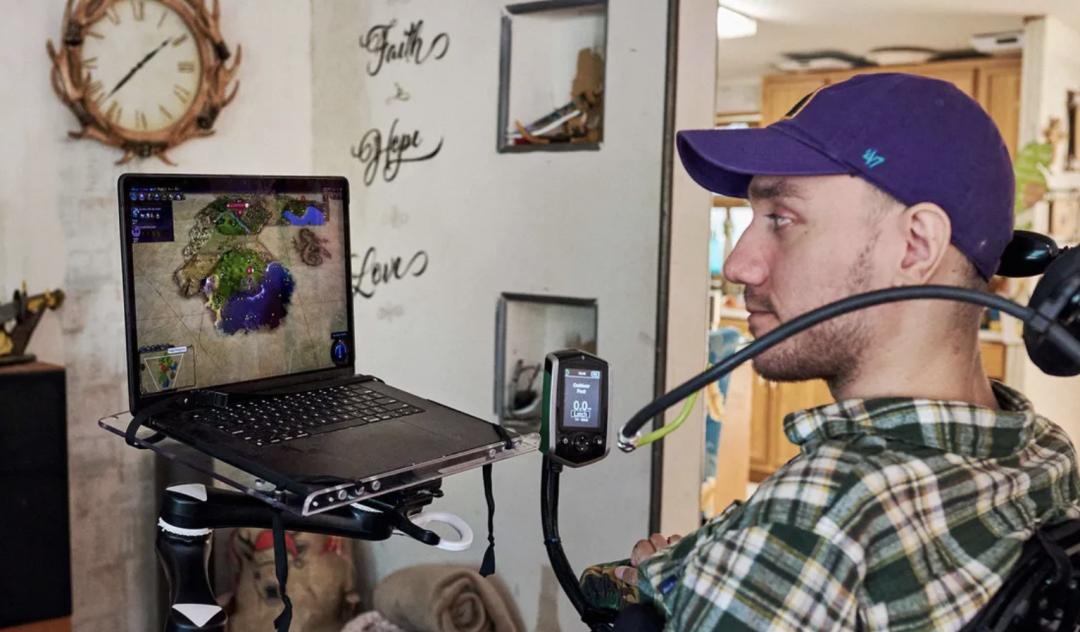
Core Insights - Neuralink has implanted devices in 12 individuals, with a cumulative usage exceeding 2000 days, enabling patients to regain mobility and pursue academic and professional endeavors [1][7][8] - Elon Musk announced that Noland Arbaugh, the first recipient of the Neuralink implant, may be the first to receive an upgrade or a dual-chip implant to further enhance capabilities [1][3] Group 1: Patient Experiences and Outcomes - Noland Arbaugh, paralyzed from a diving accident, has regained significant abilities, including typing with his thoughts and engaging in academic studies, thanks to the Neuralink device [6][8] - The technology has transformed the lives of patients, allowing them to achieve previously unimaginable feats, such as competing in video games at a high level [4][6] - Arbaugh has expressed his intention to share the transformative impact of Neuralink technology on his life and its potential for others [23] Group 2: Technological Advancements and Clinical Trials - Neuralink has initiated a new clinical trial aimed at enabling participants to generate text through thought alone, which could revolutionize communication for those unable to speak [10][14] - The company has received FDA approval for this trial, which is a significant step towards expanding the clinical applications of their technology [16][17] - Neuralink's technology is designed to decode brain signals and translate them into actions, marking a shift from traditional assistive communication methods [12][18] Group 3: Future Aspirations and Market Potential - Neuralink aims to implant devices in 20,000 individuals annually by 2031, with a projected annual revenue exceeding $1 billion [14][18] - The company is currently valued at $9 billion, having raised over $1 billion in its latest funding round [18] - The ultimate goal of Neuralink is to facilitate communication with AI at the speed of thought, surpassing traditional language [10][14]
马斯克:Neuralink 脑机接口使用者未来用意念打游戏能赢所有人
Sou Hu Cai Jing· 2025-11-02 07:56
除了身体康复之外,阿博强调,Neuralink 让他重新实现了日常生活的各项目标。他目前正在攻读神经科学专业,修读化学、生物学和微积分预备课程,并 且成绩优异。他表示,如果没有 Neuralink 的帮助,这一切都是不可能实现的。 在回应中,马斯克表示,阿博可能成为首位接受 Neuralink 升级的患者。他在 X 平台上写道:"诺兰德或许会是首个获得 Neuralink 升级,甚至接受双侧 Neuralink 植入的人,以进一步增强其能力。在不久的将来,Neuralink 使用者将能在快速反应类电子游戏中击败大多数人,最终超越所有人。" IT之家注意到,阿博本人也在 X 平台上分享了自己使用 Neuralink 设备"Eve"(他亲切地为设备命名)后的生活近况。他表示,随着越来越多的参与者加入 公司的临床试验,他本人与 Neuralink 的直接合作已有所减少。尽管最近因压力性溃疡遭遇了一次健康挫折,他仍保持乐观态度,并透露将在 2026 年初发布 其植入两周年的"重大消息"。 根据埃隆・马斯克(Elon Musk)近期的言论,Neuralink 公司似乎正考虑为其首位接受脑机接口植入的人类患者进行一次"升 ...
机械设备:脑机接口产业定路线,政策标准促规范发展
Huafu Securities· 2025-11-02 07:04
Investment Rating - The industry rating is "Outperform the Market" indicating that the overall return of the industry is expected to exceed the market benchmark index by more than 5% in the next 6 months [15]. Core Insights - The first medical device standard for brain-computer interfaces (BCI) in China will be implemented on January 1, 2024, with a goal set for 2030 to enhance innovation capabilities and cultivate leading enterprises, promoting a standardized and systematic industry development [3][4]. - The BCI industry is rapidly growing, with the domestic market expected to reach 3.2 billion yuan in 2024 and grow to 6.14 billion yuan by 2028 [3][5]. - The global BCI market is projected to reach approximately 2.62 billion USD in 2024, increasing to 2.94 billion USD in 2025, and potentially growing to 12.4 billion USD by 2034, with a compound annual growth rate of 17.35% over the next decade [5]. Summary by Sections Policy and Market Growth - The dual approach of policy and standards is expected to drive steady market growth in the BCI sector, with significant government support and a clear development roadmap [2][3]. Applications and Challenges - Current applications of BCI technology span medical health, industrial manufacturing, and consumer life, addressing issues such as neurological disease treatment and enhancing industrial safety [4]. - The industry faces challenges related to technology, ecosystem, and ethics, necessitating increased investment in core technology research and talent development [4]. Investment Opportunities - Recommended companies to watch in the BCI sector include Rock Mountain Technology, Hanwei Technology, Sanbo Brain Science, Innovation Medical, Dongfang Zhongke, Xiangyu Medical, Entropy Technology, Chengyitong, Weisi Medical, Mailande, Aipeng Medical, and Beiyikang [6].
“十五五”锚定六大未来产业,新奥产业智能助力新质生产力发展
Zheng Quan Shi Bao Wang· 2025-11-02 03:06
Core Insights - The "15th Five-Year Plan" emphasizes the construction of a modern industrial system centered on advanced manufacturing, focusing on intelligent, green, and integrated development [1] - New industries such as quantum technology, biomanufacturing, hydrogen energy, nuclear fusion energy, brain-computer interfaces, embodied intelligence, and 6G mobile communication are identified as new economic growth points [1] Group 1: Future Industries - New Energy: Newao has been exploring nuclear fusion since 2017, focusing on the "hydrogen-boron fusion" route, achieving significant breakthroughs with the "Xuanlong-50U" device, which reached a plasma current of one million amperes and a magnetic field of 1.2T [2] - Brain-Computer Interfaces: Newao has initiated the "China Brain-Computer Valley" project to promote the industrialization of brain-computer interfaces, positioning itself in a competitive global landscape [3] Group 2: Intelligent Transformation - Comprehensive Empowerment: Newao is enhancing industrial intelligence transformation by developing platforms like the "Pan-Energy Network" and "Safety Network," focusing on integrated smart models in energy and safety sectors [4] - Energy and Carbon Intelligence: Newao has introduced integrated digital products and services to help industries achieve energy savings and efficiency improvements, exemplified by a project that increased green electricity usage by 15% [4] Group 3: Safety Intelligence - Safety Solutions: Leveraging over 30 years of experience in gas safety operations, Newao provides tailored safety solutions, such as an intelligent risk map for hazardous materials transportation, ensuring zero accidents in a technology park [5] Group 4: Future Outlook - Continued Investment: Newao plans to deepen its industrial intelligence transformation and increase R&D investment in future technologies, contributing to the modern industrial system with robust technology and practical solutions [6]

定调:六大未来产业发令枪响!万亿级城市之争,开始了
Sou Hu Cai Jing· 2025-11-01 19:39
Core Insights - The recent press conference by the National Development and Reform Commission indicates a shift in the engine of China's economic development [1] - Emerging fields such as quantum technology, brain-computer interfaces, and nuclear fusion energy are identified as "new economic growth points," emphasizing their transformation into economic benefits [3][5] - The inclusion of hydrogen energy and nuclear fusion energy in the latest recommendations signals their critical roles in energy transition [10] Quantum Technology - Hefei ranks second globally in quantum industry, with three-quarters of leading companies located there, supported by the University of Science and Technology of China [7] - Key applications for quantum computing include financial modeling, drug development, and materials design, with Beijing and Shanghai focusing on practical applications [9] - Beijing aims for a complete industrial chain in hydrogen energy, while Shanghai leads in practical applications with significant data on fuel cell vehicles [11] Hydrogen Energy - Hydrogen energy is positioned as a future clean energy source, though its technology is not fully mature, presenting challenges for large-scale application [10] - Beijing's strategy involves a comprehensive approach to the hydrogen industry, while Shanghai demonstrates practical applications with substantial mileage data [11] - Cities like Guangzhou and Shenzhen are also making significant investments and advancements in hydrogen energy projects [11] Brain-Computer Interfaces - Brain-computer interface technology has rapidly developed, with Shanghai covering all technical routes and Beijing focusing on non-invasive applications [12][13] - Shenzhen is targeting commercial applications, with major companies planning to launch multiple application scenarios by 2026 [13] - The overall market for brain-computer interfaces remains in its early stages, with uncertain future developments [13] Humanoid Robots - The development of humanoid robots in China has gained attention, with significant contributions from institutions like Tsinghua University and Peking University [14] - Shenzhen leads in the number of industry chain enterprises, with a total output value of 170 billion yuan, while Shanghai aims to create a complete ecosystem for humanoid robots [14] - The success of companies like the one in Hangzhou is attributed to long-term technological accumulation [14] 6G Technology - Although not yet commercialized, countries are actively laying the groundwork for 6G technology, with Beijing focusing on standardization and Shenzhen on practical applications [15] - Nanjing's achievements in terahertz communication demonstrate significant technological capabilities [15] - Cities like Chengdu and Wuhan are developing 6G technology but lag behind Beijing and Shanghai [15] Interconnected Technologies - Technologies such as quantum technology, bio-manufacturing, hydrogen and nuclear fusion energy, brain-computer interfaces, and 6G are interconnected, forming the underlying logic of future economies [16] - Cities that strategically invest in these fields are positioned to become leaders in the next era of competition [16][17]
Neuralink首例受试者近况曝光
财联社· 2025-11-01 06:44
Core Insights - Neuralink has successfully implanted its brain-machine interface in Nolan Arbaugh, who can now control devices with his thoughts and is pursuing academic interests [3][6] - Elon Musk predicts that future Neuralink users will have enhanced capabilities, potentially dominating in fast-paced video games [3] - The company is expanding its participant base and aims for regulatory approval of its "mind-reading" device by 2029, with significant revenue projections [7] Group 1 - Nolan Arbaugh, the first recipient of Neuralink's device, has regained some control over his life and is planning to launch a personal brand by 2026 [3][6] - Following his surgery, Arbaugh was able to control a computer and play video games within weeks, showcasing the device's effectiveness [6] - Musk has indicated that future versions of the device will allow for more advanced interactions, akin to having dual control capabilities [6] Group 2 - Neuralink has recently expanded its trials to the UK, with its first participant being a patient with motor neuron disease who can now control a computer using thoughts [7] - The company anticipates performing 2,000 surgeries annually by 2029, generating at least $100 million in revenue, with plans to increase to 10,000 surgeries and over $500 million by 2030 [7]

2000万美元重注强脑科技,三七互娱落子脑机接口新纪元
Tai Mei Ti A P P· 2025-11-01 02:23
Core Insights - The strategic investment of $20 million by the company in BrainCo marks a significant move in its technology strategy, particularly in the brain-computer interface (BCI) sector, which is seen as a key area for future human-computer interaction [2][4] - BrainCo, as the first unicorn in China's BCI field, possesses over 480 authorized patents and has products certified by FDA and CE, highlighting its strong market position and technological capabilities [2][4] - The investment aligns with the company's long-term vision of evolving from a content provider to a technology-driven enterprise, emphasizing a systematic approach to technology investment [3][4] Strategic Evolution - The company's investment strategy is centered around the theme of "next-generation human-computer interaction," with previous investments in various AI and XR-related companies that complement its core business [3][4] - Since 2021, the company has focused on the "metaverse" as a core investment direction, expanding its reach into AI, XR, and related upstream and downstream sectors, including semiconductors and spatial computing [3][4] - Unlike traditional internet companies that adopt a broad investment approach, the company emphasizes synergy and practical application in its technology investments [3][4] Ecosystem Empowerment - The investment in BrainCo is not merely a financial decision but a strategic move to capture future ecological advantages and drive industry transformation through BCI technology [5][6] - The integration of BCI with existing XR devices and digital content is expected to create new interaction paradigms, fundamentally changing the nature of entertainment products [5][6] - BCI technology is anticipated to reshape the industry value chain, creating new opportunities across various sectors, including healthcare, education, and industrial applications [5][6] Market Potential - The global BCI medical market is projected to reach hundreds of billions by 2045, with the overall market potentially exceeding one trillion, indicating vast growth opportunities [6] - The company's investment strategy reflects an ecosystem empowerment mindset, providing valuable application scenarios and industry resources to accelerate the commercialization of BCI technology [6] - The alignment of the company's strategic foresight with emerging technological trends positions it to benefit from both technological innovation and industry development in the future [6]