
跨境电商

Search documents
东莞洪枫跨境电商有限公司成立 注册资本1万人民币
Sou Hu Cai Jing· 2025-11-01 02:46
Core Viewpoint - Dongguan Hongfeng Cross-border E-commerce Co., Ltd. has been established with a registered capital of 10,000 RMB, indicating a new player in the cross-border e-commerce sector [1] Company Overview - The legal representative of the company is Lin Rongjie [1] - The company is engaged in a wide range of activities including internet sales, network technology services, and various product sales such as electronic materials, household appliances, and sports equipment [1] Business Scope - The business scope includes general projects such as: - Internet sales (excluding licensed goods) - Research and sales of electronic materials - Wholesale of computer hardware and software [1] - Additional activities include: - Sales of consumer goods like cosmetics, home products, and jewelry - Import and export of goods and technology [1]
拿下“世界级” 广州要重返全国第一?
Mei Ri Jing Ji Xin Wen· 2025-10-31 16:29
Core Viewpoint - The expansion of Guangzhou Baiyun International Airport marks a significant milestone, making it the first airport in China to operate five commercial runways, with a capacity to handle 120 million passengers and 3.8 million tons of cargo annually, thus being dubbed the "world's largest single terminal airport" [1] Group 1: Airport Expansion and Capacity - The newly opened T3 terminal and fifth runway enable Guangzhou Airport to meet the growing demand for passenger and cargo transport, enhancing its status as a major international aviation hub [1] - The airport's passenger throughput reached 73.38 million in 2019, with a growth rate of 5.2%, surpassing major competitors like Beijing and Shanghai at that time [2] - Following the expansion, Guangzhou Airport is projected to achieve a passenger throughput of 120 million by 2030 and 140 million by 2045, breaking previous design limits [3] Group 2: Economic Impact and Cross-Border E-commerce - Guangzhou's foreign trade import and export volume reached 923.68 billion, with a growth rate of 12.5%, leading among major cities, driven by a 21.2% increase in exports [5] - The airport's enhanced cargo capacity supports the booming cross-border e-commerce sector, which saw a significant increase in export volume, with 33.3% of international cargo being cross-border e-commerce in 2023 [5][6] - Guangdong province has become a hub for cross-border e-commerce, with its import and export volume skyrocketing from 11.3 billion to 843.3 billion, accounting for over 30% of the national total [6][7] Group 3: Competitive Landscape and Future Challenges - The competition among major airports in the Guangdong-Hong Kong-Macau Greater Bay Area is intensifying, with Guangzhou, Shenzhen, and Hong Kong vying for international routes and passenger traffic [9][10] - Despite recent growth, Guangzhou Airport's international passenger throughput remains lower than that of Shanghai, indicating a need for improved international connectivity [10] - The management and coordination among the three major airports in the Greater Bay Area will be crucial for optimizing the overall development of the airport cluster [11]
前三季净利跌7成 华凯易佰握5亿现金流成转型“安全垫”
Nan Fang Du Shi Bao· 2025-10-31 15:22
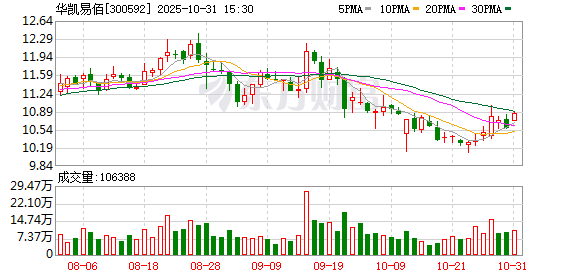
Core Insights - The financial report of Huakai Yibai for Q3 2025 shows a stark contrast with revenue maintaining double-digit growth while net profit significantly declines, indicating strategic adjustments and transformation pains amid industry changes [2][5] Company Overview - Huakai Yibai, established in 2009, transitioned from a design studio to a leading player in cross-border e-commerce after acquiring Yibai Network in 2019 [3] - The company operates with a diversified business model, including Yibai Network focusing on general product operations, Tongtuo Technology on premium products, and Yimai Ecological Platform empowering merchants, with over 1 million SKUs and more than 10 branches globally [3] - In 2023, Huakai Yibai acquired Tongtuo Technology for 540 million yuan, enhancing its supply chain and overseas warehouse capabilities, marking a significant industry consolidation event [3] Financial Performance - For the first three quarters of 2025, Huakai Yibai reported total revenue of 6.74 billion yuan, a year-on-year increase of 10.21%, but net profit dropped to 49.41 million yuan, a decline of 73.90% [5][6] - The third quarter saw revenue of 2.20 billion yuan, a decrease of 15.10%, marking the first quarterly revenue decline in the reporting period, with net profit falling by 76.87% to 12.67 million yuan [5][6] - Operating cash flow was a highlight, with a net cash flow from operating activities of 579.36 million yuan, representing a 239% increase, and free cash flow accounting for 3.71% of revenue [8] Industry Context - The cross-border e-commerce sector faces challenges from frequent policy adjustments, rising compliance requirements, and increased international trade friction, leading to heightened competition and price wars [7] - Huakai Yibai's reliance on Amazon remains significant, with over 60% of sales coming from this platform, indicating vulnerability to platform policy changes [7] - The integration of Tongtuo Technology is ongoing, with the latter achieving profitability in H1 2025, contributing 2.82 million yuan to net profit, but full synergy realization will take time [7] Strategic Adjustments - The company is focusing on optimizing its business structure and improving asset quality, which has slowed revenue growth [7] - Inventory management has improved, with inventory levels decreasing by 30.38% to 1.27 billion yuan by the end of Q3 2025, enhancing operational efficiency despite short-term profit pressures from increased promotions [7] - The Yimai Ecological Platform is rapidly growing, with over 339 partner merchants, a 23.27% increase from the end of 2024, potentially becoming a new growth engine for the company [8] Comparative Analysis - Huakai Yibai's performance contrasts sharply with competitors like Daotong Technology, which expects a net profit of 710 to 738 million yuan for the same period, highlighting the advantages of focusing on vertical markets and technological innovation [9] - The industry trend indicates that reliance on traditional distribution models is becoming unsustainable, emphasizing the need for Huakai Yibai to enhance product value and diversify its platform offerings to overcome transformation challenges [9]


前三季净利跌7成, 华凯易佰握5亿现金流成转型“安全垫”
Nan Fang Du Shi Bao· 2025-10-31 15:00
Core Insights - The article highlights the contrasting financial performance of Huakai Yibai, a leading player in China's cross-border e-commerce sector, with revenue showing double-digit growth while net profit significantly declined due to industry changes and strategic adjustments [2][6][10] Financial Performance - For the first three quarters of 2025, Huakai Yibai reported total revenue of 6.74 billion yuan, a year-on-year increase of 10.21%, indicating resilience in its business fundamentals [6][7] - However, the net profit attributable to shareholders plummeted by 73.90% to 49.41 million yuan, with the non-recurring net profit dropping by 81.12% to 35.18 million yuan [6][7] - In Q3 2025, the company experienced a revenue decline of 15.10% to 2.20 billion yuan, marking the first quarterly year-on-year revenue drop during the reporting period [6][7] Cost and Profitability Challenges - The company's operating costs increased by 14.32% to 4.54 billion yuan, while total expenses rose by 11.67% to 2.12 billion yuan, outpacing revenue growth and compressing profit margins [6][8] - The gross profit margin was negatively impacted by increased promotional activities aimed at clearing inefficient inventory, alongside rising warehousing and logistics costs [8][9] Strategic Adjustments and Market Conditions - The cross-border e-commerce industry is facing heightened competition, frequent policy adjustments, and rising international trade friction, leading to increased operational uncertainties [8][10] - Huakai Yibai is focusing on optimizing its business structure and enhancing asset quality, which has resulted in a slowdown in revenue growth [8][10] - The company remains heavily reliant on Amazon, with over 60% of sales coming from this platform, exposing it to risks from potential policy changes [8][10] Cash Flow and Future Outlook - Despite profitability pressures, Huakai Yibai's cash flow remains strong, with net cash flow from operating activities reaching 579 million yuan, representing a 239% increase [9][10] - The company’s ecosystem platform, Yimai, is rapidly growing, with the number of partner merchants exceeding 339, a 23.27% increase from the end of 2024, indicating potential for future growth [9][10] - Analysts suggest that the worst may be over for Huakai Yibai, with expectations for a recovery in performance in 2025 [10]

前三季度西安高新区外贸持续领跑
Sou Hu Cai Jing· 2025-10-31 10:35
Core Insights - Xi'an High-tech Zone plays a crucial role in China's (Shaanxi) Free Trade Pilot Zone, leading high-quality development through an open economy [1] - In the first three quarters of this year, the total import and export value reached 250.53 billion yuan, a year-on-year increase of 19.4%, contributing over 80% to the city's foreign trade growth [1] - The zone's export performance is particularly strong, with exports reaching 168.78 billion yuan, up 27.9% year-on-year, while imports grew by 3.2% to 81.75 billion yuan, resulting in a trade surplus of 87.03 billion yuan [1] Trade Performance - General trade increased by 46.3%, becoming the main driving force for foreign trade growth, indicating enhanced competitive strength of local industries [1] - Processing trade grew by 9%, and bonded logistics increased by 4.8%, showcasing the resilience of diverse trade methods [1] - The top 30 enterprises in the zone accounted for over 93% of the total import and export value, with a total of 234.83 billion yuan, reflecting significant driving effects [1] Export Dynamics - Mechanical and electrical products saw a year-on-year export increase of 29.2%, while automotive exports surged by 73.7%, marking a new growth point in foreign trade [2] - High-tech product exports rose by 22.1%, demonstrating the competitive edge of technology-intensive products [2] - Cross-border e-commerce emerged as a new growth engine, with exports reaching 220 million yuan, a 49.2% increase, significantly outpacing overall trade growth [2] Future Strategies - The Xi'an High-tech Zone plans to enhance foreign trade quality by focusing on three main areas: implementing targeted policies for enterprises, expanding market reach through domestic and international exhibitions, and optimizing services for private enterprises [2]
广交会上的“新外贸”:瞄准新兴市场做增量,让AI成选品主角
2 1 Shi Ji Jing Ji Bao Dao· 2025-10-31 09:24
Core Insights - The China Import and Export Fair (Canton Fair) has seen a significant increase in international participation, with nearly 240,000 foreign buyers from 223 countries and regions attending, marking a 6.8% growth compared to the previous session [1] - Cross-border e-commerce is a vital component of the digital economy, contributing 9.2% to China's foreign trade growth in the first three quarters of the year, with an import and export value of approximately 2.06 trillion yuan [1] - The 2025 China Digital Trade Development Report predicts that cross-border e-commerce exports will exceed 2.15 trillion yuan in 2024, with significant growth in Southeast Asia and Latin America [2] Cross-Border E-Commerce Trends - Multi-market strategies have become a consensus among cross-border e-commerce sellers, with varying approaches based on company capabilities [2][6] - Emerging markets such as Southeast Asia and Latin America are increasingly targeted by sellers to diversify risks and seek new growth opportunities [6][7] - The rise of AI and big data technologies is transforming cross-border e-commerce, enhancing supply chain management and customer service efficiency [8][10] AI Integration in Cross-Border E-Commerce - AI is shifting cross-border e-commerce from an "experience-driven" model to a "data-driven" one, improving product recommendations and personalized marketing strategies [8][10] - The application of AI in cross-border e-commerce includes fraud detection, material verification, and enhancing operational efficiency [10][11] - Future development in cross-border e-commerce will heavily rely on AI, which will enhance product value, user experience, and international brand recognition [11]

赛维时代(301381):单三季度国内市场增长9%,利润同比大幅改善
Shenwan Hongyuan Securities· 2025-10-31 09:18
Investment Rating - The report maintains an "Outperform" rating for the company [1] Core Insights - The company reported a significant improvement in profits, turning from a loss to a profit in Q3 2025, with total revenue of 8.19 billion yuan for the first three quarters, representing a year-on-year growth of 20.4% [4][7] - The apparel segment showed steady growth, while the non-apparel segment experienced a strategic contraction, leading to a reduction in losses [7] - The company has effectively managed expenses and inventory, resulting in a substantial improvement in cash flow, with operating cash flow increasing by 253% year-on-year [7] - The company is optimistic about clearing inventory in the upcoming sales season and is confident in achieving its equity incentive targets for 2025 [7] - The company is positioned as a technology-driven cross-border e-commerce entity, leveraging digitalization and agile organizational capabilities to expand its market presence [7] Financial Data and Profit Forecast - Total revenue for 2025 is projected at 12.53 billion yuan, with a year-on-year growth rate of 22% [5] - The net profit attributable to the parent company is expected to reach 341 million yuan in 2025, reflecting a significant year-on-year growth of 59.3% [5] - The gross margin is forecasted to be 44% in 2025, with a return on equity (ROE) of 12.2% [5]
赛维时代(301381):技术驱动品牌孵化 铸就服饰类跨境电商龙头
Xin Lang Cai Jing· 2025-10-31 08:43
Core Insights - The company is a leading player in the cross-border apparel retail sector, focusing on brand transformation and leveraging a flexible supply chain for rapid response to market demands [1][4] - The cross-border e-commerce industry is experiencing differentiation, with brand sellers expected to emerge successfully amidst a mature market [2] - The company is advancing its brand strategy and enhancing operational management capabilities through an agile organizational structure [3] Group 1: Company Overview - The company has established itself as a top seller in the cross-border fashion sector, primarily on the Amazon platform, and is expanding into B2B and logistics services [1] - By the end of 2024, the company aims to have incubated 10 self-owned brands with revenues exceeding 100 million [1] Group 2: Industry Trends - The cross-border e-commerce sector has seen a compound annual growth rate (CAGR) of nearly 24% from 2018 to 2022, although growth has slowed due to supply pressures and international circumstances [2] - In 2022, cross-border e-commerce transactions were predominantly B2B, accounting for 68%, but B2C is gaining traction and is expected to become a new growth driver [2] Group 3: Strategic Initiatives - The company is implementing a "small front-end + large middle platform" agile organizational structure to enhance operational efficiency and focus on niche market demands [3] - Investment in system and product development is ongoing, with a focus on digitalizing the supply chain and optimizing processes to improve efficiency [3] - The company is developing a self-researched flexible supply chain system to meet the demands of fast fashion, enabling small-batch and multi-batch production [3] Group 4: Financial Projections - Revenue projections for the company are estimated at 12.7 billion, 15.5 billion, and 19.1 billion for 2025, 2026, and 2027, respectively, with a consistent growth rate of 23% [4] - Net profit forecasts for the same years are 340 million, 540 million, and 680 million, reflecting growth rates of 59%, 58%, and 26% [4] - The current market valuation corresponds to a price-to-earnings ratio (PE) of 28, 18, and 14 for 2025, 2026, and 2027, respectively, with a "buy" rating assigned [4]
赛维时代(301381):技术驱动品牌孵化,铸就服饰类跨境电商龙头
ZHESHANG SECURITIES· 2025-10-31 08:33
Investment Rating - The report assigns a "Buy" rating for the company, marking its first coverage [5]. Core Insights - The company is a leading player in the cross-border apparel retail sector, transitioning from a broad product distribution model to a brand-focused strategy. It has successfully incubated 10 self-owned brands with over 100 million in revenue by the end of 2024 [1][4]. - The cross-border e-commerce industry is experiencing differentiation, with brand-oriented sellers expected to break through amidst a mature market. The industry has seen a compound annual growth rate (CAGR) of nearly 24% from 2018 to 2022, despite a slowdown in growth due to supply pressures and international circumstances [2]. - The company is enhancing its operational management capabilities through a brand-focused strategy and agile organizational structure, which includes a small front-end and a large middle platform to support agile teams [3]. Summary by Sections 1. Brand Transformation and Growth - The company has seen significant revenue growth, with sales increasing from 5.3 billion to 10.3 billion from 2020 to 2024, achieving a CAGR of 18%. The brand transformation has led to a notable increase in market share and brand recognition [20][21]. - The core business of apparel and accessories is growing rapidly, with projected revenue growth rates of 59% for apparel and 34% for non-apparel categories in 2024 [22]. 2. Industry Environment and Trends - The cross-border e-commerce market in China has expanded from 2.8 trillion yuan in 2018 to 6.6 trillion yuan in 2022, with a forecasted growth to 10.4 trillion yuan by 2025 [36][37]. - The B2B model dominates the cross-border e-commerce landscape, accounting for nearly 70% of the market, while B2C is gaining traction and is expected to continue growing due to changing consumer behaviors [38]. 3. Operational Efficiency and Digitalization - The company is implementing a fully digitalized supply chain and flexible production system, which enhances operational efficiency and supports the rapid production of small batches [3][29]. - The organization is structured to support agile teams focused on specific consumer needs, backed by a robust digital management and assessment mechanism [3]. 4. Financial Forecast and Valuation - The company is projected to achieve revenues of 12.7 billion, 15.5 billion, and 19.1 billion yuan in 2025, 2026, and 2027, respectively, with a consistent growth rate of 23% [4][10]. - The net profit attributable to the parent company is expected to reach 3.4 billion, 5.4 billion, and 6.8 billion yuan in the same years, reflecting growth rates of 59%, 58%, and 26% [4][10].
三态股份涨2.03%,成交额1.10亿元,近5日主力净流入305.45万
Xin Lang Cai Jing· 2025-10-31 08:02
Core Viewpoint - Shenzhen SanTai E-commerce Co., Ltd. is benefiting from the cross-border e-commerce sector, intellectual property protection, and the depreciation of the RMB, with a focus on AI-driven solutions for risk detection in e-commerce [2][3]. Company Overview - Shenzhen SanTai E-commerce Co., Ltd. was established on January 7, 2008, and listed on September 28, 2023. The company primarily engages in cross-border e-commerce retail and logistics [7]. - The company's revenue composition includes 76.14% from cross-border e-commerce product sales, 23.80% from logistics sales, and minimal contributions from technology services and other business [7]. Financial Performance - For the period from January to September 2025, the company achieved a revenue of 1.252 billion yuan, reflecting a year-on-year growth of 0.15%. However, the net profit attributable to shareholders decreased by 25.94% to 31.8471 million yuan [8]. - The company has distributed a total of 110 million yuan in dividends since its A-share listing [9]. Market Activity - On October 31, the stock price of SanTai increased by 2.03%, with a trading volume of 110 million yuan and a turnover rate of 5.55%, resulting in a total market capitalization of 7.123 billion yuan [1]. - The stock has seen a net inflow of 740,000 yuan from major investors, indicating a lack of clear trend in major holdings [4][5]. Product and Service Development - The company has developed an AI-based intellectual property risk detection tool named "RuiGuan·ERiC," which was made available for trial use on September 28, 2023. This tool aims to provide flexible, low-cost, and accurate risk monitoring solutions for businesses [2][3]. - The company is also working on an AIGC project that utilizes Stable Diffusion to generate high-quality images, enhancing operational efficiency and reducing production costs [2]. Industry Context - SanTai operates within the cross-border e-commerce sector, which is supported by trends in e-commerce, intellectual property, and smart logistics [8]. - As of October 20, the number of shareholders in SanTai decreased by 2.20% to 29,400, while the average number of circulating shares per person increased by 2.24% to 7,451 shares [8].