制造业

Search documents
【数据发布】2025年1—11月份全国固定资产投资基本情况
中汽协会数据· 2025-12-16 09:04
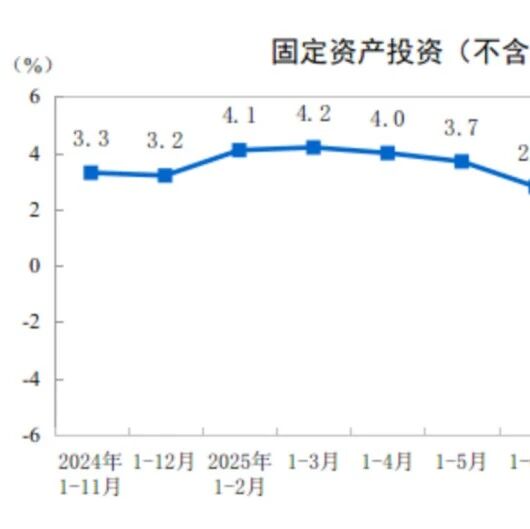
Core Viewpoint - The fixed asset investment in China (excluding rural households) for January to November 2025 is 444,035 billion yuan, showing a year-on-year decline of 2.6% [1][4]. Investment by Industry - Investment in the primary industry reached 8,770 billion yuan, with a year-on-year growth of 2.7% [3][4]. - The secondary industry saw an investment of 162,243 billion yuan, growing by 3.9% year-on-year, with industrial investment specifically increasing by 4.0% [3][4]. - The tertiary industry experienced a decline in investment to 273,022 billion yuan, down 6.3% year-on-year [3][4]. Secondary Industry Breakdown - Mining investment grew by 4.0%, while manufacturing investment increased by 1.9% [3][4]. - Notable growth was observed in the electricity, heat, gas, and water production and supply industry, which saw a 10.7% increase [3][4]. Tertiary Industry Breakdown - Infrastructure investment (excluding electricity, heat, gas, and water production and supply) decreased by 1.1% [3][4]. - Specific sectors such as pipeline transportation and water transportation saw increases of 16.8% and 8.9%, respectively [3][4]. Regional Investment Analysis - Eastern regions experienced a significant decline in investment by 6.6%, while central and western regions saw decreases of 1.7% and 0.2%, respectively [3][4]. - The northeastern region faced the largest drop at 14.0% [3][4]. Investment by Registration Type - Domestic enterprises' fixed asset investment fell by 2.6%, while investment from Hong Kong, Macau, and Taiwan enterprises decreased by 2.2% [3][4]. - Foreign enterprises experienced a substantial decline in investment by 14.1% [3][4].

【数据发布】2025年11月份规模以上工业增加值增长4.8%
中汽协会数据· 2025-12-16 09:04
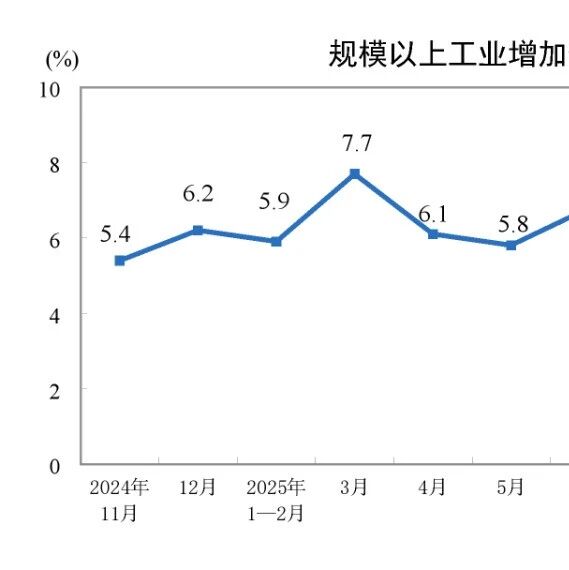
Core Viewpoint - In November, the industrial added value of enterprises above designated size increased by 4.8% year-on-year, indicating a steady growth trend in the industrial sector [1][6]. Group 1: Industrial Growth Data - The industrial added value for January to November showed a year-on-year growth of 6.0% [1][6]. - In November, the mining industry saw a 6.3% increase, manufacturing grew by 4.6%, and the electricity, heat, gas, and water production and supply industry increased by 4.3% [3][6]. - Among the 41 major industries, 30 experienced year-on-year growth in added value in November [3]. Group 2: Economic Type Analysis - State-controlled enterprises had a year-on-year growth of 4.2%, while joint-stock enterprises grew by 5.2%. Foreign and Hong Kong, Macao, and Taiwan-invested enterprises increased by 3.4%, and private enterprises saw a growth of 3.2% [3][6]. Group 3: Industry-Specific Performance - Notable growth was observed in coal mining and washing (7.5%), oil and gas extraction (5.1%), and automotive manufacturing (11.9%) [3][6]. - The chemical raw materials and chemical products manufacturing industry grew by 6.7%, while the textile industry increased by 1.8% [3][6]. Group 4: Product Output and Sales - In November, out of 623 industrial products, 310 saw a year-on-year increase in output [4]. - The production of automobiles reached 3.519 million units, a 2.4% increase, with new energy vehicles growing by 17.0% to 1.841 million units [4][7]. - The product sales rate for industrial enterprises was 96.5%, a decrease of 0.8 percentage points year-on-year [4][7]. Group 5: Export and Delivery Value - The export delivery value of industrial enterprises was 1.361 trillion yuan, showing a nominal decrease of 0.1% year-on-year [4][7].
德国12月制造业PMI初值为47.7,预期48.5
Mei Ri Jing Ji Xin Wen· 2025-12-16 08:41
每经AI快讯,12月16日,德国12月制造业PMI初值为47.7,预期48.5;12月服务业PMI初值为52.6,预期 53。 ...
【宏观经济】一周要闻回顾(2025年12月10日-12月16日)
乘联分会· 2025-12-16 08:39
Consumer Price Index (CPI) Overview - In November 2025, the national consumer price index (CPI) increased by 0.7% year-on-year, with urban areas rising by 0.7% and rural areas by 0.4% [3] - Food prices rose by 0.2%, while non-food prices increased by 0.8% [3] - The average CPI from January to November remained flat compared to the previous year [3] Price Changes in November - Year-on-year, food, tobacco, and alcohol prices increased by 0.3%, contributing approximately 0.09 percentage points to the CPI [4] - Fresh vegetable prices surged by 14.5%, impacting the CPI by about 0.31 percentage points [4] - Pork prices fell by 15.0%, leading to a decrease in CPI by approximately 0.21 percentage points [4] Month-on-Month Price Changes - In November, the CPI decreased by 0.1% month-on-month, with urban areas also declining by 0.1% [3] - Food prices increased by 0.5% month-on-month, while non-food prices decreased by 0.2% [3] - Among various categories, other goods and services prices rose by 14.2%, while transportation and communication prices fell by 2.3% [4][5] Industrial Production - In November 2025, the industrial added value for large-scale enterprises grew by 4.8% year-on-year, with a month-on-month increase of 0.44% [7] - The mining sector saw a 6.3% increase, while manufacturing and electricity, heat, gas, and water production and supply grew by 4.6% and 4.3%, respectively [7] - Among 41 major industries, 30 reported year-on-year growth in added value [7] Retail Sales Performance - The total retail sales of consumer goods reached 43,898 billion yuan in November, marking a 1.3% year-on-year increase [10] - Retail sales excluding automobiles grew by 2.5% [10] - Online retail sales from January to November amounted to 144,582 billion yuan, reflecting a 9.1% year-on-year increase [12] Fixed Asset Investment Trends - From January to November 2025, fixed asset investment (excluding rural households) totaled 444,035 billion yuan, a decrease of 2.6% year-on-year [15] - The investment in the primary industry rose by 2.7%, while the secondary industry saw a 3.9% increase [15] - Infrastructure investment in the tertiary sector declined by 1.1% [15]

有实力的深圳短视频代运营公司推荐
Sou Hu Cai Jing· 2025-12-16 08:16
Core Insights - Short videos have become a crucial marketing channel for manufacturing companies in the digital age, yet many face significant challenges in leveraging this medium effectively [1][2]. Group 1: Challenges in Short Video Marketing - Approximately only 30% of manufacturing companies can achieve stable monetization through short videos, highlighting a major industry pain point [2]. - The three core challenges identified are: difficulty in retaining inquiries after video creation, challenges in converting inquiries into sales, and the inability to replicate successful monetization strategies [2]. Group 2: Solutions for Improvement - AI-driven solutions are proposed to address the issue of lead retention, with intelligent algorithms analyzing user behavior for precise targeting. A mechanical manufacturing company reported over a 40% increase in effective inquiries after utilizing AI short video tools [3]. - A comprehensive solution for converting inquiries into orders is provided through a full-link monetization strategy, optimizing processes from content creation to customer service [5]. - The implementation of standardized operational models is emphasized for achieving scalable growth, with factories adopting these models seeing a 50% improvement in market expansion efficiency [6]. Group 3: Future Outlook - With AI empowerment, the short video marketing landscape for manufacturing is expected to experience new growth opportunities, allowing more companies to achieve marketing breakthroughs through professional short video operation services [10].

阳江市搏亿工贸有限公司成立 注册资本100万人民币
Sou Hu Cai Jing· 2025-12-16 07:36
Core Insights - Yangjiang Boyi Industrial and Trade Co., Ltd. has been established with a registered capital of 1 million RMB [1] Company Overview - The company operates in various sectors including the sales and manufacturing of metal tools, daily wooden products, hardware products, plastic products, and rubber products [1] - The business scope also includes domestic trade agency and internet sales, excluding items that require special permits [1]
股指年报
Hong Ye Qi Huo· 2025-12-16 07:18
1. Report Industry Investment Rating No relevant content provided. 2. Core Viewpoints of the Report - After the valuation repair in the A-share market in 2025, the main driving force in 2026 is expected to shift more towards the substantial improvement of the profit fundamentals. The core logic of this profit recovery lies in the gradual re - balancing of the supply - demand pattern. With the continuous deepening of the "anti - involution" policy and the natural clearing of the production capacity cycle, enterprise profit margins have stabilized first, and asset turnover is also expected to gradually pick up. The moderate recovery of PPI will drive the profit margin repair of the mid - stream manufacturing industry, and the gradual entry of AI technology into the commercial application stage will also promote the accelerated growth of revenues in related industries [3][54]. - The capital side is expected to remain generally abundant, supported by three aspects: the continuous transfer of domestic residents' asset allocation to equity products, the potential return of foreign capital to the A - share market as the external environment stabilizes, and the steady entry of long - term funds such as pensions and insurance funds, which will provide stable liquidity support for the market [3][54]. - Overall, the reasonable level of the valuation side and the positive factors on the capital side will provide strong support for the performance of the A - share market in 2026 [3][54]. 3. Summary by Directory 3.1 Market Review 3.1.1 Index Review - Since the beginning of the year, all major domestic stock indices have shown an upward trend, with the ChiNext Index having the largest increase and the Composite Index having the smallest increase. In terms of structure, small and medium - cap indices performed better. As of December 15, the ChiNext Index rose 49.16%, the Science and Technology Innovation 50 Index rose 36.40%, the Shenzhen Component Index rose 27.31%, and the Hang Seng Tech Index rose 26.18%. The small and medium - cap 100 Index, CSI 500 Index, and CSI 1000 Index rose 25.66%, 25.22%, and 23.72% respectively. In addition, the CSI 300 Index rose 16.42%, the Shanghai Composite Index rose 16.04%, the SSE 50 Index rose 11.54%, and the Composite Index rose 11.29% [10]. - In 2025, the A - share market showed an "N" - shaped upward trend, mainly centered around the triple game of external environment disturbances, internal policy adjustments, and technological industry breakthroughs. It was affected by both external shocks such as tariff policies and changes in the Fed's interest - rate cut policy and internal factors such as policy support, valuation repair, and profit verification, completing multiple rounds of switches from risk aversion to confidence repair, then to trend - up and structural digestion [12]. 3.1.2 Sector Review - In the first half of 2025, most sectors showed an upward trend. As of December 15, among the primary industries, the materials and information technology sectors led the gains, with annual increases of 47.22% and 44.03% respectively. The industrial sector rose 27.32%, the communication services sector rose 20.30%, the healthcare sector rose 16.22%, and the optional consumer sector rose 14.48%. The annual increases of the finance, energy, utilities, and real estate sectors were all less than about 10%. The only sector that declined was the daily consumer sector, which fell 1.68% [17]. 3.1.3 Stock Index Futures Review - The overall trend of stock index futures in 2025 was consistent with the index market, showing an "N" - shaped trend. As of December 15, the SSE 50 futures, CSI 300 futures, CSI 500 futures, and CSI 1000 Index rose 12.60%, 20.21%, 38.61%, and 39.66% respectively compared with the beginning of the year. In terms of trading volume, the average annual daily trading volumes of the SSE 50 continuous contract, CSI 300 continuous contract, CSI 500 continuous contract, and CSI 1000 continuous contract were 35,000 lots, 70,000 lots, 63,000 lots, and 147,000 lots respectively. In terms of open interest, the average annual daily open interests of the SSE 50 continuous contract, CSI 300 continuous contract, CSI 500 continuous contract, and CSI 1000 continuous contract were 56,000 lots, 143,000 lots, 105,000 lots, and 175,000 lots respectively [19]. 3.2 Fundamental Analysis 3.2.1 Domestic Economic Progress - **GDP Data**: In 2025, China's economic growth rate showed a pattern of high at the beginning and stable later. The GDP grew by 5.4% year - on - year in the first quarter, 5.2% in the second quarter, and 4.8% in the third quarter. The cumulative GDP growth in the first three quarters was 5.2% year - on - year, higher than the full - year growth rate of the previous year [22][27]. - **PMI Data**: Since the beginning of the year, both the manufacturing PMI and non - manufacturing PMI have fluctuated around the boom - bust line (50). In November, the manufacturing PMI was 49.2%, slightly increasing by 0.2 percentage points but remaining below the boom - bust line. The service industry index in November was 49.5%, down 0.7 percentage points from the previous value [30]. - **Inflation Data**: Since the beginning of the year, the overall price level has shown a pattern of low - level CPI fluctuations and continuous negative PPI growth. However, there are positive structural changes. The core CPI has continued to rise since the second quarter, and the decline of PPI has significantly narrowed since August, showing signs of stabilization [31]. - **Consumption Data**: From January to November, the total retail sales of consumer goods increased by 4% year - on - year, faster than the same period and the full - year of the previous year. In November, the total retail sales of consumer goods increased by 1.3% year - on - year, with the growth rate continuing to decline. Service consumption grew rapidly, and the consumption of cultural and sports services maintained double - digit growth [38][39]. - **Fixed Investment Data**: From January to November, fixed - asset investment (excluding rural households) decreased by 2.6% year - on - year, while project investment excluding real - estate development investment increased by 0.8%. Investment in emerging fields showed good momentum, and investment in some traditional industries also expanded. Policy effects continued to appear, and equipment and tool purchase investment increased by 12.2% year - on - year [41]. - **Outlook for the 2026 Economy**: In 2026, China's economy is expected to achieve "repair - type" growth and structural re - balancing under policy support, showing a "stable at the beginning and rising later" trend. The GDP growth target is expected to be set at around 5%, inflation is expected to enter a moderate recovery channel, and policies will focus on boosting consumption [44]. 3.2.2 Macroeconomic Policies Supporting the A - share Market - The "anti - involution" policy will continue to deepen, aiming to optimize the industrial structure and enhance global competitiveness. Active fiscal policies and moderately loose monetary policies are expected to continue. The fiscal deficit ratio is expected to remain at about 4%, the scale of new special bonds may reach 4.4 trillion yuan, and the scale of ultra - long - term special treasury bonds may increase to 1.6 trillion yuan. The M2 growth rate is expected to be between 7.7% and 8.1%, with possible reserve - requirement ratio cuts of 50 basis points and interest - rate cuts of 10 - 20 basis points [46][48]. 3.2.3 Tariff Uncertainty Disturbing the A - share Market - In April 2025, the US announced a series of tariff policies, which led to significant fluctuations in the A - share market in the short term. In the long term, it accelerated the transformation of A - share listed companies in two aspects: diversifying export markets and strengthening the "self - controllable" logic [49][50]. 3.2.4 Overseas Liquidity Loosening Supporting the A - share Market - The Fed cut interest rates three times in 2025, with a cumulative reduction of 75 basis points. This has two main impacts on the A - share market: expanding domestic policy space and boosting market risk appetite. However, the medium - and long - term trend of the market still depends on the recovery of the domestic economic fundamentals and policy effects [51][52]. 3.3 Summary and Outlook - In 2025, stock index futures were affected by both external shocks such as tariff policies and Fed interest - rate cut policy changes and internal factors such as policy support, valuation repair, and profit verification, completing multiple rounds of switches [53]. - In 2026, the A - share market is expected to be driven more by the improvement of profit fundamentals, and the capital side is expected to remain abundant, providing strong support for the market [54].
华创证券张瑜:中游供需矛盾进一步改善——11月经济数据点评
Xin Lang Cai Jing· 2025-12-16 07:02
Group 1 - The core analysis focuses on the supply-demand contradiction, particularly in the midstream sector, where the demand-investment growth differential has increased to 7.6% in November, up from 6.4% in the previous month, indicating a potential shift from "strong supply, weak demand" to "weak supply, strong demand" [1][4][30] - The methodology involves calculating the difference between demand growth and investment growth, with a positive differential suggesting that supply-demand contradictions are easing, which may lead to price stabilization in the future [3][32] - Current observations indicate that while midstream demand growth has slightly decreased to 8.9% in November from 9.3% in October, midstream investment growth has also declined to 1.3%, resulting in a continued upward trend in the demand-investment growth differential since May 2024 [4][33] Group 2 - Historical data suggests that the midstream demand-investment growth differential is likely to remain positive, with expectations for the midstream Producer Price Index (PPI) to stop declining and potentially rise in 2026 [2][31] - In November, the midstream PPI showed a month-on-month increase of 0.04%, marking the first positive change since June 2024, indicating a potential upward trend in midstream profitability [5][34] - The analysis of November's economic data reveals a weakening supply side, with industrial production growth at 4.8% and service sector production index at 4.2%, while consumer demand and investment remain weak [43][45] Group 3 - The real estate sector continues to face challenges, with property sales area down 17.3% year-on-year in November, and real estate investment declining by 30.3% [20][26] - Employment remains stable, with the urban survey unemployment rate holding steady at 5.1% in November, indicating a relatively stable labor market despite economic pressures [43][45] - Consumer retail sales growth has slowed to 1.3% in November, down from 2.9% in October, reflecting ongoing challenges in consumer spending [17][43]
特朗普政府为何不断施压美联储降息?
Sou Hu Cai Jing· 2025-12-16 06:59
Group 1 - The Federal Reserve announced a 25 basis point reduction in the federal funds rate target range to 3.5%-3.75%, marking the third rate cut of the year [1] - President Trump has publicly criticized the Fed for its slow response to rate cuts, indicating ongoing tensions between the Fed and the Trump administration [1] - The internal division within the Fed is highlighted by the fact that three out of twelve members voted against the rate cut, the highest number of dissenting votes since 2019 [1] Group 2 - The direct motivation for the Trump administration's push for significant rate cuts is to reduce interest payments on federal debt, which is projected to exceed $37.7 trillion by December 2025 [2] - A 1% reduction in the federal funds rate could save the federal government nearly $400 billion in interest payments [2] - The administration also aims to alleviate cost pressures from tariffs imposed on major economies, which have increased import prices and manufacturing costs in the U.S. [2] Group 3 - The Trump administration's intervention in monetary policy poses challenges to the independence of the Federal Reserve, potentially undermining the effectiveness and credibility of its decisions [3] - Political pressure may compromise the scientific basis of the Fed's decision-making, affecting investor confidence in U.S. economic policies [3] - The Fed faces a dilemma in balancing political pressures with professional judgment, which could impact its policy coherence and transparency [3]

首次突破万亿美元!今年的贸易顺差,要再破世界记录
Sou Hu Cai Jing· 2025-12-16 06:49
Core Viewpoint - China's manufacturing strength continues to grow, with trade surplus surpassing $1 trillion by November, marking a historic achievement in global trade [1][12]. Trade Surplus Overview - As of November, China's cumulative trade surplus reached $1.08 trillion, breaking last year's record [1]. - Despite a decline in exports to the U.S. by nearly 29%, exports to other regions, including ASEAN and the EU, saw significant growth, contributing to the overall increase in trade surplus [5][10]. Regional Trade Dynamics - The trade surplus is supported by strong export growth to regions involved in the Belt and Road Initiative and the Regional Comprehensive Economic Partnership, as well as emerging markets in Southeast Asia, the Middle East, Africa, and Latin America [3][4]. - Exports to the EU and Latin America showed robust growth, with November exports to the EU increasing by 14.8% and to ASEAN by 8% [5]. Economic Implications - The trade surplus indicates a strong competitive position for China in global trade, with exports significantly outpacing imports, particularly in the context of the EU's industrial base facing challenges [10][11]. - China's manufacturing sector produces one-third of the world's goods, highlighting its reliance on external markets for over 20% of its production capacity [5][11]. Future Considerations - The increasing trade surplus may prompt reactions from the EU, particularly as the EU Commission President has previously called for a "de-risking" strategy regarding trade with China [6][10]. - Economists suggest that a stronger currency could benefit domestic consumption but may also impact export competitiveness, indicating a complex balance for future trade strategies [14][15].