电动汽车

Search documents
泰国长期居留签证措施吸引超过7,000名高素质外国人
Shang Wu Bu Wang Zhan· 2025-09-18 11:31
Core Insights - The Thai Long-Term Residence (LTR) Visa, implemented in September 2022, aims to attract four categories of high-quality foreigners: skilled professionals, remote workers, wealthy individuals, and retirees [1] - Over 7,000 LTR Visas have been approved in the past three years, primarily for applicants from Europe, the United States, Japan, China, and India [1] - The initiative has contributed over 230 billion Thai Baht to the Thai economy, derived from visa fees, local consumption, direct investments, and taxes paid by skilled professionals [1] - The influx of foreign talent has accelerated technology transfer in emerging industries such as semiconductors, data centers, artificial intelligence, electric vehicles, and robotics, enhancing the competitiveness of local talent [1] - The Board of Investment (BOI) is upgrading LTR Visa services to a one-stop digital service, including e-Visa, electronic payments, and integration with government systems [1] - A new Foreign Investment and Talent Service Center has been opened in One Bangkok, providing comprehensive services for foreign investors and professionals [1]
商务部:中方始终审慎、克制使用贸易救济措施,今年以来未对欧盟发起任何原审调查
Yang Shi Wang· 2025-09-18 09:20
Group 1 - The Chinese Ministry of Commerce held a press conference on September 18 to discuss key recent developments in the business sector and respond to media inquiries [1] - The anti-dumping investigation into EU pork products was initiated based on applications from the Chinese domestic industry, with the investigation conducted in accordance with Chinese laws and WTO rules [1] - China has maintained a cautious approach to trade remedy measures, having not initiated any original investigations against the EU this year, contrasting with the EU's seven investigations against China, which account for nearly 40% of its total external investigations [1] Group 2 - In the electric vehicle anti-subsidy case, the EU initiated an investigation without any domestic industry application, which China deems unreasonable and a misuse of trade remedy measures, leading to a dispute resolution mechanism appeal [2] - Despite these challenges, China has engaged in over 20 rounds of consultations with the EU to seek mutually acceptable solutions, demonstrating a commitment to dialogue and cooperation [2] - China emphasizes the importance of dialogue and cooperation for industry and public sentiment, expressing readiness to work with the EU to create an open and stable market environment [2]
商务部:今年未对欧盟发起任何原审调查
第一财经· 2025-09-18 08:18
Core Viewpoint - The Chinese Ministry of Commerce emphasizes a cautious and restrained approach to trade remedy measures, contrasting with the EU's aggressive stance against Chinese exports, particularly in the pork and electric vehicle sectors [1][2]. Group 1: Trade Investigations - The anti-dumping investigation into EU pork products was initiated based on applications from the domestic industry in China, with the investigation conducted fairly and in accordance with WTO rules [1]. - In 2023, the EU has initiated 7 original investigations against China, accounting for nearly 40% of its total external investigations, involving approximately $3.5 billion in Chinese exports [2]. Group 2: Trade Remedies and Responses - Currently, there are 95 ongoing trade remedy measures by the EU against China, affecting around $39.3 billion in Chinese exports [2]. - The EU's investigation into electric vehicle subsidies was initiated without any domestic industry application, which China views as an unreasonable and non-compliant use of trade remedy measures [2]. Group 3: Dialogue and Cooperation - China has engaged in over 20 rounds of consultations with the EU, aiming for mutually acceptable solutions and maintaining an open and cooperative stance [2]. - The Ministry of Commerce expresses hope that the EU will recognize industry concerns and work towards creating an open and stable market environment through dialogue [2].


这家新势力的车门把手问题被调查,重新设计能否解安全之忧?
Zhong Guo Qi Che Bao Wang· 2025-09-18 07:46
Core Insights - Tesla is redesigning its door handle system due to safety concerns raised by the NHTSA, which is investigating defects in approximately 174,000 vehicles [4][5] - The NHTSA has received over 140 consumer complaints since 2018 regarding door malfunctions, including incidents where doors could not be opened after power loss, leading to injuries [4][5] - The investigation highlights the risks associated with electric vehicles' reliance on electronic systems, particularly in low battery situations where door handles may fail [5][6] Design and Safety Concerns - The NHTSA's technical report indicates that some Tesla models require a manual unlocking force exceeding 40N, which is above the industry safety threshold of 20N, making it difficult for elderly and disabled users to operate [6] - Experts emphasize that electric vehicle escape operations should align with instinctive responses rather than relying on user training, advocating for designs that enhance user safety in emergencies [7] Redesign Initiatives - Tesla's redesign plan involves a "dual mechanism normalization" approach, integrating electronic release buttons with mechanical levers to allow for a single operation that works regardless of power status [8] - The new design aims to reduce the unlocking force to below 15N, making it accessible for all users, including those with disabilities [8] - Enhancements such as illuminated indicators and tactile feedback are intended to improve usability in emergency situations [8] Industry Implications - The situation serves as a reminder for the automotive industry to prioritize safety in design, advocating for redundancy and fail-safe principles in critical systems [9] - The shift in focus from "engineer-centric" to "user-centric" design is crucial, ensuring that innovations do not compromise user safety [10] - The evolution of electric vehicles into "mobile smart terminals" necessitates a commitment to maintaining safety standards amid technological advancements [10]


彭博数据洞察 | 化情绪为价值:NLP如何解读新闻标题情绪,捕捉交易信号?
彭博Bloomberg· 2025-09-18 06:05
Core Insights - The article emphasizes the importance of utilizing data to focus on key investment opportunities and risks, particularly in the context of geopolitical tensions and trade dynamics [3][5]. Group 1: Fund Risk Exposure - The article discusses a new method for quantifying fund risk exposure by combining industry classification data with fund holding data, allowing for a more precise assessment of actual risk exposure across various sectors [3][5]. - A comparison is made between traditional methods and the new business classification method, highlighting that the latter provides a more balanced view of a fund's industry exposure [3][5]. - The analysis identifies the top 10 exchange-traded products (ETPs) with the highest tariff risk exposure in North America, with the Simplify Volt TSLA Revolution ETF showing a sensitivity of 22.1 [5]. Group 2: News Sentiment Analysis - The article introduces a natural language processing (NLP) approach to quantify news sentiment and its correlation with asset performance, particularly focusing on crude oil futures [7][9]. - The methodology involves generating sentiment scores from news headlines and using z-scores to identify significant deviations from historical norms, which can indicate potential price movements [7][9]. - The analysis reveals that negative sentiment often correlates with supply disruptions, which historically lead to price increases in the crude oil market [9]. Group 3: Enhanced OHLC Data - The article presents enhanced OHLC (Open, High, Low, Close) data that includes precise timestamps for price movements, allowing for improved trading strategies [12][15]. - It categorizes OHLC bars into "trend bars" and "range bars" based on the sequence of high and low points, which can provide insights into market behavior [12][15]. - The article suggests that the type of OHLC bar may influence the likelihood of price continuation, which can be critical for traders [18].

昨夜今晨全球大公司动态 | 美国监管机构对特斯拉车门把手展开调查;奇瑞股票计划9月25日在港交所开始交易
Sou Hu Cai Jing· 2025-09-18 02:10
Group 1: Tesla and Rivian - The U.S. National Highway Traffic Safety Administration (NHTSA) is investigating Tesla's Model Y door handles due to complaints that parents are unable to unlock the doors, potentially trapping children inside [2] - The investigation will focus on over 174,000 units of the 2021 Model Y, particularly the operability of electronic door locks when the vehicle lacks sufficient power [2] - Rivian is expanding its electric vehicle production by breaking ground on a new factory located about 45 miles east of Atlanta, marking a significant shift for the high-end pickup and SUV manufacturer [2] Group 2: Nissan and Chery - Nissan announced the closure of its automotive design centers in San Diego, California, and São Paulo, Brazil, as part of a restructuring plan to cut costs [3] - The number of Nissan's design centers will be reduced to five, with operations shifting to other locations [3] - Chery Automobile plans to raise up to $1.2 billion through an IPO, with shares set to begin trading on the Hong Kong Stock Exchange on September 25 [3] Group 3: Lantu and Hesai - Lantu Automotive has officially changed its name to Lantu Automotive Technology Co., Ltd., marking a key step towards its planned listing on the Hong Kong Stock Exchange [4] - Hesai Technology, a leading manufacturer of automotive sensors, expressed skepticism about the readiness of society and regulators to accept fully autonomous vehicles, citing safety concerns [4] Group 4: AI Investments - Major U.S. tech companies, including Microsoft and Google, are investing over $40 billion to expand AI infrastructure in the UK, with Microsoft committing $30 billion by the end of 2028 [5] - Google plans to invest approximately $6.8 billion in AI and related engineering fields in the UK over the next two years [5] Group 5: Pharmaceutical Investments - Multiple pharmaceutical companies, including GSK and Eli Lilly, have pledged to invest over $350 billion in U.S. manufacturing to mitigate the impact of tariffs on imported drugs [8] Group 6: General Mills Financials - General Mills reported net sales of $4.518 billion for the first fiscal quarter ending August 24, 2025, down from $4.848 billion year-over-year, a decrease of 7% [10] - The company's operating profit for the quarter was $1.726 billion, up 108% from the previous year's $0.832 billion [10] - Net profit attributable to the company was $1.204 billion, also reflecting a 108% increase from $0.580 billion in the same quarter last year [10]
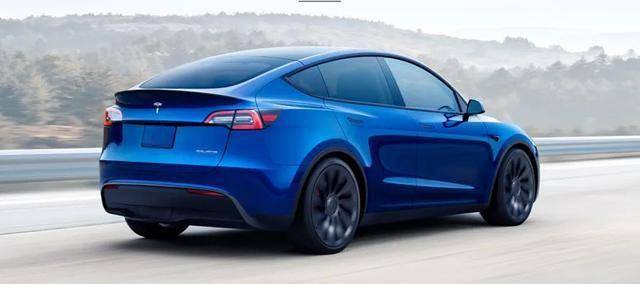
尽管泰市场形势不佳,电动汽车的销量仍在增长
Shang Wu Bu Wang Zhan· 2025-09-17 17:31
Group 1 - The Thai electric vehicle (EV) industry is experiencing growth despite a stagnant overall automotive market, driven by increased sales and exports of domestically manufactured electric vehicles [1] - From January to July, battery electric vehicles (BEVs) accounted for 18% of total domestic automotive sales, closely following fuel pickup trucks at 24%, internal combustion engine passenger cars at 23%, and hybrid electric vehicles at 20% [1] - BEV sales increased by nearly 57% year-on-year, while plug-in hybrid electric vehicle sales surged by 316% during the same period [1] Group 2 - The number of newly registered BEVs in Thailand rose by 35% year-on-year, reaching 81,179 units from January to July [1] - The growth in electric vehicle sales is attributed to various marketing activities, including attractive retail pricing [1] - The National Electric Vehicle Policy Committee has approved a plan to ease production requirements for manufacturers participating in the EV incentive programs (EV3.0 and EV3.5) to enhance Thailand's position as a BEV export hub [1] Group 3 - Under the EV3.0 standard, starting in 2024, companies producing BEVs must adhere to a 1:1 ratio requirement for imported and locally produced vehicles [2] - For manufacturers starting production in 2025, the ratio will be 1:1.5, and for those starting in 2026, it will be 1:2, while for 2027, the requirement will be 1:3 [2] - Adjustments will be made for manufacturers producing BEVs for export, allowing each exported vehicle to count as 1.5 vehicles towards their production commitments [2]
中方发火,几乎切断欧盟稀土供应,日本表态:不同意美国遏华要求
Sou Hu Cai Jing· 2025-09-17 11:13
Core Insights - The tightening of rare earth supply in the EU has led to production warnings from several high-tech companies, indicating a significant impact on the industry [1][2][5] - The EU's heavy reliance on rare earths, particularly from China, poses a critical challenge to its industrial competitiveness [2][5][19] - The geopolitical landscape is shifting, with the US pushing for sanctions against China while facing resistance from allies like Japan [7][11][21] Group 1: Rare Earth Supply and Industry Impact - The rare earth supply bottleneck is described as the "Achilles' heel" of the EU's industrial chain, causing some companies to delay investment plans and consider layoffs [2] - The EU's high-tech industry has a 98% dependency on rare earths, with China accounting for over 70% of global rare earth exports [5][19] - The EU has experienced a nearly 60% decline in rare earth imports from countries like Germany, France, and Spain compared to the previous year [4] Group 2: Geopolitical Tensions and Responses - The US has proposed imposing 100% tariffs on China and India under the pretext of purchasing Russian oil, which has raised concerns among EU member states about potential damage to their own industries [4][7] - Japan has publicly rejected the US's push for a coordinated response against China, citing the economic costs of such a confrontation [11][13] - The EU is caught between the US and China, needing to navigate its foreign policy carefully to avoid economic disruptions [7][11] Group 3: Strategic Alternatives and Future Outlook - The EU is exploring alternative sources for rare earths, including Greenland, Australia, and Canada, but these options are unlikely to fill the supply gap in the short term [9][19] - The establishment of the "Japan-EU Competitiveness Alliance" aims to enhance cooperation in critical areas like semiconductors and renewable energy [13][17] - The ongoing geopolitical tensions and supply chain challenges indicate that the global supply chain is entering a period of significant restructuring, with uncertain outcomes [21]

车百会理事长张永伟:机器人将从百万元级步入十万元级市场,市场化进程或超越电动汽车
Mei Ri Jing Ji Xin Wen· 2025-09-17 09:24
Core Viewpoint - The robotics industry is expected to reach a faster scaling inflection point, similar to the electric vehicle industry, driven by significant cost reductions and technological advancements [1] Industry Insights - The electric vehicle sector has experienced a dramatic increase in annual sales from 1 million to 10 million units over the past five years, primarily due to a 50% reduction in auto parts costs, with an average annual decline exceeding 10% [1] - The sales revenue in the electric vehicle market has shown a "scissor-type" growth pattern, indicating a strong correlation between cost reduction and revenue increase [1] Market Predictions - As technology matures and costs optimize, robots currently priced at one million yuan, which rely on subsidies, are expected to rapidly enter the market at a price point of around one hundred thousand yuan [1] - The relatively simple mechanical structure of robots suggests that the cost reduction logic and marketization process may surpass that of electric vehicles [1]

绿色能源新机遇,中国—东盟培训项目即将开班
中国能源报· 2025-09-17 09:23
Core Viewpoint - The article emphasizes the critical phase of global climate governance, highlighting the shared mission of China and ASEAN in the green low-carbon transition and the importance of collaboration in renewable energy and zero-carbon demonstration zones [1][4]. Training Program Details - The first "China-ASEAN Green Energy Transition and Zero-Carbon Park" capacity-building training will be held from October 19 to 24, 2025, in Shanghai and Suzhou [1][4]. - The training will cover topics such as green power development, policy mechanisms, zero-carbon park technologies, and industrial upgrades, combining theoretical learning with practical visits [1][4][6]. Training Schedule and Locations - Training will take place on October 20-21, followed by site visits from October 22-24, with registration on October 19 [5][6]. - The training venue will be in Shanghai, while the visits will include Suzhou Industrial Park and other renewable energy enterprises [6]. Target Audience - The training is open to representatives from ASEAN energy departments, clean energy experts, and professionals from China's renewable energy, electric vehicle, storage, and digital energy sectors [6][7]. Training Content - The training consists of two main modules: specialized lectures and practical interactions [7]. - Specialized lectures will cover four key areas: 1. Green power development and market innovation [7] 2. Policy coordination and support mechanisms for low-carbon development [7] 3. Technologies and operational models for zero-carbon parks [7] 4. Sustainable development of the new energy industry [7] - Practical interactions will include site visits to benchmark parks, group discussions, and dialogues on technology cooperation and project implementation [7]. Organizational Details - The event is organized by China Energy News and the China Energy Research Society [8]. - The training fee is set at 8,750 yuan per person, covering course materials and site visits, with accommodation arranged separately [8]. Language and Certification - The courses will be conducted in both Chinese and English, requiring participants to have basic English communication skills [8]. - Participants will receive a completion certificate from the organizing units upon finishing the training [8].