
计算机硬件

Search documents
拉美成中国AI基建"后院":联想、阿里、字节三企割据
Ge Long Hui· 2025-12-05 07:17
Core Insights - A number of Chinese internet companies are expanding their operations to Latin America, with significant investments in data centers and cloud infrastructure to tap into the region's growing digital economy [1][2] Group 1: Investment and Expansion - TikTok plans to invest approximately $37.7 billion in a large data center complex in Northeast Brazil, marking its first major project in Latin America [1] - Alibaba Cloud announced the construction of a new data center in Brazil and the expansion of its existing center in Mexico, aligning with local businesses' digital transformation needs [1] - International tech giants like Amazon, Google, and Microsoft are also heavily investing in Latin America, establishing multiple data centers despite local resource challenges [2] Group 2: Market Growth and Demand - Latin America is experiencing a significant boom in data center investments, with the market expected to nearly double from approximately $5 billion in 2023 to nearly $10 billion by 2029 [2] - The region's cloud service demand is projected to drive investment growth, with sustainable energy sources like wind and solar power being a key advantage for operations [3] Group 3: Competitive Landscape - Alibaba Cloud is accelerating its presence in Latin America, focusing on cloud infrastructure and AI applications to capture growth opportunities in e-commerce and fintech [4] - Lenovo, as a hardware supplier, supports Alibaba Cloud's infrastructure development and is expanding its market share in the region, aiming to challenge the top three cloud providers [4] Group 4: Strategic Partnerships and Innovations - Lenovo's unique "global resources + local delivery" model has proven effective in Latin America, allowing for efficient cost control and product customization [6] - The company emphasizes a hybrid AI strategy, with AI PCs expected to account for over 80% of global PC sales by 2028, and AI servers being deployed in enterprise solutions [6] Group 5: Support for Other Industries - Lenovo has also supported Chinese companies entering the Latin American market, providing IT infrastructure for electric vehicle manufacturers like BYD and Geely, enhancing their R&D capabilities [7]

超2400万粉丝汽车大V陈震被全网禁言
21世纪经济报道· 2025-12-05 00:29
Core Viewpoint - The social media accounts of automotive influencer Chen Zhen have been suspended across multiple platforms due to violations of relevant laws and community rules, with a total follower count exceeding 24 million [1]. Group 1 - Chen Zhen is a well-known automotive blogger and co-founder of the automotive programs "Radish Report" and "Off-Road Book," with a background as a champion in motorsport [5][8]. - The suspension of Chen Zhen's accounts began on the early morning of December 4, and the duration of the ban is currently unknown [1]. - Chen Zhen has previously attracted controversy, including a car accident involving a Rolls-Royce Phantom in October, which was noted as his fourth Rolls-Royce vehicle [9].


全球市场早报 | 市场静候美联储政策会议,美股三大指数涨跌不一,小盘股指数再创历史新高
Sou Hu Cai Jing· 2025-12-04 23:38
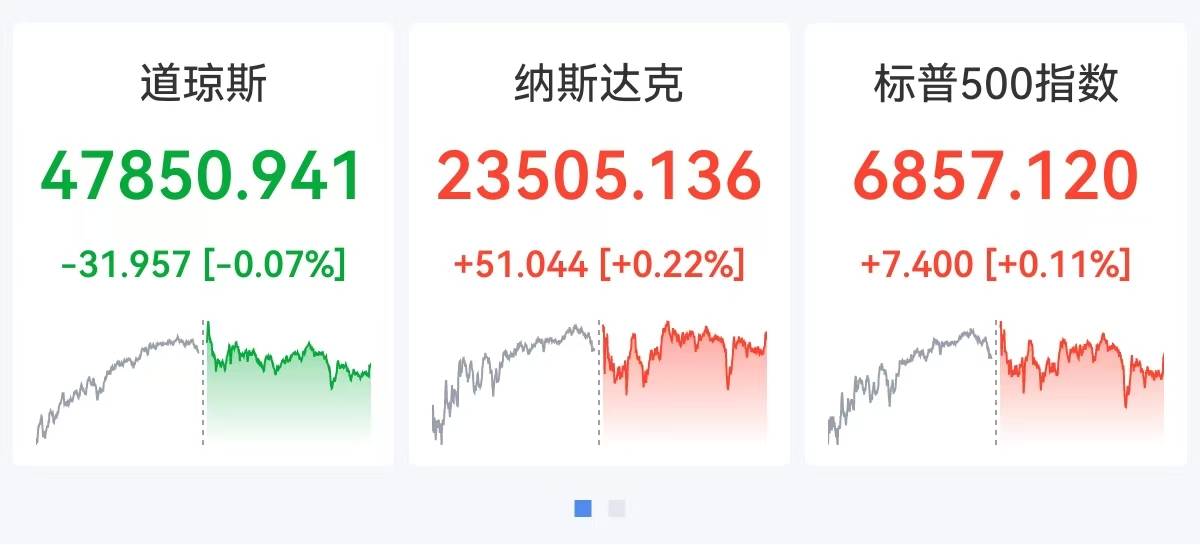
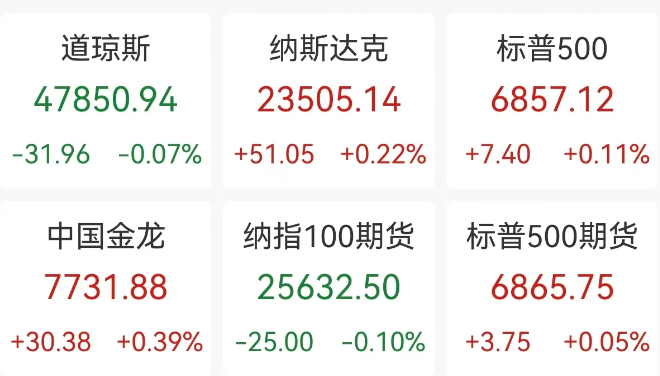
Market Overview - The U.S. stock market showed mixed results with the Dow Jones Industrial Average down by 31.96 points, closing at 47850.94, a decrease of 0.07% [1] - The S&P 500 index rose by 7.4 points, closing at 6857.12, an increase of 0.11% [1] - The Nasdaq Composite increased by 51.05 points, closing at 23505.14, a rise of 0.22% [1] - The Russell 2000 index, representing small-cap stocks, rose by 0.76%, surpassing its previous high set on October 27 [1] Employment Data - Initial jobless claims in the U.S. fell to the lowest level since September 2022, indicating a cautious market sentiment ahead of the Federal Reserve's upcoming monetary policy meeting [3] Technology Sector Performance - Major tech stocks experienced mixed performance with Meta rising over 3% and Nvidia increasing by over 2%, while Amazon and Apple both fell by more than 1% [3] - Computer hardware and cryptocurrency mining companies saw significant gains, with SanDisk up over 9%, Hut8 nearly 7%, Dell Technologies up over 4%, and HP rising nearly 3% [3] European Market Performance - European stock indices all closed higher, with the FTSE 100 in London up by 18.8 points to 9710.87, a rise of 0.19% [4] - The CAC40 index in Paris increased by 34.61 points to 8122.03, a gain of 0.43% [4] - The DAX index in Frankfurt rose by 188.32 points to 23882.03, an increase of 0.79% [4] Commodity Market - International oil prices increased, with WTI crude oil futures rising by $0.75 to $59.7 per barrel, a gain of 1.27% [5] - COMEX gold futures rose by $5.40, an increase of 0.13%, closing at $4237.9 per ounce [5]
美股计算机硬件大涨,闪迪涨近10%,万物新生涨近9%,加密货币超10万人爆仓
2 1 Shi Ji Jing Ji Bao Dao· 2025-12-04 23:25
Group 1: Stock Performance - Meta's stock rose by 3.4%, with a pre-market increase of over 7%, marking the largest intraday gain since July 31 [2] - Nvidia increased by over 2%, while Amazon and Apple both fell by more than 1% [2] - Significant gains were observed in computer hardware and chip stocks, with SanDisk rising nearly 10% and Hut8 up nearly 7% [2] Group 2: Industry Trends - The storage industry is experiencing a historic price surge, with SanDisk significantly raising NAND flash contract prices by approximately 50% in early November [2] - The Nasdaq Golden Dragon China Index saw a nearly 0.4% increase, with notable gains in computer hardware stocks such as Wanwu Xingsheng and Canadian Solar [3] Group 3: Cryptocurrency Market - International precious metal futures closed mixed, with COMEX gold futures up 0.13% and silver down 1.86% [5] - The cryptocurrency market faced a collective downturn, with Bitcoin dropping below $91,000 and a total liquidation amounting to nearly $320 million [5][7] Group 4: Economic Indicators - The U.S. Labor Department reported a decrease of 27,000 in initial jobless claims, reaching a three-year low of 191,000 [7] - The U.S. labor market continues to face structural pressures, with ongoing challenges in re-employment for job seekers [7] Group 5: Federal Reserve Outlook - The White House's National Economic Council Director indicated a potential 25 basis point rate cut by the Federal Reserve in the next meeting, with an 87% probability of this occurring [8]
美股计算机硬件大涨,闪迪涨近10%,万物新生涨近9%,加密货币超10万人爆仓
21世纪经济报道· 2025-12-04 23:20
Market Overview - The U.S. stock market showed mixed performance with the Nasdaq and S&P 500 indices rising, while the Dow Jones fell by 0.07% [1] - The Dow Jones closed at 47,850.94, the Nasdaq at 23,505.14, and the S&P 500 at 6,857.12 [2] Technology Sector - Major tech stocks had varied performances; Meta Platforms rose by 3.4%, reaching its highest intraday gain since July 31, while Nvidia increased by over 2%. However, Amazon and Apple both fell by more than 1% [2] - The computer hardware and chip sectors saw significant gains, with SanDisk rising nearly 10% and Dell Technologies increasing by 4% [2] Chinese Stocks - The Nasdaq Golden Dragon China Index increased by nearly 0.4%, with notable gains in companies like Wanwu Xingsheng and Canadian Solar, which rose over 5% [3] - However, some Chinese stocks like Daqo New Energy and BOSS Zhipin experienced declines of nearly 3% and over 2%, respectively [3] Cryptocurrency Market - The cryptocurrency market faced a collective downturn, with Bitcoin dropping below $91,000 and a 24-hour decline of 1.4%. The total liquidation amount exceeded $320 million [4][5] - Ethereum also saw a decrease of 0.86%, while other cryptocurrencies like Solana and XRP experienced declines of 3.64% and 4.92%, respectively [5] Labor Market Data - Recent data from the U.S. Labor Department indicated a decrease in initial jobless claims by 27,000 to 191,000, marking the lowest level in over three years. However, the number of individuals continuing to claim unemployment benefits remains above 1.9 million, indicating ongoing structural pressures in the labor market [5] Federal Reserve Outlook - The White House's National Economic Council Director indicated a potential interest rate cut by the Federal Reserve, with an 87% probability of a 25 basis point reduction in December [6]

美国上周初请失业金人数创三年新低,裁员潮未成真?
Jin Shi Shu Ju· 2025-12-04 14:06
上周美国初请失业金人数降至三年多来的最低水平,这表明尽管近期出现了一波裁员公告,但雇主们在 很大程度上仍在留住员工。 在截至11月29日的一周(包括感恩节)内,初请失业金人数减少了2.7万人,降至19.1万人。值得注意的 是,每周的失业金数据在假期前后可能会出现特别大的波动。该数字低于市场预期的22万人。 根据劳工部周四发布的数据,有助于平滑波动的新申请人数四周移动平均值上周降至21.475万人。这是 自1月份以来的最低水平。 近几个月来,许多雇主大幅缩减了招聘,包括惠普和联邦快递在内的一些大公司已经宣布了裁员。即便 如此,周四的数据表明实际裁员仍然有限,有助于缓解对劳动力市场迅速恶化的担忧。 虽然在截至11月22日的一周内,续请失业金人数(衡量领取福利人数的指标)回落至194万人,但仍接 近自2021年以来的最高水平。这种"低招聘、低解雇"的就业市场虽然抑制了初次申请失业救济的人数, 但也限制了失业的美国人找到新工作的能力。 根据ADP研究所周三发布的数据,11月美国公司削减的就业岗位数量是两年多来最多的,主要受小企业 驱动。该报告连同每周的申请失业金数据,将为美联储官员在下周决定是否连续第三次降息提供参考 ...
美国SEC准备松绑上市规则 特斯拉更新机器人跑步视频|环球市场
Sou Hu Cai Jing· 2025-12-03 00:12
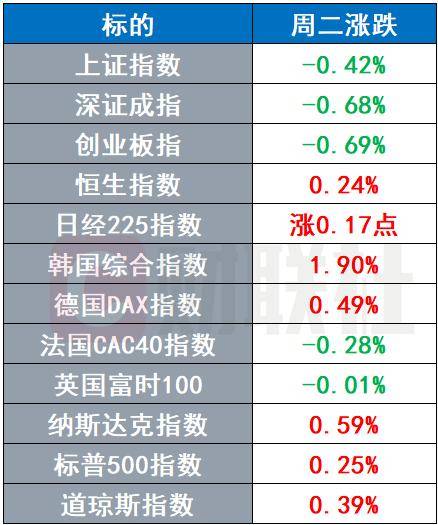
Market Overview - Overseas market trading sentiment has stabilized, with major Wall Street indices slightly rising, and cryptocurrencies like Bitcoin and Ethereum showing significant rebounds. The S&P 500 index is now less than 100 points away from its historical high of 6920 points [1] - On Tuesday, the S&P 500 index rose by 0.25%, while the Nasdaq increased by 0.59% and the Dow Jones by 0.39%. In contrast, the Shanghai Composite Index fell by 0.42% and the Shenzhen Component by 0.68% [2] Commodity Market - The commodity market was relatively flat, with most crude oil and industrial metals declining. However, spot silver saw a slight increase of 0.85% [3] - Specific commodity price changes included a 1.31% drop in ICE Brent crude oil and a 0.84% decrease in COMEX gold [3] Economic and Regulatory Developments - The U.S. SEC plans to ease listing rules, aiming to make it easier for small businesses to go public by reducing mandatory disclosures and relaxing requirements based on company size [4] - The American Economic Association has imposed a lifetime ban on former U.S. Treasury Secretary Larry Summers due to his communications with Jeffrey Epstein, citing a breach of professional integrity standards [5] Corporate Developments - Dell Technologies' founders announced a donation of $6.25 billion to help establish investment accounts for 25 million American children, with each account receiving $250 [5] - Amazon AWS launched its first 3nm AI chip, Trainium3, which boasts a 4.4 times increase in computing performance compared to its predecessor, and announced the development of Trainium4 [6] Technology Innovations - Tesla's Optimus team released a video showcasing the robot running, indicating advancements in their robotics technology [7]

戴尔夫妇豪捐62.5亿美元,为2500万儿童开设特朗普账户,特朗普:慷慨!
Hua Er Jie Jian Wen· 2025-12-02 22:02
戴尔科技公司创始人Michael Dell及妻子Susan Dell夫妇向美国财政部承诺捐赠62.5亿美元,为2500万名 儿童设立投资账户。 我们相信,如果每个孩子都能看到值得为之储蓄的未来,我们将建立的不仅是账户,而是希 望、机会和世代繁荣。 美国政府"特朗普账户"计划将于2026年7月4日启动,仅面向2025年至2028年出生的儿童,每人提供1000 美元。届时,任何父母都可以为自己的孩子开设一个账户,并每年最多存入5000美元。 12月2日,在美国白宫的一场活动上,美国总统特朗普宣布,旨在帮助美国儿童建立财富的储蓄计划"特 朗普账户"将于2026年7月4日起可用。 而针对戴尔夫妇的这项捐赠,特朗普表示赞扬,称此举是"我们国家历史上最慷慨的行为之一"。特朗普 表示这让"中产阶级家庭在美国的繁荣中获得一份子,从上涨的股市中受益,并更好地实现美国梦"。 "特朗普账户"是今年"大漂亮法案"的一部分,该提案要求美国财政部为2025年1月1日至2029年1月1日期 间在美国出生的儿童提供1000美元的投资账户。戴尔夫妇的捐赠将扩大该计划的覆盖范围,使更多儿童 受益。 分析认为,随着参与家庭和企业捐赠的增加,这可能 ...
美股异动 | 戴尔科技(DELL.US)涨逾3% 存储芯片价格飙升 公司部分产品或重新定价
Xin Lang Cai Jing· 2025-12-02 15:29
Core Viewpoint - Dell Technologies (DELL.US) shares rose over 3% to $136.57 amid rising storage chip prices, which have increased by 50% cumulatively since 2025 [1] Group 1: Price Trends - The price of 512GB storage chips has increased by nearly 500 yuan since October [1] - The surge in storage chip prices is described as a "crazy mode" by industry analysts [1] Group 2: Company Insights - Dell's Chief Operating Officer, Jeff Clarke, stated that he has "never seen costs rise this quickly" [1] - Clarke indicated that the rising costs will eventually be passed on to end customers, with a possibility of repricing some products [1]

戴尔科技(DELL.US)涨逾3% 存储芯片价格飙升 公司部分产品或重新定价
Zhi Tong Cai Jing· 2025-12-02 15:24
周二,戴尔科技(DELL.US)涨逾3%,报136.57美元。消息面上,自存储芯片价格开启"狂飙模式"以来, 2025年累计涨幅已达50%。其中,512GB存储芯片较10月份涨价近500元。戴尔首席运营官Jeff Clarke在 分析师电话会议上坦言"从未见过成本涨这么快"。他表示,成本最终将传导至终端客户,不排除部分产 品重新定价的可能。 ...