
芯片

Search documents
AI芯片公司估值高企 阿里拟拆分平头哥
BambooWorks· 2026-01-23 09:24
Core Viewpoint - Alibaba is considering the spin-off of its semiconductor division, Pingtouge, for independent listing, aiming to join the ranks of high-valuation Chinese AI chip companies [2][3] Group 1: Spin-off Consideration - Alibaba is evaluating the feasibility of spinning off Pingtouge, which is closely related to its cloud intelligence business, to unlock shareholder value [3][5] - The spin-off plan comes nearly three years after Alibaba's previous restructuring announcement, which ultimately did not materialize [3] - The recent surge in stock prices of competitors like Biren Technology and Moore Threads, which have seen significant increases since their IPOs, is influencing Alibaba's decision [2][5] Group 2: Market Context and Valuation - The current high valuations of Chinese chip companies, with some trading at over 200 times their price-to-sales ratios, provide a favorable backdrop for Alibaba's potential spin-off [6][7] - In contrast, Nvidia's price-to-sales ratio is only 24, highlighting the disparity in valuations between Chinese and Western chip firms [6] - The expectation of substantial policy and financial support for Chinese chip companies is also a motivating factor for Alibaba's consideration [6] Group 3: Competitive Landscape - Alibaba is not alone in pursuing a spin-off; Baidu has also announced plans to spin off its Kunlun chip division, potentially raising up to $2 billion [8] - Both Pingtouge and Kunlun have begun selling chips externally, targeting major telecom operators in China, which are investing heavily in AI infrastructure [8][9] Group 4: Financial Performance - Alibaba's recent financial performance shows a year-on-year revenue growth of 5% to 248 billion yuan, with a more substantial growth of 15% when excluding certain asset sales [10] - The cloud business remains a strong growth driver, with a 34% year-on-year revenue increase, contributing approximately 16% to total revenue [11] - The potential spin-off, combined with robust growth in cloud services and instant retail, could provide further momentum for Alibaba's stock price recovery [12]


国产定制芯片龙头芯原股份:预计全年亏损同比收窄25%,营收同增36%,AI算力推动订单翻番|财报见闻
Hua Er Jie Jian Wen· 2026-01-23 08:43
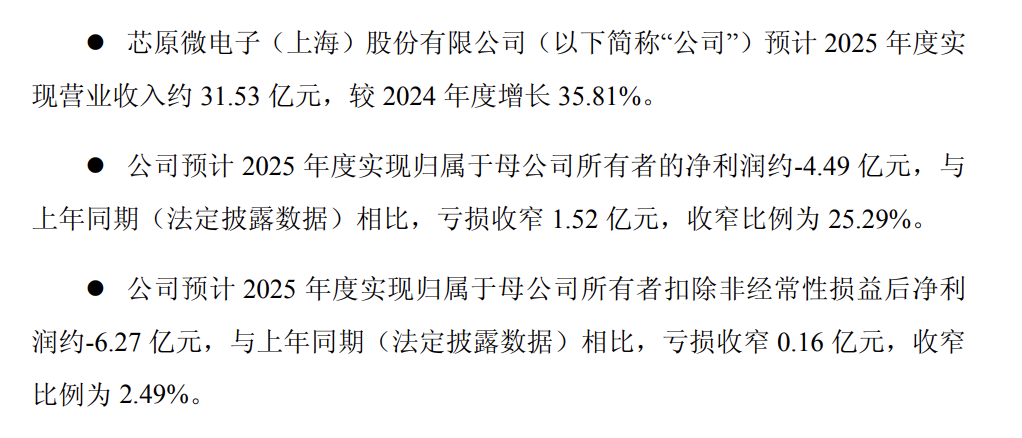
具体看点如下: 从结构来看,归属于母公司所有者的净利润同比减亏1.52亿元,不过,扣除非经常性损益后的净利润亏损为6.27亿元,同比仅收窄2.49%。 受益于单季度新签订单屡创新高及规模效应逐步显现,国产定制芯片龙头芯原股份2025年业绩展现出"营收增长、亏损收窄"的态势。 根据公司1月23日发布的年度业绩预告,预计2025年度实现营业收入31.53亿元,同比大幅增长35.81%;净亏损为4.49亿元,较上年同期收窄25.29%。公司在 收入规模快速扩张的同时,整体盈利能力正逐步改善。 公司业绩的核心驱动力,在于其新签订单呈现爆发式增长,连续三个季度创下历史新高,展现出强劲的市场需求与客户认可。2025年第二、三、四季度的新 签订单金额分别为11.82亿元、15.93亿元和27.11亿元,第四季度环比增幅高达70.17%。 全年新签订单总额达59.60亿元,是2024年的两倍以上,同比增长103.41%。其中,AI算力相关订单占比超过73%,数据处理领域订单占比超50%。 截至2025年末,公司在手订单金额已攀升至50.75亿元,连续九个季度保持高位,较第三季度末增长54.45%。尤其值得关注的是,量产业务订 ...

索尼退场,日本电视全军覆没
芯世相· 2026-01-23 08:41
Core Viewpoint - Sony's decision to form a joint venture with TCL for its home entertainment business marks a significant shift in the global television market, indicating Japan's exit from the competitive landscape of television manufacturing [4][9]. Group 1: Sony's Strategic Move - Sony will transfer its television business and the BRAVIA brand to a joint venture with TCL, with TCL holding a 51% stake, effectively rebranding Sony's television operations [4]. - The move reflects Sony's lack of display panel production capabilities, which limits its profit margins in the television sector, relying instead on LG and TCL for panel supply [4][9]. - Sony's television market presence has been minimal, often categorized under "others" in market share rankings, and its television segment has historically underperformed compared to its other business units like CIS chips and gaming [4][9]. Group 2: Implications for the Japanese Market - The partnership signifies the end of Japan's independent television brands, as major players like Sharp, Toshiba, and Panasonic have either exited or significantly downsized their television operations [9][10]. - The historical context shows that since 2010, Japanese electronics companies have been selling off their consumer electronics divisions, with Sony's television business being the latest casualty [11][16]. - The decline of Japanese brands in the television market is attributed to their loss of panel production capabilities, which has led to a diminished ability to control pricing and market presence [20][26]. Group 3: The Rise of Chinese and Korean Competitors - TCL's acquisition of Sony's television business is positioned to enhance its competitive stance against Samsung, leveraging Sony's brand equity alongside its own manufacturing capabilities [9]. - The shift in market dynamics has seen Chinese and Korean companies dominate the display panel production, with significant investments leading to a loss of market share for Japanese firms [22][25]. - The transition from Japanese dominance in the television market to a landscape where Chinese and Korean manufacturers hold the majority of panel production capabilities illustrates a broader trend of technological and market leadership shifting eastward [20][29].



【买卖芯片找老王】260123 GD/旺宏/美光/博通/TI/英飞凌/Skyworks
芯世相· 2026-01-23 08:41
Core Insights - The article discusses the challenges of managing excess inventory in the semiconductor industry, highlighting the financial burden of storage and capital costs associated with unsold materials [1] - It emphasizes the services provided by a company called "Chip Superman," which has successfully served 22,000 users and offers rapid transaction completion for inventory clearance [2][9] Group 1: Inventory Management - A significant amount of obsolete materials is causing financial strain, with monthly storage and capital costs amounting to at least 5,000, leading to a potential loss of 30,000 over six months [1] - The company is promoting its services to help clients sell excess inventory, indicating a market need for better inventory management solutions [10] Group 2: Service Offerings - "Chip Superman" has a large inventory, with over 50 million chips in stock, covering more than 1,000 models and 100 brands, valued at over 100 million [8] - The company operates a smart warehousing facility of 1,600 square meters and has an independent laboratory for quality control of each item [8] Group 3: Market Dynamics - The article mentions ongoing price adjustments in the semiconductor market, suggesting that some manufacturers have started to increase prices [12] - There is a call for users to check the "Factory Obsolete Materials" mini-program for better pricing and inventory options [10]

腾讯重仓的芯片公司要上市了!3年亏损超40亿
Di Yi Cai Jing Zi Xun· 2026-01-23 08:40
Core Viewpoint - Another AI chip company deeply tied to major internet firms is moving closer to an IPO, reflecting the growing trend of domestic AI chip companies aligning with tech giants like Baidu, Alibaba, and Tencent [2] Group 1: Company Developments - Kunlun Chip, a subsidiary of Baidu, submitted its IPO application to the Hong Kong Stock Exchange in January [2] - Suiyuan Technology's IPO was accepted, revealing that over half of its revenue in the first three quarters of the previous year came from direct sales to Tencent [2] - Suiyuan Technology plans to raise 6 billion yuan for the development and industrialization of its fifth and sixth generation AI chip series [3] Group 2: Financial Performance - Suiyuan Technology reported revenues of 0.9 million yuan, 3.01 million yuan, 7.22 million yuan, and 5.4 million yuan for the years 2022 to 2024 and the first nine months of 2025, respectively, with losses of 11.16 billion yuan, 16.65 billion yuan, 15.1 billion yuan, and 8.88 billion yuan during the same periods [3][4] - Cumulatively, Suiyuan Technology incurred losses of 42.9 billion yuan from 2022 to 2024, with unrecouped losses of 41.65 billion yuan as of September 2025 [3][4] Group 3: Research and Development - The company has invested 35.29 billion yuan in R&D from 2022 to 2024, representing 316.86% of its cumulative revenue during that period [4] - High R&D costs and the need for collaboration with internet giants for product validation are cited as reasons for ongoing losses [4] Group 4: Customer Concentration - Suiyuan Technology's sales to its top five customers accounted for 94.97%, 96.50%, 92.60%, and 96.41% of its revenue from 2022 to 2025 [4] - The proportion of revenue from Tencent has increased significantly, from 8.53% in 2022 to 71.84% in the first three quarters of 2025 [4] Group 5: Market Position - Suiyuan Technology holds a market share of approximately 1.4% in the domestic AI chip market, similar to other domestic competitors [5] - The competitive landscape shows that international firms like NVIDIA dominate the market, with a 70% share, while domestic firms struggle to gain significant market presence [6]
腾讯重仓的芯片公司要上市了!3年亏损超40亿
第一财经· 2026-01-23 08:29
Core Viewpoint - The article discusses the progress of AI chip companies closely tied to major internet firms in China, highlighting their IPO movements and financial challenges, particularly focusing on Suiyuan Technology's reliance on Tencent for revenue and its significant losses [3][6][10]. Group 1: Company Developments - Kunlun Chip, a subsidiary of Baidu, has submitted an IPO application to the Hong Kong Stock Exchange [3]. - Suiyuan Technology's IPO has been accepted, with its prospectus revealing that over half of its revenue comes from direct sales to Tencent [3][6]. - Suiyuan Technology plans to raise 6 billion yuan for the development and industrialization of its fifth and sixth-generation AI chip series [5]. Group 2: Financial Performance - Suiyuan Technology reported revenues of 0.9 million yuan in 2022, 3.01 million yuan in 2023, 7.22 million yuan in 2024, and 5.4 million yuan in the first three quarters of 2025, with cumulative losses exceeding 42.9 billion yuan over three years [6][7]. - The company has a high research and development expenditure, totaling 35.29 billion yuan from 2022 to 2024, which accounts for 316.86% of its cumulative revenue during the same period [7][8]. - The concentration of sales to major clients is significant, with the top five clients accounting for over 92% of revenue in recent years, and sales to Tencent increasing from 8.53% in 2022 to 71.84% in the first three quarters of 2025 [7][8]. Group 3: Market Position and Competition - Suiyuan Technology's market share in the AI accelerator market is approximately 1.4%, similar to other domestic competitors like Cambricon, while international players like NVIDIA dominate with a 70% market share [8][9]. - The competitive landscape shows that many domestic AI chip companies, including Suiyuan Technology, have not established a strong market presence, with most having market shares below 1% [8][9]. - Suiyuan Technology anticipates reaching a breakeven point by 2026, although this does not constitute a profit forecast [10].

龙芯中科2025年营收增长26% 亏损大幅收窄
Ju Chao Zi Xun· 2026-01-23 08:20
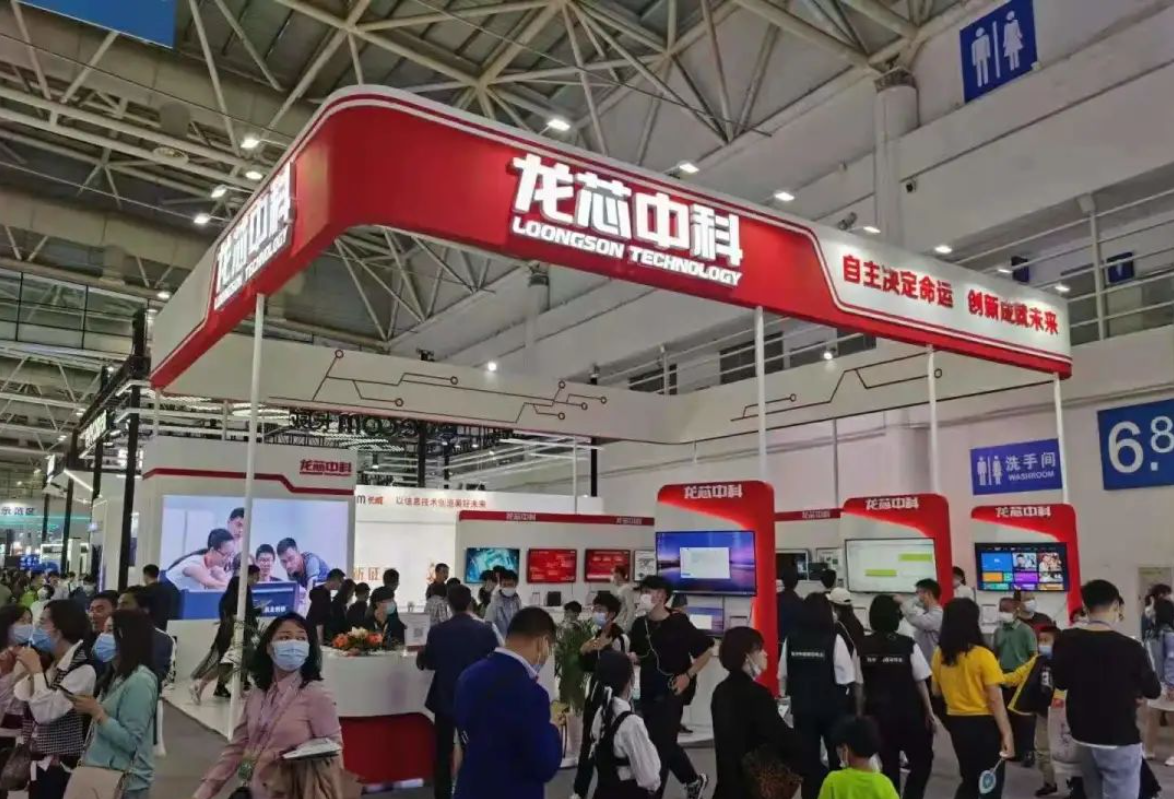
1月23日,龙芯中科发布2025年度业绩预告。财务数据显示,公司预计全年实现营业收入约63,500万元,较上年同期增长约26%,呈现良好增长势头。同 时,公司亏损额显著收窄,预计归属于母公司所有者的净利润约为-44,900万元,与上年同期相比,减亏约17,600万元,同比减亏幅度达28%。扣除非经常性 损益后,净利润预计为-50,300万元,同比减亏约24%。 报告期内,龙芯中科坚持"政策性市场"与"开放市场"双轮驱动的发展战略,通过将自主化核心优势转化为产品性价比与软件生态的竞争优势,实现了营业收 入的"量质齐升"。 具体来看,在工控领域,公司抓住安全应用市场复苏的机遇,充分发挥新一代嵌入式CPU的性价比优势,推动工控类芯片业务实现快速恢复与增长。 在信息化领域,公司凭借长期技术积累,把握市场重启契机。其主力产品"三剑客"(指龙芯系列CPU及相关解决方案)在系统性价比与局部生态建设上形成 领先优势,在办公系统及行业业务系统的招标采购中取得良好进展。同时,公司积极推动3C6000系列服务器芯片的典型应用落地,并成功探索对外技术授 权这一创新商业模式,为公司开拓了新的、可持续的收入增长点。 除收入规模增长外,公 ...

每周回顾 高盛上调黄金目标价至5400美元/盎司;泡泡玛特情节人限定盲盒溢价超600%
Sou Hu Cai Jing· 2026-01-23 08:17
Group 1: Gold Market - Goldman Sachs raised its gold price target for 2026 from $4,900 to $5,400 per ounce, driven by private investors diversifying their portfolios to hedge against global policy risks [1] - Gold prices recently reached a historical high, surpassing $4,900 per ounce, with a year-to-date increase of over 14% [1] Group 2: Semiconductor Industry - A surge in demand from large cloud service providers has led Intel and AMD to sell out their server CPU capacity for 2026, prompting a planned price increase of 10-15% for server CPUs [1] - The semiconductor sector is viewed as a significant investment opportunity, particularly in the context of AI-driven innovations in computing architecture [1] Group 3: ByteDance and AI in Animation - ByteDance's animation sector has reached a peak daily expenditure of 30 million, with the overall market expected to grow to 22 billion yuan by 2026 [2] - AI integration in animation production is significant, with cost reductions of over 70% and efficiency improvements of over 80% [2] Group 4: Xiaomi's Share Buyback - Xiaomi announced a share buyback plan of up to 2.5 billion HKD, coinciding with a decline in its stock price, which has dropped 42.65% from its peak [3] - The buyback is seen as a response to the company's recent stock performance and rising industry storage costs [3] Group 5: Robotics Industry - Yushun Technology clarified that its humanoid robot shipments exceeded 5,500 units in 2025, with production volume surpassing 6,500 units [3] - The company is preparing for an IPO in the domestic market after completing its IPO guidance work [3] Group 6: Fund Management and Market Trends - Public funds increased their holdings in non-ferrous metals, chemical, and non-bank financial sectors during the fourth quarter of 2025, despite a generally volatile A-share market [5] - The total net asset value of public funds exceeded 37.64 trillion yuan by the end of 2025, marking a historical high [5] Group 7: IPO Developments - Qinheng Micro's IPO application for the Sci-Tech Innovation Board was terminated, marking the second IPO termination in 2026 [9] - Alibaba is reportedly planning to spin off its AI chip division, Pingtouge, for an independent IPO, reflecting a trend of domestic AI chip companies moving towards public offerings [11]

龙芯中科:预计2025年净亏损4.49亿元左右 同比减亏28%
Mei Ri Jing Ji Xin Wen· 2026-01-23 08:04
每经AI快讯,1月23日,龙芯中科(688047.SH)公告称,预计2025年年度实现归属于母公司所有者的净利 润为-4.49亿元左右,与上年同期相比减少亏损1.76亿元左右,同比减亏28%左右。报告期内,公司坚持 政策性市场和开放市场并重,抓住安全应用市场恢复机遇,推动工控类芯片业务回升,信息化领域取得 招标进展,探索技术授权新模式;毛利率回升,减值损失同比减少约0.84亿元。 ...
英特尔复苏与联想红利:30年Wintel联盟的AI再造
Ge Long Hui· 2026-01-23 07:08
Core Insights - Intel has shown significant improvement in its financial performance for Q4 of FY2025, with revenue reaching $13.7 billion and Non-GAAP EPS at $0.15, exceeding expectations [1] - The recovery is primarily driven by a strong rebound in the Data Center and AI (DCAI) business, which saw a 15% quarter-over-quarter growth, marking the fastest growth in nearly a decade [1] - The partnership between Intel and Lenovo is deepening, particularly in the Client Computing Group (CCG) sector, with the early shipment of the Core Ultra Series 3 processors, which supports Lenovo's high-end AI PC strategy [2][3] Financial Performance - Intel's Q4 FY2025 revenue reached $13.7 billion, hitting the upper limit of guidance, with a Non-GAAP EPS of $0.15, significantly above the expected $0.08 [1] - The gross margin improved to 37.9%, exceeding guidance by 140 basis points, marking the fifth consecutive quarter of performance exceeding expectations [1] Strategic Developments - The Core Ultra Series 3 processors, based on the advanced 18A process node, have been shipped ahead of schedule, providing a boost to Lenovo's AI PC strategy [2] - The Aura Edition product line, featuring the latest Core Ultra processors, is set to drive over 200 laptop designs, making it one of Intel's most widely adopted AI PC platforms [3] Market Positioning - Intel and Lenovo are focusing on the private cloud and edge AI markets, which are seen as underappreciated growth areas for Intel and a core competitive advantage for Lenovo [7][8] - The collaboration aims to provide cost-effective AI solutions for businesses, avoiding the high-end GPU market dominated by competitors like NVIDIA [7][8] Future Outlook - The partnership is expected to strengthen as Intel resolves capacity constraints and improves supply conditions in Q2 2026, positioning Lenovo to capitalize on the upcoming enterprise upgrade cycle [3] - The alliance is redefining the Wintel partnership, with a focus on local processing of AI applications to enhance privacy and reduce latency, potentially leading to a structural turnaround for Intel's performance [10][11]

