
美妆

Search documents
全球美妆十强公司,跌了
3 6 Ke· 2025-08-07 03:34
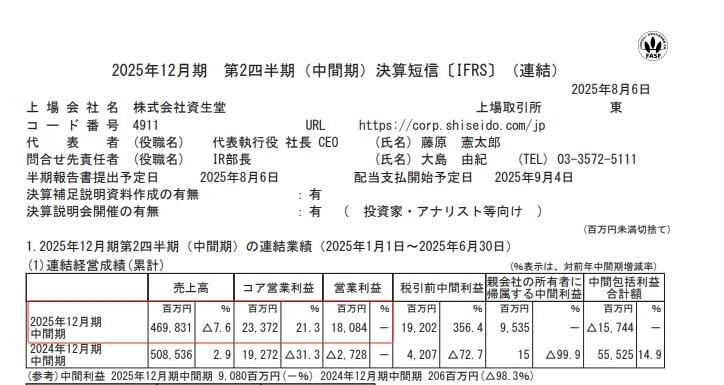
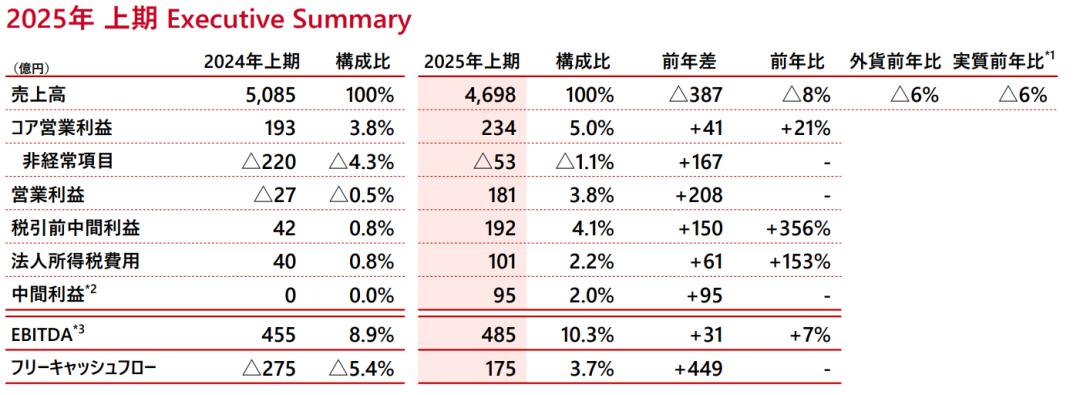
Core Insights - Shiseido reported a sales revenue of 229.96 billion yuan for the first half of 2025, a decrease of 7.6% year-on-year, marking the largest decline in the past five years [1][4][5] - The core operating profit for the same period was 11.38 billion yuan, reflecting a year-on-year increase of 21.3% [1][2][5] - The decline in sales was observed across all five major business regions globally, with the largest drop in the China travel retail segment, which saw a 12.4% decrease [1][10][16] Financial Performance - The sales revenue for the first half of 2025 was 229.96 billion yuan, down 7.6% year-on-year, and down 6.1% when adjusted for local currency [2][5] - Core operating profit increased to 11.38 billion yuan, up approximately 2 billion yuan from the previous year, representing a 21.3% growth [2][5] - Operating profit turned from a loss of 1.33 billion yuan in the previous year to a profit of 8.81 billion yuan [2][5] Historical Performance - The first half of 2025 marked the largest sales decline for Shiseido in the past five years, with previous years showing either growth or minimal decline [4][5] - In 2021, Shiseido recorded the highest sales growth of 21.5% in the first half, while other years had growth rates below 3% [4][5] Regional Performance - The China travel retail segment's sales were 84.76 billion yuan, down 12.4%, making it the most significant decline among all regions [10][16] - The Americas region saw a 10.1% decrease in sales, while the Asia-Pacific and European regions experienced declines of 2.3% and 5.3%, respectively [10][16] - Japan's sales decreased by 0.6%, indicating a broad downturn across all major markets [10][16] Brand Performance - Among Shiseido's brands, CPB, NARS, and ELISE showed positive growth, with ELISE achieving a 12% increase in sales [6][9] - The overall brand sales declined by 4%, but excluding the China travel retail area, the brand's sales increased by 4% [9][16] - The brand "Zui Xiang" experienced a significant drop in sales by 57% [9][16] Strategic Initiatives - Shiseido aims to achieve a core operating profit of 36.5 billion yen (approximately 17.77 billion yuan) for the year, despite the sales decline [17][18] - The company plans to cut costs globally, having already reduced 13.5 billion yen (approximately 6.57 billion yuan) in the first half of the year, with a target of 50 billion yen (approximately 24.34 billion yuan) in total cost reductions over the next two years [18] - Shiseido is focusing on brand optimization, management efficiency, and cost control to navigate the challenging market environment [17][18]

知名品牌断崖式暴跌57%
3 6 Ke· 2025-08-06 23:34
Core Insights - Shiseido Group faces significant challenges, with a notable decline in performance across all regions, particularly in China and travel retail markets, which experienced double-digit drops compared to the previous year [1][2][5] Financial Performance - For the first half of 2025, Shiseido Group reported net sales of 469.83 billion yen (approximately 22.846 billion RMB), a year-on-year decrease of 7.6% [1][2] - Core operating profit increased by 21.3% to 23.372 billion yen (approximately 1.137 billion RMB), while operating profit recovered from a loss of 2.728 billion yen (approximately 133 million RMB) to 18.084 billion yen (approximately 880 million RMB) [1][2] - The decline in net sales is attributed mainly to weak performance in the Chinese and travel retail markets, as well as the impact of the Drunk Elephant brand [2][5] Market Performance - The overall net sales decline of 8% in the first half of 2025 marks the first drop for Shiseido in three years [2][5] - The Japanese market saw the smallest decline at -0.6%, while the Chinese and travel retail markets experienced the largest drop at -12.4% [2][5] - In the second quarter, all markets except for the Americas and travel retail showed low single-digit growth, with travel retail down approximately 20% [2][5] Brand Performance - The Drunk Elephant brand significantly impacted overall performance, with a 43% year-on-year decline in Q2 and a 57% drop in the first half of 2025 [10][12] - Despite challenges, the Shiseido and NARS brands showed growth when excluding the impact of the Chinese and travel retail markets, with Shiseido brand sales increasing by 4% [12][19] - The Next 5 brands, particularly ELIXIR, demonstrated double-digit growth in the second quarter and the first half of 2025 [10][12] Regional Insights - Shiseido's performance in the Chinese market is affected by economic downturns leading to low consumer spending, with offline channels continuing to decline [16][19] - The Americas market is facing challenges, particularly for the Drunk Elephant brand, while other brands like Shiseido and NARS have seen some growth [23][31] - The company has announced significant layoffs in the Americas region as part of restructuring efforts [26][31]
逸仙电商上涨5.11%,报9.155美元/股,总市值8.44亿美元
Jin Rong Jie· 2025-08-06 17:17
Core Insights - Yatsen Holding Limited (YSG) experienced a stock price increase of 5.11% on August 7, reaching $9.155 per share, with a total market capitalization of $844 million [1] - As of March 31, 2025, Yatsen reported total revenue of 834 million RMB, reflecting a year-on-year growth of 7.78%, while the net profit attributable to shareholders was -5.303 million RMB, showing a significant year-on-year increase of 95.74% [1] Company Overview - Yatsen Holding Limited is a Cayman Islands-registered holding company that operates primarily through its domestic subsidiary, Guangzhou Yatsen E-commerce Co., Ltd. [2] - Founded in 2016, Yatsen is a leading player in the Chinese beauty market, aiming to create an exciting journey of beauty exploration for consumers in China and globally [2] - The company owns several high-growth cosmetic and skincare brands, including Perfect Diary, Little Ondine, Abbys Choice, Galenic, DR.WU, EVE LOM, Pink Bear, and EANTiM [2] - Yatsen engages customers through both online and offline channels, with a broad presence on major e-commerce, social, and content platforms in China [2] Upcoming Events - Yatsen is scheduled to disclose its fiscal year 2025 interim report on August 19, with the actual release date subject to company announcement [2]

逸仙电商上涨2.07%,报8.89美元/股,总市值8.20亿美元
Jin Rong Jie· 2025-08-06 16:12
Core Viewpoint - Yatsen Holding Limited (YSG) shows positive financial performance with a notable increase in revenue and net profit, indicating growth potential in the beauty market [1][2]. Financial Performance - As of March 31, 2025, Yatsen's total revenue reached 834 million RMB, reflecting a year-on-year growth of 7.78% [1]. - The company's net profit attributable to shareholders was -5.303 million RMB, which represents a significant year-on-year increase of 95.74% [1]. Stock Performance - On August 6, YSG's stock price increased by 2.07%, closing at $8.89 per share, with a total market capitalization of $820 million [1]. Upcoming Events - Yatsen is scheduled to disclose its fiscal year 2025 mid-term report on August 19, with the actual date subject to company announcement [2]. Company Overview - Yatsen Holding Limited is a Cayman Islands-registered holding company that operates primarily through its subsidiary, Guangzhou Yatsen E-commerce Co., Ltd. [2]. - Founded in 2016, the company is a leading player in the Chinese beauty market, offering brands such as Perfect Diary, Little Ondine, and DR.WU, among others [2]. - The company engages customers through both online and offline channels, with a strong presence on major e-commerce, social, and content platforms in China [2].
二季度调仓路径曝光!张坤加仓白酒守护信仰,刘彦春与焦巍奔向新经济
市值风云· 2025-08-06 10:09
Core Viewpoint - The article discusses the significant shifts in investment strategies among fund managers in response to changing market conditions, particularly focusing on the divergence in approaches towards traditional sectors like liquor and emerging sectors like new consumption and innovative pharmaceuticals [3][39]. Market Performance - In Q2 2025, the Chinese A-share market experienced a rebound after an initial decline, with the Shanghai Composite Index dropping nearly 10% before recovering due to policy support [4][5]. - The Shanghai and Shenzhen Composite Index rose by 3.8% in Q2, while the Hang Seng Index outperformed with a 4.1% increase [6][7]. Fund Manager Strategies - Fund managers displayed contrasting strategies, with some reducing exposure to traditional sectors like liquor while others increased their stakes in high-end liquor brands [10][11]. - Zhang Kun, a prominent fund manager, significantly increased his holdings in high-end liquor stocks, contrary to the general trend of reduction among peers [12][16]. - In contrast, Jiao Wei completely exited liquor stocks to focus on new consumption sectors, indicating a shift in investment paradigms [17][18]. Sector Analysis - The article highlights a notable reduction in public fund holdings in the liquor sector, with the average allocation dropping to 4%, marking a historical low [10]. - Jiao Wei's new focus includes companies like Pop Mart and high-end gold brands, reflecting a broader trend towards new consumption [18][24]. - Liu Yanchun's fund also reduced its liquor holdings but maintained a consistent investment logic despite market fluctuations [26][30]. Emerging Trends - The article emphasizes the growing interest in innovative pharmaceuticals, with many fund managers reallocating resources towards this sector due to its recent performance and potential [39][41]. - Fund managers are increasingly recognizing the opportunities in new consumption narratives and cultural exports, which are seen as significant growth areas [46].

吴声2025年度演讲:场景革命十年,哲学生活方式到来
21世纪经济报道· 2025-08-06 02:20
Core Viewpoint - The article emphasizes the ongoing "AI scene revolution" and the importance of reconstructing meaning in specific contexts, highlighting the need for businesses to adapt to the evolving landscape shaped by AI technologies [5][20]. Group 1: Scene Creation and Evolution - The concept of "scene creation" has been pivotal over the past decade, driving the development of new business models and brands, such as Luckin Coffee and Red Star Macalline, which have successfully navigated market changes through innovative scene strategies [12][17]. - The evolution of brands like Sanwing Bird illustrates the shift from product-centric to solution-oriented approaches, focusing on personalized home scene customization [15]. - Red Star Macalline's transformation into an "AI home life destination" showcases the integration of home appliances, furniture, and home decoration into a cohesive shopping experience [17][19]. Group 2: Instant Connection and Meaning Reconstruction - The article discusses the significance of "NOW" as a concept of connection in the AI era, where businesses must focus on real-time engagement and meaningful interactions with consumers [31]. - Platforms like Xiaohongshu exemplify the shift towards immediate connection, transforming user-generated content into a valuable resource for decision-making and community engagement [33][35]. - The connection revolution is highlighted through brands like Three Squirrels, which have adapted their organizational structures to enhance responsiveness and innovation in product development [38][39]. Group 3: AI and Physical World Integration - The emergence of "physical AI" is reshaping human-machine interactions, allowing for a more intuitive and responsive experience in everyday environments [61][62]. - Companies like AAC Technologies are pioneering solutions that integrate AI into physical spaces, enhancing user experiences through sensory technology [62][64]. - The article emphasizes the importance of creating seamless interactions between digital and physical realms, as seen in the case of brands like Xiaomi and their approach to automotive manufacturing [40][71]. Group 4: Retail and Experience Innovation - The transformation of retail spaces into experiential destinations is exemplified by Anta's innovative store concepts, which blend art and community engagement to enhance customer experiences [78][79]. - The article highlights the need for physical spaces to evolve alongside digital advancements, ensuring that consumer experiences are holistic and engaging [80][83]. - The rise of emotional commerce, particularly through collectible toys, reflects a shift in consumer preferences towards products that resonate on a personal and emotional level [85][86].

从社媒爆红到闭店,为什么这类美妆死得快?
3 6 Ke· 2025-08-05 23:50
Core Viewpoint - The beauty consumption market is undergoing a brutal selection and reshuffling, with many small and startup brands facing significant challenges and closures amid economic downturns [1][3]. Company Summary - Youthforia, a DTC beauty brand focused on clean beauty, is set to close after achieving over $15 million in sales since its founding in 2021, despite previously maintaining triple-digit growth [3][5]. - The brand's closure follows a controversy regarding its product offerings, particularly a foundation shade criticized for being inappropriate, which led to a significant drop in website traffic and social media followers [11][12]. - Youthforia's sales were heavily driven by viral marketing on TikTok, accounting for 84% of its revenue, but the brand ultimately could not sustain its operations [7][19]. Industry Summary - The clean beauty segment is experiencing rapid growth, with a projected annual increase of 18.6%, yet the average lifespan of brands in this category has decreased to 3.2 years [12]. - Other clean beauty brands, such as Ami Colé, have also announced closures, indicating a broader trend of challenges faced by new entrants in the beauty market [12][22]. - The DTC beauty model, once thriving, is now under pressure due to rising customer acquisition costs and increased competition from established brands that have adapted to digital marketing strategies [24][25].
警惕!美妆科学传播,开始被吐槽没有“活人感”了
FBeauty未来迹· 2025-08-05 14:11
Core Insights - The article emphasizes that scientific communication is becoming a new "lifeline" for beauty brands, as consumers increasingly demand rigorous and verifiable data to support product claims [2][14][36] - The shift in consumer focus has moved from simply asking about ingredients to questioning the effectiveness and proof of those ingredients [3][19] Consumer Perception - A survey indicated that only about 25% of consumers fully trust brands' self-declarations, with 56% preferring clinical test results with control groups to establish trust [6][14] - Over 70% of consumers want brands to clearly label the concentration of key ingredients, reflecting a demand for transparency [6][30] Evolution of Consumer Knowledge - Consumers have evolved from ingredient-focused to understanding the mechanism of action, with 33% able to grasp how ingredients work in skincare [9][19] - Nearly 90% of consumers are familiar with professional concepts like "transdermal absorption," and 48.25% have researched these concepts further [10][14] Trust and Verification - The article highlights that 68.09% of consumers believe that "laboratory data does not equal real-world effectiveness," indicating skepticism towards brand claims [15][19] - Consumers are increasingly constructing a "triangular verification" model, relying on brand information, expert evaluations, and personal experiences [23][27] Demand for Scientific Communication - Consumers prefer engaging and relatable scientific communication, with 71.6% favoring short videos or animations to explain ingredient principles [28][30] - There is a strong demand for verifiable data, with 70.2% of consumers wanting clear labeling of core ingredients and their effective concentrations [30][34] Pricing Sensitivity and Value Perception - Over 80% of consumers are willing to pay a premium for products backed by solid scientific research, with 20% willing to pay over 20% more for technology [19][21] - The core logic of consumer purchasing decisions has shifted to a formula where perceived value equals the cost of science divided by verifiable actual effects [19][21] Future Directions for Brands - Brands need to build a multi-dimensional communication system that moves beyond ingredient stacking and scientific jargon to include data and experiential evidence [34][36] - A proposed "scientific communication scoring system" could significantly influence purchasing decisions, emphasizing transparency and verifiability [34][36]

上美股份盈喜:预计2025年上半年净利润约5.4亿至5.6亿元 涨幅30.9%-35.8%
Zhi Tong Cai Jing· 2025-08-05 13:50
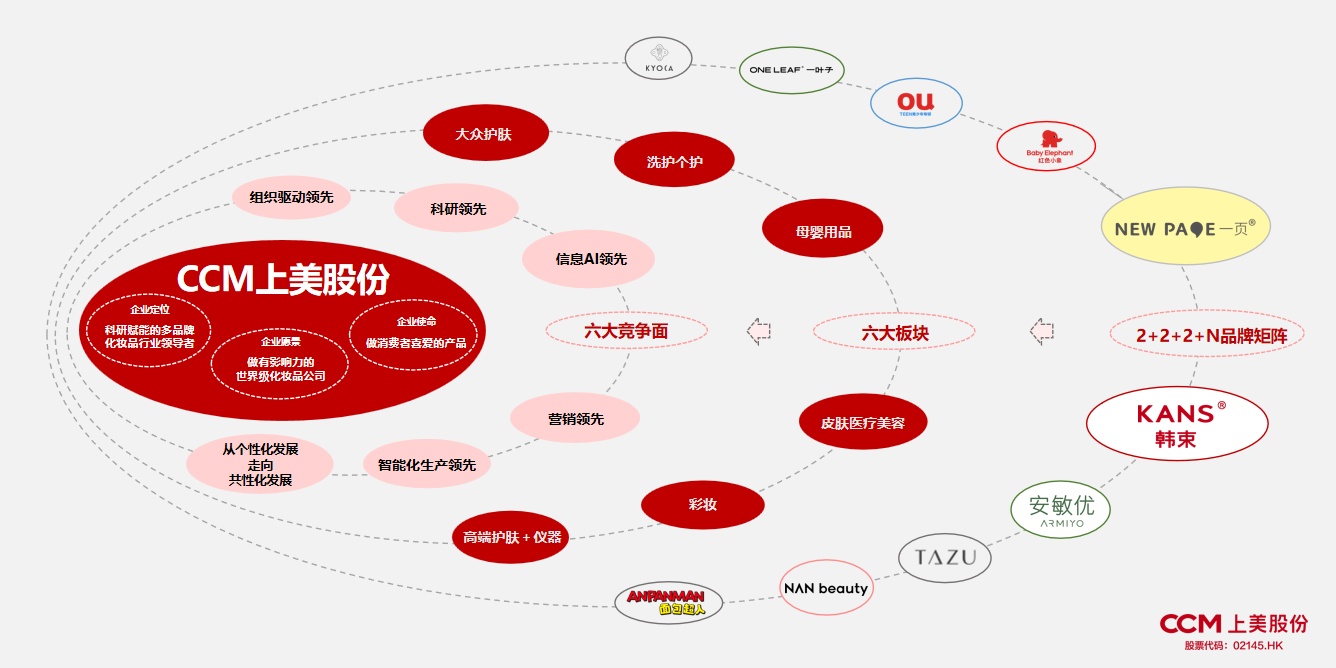
Core Viewpoint - Shanghai Shangmei Cosmetics Co., Ltd. (02145) has released a positive profit forecast for the first half of 2025, indicating strong revenue and net profit growth driven by its main brand Han Shu and the second growth curve brand New Page [1][2][4] Group 1: Financial Performance - For the first half of 2025, the company expects revenue to be between RMB 4.09 billion and RMB 4.11 billion, representing a year-on-year growth of 16.8% to 17.3% [1] - The net profit is projected to reach between RMB 540 million and RMB 560 million, showing a significant year-on-year increase of 30.9% to 35.8% [1] Group 2: Brand Strategy - The company is advancing a "single focus, multi-brand, globalization" strategy, creating a multi-brand matrix that includes the main brand Han Shu and the second curve brand New Page, achieving comprehensive layout across multiple categories and price ranges [2][12] - Han Shu has achieved a breakthrough in all-channel growth, with GMV on Douyin exceeding RMB 3.63 billion in the first half of 2025, maintaining its position as the top beauty brand on the platform [4][12] Group 3: Product Innovation - The Han Shu brand has successfully launched popular products, such as the Hong Man Yao series, which sold over 14 million sets, and the Bai Man Yao series, which continues to grow in the whitening market [4][9] - New Page has shown strong growth since its launch in 2022, with a strategic upgrade targeting "effective skincare for all ages" and achieving a sales increase of 106% during the 618 shopping festival [6][12] Group 4: Competitive Advantage - The An Min You brand targets the sensitive skin segment, utilizing innovative ingredients like Qinghao Oil AN+ to provide gentle solutions, enhancing the company's competitive edge in professional skincare [9][12] - The company has established a complete innovation matrix in the hair care sector, focusing on functional hair care and scalp anti-aging products, driven by consumer demand [9][12] Group 5: Future Outlook - The company aims to achieve a strategic goal of RMB 30 billion by 2030, leveraging clear strategic planning and ongoing research investment to transition from following international brands to leading industry development [19]
上美股份(02145.HK)盈喜:预计2025年上半年营收超40.9亿元,净利润飙升超30.9%
Ge Long Hui· 2025-08-05 13:08
Core Viewpoint - Shanghai Shangmei Cosmetics Co., Ltd. (02145.HK) has released a positive profit forecast for the first half of 2025, indicating strong revenue and net profit growth driven by its main brand Han Shu and the second growth curve brand New Page [1][2] Group 1: Financial Performance - For the first half of 2025, the company expects revenue to be between RMB 4.09 billion and RMB 4.11 billion, representing a year-on-year growth of 16.8% to 17.3% [1] - The net profit is projected to reach between RMB 540 million and RMB 560 million, showing a significant year-on-year increase of 30.9% to 35.8% [1] Group 2: Brand Strategy - The company is advancing a "single focus, multi-brand, globalization" strategy, creating a multi-brand matrix that includes the main brand Han Shu and the second curve brand New Page, achieving comprehensive layout across multiple categories and price ranges [2][10] - Han Shu has achieved a breakthrough in all-channel growth, with GMV on Douyin exceeding RMB 3.63 billion in the first half of 2025, maintaining its position as the top-selling beauty brand on the platform [4] Group 3: Product Innovation - The Han Shu brand has successfully launched innovative products, such as the Hong Man Yao series, which sold over 14 million sets, and the Bai Man Yao series targeting the whitening market, reinforcing the brand's market recognition for "functional skincare" [4] - New Page has shown strong growth since its launch in 2022, with a strategic upgrade focusing on "effective skincare" for all age groups, achieving a sales increase of 106% during the 618 shopping festival [6] Group 4: Competitive Advantage - The Anminyou brand targets the sensitive skin segment with its core ingredient "Artemisia Oil AN+", providing a gentle solution for sensitive skin, enhancing the company's professional skincare portfolio [8] - The company has established a complete innovation matrix in the hair care sector, launching differentiated brands like Jifang and Han Shu Hair Care, focusing on functional hair care and scalp anti-aging [8] Group 5: Research and Development - The company emphasizes R&D as a strategic priority, having established a 3.0 innovation R&D system and an "1+N open innovation platform" to integrate global scientific resources [11] - In 2024, Han Shu achieved a significant technological breakthrough with the approval of its self-developed cyclic peptide-9 anti-aging ingredient by the National Medical Products Administration [13] Group 6: Manufacturing and Future Goals - The company has built an international and intelligent production system, with a smart factory that operates fully automated processes from raw material scheduling to finished product delivery [14] - The company aims to reach a strategic target of RMB 30 billion by 2030, leveraging clear strategic planning and continuous R&D investment to transition from following international brands to leading industry development [16]
