旅游业

Search documents
冬日经济|冰雪游南方游客占比超70% 00后泡汤养生订单同比增43%
Di Yi Cai Jing· 2025-11-21 04:44
Core Insights - The winter tourism trend is significantly rising, particularly in snow-related activities, with southern tourists making up over 70% of bookings for snow tourism products [1][2][3] Group 1: Popular Destinations and Trends - Major cities contributing to snow tourism include Shanghai, Nanjing, Shenyang, Beijing, Shenzhen, Chengdu, Hangzhou, Tianjin, Wuhan, and Ningbo, with a notable increase in bookings for destinations like Harbin, which saw over 80% growth in homestay reservations [1][2] - The report from Tongcheng Travel indicates that popular destinations for the 2025-2026 snow season include Harbin, Shenyang, Urumqi, Changchun, Hulunbuir, Altay, Qiqihar, Daxing'anling, Changbai Mountain, and Ili [2] - The winter group tour bookings have more than doubled compared to last year, with a diverse range of destinations being favored, including both snow and warm winter tourism options [3] Group 2: Consumer Behavior and Preferences - There is a notable trend of consumers pre-booking accommodations in popular snow tourism destinations to lock in prices, with an average increase of over 80% in homestay bookings on the Tongcheng platform [2][3] - The demographic for winter hot spring tourism is shifting, with a significant portion of bookings coming from the post-90s generation, who account for about one-third of orders, and the post-00s generation showing a 43% increase in order volume [4] - Family-oriented travel is becoming more prevalent, with services catering to children, such as one-on-one ski coaching, seeing significant growth [4] Group 3: International Snow Tourism - The interest in outbound snow tourism is also increasing, with popular international destinations for the upcoming season including Moscow, Interlaken in Switzerland, Aspen in France, and Whistler in Canada [5] - The recent visa-free policy for Russia has led to a noticeable rise in winter tourism bookings, while traditional favorites like Japan's Hokkaido and Tokyo have seen a decline in popularity [5]

东莞发力赛事经济,打造“体育+旅游”消费新场景
2 1 Shi Ji Jing Ji Bao Dao· 2025-11-21 01:26
Core Viewpoint - The 15th National Games (referred to as "Fifteenth Games") is being held in the Guangdong-Hong Kong-Macao Greater Bay Area, with Dongguan hosting several key events, aiming to enhance the city's profile through sports and cultural tourism [1] Group 1: Event Significance - Dongguan is recognized as a "National Basketball City," with a rich history in sports events, particularly basketball, which has been a significant part of the city's culture since the 1950s [1] - The city is leveraging its sports heritage and successful past events to boost its economy through the Fifteenth Games [1] Group 2: Economic Impact - The integration of "sports + tourism" is seen as a crucial driver for enhancing consumer markets, with Dongguan's cultural and tourism bureau actively promoting this model during the games [1][5] - The Dongguan Basketball Center, known as the "CBA First Stadium," serves as a central hub for consumer activity during events, significantly boosting local hospitality, dining, and shopping sectors [2] Group 3: Consumer Engagement Initiatives - Dongguan's cultural and tourism bureau has launched a series of promotional activities, including "Follow the Fifteenth Games to Explore Dongguan," offering free access to various attractions for ticket holders [2][3] - The city is implementing a comprehensive approach to connect dining, accommodation, transportation, tourism, shopping, and entertainment, enhancing the overall visitor experience [3] Group 4: Cultural Activities - The "Bay Area Weekend IN Dongguan" series combines sports events with cultural markets and performances, aiming to activate weekend consumer engagement [4] - Various cultural activities, such as Cantonese opera performances and photography contests, are being organized to showcase local heritage alongside sports events [4] Group 5: Future Prospects - Dongguan is positioned to transform event traffic into economic growth, establishing a unique "sports + tourism" consumption ecosystem that contributes to high-quality urban economic development [5]
综述丨订单大量取消 日本旅游业日子“很难过”
Xin Hua Wang· 2025-11-20 12:45
Group 1 - Japan's tourism industry is facing significant challenges due to a surge in order cancellations from Chinese tourists, with cancellations reaching 70% of overall orders by November 18 [1] - The Hokkaido region, a key destination for Chinese tourists, has reported a notable decline in visitor numbers, with hotels experiencing cancellations of approximately 70 bookings in November alone [1] - The Japanese government and tourism officials are expressing concerns about the potential impact on the winter tourism peak season, as cancellations are occurring just before major events like the Lunar New Year and snow festivals [1] Group 2 - The cancellation of group travel orders is expected to have a pronounced effect on the tourism industry starting in December, according to industry experts [2] - The Chinese government's travel advisories and warnings have led to a decrease in the willingness of Chinese tourists to visit Japan, prompting airlines to implement flexible cancellation policies [2] - Predictions indicate that the decline in Chinese tourist spending could result in a loss of approximately 1.79 trillion yen (about 11.5 billion USD) in tourism revenue for Japan, which may reduce the country's GDP by 0.29% [2]
南京商旅(600250.SH):控股股东重组完成
Ge Long Hui A P P· 2025-11-20 10:52
Group 1 - Nanjing Business Travel (600250.SH) announced the completion of a restructuring of its controlling shareholder, with the new registered capital of the restructured cultural tourism group set at 10 billion yuan [1] - The ownership structure post-restructuring includes Nanjing State-owned Assets Supervision and Administration Commission holding 42%, Nanjing Urban Construction Investment Holding Group Co., Ltd. holding 35%, and Nanjing State-owned Assets Investment Management Holding Group Co., Ltd. holding 23% [1] - The restructuring does not change the actual controller or the controlling shareholder of Nanjing Business Travel, and there are no indirect controlling shareholders following the restructuring [1] Group 2 - The restructuring does not involve any changes to the main business of the listed company, and there are no other asset injection plans related to the listed company from the controlling shareholders, aside from the ongoing acquisition of 100% equity in Nanjing Huangpu Hotel Co., Ltd. [2]

50 万张机票退订背后:中国退单戳破日本旅游泡沫
Xin Jing Bao· 2025-11-20 09:45
50万张赴日机票一朝退空,春节订单腰斩、零售股跌停——日方一句错话,让7.5%GDP依赖旅游、四 成消费靠中国游客的日本再遭"速冻"。政治挑衅,经济买单,合作共赢才是解药。 ...
复星旅文首席执行官鲍将军:以系统性 AI 组织重构文旅,让硅基服务赋能碳基温度
Cai Jing Wang· 2025-11-20 09:13
Core Insights - The article highlights the innovative application of AI technology by Fosun Tourism Group to enhance the consumer experience in the tourism industry, aiming to create a personalized vacation experience and improve operational efficiency [1][2][3] AI-Driven Vacation Services - Fosun Tourism Group has launched AI G.O, the world's first all-scenario AI vacation assistant, which provides 24/7 service with a response time of under 1.5 seconds, addressing the long-standing pain points in the tourism service chain [2][3] - AI G.O offers personalized recommendations for trip planning, real-time information during the vacation, and post-trip engagement to maintain customer loyalty [2][3] Unique Interaction and Personalization - Unlike traditional platforms, AI G.O utilizes large language models to deeply understand consumer needs, enabling personalized interactions and recommendations, including customized itineraries and reminders for events [3] - The company is also developing unique IP characters for AI G.O to enhance consumer engagement, transitioning from a customer service role to a dedicated vacation partner [3] Operational Efficiency and Strategic Upgrades - AI technology is central to optimizing operations and upgrading strategies within Fosun Tourism Group, allowing for the automation of repetitive tasks and enabling staff to focus on more complex customer service needs [7][8] - The company is implementing AI across various departments, including customer service, marketing, product development, and talent management, to enhance overall efficiency and decision-making processes [8][9] Ecosystem Collaboration - Fosun Tourism Group is building an "AI + tourism ecosystem" by collaborating with various partners, including technology firms and local governments, to leverage AI's benefits across the industry [11][12] - The company aims to transition from a "business + AI" model to an "AI + business" model, where AI becomes an integral part of the business strategy, enhancing operational capabilities and consumer experiences [12]


高市早苗的闹剧,让日本经济先中了“回旋镖”|京酿馆
Xin Jing Bao· 2025-11-20 08:29
打开百度APP畅享高清图片 ▲日本内阁府公布三季度GDP,按年率计算下降1.8%。图/IC photo 近期高市早苗的一番闹剧式表演,让日本经济挂上了新一层寒霜。 据经济日报报道,11月17日,日本内阁府公布三季度GDP,按年率计算下降1.8%,为六个季度以来首 次萎缩。日本金融市场出现股债汇"三杀",20年期国债收益率创1999年以来最高水平。 11月18日,日本金融市场再现股债汇"三杀"。日经225指数暴跌3.22%,日元对美元汇率当天一度下跌至 1美元兑换155.38日元,创今年1月以来最低水平。30年期国债收益率升至3.28%。 11月19日,东京股市两大股指连续4个交易日下跌,日经股指累计下跌2700多点。 日本金融市场的震荡,是日本国内经济低迷,高市早苗财政刺激和货币宽松计划引发市场抛售美元,美 国金融市场抛售科技股、加密货币和黄金等多重因素叠加的结果。其中,高市早苗的妄语妄行毒化了中 日关系,也是新生的市场重大风险。 11月20日早盘,日本金融市场止跌反弹,但是这并不代表高市早苗给日本经济造成的风险溢出效应会逐 渐消失。 这场作空日元的盛宴已经开了十几年。即使今年1月24日,日本央行将基准利率从 ...
高市早苗的闹剧,让日本经济先中了“回旋镖”
Xin Jing Bao· 2025-11-20 08:17
Core Viewpoint - The recent economic turmoil in Japan, marked by a 1.8% annualized decline in GDP for Q3, is attributed to a combination of internal economic stagnation and external geopolitical tensions, particularly involving China [1][6]. Economic Performance - Japan's Q3 GDP contracted by 1.8%, marking the first decline in six quarters [1]. - The Nikkei 225 index fell by 3.22%, and the yen depreciated to 155.38 against the dollar, the lowest since January [1]. - The 30-year government bond yield rose to 3.28%, the highest level since 1999 [1]. Market Reactions - The Japanese financial market experienced a "triple kill" in stocks, bonds, and currency, leading to significant sell-offs [1]. - The Tokyo stock market indices fell for four consecutive trading days, with a cumulative drop of over 2700 points [1]. Geopolitical Factors - The tensions between Japan and China, exacerbated by Prime Minister Kishi's provocative statements, have led to increased market volatility and investor caution [1][4]. - Japan's reliance on China for imports is significant, with over 50% of certain product categories sourced from China [4]. Investment Climate - The ongoing depreciation of the yen is seen as a result of high fiscal stimulus and military expansion policies under Kishi, which are viewed as contradictory and unsustainable [3]. - International investors have been shorting the yen, taking advantage of the interest rate differentials between Japan and the U.S. [2]. Economic Dependencies - Chinese tourists are crucial to Japan's economy, contributing approximately 30% to tourism revenue; a decline in their visits could significantly impact GDP [5]. - Japan's economic structure is heavily reliant on imports from China, with critical goods such as electronics and fertilizers being predominantly sourced from there [4]. Risk Mitigation - Analysts suggest that Kishi should retract her controversial statements to mitigate economic risks and stabilize market conditions [6]. - The potential for further economic decline in Japan is anticipated in Q4 due to existing structural issues and geopolitical uncertainties [6].
高市早苗的闹剧,让日本经济先中了“回旋镖” | 京酿馆
Sou Hu Cai Jing· 2025-11-20 08:16
Economic Overview - Japan's GDP for the third quarter has decreased by an annualized rate of 1.8%, marking the first contraction in six quarters [2] - The financial market in Japan has experienced significant turmoil, with the Nikkei 225 index dropping by 3.22% and the yen falling to its lowest level against the dollar since January [2][3] - The decline in the stock market has been compounded by a sell-off in bonds and currency, leading to the highest 20-year bond yield since 1999 [2] Government Policy Impact - Prime Minister Kishi's aggressive fiscal stimulus and monetary easing policies have contributed to market sell-offs, particularly affecting the yen's value [2][4] - The current debt level in Japan is approximately 263% of GDP, raising concerns about the sustainability of fiscal policies and potential increases in long-term interest rates [5] - The government's push for military expansion and fiscal stimulus is seen as providing new momentum for short-selling the yen [4] Trade Relations and Risks - Tensions with China, Japan's largest trading partner, have escalated due to provocative statements from Kishi, potentially leading to greater economic repercussions for Japan [3][6] - Japan's reliance on imports from China is significant, with over 50% of certain product categories sourced from China, highlighting the vulnerability of Japan's economy to trade disruptions [6][7] - A reduction in Chinese tourists could lead to a GDP decrease of 0.36%, equating to an economic loss of approximately 2.2 trillion yen [7] Market Sentiment and Future Outlook - Analysts predict continued economic decline in Japan for the fourth quarter due to existing structural issues and rising uncertainties [8] - There is a call for Kishi to retract controversial statements to mitigate risks to the economy, although it remains uncertain whether this will occur [8][9]
视频丨中国游客赴日游锐减 日本旅游业受冲击
Yang Shi Xin Wen Ke Hu Duan· 2025-11-20 08:15
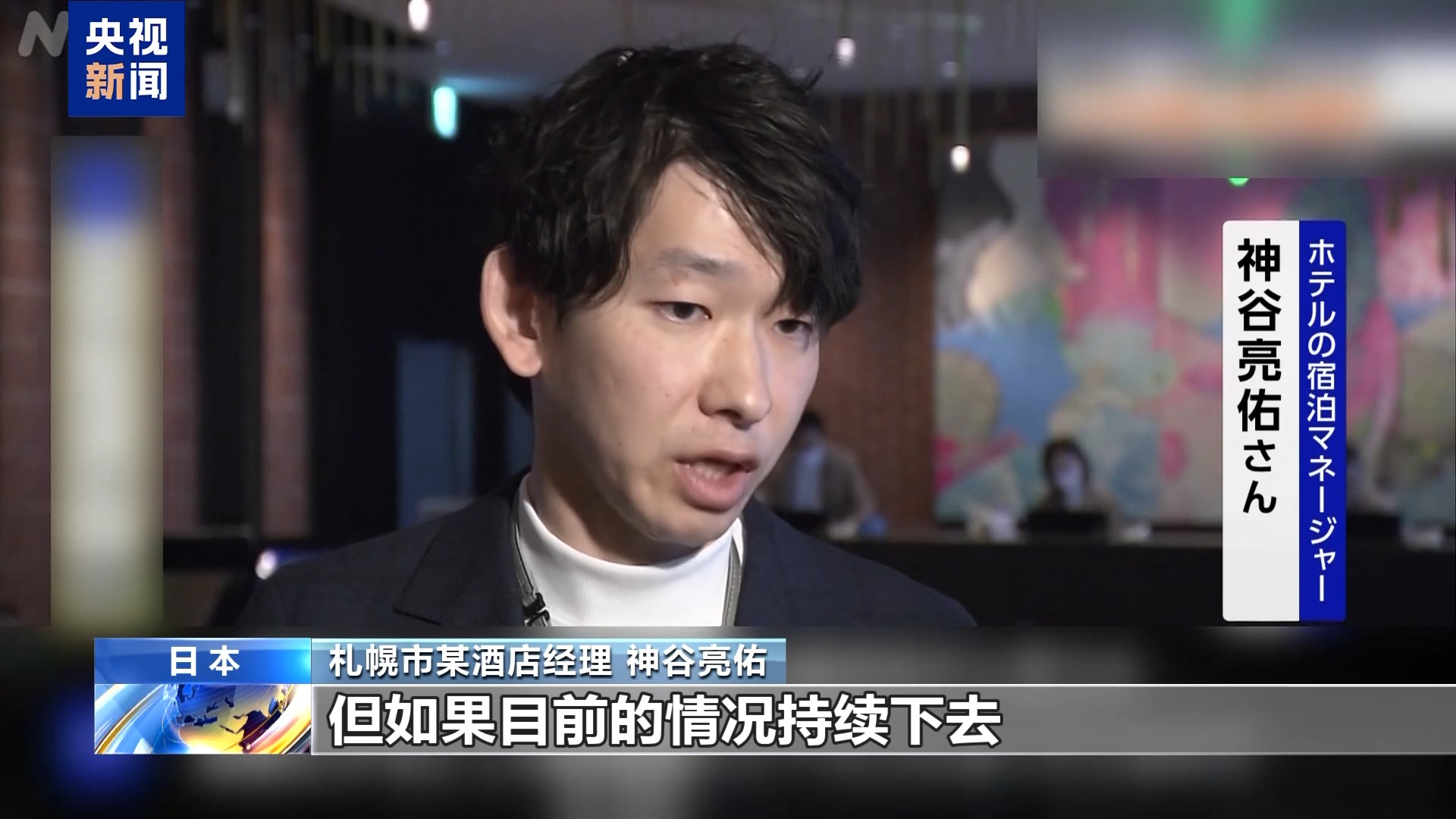
Group 1 - The negative impact of Japanese Prime Minister Sanna Takashi's remarks regarding Taiwan continues to affect Japan's tourism industry significantly [1] - There has been a noticeable decline in hotel revenues in Japan, particularly in Hokkaido, which is entering its peak winter tourism season [1][3] - Since October 14, cancellations of accommodation bookings by Chinese tourists have been reported, with one hotel in Sapporo noting around 20 nights of cancellations by October 19 [3] Group 2 - A major international travel agency in Japan, primarily catering to Chinese tourists, has seen an 80% reduction in bookings for the remainder of the year following China's travel advisory against visiting Japan [7] - The World Travel and Tourism Council indicates that tourism accounts for approximately 7% of Japan's GDP [9] - The Japan National Tourism Organization reported that in October, the number of foreign visitors to Japan reached 3.8963 million, with 715,700 coming from mainland China, representing 18.4% of the total [9] - Nomura Research Institute estimates that the travel advisory from China could lead to a decrease of 1.79 trillion yen in tourism revenue for Japan over the next year, potentially reducing Japan's GDP by 0.29% [9]