消费电子

Search documents
对话浩瀚CEO陈敏:让技术普惠到更多的用户
Sou Hu Cai Jing· 2026-01-13 02:08
正是基于这样的背景,浩瀚把他们重塑手持拍摄市场的"野心"——Hohem Eyepic 磁吸 AI Vlog 相机,带到了 CES 2026 的舞台。 图片来源:雷科技 当地时间 2026 年 1 月 9 日下午,CES 2026 在拉斯维加斯落下帷幕。在四天时间里,来自全世界的消费电子品牌齐聚一堂,在 CES 舞台上展示着自己最新 的产品、技术和理念,共同描绘出未来消费电子品类的市场新格局。 以影像设备为例,视频创作时代的出现,让全球消费者认识到了移动影像市场的新活力;不同的创作方式和不同的技术路线,也让移动影像赛道分化出许多 细分品类,比如用于正式创作的云台相机、用于以第一身视角记录的拇指相机、拥有更强防护能力的运动相机、以及能带来最广阔视野的全景相机。 但过度细分的产品品类也带来了另一个问题:大多数时候消费者并不需要一箩筐的的专业设备——大家用不上、也应该不明白。相比于那些高度细分、特化 的产品,一套"万用、好用"的产品,往往更能获得消费者的认可。 图片来源:雷科技 从一般用户的角度看,Hohem Eyepic 的分体式设计用一套硬件覆盖了运动相机、云台相机这两大使用场景,不需要用户分开买两款设备。而从视 ...

鸿富瀚1月12日获融资买入1.10亿元,融资余额3.30亿元
Xin Lang Zheng Quan· 2026-01-13 01:32
1月12日,鸿富瀚涨2.49%,成交额5.31亿元。两融数据显示,当日鸿富瀚获融资买入额1.10亿元,融资 偿还9455.18万元,融资净买入1562.45万元。截至1月12日,鸿富瀚融资融券余额合计3.30亿元。 融资方面,鸿富瀚当日融资买入1.10亿元。当前融资余额3.30亿元,占流通市值的3.05%,融资余额超 过近一年90%分位水平,处于高位。 融券方面,鸿富瀚1月12日融券偿还0.00股,融券卖出0.00股,按当日收盘价计算,卖出金额0.00元;融 券余量0.00股,融券余额0.00元,超过近一年90%分位水平,处于高位。 分红方面,鸿富瀚A股上市后累计派现2.91亿元。近三年,累计派现2.31亿元。 机构持仓方面,截止2025年9月30日,鸿富瀚十大流通股东中,大成中证360互联网+指数A(002236) 退出十大流通股东之列。 责任编辑:小浪快报 资料显示,深圳市鸿富瀚科技股份有限公司位于广东省深圳市龙岗区宝龙街道宝龙社区拓新路11号鸿富 瀚科技大楼,成立日期2008年2月13日,上市日期2021年10月20日,公司主营业务涉及消费电子功能性 器件和自动化设备的设计、研发、生产与销售。主营业务收 ...
联创电子(002036.SZ):目前公司MLA技术主要应用于消费电子与车载行业
Ge Long Hui· 2026-01-13 01:31
Core Viewpoint - The company is leveraging its MLA technology primarily in the consumer electronics and automotive sectors, focusing on overcoming challenges in optical design and ultra-precision micro-nano processing [1] Group 1: Technology Application - The company's MLA technology is currently applied in consumer electronics and automotive industries [1] - The main technical challenges are complex optical design and ultra-high precision micro-nano processing [1] Group 2: Technical Advantages - The company has established technical advantages in specialized simulation algorithms and core processing techniques, such as wafer-level processing, based on its long-term accumulation in the optical field [1] Group 3: Future Development - The company plans to continue deepening its focus on MLA technology and expand its applications in more smart terminal devices [1]

如何布局春季行情
2026-01-13 01:10
Summary of Key Points from Conference Call Records Industry Overview - **Commercial Aerospace Sector**: The sector is driven by policy encouragement and US-China competition, experiencing significant growth since November 2022 due to factors like space computing power, reusable rockets, and the SpaceX IPO. [1][3] - **Satellite Internet**: Expected to enter a growth phase by 2026, with a significant increase in satellite orders and launches, potentially seeing over tenfold growth in orders if domestic bidding for the second-generation satellite system proceeds smoothly. [1][4] Core Insights and Arguments - **Investment Opportunities**: - Rocket segment is suitable for trading. - Satellite manufacturing should focus on leading companies with technological upgrades and competitive advantages. - The operations and applications segment should target companies related to ground terminal equipment. [1][5] - **CES 2026 Trends**: - AI hardware trends include lightweight AI glasses and practical AI robots with enhanced functionality and specific applications. [6][7][8] - NVIDIA's new Ruby NVL 72 chip significantly improves GPU performance, enhancing cloud hardware capabilities. [9] Financial Insights - **High Growth in Household Deposits**: - A surge in household deposits from 2022-2023, totaling an increase of 28 trillion yuan, is expected to lead to a maturity of 75 trillion yuan in fixed-term deposits by 2026, with a 17% increase in medium to long-term deposits compared to last year. [1][12][14] - **Misconceptions about Deposit Maturity**: - The discussion around the maturity of large deposits often overlooks the nature of these deposits, which are similar to low-risk financial products. [12][14] Market Dynamics - **A-Share vs. Hong Kong Market**: - A-shares have shown strong performance with a 16-day rally, while Hong Kong stocks lag due to structural differences and capital flow issues. [2][20] - The performance of the Hong Kong market is influenced by external factors such as foreign capital flows and domestic economic conditions. [20][27] Future Outlook - **Potential for Hong Kong Market**: - The future performance of the Hong Kong market depends on structural adjustments, improvement in capital flow, and expectations of credit expansion. [22][24] - **Investment Strategy**: - Investment direction should align with credit expansion, focusing on sectors with clear growth potential and reasonable valuations, particularly in traditional demand areas and deep-value companies. [30] Additional Important Insights - **External Factors Affecting Investment**: - The development of overseas computing power chains is expected to enhance competitiveness in both cloud and edge hardware sectors. [10][11] - **Challenges for Banks**: - In a low-interest-rate environment, banks face challenges in liquidity management due to increased volatility in deposit costs. [18] This summary encapsulates the key points from the conference call records, highlighting the commercial aerospace sector, satellite internet growth, investment opportunities, market dynamics, and future outlooks.
iPhone 4翻红需求暴增1000% 只为拍照氛围感
Xin Lang Cai Jing· 2026-01-13 01:09
Core Insights - The iPhone 4 has seen a resurgence in demand, increasing by 1000%, becoming a trendy product among young people due to its nostalgic appeal driven by TikTok creators [1][5] Group 1: Market Trends - The revival of the iPhone 4 is attributed to its unique photographic qualities, which are perceived as a nostalgic symbol, particularly its grainy texture that evokes a specific atmosphere [1][5] - This trend mirrors similar movements in domestic markets, such as the popularity of CCD trends and various film filter functionalities, all centered around a shared appreciation for nostalgia [1][5] Group 2: Technical Aspects - Technically, the iPhone 4 features a 5-megapixel camera, which significantly lags behind the current 48-megapixel imaging systems offered by Apple in terms of resolution and fidelity [4][7] - The grainy effect associated with the iPhone 4's photography is primarily a result of technical limitations rather than a desired feature, similar to the graininess found in film photography due to material defects [4][7] - While the iPhone 4 can produce the desired grainy effect, it is not recommended to use it as a primary device due to its outdated iOS 7 system, which poses significant security vulnerabilities [4][7]


中国版“CES展”背后的惊喜
吴晓波频道· 2026-01-13 00:30
Core Viewpoint - The future of AI hardware is firmly rooted in China, as evidenced by the recent intelligent hardware exhibition held by Alibaba Cloud, which showcased over 1,500 AI hardware products, indicating a significant leap in the industry [2][5][12]. Group 1: AI Hardware Exhibition Insights - The Alibaba Cloud exhibition featured more than 1,500 AI hardware products, with 180 items debuting simultaneously at the CES in the U.S., covering a wide range of consumer sectors from digital devices to home entertainment [5][12]. - The exhibition presented a strong "booth feel," with various AI products displayed in a way that encouraged hands-on interaction, highlighting the diversity and accessibility of AI technology [6][8]. - The event underscored the concepts of "emergence" and "generalization," indicating that AI capabilities are rapidly expanding across various industries, leading to unprecedented product proliferation [8][12]. Group 2: Future Trends in AI - By 2026, a second wave of AI development is anticipated, characterized by rapid technological iterations and a significant reduction in the time required for technology deployment, from 5-10 years to 2-3 years [14][17]. - The shift towards "physical AI" is expected to redefine industries, particularly in automotive and heavy machinery, as AI becomes integrated into traditional sectors [14][16]. - The distinction between consumer and enterprise applications of AI is becoming clearer, with enterprise applications poised to drive deeper value and productivity enhancements, potentially increasing global GDP by 10% [17][18]. Group 3: Competitive Landscape - The competition in AI is evolving into a dual-track approach, where traditional industries leverage AI for transformation while "AI-native companies" explore new business models [19][20]. - Chinese industries are focusing on traditional manufacturing, new energy vehicles, and agriculture, utilizing cloud services to enhance efficiency and reduce costs [20][22]. - The emergence of "AI-native companies" is fostering innovation across various sectors, with a notable rise in startups that utilize generative AI for content creation and other applications [24][26]. Group 4: Infrastructure and Cloud Computing - The foundational infrastructure for AI is transitioning from a "Token factory" to an "AI super factory," emphasizing the need for comprehensive cloud services that support both immediate and advanced AI applications [30][32]. - Companies like Alibaba Cloud are expanding their global infrastructure to meet the increasing demand for AI capabilities, supporting Chinese enterprises in their international ventures [37][38]. - The integration of AI into cloud computing is essential for realizing the full potential of AI technologies, as it enables efficient data processing and model deployment [36][38].


iPhone4回收价涨了60倍,年轻人为回忆杀疯狂买单?
Sou Hu Cai Jing· 2026-01-12 17:00
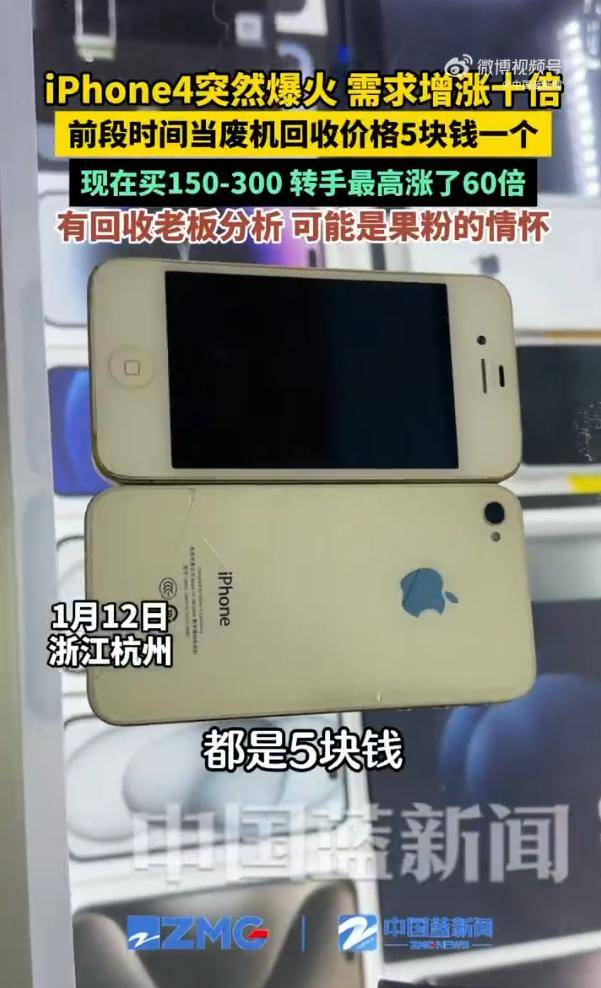
Group 1 - The iPhone 4 has seen a sudden surge in demand, increasing tenfold, with recycling prices rising from 5 yuan to between 150 and 300 yuan, marking a maximum increase of 60 times [1][2] - The phenomenon is attributed to the emotional connection that fans of Apple products have with the device [1][2] Group 2 - Young consumers are increasingly drawn to nostalgia, purchasing old items as a form of emotional consumption, with over 80% engaging in such purchases at least once a month for emotional relief [5] - The rapid development of society and technology has led to a longing for the past, as old items provide a connection to memories and a temporary escape from current anxieties [6] - Many young people seek to relive their childhood by acquiring items they once desired but could not have, fulfilling a personal obsession [7] Group 3 - The tactile experience of old items is seen as a rare commodity in the digital age, allowing young consumers to achieve a sense of "spiritual deceleration" [8] - Purchasing and sharing nostalgic items fosters a sense of belonging and resonance among peers, as these items often carry collective memories of specific cultural and historical contexts [9] - Fashion trends are cyclical, and when vintage items align with contemporary aesthetics, they attract significant interest from young consumers, exemplified by the popularity of CCD cameras for their unique image quality [10]
“护娃神器”儿童电话手表 真能放心护娃吗?
Xin Lang Cai Jing· 2026-01-12 16:57
Core Insights - The children's smart watch, known as a "guardian device," has evolved from basic communication and location tracking to multifunctional devices that include social networking, entertainment, and payment features, raising concerns among parents about children's screen time and safety [1][2]. Group 1: Product Features and Concerns - The children's smart watch has increasingly adopted features similar to smartphones, leading to a competitive environment among children and potential information security risks [2]. - Many children's smart watches come pre-installed with applications that encourage children to engage in tasks to earn points, which can lead to excessive time spent on the device [1][2]. Group 2: Consumer Issues - Induced consumption is a significant concern, as parents report unauthorized subscriptions to paid services on the watches, which can be difficult to cancel without the child's number [3]. - There are risks of information leakage, particularly with older models lacking necessary security features, making it easier for malicious individuals to access personal data [4]. Group 3: Content Regulation and Safety Measures - While major brands implement filtering mechanisms for inappropriate content, there are still ways to bypass these regulations, such as modifying parental controls without additional verification [5]. - Experts suggest enhancing the qualification review and accountability mechanisms for children's products and content providers, emphasizing the need for guidance rather than strict prohibition [6].
中外资机构热议AI的投资机遇与风险
Zhong Guo Ji Jin Bao· 2026-01-12 16:06
Core Viewpoint - The narrative around AI is shifting from valuation expansion to the realization of technological capabilities, making discussions about an AI bubble premature [2][3]. Group 1: AI Narrative and Market Dynamics - AI's current boom is shaped by capital expenditure expansion and macro liquidity, with a focus on whether technological paths can translate into productivity gains and profit restructuring [2]. - The AI narrative is evolving from "irrational exuberance" to "rational bubble," driven by national strategies and corporate dynamics rather than mere emotional speculation [2]. - AI is expected to remain a significant theme in global markets through 2026, with opportunities expanding across various industries [2][3]. Group 2: Investment Opportunities - Investment opportunities in AI arise from two main areas: capital expenditure related to computing power and infrastructure, and applications that can translate technological advantages into industry penetration and cash flow improvement [4]. - Key sectors for investment include upstream hardware (e.g., chips like Nvidia) and computing infrastructure (data centers), as well as midstream cloud service providers (e.g., Microsoft, Alibaba Cloud) [4]. - Downstream, focus should be on "AI-First" companies that drive core value through AI, ensuring they have clear commercialization paths and high user retention [4]. Group 3: Sectoral Insights - AI applications are penetrating various sectors beyond technology, including finance, manufacturing, healthcare, and consumer industries, with financial institutions likely to benefit from AI in optimizing business models [5]. - The gaming sector, medical AI, and consumer electronics are currently showing strong performance, although some areas may experience localized overheating [6]. - The AI landscape may shift from dominance by a few major players to a more diversified market, especially as global AI industries challenge the strongholds of U.S. giants [6]. Group 4: Risks and Considerations - High valuations pose risks, as negative news could lead to significant volatility in AI-related stocks [7]. - Key risks include cyclical volatility due to high valuations, delays in profit realization, and crowded trades leading to compressed risk premiums [7][8]. - Investors should be cautious of short-term liquidity and valuation risks, as well as the potential for systemic risks if capital does not translate into commercial value [8].
中外资机构热议AI的投资机遇与风险
中国基金报· 2026-01-12 16:02
Core Viewpoint - The narrative around AI is shifting from valuation expansion to the verification of technological capabilities, making discussions about an AI bubble premature [3][4]. Group 1: AI Narrative and Market Dynamics - The current AI boom is shaped by capital expenditure expansion and macro liquidity, with technology sectors providing a fiscal stimulus effect amid traditional industry pressures [4]. - The AI narrative is evolving from "irrational exuberance" to "rational bubble," driven by national strategies and corporate dynamics rather than mere emotional speculation [4][5]. - AI's rapid adoption will remain a significant theme in global markets in 2026, with low chances of a trend reversal [5]. Group 2: Investment Opportunities in AI - Investment opportunities in AI arise from two main areas: certainty in capital expenditure related to computing power and infrastructure, and the ability to translate technological advantages into industry penetration and cash flow improvement [7]. - Key areas for investment include upstream hard technology (e.g., chips and hardware) and computing infrastructure, which are essential entry points for capital [7][8]. - Midstream platform companies, such as cloud service providers and open-source model ecosystems, are also highlighted as potential investment targets due to their long-term ecological barriers [8]. - Downstream, focus should be on "AI-First" companies that drive core value through AI, ensuring they have clear commercialization paths and high user retention [8]. Group 3: Sector-Specific Insights - AI applications are penetrating various sectors beyond technology, including finance, manufacturing, healthcare, and consumer industries, with significant potential in financial sectors benefiting from AI optimization [8]. - The gaming sector, medical AI, and smart consumer electronics are currently performing well, although some may experience localized overheating and volatility in 2026 [8][9]. - The AI landscape may shift from dominance by a few major players to a more diversified market, especially as challenges to the "moats" of US AI giants arise [9]. Group 4: Risks and Considerations - High valuations pose risks, with potential for increased volatility in response to negative news, particularly for highly leveraged companies [11]. - Key risks include cyclical volatility due to high valuations, delays in profit realization leading to path reassessment, and crowded trades compressing risk premiums [11][12]. - Short-term liquidity and valuation risks are highlighted, with indicators suggesting potential market overheating [12].