科技

Search documents
ESG中国·创新年会(2025)暨首届ESG国际博览会即将举行
Zheng Quan Ri Bao· 2025-10-18 02:45
Core Points - The ESG China Innovation Annual Conference (2025) and the first ESG International Expo will be held from October 24 to October 26 in Beijing, focusing on "full-chain innovation leading green transformation" [1] - The conference aims to stimulate ESG innovation actions among Chinese enterprises and promote the construction of a Chinese-style ESG system, responding to national strategies such as modernization and green low-carbon development [1][3] - This year's conference marks a transition from the previous focus on ESG concept popularization and industry chain collaboration to a deeper emphasis on full-chain innovation and transformation [1][2] Event Structure - The conference will adopt a "1+15+1" structure, featuring one main forum, fifteen parallel sessions, and one ESG international expo, serving as a "showcase, connector, and accelerator" for ESG practices in China [2] - The main forum will include leadership speeches, the release of seven core outcomes, industry leader presentations, and roundtable discussions, with key outcomes such as the "2025 Annual ESG Practice Report" and the first ESG large model [2] - The fifteen parallel sessions will cover topics like "theoretical innovation driving development," "new opportunities in ESG innovation and green finance," and "digital technology empowering ESG innovation," ensuring a comprehensive discussion from concept to practice [2] Participation and Impact - The conference is expected to gather over a thousand representatives from government, various enterprises, international organizations, and academic institutions across dozens of key industries, including energy, manufacturing, finance, and technology [3] - The first ESG International Expo has attracted over 70 participating organizations, including central enterprises, local state-owned enterprises, private enterprises, foreign enterprises, and international organizations, highlighting the diversity and internationalization of the event [3] - Notably, over 37% of the participating organizations are from overseas, showcasing the global influence of China's ESG practices and facilitating efficient connections between domestic and international ESG systems [3]
ESG中国·创新年会暨首届ESG国际博览会即将举行
Zheng Quan Ri Bao Wang· 2025-10-18 02:27
Group 1 - The ESG China Innovation Conference 2025 and the first ESG International Expo will be held in Beijing from October 24 to 26, focusing on "full-chain innovation leading green transformation" [1] - The conference aims to stimulate ESG innovation actions among Chinese enterprises and promote the construction of a Chinese-style ESG system, responding to national strategies such as modernization and low-carbon development [1][3] - This year's conference marks a key transition in China's ESG development from concept to practice, emphasizing deep transformation through full-chain innovation [1] Group 2 - The conference will feature a "1+15+1" structure, including one main forum, fifteen parallel sessions, and one ESG international expo, serving as a showcase, connector, and accelerator for ESG practices in China [2] - The main forum will include leadership speeches, the release of seven core results, and roundtable discussions, with key outcomes such as the 2025 ESG Practice Report and China's first ESG large model [2] - The first ESG International Expo will highlight bilateral exchanges between local achievements and international experiences, with over 70 participating institutions, showcasing a diverse and international character [3] Group 3 - The conference will gather over a thousand representatives from government, various enterprises, international organizations, and academic institutions across key industries such as energy, manufacturing, finance, and technology [3] - The expo will feature more than 37% of overseas participating institutions, demonstrating the global influence of China's ESG practices and facilitating efficient connections between domestic and international ESG systems [3] - The event aims to enhance the sustainable development capabilities and international competitiveness of Chinese enterprises, contributing Chinese wisdom and solutions to global ESG governance [3]
青岛:2025年离境退税商店数量翻倍
Xin Hua Wang· 2025-10-18 01:43
Core Insights - Qingdao is becoming a popular destination for inbound consumption, driven by policies such as visa-free travel and optimized tax refund processes for foreign tourists [1][4] - The city has seen a significant increase in international consumer engagement, with a notable rise in the number of tax refund stores and foreign visitors [1][2] Group 1: Inbound Consumption Growth - Qingdao has added 42 new tax refund stores this year, more than doubling the previous count, which is attracting international consumers [1] - The city received 442,000 foreign visitors in the first nine months of the year, marking a 43.5% year-on-year increase [4] Group 2: Consumer Preferences and Trends - Foreign tourists are increasingly purchasing local products such as Tsingtao beer, with the Tsingtao Beer Museum seeing a 130% increase in foreign visitors during the recent holiday period [3] - High-end shopping areas like Hisense Plaza are attracting international customers, particularly from South Korea, due to the availability of rare and limited products [2] Group 3: Enhanced Consumer Experience - The city is improving service experiences for foreign visitors by providing multilingual signage and services, making it easier for them to navigate and enjoy their time in Qingdao [4] - Payment services are being optimized, with several malls, including Hisense Plaza, becoming payment-friendly for foreign tourists, allowing them to use their preferred electronic wallets [4][5]

美股反弹道指收复46000 热门中概股分化 黄金尾盘跳水
Di Yi Cai Jing· 2025-10-18 00:37
*三大股指反弹,纳指涨逾0.5%; *中长期美债收益率回升,2年期美债重返4%; *担忧情绪环境,地区银行指数涨超1%。 本周,摩根大通等大型银行发布了强劲财报,为第三季度财报季奠定了乐观开局。伦敦证券交易所集团 (LSEG)I/B/E/S 数据显示,分析师平均预期标普500成分股公司第三季度盈利将增长9.3%,较10月初 8.8%的预期有所上调。 美国国债收益率走高,基准10年期国债收益率上升2.1个基点,至4.00%,与利率预期关联密切的2年期 国债收益率上升2.9个基点,至3.46%。 个股方面,上一交易日齐昂银行(Zions Bancorporation)披露两笔工商业贷款相关损失,西部联合银行 (Western Alliance)对康托集团(Cantor Group V)提起欺诈诉讼引发地区性银行股抛售。周五,该板 块股价迎来反弹。标普综合1500地区性银行指数在暴跌近6%后上涨1.5%。涵盖美国大型银行的标普500 金融板块指数上涨 0.8%。 Argent资本公司投资组合经理埃勒布鲁克(Jed Ellerbroek)称:"信贷担忧其实更多是'雷声大,雨点 小'。纵观所有大型银行的财报,信贷状况都 ...
美股大涨!特朗普签署新关税
Zhong Guo Ji Jin Bao· 2025-10-18 00:04
Market Overview - US stock market experienced a significant rise, with the VIX fear index steadily declining, indicating improved market sentiment [1][2] - The Dow Jones Industrial Average rose by 238.37 points (0.52%) to close at 46,190.61 points, while the Nasdaq increased by 117.43 points (0.52%) to 22,679.97 points, and the S&P 500 gained 34.94 points (0.53%) to reach 6,664.01 points [3] Banking Sector - Bank stocks rebounded after a decline, as traders believed that recent bad credit events were isolated incidents rather than indicative of a broader crisis [4][5] - Zion Bank saw a significant increase of 5.8%, while the Cboe Volatility Index (VIX) decreased, suggesting reduced market anxiety [6] Boeing and Aviation Industry - Boeing received regulatory approval to increase the production of its 737 Max aircraft to 42 units per month, with ongoing oversight from the FAA to ensure safety [7][8] - The aviation sector showed mixed performance, with Boeing's stock rising by 0.48% while other airlines like American Airlines and Delta Airlines experienced declines [8] Technology Sector - Major US technology stocks mostly saw gains, with Tesla rising over 2%, Apple nearly 2%, and other tech giants like Google and Microsoft also increasing [9][10] Oil Market - Oil prices saw a slight increase on Friday but fell nearly 3% over the week due to concerns about oversupply and geopolitical discussions between Trump and Putin [12][13] Trade Policy - President Trump announced a 25% tariff on imported medium and heavy trucks and parts, effective November 1, along with a 10% tariff on imported buses [14][15]
美股大涨!特朗普签署新关税
中国基金报· 2025-10-17 23:58
Market Overview - US stock market experienced a rise, with the Dow Jones increasing by 238.37 points (0.52%) to close at 46190.61 points, the Nasdaq up by 117.43 points (0.52%) to 22679.97 points, and the S&P 500 rising by 34.94 points (0.53%) to 6664.01 points [3] Banking Sector - Risk sentiment in the banking sector improved, with traders believing that recent bad credit events were isolated incidents rather than indicative of a broader crisis. Zion Bank saw a significant increase of 5.8% [8][10] - Major banks showed mixed performance, with JPMorgan down 0.34%, Goldman Sachs down over 1%, Citigroup up 0.85%, Morgan Stanley down 0.86%, Bank of America up over 1%, and Wells Fargo down 0.87% [10] Boeing and Aviation Industry - Boeing received regulatory approval to increase the production of its 737 Max aircraft to 42 units per month. The FAA will continue to monitor Boeing's production processes to ensure safety [11][12] - The aviation sector showed varied stock performance, with Boeing up 0.48%, American Airlines down 0.25%, Delta Air Lines down over 1%, Southwest Airlines up 0.72%, and United Airlines up nearly 1% [12] Technology Sector - Major US technology stocks mostly rose, with Tesla increasing over 2%, Apple nearly 2%, Google up 0.73%, Microsoft up 0.39%, Facebook up 0.68%, and Nvidia up 0.78%. However, Amazon saw a decline of 0.67% [15] Oil Market - Oil prices saw a slight increase on Friday but dropped nearly 3% over the week, attributed to predictions of increased supply and discussions between Trump and Putin regarding Ukraine. WTI crude oil closed at $57.54 per barrel, while Brent crude settled at $61.29 per barrel [19] Trade Policy - President Trump announced a 25% tariff on imported medium and heavy trucks and parts, effective November 1. Additionally, a 10% tariff will be imposed on imported buses [20][21] Regulatory Developments - The UK Competition and Markets Authority approved the lifting of restrictions on Google, concluding that competition concerns had been adequately addressed [17]

银行信贷恐慌退潮,美股三大指数集体收涨
Feng Huang Wang· 2025-10-17 23:40
Market Overview - US stock indices collectively rose, with investors assessing President Trump's latest comments on trade, interpreting them as a sign that the threat of 100% tariffs would not materialize [1] - The VIX index closed at 21.5, indicating a decrease in risk aversion among investors [1] - Regional bank stocks rebounded after a previous decline, with Zions up 5.8% and Western Alliance up 3%, as concerns over bad loans were seen as isolated incidents rather than systemic issues [1] Company Performance - Fifth Third Bancorp reported earnings that exceeded expectations, leading to a 1.3% increase in its stock price, despite increasing credit loss provisions due to exposure to a bankrupt subprime auto lender [2] - Major banks like JPMorgan and Wells Fargo reported earnings that surpassed expectations, prompting analysts to raise the Q3 S&P 500 earnings growth forecast from 8.8% to 9.3% [2] Sector Performance - The Dow Jones increased by 238.37 points (0.52%) to 46,190.61, while the Nasdaq rose by 117.44 points (0.52%) to 22,679.97, and the S&P 500 gained 34.94 points (0.53%) to 6,664.01 [3] - The consumer staples sector led the S&P 500 with a 1.23% increase, while the materials sector saw a decline of 0.35% [3] Stock Movements - Major tech stocks generally rose, with Tesla up 2.46%, Apple up 1.96%, and Microsoft up 0.39%, while Oracle saw a significant drop of nearly 7% [4][5] - Precious metals and mining sectors faced declines, with gold resources dropping over 16% [4] Industry News - ChatGPT's mobile application growth appears to be stagnating, with daily active users showing signs of leveling off since April, according to Apptopia [7] - Jefferies Group's CEO claimed the firm was a victim of fraud related to the bankruptcy of First Brands, indicating potential legal proceedings [8] - Apple announced a five-year exclusive broadcasting partnership with Formula 1 in the US, reportedly costing $700 million [8]
认清本轮周期大趋势
Zheng Quan Shi Bao· 2025-10-17 18:49
Core Viewpoint - The A-share market experienced a strong performance from May to September, with the Shanghai Composite Index rising for five consecutive months, peaking at an 18.91% increase, but faced a downturn in October due to multiple factors, including external trade tensions and internal market adjustments [1][2]. Market Performance - The Shanghai Composite Index reached a new 10-year high at 3900 points at the beginning of October but subsequently lost this level, indicating a period of volatility and adjustment [1]. - August was noted as the best month since the "9.24" market surge, with a monthly increase of 7.97% [1]. Factors Influencing Market Adjustment - The rapid increase in the market over the previous months led to a buildup of profit-taking pressure, necessitating a technical correction. This adjustment was evident in September, where the market showed signs of weakness despite a positive monthly close [2]. - The technology sector, particularly stocks related to artificial intelligence (AI), had been leading the market but faced scrutiny over potential bubbles, contributing to downward pressure on prices [2]. Future Outlook - The current market adjustment is viewed as a phase of correction since the "9.24" rally, with limited downside potential. The financial sector is showing signs of recovery, which could support the overall market [3]. - Positive macroeconomic data suggests a strengthening trend in the real economy, which, along with incremental policy measures, is expected to provide substantial support for the market's upward trajectory [3]. - Investor confidence is crucial, and a long-term perspective is encouraged to navigate through the current market fluctuations [3].
Markets Pushing Back Overnight Losses & Analyzing the Regional Bank Sell-Off
Youtube· 2025-10-17 13:30
to help us set up the trading day. Welcome in Kevin Hanks, my co-host on Fast Market. Kev, you know, we had a lot of volatility overnight.The VIX almost hit the 29 level. Um, but we've seen a little bit of a rebound on probably these comments from President Trump. Besset meeting with the trade representative from China today.So, what's your take here on these volatile market moves. >> Tom, talking to you, you're throwing off my inner clock. I don't even know what time it is now.Isn't it later if I'm talking ...
抹掉本轮国产AI涨幅并不合理,港股科技ETF(159751)本周共4日获资金净申购
Sou Hu Cai Jing· 2025-10-17 13:22
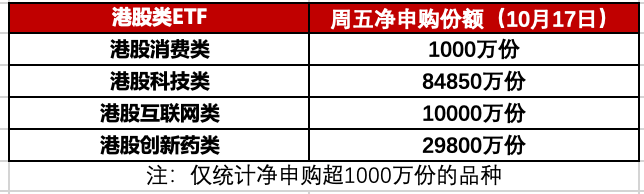
Group 1 - The Hong Kong stock market experienced a significant decline, particularly in the technology sector, which fell nearly 4%, with the Hang Seng Index breaking the support level of 25,700 [1] - The decline is attributed to the risk exposure of U.S. regional banks, but its direct impact on Hong Kong stocks is limited. The resulting decrease in U.S. Treasury yields and potential Federal Reserve rate cuts may be beneficial [1] - The market correction is seen as a result of excessive prior gains, with tariffs also contributing to a suppression of risk appetite [1] Group 2 - In the trading session, only two Hong Kong stock ETFs experienced redemptions, with one related to negative news about two automotive companies. The remaining ETFs saw net inflows, with 13 products collectively gaining over 1.256 billion shares [2] - The Hong Kong technology ETF received significant attention, with a net subscription of 84.85 million shares, indicating strong investor interest despite the market downturn [3] Group 3 - Long-term investors are advised to view the current market adjustment as a buying opportunity, particularly in leading technology and innovative pharmaceutical stocks, which have seen substantial corrections [3] - The copper-to-oil ratio is highlighted as a potential indicator of market trends, with a higher ratio suggesting stronger economic growth and lower inflation, serving as a predictive tool for market movements [3]