信息技术

Search documents
科技赋能 各国青年“秀”方案
Zhong Guo Qing Nian Bao· 2025-07-21 00:56
Group 1 - The forum held on July 16, 2025, in Suzhou, Jiangsu, focused on green consumption and sustainable development, attracting youth interested in using technology and data to combat climate change [1] - Youth representatives showcased various technological solutions for sustainable development, emphasizing the role of technology as a key driver for change [4] - The forum highlighted the importance of collaboration among governments, private sectors, and civil society to support youth participation in sustainable development initiatives [6] Group 2 - Huang Wandi's team developed a mobile charging robot system for underground parking, enhancing the efficiency of electric vehicle charging by utilizing overhead charging facilities [2] - Yusuf Doru's team created an eco-friendly water treatment system using waste materials from the seafood industry, achieving a dye removal efficiency of 98% [3] - The forum featured diverse youth projects from different countries, including rural ecological toilet designs, soil-less cultivation techniques, and the transformation of electronic waste into solar products [4] Group 3 - The climate data system established by Salih allows for crowd-sourced reporting of illegal activities affecting local wildlife, significantly reducing turtle egg theft in his hometown [5] - The challenges faced by young innovators in the field of sustainable materials include a lack of standardized guidelines and resource limitations, which hinder research and development [6] - Investment in youth-led initiatives is crucial for fostering a green future, as emphasized by various speakers at the forum [6]
【钛晨报】工信部下一步工作重点速览18条:汽车、建材等行业将迎稳增长方案,推动人形机器人、脑机接口等未来产业创新发展;娃哈哈宗氏财产纠纷案8月1日将有新...
Tai Mei Ti A P P· 2025-07-20 23:32
Group 1 - The industrial economy in China is experiencing growth driven by over a hundred AI-enabled devices such as AI smartphones, computers, and glasses [2] - The number of 5G mobile phone users has reached 1.118 billion, with intelligent computing power scaling up to 748 EFLOPS [3] - More than 140,000 specialized and innovative small and medium-sized enterprises have been cultivated, including 14,600 "little giant" enterprises [4] Group 2 - New work plans for stabilizing growth in key industries such as steel, non-ferrous metals, petrochemicals, and building materials will be released soon [5] - Implementation plans for digital transformation in the automotive and machinery sectors are set to be issued [6] - The "Artificial Intelligence +" initiative will accelerate the deployment of large models in key manufacturing sectors [6] Group 3 - The establishment of national-level manufacturing pilot platforms is underway, focusing on critical areas such as raw materials and emerging industries [6] - A series of actions will be taken to address overdue payments to small and medium-sized enterprises [7] - The establishment of the second phase of the National SME Development Fund aims to attract more social capital for investment in hard technology [7] Group 4 - The first public REITs for data centers have been established, raising a total of 69 billion yuan, indicating strong investor interest [11][12] - China's unicorn companies have a total valuation exceeding 1.2 trillion USD, reflecting the vitality of new productive forces [12] - The digital asset exchange Bullish has filed for an IPO, marking the first public listing attempt following the enactment of the stablecoin legislation [12]


港股“双重优势”吸引QDII基金配置转向
Zheng Quan Ri Bao· 2025-07-20 16:15
Core Viewpoint - The adjustment of QDII fund's regional allocation strategy, particularly the increased allocation to Hong Kong stocks, has drawn market attention as the second quarter reports are released [1][2]. Group 1: QDII Fund Allocation Changes - As of July 20, 37 QDII funds have allocated assets to Hong Kong stocks, with many increasing their holdings [1]. - The Nasdaq index's volatility in the first quarter prompted QDII funds to reduce their U.S. stock positions and shift towards the more favorably valued Hong Kong market [2]. - For instance, the allocation of the Chuangjin Hexin Global Pharmaceutical Biotechnology Stock Fund to U.S. stocks decreased from 39.04% at the end of last year to 29.33% by the end of the first quarter, while its Hong Kong stock allocation rose from 13.97% to 24.07% [2]. Group 2: Sector Focus - The technology sector remains a core focus for QDII funds, with 38 funds investing a total of 33.147 billion yuan in this sector [4]. - The information technology industry, which includes sub-sectors like artificial intelligence, semiconductors, and software services, is the largest allocation area for QDII funds [4]. - Sixteen QDII funds maintain over 30% allocation to the information technology sector, with some, like the Chuangjin Hexin Global Chip Industry Stock Fund, increasing their allocation from 74.65% to 75.47% [4]. Group 3: Future Investment Trends - Many QDII funds are focusing on the AI industry chain as a key investment theme for the second half of the year, emphasizing the importance of AI's development from foundational infrastructure to application scenarios [5]. - The trend of increasing allocation to Hong Kong stocks and focusing on technology reflects a rational response to global market valuation differences and an active grasp of industrial transformation opportunities [5]. - Investors are advised to pay attention to the technological barriers, global competitiveness, and policy adaptability of leading technology stocks in Hong Kong [5].
山东政商要情(7.14—7.20)
Jing Ji Guan Cha Bao· 2025-07-20 13:15
Group 1: Trade and Economic Performance - In the first half of 2025, Shandong's foreign trade import and export reached 1.73 trillion yuan, a year-on-year increase of 6.8%, surpassing the national growth rate of 3.9% [1] - Exports amounted to 1.05 trillion yuan, growing by 6%, while imports were 676.41 billion yuan, increasing by 8.1% [1] - Shandong's import and export scale set historical records for the same period, contributing nearly 20% of the national growth in foreign trade [1] Group 2: Regional Cooperation and Events - The China-Shanghai Cooperation Organization Local Economic and Trade Cooperation Conference was held in Qingdao, attracting around 360 exhibitors and 3,000 buyers [3] - The conference resulted in several cooperation projects, including a partnership between the SCO demonstration zone and Shandong Railway Investment Holding Group [3] - The conference emphasized building international logistics channels and enhancing trade and investment quality among SCO countries [3] Group 3: Supply Chain Development - Shandong participated as the guest province in the third China International Supply Chain Promotion Expo, showcasing 78 enterprises and over 1,000 exhibits [4] - The event highlighted Shandong's transition from traditional manufacturing to modern supply chain practices, addressing global demands for resilience and collaboration [4][5] - Shandong has implemented a "chain leader system" for five years to enhance supply chain collaboration [4] Group 4: Financial Development Initiatives - Shandong's government issued a plan focusing on five key areas of finance: technology finance, green finance, inclusive finance, pension finance, and digital finance [6] - The plan aims for an annual growth rate of at least 20% in loans for technology SMEs and green loans, with a target of adding no less than 100,000 new inclusive finance "first loan" clients each year [6][7] Group 5: Support for Private Construction Industry - Shandong's housing and urban-rural development department released 21 measures to support the sustainable development of private construction enterprises [8] - The measures include optimizing market conditions, enhancing financial support, and ensuring that at least 50% of project evaluations favor private construction firms [8][9] - In the first half of 2025, Shandong's construction industry achieved a total output value of 833.47 billion yuan, a year-on-year increase of 4.2%, outperforming the national growth rate by 4 percentage points [9]
国泰海通海外:港股迎来增配时机 下半年有望跑赢A股
智通财经网· 2025-07-20 02:37
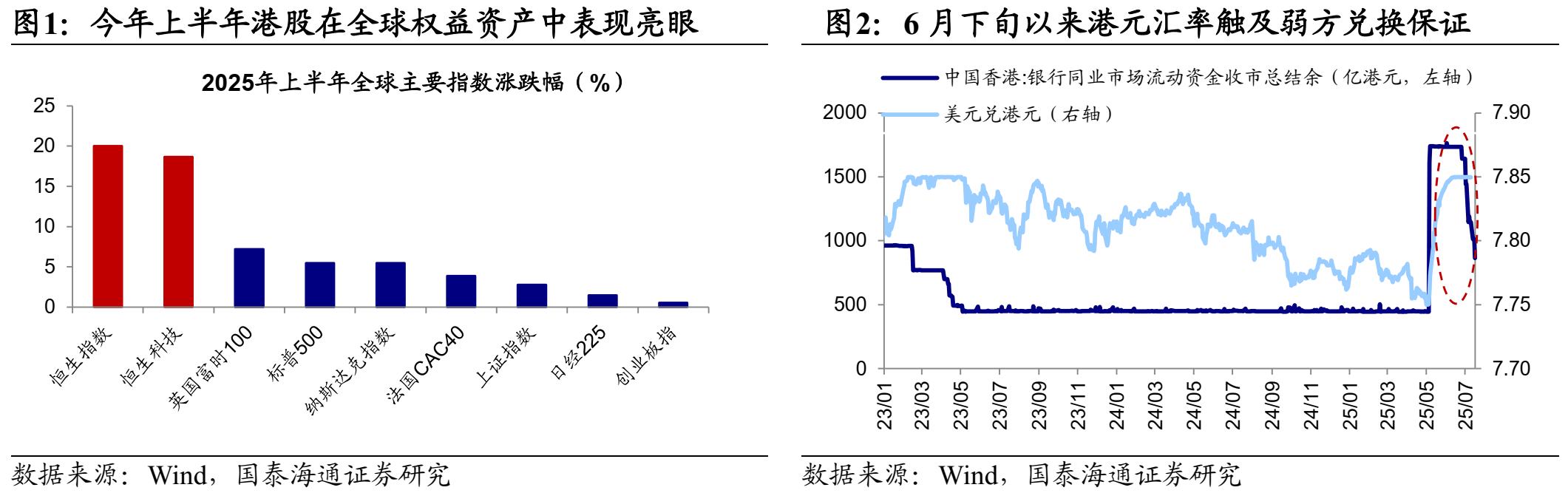
Core Viewpoint - The Hong Kong stock market has experienced fluctuations since the end of June due to tariffs and exchange rate impacts, but is expected to outperform the A-share market in the second half of the year as positive factors accumulate [1][3][13]. Market Performance - Since the end of June, the Hong Kong stock market has shown weaker performance compared to the A-share market, primarily influenced by U.S. tariff policies and the Hong Kong dollar's exchange rate [4][7]. - The Hang Seng Index rose by 20% in the first half of the year, outperforming major global indices, including the S&P 500 (5.5%) and the Shanghai Composite Index (2.8%) [3][4]. Sector Analysis - The technology and dividend sectors in Hong Kong are currently less active compared to A-shares, with the overall market heat slightly below historical averages [7][8]. - The healthcare and consumer sectors in Hong Kong show higher activity levels compared to A-shares, with the healthcare sector's heat at 91%, significantly above A-shares' 77% [9][8]. Investment Opportunities - The easing of U.S. chip export restrictions and the acceleration of AI applications are expected to benefit the Hong Kong technology sector, which is well-positioned to capitalize on the AI industry transformation [17]. - The dividend sector in Hong Kong, despite lower heat compared to A-shares, still holds value due to high dividend yields relative to risk-free rates, making it an attractive option for long-term investors [18]. Future Outlook - The Hong Kong stock market is entering a favorable allocation period, with expectations of continued upward movement in the second half of the year driven by supportive policies and improved capital inflows [13][14]. - The anticipated increase in capital expenditure by Hong Kong internet giants in AI infrastructure is expected to enhance the performance of the technology sector [17].

多领域“黑科技”亮相广州 双创赛舞台上较高下
Zhong Guo Xin Wen Wang· 2025-07-18 07:47
Group 1 - The "Maker Guangdong" competition aims to discover the potential of innovative SMEs and accelerate the development of a nurturing system for SMEs, promoting collaboration between large enterprises and SMEs [1][2] - A total of 255 quality projects registered for the competition, with 78 projects selected for the finals, showcasing a rigorous selection process [1] - The competition offers a total prize pool of 220,000 yuan, with awards distributed across 16 categories including first, second, and third prizes [1] Group 2 - Innovative projects presented at the finals included a "High-Speed Micro AOI Visual Defect Detection Platform" that integrates AI algorithms, precision optics, and automation systems, achieving defect detection accuracy of 3 microns [2] - Another notable project was the "Wireless Intelligent Inspection System" for the transportation industry, which can replace manual inspections in rail transit and be applied in the low-altitude economy [2] - The competition highlighted the strong motivation and potential of SMEs in innovation, employment, and improving livelihoods [2]
经济与市场“背离”:全球资产配置的变局与应对
Guo Ji Jin Rong Bao· 2025-07-18 07:44
Economic Outlook - The market anticipates that tariffs will lead to economic growth slowdown and rising inflation in the coming months, but significant opportunities for long or short positions in overall duration have not been identified yet [1] - Federal Reserve Chairman Powell advocates for patience regarding interest rates, suggesting that the Fed may prioritize employment goals and consider rate cuts later in the year as inflation is expected to decline [1] - Global central banks are adopting different policies in response to regional dynamics, leading to a general divergence between the economy and the markets [1] Government Bonds - In the Eurozone, the market expects the European Central Bank to further cut rates after a 175 basis point reduction, with long-term yields facing upward risks due to signs of demand recovery and low inflation expectations [3] - Japan is experiencing inflation pressure, with nominal GDP growth exceeding 5% year-on-year, but concerns over tariffs may hinder GDP growth and market confidence [3] - Investment opportunities may arise in UK government bonds as fears of fiscal irresponsibility lead to increased term premiums, despite signs of a weakening job market [3] Equities - The company maintains a moderate overweight in global equities, expecting positive earnings growth across major regions, although valuation remains a concern due to low risk premiums indicating market over-optimism [5] - Japanese equities are favored over U.S. equities due to valuation differences and ongoing corporate governance reforms, although potential policy headwinds may limit further overweighting [5] - U.S. equities are underweighted due to high valuations and market over-reliance on a few large companies for performance, with expectations for broad earnings growth being delayed [5][6] Credit Markets - Credit spreads have tightened back to historical lows after an initial widening, with a moderate overweight in credit spreads deemed acceptable in a non-recession scenario [8] - U.S. high-yield bonds have a total return of 6%-7%, attracting investors seeking arbitrage opportunities, supported by improved credit quality and low default rates [8] Commodities - The company holds a neutral view on commodities, with gold benefiting from structural factors and geopolitical concerns, although a cautious approach to new positions is advised [10] - Oil allocation has been slightly reduced due to expectations of oversupply by year-end, presenting a potential shorting opportunity, with risks associated with significant negative spreads [10]
星环科技: 董事、高级管理人员所持本公司股份及其变动管理制度(H股适用)
Zheng Quan Zhi Xing· 2025-07-17 16:14
General Principles - The management system for the shares held by directors and senior management of StarRing Information Technology (Shanghai) Co., Ltd. aims to clarify the procedures for handling share ownership and changes in accordance with relevant laws and regulations [1][2] - The system is applicable after the issuance of H shares and is designed to ensure compliance with the Company Law, Securities Law, and other regulatory guidelines [1][2] Shareholding and Trading Restrictions - Directors and senior management are prohibited from engaging in margin trading or derivative transactions involving the company's shares [2] - Share transfers by directors and senior management must comply with legal and regulatory requirements, including commitments regarding shareholding ratios and transfer methods [2][3] - Specific conditions under which shares cannot be transferred include the first year after the company's stock is listed, within six months after leaving the company, and during ongoing investigations or legal proceedings [3][4] Trading Blackout Periods - Directors and senior management are restricted from trading company shares during specific periods, such as 15 days before annual and semi-annual reports, and 5 days before quarterly reports [4] - Additional restrictions apply when significant events that could impact share prices occur, until the information is disclosed [4] Reporting and Disclosure Requirements - Directors and senior management must report their shareholding changes within two trading days and disclose details such as the number of shares before and after the change, the date, and the reason for the change [9][12] - Any planned share reductions must be reported to the Shanghai Stock Exchange 15 trading days in advance, including details about the number of shares, source, and reasons for the reduction [8][9] Compliance and Penalties - The company is responsible for ensuring that directors and senior management do not engage in insider trading or other illegal activities related to share transactions [12] - Violations of the management system may result in disciplinary actions by the company and potential legal consequences [12][14] Implementation and Effectiveness - The management system will take effect upon the company's first public issuance of H shares and listing on the Hong Kong Stock Exchange, replacing any previous regulations [14]

星环科技: 信息披露管理制度(H股适用)
Zheng Quan Zhi Xing· 2025-07-17 16:14
General Principles - The information disclosure management system is established to ensure timely, accurate, and complete disclosure of significant information, protecting investors' rights [1][2] - The system applies to the board of directors, senior management, and other relevant personnel responsible for information disclosure [2][3] Disclosure Requirements - Significant information includes financial performance, mergers and acquisitions, major investments, and legal matters that may impact stock prices or investment decisions [2][4] - Information must be disclosed simultaneously to all investors, avoiding selective disclosure [4][6] Disclosure Procedures - The company must disclose information through designated media and ensure that announcements are clear, concise, and free of promotional language [3][5] - The chairman is the ultimate responsible person for information disclosure, and all disclosures must comply with relevant laws and regulations [4][5] Types of Reports - Regular reports include annual, semi-annual, and quarterly reports, while temporary reports cover significant events outside the regular reporting schedule [8][12] - The company must ensure that financial data in reports is audited and accurate, with specific timelines for disclosure [12][14] Major Events Disclosure - The company must disclose major events as they occur, including board resolutions, significant transactions, and legal disputes that may affect stock prices [17][18] - If a major event is confidential, it can be disclosed later once it is no longer sensitive [16][19] Risk Management - The company must disclose any significant risks that could impact its financial health or operational stability, including potential losses or legal issues [26][27] - Disclosure of risks must be timely and comprehensive, ensuring that investors are fully informed [26][28] Shareholder Communication - The company must communicate with shareholders regarding significant changes, including changes in management, capital structure, or business strategy [29][30] - Shareholder meetings and resolutions must be properly documented and disclosed [30][31]
AI科技拉升需求 上半年上海产业园区市场表现活跃
Zhong Guo Jing Ying Bao· 2025-07-17 11:26
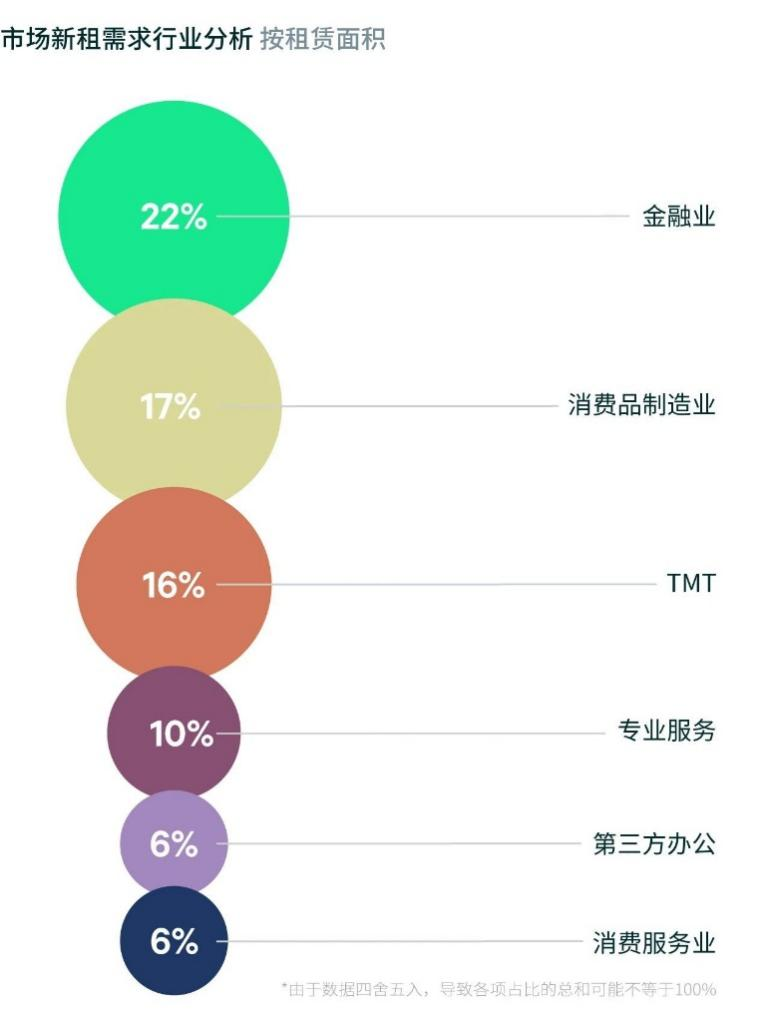
Core Insights - The Shanghai office market showed a slight recovery in demand during the first half of 2025, driven by the financial, consumer goods manufacturing, and technology sectors [4][5][6] Office Market Overview - The financial sector led the market with a 22% share, followed by consumer goods manufacturing at 17%, primarily due to the expansion needs of fast-moving consumer goods and home goods companies [4][5] - Approximately 770,000 square meters of new office supply is expected in the next six months, which may increase market competition and enhance leasing activity [4][5] - The overall net absorption increased by 126.1% to 173,000 square meters, while the overall vacancy rate rose by 0.3 percentage points to 22.4% [5][6] Rental Trends - Average rental prices decreased by 3.0% to 247.2 yuan per square meter per month, with effective rents dropping by 4.3% to 174.4 yuan per square meter per month [5][6] - Different sub-markets experienced varying degrees of rental price declines, with the average rental price in the city falling by 2.2% to 133.8 yuan per square meter at the end of the quarter [8] Sector-Specific Insights - The TMT sector accounted for 41% of the leasing demand in the industrial park market, with significant activity in information technology and AI-enabled sectors [7][8] - The automotive manufacturing sector is also accelerating its presence in industrial parks, with companies like Jianghuai Automobile establishing R&D centers [7][9] Regional Performance - The Huamu area became the most active sub-market, driven by demand from core locations and industrial parks, while the Hongqiao area benefited from the expansion of cross-border e-commerce [6][8] - The Zhangjiang area attracted TMT and industrial manufacturing companies, while the Caohui area saw demand from automotive and consumer goods sectors [8][9]